Updated August 2026
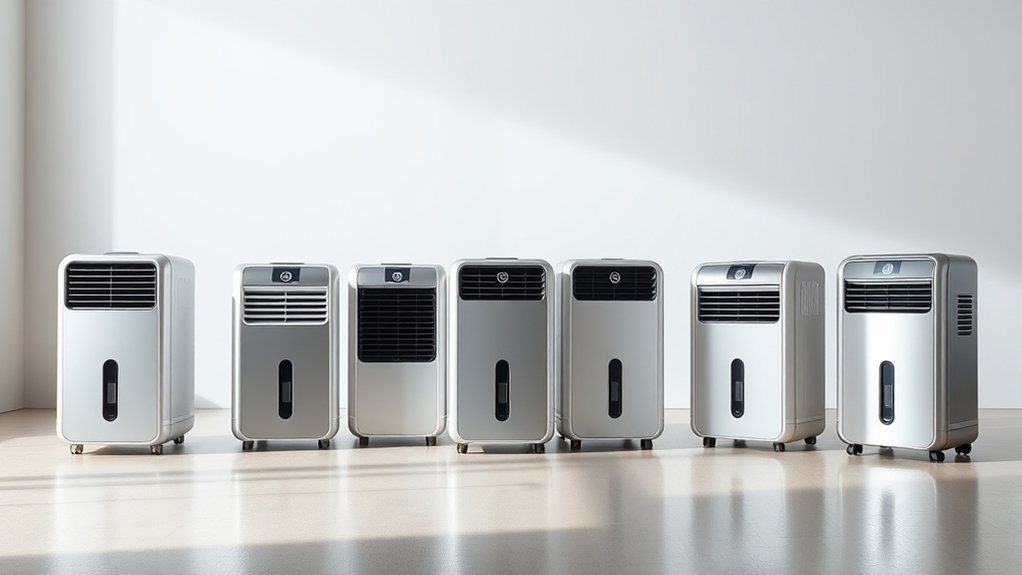
If you need a 50-pint dehumidifier with a built-in pump, start with the drainage route. A pump is most useful when water must travel upward to a sink, window, or other approved discharge point. The Midea Cube combines a large modular bucket, smart controls, and a built-in pump. hOmeLabs and DuraComfort add Wi-Fi operation, while Amazon Basics and BLACK+DECKER use more traditional electronic controls. Compare the standardized capacity, pump-hose reach, room temperature, bucket design, noise, and model-specific instructions before choosing a unit for a basement or large room.
How These Models Were Compared:
- Exact product fit: 50-pint rating and a built-in pump.
- Drainage choices: bucket, gravity drain, and pumped drain.
- Pump-hose reach and installation flexibility.
- Controls, portability, maintenance, and honest limitations.
- Current listing details checked against available manufacturer or manual information where possible.
Quick Verdict
Best Overall: Midea Cube 50-Pint Dehumidifier With Pump
Best for Broad Manufacturer-Rated Coverage: hOmeLabs 50-Pint Wi-Fi Dehumidifier With Pump
Best Straightforward Option: Amazon Basics 50-Pint Dehumidifier With Pump
Best Traditional Pump Setup: BLACK+DECKER 50-Pint Portable Dehumidifier
Best Wi-Fi Alternative: DuraComfort 50-Pint Dehumidifier With Pump
Quick Comparison of 50-Pint Dehumidifiers With Built-In Pumps
| Product | Capacity | Manufacturer-Rated Coverage | Drainage and Controls | Best For |
|---|---|---|---|---|
| Midea Cube With Pump | 50 pints per day | Up to 4,500 sq. ft. | Built-in pump with 16-ft drain tube; app and voice control | Smart features and a large modular bucket |
| hOmeLabs Wi-Fi | 50 pints per day under the listing’s stated standard condition | Up to 7,500 sq. ft. on the current listing; verify the exact manual | Bucket, gravity drain, built-in pump, Wi-Fi controls | Large open areas and remote monitoring |
| Amazon Basics | 50 pints per day | Up to 4,000 sq. ft. | Built-in pump, bucket, electronic controls; no app listed | Simple operation and routine basement use |
| BLACK+DECKER | 50 pints per day | Up to 4,500 sq. ft. | 16-ft pump hose, short gravity hose, electronic controls | Traditional controls and included drain hoses |
| DuraComfort DH50PWM | 50 pints per day | Up to 4,500 sq. ft. | Built-in pump with 16.4-ft hose, gravity drain, Wi-Fi controls | Remote adjustments and flexible drainage |
Important: Square-foot figures are manufacturer marketing estimates, not sizing guarantees. Temperature, starting humidity, active leaks, room layout, ceiling height, airflow, and the applicable capacity test method can substantially affect real-world performance.
Midea Cube 50-Pint Dehumidifier With Pump and Smart Control
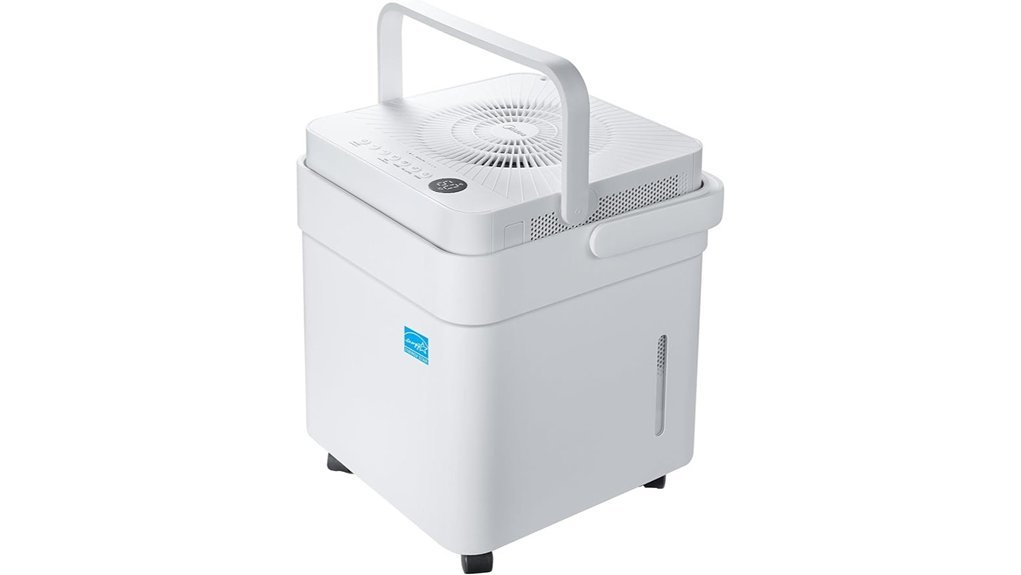
The Midea Cube with pump is a strong choice when you want smart controls, upward drainage, and a large water container in one unit. The exact linked listing identifies a 50-pint model with a built-in pump, manufacturer-rated coverage up to 4,500 square feet, Wi-Fi control, voice-assistant support, three fan speeds, and a 4.2-gallon tank.
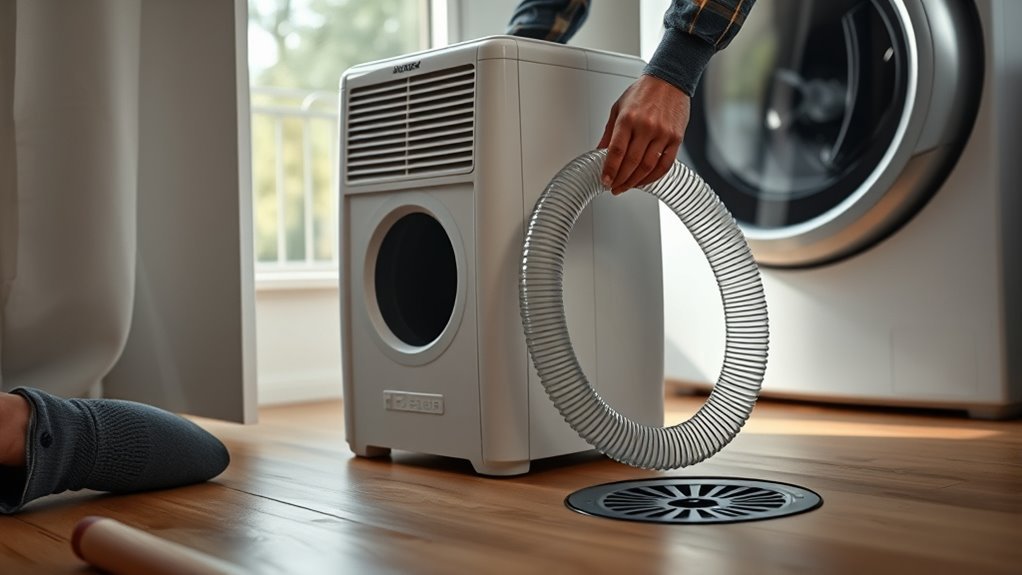
The included 16-foot pump tube can send collected water to a suitable sink, drain, or window outlet when gravity drainage is not practical. The lift-and-twist design lets the dehumidifier operate in an extended form or nest into the bucket for storage. The large tank reduces emptying frequency, but it can be difficult to handle when full, so the pump or continuous-drain setup is especially useful for buyers who prefer not to lift water.
Why You’ll Like It: It combines a large bucket, connected controls, and a pump in a compact modular design.
Best For: Buyers who want remote control, flexible pumped drainage, and fewer bucket-emptying trips.
Skip It If: You prefer a conventional one-piece cabinet or do not want to manage app and pump setup.
Pros:
- Built-in pump supports upward or horizontal drainage with the included 16-foot tube.
- SmartHome app and compatible voice control allow remote monitoring and adjustments.
- Large modular tank can run longer between manual emptying cycles.
- Three fan speeds provide more control over airflow and sound.
Cons:
- The unit weighs about 41.5 pounds before water is collected.
- A full large-capacity bucket can be heavy to lift.
- The modular layout and connected features require more setup than a basic one-piece model.
hOmeLabs Wi-Fi Dehumidifier With Pump (50 Pint)
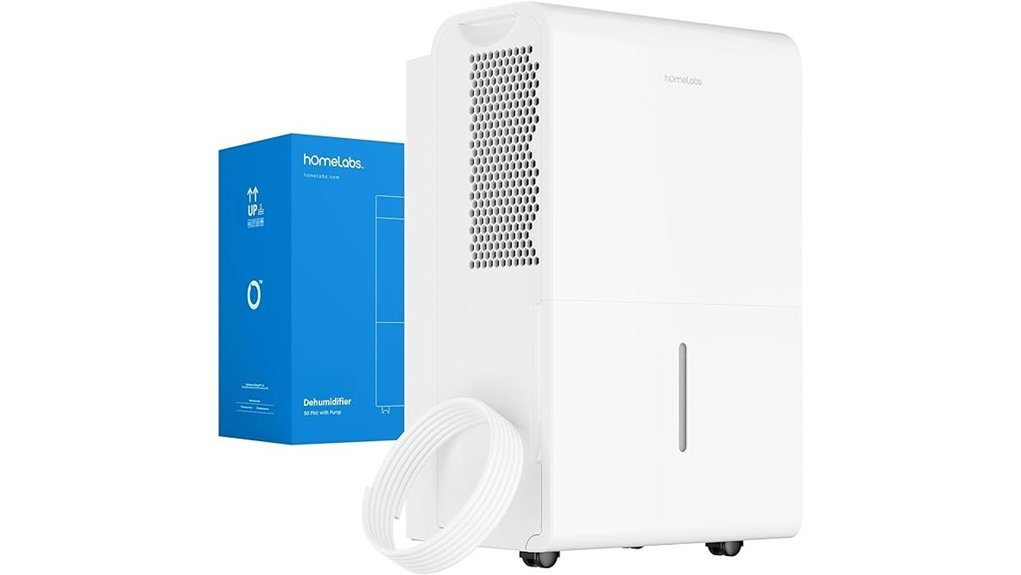
The linked hOmeLabs model combines a 50-pint daily rating, Wi-Fi control, and a built-in pump. Its current Amazon listing markets coverage up to 7,500 square feet, while an available HME1004 manual references up to 7,000 square feet. Treat either figure as a broad manufacturer estimate and confirm the exact model number and manual supplied with the unit.
Comfort, Turbo, and Continuous modes help adapt operation to changing conditions. You can collect water in the bucket, connect a gravity drain to a lower outlet, or use the internal pump when the discharge point is higher than the dehumidifier. A washable filter, timer, full-bucket shutoff, and casters support routine basement use.
Why You’ll Like It: It offers remote monitoring plus three drainage methods for a large open space.
Best For: Buyers who value Wi-Fi operation and pumped drainage more than compact size.
Skip It If: You need a lightweight machine that will be carried between floors often.
Pros:
- Wi-Fi controls allow remote monitoring and setting changes.
- Built-in pump provides an option when gravity drainage is unavailable.
- Comfort, Turbo, and Continuous modes support different humidity conditions.
- Washable filter and casters simplify regular maintenance and movement.
Cons:
- The current listing and available manual show different coverage estimates.
- Its size and weight make frequent stair carrying impractical.
- Wi-Fi pairing adds setup steps that manual-control buyers may not need.
Amazon Basics 50-Pint Dehumidifier With Pump
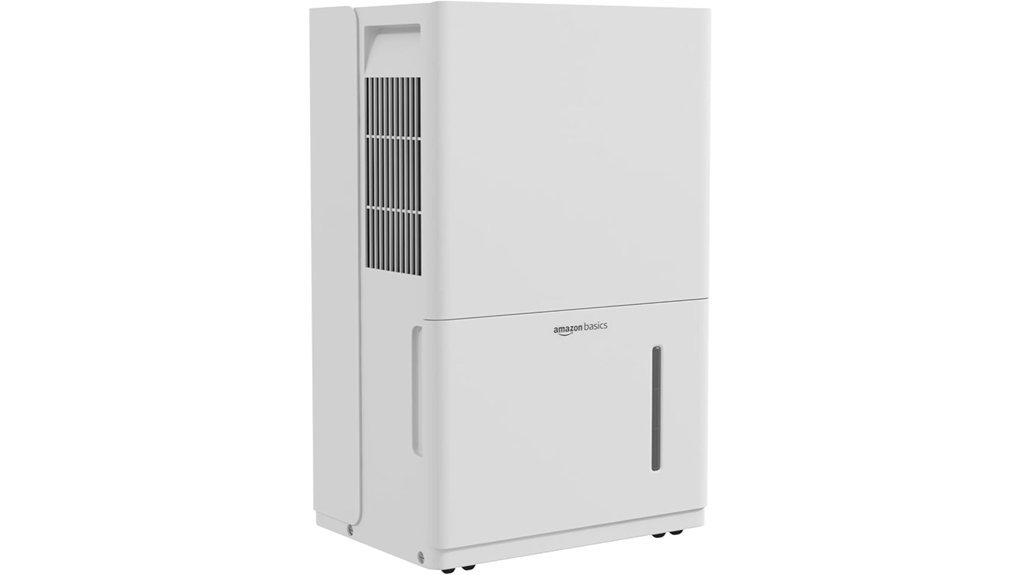
The Amazon Basics 50-Pint Dehumidifier With Pump suits buyers who want automatic drainage without app setup. The exact listing identifies a 50-pint model for spaces up to 4,000 square feet with a drain pump, electronic humidity controls, a timer, auto-defrost, overflow protection, and automatic restart after a power interruption.
The model manual lists an approximately 1.59-gallon bucket, which is separate from the 50-pint daily moisture-removal rating. Its ENERGY STAR label is another reason to consider it when efficiency matters, although actual electricity use still depends on humidity, temperature, runtime, and the selected settings.
Why You’ll Like It: It focuses on the core features needed for unattended basement use without requiring an account or app.
Best For: Buyers who prioritize simple controls, automatic drainage, and ENERGY STAR efficiency.
Skip It If: You need phone notifications, remote humidity monitoring, or voice-assistant integration.
Pros:
- Built-in pump reduces the need for manual bucket emptying.
- ENERGY STAR certification supports more efficient operation than a comparable non-certified model.
- Auto-defrost, overflow protection, and auto restart support routine unattended use.
- Reusable filter helps reduce recurring maintenance purchases.
Cons:
- No app or voice control is listed for this model.
- Its 4,000-square-foot manufacturer estimate is lower than the other models in this comparison.
- At about 41.7 pounds, it is better rolled than carried.
BLACK+DECKER 50-Pint Portable Dehumidifier With Built-In Pump
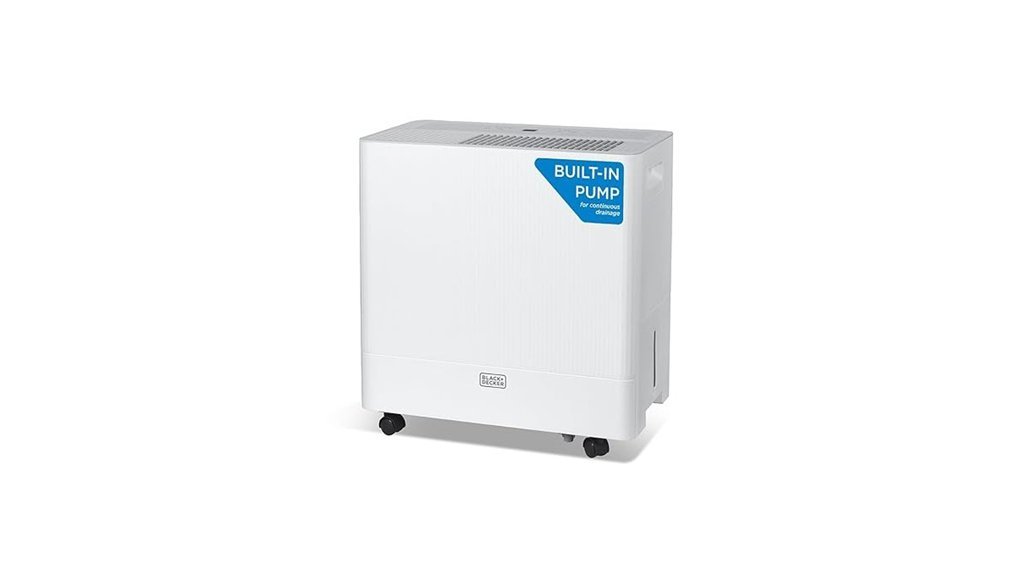
The BLACK+DECKER BD50PMWSA offers a familiar one-piece design with electronic humidity control and two continuous-drain routes. It is listed for spaces up to 4,500 square feet and for removal of up to 50 pints of moisture per day under its rated conditions.
The package includes a 16-foot pump hose for sending water to a higher discharge point and a short gravity-drain hose for a lower outlet. Its approximately 12.68-pint bucket, adjustable humidistat, digital display, timer, auto-defrost, auto restart, full-bucket alert, and automatic shutoff cover the main convenience features needed for basement use.
Why You’ll Like It: The included pump and gravity hoses make the drainage choices clearer out of the box.
Best For: Buyers who want conventional controls, included drain hoses, and no required app account.
Skip It If: You want to check the room’s humidity from your phone while away from home.
Pros:
- Built-in pump and included 16-foot pump hose support upward drainage.
- Short gravity hose is also included for a suitable lower drain.
- Adjustable humidistat and digital display provide direct control at the unit.
- Auto-defrost, auto restart, full-bucket alert, and shutoff support routine operation.
Cons:
- No Wi-Fi or app control is listed for the supplied model.
- At about 42.8 pounds, carrying it between levels may be difficult.
- The pump hose must remain within the model’s approved routing and lift limits.
DuraComfort DH50PWM 50-Pint Dehumidifier With Pump and Wi-Fi
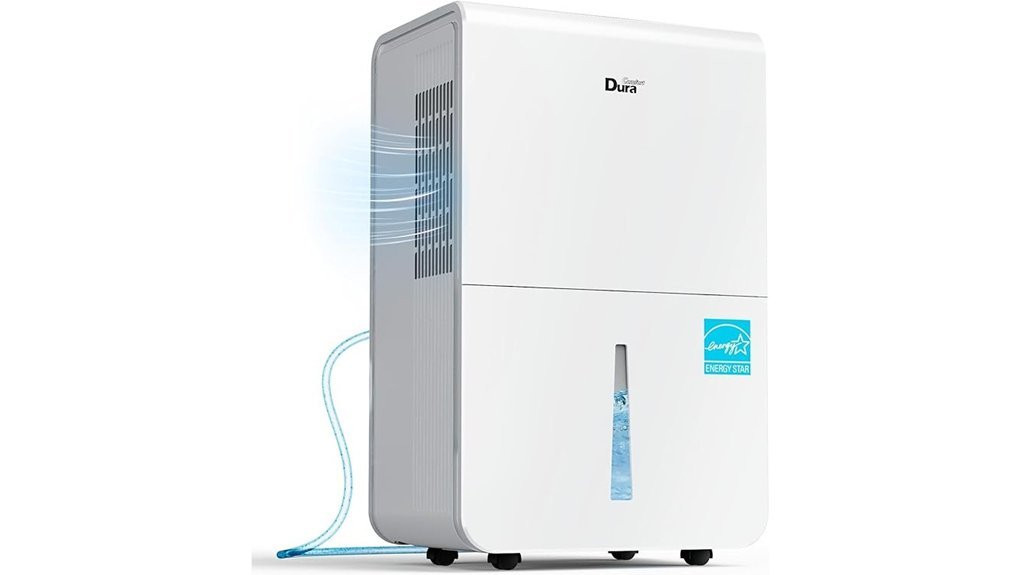
The linked DuraComfort DH50PWM is another option for buyers who want remote humidity adjustments and automatic water removal. The current listing identifies a 50-pint dehumidifier with Wi-Fi, a built-in pump, a 16.4-foot pump hose, and manufacturer-rated coverage up to 4,500 square feet.
You can use the bucket when no drain is available, connect a gravity hose to a lower outlet, or use the pump when the discharge point is higher than the unit. The model also lists an adjustable humidistat, timer, washable filter, and rolling casters. Because similar DuraComfort listings may use close model names, confirm that the listing and delivered label show model DH50PWM with Wi-Fi and a built-in pump.
Why You’ll Like It: It combines remote adjustment with three practical drainage choices.
Best For: Buyers looking for a Wi-Fi-enabled alternative with both gravity and pumped drainage.
Skip It If: You prefer a simpler model lineup or do not need connected controls.
Pros:
- Wi-Fi controls allow remote humidity adjustments.
- Built-in pump and 16.4-foot hose support drainage above the unit’s location.
- Timer, washable filter, casters, and carrying handles support everyday use.
- Bucket, gravity drain, and pump drain provide flexible installation choices.
Cons:
- Exact model verification is important because similar DuraComfort names appear in listings.
- It is a heavy appliance and is better rolled than carried.
- App setup and pump maintenance add complexity compared with a basic gravity-drain unit.
Factors to Consider When Choosing a 50-Pint Dehumidifier With a Built-In Pump
A built-in pump is valuable when the nearest approved drain is above the dehumidifier, but the pump alone does not determine whether a model is right for your space. Compare the standardized capacity, moisture load, maximum pump lift, supplied hose, room temperature, efficiency, noise, bucket design, and control system before buying.
Standardized Pint Capacity
Make sure the products are using a comparable capacity rating. Capacity is the amount of water removed in 24 hours under a defined test procedure. Current DOE-based ratings use cooler conditions intended to better represent portable dehumidifier use in spaces such as basements. Some listings also advertise much larger “maximum” figures measured in hotter and more humid air. Do not compare a maximum figure directly with a standardized capacity.
The bucket size is separate from the moisture-removal capacity. A 50-pint unit does not necessarily hold 50 pints in its tank. It may remove that amount over a day while pumping water away or requiring several bucket-emptying cycles.
Coverage Area and Moisture Load
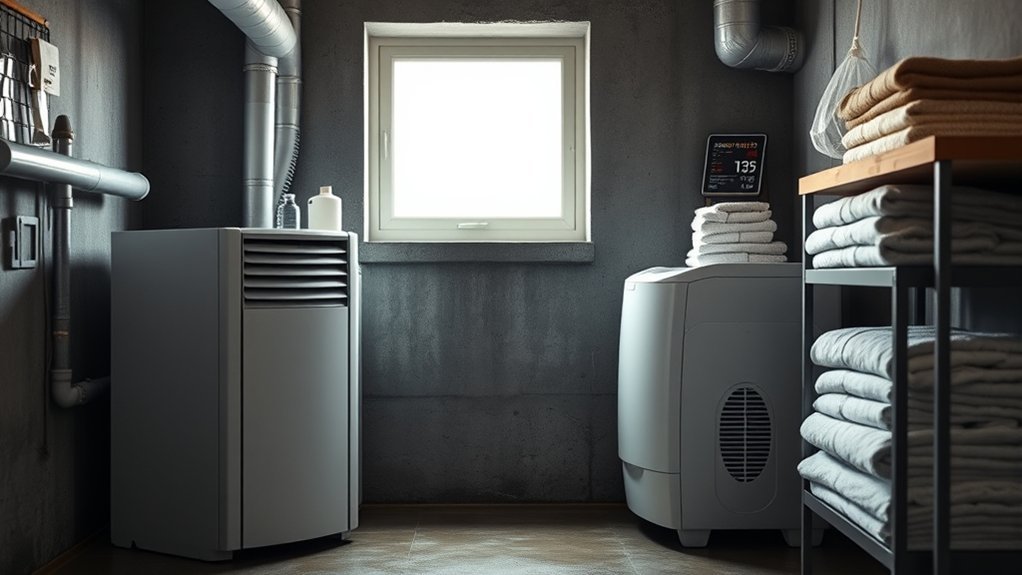
Manufacturer square-foot ratings are useful for broad comparison, but they are not precise sizing guarantees. A warm open basement with moderate humidity is easier to manage than a cold divided basement with seepage, wet walls, or standing water. Ceiling height, closed doors, airflow, and starting humidity also affect performance.
Choose based on the severity of the moisture problem rather than square footage alone. A 50-pint model is generally aimed at large rooms and damp residential basements, but active leaks, foundation seepage, or flooding should be repaired instead of relying on a dehumidifier to manage the water source.
Pump Drainage Reach
Check both the maximum vertical lift and the approved hose length in the exact model’s manual. A supplied 16-foot hose does not automatically mean the pump can lift water 16 feet vertically. Hose length and vertical lift are different limits.
Use the supplied pump hose unless the manual permits a replacement. Keep it free of kinks, secure the discharge end, and avoid routing it where it can freeze. Do not confuse the pump outlet with the gravity-drain connection, since the two may require different hoses or fittings.
Energy Efficiency
ENERGY STAR certified dehumidifiers are designed to remove moisture with less energy than comparable non-certified models. Certification applies to an exact model number, not automatically to every product sold under the same brand or series.
Automatic humidity control can also reduce unnecessary runtime. Use Continuous mode for severe dampness or a specific drying task, then switch to a reasonable humidity target when conditions stabilize.
Cold-Room Operation
Basement temperature matters because compressor dehumidifiers generally remove less moisture as the air becomes colder. Look for automatic defrost if the space regularly becomes cool. Defrost helps manage frost on the coils, but it does not make every portable unit suitable for near-freezing conditions.
Check the operating-temperature range in the exact model’s manual. A cold crawlspace, garage, or unheated basement may require equipment designed specifically for lower-temperature operation.
Noise Levels
A 50-pint unit produces sound from its fan and compressor, and a pump-equipped model also makes brief pumping noises as water collects. High fan speed usually removes moisture faster but is more noticeable in a bedroom, office, or finished living area.
Use published decibel figures when the manufacturer provides them for the exact model. When no comparable measurement is listed, assume the machine may be noticeable overnight and place it farther from beds, televisions, and work areas when possible.
Smart Controls
Wi-Fi control is useful when the unit sits in a basement, rental property, or another area you do not visit frequently. Depending on the model, an app may let you check humidity, change the set point, select a mode, create a schedule, or receive an operating alert.
Smart control does not replace a reliable drain installation. A disconnected hose, blocked pump line, incorrectly seated bucket, or power outage can still stop operation. Inspect the machine and drainage route periodically even when the app reports normal operation.
Bucket, Pump, and Filter Maintenance
A built-in pump reduces bucket emptying, but the tank, filter, grille, pump filter, and drain system still need maintenance. Check the pump hose for algae, residue, pinching, or loose connections. Clean the filter according to the manual and let a washable filter dry completely before reinstalling it.
If you plan to use bucket mode, consider how heavy the container will become when full. A larger bucket reduces emptying frequency but may be difficult to lift safely.
- Measure the total hose route and the vertical lift separately.
- Confirm the supplied pump hose can reach the discharge point.
- Check the exact model’s standardized pint rating and model number.
- Verify the minimum operating temperature.
- Make sure the filter and bucket are easy for you to access.
- Check whether app control requires 2.4 GHz Wi-Fi or account registration.
- Use a properly grounded wall outlet and follow the manual’s electrical instructions.
Frequently Asked Questions
How Often Should I Clean the Dehumidifier’s Filter?
Inspect the filter about every two to four weeks during regular use and more often in dusty, pet-heavy, or frequently occupied spaces. Follow the exact model’s manual, remove loose dust, and let a washable filter dry completely before reinstalling it.
Can I Pump the Water Out Through a Basement Window?
Yes, when the model’s approved pump lift, hose length, temperature limits, and local drainage rules allow it. Secure the hose, protect the opening from weather and pests, prevent backflow, and make sure the outdoor end cannot freeze or become blocked. Route discharged water away from the foundation.
What Hose Length Works Best for Pump Drainage?
Use the manufacturer-supplied pump hose whenever possible. The correct length depends on the pump’s approved maximum run and vertical lift, so there is no universal 10-foot, 15-foot, or 16-foot rule. Keep the line kink-free and avoid unnecessary loops.
Do These Dehumidifiers Require a Dedicated Electrical Outlet?
Follow the exact manual. Many portable dehumidifiers use a properly grounded household wall outlet, but the circuit must not be overloaded. Avoid extension cords and plug adapters unless the manufacturer explicitly permits them, and do not share the circuit with several high-draw appliances if it causes tripping or voltage problems.
How Noisy Are Pump-Equipped Dehumidifiers Overnight?
You may hear steady fan and compressor noise along with short pump cycles, clicks, or water movement. Low fan speed is usually less noticeable, but light sleepers may still prefer to place the unit outside the bedroom or farther from the sleeping area.
Is a Built-In Pump Better Than Gravity Drainage?
A pump is better when the approved drain, sink, or window outlet is above the dehumidifier. Gravity drainage is simpler and has fewer moving parts when a suitable lower drain is available. Use gravity drainage when practical and reserve the pump for installations that require water to travel upward.
What Humidity Setting Should I Use?
A setting around 45% to 50% relative humidity is a practical starting point for many basements and living areas. ENERGY STAR guidance generally places a building’s optimum relative humidity between 30% and 50%. Adjust for comfort, condensation, climate, and how often the unit cycles, and use an independent hygrometer if you want to check the built-in reading.
Does a 16-Foot Pump Hose Mean 16 Feet of Vertical Lift?
No. Hose length is the total length of the supplied line, while vertical lift is how high the pump can raise water. A route may use much of the hose horizontally while rising only a few feet. Check the exact manual for the maximum vertical lift.
Conclusion
Final Recommendation: Choose the drainage setup first, then choose the controls.
The Midea Cube 50-Pint Dehumidifier With Pump offers the strongest overall combination of smart controls, a built-in pump, a 16-foot drain tube, and a large modular bucket. The hOmeLabs Wi-Fi model is a useful alternative for a large open area, but its current listing and available manual show different coverage estimates. The Amazon Basics model is the simpler option for buyers who do not want an app.
Choose the BLACK+DECKER BD50PMWSA when you want a conventional cabinet with both pump and gravity hoses included. Consider the DuraComfort DH50PWM when Wi-Fi control and a 16.4-foot pump hose are priorities. Whichever model you select, confirm the exact model label, pump lift, hose routing, operating-temperature range, capacity test method, and drainage instructions before ordering.