Choosing the right rug pad materials affects how plush your rug feels underfoot, how securely it stays in place, and whether your floors stay free of scratches and chemical stains. The wrong backing can yellow luxury vinyl plank, strip hardwood finishes, or turn a hallway runner into a sliding hazard. Matching the pad’s material, density, and thickness to your specific floor and rug style protects both investments for years.
Quick Answer
For most homes, the best rug pad material is a heat-pressed felt-and-natural-rubber combination. Dense felt cushions footsteps and absorbs noise, while natural rubber grips hard floors without sticky adhesives. Choose a 1/8-inch natural rubber pad for hallway runners and door clearances, a 1/4-inch hybrid pad for living areas, or a 100% felt pad for luxury vinyl plank.
At a Glance
| Time Required | 10–20 minutes to measure, trim, and position a pad |
| Difficulty | Easy |
| Tools Needed | Tape measure, marker, straightedge, and heavy-duty household shears |
| Typical Cost (8×10 ft) | $15–$35 for PVC mesh; $40–$80 for recycled felt; $70–$150 for felt-and-natural-rubber; $120–$220 for wool or jute |
Why Do Rug Pad Materials Matter for Comfort and Safety?
Rug pad materials control three critical jobs at once: slip resistance, impact absorption, and subfloor protection. Without a proper pad, foot traffic grinds trapped grit and rough rug backings directly against your floor finish like fine sandpaper. A well-matched pad absorbs that friction, lets air circulate, and keeps rug fibers from crushing prematurely under heavy furniture.
Unsecured rugs are also a leading cause of household slips and trips. According to National Institute on Aging fall prevention guidelines, loose throw rugs and curled carpet edges are major indoor fall hazards that should be removed or anchored with reliable non-skid backing. Choosing the right material keeps corners flat and prevents sudden shifts when you step onto a runner or area rug.
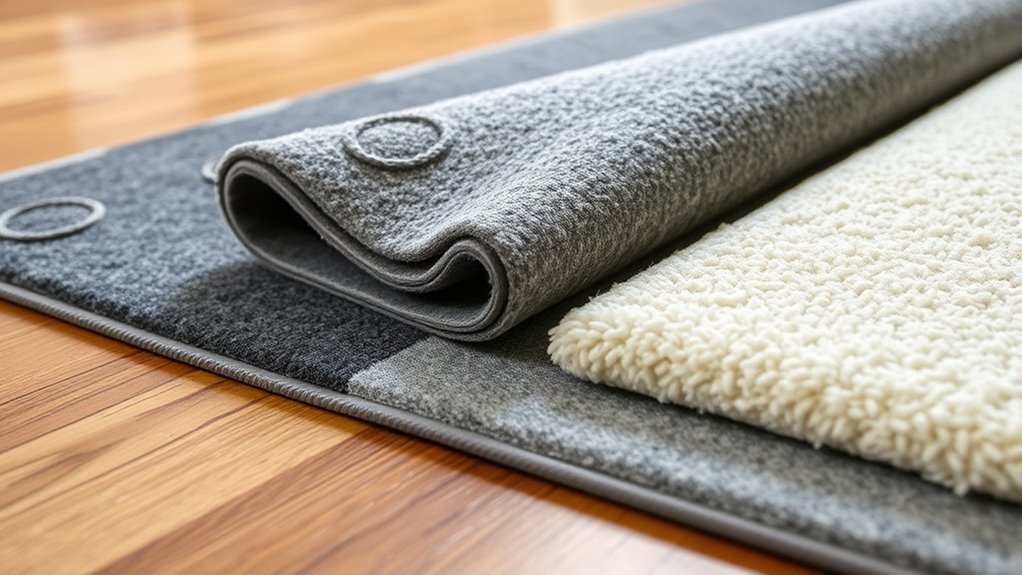
Each material solves a distinct problem. Solid or perforated natural rubber maximizes traction on slick surfaces. Needle-punched felt provides dense cushioning, thermal insulation, and sound dampening. A felt-and-rubber hybrid pairs both layers to deliver stability and comfort across living rooms, bedrooms, and dining spaces.
Warning: Always check your flooring manufacturer’s warranty and care guide before laying any rug pad on luxury vinyl plank (LVP), sheet vinyl, laminate, radiant heated floors, or newly refinished hardwood. Synthetic latex, PVC plasticizers, and chemical adhesives can permanently yellow, dull, or bond to sensitive floor finishes.
What Are the Best Materials for Rug Pads?
The five main rug pad materials—natural rubber, felt, felt-and-rubber hybrids, memory foam, and PVC mesh—differ sharply in grip, cushioning, lifespan, and chemical safety. Natural rubber and dense felt consistently outperform budget plastics in both floor protection and durability. Compare the core options below to match your room’s traffic and flooring.
| Material | Best For | Typical Lifespan & Specs | Watch Out For |
| Natural rubber | Maximum grip under small rugs, flatweaves, hallway runners, and door clearances | 7–10+ years; 1/16 to 1/8 inch thick; high friction without adhesives | Avoid on LVP, vinyl, and uncured or oil-finished wood unless explicitly rated safe |
| 100% Felt (recycled or wool) | Plush cushioning, noise reduction, LVP floors, and large rugs anchored by furniture | 8–10+ years; 24 to 45 oz/sq yd density; 1/4 to 1/2 inch thick | Pure felt lacks floor grip on its own and will slide under unanchored small rugs |
| Felt + natural rubber | Living rooms, bedrooms, dining rooms, and area rugs over wall-to-wall carpet | 8–10+ years; 28 to 40 oz/sq yd felt heat-pressed to a rubber base | Pick 1/4 inch or thinner near doorways; do not place rubber side on vinyl |
| Memory foam (polyurethane) | Soft underfoot comfort in low-traffic bedrooms, nurseries, or standing zones | 3–6 years; 6 to 10 lb/ft³ density; 1/4 to 1/2 inch thick | Compresses under heavy furniture; feels spongy and unstable under thin flatweaves |
| PVC or plastic mesh | Short-term, budget slip control on tile or stone where approved | 1–3 years; 1/16 to 1/8 inch open-grid vinyl scrim | Leaches plasticizers that yellow vinyl, imprint hardwood, and crumble over time |
Recommended Products

Upgraded Cushioning and Grip: Unlike other pure felt pads, our pad has a durable natural rubber backing to increase gripping and durability. 1/4" thick felt forming a dense, cushioned surface, aims to make your rugs cozier and provide extra comfort underfoot, even the thinnest rugs can feel soft and comfortable. Dense fibers surface securely holds rugs in place without bunching, while offering noise reduction and insulation
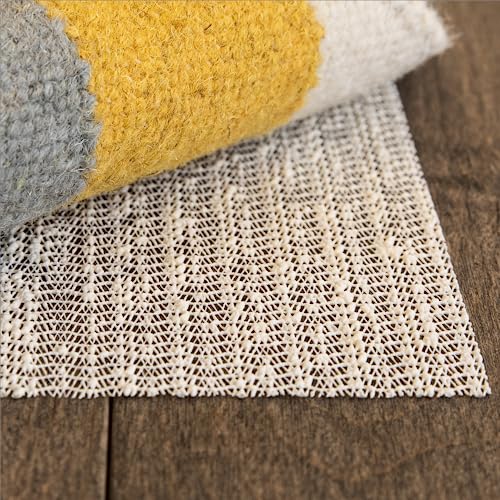
Grip-It RUG STOP NATURAL 3' x 5' is a high-quality low-profile non-slip rug pad to help keep area rugs from shifting, bunching, and sliding on hard-surface floors. Perfect for area rugs that do not require extra cushion.

Upgraded Cushioning and Grip: Unlike other pure felt pads, our pad has a durable natural rubber backing to increase gripping and durability. 1/8" thick felt forming a dense, cushioned surface, aims to make your rugs cozier and provide extra comfort underfoot, even the thinnest rugs can feel soft and comfortable. Dense fibers surface securely holds rugs in place without bunching, while offering noise reduction and insulation
Natural Rubber Advantages
Natural rubber rug pads are made from harvested rubber tree sap rather than petroleum-based plastics, giving them superior grip on smooth hard surfaces. They stop hallway runners, small accent rugs, and lightweight flatweaves from bunching or sliding when stepped on.
Unlike cheap vinyl scrim that relies on tacky surface coatings, vulcanized natural rubber grips through weight and micro-friction. A quality perforated or waffle-weave rubber pad lies flat, allows air transfer, and lifts cleanly without flaking or leaving sticky residue on compatible polyurethane-finished hardwood or tile.
Pro Tip: You can use a felt-and-rubber hybrid pad on both hard floors and wall-to-wall carpet simply by flipping it over. Place the rubber side down on hard floors to grip the surface, or flip the rough felt side down on carpet so the rubber top anchors the underside of your area rug.
Eco-Friendly Felt Options
Felt rug pads deliver dense, supportive cushioning that protects both rug fibers and subfloors from heavy furniture indentations and foot traffic. Felt is measured by weight in ounces per square yard: a 24-ounce pad suits lighter everyday use, a 28- to 32-ounce pad provides balanced 1/4-inch support, and a 40- to 45-ounce pad offers maximum plushness and sound insulation under large 8×10 or 9×12 rugs anchored by sofas or beds.
Many quality felt pads are needle-punched from 100% recycled synthetic fibers, natural wool, or plant-based jute using heat and pressure rather than chemical binders. If a pad advertises organic wool, cotton, or jute content, verify whether it carries a certification like GOTS (Global Organic Textile Standard), which mandates independent third-party verification across the supply chain and strict chemical restrictions.
Because dense felt traps fine dust and dander that filter through woven rug backings, it requires periodic vacuuming. Unblended wool or recycled synthetic felt has no rubber odor, making it popular for scent-sensitive bedrooms, though allergy relief still depends on regular cleaning.
Natural Rubber or Synthetic: Which Should You Choose?
Choose natural rubber or a felt-and-natural-rubber hybrid for long-term grip on cured hardwood, tile, and stone, and reserve 100% needle-punched felt (without rubber) for luxury vinyl plank and oil-finished wood. Avoid low-cost synthetic PVC mesh and latex-coated scrim on finished wood or vinyl floors.
Budget PVC and synthetic latex pads contain chemical softening agents called plasticizers. Under everyday foot pressure and room warmth, these plasticizers migrate out of the pad and react chemically with polyurethane wood topcoats and vinyl wear layers. The result is permanent yellow or brown grid staining and a tacky residue that cannot be scrubbed off.
If you prefer a synthetic option for cushioning, choose high-density needle-punched polyester felt or a memory foam pad backed with a non-staining, vinyl-safe barrier rather than open-grid PVC.
The safest rug pad is not simply the thickest or softest one. It is the pad that matches your rug weight, room traffic, and floor manufacturer’s chemical compatibility rules.
Recommended Products

NON-SLIP: Keeps your rugs firmly in place using high-quality, natural rubber.

Strong gripping power - natural rubber backing keeps rugs anchored firmly in place; prevents slipping, sliding, and wrinkling in high-traffic areas.

Upgraded Grip and Comfort: Unlike other pure felt pads, Our Deep Dream rug pad features a rubber backing for superior gripping power and increased durability. The 1/8" thick felt provides a plush cushioned surface, making your rugs feel cozier and more comfortable underfoot while preventing bunching and reducing noise.
How Does Thickness Affect Comfort and Floor Protection?
Rug pad thickness—ranging from 1/16 inch to 1/2 inch—determines whether your rug lies flat and stable or catches on swinging doors and shoes. Most interior doors have only 1/2 to 3/4 inch of clearance above the floor, so pairing a thick rug with a thick pad easily jams entryways.
- 1/16 to 1/8 inch (low profile): Best for hallway runners, entryways, kitchens, door swings, and thin flatweave or kilim rugs where edge stability and zero trip hazard come first.
- 1/4 inch (standard all-purpose, ~28–32 oz/sq yd felt): The ideal thickness for most living room and dining room rugs (5×8 ft and larger), offering noticeable foot cushion and acoustic dampening without lifting rug borders.
- 3/8 to 1/2 inch (plush comfort, ~40–45 oz/sq yd felt): Best for bedrooms, nurseries, and large, heavy rugs in low-traffic zones where doors do not cross the rug and maximum sound and thermal insulation are desired.
Match pad thickness to your rug’s construction. Thin flatweaves and braided rugs drape over thick pads, causing edges to wave and buckle when chairs move. High-pile wool or knotted rugs have stiff backings that handle a firmer 1/4-inch to 3/8-inch felt-and-rubber pad well, provided the pad is trimmed slightly smaller so the rug edges bevel smoothly to the floor.
Why Choose Eco-Friendly Rug Pads?
Eco-friendly rug pads use disclosed natural or recycled fibers, thermal bonding instead of solvent glues, and independent emission testing to minimize household chemical exposure. Choosing a certified low-VOC pad prevents the sharp petroleum or latex odors common with cheap synthetic underlays while lasting two to three times longer.
Healthier Indoor Air Quality
Unsealed foams, synthetic latex backings, and solvent-based adhesives can off-gas chemicals into bedrooms and living spaces for weeks after unrolling. According to the U.S. Environmental Protection Agency, concentrations of volatile organic compounds (VOCs) are consistently 2 to 5 times higher indoors—and up to 10 times higher—than outdoors, potentially causing eye, nose, and throat irritation or headaches.
To verify low chemical emissions, check for independent laboratory certifications rather than vague “odor-free” marketing claims. The Carpet and Rug Institute’s Green Label Plus program tests carpet cushions and adhesives in a 14-day environmental chamber protocol (under California Section 01350 standards) to confirm very low VOC emissions. For textile-based felt pads, OEKO-TEX Standard 100 certifies that every fiber has been tested for harmful substances.
Sustainable Material Choices
Sustainable rug pad manufacturing relies on renewable plant or animal fibers—such as FSC-certified natural rubber, wool, and jute—or post-industrial recycled textile felt that diverts fabric scraps from landfills. When comparing organic textile claims, GOTS label grades distinguish between two verified tiers: products labeled “Organic” must contain at least 95% certified organic fibers, while “Made with Organic Materials” requires at least 70% certified organic fibers.
Reduced Environmental Impact
Durability is one of the most practical sustainability metrics in home furnishings. A heat-pressed felt-and-natural-rubber pad that lasts 10 years and prevents abrasive wear on your rug’s foundation knots keeps both the pad and the rug out of the waste stream far longer than a PVC mesh pad that crumbles after 18 months.
Note: Labels like “natural,” “plant-based,” and “eco-friendly” do not mean a pad is safe for every floor finish. Natural rubber can still discolor luxury vinyl plank through chemical migration, so floor compatibility always comes first.
How to Choose the Right Rug Pad for Your Flooring
Every floor surface reacts differently to heat, moisture, and chemical compounds in rug backings. Before buying, check your flooring manufacturer’s care documentation—for example, Shaw Floors vinyl care guidelines explicitly warn against rubber- or latex-backed mats because they can permanently discolor vinyl wear layers. Use the table below to match your subfloor with a safe pad material.
| Floor Type | Best Rug Pad Material | Materials to Avoid |
| Hardwood (polyurethane finish) | 100% felt, natural rubber, or felt-and-natural-rubber (wait at least 30 days after refinishing for finish to cure) | PVC mesh, synthetic latex, adhesive carpet tape, and solid moisture-trapping plastic sheets |
| Hardwood (penetrating oil or wax finish) | Breathable 100% wool felt, recycled felt, or woven jute with no rubber barrier | Any solid rubber, synthetic latex, or non-breathable foam that blocks airflow to the oil finish |
| Luxury vinyl plank (LVP) or sheet vinyl | 100% felt (with no rubber backing) or a pad explicitly certified “LVP-safe / non-staining” by the manufacturer | Natural or synthetic rubber, latex-backed rugs, standard PVC mesh, and acrylic adhesives |
| Laminate | Felt-and-natural-rubber or 100% felt (1/8 to 1/4 inch) | Adhesive grippers that pull at laminate wear layers or pads that trap spilled moisture |
| Tile, porcelain, or natural stone | Waffle natural rubber for high-grip runners; 1/4-inch to 3/8-inch felt-and-rubber to bridge grout lines and cold floors | Paper-thin pads under thin rugs if wide grout joints telegraph through the rug |
| Wall-to-wall carpet | Felt-and-rubber pad placed felt-side down and rubber-side up, or a dedicated rug-on-carpet nonslip pad | Plush memory foam or soft rubber-down pads that cause the top rug to buckle and creep |
| Radiant heated floors | Thin (1/8 to 1/4 inch) perforated natural rubber or low-profile needle-punched felt rated for radiant heat (up to 80–85°F) | Thick 1/2-inch felt or closed-cell foam pads that push total rug-plus-pad thermal resistance above R-2.0 |
Recommended Products

NON-SLIP GRIP FOR SAFETY: Durable latex rubber backing prevents slipping, sliding, bunching, and wrinkles on hardwood, tile, carpet, or any floor—superior hold compared to basic foam pads for everyday use.

NOT NON-SLIP - This pad is meant for use with rugs anchored by furniture or heavy rugs that stay in place on their own. For non-slip applications, try one of our felt and rubber options.
How to Size and Trim a Rug Pad
A rug pad must be cut slightly smaller than your rug’s actual footprint so the rug’s outer border drops smoothly to the floor. This 1- to 2-inch inset hides the pad from view and keeps shoes from catching on a raised lip.
- Measure the actual rug: Measure the exact length and width of your rug with a tape measure rather than relying on the nominal label size (an “8×10” rug often measures 7’9″ × 9’10”).
- Subtract 2 inches from length and width: Aim for a pad that sits 1 inch inside all four edges for standard rugs, or 1.5 to 2 inches inside each edge for thick wool or high-pile rugs.
- Mark your cut lines: Lay the pad flat, measure in from two adjacent edges, and draw a straight line with a marker and straightedge.
- Trim with heavy-duty shears: Cut along the line using sharp household or utility scissors, keeping your blade perpendicular so the edge doesn’t bevel outward.
- Position the correct side down: On hard floors, place the rubber side down and the rough felt side up. On wall-to-wall carpet, place the rough felt side down and the tacky rubber side up against the rug backing.
- Center the rug and test: Lay the rug centered over the pad with an equal 1-inch border on all sides, smooth out any ripples from the center outward, and confirm that nearby doors swing clear.
If your rug corners still curl or the rug creeps after trimming, check two common culprits: either the pad is too thick and soft for a lightweight flatweave, or the felt/rubber orientation is upside down for your floor surface.
Tips for Maintaining and Extending the Life of Your Rug Pad
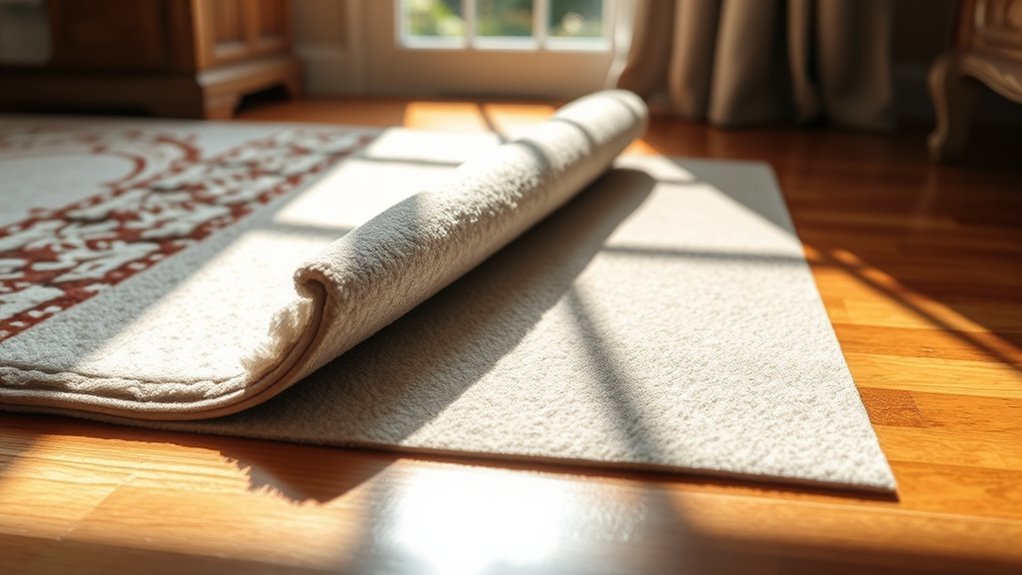
Routine maintenance keeps fine grit from accumulating beneath the pad and preserves the natural tack of rubber backings for up to 10 years. Lift and inspect the corner of your rug every three to six months, especially in sunny rooms or high-traffic hallways.
- Vacuum both sides twice a year: Vacuum the top of the rug weekly, and roll the rug back every 6 months to vacuum fine grit off the pad and mop the floor underneath.
- Rotate the rug and pad every 6 months: Rotating 180 degrees distributes foot traffic, chair castor wear, and window UV exposure evenly across the room.
- Inspect for chemical transfer on vinyl or wood: Peel back a corner periodically to check for tackiness, trapped dampness from pet spills, or early yellowing.
- Spot clean with damp water only: Blot liquid spills immediately with a clean towel and mild soap if approved by the manufacturer; never machine-wash or tumble-dry felt or rubber pads.
- Air-dry 100% flat before reinstalling: Lay a damp pad over a dry surface with a fan running until completely dry on both sides—trapping even slight moisture against hardwood or laminate can cup boards or breed mildew.
- Replace worn pads promptly: Discard any pad that flakes into powder, smells musty, stays compressed under 50% of its original thickness, or loses traction.
Key Takeaways
- Best everyday hybrid: A 1/4-inch heat-pressed felt-and-natural-rubber pad (28–32 oz/sq yd felt) balances foot comfort, sound dampening, and non-slip traction in most rooms.
- Luxury vinyl plank (LVP) rule: Avoid natural rubber, synthetic latex, and standard PVC mesh on LVP due to plasticizer staining; use 100% needle-punched felt or an explicitly certified LVP-safe pad.
- Right side up: Put the rubber side down on hard floors, and flip the rough felt side down when layering an area rug over wall-to-wall carpet.
- Proper sizing: Trim your pad 1 inch shorter than the rug on all four sides (2 inches smaller in total length and width) so rug borders bevel smoothly to the floor.
- Radiant heat limit: On heated floors, choose a perforated 1/8- to 1/4-inch pad and keep combined rug-and-pad thermal resistance below R-2.0.
Frequently Asked Questions
What is the best material for a rug pad?
The best all-around rug pad material for most homes is a heat-pressed felt-and-natural-rubber combination. The dense felt top (typically 28 to 40 ounces per square yard) cushions footsteps and grips the rug backing, while the natural rubber base anchors the pad on hard floors without sticky adhesives. Use solid natural rubber alone for thin hallway runners, or 100% felt (without rubber) on luxury vinyl plank.
What is the best carpet padding for comfort?
For wall-to-wall installed carpet, a 7/16-inch rebond or memory foam cushion with an 8-pound density rating offers the best blend of plush comfort and support. For area rugs placed over hard floors, a 1/4-inch to 3/8-inch needle-punched felt or felt-and-rubber pad is far better than wall-to-wall foam cushion because it resists edge buckling and protects finished floors.
What is the most comfortable material for a rug pad?
High-density felt (40 to 45 ounces per square yard at 3/8 to 1/2 inch thick) is the most comfortable and supportive rug pad material for everyday living spaces. Viscoelastic memory foam feels softer initially, but it compresses under furniture and can feel spongy or unstable under thin area rugs.
Is a 10-pound or 8-pound carpet pad better?
For wall-to-wall carpet, a 10-pound per cubic foot pad is firmer and resists crushing better in high-traffic hallways and on stairs, whereas an 8-pound pad feels slightly softer underfoot and costs less for bedrooms. For area rugs, pound-per-cubic-foot foam ratings matter less than felt weight (28 to 40 ounces per square yard) and floor-safe backing materials.
Can rug pads damage hardwood or vinyl floors?
Yes, cheap PVC mesh, synthetic latex, and unapproved rubber pads can permanently yellow luxury vinyl plank or strip polyurethane hardwood finishes through plasticizer migration. Always choose 100% felt or an explicitly labeled vinyl-safe pad for LVP, and use only non-staining natural rubber or felt on fully cured hardwood.
How thick should a rug pad be?
A 1/4-inch rug pad is the best all-purpose thickness for most living room and bedroom area rugs. Choose a thin 1/16- to 1/8-inch pad for hallway runners, entryways, and doors with low clearance, and reserve 3/8- to 1/2-inch pads for large rugs in low-traffic rooms where extra cushioning and sound absorption are priorities.
Which side of a felt and rubber rug pad goes down?
On hard floors like hardwood, tile, stone, and laminate, place the smooth rubber side face down against the floor for grip and the rough felt side face up to hold the rug backing. When placing an area rug over wall-to-wall carpet, flip the pad so the rough felt side faces down into the carpet fibers and the rubber side faces up against the rug.
Conclusion
Selecting the right rug pad materials comes down to pairing your floor’s chemistry with your rug’s size and traffic level. A 1/4-inch felt-and-natural-rubber pad delivers the best balance of grip and cushioning on cured hardwood and tile, a thin 1/8-inch natural rubber pad secures runners near doorways, and a 100% felt pad protects luxury vinyl plank from chemical staining. Measure your rug today, trim your pad 1 inch smaller on all four sides, and check your flooring manufacturer’s care guide before laying it down.
Sources
- National Institute on Aging (NIH): Falls and Falls Prevention: Home safety guidance on securing throw rugs and area rugs with non-skid backing to prevent indoor falls.
- GOTS: Key Features: Third-party supply-chain certification and minimum organic fiber thresholds for textile products.
- U.S. Environmental Protection Agency: Volatile Organic Compounds’ Impact on Indoor Air Quality: Indoor vs. outdoor VOC concentration data and health impacts from household furnishings.
- The Carpet and Rug Institute: Green Label Plus: Independent 14-day chamber VOC emissions testing standards for carpet, cushion, and adhesives.
- OEKO-TEX: Standard 100: Independent laboratory testing standards for harmful substances in textile fibers and finished home goods.
- GOTS: Label Grades: Distinction between the 95% “Organic” and 70% “Made with Organic Materials” textile certification tiers.
- Shaw Floors: Vinyl Floor Care & Maintenance: Manufacturer maintenance guidance advising against latex- and rubber-backed mats on luxury vinyl flooring to prevent discoloration.