Affiliate disclosure: This article contains Amazon affiliate links. If you buy through one of these links, we may earn a commission at no extra cost to you.
UK buyer notice: The product links point to Amazon.com. These compact units are not confirmed UK-market bathroom appliances. Before ordering, verify the exact plug, input voltage, power adaptor, manufacturer instructions, warranty, returns and suitability for your intended location.
If you are comparing compact dehumidifiers for a small bathroom in the UK, do not start with tank size or advertised room coverage. Start by deciding where the appliance can be powered and operated safely. A portable mains-powered unit should normally be kept outside the bathroom and used with the door open after showering unless the exact manufacturer instructions and electrical installation clearly permit another arrangement.
The four models below are identifiable compact dehumidifiers that may help with light or moderate post-shower condensation. They are imported Amazon.com products rather than confirmed UK-market recommendations. Compare their listed extraction rate, operating temperature, drainage, noise and controls before considering a purchase.
Quick verdict: The Levoair 2L Dehumidifier has the strongest listed extraction and is the only retained model with an included continuous-drain hose. The BeOkay 1,657ml is the better choice for timer controls, while the SANVINDER has the lowest claimed noise level. Choose the AlohaAir 1L when compact dimensions matter more than rapid moisture removal.
Important safety point: These rankings compare listed product features only. They do not confirm that any unit is approved for use inside a UK bathroom. The safer default is to place the appliance in a dry adjoining room or hallway and allow damp air to reach it after the shower has finished.
How the products were compared
- Identifiable brand and model information.
- Listed water extraction under stated test conditions.
- Tank capacity and continuous-drain support.
- Controls, noise claims and portability.
- Cold-room limitations and suitability for light bathroom condensation.
- UK import, electrical compatibility and warranty concerns.
Quick Comparison of Compact Dehumidifiers
| Product | Best For | Tank | Listed Extraction | Standout Feature | Amazon |
|---|---|---|---|---|---|
| Levoair 2L | Best Listed Performance | 2,000ml | Up to 1,000ml/day* | Included 5ft drain hose | Check Product Details |
| BeOkay 1,657ml | Best Timer Controls | 1,657ml | Up to 300ml/day* | Three modes and five timers | Check Product Details |
| SANVINDER DH-CS17 | Best for Low Noise | About 1,000ml | Up to 16 fl oz/day* | Claimed below 25dB | Check Product Details |
| AlohaAir 1L | Best Compact Pick | 1,000ml | Up to 280ml/day* | Compact transparent tank | Check Product Details |
*Maximum extraction figures are based on warm, highly humid test conditions. Collection may be substantially lower in a cool UK home. These figures do not establish approval for use inside a bathroom.
Levoair 68 oz Dehumidifier with Drain Hose
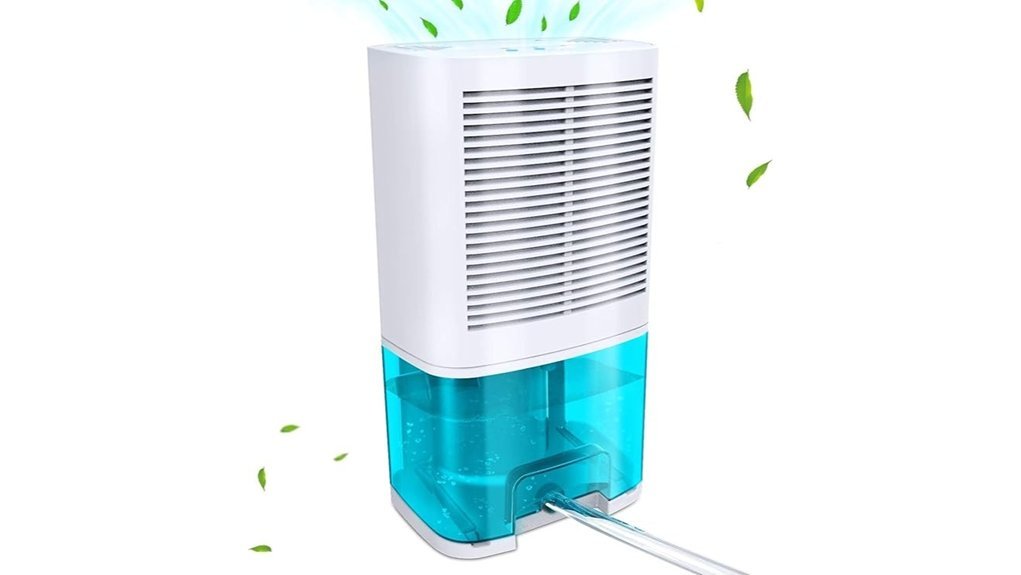
Best Listed Performance: The Levoair YXTX-607D has the strongest specification set among the retained compact models. It combines a 2,000ml tank, an included 5ft drain hose and listed extraction of up to 1,000ml per day at approximately 30°C and 80% relative humidity.
Continuous drainage can reduce tank emptying when the unit is placed on a stable surface above a suitable drain and the hose runs downhill without kinks. That does not make the product suitable for routing a lead or hose through a wet bathroom. A dry utility area, landing or adjoining room is the safer default unless the manufacturer explicitly approves your proposed arrangement.
The available instructions list operation above approximately 15°C. Expect the extraction rate to fall as room temperature and humidity decrease. Although a wide input-voltage range has been listed for this model, UK buyers must still confirm the exact supplied plug, adaptor output, warranty and safety instructions.
Why You’ll Like It: It provides the best combination of listed extraction, tank capacity and drainage convenience in this four-product comparison.
Who Should Buy This: Buyers dealing with repeated post-shower condensation who can operate the unit in a dry adjoining area and safely route the drain hose.
Who Should Avoid This: Anyone seeking a confirmed UK bathroom appliance, anyone without a safe drainage route, or anyone relying on strong extraction in a consistently cold room.
Pros:
- Largest verified extraction claim among the retained models.
- Large 2,000ml collection tank.
- Included 5ft hose supports gravity drainage.
- Auto shut-off helps prevent tank overflow.
Cons:
- Maximum extraction requires warm and highly humid conditions.
- Performance is likely to drop in a cold bathroom or hallway.
- UK plug, supplied adaptor, warranty and approved placement need confirmation.
- The advertised room-coverage figure is not a reliable measure of shower-moisture performance.
BeOkay 1,657ml Dehumidifier with Timers
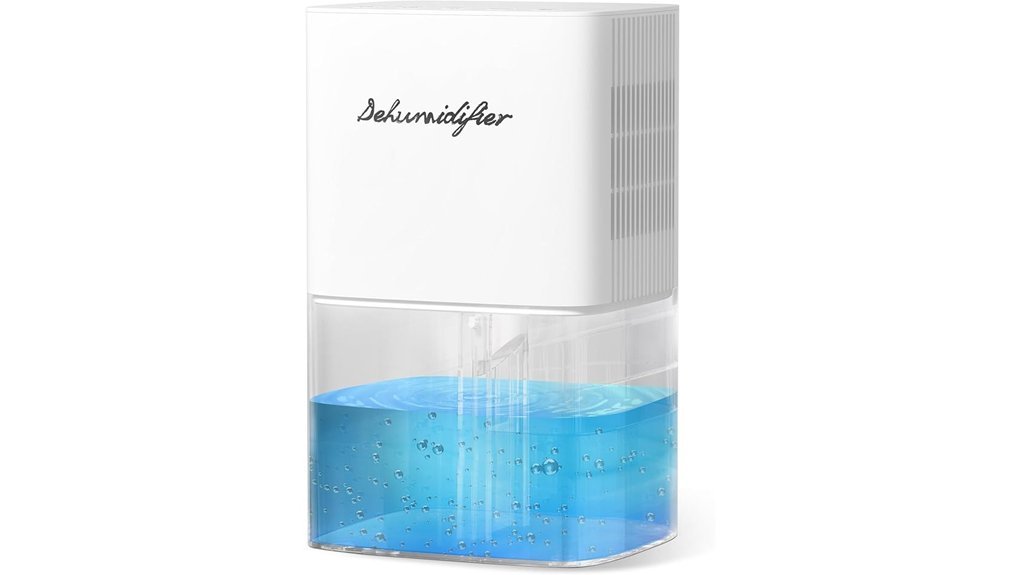
Best Timer Controls: The BeOkay model combines a 1,657ml tank with three operating modes, five timer choices, auto shut-off and a lower-noise sleep setting. Its listed extraction is up to 300ml per day, making it more appropriate for light or moderate condensation than a room with severe persistent damp.
The relatively large tank means the unit should not require emptying after every small collection cycle. The timers are useful when you want a controlled post-shower run instead of leaving the appliance operating continuously.
Why You’ll Like It: It offers more scheduling flexibility than a basic one-button mini dehumidifier while keeping a compact footprint.
Who Should Buy This: Buyers who want scheduled operation for light condensation in a dry area beside the bathroom.
Who Should Avoid This: Homes with visible mould, active leaks, a failed extractor fan or moisture levels that require rapid extraction.
Pros:
- Five timer choices and three operating modes.
- Auto shut-off reduces the risk of tank overflow.
- Tank capacity is generous relative to its extraction rate.
- Sleep setting may be useful near an en-suite or bedroom.
Cons:
- Up to 300ml per day is modest for heavy shower moisture.
- No continuous-drain connection is clearly confirmed.
- Noise and extraction claims depend on the selected mode and room conditions.
- UK plug, voltage, adaptor and warranty terms require verification.
SANVINDER 33 oz Quiet Portable Dehumidifier
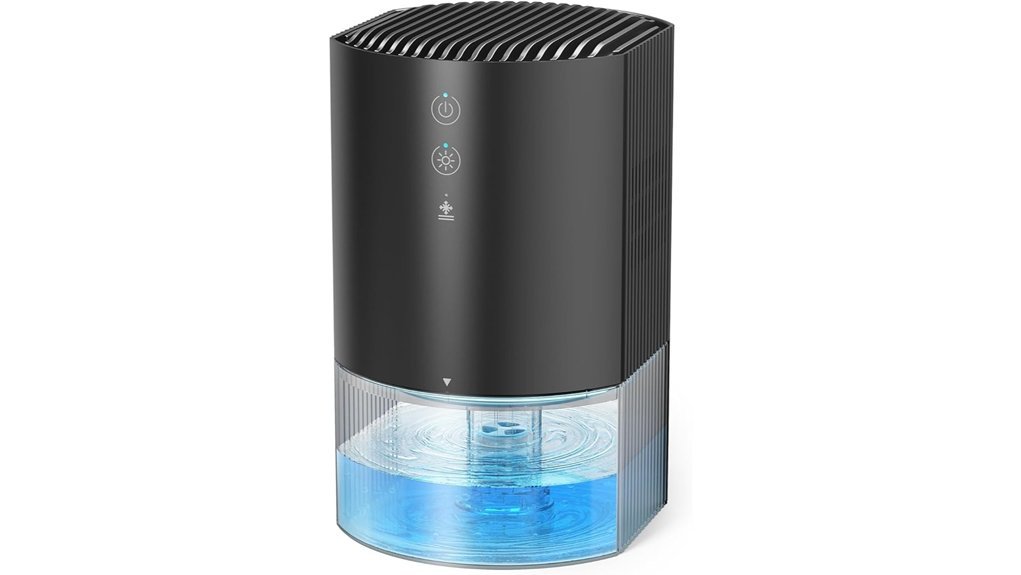
Best for Low Noise: The SANVINDER DH-CS17 has an approximately 1-litre tank and is listed to remove up to 16 fluid ounces of moisture per day at about 24°C and 80% relative humidity. Its main advantage is a claimed operating noise level below 25dB.
The twist-lock tank is intended to make removal and cleaning easier, while auto shut-off stops collection when the tank is full. The compact design may suit a bedroom, landing or other dry space close to an en-suite bathroom.
Why You’ll Like It: It combines straightforward controls, easy tank access and the lowest listed noise figure in the comparison.
Who Should Buy This: Noise-sensitive users who need supplemental control for light or moderate post-shower condensation.
Who Should Avoid This: Buyers who need continuous drainage, automatic target-humidity control or high extraction in cold conditions.
Pros:
- Claimed operating noise below 25dB.
- Twist-lock tank is designed for easier removal and cleaning.
- Auto shut-off helps prevent overflow.
- Compact footprint is easy to position in a dry adjoining area.
Cons:
- No continuous-drain connection is listed.
- Maximum extraction is measured in warm, highly humid air.
- Advertised room coverage is less useful than the extraction rate.
- UK plug, power adaptor and warranty coverage are unconfirmed.
AlohaAir 1L Small Dehumidifier with Night Light
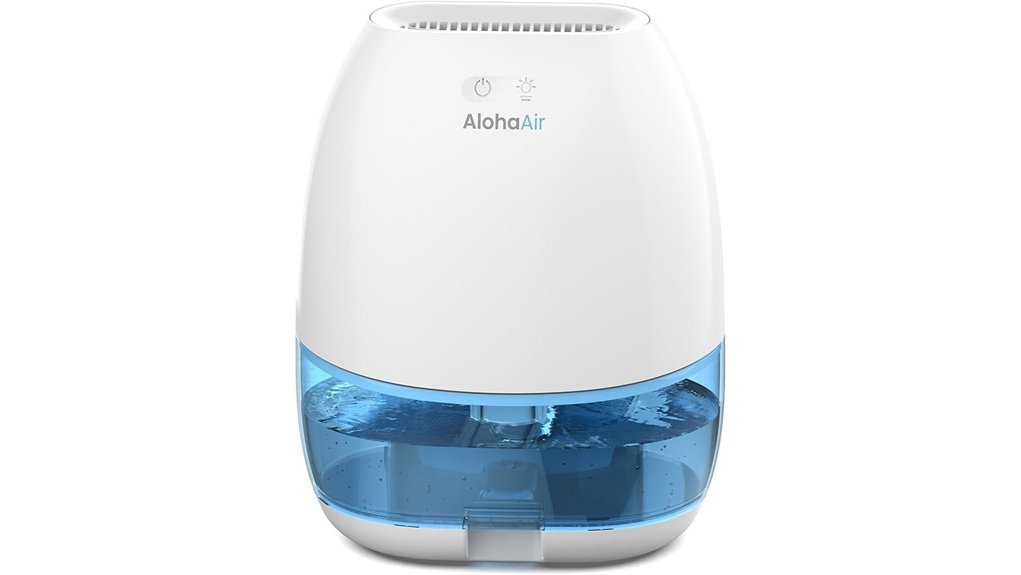
Best Compact Pick: The AlohaAir model measures approximately 7.87 × 4.72 × 10.83 inches and uses a transparent 1,000ml tank. It is listed to remove up to 280ml of moisture per day under favourable conditions.
The transparent tank makes the collection level easy to check, while auto shut-off stops the unit when the tank is full. Its seven-colour light is optional decoration. The main reason to choose this product is its compact footprint rather than rapid moisture removal.
Why You’ll Like It: It requires less space than the larger models and can be positioned easily in a dry bedroom, landing or dressing area near the bathroom.
Who Should Buy This: Buyers with limited space and a light condensation problem who do not need continuous drainage.
Who Should Avoid This: Anyone dealing with heavy daily steam, persistent damp, a cold room or a bathroom that needs fast recovery after every shower.
Pros:
- Compact dimensions and built-in carrying handle.
- Transparent 1,000ml tank is easy to monitor.
- Auto shut-off helps prevent overflow.
- Suitable for small dry spaces where a full-size unit will not fit.
Cons:
- Up to 280ml per day may not keep pace with frequent showers.
- No continuous drain hose is included.
- Performance will vary with room temperature and relative humidity.
- UK plug, power supply, warranty and approved placement are not confirmed.
How to Choose a Dehumidifier for Small-Bathroom Moisture in the UK
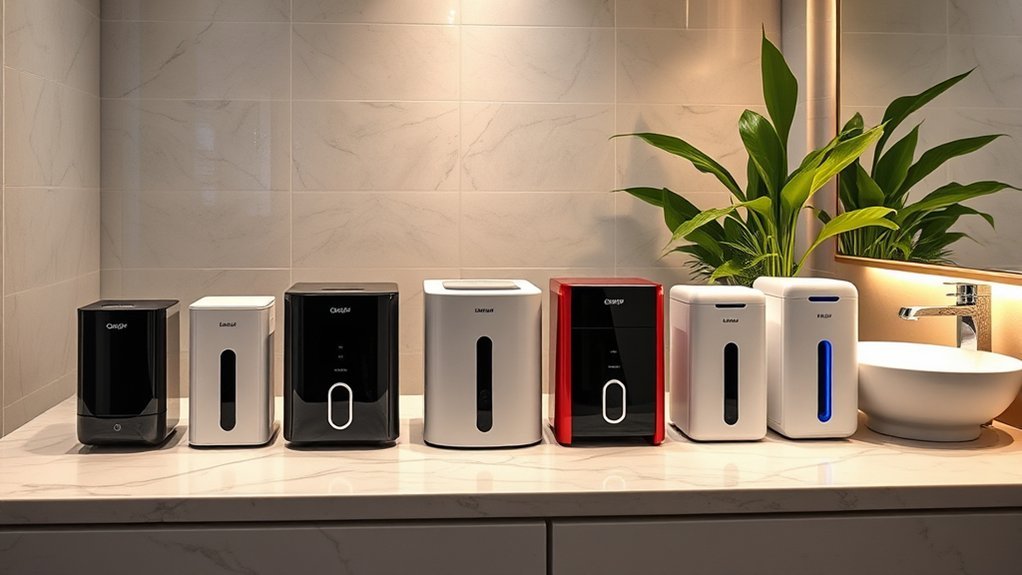
A small bathroom creates a difficult combination of concentrated steam, cool surfaces, limited space and electrical risk. Work through the checks below before comparing decorative lights or large advertised coverage figures.
UK Electrical Compatibility and Bathroom Safety
Do not assume that a product is suitable for UK use because its listing mentions bathrooms. Confirm the input voltage and frequency shown on the exact appliance or power adaptor, the supplied plug, the fuse arrangement, the manufacturer’s location restrictions and any applicable safety certification.
A travel plug adaptor changes the plug shape only. It does not convert an incompatible voltage or make an appliance suitable for a wet location. Unless the exact product instructions and electrical installation clearly allow your intended setup, keep a portable dehumidifier outside the bathroom and open the door after showering.
Moisture Removal Capacity
Compare millilitres or litres removed per day rather than relying on an advertised room area. A compact unit rated around 280 to 300ml per day may help with light residual condensation. A model listed closer to 1 litre per day may recover faster, but only when the air is sufficiently warm and humid.
No mini dehumidifier can compensate for an active leak, failed seal, blocked ventilation system or serious damp problem.
Tank Size and Drainage
A larger tank reduces emptying frequency but does not make the appliance extract moisture faster. For longer operation, continuous drainage can be convenient when the unit is above the drain and the hose follows a safe, uninterrupted downhill route.
Do not run a power lead or drain hose through a route where it can contact water, become trapped in a door or create a trip hazard.
Temperature and Peltier Performance
These compact models use thermoelectric or Peltier-style cooling rather than the larger refrigeration systems found in high-capacity dehumidifiers. Their extraction normally falls in cooler conditions. Check the minimum operating temperature and do not judge performance from a maximum figure measured in hot, humid laboratory air.
For a consistently cold space, a confirmed UK-market desiccant dehumidifier may be more appropriate than a mini Peltier unit.
Noise Level
Low listed noise can be useful near a bedroom or en-suite, but manufacturer figures may be measured at a specific distance and operating setting. A sleep mode may reduce fan noise while also reducing the extraction rate.
Humidistat and Controls
A true humidistat can stop a dehumidifier when the target relative humidity is reached. Many compact models offer only a power button, fan speeds or timers. A separate digital hygrometer can help you see whether the appliance is making a meaningful difference.
Treat Coverage Claims Carefully
Large square-foot figures are often poor indicators of mini-dehumidifier performance. Room volume, shower duration, ventilation, surface temperature, door position and outdoor humidity all affect how much water the unit can collect.
Use the verified daily extraction rate, test conditions and your own humidity readings as the main comparison points.
Prioritise the Extractor Fan
A working extractor fan should remove steam at its source during and after a shower. Keep the bathroom door closed while extracting steam if that is how the ventilation system is designed to operate, then follow the fan manufacturer’s recommended run-on period.
A dehumidifier can help with remaining moisture afterwards, but it should not be used to hide a ventilation fault or building defect.
Maintenance and Cleaning
Empty and rinse the tank regularly, keep the inlet and outlet clear, and clean any filter according to the instructions. Check the cable, plug, adaptor, tank seal and drain hose for wear or damage.
Stop using the unit if it develops a burning smell, unusual heat, repeated electrical tripping, leaking or abnormal noise.
Before You Buy
- Confirm the exact input voltage, frequency, plug and adaptor output.
- Read the manufacturer’s wet-location and bathroom restrictions.
- Plan to operate the unit in a dry adjoining location unless explicitly approved otherwise.
- Compare daily extraction under stated test conditions.
- Check the minimum operating temperature.
- Decide whether tank emptying or safe gravity drainage is practical.
- Check UK warranty support, return costs and replacement-part access.
- Use a hygrometer to measure whether humidity improves in real use.
Frequently Asked Questions
Can I Use a Portable Dehumidifier Inside a Closed Bathroom?
Do not assume that you can. Portable mains-powered appliances and wet rooms are a hazardous combination. Unless the exact manufacturer instructions approve the intended location and the electrical setup is compliant, place the dehumidifier outside the bathroom and open the door after the shower has finished.
Will a Travel Plug Adaptor Make a US Dehumidifier Safe in the UK?
No. A travel adaptor normally changes only the plug shape. It does not convert voltage, change the adaptor’s electrical output, provide UK warranty support or approve the appliance for bathroom use. Check the electrical label on the exact unit and power supply before connecting it.
How Often Should I Empty the Tank?
Empty it when the full-tank indicator activates, or earlier if the water has been standing for several days. The schedule depends on the extraction rate, tank size, shower use, room temperature and humidity.
Do Small Dehumidifiers Work in Cold UK Homes?
They can collect some water, but compact Peltier models generally become less effective as the temperature falls. Check the stated operating range. For persistent moisture in a cold room, compare a suitable UK-market desiccant model rather than relying only on a mini thermoelectric unit.
Is a Larger Tank Always Better?
No. Tank size changes how often you empty the unit. It does not determine how quickly moisture is removed. A 2-litre tank on a weak machine can fill more slowly than a smaller tank connected to a stronger dehumidifier.
Do I Still Need an Extractor Fan?
Yes, in most cases. A working extractor fan removes steam at the source and should be the first line of moisture control. A dehumidifier may help with remaining humidity after showering, but it should not replace ventilation or repairs.
What Humidity Level Should I Aim For?
A practical target after the room has dried is often around 50% to 60% relative humidity. Humidity will rise sharply while a shower is running, so assess the reading after ventilation has had time to remove the steam.
When Is a Mini Dehumidifier Not Enough?
Choose a stronger UK-market appliance or investigate the building when condensation remains for hours, water runs down walls daily, mould returns after cleaning, plaster stays damp, or there is evidence of a leak. A small Peltier unit is intended for supplemental moisture control, not water-damage recovery.
Final Recommendation
Among these four imported compact models, the Levoair 2L Dehumidifier has the strongest listed extraction and the most useful drainage setup. The BeOkay is preferable when timer controls matter, the SANVINDER is the low-noise option, and the AlohaAir is the easiest to fit into a small dry adjoining space.
None should be treated as a confirmed UK bathroom appliance. Verify the exact electrical label, supplied adaptor, plug, manufacturer instructions, warranty and return route before ordering from Amazon.com.
For the lowest-risk buying route, choose a confirmed UK-market dehumidifier with a UK plug, local warranty and clear manufacturer guidance. Unless the appliance is specifically approved for your intended bathroom location, operate it outside the doorway after showering rather than placing a portable mains-powered unit in the wet room.