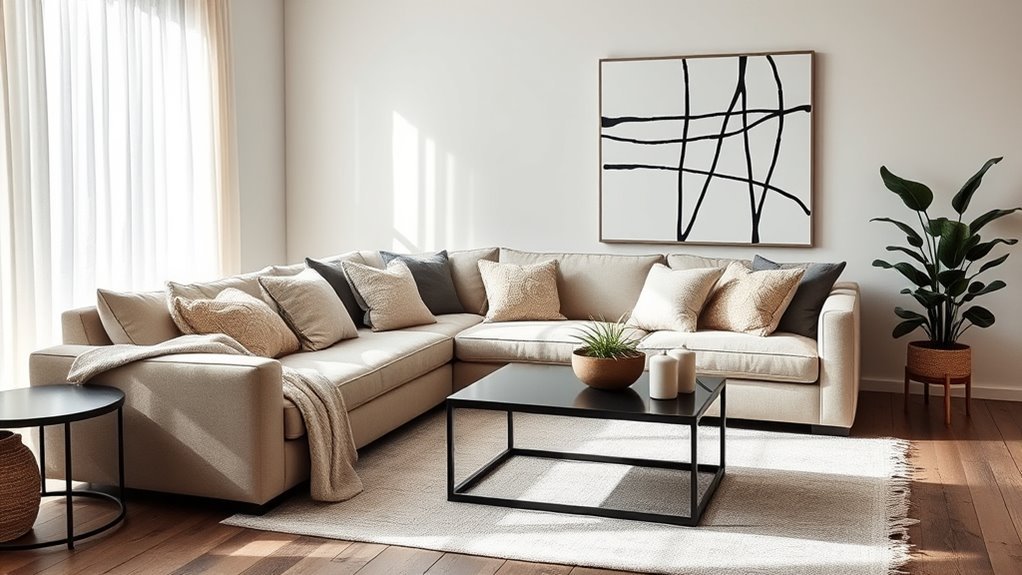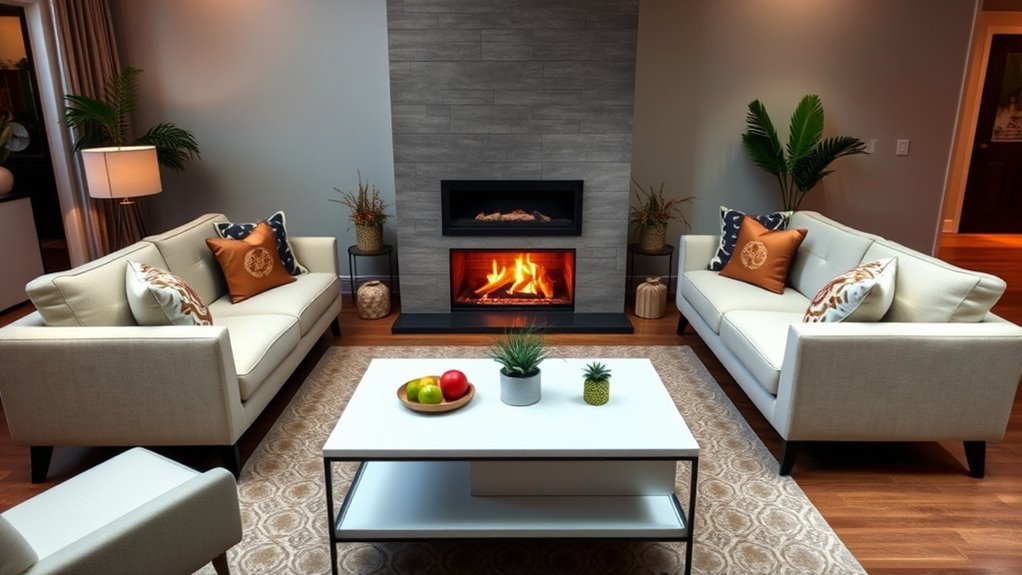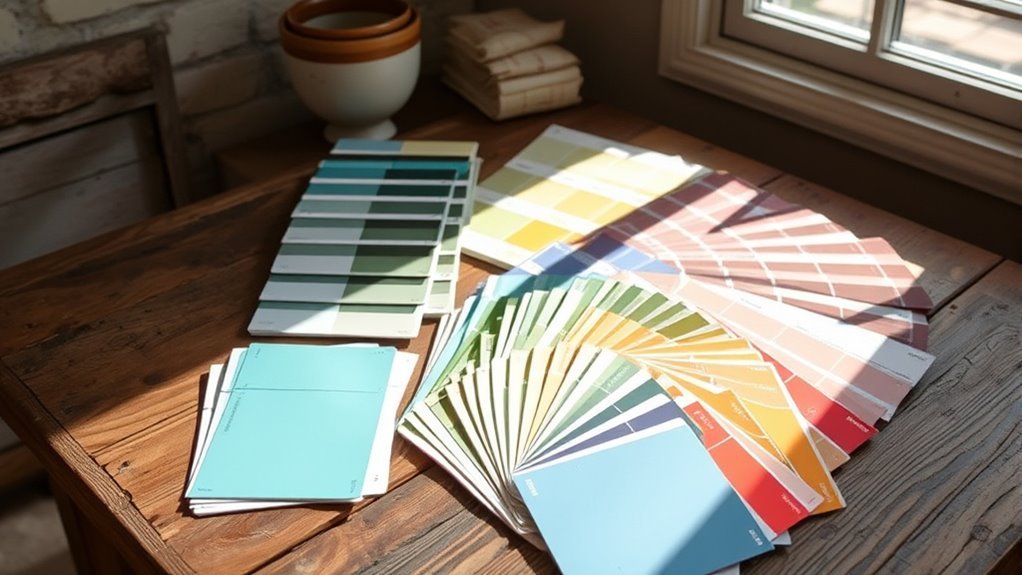
Choosing a neutral wall color or sofa swatch in a store seems simple until you bring it home and watch a beige paint turn fleshy pink or a cream linen look dingy against your trim. Color undertones in paint and fabric are the quiet warm, cool, or balanced pigment biases hiding beneath the surface shade. Learning how to spot and coordinate those hidden hues before buying gallons of paint or yards of upholstery is the fastest way to make walls, drapery, rugs, and fixed finishes look intentional.
Quick Answer
Undertones are the secondary warm (yellow, pink, peach) or cool (blue, green, violet) hues mixed into paint and fabric. To identify them, place large samples on pure white paper beside your room’s fixed finishes and observe them from morning through nighttime lighting. Match dominant undertones for calm flow, or bridge mixed temperatures with multi-toned textiles.
At a Glance
| Time Required | 2–3 days of observing samples across morning, midday, evening, and night light |
| Difficulty | Easy; relies on side-by-side comparison rather than guesswork |
| Tools Needed | 8 oz liquid paint samples or peel-and-stick swatches (8×8 in. or 9×14.75 in.), white poster board, fabric swatches, painter’s tape, and pure white printer paper |
| Cost | Low; free 2×3 in. store chips, $3.50–$10 per large paint sample or fabric swatch |
What Are Color Undertones in Paint and Fabric?
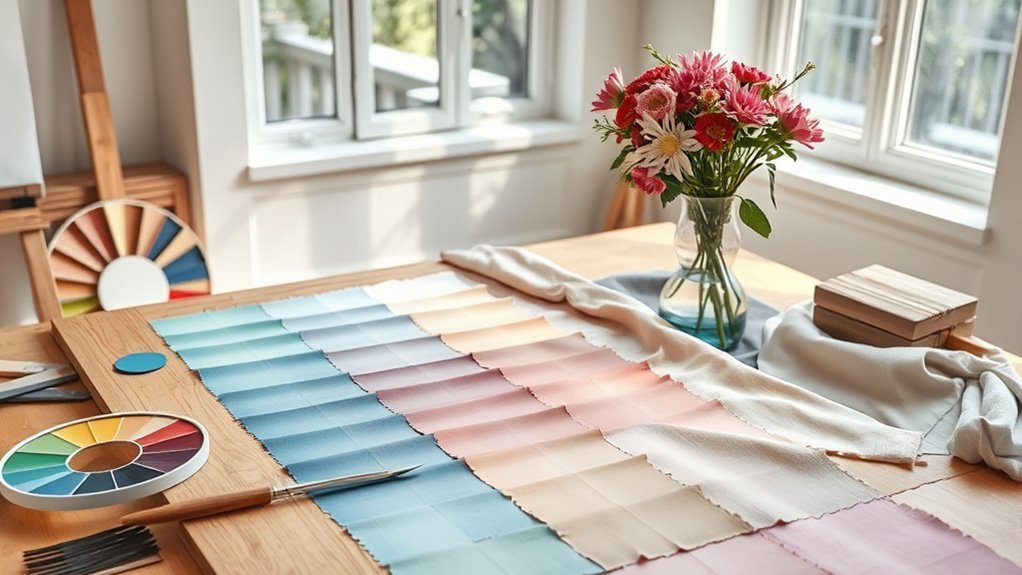
Every mixed paint or dyed textile has two layers of color: a surface color and a hidden undertone. The surface color tells you the general category—such as beige, gray, white, or navy—while the undertone determines whether that shade reads golden, rosy, icy, or earthy once it covers a wall or sofa.
As Sherwin-Williams’ color specification guide explains, the mass tone is the dominant color you register first, and the undertone is the subtler bias created by combining two or more pigments or dyes. When the mass tone and undertone are close, a color looks pure. When secondary pigments shift the formula, a red can lean blue (magenta) or orange (poppy), and a neutral can lean distinctly warm or cool.
In interior design, neutral families follow predictable pigment patterns:
- Beige: Carries a yellow/gold, pink/red, or green undertone.
- Gray: Rarely sits dead-center; almost every gray leans blue, green, or violet.
- Taupe and greige: Blend warm and cool pigments. Taupe pairs brown and gray with a pink, violet, or soft yellow cast, while greige mixes gray and beige to lean either warm (yellow-beige) or cool (green-gray).
- White and off-white: Range from warm creamy, ivory, and peach-tinted whites to crisp whites with blue, gray, or green casts.
Lighting also alters how these pigments and dyes behave. The U.S. Department of Energy’s LED color guidance notes that correlated color temperature (CCT) describes how warm (yellowish) or cool (bluish) a white light source looks, while color rendition measures how accurately that light reveals surface pigments. Because paint uses suspended mineral or synthetic pigments and upholstery uses fiber dyes, the two materials reflect light wavelengths differently. Two swatches that match under showroom lights can separate at home—a phenomenon designers call metamerism.
Undertone vs. LRV vs. Sheen
Undertone, Light Reflectance Value (LRV), and sheen are three separate properties that work together on a painted wall or textile. Undertone is the warm or cool color bias. LRV measures the percentage of visible light a color reflects on a scale from 0 (absolute black, absorbing all light) to 100 (pure reflective white). Sheen (or fabric weave and nap) controls how specular light bounces off the surface.
| Term | What It Measures | Why It Matters for Paint and Fabric |
|---|---|---|
| Undertone | Hidden pigment or dye bias (yellow, pink, green, blue, violet, gray) | Determines whether walls, flooring, stone, and upholstery harmonize or clash |
| LRV (0–100) | Percentage of light reflected back into the room | Predicts how bright or moody a room will feel; high-LRV whites (70+) still carry warm or cool undertones |
| Sheen & Texture | Surface reflectivity (flat, eggshell, satin, semi-gloss, gloss; matte linen vs. plush velvet) | Higher gloss reflects surrounding colors and glare; textured weaves and velvet nap deepen shadows |
Changing a paint’s sheen or a fabric’s weave alters its perceived depth without changing its core pigment formula. For room-orientation and LRV planning, check Sherwin-Williams’ room-direction guide, and review Sherwin-Williams’ light-and-finish guide for how flat, satin, and gloss finishes shift color appearance across different viewing angles.
Warm vs. Cool Undertones: Quick Reference
Color undertones fall into three functional groups: warm, cool, and balanced (complex neutrals). Warm undertones advance visually and make spacious or dim rooms feel welcoming, whereas cool undertones recede visually and make sunny or compact rooms feel airy and crisp.
| Undertone Family | Common Hidden Hues | How It Reads in Shadows | Pairs Naturally With |
|---|---|---|---|
| Warm | Yellow, gold, cream, red, orange, peach, blush pink | Amber, golden brown, honey, or warm clay | Honey or red oak, unlacquered brass, travertine, oatmeal linen, camel leather, terracotta |
| Cool | Blue, green, violet, plum, slate, icy gray | Charcoal, steel blue, mossy gray, or muted purple | Carrara marble, polished chrome, brushed nickel, crisp white trim, slate tile, ash wood |
| Balanced / Bridge Neutrals | Blended warm and cool pigments (greige, putty, soft off-white) | Soft mushroom, weathered driftwood, or stone | Mixed metals, natural jute or wool textures, white oak, rooms combining warm floors with cool stone |
A Simple Undertone Decision Framework
Before ordering fabric yardage or custom-tinted paint, decide whether your room needs unified, bridged, or contrasting undertones. Picking one strategy up front prevents the common mistake of layering four unrelated neutrals that make each other look dirty.
| Design Goal | Best Undertone Move | Real-Room Example |
|---|---|---|
| Calm and unified | Keep walls, large upholstery, and fixed finishes in the same undertone family. | Warm oak floors, creamy oatmeal linen sofa, and warm yellow-greige walls. |
| Mixed but cohesive | Anchor the room with a multi-tone bridge textile (rug, drapery, or print) that contains both temperatures. | A wool rug woven with ivory, warm taupe, slate blue, and olive tying together warm floors and a cool gray sofa. |
| Layered and contrasted | Let one temperature lead (about 70–80% of the room) and repeat the contrasting temperature at least twice. | Cool blue-gray walls balanced with a camel leather chair, walnut side tables, and aged brass sconces. |
How Do You Identify Warm and Cool Undertones?
You can identify any paint or fabric undertone in minutes by comparing the sample against a pure white reference and similar shades from the same color family. Your eyes automatically adjust to a single swatch in isolation, so side-by-side contrast is essential to force hidden pigments into view.
- Place the sample on pure white printer paper. Unbleached wallboard and existing wall paint distort your perception. Set your paint swatch or fabric square on bright white copy paper in natural daylight; a subtle yellow, pink, peach, green, blue, or violet cast will immediately stand out against the white border.
- Line up three to four cousins from the same neutral family. Place a yellow-beige, a pink-beige, and a green-beige side by side, or compare three grays together. Even when each swatch looks neutral alone, grouping them exposes which one is warmest and which is coolest.
- Inspect the darkest shade on a true let-down strip. When a paint manufacturer prints lighter and darker dilutions of the same formula on a single fan-deck strip, look at the bottom two shades. Pale tints at the top often hide their bias, while the deeper values make a red, green, or blue base unmistakable. (Verify with the store clerk that the strip is a true formula gradation rather than a curated palette card.)
- Check the creases and shadow zones in fabrics. For upholstery, drapery, and rugs, fold the swatch loosely and look inside the crease. Textured weaves like boucle, linen, chenille, and velvet amplify undertones in their shadows: warm dyes turn golden, amber, or rosy in the fold, while cool dyes turn slate, blue, or plum. Brush velvet or chenille in both directions to see how the nap shifts the lightness.
- Test directly against your room’s fixed finishes. Hold your top candidates flat against flooring, stone countertops, fireplace brick, and cabinet doors, since these permanent surfaces dictate which undertones will clash.
- View wall samples vertically and floor samples horizontally. Light hits vertical walls at an angle that makes colors read slightly darker and cooler than when laid flat on a table. Tape paint and curtain samples upright on the wall, and lay rug or flooring swatches flat on the floor.
Pro Tip: If a neutral still looks ambiguous on white paper, do the two-reference test: place the swatch next to a warm cream fabric and then next to a cool light-gray swatch. Whichever pairing looks calmer and cleaner reveals the sample’s true temperature family.
Recommended Products
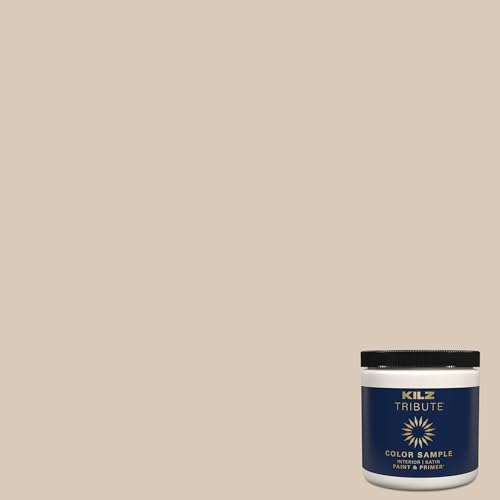
PAINT + PRIMER: KILZ TRIBUTE is a low VOC, 100% acrylic advanced technology paint and primer in one formulated for superior hide and coverage with exceptional durability. Paint and primer covers light-medium stains and light-dark color changes.
How Lighting Affects Your Color Choices
Natural daylight and artificial light bulbs change the wavelengths hitting your walls and furniture, which can amplify one undertone while muting another. Always evaluate paint and textile samples in the exact room where they will live across a full day-to-night cycle.
Natural Light Variations
Sunlight shifts in both color temperature and intensity from sunrise to sunset, and your window orientation controls which cast dominates the room. In the Northern Hemisphere, each exposure pulls undertones differently:
- North-facing rooms: Receive indirect, bluish-cool daylight throughout the day. Cool grays, blues, and crisp whites look sharper and chillier here, while warm whites, creamy beiges, and higher-LRV paints help counteract the gray shadow.
- South-facing rooms: Receive abundant, warm-golden sunlight from late morning through afternoon. Very warm yellow or peach undertones can look overly intense at midday, while cool grays, blues, and soft greens feel balanced and inviting.
- East-facing rooms: Catch bright, warm-yellow sunlight in the early morning as the sun rises low on the horizon, then shift to cooler, indirect light by afternoon.
- West-facing rooms: Read cooler and more shadowed in the morning, then fill with a warm, amber-reddish glow in late afternoon and evening. Avoid red- or orange-biased neutrals in west-facing rooms if you dislike an intense sunset cast.
Note that exterior reflections matter too: dense green trees outside a window can bounce a green cast onto pale walls and sheer curtains, while a red brick patio or neighboring wall can push neutral paint toward pink. (In the Southern Hemisphere, north- and south-facing light behavior is reversed.)
Artificial Light Impact
Once the sun sets, your light bulbs determine how undertones read. According to ENERGY STAR’s light bulb purchasing checklist, residential white bulbs are rated on the Kelvin (K) scale:
- Warm White / Soft White (2700K–3000K): Emits a cozy, yellowish glow similar to traditional incandescent bulbs. It intensifies yellow, cream, red, and terracotta undertones while muting blues and making cool grays look slightly muddy or greenish.
- Neutral / Cool White (3500K–4100K): Produces a clean, whiter light well suited to kitchens, bathrooms, and workspaces. It lets both warm and cool undertones read close to their neutral afternoon appearance.
- Daylight (5000K–6500K): Casts a crisp, bluish-white light. It accentuates blue, green, and violet undertones, which can make warm beige or cream fabrics look flat or slightly sallow.
Beyond Kelvin temperature, check the bulb’s color accuracy. The U.S. Department of Energy recommends a Color Rendering Index (CRI) of at least 80 for residential interiors and notes that a CRI of 90 or higher delivers excellent color fidelity. Because standard CRI only measures eight pastel reference swatches, DOE also points to IES TM-30 metrics—specifically fidelity (Rf) and gamut (Rg)—for a fuller measure of how accurately LEDs render rich reds, skin tones, and layered textiles.
Consistency in Lighting Temperature
Mixing bulb temperatures in the same room splits your palette in two. If an overhead fixture has 4000K bulbs and a table lamp uses a 2700K bulb, the same greige wall and linen drapery will look violet-gray near the ceiling and buttery yellow beside the sofa. Standardize every bulb in a single room (and across open-concept sightlines) to the same Kelvin rating and CRI 90+ before you judge your final swatches.
Note: Never finalize paint or fabric under retail store lighting. Big-box stores and fabric showrooms typically use high-ceiling 4000K–5000K commercial fixtures that strip out warmth and trigger metamerism once you bring materials into a 2700K–3000K living room.
How to Match Paint Undertones With Fabric, Flooring, and Decor
Coordinating a room starts from the ground up: identify the undertones of your permanent hard surfaces first, choose large upholstery second, and pick wall paint last. Paint comes in thousands of custom tints, making it far easier to match to a sofa or floor than the other way around.
Recommended Products

Neutral Vintage Rug: This area rug features a trendy retro design adorned with floral pattern. Its unique tones blend perfectly with your home decor. Its unique texture and patterns add a layer of sophistication and comfort to any room

Modern Geometric Rug: Featuring a modern arched pattern with high piles, this neutral rug creates soft arch lines that add visual depth and texture to your floor. The versatile beige neutral palette seamlessly complements modern, boho, farmhouse, or transitional interiors, perfect for living room, bedroom, or dining room

WASHABLE FOR EASY CARE: This machine washable area rug makes everyday cleaning simple. Machine wash when needed, spot clean spills, or use a robot vacuum for easy daily maintenance.
Start With Fixed Elements
Inventory every surface you do not plan to replace in the next five years: hardwood floors, floor tile, stone countertops, kitchen cabinetry, fireplace surrounds, and painted millwork. Wood species and stains carry strong undertones—honey oak and maple lean yellow-gold, cherry and mahogany lean red-orange, walnut leans rich neutral-to-warm brown, and weathered white oak often carries a cool gray or green-beige wash. Pairing a red-undertone cabinet stain with a yellow-beige wall creates visual friction unless a bridge surface mediates between them.
Use Fabric as the Bridge
Patterned and multi-yarn textiles are the easiest way to connect warm fixed finishes with cooler walls or furniture. A woven performance fabric that twists cream and cool gray yarns together, or a patterned area rug containing ivory, warm camel, slate blue, and sage green, gives every solid surface in the room a partner. When ordering pale upholstery or drapery, always ask the vendor for a cutting for approval (CFA) from the current dye lot, as textile dye batches can shift slightly warmer or cooler between production runs.
Should Paint and Fabric Undertones Match Exactly?
Paint and fabric undertones do not need to match identically to look cohesive. Matching every surface in the exact same yellow-beige or blue-gray can make a room feel flat or one-note. Instead, aim for a clear temperature hierarchy: let either warm or cool tones cover roughly 70% to 80% of the room, and introduce the opposite temperature in 20% to 30% of the accents (such as warm cognac leather pillows and brass lamps against cool green-gray walls).
Essential Tips for Selecting Paint Colors That Complement Undertones

Following a structured sampling workflow eliminates the risk of repainting an entire room. As Architectural Digest’s neutral paint guide emphasizes, comparing oversized samples against your actual furnishings and white trim is the only reliable way to preview how a neutral will behave on four walls.
- Build a vertical and horizontal mood board. Gather your flooring plank, stone or tile sample, cabinet door, upholstery swatches, curtain fabric, and metal hardware on a piece of white foam core board so no competing table color bleeds through.
- Upgrade from tiny chips to oversized paint samples. Free 2 × 3 inch store chips are great for narrowing 20 options down to 3, but they are too small to show full wall saturation. Benjamin Moore recommends larger samples—either brushing two coats from an 8 oz liquid sample pot onto a 2 × 2 foot white poster board (leaving a 1-inch white border) or using real-paint peel-and-stick sheets (typically 8 × 8 inches to 9 × 14.75 inches).
- Never paint small test patches directly next to each other on a colored wall. Painting four squares over an existing yellow or gray wall without a white border causes simultaneous contrast, making the samples look artificially cooler or warmer than they really are.
- Move movable boards to at least three locations. Tape your sample board beside the window frame, in a shadowy corner, and directly behind your sofa or bed headboard, wrapping peel-and-stick samples around an inside corner to see how shadows shift the undertone.
- Observe across a 48-to-72-hour window. Check your top two finalists at breakfast, solar noon, sunset, and at night with all lamps switched on before buying full gallons.
The right paint color is never the one that looks prettiest alone under hardware-store lights—it is the one that makes your existing floors, fabrics, and stonework look cleaner in your own room.
Recommended Products

PERFECT SAMPLES: These 12" x 9" white, styrene panels provide a smooth, warp-free surface for testing up to 5 color samples with paint, stain or other coatings.

20PCS FOAM CORE BOARD: White foam board is made with polystyrene extruded foam laminated between two sheets of paper to form a lightweight but strong and rigid surface. Good for school projects or any other signs you need to make.

PAINT COLOR SAMPLE BOARDS - Organize paint colors while exploring and comparing them effortlessly with this 24-pack paint board set. Each tester board features a blank space on the front for paint-out and a label on the back to identify all the details of the particular color you are testing
Avoid These Common Mistakes When Selecting Undertones
Most expensive color regrets happen when homeowners skip comparison steps or rely on digital screens. Watch out for these six traps before placing a custom paint or fabric order:
- Picking wall paint before choosing textiles: Fabrics and rugs come in fixed dye palettes, while paint can be matched to any swatch. Always lock in your rug, sofa, and curtains first.
- Ignoring existing white trim and ceilings: If your baseboards and doors are already painted in a creamy warm white, pairing them with a crisp blue-white wall will make the trim look yellowed and dirty.
- Combining competing “near-neutrals” without a bridge: Putting pink-beige carpet next to yellow-beige walls and a green-gray sofa creates visual tension because three different undertones are fighting for dominance.
- Forgetting lampshade tint and fixture direction: Linen or parchment lampshades cast a warm golden filter onto nearby walls, while recessed downlights leave the upper inches of a wall in cooler shadow.
- Overlooking fabric texture and pile direction: A matte cotton canvas and a high-sheen silk or performance velvet dyed with the exact same undertone will read several shades apart once light hits the fibers.
- Choosing colors from smartphone photos or Pinterest: Camera white-balance algorithms and OLED/LCD screen settings alter color temperature, saturation, and LRV dramatically.
Warning: Custom-tinted paint gallons and cut-to-order upholstery yardage are almost always non-refundable. Never order full quantities from a digital visualizer or a 2-inch paper chip without testing a physical swatch in your room first.
Examples of Color Undertones and Their Influence on Interior Design
Seeing how specific undertone families interact with common woods, stones, and metals makes it easier to diagnose your own space. Use these real-world pairings to guide your sample board:
- Yellow-beige and warm cream: Harmonizes naturally with honey oak floors, travertine, unlacquered brass, and oatmeal bouclé. Avoid pairing it directly with cool blue-gray stone or stark blue-white trim, which can make yellow-beige look brassy.
- Pink-beige and warm taupe: Flattering and soft alongside warm walnut, aged bronze, blush textiles, and creamy off-whites. Keep it away from golden-yellow oak or green-gray granite, which magnify the pink cast.
- Green-gray and sage-tinted greige: One of the most adaptable bridge neutrals; it connects warm wood tones, natural jute rugs, matte black iron, and stone countertops without feeling icy.
- Blue-gray and slate: Delivers a crisp, tailored look alongside Carrara marble, chrome fixtures, white oak, and navy or charcoal textiles. In dim or north-facing rooms, warm it up with cognac leather, woven cane, and 2700K–3000K lamps.
- Violet-gray: Reads sophisticated and moody in dining rooms or bedrooms paired with plum, pewter, dark walnut, and alabaster white, but can turn unexpectedly lavender under warm incandescent or 2700K LED bulbs.
Troubleshooting Common Undertone Problems
When a freshly painted room or new piece of furniture looks “off,” the culprit is almost always an unplanned contrast with adjacent finishes or lighting. Here is how to diagnose and fix the four most common undertone surprises without starting over from scratch.
Why Does My Beige Look Pink?
Beige looks pink when it contains a red or violet-taupe pigment base and sits next to strongly yellow or green surfaces—such as golden oak floors, yellow-cream trim, or green landscaping outside the window. If repainting isn’t an option, swap 2700K bulbs for cleaner 3000K–3500K high-CRI LEDs, replace yellow-cream curtains with crisp off-white linen, and add a patterned rug that intentionally includes terracotta, blush, or warm taupe so the rosy cast looks deliberate.
Why Does My Gray Look Blue?
Gray turns baby-blue or icy when a blue-undertone gray is paired with cool north-facing daylight, 4000K–5000K bulbs, or warm orange-toned oak floors (since orange and blue sit opposite each other on the color wheel and intensify one another). Soften the blue cast by switching to 2700K warm-white bulbs, hanging warm ivory or oatmeal drapery, and layering in natural wood, brass, or camel accents.
Why Does My White Look Yellow?
White paint or cream upholstery reads overly yellow when a warm yellow-based white is lit by low-Kelvin (2700K) bulbs or placed right next to a cooler, brighter white on trim, ceilings, or countertops. Hold a sheet of pure white printer paper against both surfaces to see which one holds the stronger bias, and test a 3000K or 3500K CRI 90+ bulb before deciding to repaint.
Why Do My Fabrics Clash With the Wall Color?
Fabrics and walls clash when one carries a clean cool undertone (like a blue-gray sofa) and the other carries a competing warm undertone (like a yellow-cream or pink-beige wall) with nothing tying them together. Bridge the gap by adding throw pillows, window treatments, or an area rug that weaves both exact tones into a single pattern, or repaint the walls in a balanced greige that shares the fabric’s underlying hue.
Key Takeaways
- Every neutral has a hidden bias: Grays lean blue, green, or violet; beiges lean yellow, pink, or green; and greiges bridge the two.
- Use two diagnostic tests: Place paint and fabric against pure white copy paper to expose the cast, and inspect fabric creases where shadow zones concentrate warm (amber/gold) or cool (slate/blue) dyes.
- Watch for metamerism: Because paint uses mineral pigments and textiles use fiber dyes, swatches that match under 4000K store lights can separate under 2700K home lamps.
- Match your bulbs first: Standardize room lighting to one Kelvin temperature (2700K–3000K for warm spaces, 3500K–4100K for task areas) and a CRI of 90+ before judging samples.
- Work from fixed to flexible: Lock in floors, stone, and cabinetry first, select upholstery and rugs second, and choose wall paint last using 2 × 2 foot sample boards.
Frequently Asked Questions
How do you know the undertone of a paint color?
Place the paint sample on a sheet of pure white printer paper next to two or three similar shades from the same color family. The contrast against true white will immediately reveal whether the color leans yellow, pink, peach, green, blue, or violet. You can also look at the darkest shade on a true let-down strip to see the concentrated pigment bias.
How do I know my room’s dominant color undertone?
Look at the largest fixed surfaces and furnishings you plan to keep, including hardwood floors, tile, countertops, cabinetry, and major upholstery. If those pieces feature honey oak, cream, camel, brass, or earthy stone, your room leans warm. If they feature gray-veined marble, chrome, ash wood, slate, or crisp white, your space leans cool.
What do cool undertones mean in paint?
Cool undertones mean a paint color contains subtle blue, green, violet, or slate-gray pigments beneath its surface shade. These hues make walls recede visually, creating a crisp, calm, and airy feel in bright or south-facing rooms. In dim or north-facing rooms, cool undertones can feel chilly unless balanced with warm wood and 2700K–3000K lighting.
How can you tell if a fabric or paint color is warm or cool toned?
Compare the swatch against both a pure white sheet of paper and a known warm cream or cool gray reference. Warm colors show yellow, gold, orange, red, or blush casts and turn amber in fabric folds. Cool colors show blue, green, or purple casts and read slate or charcoal inside textile creases.
Should paint and fabric undertones match exactly?
No, paint and fabric undertones do not need to match identically, but their relationship should look intentional. Matching the dominant undertone family creates a serene, unified palette. If you mix warm and cool tones, let one temperature lead across 70% to 80% of the room and use a patterned rug or curtain fabric containing both hues as a visual bridge.
Why does a paint color look different after I bring it home?
A paint color shifts at home because your room’s window direction, bulb Kelvin rating, wall size, and surrounding floor and furniture colors differ from the store. Store displays often use cool commercial lighting, and a tiny 2-inch chip cannot show how light bounces between four full walls. Testing a 2 × 2 foot sample board at home prevents surprises.
What is the difference between paint undertone and LRV?
Undertone is the warm or cool pigment bias hiding beneath the main color, such as yellow, pink, blue, or green. Light Reflectance Value (LRV) measures how much visible light a paint reflects on a scale from 0 (black) to 100 (pure white). Two paints can share the exact same LRV of 75 while one leans warm creamy yellow and the other leans icy blue.
Why do paint and fabric match in the store but clash at home?
This mismatch is caused by metamerism, which happens when two materials with different pigment and dye formulas reflect light wavelengths differently. A painted swatch and a dyed sofa fabric may look identical under 4000K showroom LEDs, but once placed under 2700K lamps or north-facing window light at home, their underlying red, yellow, or blue biases separate.
Conclusion
Getting color undertones in paint and fabric right comes down to testing materials together rather than judging swatches in isolation. Start by identifying the undertones of your permanent floors, stone, and cabinetry, then gather fabric swatches and 2 × 2 foot painted poster boards on a pure white backing. Observe your top candidates across morning, midday, evening, and nighttime lighting for at least two days—once every surface shares a clear warm, cool, or bridged relationship, you can order your paint and textiles with confidence.
Sources
- U.S. Department of Energy — LED Color Characteristics: Supports correlated color temperature (CCT), spectral power distribution, and warm versus cool light appearance.
- U.S. Department of Energy — LED Basics: Supports interior CRI 80+ and 90+ color fidelity benchmarks and TM-30 color rendering metrics.
- ENERGY STAR — Light Bulb Purchasing Checklist: Supports residential Kelvin ranges from 2700K–3000K (warm white) to 3500K–4100K (cool/neutral white) and 5000K–6500K (daylight).
- Sherwin-Williams — Understanding Undertones to Choose the Right Color: Supports mass tone versus undertone definitions, white-paper comparison, let-down strips, and balancing room temperatures.
- Benjamin Moore — How to Use Paint Color Samples: Supports 8 oz liquid sample coverage (2 × 2 ft), 9 × 14.75 in. peel-and-stick swatches, upright viewing, and white borders.
- Sherwin-Williams — Choosing Color Based on Room Orientation: Supports room-direction daylight shifts, LRV 0–100 scale guidance, and sample chip dimensions.
- Sherwin-Williams — How Light & Finish Affect Paint Color: Supports morning-to-evening sunlight changes, fixture and lampshade effects, and paint sheen reflectivity.
- Architectural Digest — A Complete Guide to Choosing Neutral Paint Colors: Supports comparing neutral undertones against white backgrounds and coordinating paint with fixed finishes and textiles.