Disclosure: As an Amazon Associate, we earn from qualifying purchases. If you click a link on this page and make a purchase, we may receive a small commission at no extra cost to you.
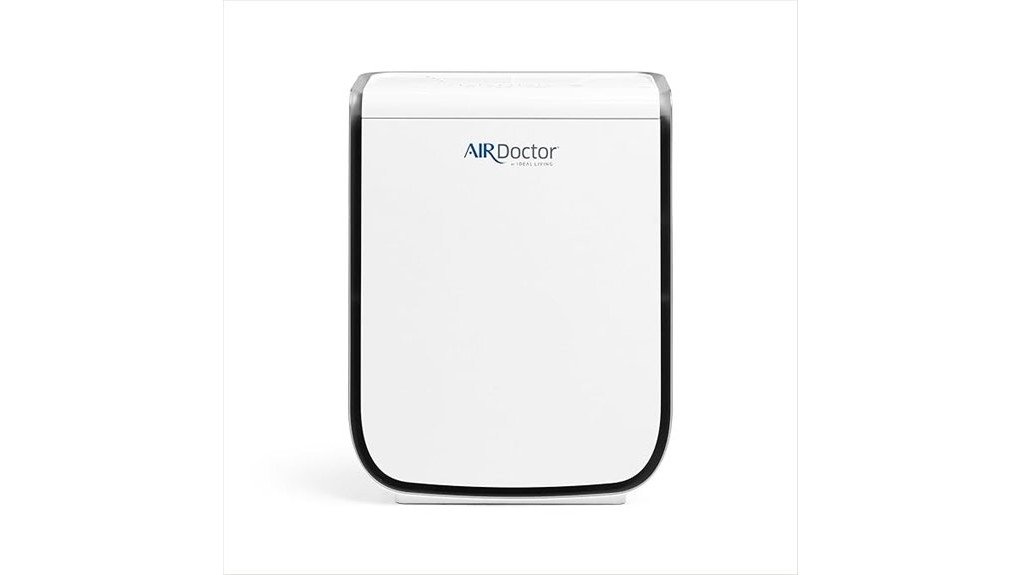
Choosing an air purifier gets confusing when large room-size claims hide how often the air is actually cleaned. The AirDoctor AD2000 is best treated as a compact purifier for small to medium rooms, with a manufacturer rating of 305 ft² at four air changes per hour. Its main strengths are its 3-stage filtration, automatic air-quality sensing, and compact 10-pound design. The tradeoffs are ongoing filter replacements, more fan noise at higher speeds, and different features depending on whether you buy the Classic or Smart version.
Quick Verdict
Rating: 8.5/10, Recommended with caveats
Best For: Bedrooms, home offices, nurseries, playrooms, and other small to medium rooms where automatic air-quality control is useful.
Bottom Line: The AD2000 combines strong particle filtration with a dedicated carbon/VOC stage and useful automatic controls. It makes the most sense when you size it around its 305 ft², four-air-changes-per-hour rating rather than focusing only on larger one-pass coverage numbers.
| Specification | Detail |
|---|---|
| Brand | AirDoctor |
| Model | AD2000 |
| Product type | Portable room air purifier |
| Recommended coverage | Up to 305 ft² at 4 air changes per hour |
| Smoke CADR | 162 CFM |
| Filtration | Pre-filter, Carbon/Gas Trap/VOC filter, UltraHEPA filter |
| Particle filtration claim | 99.99% of particles down to 0.003 microns, according to AirDoctor testing |
| Carbon media | Activated carbon with potassium permanganate |
| Dimensions | 13.85 in W × 6.6 in D × 18.72 in H |
| Weight | 10 lb |
| Fan speeds | Low, Medium, High, and Boost |
| Power | 120V AC, 60Hz; manual lists 11W on low and 110W on high |
| Power cord | 6 ft |
| Controls | Auto mode, fan-speed control, dim mode, 24-hour timer, filter indicator, control lock |
| Ionizer | Optional and manually switchable |
| Main filter intervals | Carbon/VOC filter up to 6 months; UltraHEPA filter up to 12 months, depending on conditions |
| Warranty | One-year limited warranty documented in the AD2000 manual |
Key Takeaways
- The AirDoctor AD2000 is best matched to rooms around 305 ft² when you want four air changes per hour.
- Its 3-stage system combines a pre-filter, a Carbon/Gas Trap/VOC filter, and an UltraHEPA filter rated to capture 99.99% of particles down to 0.003 microns.
- Auto mode reads particulate levels and changes the fan speed without requiring constant adjustments.
- The unit weighs about 10 pounds and has a slim 6.6-inch depth, making it easier to reposition than many large-room purifiers.
- Replacement filters are an ongoing cost, with the carbon filter rated for up to six months and the UltraHEPA filter for up to 12 months under typical conditions.
- The Classic and Smart versions are not identical. Confirm the version before buying if Wi-Fi or app control matters to you.
What Is the AirDoctor AD2000?
The AirDoctor AD2000 is a portable air purifier designed for bedrooms, nurseries, playrooms, home offices, laundry rooms, and other small to medium spaces. AirDoctor rates it for 305 ft² at four air changes per hour, which is a more useful figure for regular purification than a much larger one-air-change coverage number.
Its main selling point is the combination of fine-particle filtration and a separate carbon/VOC stage. The pre-filter catches larger debris, the carbon media targets odors and gaseous pollutants, and the UltraHEPA filter handles fine airborne particles.
This review is based on current manufacturer specifications, the AD2000 owner’s manual, and available product documentation. It should not be read as a claim of independent laboratory testing by our editorial team.
Who Should Buy It?
Best For
- You want frequent air cleaning in a bedroom, office, nursery, or similar room around 305 ft².
- You want automatic fan adjustment based on changing particulate levels.
- You want both particle filtration and a dedicated carbon/VOC filter stage.
Skip If
- You need four air changes per hour in a room much larger than 305 ft².
- You want washable main filters with no scheduled replacement cost.
- You need app control but are considering the non-Smart AD2000 Classic.
Before You Buy: Do not compare room-size numbers without checking air changes per hour. The current U.S. specification is 305 ft² at four air changes per hour. A much larger one-hour coverage figure means the room air is being cycled less often.
Key Benefits of the AirDoctor AD2000 for Small and Medium Rooms
The AD2000 offers a useful balance of compact size and airflow. Its smoke CADR is 162 CFM, while its 13.85-inch width and 6.6-inch depth make it easier to fit into a bedroom or office than many larger tower-style purifiers.
Auto mode is especially useful when pollution changes during the day. The air-quality sensor reads particulate conditions and adjusts the fan from low to higher speeds as needed. A color indicator shows good, fair, or poor air quality.
You also get four manual fan speeds, a dim function, a 24-hour timer, a clean-filter indicator, and a control lock that can help prevent accidental button presses.
How the 3-Stage Filtration System Works
Pre-Filter
The first layer catches larger material such as dust, lint, and pet hair before it reaches the main filters. This layer is reusable. AirDoctor recommends vacuuming it about monthly, or more often when buildup is heavy.
Carbon/Gas Trap/VOC Filter
The second stage uses activated carbon with potassium permanganate. It is intended to reduce odors, volatile organic compounds, and some gaseous pollutants that a particle-only filter is not designed to capture.
The manual lists this filter for replacement at about six months, although actual life depends on use and indoor conditions.
UltraHEPA Filter
The final main stage is AirDoctor’s UltraHEPA filter. The manufacturer says it captures 99.99% of airborne particles down to 0.003 microns under its testing conditions. That can include fine dust, pollen, smoke particles, and other airborne particulate matter.
The manual lists an expected replacement interval of up to 12 months. The main UltraHEPA and carbon filters should not be washed.
Air Quality Monitoring: What to Expect?
The AD2000 continuously checks particulate conditions through its air-quality sensor. The indicator uses blue for good air quality, orange for fair air quality, and red for poor air quality.
When Auto mode is active, good readings correspond to low fan speed, fair readings move the unit to medium, and poor air quality can trigger High or Boost operation. This is useful after activities that temporarily raise airborne particles, such as cleaning, opening an exterior door, or disturbing dust.
The standard AD2000 does not require an app for these automatic functions. AirDoctor also sells a Smart version with Wi-Fi and mobile-app features, so check the exact model if remote control matters to you.
Noise Level and Everyday Controls
The AD2000 is quieter on its lower settings and becomes more noticeable as airflow increases. That is important because Auto mode can raise the fan speed when the sensor detects poor air quality.
The original blanket claim of 30 dB does not describe the full operating range. Your experience will depend on fan speed, room acoustics, and how close the purifier is to your bed or desk. Dim mode can turn off the control-panel lighting when you want a darker room.
Pro Tip: For bedroom use, let Auto mode reduce the fan when the air is clean, but position the purifier far enough from your bed that higher fan speeds will not be distracting.
How It Performs in Real Use
In a Bedroom
A bedroom close to the 305 ft² rating is a sensible match because you can maintain several air changes per hour without moving up to a much larger purifier. Dim mode also helps when control-panel lighting bothers you at night.
In a Home Office
The narrow 6.6-inch depth makes the AD2000 easier to place near a wall than many deeper machines. Auto mode lets you leave the purifier running without changing fan speed every time particulate levels shift.
Around Pets
The pre-filter helps catch larger pet hair before it reaches the main filters, while the UltraHEPA stage handles smaller airborne particles. The carbon/VOC stage also gives you an additional layer for odor control, although an air purifier does not replace regular cleaning or source control.
During Short Pollution Spikes
High and Boost modes are designed for periods when you want faster filtration. They are useful when airborne particle levels rise, but the higher airflow also brings more fan noise.
Placement Tips for Better Results
Placement affects airflow. The AD2000 manual gives several specific instructions that are worth following.
- Keep both sides of the purifier more than 1 foot from a wall.
- Keep curtains and drapes away from the air inlet and outlet.
- Do not aim a fan or air conditioner directly into the purifier.
- Place the unit on the floor or ground as directed by the manual.
- When practical, position it closer to the main pollution source without blocking airflow.
- Remove protective packaging from the filters before first use.
Compatibility and Safety
The AD2000 is a 120V AC electrical appliance. Keep it away from bathrooms, sinks, wet environments, fireplaces, flammable vapors, and other locations excluded by the manual. Unplug it before cleaning, changing filters, or moving it.
AirDoctor says its filters are ozone-free. The AD2000 manual also documents a separate built-in ionizer that produces negative ions and must be switched on manually. The purifier does not depend on that optional ionizer for normal filtration, so you can leave it off if you prefer filtration-only operation.
Adult supervision is appropriate when you operate the unit around children. Follow the current product manual for electrical, placement, filter, and maintenance instructions.
Keeping Your AirDoctor AD2000 Running Smoothly: Easy Maintenance Tips
The main maintenance task is filter care. AirDoctor recommends vacuuming the reusable pre-filter about monthly and replacing the Carbon/Gas Trap/VOC filter at roughly six months and the UltraHEPA filter at roughly 12 months, depending on operating conditions.
Do not wash the UltraHEPA or carbon filters. Moisture can damage them. The air-quality sensor may also need cleaning if its reading appears stuck or inaccurate. The manual recommends unplugging the purifier before sensor maintenance.
A filter indicator tells you when replacement is due. On the AD2000, the filter alert can be reset after replacement by holding the appropriate Auto and Dim controls as described by AirDoctor.
Pros and Cons
Pros
- 305 ft² rating at four air changes per hour gives you a clear small-room performance target.
- 3-stage system handles both airborne particles and odor/VOC filtration.
- Automatic air-quality sensing adjusts fan speed for you.
- Compact 13.85 × 6.6 × 18.72-inch body weighs only 10 pounds.
- Four fan speeds, timer, dim mode, filter alert, and control lock add useful daily controls.
Cons
- The carbon filter may need replacement about every six months, adding ongoing ownership cost.
- High and Boost modes are more noticeable than the lower fan settings.
- Wi-Fi and app functions are Smart-version features, so you must check the exact variant before buying.
What Buyers Tend to Notice About the AirDoctor AD2000
Feedback displayed by AirDoctor includes buyers who mention the purifier responding when indoor conditions change, including smoke or aerosol-type pollution. That matches how the documented sensor and Auto mode are designed to work.
Noise is more subjective. Lower fan settings are better suited to quiet spaces, while High and Boost move more air and are easier to hear. Your room size and normal pollution level will affect how often Auto mode needs those faster settings.
Is It Worth the Price?
The AD2000 sits in the premium side of the compact air-purifier market. Part of that value comes from the dedicated carbon/VOC media, automatic particulate sensing, four-speed operation, compact build, and UltraHEPA filter specification.
You get the most value if you plan to use those features in a room that matches its airflow. It is harder to justify if you only need basic particle filtration or if replacement-filter cost is your main concern.
For a bedroom or home office where air quality changes through the day, it is worth considering if you want automatic control plus particle and gas/odor filtration in one compact unit.
How It Compares to Alternatives
The Levoit Core 300S is a smaller smart alternative rated for 219 ft² at 4.8 air changes per hour, with app control built into that model. The Blueair Blue Pure 511i Max is another compact smart option, rated around 237 ft² at 4.8 air changes per hour.
The AD2000 offers a larger 305 ft² four-air-change target and emphasizes its UltraHEPA plus dual-action carbon/VOC filtration. Levoit or Blueair may appeal more if integrated smart control is your priority and you do not want to step up to the AD2000 Smart version.
Frequently Asked Questions
How large a room can the AirDoctor AD2000 handle?
For frequent filtration, use AirDoctor’s current 305 ft² rating at four air changes per hour. Larger coverage numbers represent fewer complete air changes, so they are not equivalent to the 305 ft² performance target.
How often do the AD2000 filters need replacement?
The manual lists the Carbon/Gas Trap/VOC filter at up to six months and the UltraHEPA filter at up to 12 months. Actual life can change with operating time and pollution levels.
Can I wash the AirDoctor AD2000 filters?
Do not wash the UltraHEPA or Carbon/Gas Trap/VOC filters. The reusable pre-filter should be vacuumed rather than washed so moisture does not reach the main filtration system.
Does the AirDoctor AD2000 have an ionizer?
Yes. The AD2000 manual documents a built-in ionizer that you can turn on or off. AirDoctor says the purifier does not depend on the ionizer for its normal filtration performance.
Is the AirDoctor AD2000 ozone-free?
AirDoctor states that its filters are ozone-free. The purifier also has a separate optional ionizer, so it is more accurate to distinguish the filtration system from that switchable feature rather than describe every operating mode with one blanket statement.
Does the AirDoctor AD2000 have Wi-Fi or app control?
AirDoctor sells Classic and Smart AD2000 versions. Smart models add Wi-Fi and mobile-app features, so verify the version on the product page before buying if remote control is important to you.
Where should I place the AD2000?
The manual says to keep both sides more than one foot from a wall, avoid blocking the inlet or outlet with curtains, and keep direct fan or air-conditioner airflow away from the purifier. It should be placed on the floor or ground.
The Bottom Line
The AirDoctor AD2000 is a strong fit for you if you want automatic air-quality control, dedicated carbon/VOC filtration, and frequent air cleaning in a room around 305 ft². Skip it if your room is much larger, you want washable main filters, or you need smart-app features without confirming that you are buying the Smart variant.
Its strongest points are the 3-stage filtration system and useful automatic controls. Its main tradeoffs are replacement-filter costs and more noticeable fan noise when the unit moves to higher speeds.
Ready to Buy?
Check the latest price, model version, and product details before you decide.