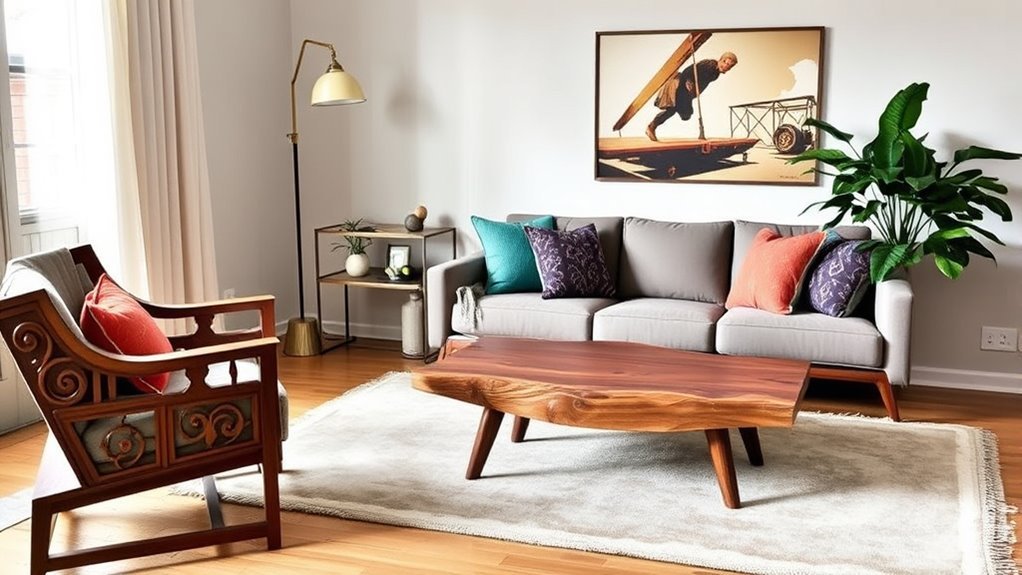
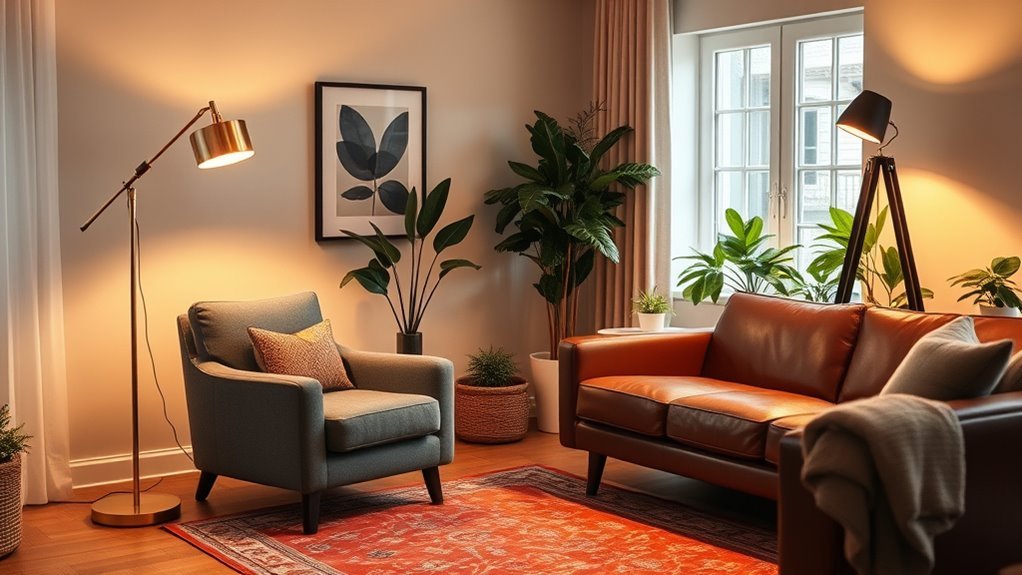
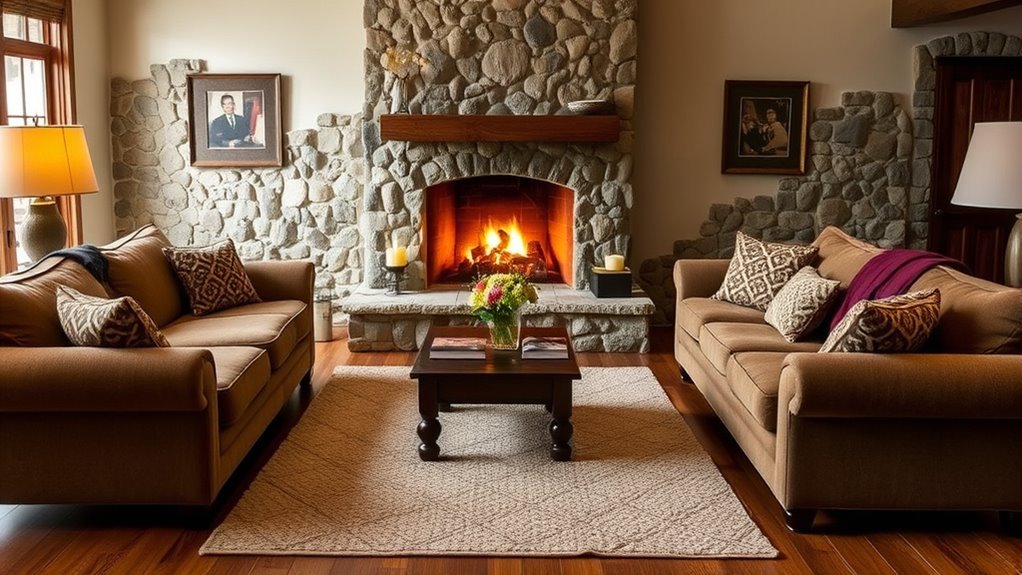
To design your living room with mixed lighting color temperatures, start by blending warm ambient light (around 2,700K) for warmth with cooler task lighting (3,000K-4,000K) for functionality. Choose cohesive fixtures that match your style and avoid clutter. Position ambient lights centrally, place task lights near seating, and use accent lights to highlight artwork. Balance the hues to enhance depth and mood. Next, explore more strategies to perfect your lighting design seamlessly.
How to Create a Cohesive Lighting Design With Mixed Temperatures
When you’re designing a living room, creating a cohesive lighting design with mixed temperatures can transform the space into a functional and inviting haven. Start by choosing fixtures that share cohesive styles and finishes, ensuring your light distribution maintains color harmony. Layer ambient, task, and accent lighting to achieve visual balance, with warmer lights at lower levels for lounging and cooler lights higher up for clarity in functional areas. This strategic placement enhances design consistency, allowing each layer to serve its purpose without overwhelming the atmosphere. Don’t forget dimmer switches; they’re perfect for mood adjustment, giving you the flexibility to adapt brightness levels and enhance space functionality. Embrace this blend, and watch your living room come alive!
Understanding Color Temperature and Its Impact on Your Living Room
Understanding color temperature is key to transforming your living room into a welcoming retreat. Warm lighting creates a cozy vibe perfect for relaxation, while cool tones enhance clarity and productivity for activities like reading or socializing. By choosing the right balance of temperatures, you can influence the mood and style, making your space both inviting and functional.
Warm vs. Cool Lighting
Lighting can greatly influence the atmosphere of your living room, and choosing between warm and cool tones is essential. Warm lighting, ranging from 2,000K to 3,000K, creates a cozy vibe perfect for socializing and relaxation. On the other hand, cool lighting, above 4,500K, enhances clarity and focus—ideal for multifunctional spaces where reading or working happens. Mixing these tones can add depth, but make sure you maintain color harmony to avoid disjointedness. Layering ambient light, task lighting, and accent lighting with varying temperatures offers design flexibility and visual interest. By thoughtfully selecting lighting fixtures, you can achieve mood enhancement and space functionality, creating a dynamic living area that invites both relaxation and productivity.
Psychological Effects of Lighting
The right color temperature can transform your living room into a sanctuary that reflects your mood and purpose. Warmer tones (2,700K-3,000K) promote relaxation, creating an inviting space for evening gatherings. In contrast, cooler tones (4,000K-5,000K) enhance focus, boosting your energy for productive activities. Mixing these temperatures can evoke emotional responses but may cause visual discord if not balanced. Here’s a simple guide to help you navigate the psychological effects:
| Color Temperature | Mood Enhancement | Ideal Use |
|---|---|---|
| 2,700K | Cozy, Relaxing | Evenings, Social Spaces |
| 3,000K | Warm, Inviting | Casual Gatherings |
| 4,000K | Focused, Energizing | Reading, Working |
| 5,000K | Bright, Alerting | Active, Creative Tasks |
| Mixed | Dynamic, Varied | Unique, Personal Touch |
Choosing Ideal Color Temperature
Creating the perfect ambiance in your living room starts with choosing the right color temperature. Think of warm tones, around 2,700K to 3,000K, which invite coziness and relaxation. This is ideal for evenings spent with loved ones. For areas like reading nooks, consider cool white light (3,000K to 4,000K) to strike a balance between warmth and clarity. If you’re planning social gatherings, daylight white lighting (above 4,500K) energizes the space, mimicking natural sunlight. Consistency is key; using a uniform color temperature enhances cohesion. However, layering different temperatures—like warm ambient lighting alongside cooler task and accent lights—adds visual interest and versatility, letting your living room breathe and evolve with your needs. Embrace the transformative power of lighting fixtures!
Pick the Perfect Ambient Light for a Cozy Feel
When you want to transform your living room into a cozy haven, choosing the right ambient light is key. Aim for an ambient light selection with a color temperature between 2,700K and 3,000K. This range casts a warm, inviting glow that wraps around you like a soft blanket. Incorporate soft, diffused sources like chandeliers or floor lamps to enhance comfort while reducing harsh shadows. Layer your lighting texture options with warm-toned LED bulbs for consistency. Don’t forget dimmer switches; they let you adjust brightness, setting the mood from intimate evenings to lively gatherings. Position floor and table lamps at varying heights to create an evenly distributed glow, enveloping your space in warmth and tranquility.
How to Use Task Lighting Effectively?
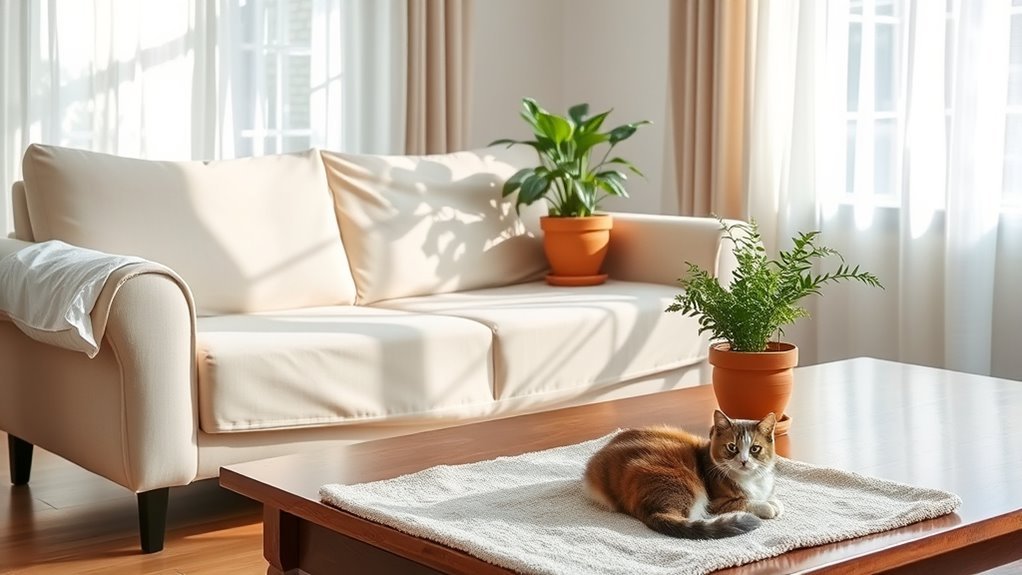
To effectively illuminate your living room for specific activities, position task lighting strategically where you’ll need it most. Here are some effective task lighting techniques to enhance your space:
- Desk Lamps: Place them near workspaces to guarantee ideal brightness during tasks.
- Under-Cabinet Lights: Install these in kitchens for clear visibility while cooking or preparing food.
- Adjustable Fixtures: Use swing-arm lamps or dimmable LEDs to customize brightness based on your needs.
- Focused Lighting: Incorporate pendant lights or directional floor lamps to minimize shadows and highlight specific areas.
Accent Lighting: Enhancing Your Mixed Lighting Design
Task lighting sets the stage for functionality in your living room, but accent lighting takes your design to the next level. Use accent techniques to highlight features like artwork or architectural details, enhancing visual interest. Opt for a variety of fixtures, such as adjustable LED spotlights and warm-toned table lamps, to create dynamic layering strategies. Mixing cooler wall-mounted lights with warmer accents fosters engaging color contrast. Dimmable options allow you to make mood shifts effortlessly, shifting from lively gatherings to cozy evenings. By strategically placing these elements, you invite depth and dimension into your space, enriching your living room’s atmosphere and liberating your design vision. Embrace the freedom of expression through thoughtful accent lighting!
Balancing Warm and Cool Tones for Depth and Mood
To create a living room that feels both inviting and dynamic, mix warm and cool lighting tones. Layering warm table lamps with cool overhead fixtures adds depth and contrast, enhancing the overall atmosphere while supporting different activities. This thoughtful balance not only defines spaces but also sets the perfect mood for every occasion.
Layering Warm and Cool Tones
While creating a balanced living room, layering warm and cool tones can greatly enhance the depth and mood of the space. Here’s how to effectively blend these colors through thoughtful fixture placement:
- Ambient Lighting: Use warm tones (2,700K to 3,000K) for overhead fixtures to establish a cozy backdrop.
- Task Lighting: Incorporate cool tones (4,000K and above) with table lamps for focused areas, energizing the atmosphere.
- Accent Features: Highlight artwork or architectural elements with cooler accent lights, ensuring they complement the warm glow.
- Layering Styles: Combine different fixture types, like floor lamps with table lamps, to create visual interest without overwhelming the room.
This harmonious blend will invite comfort and functionality, liberating your living space’s true potential.
Enhancing Depth With Contrast
When you balance warm and cool tones in your living room, you not only enhance depth but also create a dynamic atmosphere that adapts to your needs. Warm lighting, ranging from 2,700K to 3,000K, invites you in with coziness, while cool tones, between 4,000K and 5,000K, sharpen focus and functionality. Utilizing contrast techniques, layer these color temperatures to achieve visual depth, allowing your space to shift effortlessly throughout the day. Accent lighting with cooler hues can spotlight artwork, drawing the eye and establishing focal points. Remember, consistency is key; avoid abrupt changes to maintain a harmonious aesthetic. Embrace this balance, and watch your living room come alive, reflecting your vibrant lifestyle.
Selecting the Best Fixtures for Each Lighting Layer
Creating the perfect ambiance in your living room starts with selecting the right fixtures for each lighting layer. Here’s how to choose wisely:
- Ambient Lighting: Opt for ceiling fixtures like warm chandeliers (2700K-3000K) that set a cozy base.
- Task Lighting: Use adjustable table and floor lamps (3000K-4000K) for focused activities like reading or working.
- Accent Lighting: Incorporate cool wall sconces or picture lights (4000K-5000K) to showcase artwork without overwhelming the space.
- Layering Strategy: Mix fixture styles, like a bold pendant for ambient light and sleek LED strips for accent, to create a balanced, inviting atmosphere.
With these tips on lighting materials and fixture styles, you’re well on your way to a liberated living space!
Positioning Lights for Maximum Impact
To achieve a beautifully lit living room, it’s essential to position your lights with intention, allowing each layer to shine without competing for attention. Start with ambient lighting, like ceiling fixtures, centered in the room to create a balanced base. Next, strategically place task lighting—think table and floor lamps—near seating areas or workspaces, providing focused illumination without overwhelming the space. For accent lighting, use wall sconces or spotlights to highlight architectural features or artwork, adding depth and visual interest. Confirm a mix of warm and cool color temperatures by adjusting light placement and fixture height, directing warm tones to relaxation zones while cooler lights serve functional areas, creating a cohesive, inviting atmosphere.
Common Mistakes to Avoid With Mixed Lighting
While it might seem tempting to layer various light sources indiscriminately, doing so can lead to a haphazard look that detracts from your living room’s charm. To achieve a harmonious atmosphere, steer clear of these common mistakes:
- Mixing warm and cool temperatures: This disrupts the overall harmony and creates confusion.
- Inconsistent ambient lighting: Confirm your foundation lighting shares a color temperature to avoid harsh contrasts.
- Overloading with light sources: Stick to two or three color temperatures for cohesiveness.
- Placing direct lights above seating: This can cause glare and harsh shadows, undermining comfort.
Frequently Asked Questions
What Are the Best Light Bulbs for Mixed Color Temperatures?
For mixed color temperatures, choose LED options that offer adjustable bulb brightness. Look for warm white and daylight bulbs to create a balanced ambiance, enhancing your living space while allowing you to set the perfect mood.
How Do I Adjust Lighting for Different Times of Day?
To gracefully embrace the day, you’ll make ambient adjustments using lighting layers. In the morning, opt for bright, cool tones; as evening descends, soften with warm hues, creating a cozy, inviting atmosphere for relaxation.
Can I Use Smart Bulbs for Mixed Lighting?
Yes, you can use smart bulbs for mixed lighting! Their benefits include easy color temperature adjustment, letting you effortlessly create the perfect ambiance for any moment. Embrace versatility and transform your space with vibrant, tailored lighting.
What Colors Work Best With Warm and Cool Lighting?
Warm neutrals like beige and soft whites balance cool tones, while rich jewel colors enhance lighting harmony. Experiment with color palettes that blend warm and cool shades to create a vibrant, inviting atmosphere in your living room.
How Can I Create a Focal Point With Lighting?
To create a focal point with lighting, use ambient lighting to set the mood and accent lights to highlight specific areas. This contrast draws the eye, transforming your space into a mesmerizing, inviting sanctuary.
Conclusion
By skillfully blending warm and cool lighting, you can transform your living room into a cozy yet vibrant space. Imagine curling up on the couch, surrounded by the perfect balance of light that enhances every moment. Have you considered how the right mix can elevate your mood and style? Remember, it’s all about layering and positioning your fixtures wisely to create that inviting atmosphere you’ve always dreamed of. Happy decorating!