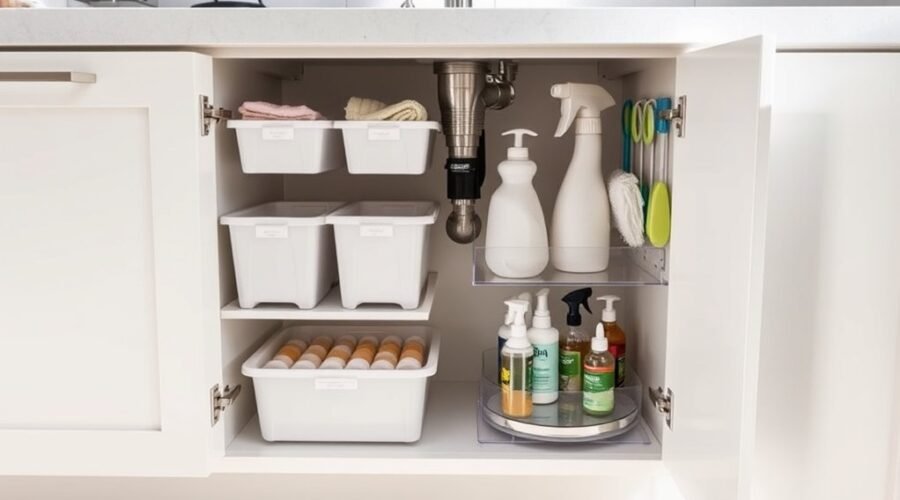
Organizing under the kitchen sink starts with clearing everything out and checking what truly belongs there. The space often hides awkward pipes, leaks, and wasted corners, so smart storage has to work around those limits. With the right bins, stackable solutions, and a few simple additions to the cabinet door, even a cramped area can become orderly and easy to use. The key is choosing a setup that fits the space instead of fighting it.
Clear Out the Under-Sink Cabinet
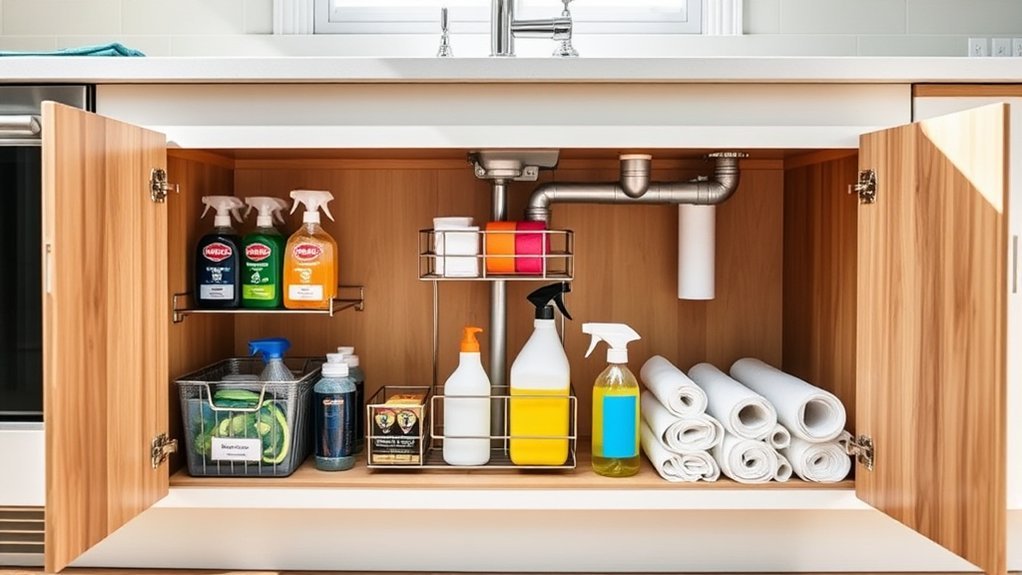
Begin by emptying the under-sink cabinet completely so the space can be assessed and every item accounted for. This first step creates a clear view of available storage and prevents clutter from hiding what is actually useful.
All contents should be placed aside, then the cabinet should be wiped down to remove spills, dust, and debris that restrict clean use of the area. Expired cleaning products, leaking containers, and damaged items should be discarded without delay.
The remaining items can then be grouped by type, such as cleaning supplies, tools, and backup items, so each category is easier to manage. This simple sorting process supports purposeful storage and reduces waste.
Once the cabinet is cleared and categorized, a practical plan can be made for storing each group according to size and shape. That preparation helps the space serve daily needs with less friction and greater freedom.
Measure Around Pipes and Plumbing
With the cabinet empty, the next step is to measure the under-sink space carefully around the pipes and plumbing fixtures. The height, width, and depth should all be recorded, with special attention to where the pipes interrupt open space.
A flexible measuring tape helps capture curved sections, tight corners, and irregular angles that a rigid tool could miss. Vertical clearance matters too, since using the full height can free more room while still leaving the plumbing unblocked.
It is wise to note the minimum access needed for valves and connections so storage will not trap essential parts. A simple diagram can turn these numbers into a clear plan, showing where organizers may fit around the pipes.
This careful measure gives the cabinet a sense of order and makes future storage choices more independent, efficient, and free from avoidable constraints.
Choose Under-Sink Storage That Fits
The cabinet should be measured carefully for height, width, and depth so storage fits around pipes and leaves access unobstructed.
Modular bins, pull-out trays, and clear containers can make the space more efficient while keeping supplies easy to see and reach.
Flexible options help the setup stay organized as storage needs change over time.
Recommended Products

【Sliding Drawer Design】The bottom drawer features a pull-out design, providing a convenient way to access items in a limited space.

【2 Pack Value Set】Sized at 15” x 8” x 12.8” each, these organizers fit perfectly for bathroom organizers and storage, kitchen organizers and storage, under sink organizer and under cabinet storage.

ESSENTIALS STORAGE PREFERRED: The multi-purpose organizer storage is a good helper to keep your vanity or bathroom countertop tidy. It can also be used as under sink organizer, kitchen organization, pantry organizer, refrigerator storage, cabinet storage. Suitable for storing cosmetics, toiletries, perfumes, cleaning supplies, snacks, bottles, spice jars
Measure Cabinet Dimensions
Before choosing any under-sink organizer, measuring the cabinet’s height, width, and depth helps confirm that the unit will fit around pipes, a garbage disposal, or other fixtures.
To measure cabinet dimensions well, a flexible tape should be used so irregular spaces are captured accurately. The top and bottom sections may differ, so each area deserves its own check before selecting a storage system. This prevents wasted purchases and supports a cleaner layout.
Storage units with pull-out drawers or tiered shelves can make better use of vertical space, especially where height is available. Door clearance should also be checked so opening and closing remains easy.
With accurate measurements, the cabinet can hold an efficient, accessible setup that serves daily use without constraint.
Work Around Plumbing
After the cabinet’s dimensions are known, the next step is choosing storage that works around the plumbing instead of against it. Effective sink storage should fill awkward spaces without boxing in pipes.
Modular bins, such as HÅLLBAR, can tuck into narrow corners and leave room for drains. Pull-out drawers and tiered organizers keep bottles reachable at the back. Adjustable shelving or turntables adds layers without waste. Measure height, width, and pipe protrusions so every inch is used with purpose, not guesswork.
- Slide a bin beside the trap.
- Lift a shelf above the pipe.
- Spin a turntable for quick access.
- Pull a drawer forward for cleaning supplies.
Choose pieces that install easily and adapt later. Freedom comes from storage that bends, shifts, and keeps clutter out of the way.
Stack Bins to Use Vertical Space
Stackable bins can turn unused height under the sink into useful storage.
Sorting items by height helps keep taller bottles accessible while smaller supplies fit neatly below.
Leaving enough vertical clearance between bins makes the setup easier to use and less crowded.
Recommended Products

Stackable Storage Bins: The top of the drawer has groove design ensures stacking. Use these stackable drawers to save space, which is also keep organized

Stackable Storage Bins-- The top of the drawer has groove design ensures stacking. Use these stackable drawers to save space, which is also keep organized.

[Stackable Design] Come with 5 storage drawers, included 12.1" W and 4.4''H&7.6‘’H storage containers. The storage containers are stackable, vertical storage will save a lot of space. Put your small objects in acrylic drawers to make your countertop space more tidy.
Choose Stackable Bins
Clear bins can turn the cramped space under a sink into a more efficient storage zone by using vertical space instead of spreading items out.
Stackable bins support simple organization ideas and help reclaim order with less effort. Clear, labeled containers keep supplies visible, so nothing gets trapped in the back.
- Place larger cleaners in the bottom bin.
- Stack medium supplies above them.
- Keep small brushes or sponges in a top bin.
- Label each container for fast access.
Different sizes make the setup more flexible, letting each item fit without waste.
Stackable bins also create calm by reducing clutter and making daily cleanup feel easier.
With a few well chosen bins, the under-sink area becomes orderly, open, and ready to serve.
Sort By Height
Vertical space under the sink can be put to work by sorting bins by height and stacking them to fit the cabinet’s full depth.
Smart storage starts with measuring the under-sink area so each bin matches available room. Taller items belong in lower bins or on lower shelves, while shorter supplies can sit above them without wasted space.
Clear stackable bins, or labeled ones, help keep contents visible even when placed at the back. Grouping similar items—cleaning products, sponges, trash bags—keeps retrieval simple and the cabinet orderly.
For added ease, tiered organizers or pull-out trays can be paired with stacked bins, supporting a tidy system that saves time and reduces clutter.
Maximize Vertical Clearance
Making full use of the space under the kitchen sink often comes down to building upward instead of spreading items out. Stackable bins help organize under the kitchen by turning unused vertical space into practical storage. Clear or labeled containers keep supplies visible, so nothing must be dug out from beneath a pile.
- Use bins of mixed heights for sprays, sponges, and brushes.
- Place heavier items on the bottom for stability.
- Add tiered shelving or pull-out drawers to reach items in back.
- Reserve upper levels for lighter backups and extras.
This layered setup increases capacity, reduces clutter, and supports a freer, easier routine.
With every inch working smarter, the cabinet becomes orderly, accessible, and ready for daily use.
Add Waste Sorting Bins Under the Sink
Adding waste sorting bins under the sink can make recycling and everyday disposal far more efficient. In a well planned sink cabinet, a HÅLLBAR system supports clear waste sorting, helping separate recyclables from general trash without clutter.
DAMMÄNG containers work well for bottles and cans, using depth and width efficiently while keeping items easy to reach. Smaller bins may be mounted on the inside of cabinet doors for quick disposal of wrappers, scraps, and other minor waste.
Larger bins with flip up lids suit bulkier refuse, since they open easily in compact spaces and reduce awkward handling. This setup gives each item a place, which can simplify routines and support a more independent kitchen.
Regular review is important: bins should be emptied, sorted, and decluttered before overflow becomes a burden. A tidy waste sorting station under the sink keeps the area orderly, functional, and ready for daily use.
Recommended Products

【RACK ONLY - TRASH CAN NOT INCLUDED】Package includes the stainless steel pull-out rack and mounting screws ONLY. CRITICAL SIZE NOTE: While the overall rack measures 16"D x 11"W x 16"H, the maximum usable INNER width for your trash can is 9 INCHES. Please measure both your cabinet and your trash can base before ordering!

[ HIDDEN DESIGN] Do you want to fall in love with cooking in a clean kitchen? Do you want to be no longer bothered by cleaning up the garbage anywhere in your kitchen. Our pull out trash can kit could completely solve your problems. Welcome to explore the usage! Note: not Include trash can.

VERSATILE UNDER COUNTER TRASH CAN – This space-saving waste bin can be used as a regular, standalone trash can, but it can also be conveniently hung to keep your floor spaces clean. Hang on the inside of a door for the perfect under cabinet storage, or on the outside for easy access.
Keep Cleaning Supplies Within Reach
Cleaning supplies can be kept just as orderly as waste bins by assigning them a clear place under the sink. A tidy kitchen sink area gives quick access without the drag of searching through clutter. Labeled containers make each bottle easy to spot, so cleaning supplies stay ready for action.
- Group dish soap, sponges, and disinfectants together.
- Use pull-out trays or a turntable to reach items at the back.
- Add LED cabinet lighting to brighten dark corners.
- Keep only daily-use items upfront; store backups farther away.
This simple system supports a freer routine because the right tool appears fast, not after rummaging. The kitchen sink becomes a working station instead of a cramped hiding place.
Regular sorting keeps the setup lean, clear, and useful. When every item has a visible home, the household can move through chores with less friction and more ease.
Protect the Cabinet From Leaks
A protective mat such as a VARIERA can shield the cabinet base from spills and leaks, helping the surface stay undamaged over time.
In the cabinet beneath the sink, this simple layer gives a reliable barrier against drips from bottles, plumbing, or the garbage disposal.
Cleaning bottles should stand upright in VARIERA containers, which reduces the chance of accidental leaks and keeps items orderly.
A drip tray under liquid cleaners adds another line of defense, catching stray drops before they spread.
Absorbent pads or washable mats can be used as replacements when moisture builds up, making upkeep easier and more flexible.
Regular checks around pipes, seals, and the garbage disposal help spot problems early, before water damage can take hold.
With a few careful choices, the cabinet stays dry, protected, and easier to manage without extra effort.
Use the Cabinet Door for Extra Storage
The inside of the cabinet door can provide useful extra storage when space beneath the sink is tight. A cabinet door can hold everyday items without crowding the base area, giving a cleaner, freer setup.
Adhesive hooks or small containers can hang lightweight tools, while a slim organizer keeps sponges and brushes ready at a moment’s notice.
- Mount hooks for gloves or scrubbers.
- Add a small caddy for sponges.
- Use pull-out trays for dish soap.
- Store trash bags in a neat pouch.
This extra storage should stay shallow so the door opens without obstruction. If a bin or caddy blocks access, the arrangement is no longer efficient.
It helps to reassess the setup often and remove items that are rarely used. A well-planned cabinet door turns unused space into practical support, helping the area stay organized, accessible, and easier to manage.
Frequently Asked Questions
What Are Some Smart Ways to Organize Under the Kitchen Sink?
Smart organization uses space saving solutions like modular bins, pull-out trays, and tiered organizers. Cleaning supply arrangement improves with labeled containers by purpose, door-mounted waste bins, and regular decluttering, freeing space and reducing frustration.
What Are Some Common Mistakes to Avoid When Organizing Under Sink Storage?
In today’s kingdom, common mistakes include misjudging space, ignoring accessibility, overcrowding, and skipping labels. A detached observer notes that exact measurements, pull-out storage, and regular checks help preserve order, usefulness, and freedom from clutter.
What Is the Best Organiser for Under the Kitchen Sink?
The best organiser is a pull-out, tiered unit with clear bins for sink organization and storage solutions. It uses vertical space, fits around pipes, labels easily, and keeps cleaning supplies visible, accessible, and clutter-free.
What Are Some Good Storage Options for Under the Kitchen Sink?
Good storage options include pull-out drawers, stackable bins, labeled baskets, and adjustable shelves. These basket options save space, and shelf height can be tailored around plumbing. Door hooks keep lightweight tools accessible and organized.
Conclusion
In the end, the under-sink cabinet becomes a small map of order. Clear bins stand like neat rows of glass, pipes are measured as careful borders, and stacked organizers rise like quiet steps toward unused space. Waste bins stay tucked below, while daily cleaners rest within easy reach. A dry liner shields the wood like an umbrella in rain, and the cabinet door serves as a final shelf, turning hidden clutter into a working tool.