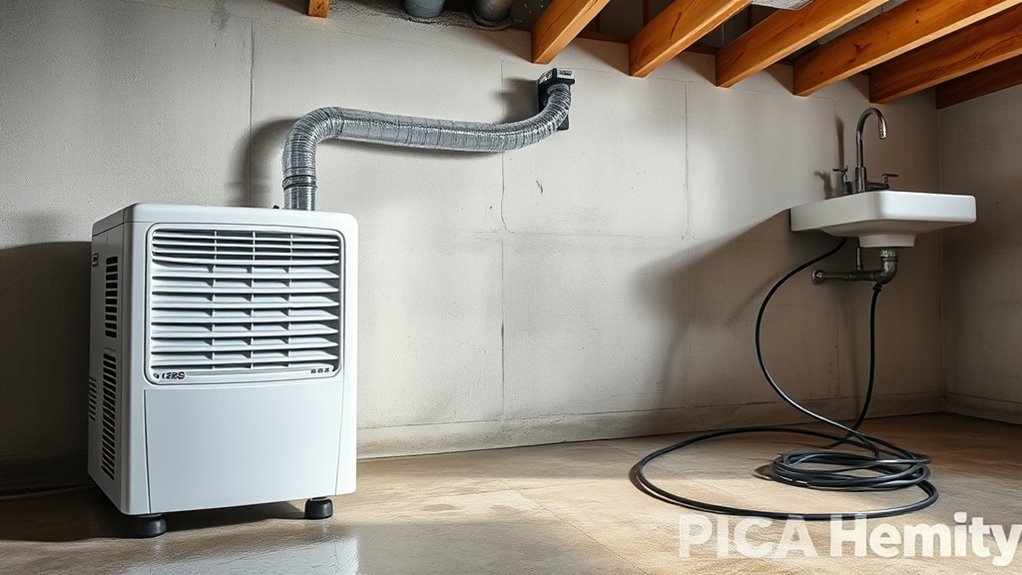
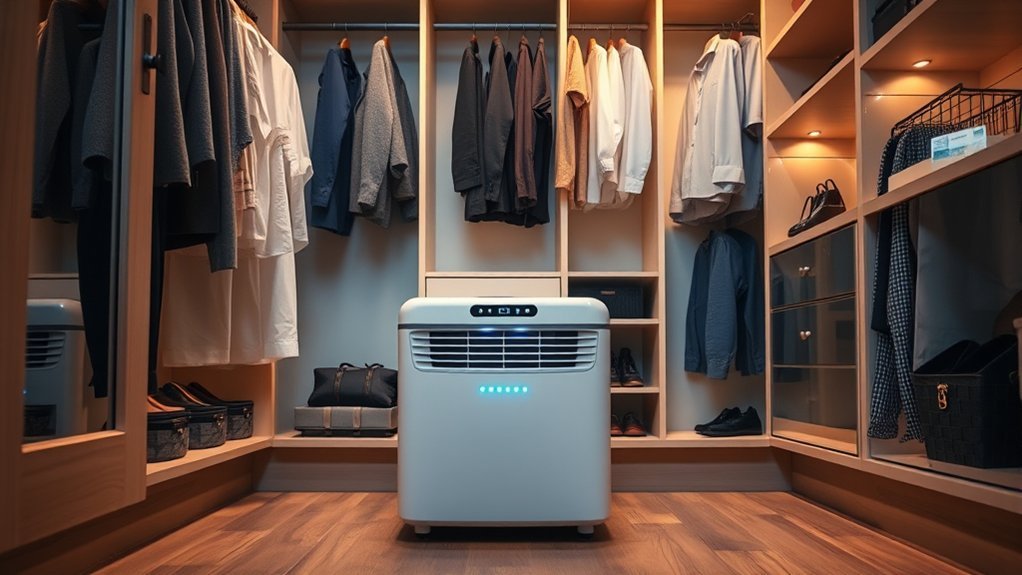
Affiliate disclosure: This article contains Amazon affiliate links. We may earn a commission from qualifying purchases at no extra cost to you.
A dehumidifier with auto shut-off can stop collecting water when its tank is full, helping reduce overflow risk when you cannot monitor the reservoir constantly. The right model still depends on the severity of the humidity, room size, operating temperature, drainage access, and noise tolerance. The four options below include two compressor dehumidifiers for persistent dampness and two compact thermoelectric models for lighter moisture in smaller enclosed spaces.
Quick verdict
Choose the PLUSCENT 32 Pint for the best overall balance of capacity, humidity control, portability, and continuous drainage. The KNKA 34 Pint is the stronger basement-focused alternative with full-tank alerts and several drainage choices. For bedrooms, bathrooms, RVs, and other smaller spaces, consider the BREEZOME 60 OZ. The lightweight NeedDuck 44 OZ is the most practical option for a very small room or closet.
How these products were selected
- Auto shut-off or a full-tank stopping function had to be stated for the current model.
- Daily extraction capacity was prioritized over large marketing coverage numbers.
- Drainage, tank size, noise, portability, and suitable room type were compared.
- Unavailable or materially confusing listings were removed from the roundup.
Quick Comparison
| Product | Best for | Listed removal | Auto shut-off | Drainage | Amazon |
|---|---|---|---|---|---|
| PLUSCENT 32 Pint Dehumidifier | Larger rooms and general basement use | Up to 32 pints per day | Automatic shutoff listed | 2-liter tank or gravity hose | Check Price |
| KNKA 34 Pint Dehumidifier | Basements and laundry areas | Up to 34 pints per day | Tank shut-off and full-tank alert | Tank, included hose, or optional external tank | Check Price |
| BREEZOME 60 OZ Dehumidifier | Bathrooms, RVs, and small bedrooms | Up to 700 ml per day under stated test conditions | Stops when the tank is full | 1.8-liter removable tank | Check Price |
| NeedDuck 44 OZ Dehumidifier | Closets and very small rooms | Not clearly stated | Automatic shutoff listed | 44-ounce removable tank | Check Price |
Important: Full-tank auto shut-off helps reduce overflow risk, but it does not repair leaks, stop groundwater intrusion, or correct structural dampness. For a persistently damp basement or large open area, prioritize daily pint capacity and continuous drainage rather than tank size, lighting, or sleep-mode features.
PLUSCENT 32 Pint Dehumidifier for Home
Best Overall for Larger Rooms
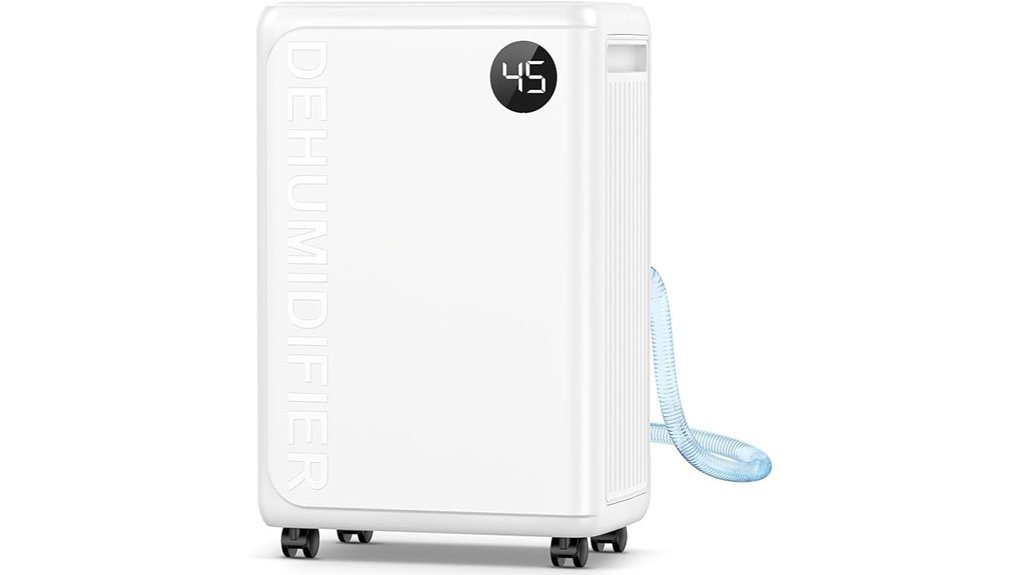
The PLUSCENT 32 Pint Dehumidifier offers the best balance in this roundup for ongoing humidity in a basement, laundry area, or larger living space. Its listing states removal of up to 32 pints per day, a 2-liter tank, automatic shutoff, adjustable humidity control, automatic defrost, automatic restart, a timer, and continuous gravity drainage.
The advertised 2,500-square-foot figure should be treated as an estimated maximum rather than a guaranteed result. Actual performance depends on room temperature, starting humidity, air leakage, ceiling height, and the source of the moisture.
Best For: Basements, laundry areas, larger rooms, and buyers who want both humidistat control and a drain-hose connection.
Why You’ll Like It: It removes substantially more moisture than the compact thermoelectric models while offering wheels, a washable filter, a child lock, three modes, and a 24-hour timer.
Who Should Avoid It: It is larger and more noticeable than a mini dehumidifier. Buyers without a suitable low drain will also need to empty the 2-liter tank regularly during humid weather.
Pros:
- Listed moisture removal of up to 32 pints per day.
- Automatic shutoff, humidity control, defrost, and restart functions.
- Continuous gravity drainage and a removable water tank.
- Washable filter, wheels, timer, and child lock.
Cons:
- The small tank may fill quickly when the drain hose is not used.
- Gravity drainage requires the hose to slope downward without kinks.
- The compressor and fan will be more noticeable than a mini thermoelectric unit.
KNKA 2500 Sq.Ft Dehumidifier with Drain Hose
Best for Basements
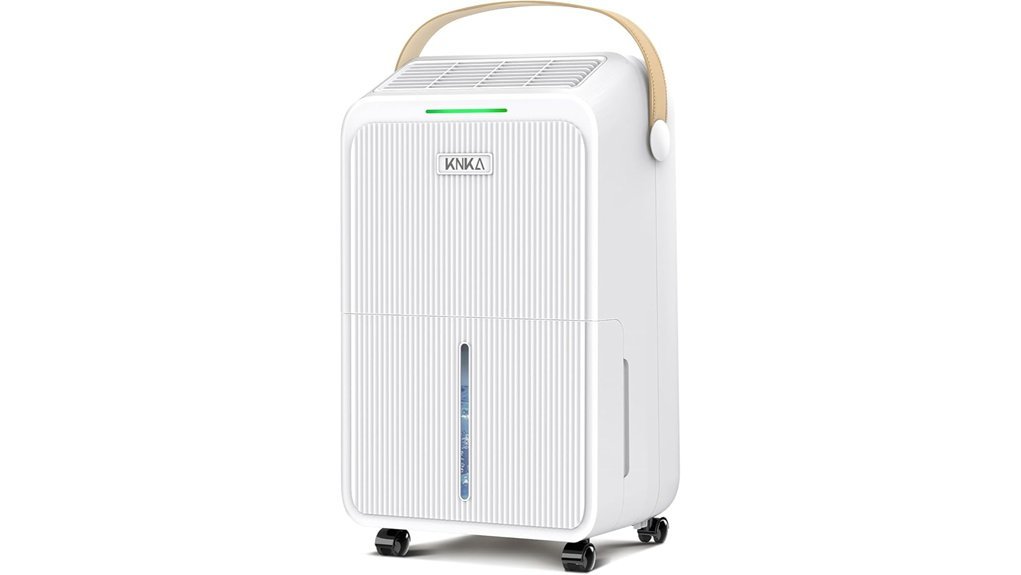
The KNKA is the highest-output option in this edited roundup, with a listed capacity of up to 34 pints per day. It provides adjustable humidity control, DEHU, DRY, and continuous modes, a 24-hour timer, full-tank alerts, and automatic shut-off for the built-in tank.
Its drainage system is especially useful for basement operation. Buyers can use the internal tank, connect the included 3.28-foot hose for gravity drainage, or purchase the compatible larger external tank separately. The optional external tank should not be confused with a built-in condensate pump.
Best For: Basements, laundry rooms, kitchens, and medium-to-large enclosed areas with recurring humidity.
Why You’ll Like It: The listing combines a slightly higher daily extraction claim than the PLUSCENT with a full-tank warning, automatic humidity cycling, wheels, and several water-management options.
Who Should Avoid It: It is excessive for a closet or lightly humid bathroom. It also requires a lower drain for continuous gravity drainage because it does not pump water upward.
Pros:
- Listed removal capacity of up to 34 pints per day.
- Auto shut-off and a visible full-tank alert.
- Adjustable humidity range and automatic humidity cycling.
- Included gravity-drain hose and optional larger external tank.
Cons:
- The 2,500-square-foot claim may be optimistic in a wet or poorly sealed basement.
- The optional external tank is sold separately.
- Gravity drainage cannot send water upward to a sink or raised outlet.
BREEZOME 60 OZ Dual-Semiconductor Dehumidifier
Best Compact High-Output Pick
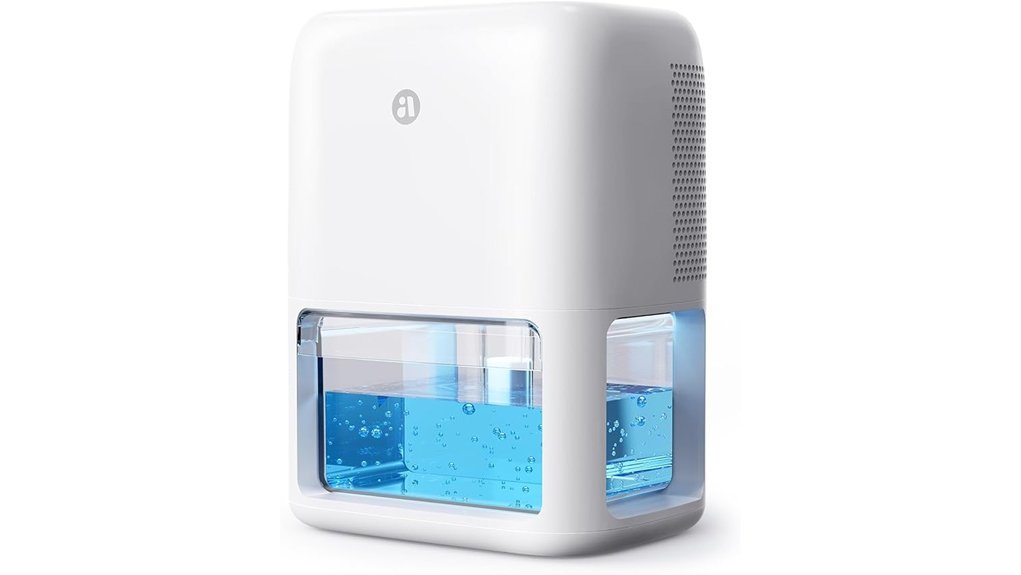
The BREEZOME 60 OZ Dehumidifier uses dual semiconductor condensers for localized moisture collection in smaller enclosed spaces. Its listing states removal of up to 700 ml per day when tested at 86°F and 80% relative humidity. Output will normally be lower in cooler or less humid rooms.
The unit includes a 1.8-liter tank, a built-in carrying handle, timer settings, automatic defrost, a sleep mode, colored lighting, and full-tank auto shut-off. The listing states that the unit stops and flashes a red indicator when the reservoir is full.
Best For: Bathrooms, RVs, small bedrooms, cloakrooms, kitchens, and other compact spaces with mild humidity.
Why You’ll Like It: Its seller-listed 700 ml daily output is relatively strong for a compact thermoelectric unit, while the 60-ounce tank reduces how often it must be emptied.
Who Should Avoid It: It is not a substitute for a compressor model in a wet basement, large open floor plan, or room with active water intrusion.
Pros:
- Seller-listed extraction of up to 700 ml per day under favorable test conditions.
- Large 1.8-liter tank for a compact model.
- Full-tank auto shut-off and warning light.
- Timer, handle, defrost function, and 35 dB sleep-mode claim.
Cons:
- Moisture removal decreases in cooler or less humid conditions.
- No continuous-drain connection is stated for this model.
- The tank still requires regular cleaning and manual emptying.
NeedDuck Portable Dehumidifier with 44OZ Water Tank
Best for Very Small Spaces
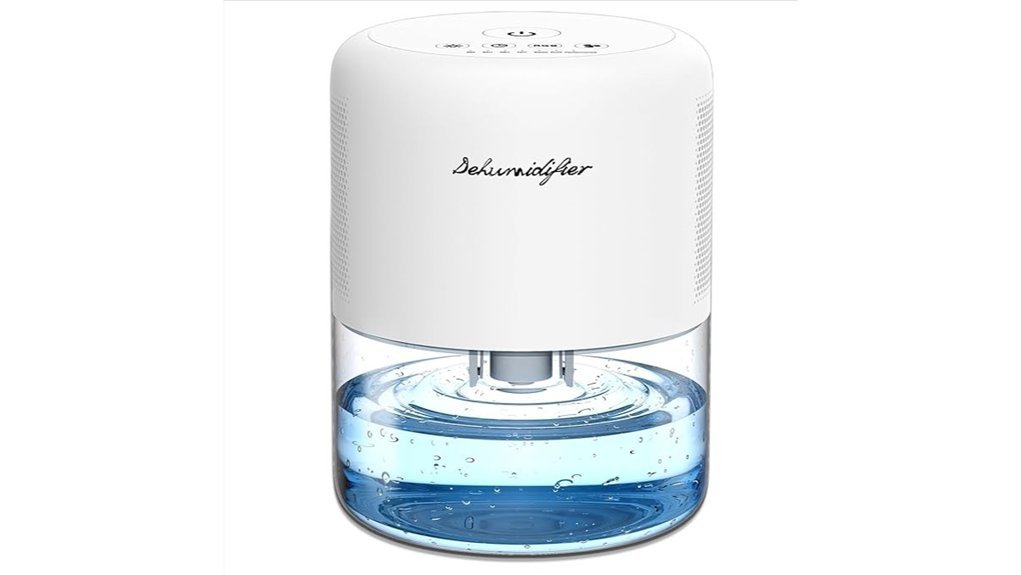
The NeedDuck 44 OZ Dehumidifier is the smallest-space option in this roundup. Its listing states a 44-ounce tank, automatic shutoff, automatic defrost, three operating speeds, several timer choices, ambient lighting, and estimated coverage of up to 215 square feet.
At approximately 2.56 pounds and 5.91 inches wide, it is easier to carry and place than the larger products. However, its listing does not clearly provide a dependable daily extraction figure, so buyers should view it as a gradual moisture-control product rather than a fast-drying appliance.
Best For: Closets, compact bathrooms, small bedrooms, RV storage areas, and other tight enclosed spaces.
Why You’ll Like It: It is lightweight, easy to place, and includes more operating and timer choices than many basic one-button mini dehumidifiers.
Who Should Avoid It: Do not choose it for a basement, large bedroom, active leak, or space that requires rapid humidity reduction.
Pros:
- Automatic shutoff and automatic defrost are listed.
- Compact 2.56-pound body and 44-ounce tank.
- Three speeds, timer choices, and adjustable lighting.
- Low listed power consumption of 28 watts.
Cons:
- The daily extraction rate is not clearly stated.
- Limited listed coverage of up to 215 square feet.
- No continuous-drain option is stated.
Factors to Consider When Choosing a Dehumidifier With Auto Shut-Off
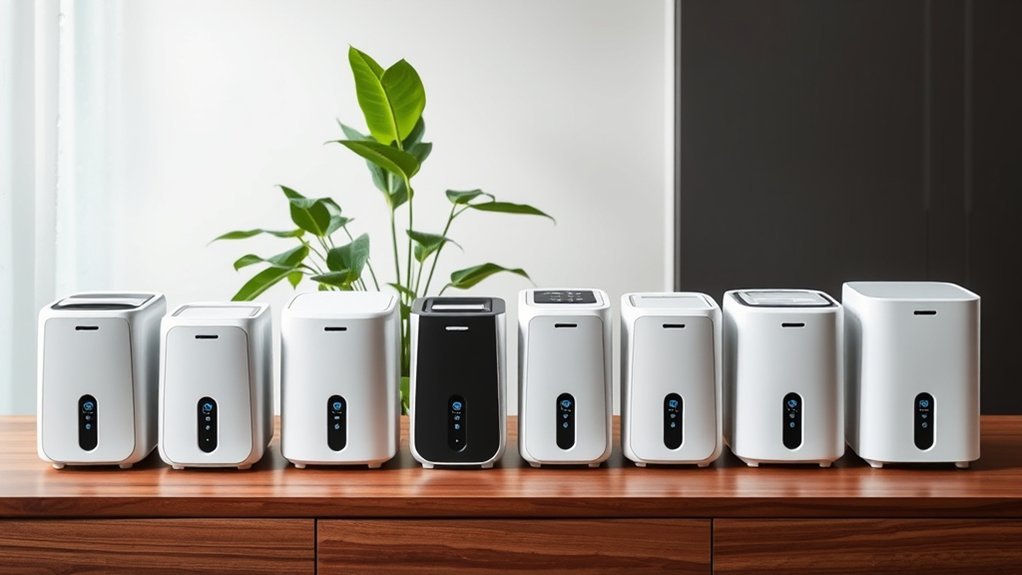
Start with the moisture problem rather than the tank size or advertised floor area. A compressor dehumidifier is normally the better choice for a damp basement, laundry area, or larger living space. A compact thermoelectric model is quieter and easier to carry, but it is designed for milder humidity in smaller enclosed areas.
1. Match Capacity to the Moisture Problem
Daily extraction capacity describes how quickly a dehumidifier can remove water from the air. Tank capacity only describes how much collected water it can store. A product with a large tank can still remove moisture slowly.
For persistent basement humidity, prioritize a verified pints-per-day rating. For a closet, RV, bathroom, or small bedroom with mild humidity, a thermoelectric model may be sufficient.
2. Treat Coverage Claims as Estimates
Square-foot coverage is not a standardized promise of performance. Room temperature, starting humidity, ceiling height, airflow, open doors, insulation, and water intrusion all affect how well a unit works.
When two products advertise similar coverage, compare their daily extraction figures and technology. A 30-pint compressor model and a 700 ml thermoelectric model are not equivalent, even when both listings mention large rooms.
3. Check Which Automatic Function Is Included
Full-tank auto shut-off stops the unit when the reservoir reaches its limit. Humidistat cycling stops or pauses a dehumidifier when the selected room-humidity level is reached. Automatic restart allows operation to resume after a power interruption.
These are separate functions. Check the current listing and manual for the exact combination included with the model.
4. Compare Noise Claims Carefully
A sleep mode can be useful in a bedroom or office, but manufacturers may measure noise under different conditions. Treat decibel figures as approximate comparison points rather than guaranteed real-room results.
Compressor units normally produce more fan and refrigeration noise than compact thermoelectric models, but they also remove far more moisture.
5. Choose Manual or Continuous Drainage
A removable tank is simple but requires regular emptying and cleaning. Continuous gravity drainage is more convenient for a basement or laundry area where the dehumidifier runs for long periods.
A gravity hose must run continuously downhill to a floor drain or other suitable outlet. It cannot lift water upward. Buyers who need to drain into a sink or through an elevated opening should look specifically for a built-in pump.
6. Check the Operating-Temperature Range
Compressor coils can collect frost in a cool room. Automatic defrost can help, but every model should still be operated only within the temperature range stated by its manufacturer.
Thermoelectric units also become less productive in cooler conditions. A mini model that performs well during a warm, humid test may collect substantially less water in a cool basement.
7. Review Size and Placement
Compare the actual dimensions and weight rather than relying only on product photos. Wheels are useful on compressor dehumidifiers, while a built-in handle is usually sufficient for a lightweight compact model.
Place the unit on a stable, level surface and keep its air intake and outlet clear. Follow the manufacturer’s required wall and furniture clearances.
8. Compare Energy Use With Output
A higher-capacity compressor dehumidifier generally uses more electricity than a small thermoelectric unit, but it can also remove many times more moisture. Wattage alone does not show which model is more efficient for a damp room.
When ENERGY STAR certification is important, verify the exact model number in the current certification directory rather than relying only on words used in a marketplace title.
9. Plan for Cleaning and Maintenance
Empty, rinse, and dry the reservoir regularly to reduce residue and odor. Clean a washable filter only as directed by the manufacturer, and do not assume a basic dust screen is a HEPA filter.
For continuous drainage, inspect the hose for kinks, buildup, loose connections, and an incorrect upward slope.
10. Before You Buy
- Confirm the current model name and electrical voltage.
- Check the daily moisture-removal rating and its test conditions.
- Verify tank size and full-tank shut-off behavior.
- Confirm whether drainage is manual, gravity-fed, or pump-assisted.
- Review the minimum operating temperature and defrost function.
- Check the warranty, return policy, hose length, and included accessories.
Frequently Asked Questions
How Does Auto Shut-Off Work in a Dehumidifier?
A full-tank auto shut-off normally uses a float or water-level sensor. When the reservoir reaches its limit, the unit stops collecting moisture to reduce overflow risk. A light, message, or audible alert may also indicate that the tank needs to be emptied.
Is Auto Shut-Off the Same as a Humidistat?
No. Full-tank shut-off responds to the water level in the reservoir. A humidistat responds to the humidity level in the room and cycles the dehumidifier on or off around a selected setting. Some larger models include both functions.
What Size Dehumidifier Is Best for My Room?
Choose according to room conditions and daily extraction capacity, not square footage alone. A higher-capacity compressor model is generally more suitable for a damp basement or large living area. A compact thermoelectric model is better for mild humidity in a small bathroom, closet, bedroom, office, or RV.
Can I Use a Dehumidifier in Colder Temperatures?
Only within the manufacturer’s stated operating range. Compressor coils may frost in cooler rooms, while thermoelectric moisture collection also drops as temperatures fall. Automatic defrost helps but does not make every unit suitable for an unheated winter space.
How Often Should I Empty the Water Tank?
Empty the reservoir when the full-tank indicator appears or the unit shuts off. A small tank may fill daily in humid weather, while the same tank may take several days to fill under mild conditions. Clean and dry it regularly instead of waiting only for it to become full.
Can Auto Shut-Off Replace a Drain Hose?
Auto shut-off prevents the unit from continuing to collect water into a full tank, but it also stops dehumidification. A correctly installed continuous drain allows a compatible model to keep running without repeated tank emptying.
Does Auto Shut-Off Mean I Can Leave the Unit Unattended?
Auto shut-off reduces overflow risk but does not eliminate the need for correct setup and routine inspection. Keep the unit level, leave its vents clear, check the cord and outlet, inspect the tank or drain hose, and follow all manufacturer instructions.
Conclusion
Final recommendation
For persistent humidity in a basement or larger room, begin with the PLUSCENT 32 Pint or KNKA 34 Pint. Their listed extraction rates are substantially higher than those of the compact models, and both support continuous gravity drainage. Choose the BREEZOME 60 OZ for localized moisture control in a bathroom, RV, or small bedroom. The NeedDuck 44 OZ is the better fit for a closet or very small enclosed room where portability matters more than rapid extraction.
The best dehumidifier with automatic shutoff is the one that matches both the room and the severity of the moisture problem. Full-tank shut-off is useful for water management, but extraction capacity, drainage, operating temperature, cleaning, and correct placement remain just as important. Confirm the current Amazon listing and product manual before ordering because model specifications and included accessories can change.