
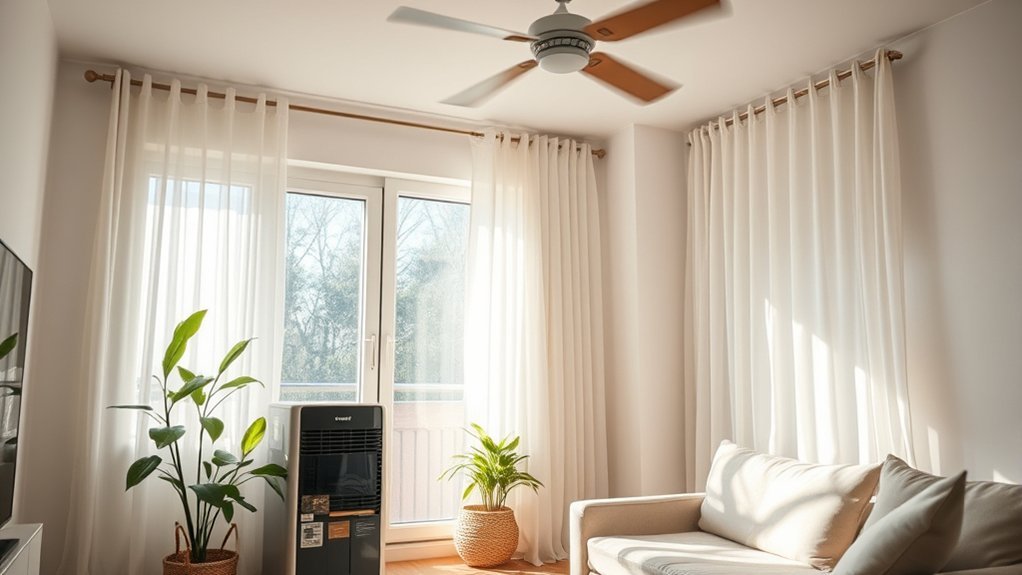
A humid apartment without central air can feel sticky, smell musty, and make condensation or mold more likely. The fastest way to lower humidity is to measure the air first, remove moisture at the source, run a properly sized dehumidifier, and use fans or exhaust vents only when they move damp air out instead of pulling more humid air in.
Quick Answer
To lower humidity in an apartment without central AC, keep indoor relative humidity around 30% to 50%, run a dehumidifier sized for your space, use bathroom and kitchen exhaust fans, keep windows closed when outdoor air is humid, and fix leaks or condensation quickly.
Key Takeaways
- Use a hygrometer first so you know whether your apartment is actually above the healthy humidity range.
- Aim for 30% to 50% relative humidity when possible; keep it below 60% at minimum to reduce mold risk.
- A dehumidifier works best with windows and doors closed, clean filters, good airflow, and the right pint capacity for the room.
- Fans help comfort and circulation, but they only lower humidity when they help exhaust damp air or move air through a dehumidifier.
- Persistent dampness, leaks, recurring condensation, or visible mold should be reported to your landlord or handled by a qualified professional.
At a Glance
| Time Required | 15 minutes to measure and set up; several hours to a few days to stabilize a damp apartment |
| Difficulty | Easy for basic humidity control; moderate if you need drainage, leak tracking, or landlord repairs |
| Tools Needed | Hygrometer, dehumidifier, fan, exhaust fan or range hood, towels, drain hose if available |
| Cost | Low for a hygrometer and simple habits; moderate for a portable dehumidifier and electricity use |
Why Your Apartment Gets So Humid
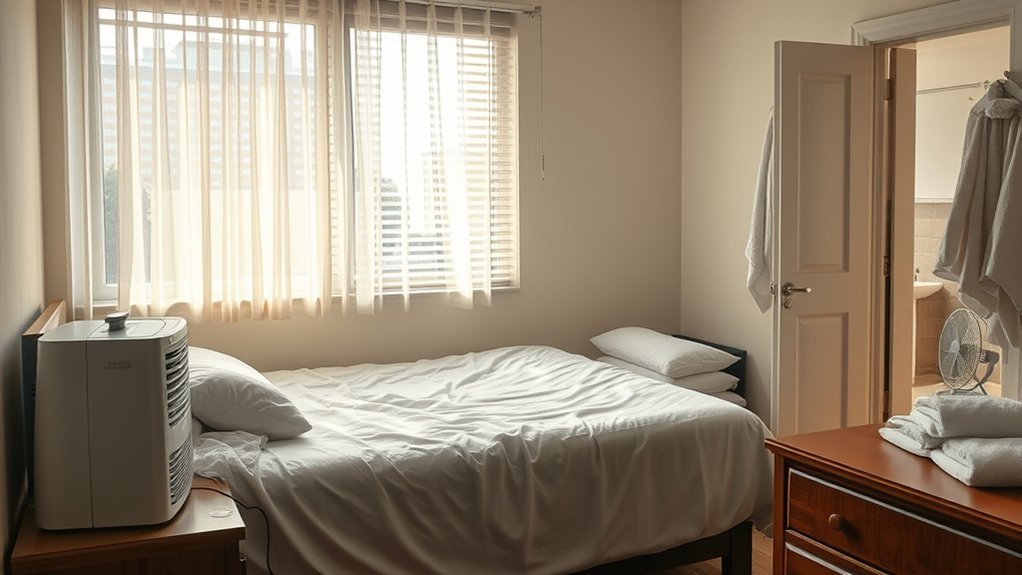
Your apartment gets humid when moisture builds up faster than it can escape. Cooking, boiling water, showering, drying laundry indoors, wet towels, houseplants, aquariums, and even normal breathing can add water vapor to the air. If your ventilation is weak, that damp air stays trapped instead of clearing out.
Older apartments can make this worse because leaky windows, unsealed gaps, thin walls, and poor bathroom ventilation let outdoor moisture seep in or keep indoor moisture from leaving. Hidden sources matter too. A small plumbing leak, damp cabinet, roof leak, wet window frame, or condensation behind furniture can keep feeding moisture into the space.
The goal is not just to make the apartment feel cooler. It is to keep indoor relative humidity in a range that supports comfort and lowers the chance of mold, mildew, dust mites, odors, and material damage.
Note: The U.S. Environmental Protection Agency recommends keeping indoor relative humidity below 60%, ideally between 30% and 50% when possible. The CDC recommends keeping home humidity no higher than 50% all day long to help prevent mold growth.
Measure Humidity Before You Start
Start with a hygrometer, which is a small humidity meter. Place it in the room that feels dampest, then check it again in the bedroom, bathroom, and kitchen. One reading is not enough because humidity changes after showers, cooking, rain, laundry, and open-window ventilation.
Use these readings as a simple decision guide:
- 30% to 50% RH: Good target range for most apartments.
- 50% to 60% RH: Watch closely, especially in bathrooms, closets, and rooms with condensation.
- Above 60% RH: Take action with a dehumidifier, better exhaust, and source control.
- Below 30% RH: The air may feel dry, especially in winter, so avoid over-drying the apartment.
Check humidity at different times of day. If it spikes after a shower but drops quickly, you may only need better exhaust habits. If it stays high all day, the apartment needs stronger dehumidification or a moisture source may be hidden.
Recommended Products

Wellness Indicator: This humidity meter with humidity level icon indicates air conditions - DRY/COMFORT/WET, allowing this humidity sensor to ensure you’re always aware of changes to your home/household with just a quick glance

Face Icon Comfort Indicator: Humidity temperature gauge features face icons to indicate DRY/COMFORT/WET air conditions, quickly informs you how to adjust your humidifier or dehumidifier to achieve optimal comfort.

1-【Widely Application】The digital LCD monitor can be used in home, office, garage, schools, hotels, laboratories, kindergartens, aquaculture, instrument workshop, warehouse, reptile tank terrarium, aquarium, hermit crab habitat, and other places where temperature/humidity measurement is required.
Use a Dehumidifier the Right Way
A portable dehumidifier is usually the most effective tool for lowering humidity without central AC. It pulls moisture from the air and collects the water in a tank or sends it through a drain hose. For best results, close windows and exterior doors while it runs so the unit is not fighting a constant supply of humid outdoor air.
Recommended Products

🍃Advanced Small Dehumidifier for Home: Designed for lasting home use, our bathroom dehumidifier works gently and steadily to maintain a balanced humidity level. The large 44 OZ (1.3L) water tank minimizes emptying frequency. Suitable for dorm room, camper, apartment, room, office and living room. No more dampness-just fresh, comfortable air everywhere

High Efficient Dehumidifiers for Home: This compact 44oz dehumidifier efficiently removes excess moisture in rooms with 86°F and 80% RH, collecting up to 11.8oz (349ml) of water in 24 hours. It maintains an ideal humidity level of 45%-55% while operating at ultra-low energy consumption (24W/hour, 576W/day). Perfect for bedrooms, bathrooms, and small spaces.

Upgrade High Efficient Dehumidification: Dehumidifier utilize semi conductor condensation technology, ensuring quiet operation while effectively extracting moisture from the air. This advanced feature helps keep humidity levels below 45%
Choose the Right Size
Choose a dehumidifier sized for your apartment, not just the cheapest or biggest model. ENERGY STAR explains that dehumidifier capacity is measured in pints per 24 hours, and the size you need depends on both the square footage and how damp the space is before dehumidification.
As a practical rule, a small bedroom or office may only need a compact unit, while a large living room, basement-style apartment, or very damp space may need a higher-capacity unit. Check the manufacturer’s rating, compare it with your room size, and choose a unit with an adjustable humidistat so you can set a target instead of running it blindly.
A dehumidifier that is too small may run constantly without reaching the target humidity. A unit that is sized correctly removes moisture faster, cycles more efficiently, and gives you better control.
Place It Strategically
Put the dehumidifier in the dampest room or near the center of the area you want to dry. Keep it at least 12 inches away from walls, curtains, furniture, and bedding so air can move freely through the intake and exhaust.
If the bedroom is humid at night, run the unit in or near the bedroom before sleep. If the bathroom is the main source, run it nearby after showers, but keep the unit away from splashing water. For an open-plan apartment, place it where air can circulate through the main living area.
Use Continuous Drainage If the Tank Fills Fast
If the tank fills every day, use continuous drainage if your model supports it. Most portable dehumidifiers can drain through a hose into a floor drain, utility sink, bathtub, shower, or condensate pump. Make sure the hose slopes downward unless the unit has a pump.
Pro Tip: If your dehumidifier shuts off before the room reaches the target humidity, check whether the bucket is full, the filter is dirty, the hose is kinked, or the unit is placed too close to a wall.
Maintain Optimal Humidity
Set the humidistat to about 45% to 50% for everyday control. If the unit does not allow exact settings, use your hygrometer to confirm the room stays near the 30% to 50% range. Empty and rinse the tank often, clean the filter according to the manual, and wipe any slime or mineral buildup before it becomes a mold source.
Warning: Check whether your dehumidifier model has been recalled through the U.S. Consumer Product Safety Commission. Plug the unit directly into a wall outlet unless the manual says otherwise, keep the cord dry, and stop using any unit that overheats, smells like burning plastic, or trips the breaker.
Run Fans to Improve Airflow
Fans do not remove water from the air by themselves, but they help move damp air toward an exhaust fan or dehumidifier. They also reduce the sticky feeling that comes with humid indoor air.
- Use ceiling fans for comfort. In summer, set most ceiling fans to rotate counterclockwise so air moves downward.
- Use box fans carefully. Put a fan in a window only when outdoor air is cooler and drier than indoor air. If it is muggy outside, close the window.
- Move air through problem rooms. Aim a fan from a damp bedroom, closet, or hallway toward the dehumidifier so moisture does not sit in one pocket.
- Clean fan blades and grilles. Dust buildup slows airflow and spreads particles around the room.
If outdoor humidity is high, the best setup is usually closed windows, a dehumidifier, and indoor air circulation. If outdoor air is dry, early morning or late evening ventilation can help flush the apartment before you close it back up.
Recommended Products

Energy Saving DC Adapter Fan - JUMXION box fan is equipped with 240V-120V to 5V DC adapter, energy efficient and easy to plug in. With 4.9ft USB-C cord, you can also connect camper fan to computer or RV. And Table cooling fan can be easy to put in any room corner, floor, table, window sill etc

AIR CIRCULATION: Designed specifically to pull in fresh outside air and circulate it evenly within your room.

VERSATILE REVERSIBLE AIRFLOW - Multi-functional electronic blades can be set to draw in outdoor fresh air, exhaust out indoor warm air or simultaneously exchange airflow for maximum cooling efficiency
Cut Off Steam, Leaks, and Condensation
Steam, leaks, and condensation can raise humidity fast, so cut moisture off at the source. Take shorter showers, use cooler water when practical, and run the bathroom exhaust fan during the shower and for at least 15 to 20 minutes afterward. In the kitchen, use a range hood that vents outdoors, cover pots while boiling water, and avoid long simmering without ventilation.
The EPA notes that local bathroom or kitchen fans that exhaust outdoors remove contaminants directly from the room where they are produced. Recirculating range hoods can catch grease and odors, but they do not remove moisture from the apartment.
| Source | Action | Result |
|---|---|---|
| Shower steam | Run an outdoor-venting exhaust fan and leave the door open after showering if privacy allows | Lower bathroom humidity |
| Cooking moisture | Cover pots, use a vented range hood, and avoid unnecessary boiling | Less steam in the kitchen |
| Plumbing leaks | Report or repair immediately | Stops hidden moisture |
| Window condensation | Wipe surfaces dry and improve airflow near cold glass | Reduces mold risk on sills and frames |
| Indoor laundry | Dry clothes outside the apartment, in a dryer vented outdoors, or near a dehumidifier | Prevents slow humidity buildup |
Wipe condensation from windows, walls, and cool surfaces as soon as you see it. Move furniture a few inches away from exterior walls if the wall feels cold or damp. Air needs space to circulate behind beds, sofas, and dressers.
Cool Your Apartment Without Adding Moisture
A humid room often feels hotter than it is because sweat evaporates more slowly. Lowering humidity can make the same temperature feel more comfortable, even without central AC.
Use these cooling methods that do not add moisture:
- Close blinds during direct sun. Less solar heat means the dehumidifier and fans do not work as hard.
- Run fans across occupied areas. Air movement improves comfort without changing the moisture level.
- Vent only when outdoor air is drier. Check the weather or compare indoor and outdoor humidity before opening windows.
- Avoid evaporative coolers in humid weather. They cool by adding moisture, so they are best only in dry climates and only if your hygrometer stays in range.
- Reduce heat-producing habits. Cook with lids, use smaller appliances when practical, and run dishwashers or dryers during cooler times of day.
If you use a portable air conditioner, make sure the exhaust hose is sealed well at the window. Poor seals can pull humid outdoor air back into the apartment and make the room feel damp again.
Room-by-Room Humidity Checklist
Humidity problems are often local. One damp bathroom, closet, or bedroom can make the whole apartment feel stale.
Bathroom
- Run the exhaust fan during and after showers.
- Leave the curtain or shower door open so surfaces dry faster.
- Hang towels flat instead of bunched on hooks.
- Report a fan that is weak, noisy, or not venting properly.
Kitchen
- Cover boiling pots.
- Use an outdoor-venting range hood when available.
- Wipe water around the sink and under the cabinet.
- Check for slow drips under the sink and dishwasher.
Bedroom and Closets
- Keep closet doors cracked open if they smell musty.
- Avoid pushing furniture tight against exterior walls.
- Do not store damp shoes, towels, or gym clothes in closed spaces.
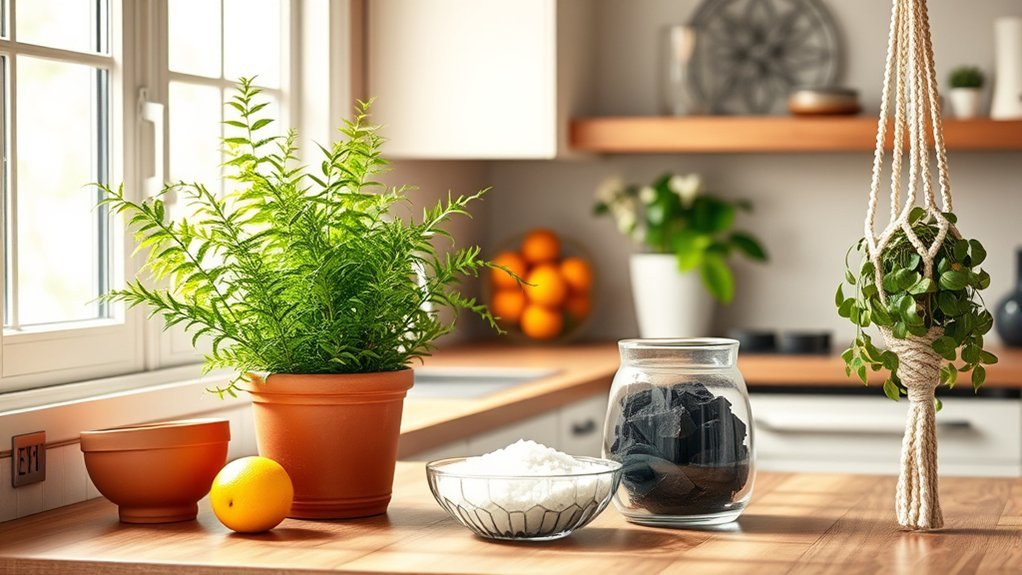
- Use moisture absorbers only as a small-space backup, not as a substitute for a dehumidifier.
Laundry and Living Areas
- Do not air-dry large loads indoors unless a dehumidifier is running nearby.
- Keep aquariums covered if possible.
- Avoid overwatering plants, and do not rely on plants to lower humidity.
- Use fans to move air through corners where it feels stale.
Troubleshooting: Why Humidity Stays High
If your dehumidifier runs but humidity stays above 55% to 60%, work through the problem step by step.
- Check the hygrometer location. Keep it away from windows, vents, showers, and the dehumidifier exhaust.
- Close windows and exterior doors. Humid outdoor air can undo the dehumidifier’s work.
- Clean the filter. A clogged filter limits airflow and moisture removal.
- Look for hidden water. Check under sinks, around toilets, behind curtains, near window frames, and along exterior walls.
- Check room temperature. Some portable dehumidifiers work less effectively in cooler spaces.
- Right-size the unit. A small unit may not be able to dry a large or very damp apartment.
- Improve air movement. Use a fan to move damp air from closed rooms toward the dehumidifier.
- Empty the tank or fix the drain hose. Many units stop automatically when the bucket is full or the hose is blocked.
Note: If you rent and the dampness comes from leaks, exterior water intrusion, failed ventilation, or recurring mold, document the problem with photos and humidity readings, then report it to your landlord or property manager.
Prevent Mold and Mildew Growth
Keep indoor humidity in the 30% to 50% range when possible, and do not let it stay above 60%. This reduces the conditions that allow mold and mildew to grow. The American Lung Association also recommends keeping homes below 50% humidity in humid areas to help reduce dust mites.
Moisture control matters more than surface cleaning alone. If you wipe mildew from a window frame but the glass keeps sweating every night, the problem will likely return. Dry the surface, improve airflow, lower indoor humidity, and look for cold spots or leaks.
For small spots on hard surfaces, follow the cleaning instructions from trusted public health sources and keep the area dry afterward. For large areas, recurring mold, mold inside walls, or mold connected to water damage, contact your landlord, building maintenance, or a qualified mold professional. Do not paint over damp or moldy material and assume the problem is solved.
Frequently Asked Questions
How do you cool down an apartment without central AC?
Close blinds during direct sun, run fans for airflow, ventilate only when outdoor air is cooler and drier, and use a dehumidifier to make the room feel less sticky. A portable AC can also help if the exhaust hose is sealed well and allowed by your lease.
How do you dehumidify a room without AC?
Use a portable dehumidifier, close humid outdoor air out, run exhaust fans during showers and cooking, wipe condensation, and remove damp items from the room. Moisture absorbers can help in small closets, but they are not strong enough for a whole room.
What humidity should an apartment be in summer?
A good summer target is usually 30% to 50% relative humidity. If the apartment stays above 60%, moisture control becomes more urgent because mold, mildew, condensation, and musty odors become more likely.
Should you use a dehumidifier if you have COPD?
A dehumidifier may help if your home is damp, but COPD symptoms are individual. Keep indoor humidity in a healthy range, avoid mold and dust mites, clean the unit often, and ask your clinician what indoor humidity range is best for your condition.
What is the $5000 rule for AC?
The $5000 rule is a rough central AC repair guideline: multiply the repair cost by the unit’s age, and if the result is over $5,000, replacement may be worth considering. It does not matter much if your goal is lowering humidity without central AC.
Can fans lower humidity by themselves?
No. Fans move air, but they do not remove water vapor. They help when they push damp air toward an exhaust fan, improve circulation around a dehumidifier, or bring in outdoor air that is actually drier than indoor air.
Why is my apartment humid even with the windows open?
Open windows can make humidity worse when outdoor air is humid. Your apartment may also have hidden moisture from leaks, wet materials, poor bathroom ventilation, indoor laundry, or condensation on cold surfaces.
Are baking soda and silica gel enough to dehumidify an apartment?
They can help in small enclosed spots like closets, cabinets, and storage bins, but they are not enough for a humid room or whole apartment. Use them as a backup, not as the main humidity-control method.
Conclusion
You can lower humidity in an apartment without central AC by controlling moisture instead of just chasing cool air. Measure humidity with a hygrometer, keep the apartment near 30% to 50% relative humidity, run a properly sized dehumidifier, use exhaust fans during showers and cooking, and keep windows closed when outdoor air is muggy.
If humidity stays high after those steps, look for hidden moisture. Leaks, failed bathroom fans, indoor laundry, condensation, and damp exterior walls can keep feeding the problem. Fixing the source is what turns a sticky apartment into a drier, healthier, more comfortable space.
Sources
- U.S. Environmental Protection Agency — A Brief Guide to Mold, Moisture and Your Home — backs indoor humidity targets and mold prevention guidance.
- Centers for Disease Control and Prevention — Mold — backs the recommendation to keep home humidity no higher than 50% for mold prevention.
- ENERGY STAR — Dehumidifiers — backs dehumidifier capacity and sizing considerations.
- U.S. Environmental Protection Agency — Improving Indoor Air Quality — backs the use of kitchen and bathroom fans that exhaust outdoors.
- American Lung Association — Dust Mites — backs humidity control below 50% in humid areas to reduce dust mites.
- U.S. Consumer Product Safety Commission — Dehumidifier Recalls — backs the dehumidifier safety and recall warning.

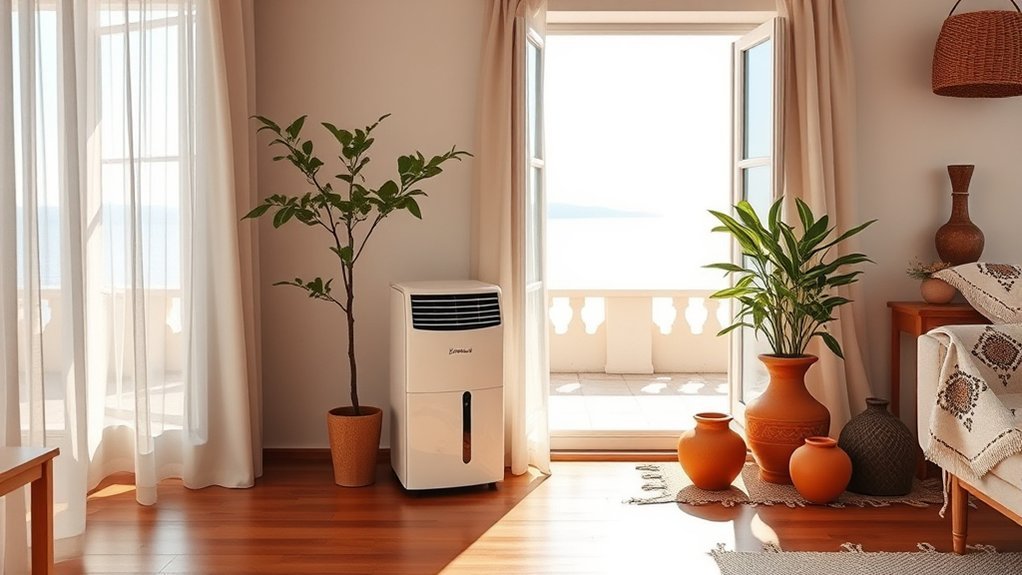

[…] a room-focused unit sized to the space, not a large-capacity unit meant for an entire floor plan. Guidance on dehumidifying apartments recommends matching unit capacity to the specific room rather than oversizing for the whole […]