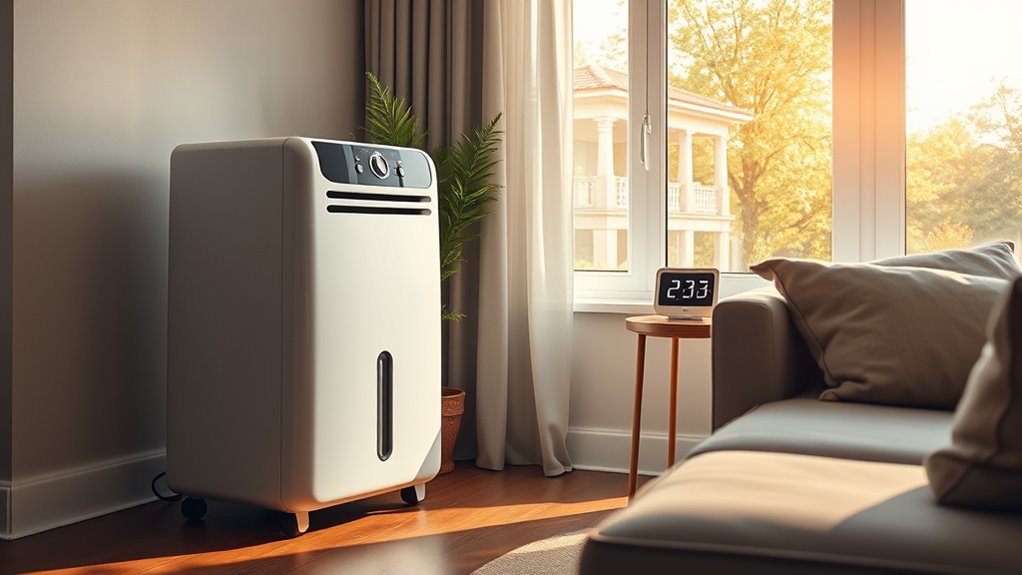
Set your dehumidifier based on the room’s actual relative humidity, not guesswork. For most rooms, a target of 45% to 50% relative humidity is the best starting point. Use 40% to 45% in damp, musty, or condensation-prone rooms, and avoid going below 30% unless a building professional or product manual gives you a specific reason.
Quick Answer
Set a dehumidifier to 45% to 50% RH for most rooms. Use 40% to 45% for basements, musty spaces, crawl spaces, or rooms with condensation. The percentage is the target relative humidity, not a temperature setting. Keep indoor humidity below 50% for mold and dust mite control, and never let normal living areas sit above 60% for long.
Key Takeaways
- 45% to 50% RH is the best everyday dehumidifier setting for most rooms.
- 40% to 45% RH works better for damp basements, crawl spaces, and rooms with musty odors or condensation.
- Use a separate hygrometer to confirm the room’s actual humidity, because built-in humidistats can be off by several percentage points.
- A dehumidifier helps prevent damp conditions, but it does not fix leaks, flooding, or mold already growing on materials.
- If the room stays above 60% RH after 24 hours, look for an active moisture source before lowering the setting again.
At a Glance
| Time Required | 10 minutes to set up, then 12 to 24 hours to judge the first results |
| Difficulty | Easy |
| Tools Needed | Dehumidifier, plug-in outlet, hygrometer, drain hose if using continuous drainage |
| Cost | Usually $10 to $50 for a basic hygrometer; operating cost depends on unit size, runtime, and electricity rate |
Quick Setting Decision Guide
| If the Room Reads | Set the Dehumidifier To | Next Step |
| Below 35% RH | Off or 50% | Raise the target or stop running the unit unless condensation still appears. |
| 35% to 50% RH | 45% to 50% | Use auto mode and check again after weather, showers, or laundry. |
| 50% to 60% RH | 40% to 45% | Run the unit with doors and windows closed, then recheck after 12 to 24 hours. |
| Above 60% RH | 40% to 45% temporarily | Check for leaks, seepage, blocked drains, wet materials, or an undersized unit. |
What Humidity Should a Dehumidifier Be Set To?
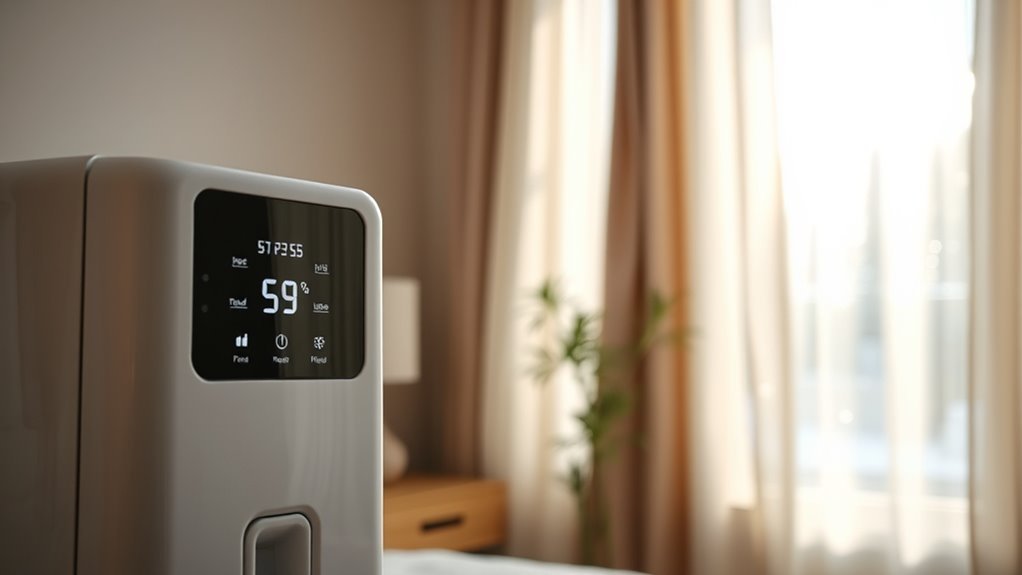
You should set a dehumidifier between 40% and 50% relative humidity in most damp rooms. For everyday living spaces, start at 45% to 50%. For basements, crawl spaces, laundry rooms, and musty areas, start closer to 40% to 45%.
The EPA recommends keeping indoor humidity between 30% and 50%, and the CDC advises keeping home humidity no higher than 50% all day to help prevent mold growth. That makes 50% a practical upper target, not just a comfort number.
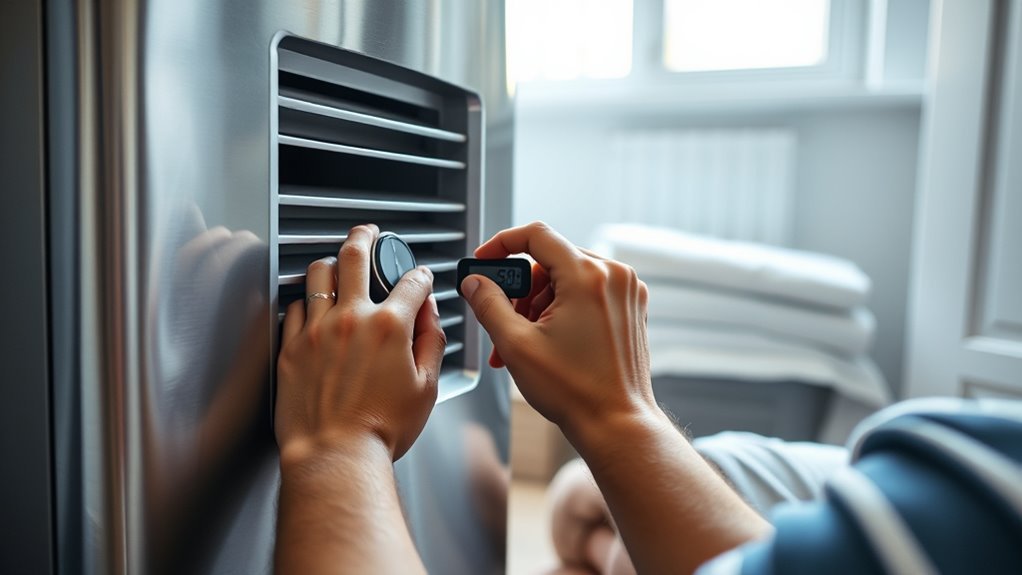
Note: The number on the dehumidifier display is not always the same as the room’s actual humidity. Place a separate hygrometer across the room and adjust the setting based on that reading.
Recommended Products

Wellness Indicator: This humidity meter with humidity level icon indicates air conditions - DRY/COMFORT/WET, allowing this humidity sensor to ensure you’re always aware of changes to your home/household with just a quick glance

1-【Widely Application】The digital LCD monitor can be used in home, office, garage, schools, hotels, laboratories, kindergartens, aquaculture, instrument workshop, warehouse, reptile tank terrarium, aquarium, hermit crab habitat, and other places where temperature/humidity measurement is required.

Smart Features: The Govee Wireless Thermometer Hygrometer supports all basic functions as well as smart functions such as remote monitoring and temp humidity graphs. Our humidity meters are reliable and easy to use for homes, greenhouses and more.(Only supports 164ft Bluetooth connection)
What Does the Percentage on a Dehumidifier Mean?
The percentage on a dehumidifier is the target relative humidity. A 45% setting means the unit tries to keep the room near 45% RH, then cycles off or slows down when the built-in humidistat thinks the room has reached that target.
That display can differ from a separate hygrometer because the sensor sits inside or near the appliance. Warm exhaust air, nearby walls, blocked airflow, and short cycling can make the unit read drier or wetter than the rest of the room. Use the dehumidifier’s display as a control, but use a hygrometer across the room as the room-level check.
Best Dehumidifier Settings by Room
Different rooms need slightly different targets because moisture sources are different. A bathroom after showers, a cool basement, and a normal bedroom should not always be treated the same way.
| Room or Area | Best Starting Setting | Why It Works |
| Living room | 45% to 50% | Comfortable for most people without over-drying the air |
| Bedroom | 40% to 50% | Helps reduce dampness while avoiding air that feels too dry overnight |
| Basement | 40% to 45% | Keeps damp air below the range where musty odors and mold risk increase |
| Crawl space | Below 50% | Helps protect wood framing, insulation, and flooring from chronic moisture |
| Bathroom or laundry room | 40% to 50% | Useful after showers, laundry, or poor ventilation |
| Garage or workshop | 45% to 55% | Helps reduce rust and mustiness without forcing the unit to run nonstop |
What Is the Best Indoor Humidity Range?
The best indoor humidity range is usually 30% to 50%. That range is dry enough to discourage mold, mildew, and dust mites, but not so dry that most people notice static, dry skin, or irritated sinuses.
Try not to let indoor humidity stay above 60%. The EPA says indoor humidity should be kept below 60%, ideally between 30% and 50%, and moisture meters or humidity meters can help you verify the real level in the room.
For most homes, treat 50% RH as the upper comfort target and 60% RH as the warning line. If a room keeps rising above 60%, look for moisture sources, not just a lower dehumidifier setting.
Recommended Humidity Range
Use these ranges as a practical guide:
- Below 30%: usually too dry for normal living areas.
- 30% to 40%: acceptable in winter if you are fighting window condensation, but it may feel dry.
- 40% to 50%: the best balance for comfort, mold prevention, and dust mite control.
- 50% to 60%: acceptable for short periods, but watch for musty odors, condensation, and allergen issues.
- Above 60%: too damp for long-term indoor conditions.
The American Lung Association recommends keeping homes below 50% humidity to help reduce dust mites, especially for people with allergies or asthma triggered by dust mite allergens.
Room-by-Room Targets
In most living areas, set the dehumidifier to 45% to 50%. In a damp basement, crawl space, or room with musty smells, set it closer to 40% to 45% until the room stabilizes. If the air starts to feel dry, raise the setting a few points.
For storage areas, workshops, and garages, the right target depends on what you store. Tools, paper, fabrics, and wood furniture do better when the air stays controlled, but a garage with frequent door opening may be hard to hold at 45% without wasting energy.
Monitoring And Adjustments
Do not set the unit once and ignore it. Humidity changes after rain, showers, laundry, cooking, and seasonal weather shifts. Check the room with a hygrometer, then adjust in small steps.
- Lower the setting by 5% if the room smells musty or the hygrometer reads above 55%.
- Raise the setting by 5% if the air feels dry or the hygrometer reads below 35%.
- Check basements after heavy rain because moisture can rise quickly.
- Use exhaust fans in bathrooms and kitchens so the dehumidifier is not doing all the work.
Pro Tip: Put the hygrometer away from the dehumidifier’s air outlet. If it sits too close to the unit, it may show a drier reading than the rest of the room.
How to Set a Dehumidifier Correctly
The best setting is easier to find when you follow a simple process. This keeps the room comfortable without making the unit run harder than necessary.
- Measure the room first. Place a hygrometer in the room for at least 15 to 30 minutes before changing the unit.
- Start at 45% to 50%. Use 45% for damp rooms and 50% for normal rooms.
- Close outside windows and doors. Otherwise, the unit keeps pulling in new humid air.
- Give the unit airflow. Keep furniture, walls, and curtains away from the intake and outlet according to the owner’s manual.
- Use auto mode after the room stabilizes. Continuous mode is useful for initial drying, but auto mode saves energy once the target is reached.
- Recheck after 12 to 24 hours. If the room still reads high, lower the setting slightly or look for a moisture source.
Warning: A dehumidifier does not solve active leaks, seepage, flooding, or visible mold. Fix the water source first. If mold covers a large area or keeps returning, follow EPA/CDC cleanup guidance or contact a qualified professional.
How Should You Adjust Dehumidifier Settings by Season?
Seasonal changes should guide your dehumidifier setting. Outdoor moisture, indoor heating, and condensation risk all change through the year.
Summer Settings
In summer, set the dehumidifier to 45% to 50% in most rooms. Warm outdoor air carries more moisture, so basements and lower levels may need a lower setting, around 40% to 45%, especially after storms or long humid spells.
Winter Settings
In winter, many homes naturally become drier because heating lowers indoor relative humidity. If your room is already below 40%, you may not need the dehumidifier at all. If you have condensation on windows, cold walls, or pipes, a setting around 35% to 45% may help, but do not over-dry the room.
Spring and Fall Settings
In spring and fall, start near 45%. These seasons can swing quickly between dry and damp, so check the hygrometer after rain, when opening windows, and when changing HVAC modes.
What Temperature Range Helps Dehumidifiers Work Best?
A dehumidifier does not have a “temperature setting” the way a thermostat does. It removes moisture from the air, and its performance depends on the room temperature, the amount of moisture in the air, and the type of unit.
Many compressor-style dehumidifiers work better in warmer rooms and lose efficiency in cooler spaces. ENERGY STAR explains that current portable dehumidifier capacity testing uses 65°F because it better reflects basement conditions, and cooler air contains less removable moisture than warmer air.
- Warmer rooms: most household compressor units remove moisture more predictably.
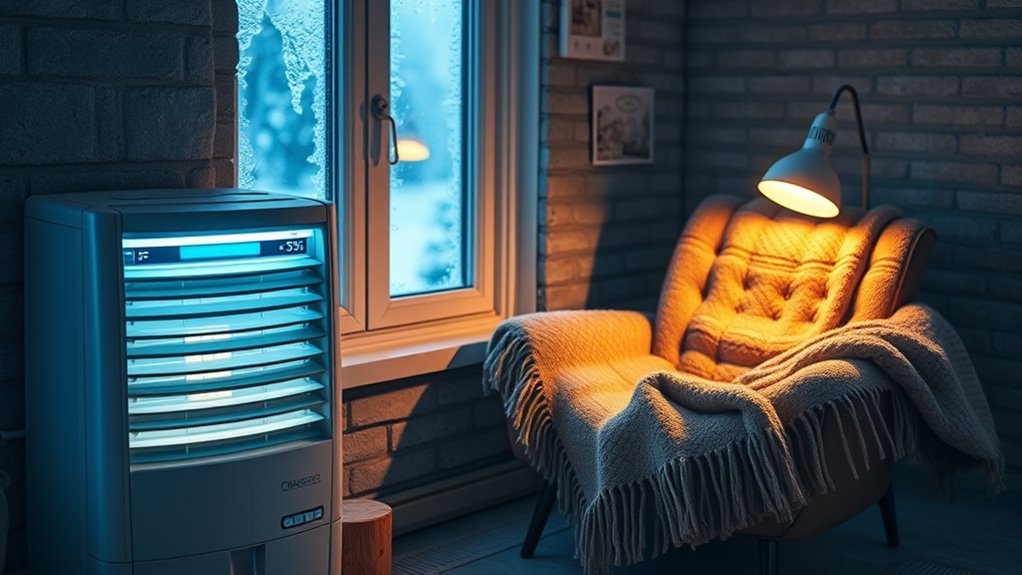
- Cool basements: performance may drop, so auto-defrost and proper airflow matter more.
- Rooms near the unit’s minimum operating temperature: check the manual before running a compressor unit; a desiccant or low-temperature model may work better.
Note: Always check your owner’s manual for the allowed operating temperature range. Some models are designed for cooler basements, while others may frost up or shut down in cold rooms.
What Are the Best Dehumidifier Settings for Basements and Cool Rooms?
For basements and cool rooms, set the dehumidifier to 40% to 45% if the space smells musty, feels damp, or has stored items you want to protect. Once the room is stable, you can raise the setting closer to 45% to 50% if it stays dry and comfortable.
Recommended Products

【𝟭𝟬𝟬 𝗣𝗶𝗻𝘁 𝗛𝗶𝗴𝗵-𝗖𝗮𝗽𝗮𝗰𝗶𝘁𝘆 𝗠𝗼𝗶𝘀𝘁𝘂𝗿𝗲 𝗥𝗲𝗺𝗼𝘃𝗮𝗹 – 𝗖𝗼𝗺𝗳𝗼𝗿𝘁 𝗬𝗼𝘂 𝗖𝗮𝗻 𝗙𝗲𝗲𝗹】 Enjoy a drier, fresher, and more comfortable home by reducing excess humidity in basements, garages, laundry rooms, and other damp spaces. Removes up to 100 pints of moisture per day under high-humidity conditions (95°F, 90% RH), and up to 70 pints per day at 86°F and 80% RH, delivering reliable moisture control across a wide range of indoor environments.

【The Undisputed Champion — Industry-Leading Dehumidifier Brand】When you choose AEOCKY, you get double market validation. According to data independently verified by Stackline, a leading third-party data analytics company, AEOCKY was an industry‑leading dehumidifier brand on Amazon U.S. in 2025. This means you’re not just choosing a flagship product from a market leader, but a top-performing brand backed by independent market data and trusted by millions of real users, delivering the ultimate combination of performance, quality and trust.

【34 Pint High Capacity for Up to 2,000 Sq.Ft Spaces】Removes up to 34 pints of moisture per day (95°F, 90% RH), ideal for basements, whole homes, garages, and commercial spaces. Designed for high-demand use, it reduces damp air, condensation, and pet-related odors caused by excess humidity. During humid seasons, it runs continuously to maintain a dry and comfortable indoor environment.
Basement Humidity Range
Basements are more likely to stay damp because they are cooler, partly below grade, and closer to soil moisture. Keep basement humidity below 50% when possible, especially if you store cardboard, fabric, wood furniture, books, or tools.
If your basement stays above 60% even with the dehumidifier running, check for foundation seepage, plumbing leaks, poor drainage, blocked gutters, or unsealed rim joists. Lowering the dehumidifier to 35% will not fix a water source.
Cool Room Dehumidifier Settings
In a cool room, start at 45% and watch whether the unit collects water normally. If the coils frost up, the tank stays empty, or the fan runs without reducing humidity, the room may be too cold for that model.
For colder spaces, choose a unit with auto-defrost, a low-temperature rating, or desiccant technology. These models are better suited to cool basements, garages, and unheated rooms.
When Should You Adjust Your Dehumidifier?
Adjust your dehumidifier whenever the room’s humidity moves outside your target range or when you see signs of moisture.
Signs the Setting Is Too High
- Musty odor
- Condensation on windows, pipes, or cold walls
- Clammy air or damp bedding
- Sticky floors or swollen wood
- Visible mildew or recurring mold spots
- Hygrometer reading above 55% to 60%
Signs the Setting Is Too Low
- Dry throat, dry skin, or irritated sinuses
- Static electricity
- Cracking wood, gaps in flooring, or overly dry furniture
- Hygrometer reading below 30% to 35%
- The unit runs constantly even though the room already feels dry
Should You Run a Dehumidifier All Day?
You can run a dehumidifier all day when a room is very damp, after heavy rain, or during the first day of drying a basement. Once the room reaches the target humidity, switch to the built-in humidistat or auto mode so the unit cycles only when needed.
Running all day at a very low setting can waste energy and make the air too dry. A setting of 45% to 50% gives the machine a clear target without forcing it to chase an uncomfortable number.
Dehumidifier Troubleshooting
| Problem | Likely Cause | What To Do |
| Humidity stays above 60% | Unit too small, windows open, or active moisture source | Close outside openings, check for leaks, clean the filter, and consider a larger unit |
| Unit runs constantly | Target is too low or room is still receiving moisture | Raise the target to 45% or 50% and inspect for water entry |
| Tank does not fill | Room is already dry, filter is dirty, or room is too cold | Check the hygrometer, clean the filter, and confirm the operating temperature range |
| Ice or frost appears | Cool room or restricted airflow | Turn the unit off to thaw, clean the filter, improve clearance, or use a low-temperature model |
| Musty smell remains | Existing mold, damp materials, or dirty appliance parts | Clean the unit, inspect materials, and remove or remediate mold safely |
Frequently Asked Questions
What does the percentage mean on a dehumidifier?
The percentage is the target relative humidity. If you set the unit to 45%, it tries to keep the room near 45% RH. Use a separate hygrometer across the room to confirm the real room reading.
What is the best temperature to set a dehumidifier?
You do not set a dehumidifier by temperature. You set the target humidity, usually 45% to 50% RH. Room temperature still matters because many compressor dehumidifiers remove moisture more efficiently in warmer rooms and may struggle in colder spaces. Check your owner’s manual for the model’s operating temperature range.
Is 40% or 50% better for a dehumidifier?
50% is usually better for normal rooms because it controls moisture without over-drying the air. 40% is better for damp basements, musty spaces, crawl spaces, or rooms with condensation. If the room feels dry, raise the setting closer to 45% or 50%.
Should you use a dehumidifier if you have COPD?
A dehumidifier may help if your home is damp, musty, or above 50% humidity, because dampness and mold can worsen indoor air quality. Keep the room around 40% to 50%, avoid over-drying the air, and ask your healthcare professional for personal guidance if COPD symptoms change or worsen.
Will a dehumidifier help dry out plaster?
A dehumidifier can help reduce room humidity around damp plaster, but do not force fresh plaster, drywall compound, or paint to dry too quickly. Rapid drying can cause cracking, weak curing, or finish problems. Use gentle airflow, steady temperature, and follow the product or contractor’s drying instructions.
Should you run a dehumidifier all day?
Yes, you can run it all day when humidity is high, after heavy rain, or during the first stage of drying a damp room. Once the hygrometer reaches your target, use auto mode or the built-in humidistat so the unit cycles on only when humidity rises again.
Can you set a dehumidifier to 30%?
You can, but it is usually too low for everyday use. A 30% setting can make the unit run longer, raise energy use, and make the room feel dry. For most homes, 40% to 50% is a better target.
Conclusion
The best dehumidifier setting is not one fixed number for every room. Start at 45% to 50% RH for normal spaces, use 40% to 45% for damp basements and musty rooms, and keep indoor humidity below 50% when mold or dust mites are a concern. Check the room with a hygrometer, adjust by season, and remember that persistent dampness usually means there is a moisture source that needs fixing.
Sources
- EPA: Care for Your Air: A Guide to Indoor Air Quality – supports the 30% to 50% indoor humidity range and use of a humidity gauge.
- EPA: A Brief Guide to Mold, Moisture and Your Home – supports keeping indoor humidity below 60%, ideally 30% to 50%, and using dehumidifiers when needed.
- CDC: Mold – supports keeping home humidity no higher than 50% all day to help prevent mold growth.
- American Lung Association: Dust Mites – supports keeping home humidity below 50% to help reduce dust mites.
- American Lung Association: Mold and Dampness – supports moisture control and respiratory-health cautions around damp indoor spaces.
- ENERGY STAR: Dehumidifier Testing and Capacity – supports the current 65°F portable dehumidifier test context and capacity-rating guidance.