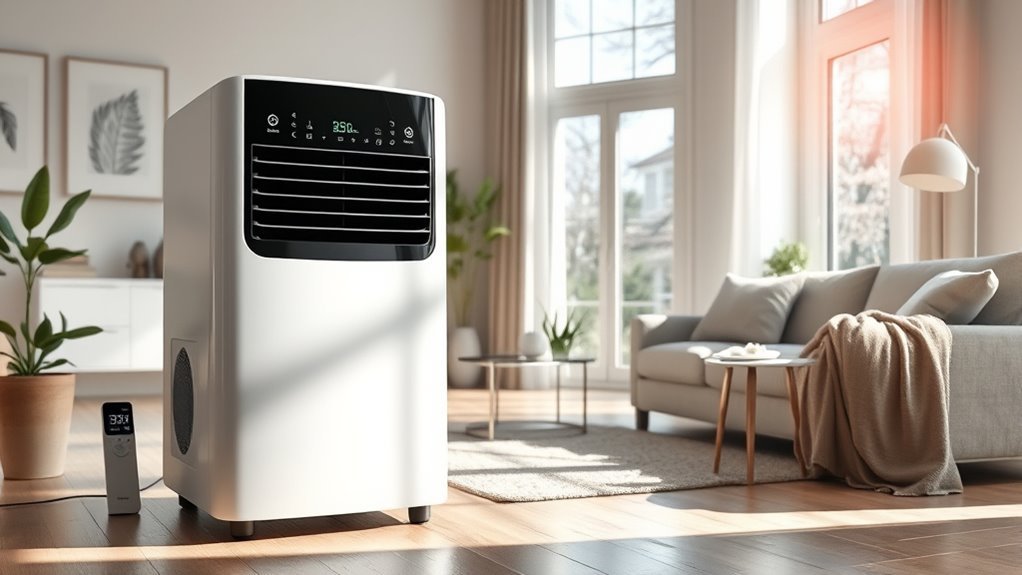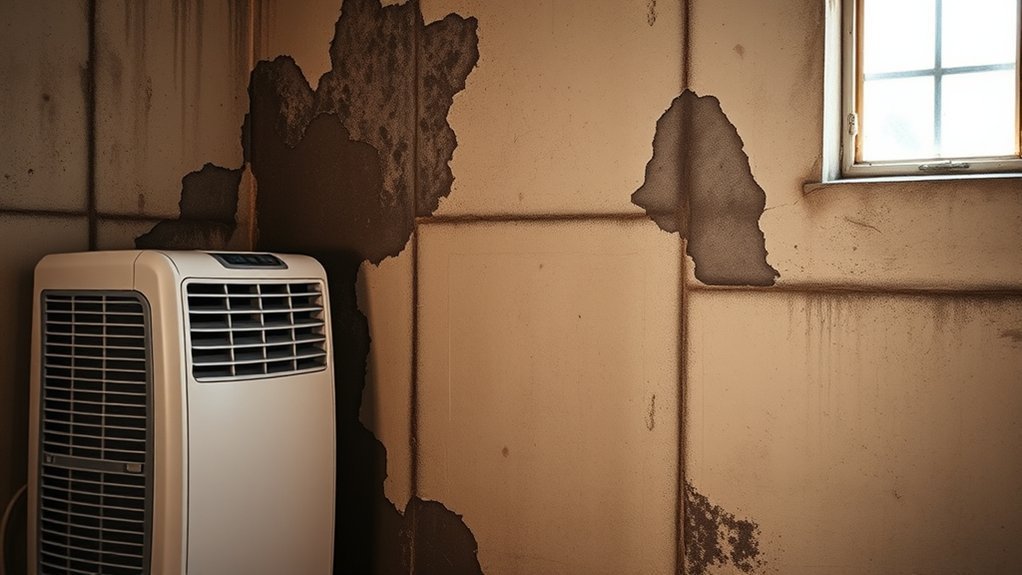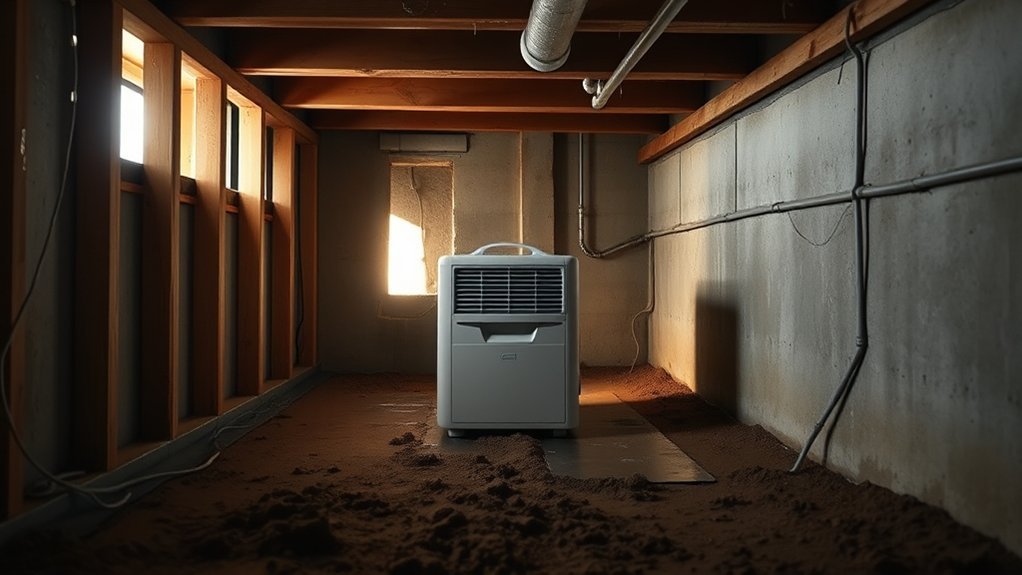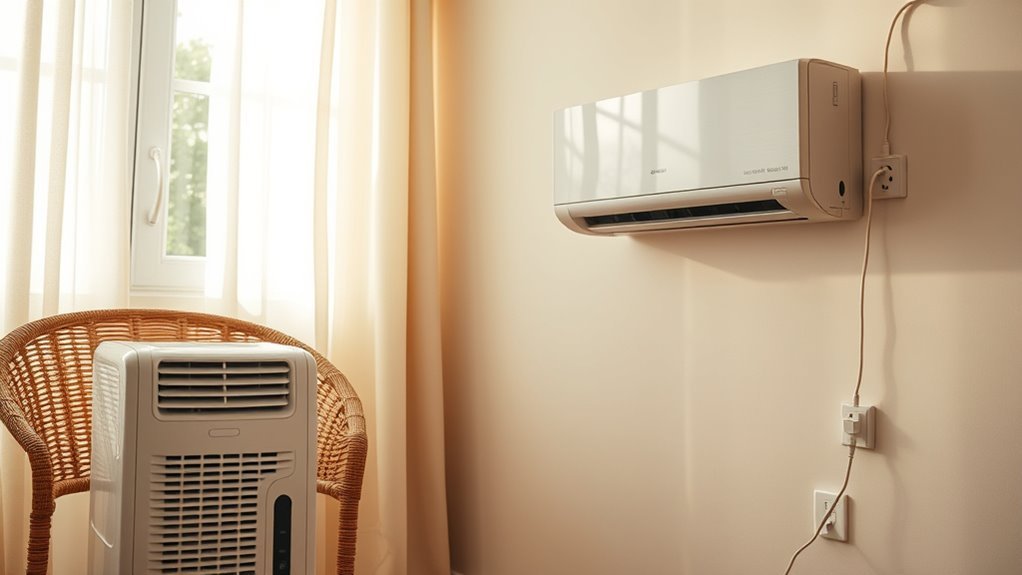
A dehumidifier usually uses less electricity than an air conditioner when the room is damp but already comfortable. Use AC when the room is hot and humid, because AC provides cooling plus some moisture removal. The only reliable way to compare cost is to multiply each appliance’s actual wattage by runtime and your electricity rate. In many homes, the cheapest setup is a dehumidifier for a mild basement or laundry room, AC for a hot living space, and both only when humidity stays high after cooling.
Quick Answer
A dehumidifier usually uses less electricity than AC when you only need to lower humidity. If the room is hot, an air conditioner can be more practical because it cools and removes moisture together. Compare the actual wattage, runtime, and electricity rate before deciding.
Key Takeaways
- Use a dehumidifier when the room feels damp but not hot.
- Use an air conditioner when you need both cooling and humidity control.
- Keep indoor relative humidity around 30% to 50% when possible to reduce mold risk.
- Estimate cost with this formula: watts × hours ÷ 1,000 × your electricity rate.
- Choose an ENERGY STAR certified dehumidifier when possible; certified models are 20% more efficient than non-certified models.
- Running both appliances together can help in some damp homes, but it also adds another electrical load.
Quick Comparison: Dehumidifier vs AC Electricity Use
This quick table helps you match the appliance to the room condition before you compare exact costs. Use it as a starting point, then check your appliance label or an energy-use monitor for the real wattage.
| Situation | Lower-cost starting point | Main reason |
|---|---|---|
| Damp room, comfortable temperature | Dehumidifier | Targets moisture without cooling the room |
| Hot and humid room | Air conditioner | Cools and removes some moisture at once |
| Cool basement below 65°F | Low-temperature dehumidifier | Standard units may frost and cycle poorly |
| Whole home stays humid after cooling | HVAC check or whole-home dehumidifier | May need sizing, ventilation, drainage, or duct fixes |
Recommended Products

DOMINATE EXCESS HUMIDITY (32 PINTS/DAY) - Engineered for heavy-duty humidity management, this unit rapidly removes up to 32 pints of moisture daily (under 95°F/90% RH conditions) to maintain a dry, crisp environment. It is a powerful dehumidifier for basement or open-concept living areas up to 2500 sq.ft, providing a reliable solution for home maintenance and property protection
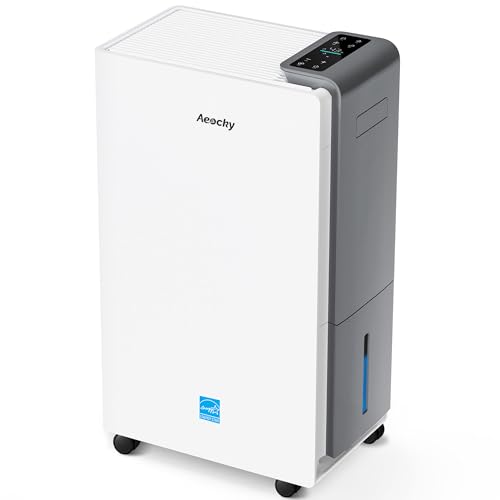
【ENERGY STAR 25 ≠ ENERGY STAR Most Efficient 2025】Don't fall for competitors' word games. With only 2.6% of ENERGY STAR models earning "Most Efficient 2025" title, these options are exceptionally rare on the market. RHEA-001 is one of the few to truly hold this top-tier certification. Many brands use misleading phrases like "Energy Star Efficient 25" or "Energy Star 25" to imply a standard they haven't met. Choosing them is a risk.With AEOCKY, you get verified performance and the peace of mind of authentic, top-tier efficiency.

𝐀𝐥𝐥-𝐒𝐞𝐚𝐬𝐨𝐧 𝐔𝐥𝐭𝐫𝐚-𝐐𝐮𝐢𝐞𝐭 𝐃𝐞𝐡𝐮𝐦𝐢𝐝𝐢𝐟𝐢𝐞𝐫: 𝐅𝐫𝐨𝐬𝐭-𝐅𝐫𝐞𝐞 𝐓𝐞𝐜𝐡 & 𝟏-𝐌𝐢𝐧 𝐀𝐮𝐭𝐨 𝐃𝐞𝐟𝐫𝐨𝐬𝐭 – Airvip dehumidifier for basement features soundproof panel for ultra-quiet operation, frost-free tech, and 1-minute auto defrost. Prevents ice buildup in low temperatures, efficient year-round
Does a Dehumidifier Use More Electricity Than AC?
No, a dehumidifier usually does not use more electricity than an air conditioner when the job is only moisture removal. A portable dehumidifier is designed to pull water from indoor air, collect it in a bucket or drain, and cycle on and off with a humidistat. An air conditioner uses more energy when it must cool the room, run a compressor, move heat outdoors, and remove some moisture at the same time.
That does not mean a dehumidifier is always cheaper. If the room is already hot, a dehumidifier may make the space feel slightly warmer because it releases heat back into the room. In that case, you may still need AC. The best choice is not “dehumidifier versus AC” in every situation. It is humidity-only problem versus heat-and-humidity problem.
For better efficiency, look for an ENERGY STAR certified dehumidifier. ENERGY STAR says certified dehumidifiers use more efficient refrigeration coils, compressors, and fans to remove the same amount of moisture as similarly sized conventional units while using 20% less energy.
The real cost is not just the appliance type. It is wattage, runtime, humidity load, room size, and your price per kilowatt-hour.
How Dehumidifiers and Air Conditioners Remove Moisture
A dehumidifier pulls damp air into the unit, passes it over cold coils, condenses water vapor into liquid, and sends drier air back into the room. Most portable models collect water in a bucket or drain it through a hose. This process is focused on humidity, not cooling.
An air conditioner also removes moisture when warm indoor air passes over a cold evaporator coil. Water condenses on the coil and drains away. But the AC’s main job is to lower temperature. That is why AC can be the better option when the room is both hot and humid.
The difference is simple: a dehumidifier targets moisture, while AC targets heat and removes moisture as part of the cooling process. If your thermostat is comfortable but the room feels sticky, a dehumidifier is often the leaner choice. If the room is hot, AC gives you the cooling a dehumidifier cannot provide.
Note: A dehumidifier is not a true cooling appliance. It can make humid air feel more comfortable, but it does not replace AC when the room temperature is too high.
How to Calculate the Electricity Cost
To compare a dehumidifier and AC fairly, use the actual wattage from the appliance label, manual, EnergyGuide label, manufacturer specification sheet, or a plug-in electricity monitor. The U.S. Department of Energy recommends this basic calculation:
(Wattage × hours used per day) ÷ 1,000 = daily kilowatt-hours (kWh)
Then multiply daily kWh by your electricity rate:
Daily kWh × electricity rate = daily cost
| Example appliance draw | 12-hour energy use | Cost at $0.15/kWh | 30-day estimate |
|---|---|---|---|
| 300 watts | 3.6 kWh | $0.54/day | $16.20/month |
| 500 watts | 6.0 kWh | $0.90/day | $27.00/month |
| 700 watts | 8.4 kWh | $1.26/day | $37.80/month |
These are examples, not guarantees. A dehumidifier with a humidistat may cycle off once the room reaches the target humidity, so the real cost can be lower than a straight 12-hour calculation. An AC can also cycle on and off depending on thermostat setting, room size, insulation, outdoor temperature, and sunlight.
A Simple Decision Test Before You Run Either Appliance
Before you run a dehumidifier or AC for hours, take three quick readings. First, measure room temperature. Second, measure relative humidity with a hygrometer. Third, check appliance wattage on the label, EnergyGuide label, manual, or energy monitor.
- If the room is comfortable but above 50% to 60% RH: start with the dehumidifier.
- If the room is hot and above 50% RH: start with AC, then reassess humidity after the room cools.
- If humidity stays high after AC runs: check whether the AC is oversized, fan speed is too high, or a moisture source is still active.
- If the appliance runs nonstop: resize the unit, seal outdoor air leaks, and look for water intrusion or poor ventilation.
When a Dehumidifier Is Cheaper to Run
You’ll usually spend less running a dehumidifier when humidity is the main problem and the room temperature is already comfortable. This often happens in basements, laundry areas, storage rooms, bathrooms, crawl-space-adjacent rooms, or sealed rooms that smell musty.
High Humidity, Mild Temperatures
A dehumidifier makes the most sense when indoor relative humidity is high but the temperature is mild. The EPA recommends keeping indoor humidity below 60% when possible and ideally between 30% and 50%. If your room is around a comfortable temperature but humidity is above that range, running AC just to remove moisture can waste cooling energy.
Use a hygrometer to check the room before you guess. If the room is 72°F to 78°F but feels sticky or smells damp, a dehumidifier may solve the problem without chilling the space.
Targeted Moisture Removal
A dehumidifier is also cheaper when you only need targeted moisture removal in one area. For example, you may not need to cool the whole home just because one basement room has high humidity. A portable dehumidifier lets you treat that room directly.
- Use it in the damp room, not the entire home, unless it is a whole-home system.
- Keep doors and windows closed while it runs.
- Use the built-in humidistat instead of running it nonstop.
- Drain the bucket or use a hose if the room stays damp for long periods.
Pro Tip: Start with a 50% relative humidity target. If the room still smells musty, try 45%. Avoid setting the target extremely low because that can waste energy and make the air feel too dry.
When an Air Conditioner Is the Better Energy Choice
An air conditioner is the better choice when the room is both hot and humid. In that case, the AC does two useful jobs at once: it cools the room and removes some moisture from the air. A dehumidifier may reduce stickiness, but it will not lower the room temperature.
Room AC sizing matters. The Department of Energy notes that an oversized room air conditioner can cool a room too quickly without dehumidifying it properly. That can leave you with a cold but clammy room. A properly sized unit often runs long enough to cool and remove moisture more effectively.
If your AC has a dry mode or dehumidify mode, it may help when the room is humid but does not need aggressive cooling. Check your owner’s manual because dry-mode behavior varies by model. Do not assume it always uses a fixed percentage less energy than cooling mode.
Recommended Products

HANDY AND PORTABLE: The SereneLife Portable Air Conditioner System features a lightweight, handy, sleek body design intended to be used in the bedroom, living room or garage at home or office. It features rolling wheels for easy portability

【OUTSTANDING COOLING ABILITY】- Shinco powerful ac unit owns a cooling capacity of 12,000 BTU(ASHRAE) / 7,500 BTU(SACC)(Tolerance of 5% between the measured cooling capacity and the nominal cooling capacity), making it perfect for cooling small to medium-sized spaces up to 450sq.ft with ease and making you can enjoy a comfortable and refreshing environment even in the hottest summer days. The adjustable temperature range of 60℉-86℉ allows you to customize your cooling experience to your liking

Powerful & Fast Cooling: Equipped with 12000 BTU (ASHRAE) / 8150 BTU (SACC) cooling capacity, this portable air conditioner delivers rapid and stable cooling to cover rooms up to 450-550 square feet. Featured with 3 adjustable fan speeds, it balances strong cooling power and quiet operation, bringing instant cool comfort for hot summer days
Why Running Both Can Raise Your Power Bill
Running a dehumidifier and an air conditioner at the same time can improve comfort in some damp homes, but it can also raise your electricity use because both appliances draw power. It is not automatically wrong, but it should be intentional.
- Your AC already removes some moisture while cooling.
- Your dehumidifier adds a second compressor or fan load.
- The dehumidifier can add slight heat to the room, which may make the AC work harder.
- If windows or doors are open, both appliances may fight incoming humid air.
Use both only when the AC alone cannot keep humidity under control, such as in a very damp basement, a humid climate, or a tightly sealed home with persistent moisture. If humidity stays high even with both appliances, look for the source: leaks, poor drainage, wet crawl spaces, unvented dryers, or weak bathroom/kitchen ventilation.
Warning: Do not use either appliance to ignore a leak, flood damage, or visible mold. Fix the moisture source first, dry wet materials quickly, and follow safe mold cleanup guidance.
How to Choose the Most Efficient Option
To choose the most efficient option, compare the humidity load, room temperature, and runtime you actually need. Then match the appliance to the job.
| Condition | Best choice | Why |
|---|---|---|
| Mild room, high humidity | Dehumidifier | Targets moisture without unnecessary cooling |
| Hot room, high humidity | Air conditioner | Cools and removes moisture together |
| One damp basement or laundry room | Dehumidifier | Treats the problem area directly |
| Cold but damp room | Low-temperature-rated dehumidifier | Standard units may frost in cooler rooms |
| Whole home feels humid | HVAC check or whole-home dehumidifier | May need sizing, drainage, duct, or ventilation fixes |
Recommended Products

Semiconductor dehumidifiers use thermoelectric cooling to remove moisture from the air. They create a drier, more comfortable environment by reducing humidity and improving air quality.

【𝐄𝐍𝐄𝐑𝐆𝐘 𝐒𝐓𝐀𝐑 𝐂𝐞𝐫𝐭𝐢𝐟𝐢𝐞𝐝 𝐟𝐨𝐫 𝐄𝐟𝐟𝐢𝐜𝐢𝐞𝐧𝐭 𝐏𝐞𝐫𝐟𝐨𝐫𝐦𝐚𝐧𝐜𝐞】Delivers consistent dehumidification across a variety of real-life conditions. Designed for energy-efficient operation, helping reduce excess power consumption and lower long-term energy costs without sacrificing performance

【150 Pints for Large Room up to 7,000 Sq. Ft】The Waykar dehumidifier for basement removes up to 150 pints of moisture per day ( at 95°F, 90% RH ), which cover areas up to 7,000 Sq. Ft. It adjusts humidity from 30% to 80% for more spaces. Ideal for basement, home, bathroom, garages, supermarkets, wine cellars, concourses, cellars, crawlspace, commercial or industrial large spaces, etc.
Efficiency Tips That Lower the Bill
Small setup choices can change the cost more than the appliance label suggests. Use these steps before you run either appliance for hours:
- Measure humidity first: Use a hygrometer instead of guessing. Aim for about 30% to 50% relative humidity in most homes.
- Close windows and exterior doors: Otherwise, you keep pulling in humid outdoor air.
- Clean filters: Dirty filters reduce airflow and make the appliance work harder.
- Use the humidistat or thermostat: Automatic cycling prevents unnecessary runtime.
- Size the appliance correctly: A too-small dehumidifier may run nonstop, while an oversized AC may cool without enough moisture removal.
- Fix moisture sources: Repair leaks, vent dryers outdoors, run bathroom fans, and keep gutters and drainage working.
- Check ENERGY STAR models: Compare capacity, integrated energy factor, and estimated energy use before buying.
Frequently Asked Questions
Is a dehumidifier cheaper to run than AC?
Usually, yes, if humidity is the main problem and the room does not need cooling. A dehumidifier targets moisture directly. If the room is hot, AC may be the better value because it cools and dehumidifies at the same time.
How much will my electric bill go up with a dehumidifier?
It depends on wattage, runtime, and your electricity rate. For example, a 500-watt unit running 12 hours uses 6 kWh. At $0.15 per kWh, that costs about $0.90 per day, or about $27 for 30 days. If the unit cycles off with a humidistat, the real cost may be lower.
How much does it cost to run a dehumidifier 12 hours a day?
Use this formula: watts × 12 ÷ 1,000 × your electricity rate. A 300-watt unit at $0.15 per kWh costs about $0.54 for 12 hours. A 700-watt unit at the same rate costs about $1.26 for 12 hours.
Should you use a dehumidifier if you have COPD?
A dehumidifier may help control dampness and mold risk if your indoor humidity is high, but it is not a COPD treatment. People with chronic lung disease can be more sensitive to damp or moldy environments, so keep humidity in a healthy range and ask your clinician what indoor-air targets are best for you.
Can a dehumidifier cool a room?
No. A dehumidifier can make a humid room feel less sticky, but it does not cool like AC. Many compressor dehumidifiers release some heat back into the room, so the air nearby may feel warmer.
What humidity setting saves the most energy?
For most homes, start around 50% relative humidity. If the room still smells damp or shows condensation, try 45%. Setting the target much lower can increase runtime and cost without giving you much extra comfort.
Should I run a dehumidifier and AC at the same time?
Run both only when AC alone cools the room but leaves humidity too high. Start with AC in hot rooms, then add the dehumidifier if humidity stays above your target. Keep windows closed and check for leaks, dryer vent problems, or weak exhaust fans if both appliances run often.
Conclusion
Choose the machine that matches your space and your goal. Use a dehumidifier for damp, mild rooms, an air conditioner for hot and humid rooms, and both only when one appliance cannot handle the moisture load. Measure humidity, size the unit correctly, set a realistic target, and avoid unnecessary runtime before you compare your next electric bill.
Sources
- ENERGY STAR — Dehumidifiers — dehumidifier efficiency, capacity, humidistat, operating temperature, and indoor humidity guidance.
- ENERGY STAR — Room Air Conditioners — room AC buying guidance and efficiency considerations.
- U.S. Department of Energy — Room Air Conditioners — AC sizing, EER2, dehumidification, and operating tips.
- U.S. Department of Energy — Estimating Appliance Energy Use — wattage, kWh, and cost calculation formula.
- U.S. EPA — Mold, Moisture, and Your Home — moisture control and recommended indoor humidity range.
- CDC — Mold — mold prevention, humidity control, and respiratory health cautions.