Last updated: August 1, 2026.
If you are comparing the best desktop dehumidifiers for 2026, focus on realistic moisture-removal capacity, tank size, noise, power use, and automatic shutoff. This guide compares three powered compact models: TABYIK for the best overall balance, MORFY for the largest tank, and Bangnics for tight spaces.
These small Peltier or thermoelectric dehumidifiers are best for mild, localized moisture in enclosed bedrooms, offices, closets, storage areas, and compatible RV spaces. They are not substitutes for a properly sized compressor dehumidifier in a wet basement, large open room, or space with an active leak.
Quick Verdict
Best Overall: TABYIK 35 OZ Dehumidifier offers the most useful balance of compact dimensions, a medium-size tank, automatic shutoff, and a low manufacturer-listed noise figure.
Best for a Larger Tank: MORFY has the largest tank and the highest manufacturer-stated daily collection figure in this comparison.
Best for Tight Spaces: Bangnics has the narrowest footprint and a low 25-watt power rating.
Before You Buy: The supplied listing information does not document a user-set humidistat or continuous-drain connection for these models. Use a separate hygrometer to confirm that a unit is lowering humidity, and expect to empty its tank manually.
Quick Comparison of the Best Desktop Dehumidifiers
| Model | Best For | Manufacturer-Stated Maximum Collection* | Tank | Listed Noise | Main Limitation | Amazon |
|---|---|---|---|---|---|---|
| TABYIK 35 OZ | Balanced bedroom, office, closet, or RV use | Up to 16 oz | 35 oz nominal tank | 28 dB | One speed and no documented humidity setpoint | Check Current Availability |
| MORFY | Larger tank and fewer emptying trips | Up to 25 oz | 60 oz | About 35 dB in Sleep Mode | Higher power draw and still limited to localized moisture | Check Current Availability |
| Bangnics | Desks, shelves, closets, and compact RV areas | Up to about 14 oz | 17 oz | Under 30 dB | Small tank may require frequent emptying | Check Current Availability |
*Daily collection figures are manufacturer-stated maximums measured under warm, highly humid, closed-room conditions, generally around 86°F and 80% relative humidity. Actual collection is usually lower in cooler, less humid, or less enclosed spaces.
MORFY Small Dehumidifier for Bedroom, RV, and Closet
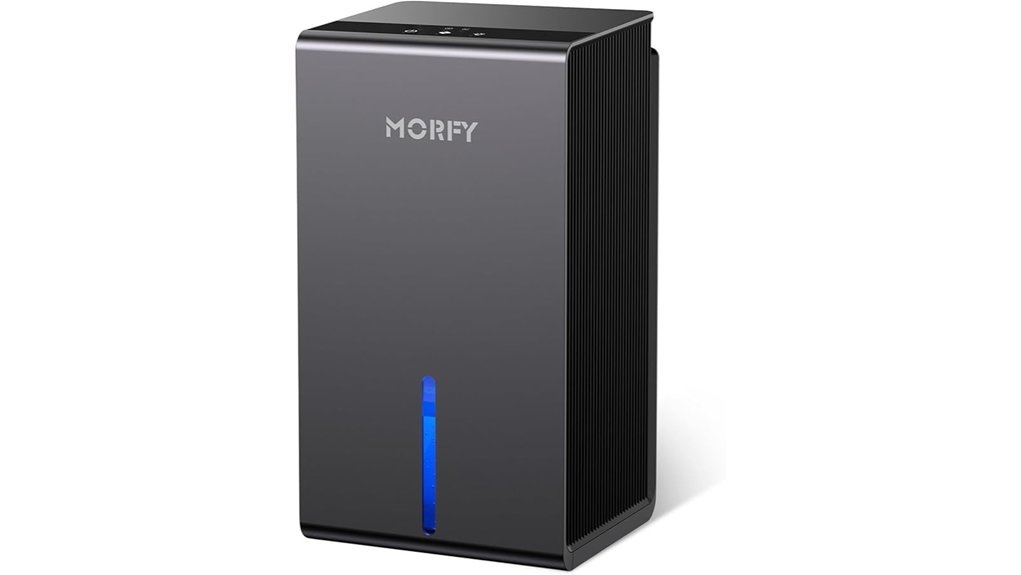
The MORFY compact dehumidifier is the best fit here when you want a larger water tank and fewer trips to empty it. Its 60-ounce tank is substantially larger than the tanks in the Bangnics and TABYIK models. The manufacturer states that it can remove up to 25 ounces, or 750 ml, of moisture in 24 hours in a sealed room at 86°F and 80% relative humidity. Treat that as a best-case figure rather than typical output.
The unit measures approximately 5.3 x 6.4 x 11.5 inches and has a listed power rating of 48 watts. Its Sleep Mode has a manufacturer-listed noise level of approximately 35 dB and reduces most of the decorative lighting. Automatic shutoff, a removable tank, automatic defrost, and two operating modes add convenience.
This model solves one of the main frustrations associated with very small desktop dehumidifiers: a tank that fills quickly. The larger reservoir does not make it a whole-room or basement dehumidifier, but it can make routine use more convenient in a mildly humid enclosed area.
Best For: Buyers who want a compact powered dehumidifier with a larger tank for a small bedroom zone, office, closet, dry storage area, or compatible RV space.
Why You’ll Like It: The 60-ounce tank can reduce how often you need to stop and empty the unit compared with smaller desktop models.
Who Should Avoid It: Skip it if you need to control severe dampness, dry a large open room, maintain an exact humidity setting, or handle an active leak. A compressor dehumidifier with an appropriate pint-per-day rating will be more suitable for those jobs.
Pros:
- Large 60-ounce tank reduces frequent emptying.
- Manufacturer-stated maximum collection of up to 25 ounces per day under warm, humid test conditions.
- Sleep Mode has a listed noise level of approximately 35 dB.
- Includes automatic shutoff, automatic defrost, and a removable tank.
- Two operating modes offer more flexibility than a single-speed model.
Cons:
- The maximum extraction claim is based on unusually warm and humid conditions.
- Its 48-watt power rating is higher than that of the smaller Bangnics model.
- No user-set humidity target or continuous-drain connection is documented in the supplied listing information.
- It is not designed to replace a full-size dehumidifier in persistently wet rooms.
Bangnics Mini Dehumidifier for Small Spaces
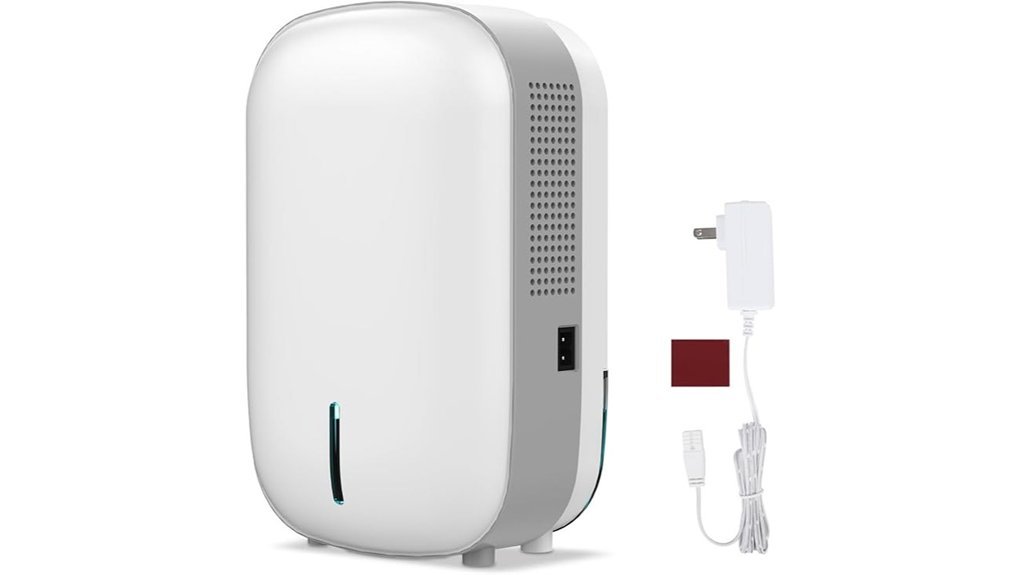
The Bangnics mini desktop dehumidifier has the narrowest footprint in this roundup. Its body measures approximately 3.93 x 6.29 x 9.44 inches, allowing it to fit on a desk, shelf, nightstand, closet floor, or stable RV surface without taking up as much room as the other two models.
The Amazon listing states coverage of up to 130 square feet and maximum moisture collection of approximately 14 ounces, or 420 ml, per day at 86°F and 80% relative humidity. Treat the square-foot figure as a general marketing reference rather than a guarantee that it will control the humidity of an entire room. This 25-watt Peltier unit is intended for mild moisture in a small enclosed area.
Its 17-ounce tank includes automatic shutoff and a full-tank warning to help prevent overflow. Noise is listed at under 30 dB. The product also lists power-off memory, which can allow operation to resume after power is restored, although the unit should still be placed and operated according to its manual.
Best For: Buyers who need a small, quiet dehumidifier for a desk, closet, pantry, small bedroom zone, camper, or compatible RV storage area.
Why You’ll Like It: Its narrow footprint, 25-watt power rating, quiet-operation claim, and automatic restart feature make it convenient where a larger appliance would be difficult to place.
Who Should Avoid It: Choose another model if you do not want to empty a small tank regularly, need a user-set humidity target, or find that the room remains above your target humidity after continuous operation.
Pros:
- Compact dimensions suit desks, shelves, closets, and other tight spaces.
- Manufacturer-listed operation below 30 dB suits quiet work and sleep environments.
- Automatic shutoff helps prevent tank overflow.
- Power-off memory can restart operation after power is restored.
- Low 25-watt power rating.
Cons:
- The 17-ounce tank may need frequent emptying during humid weather.
- Its useful performance is limited to small, enclosed spaces.
- No user-set humidity target or continuous-drain connection is documented.
- It cannot handle leaks, standing water, or heavy whole-room moisture loads.
TABYIK 35 OZ Dehumidifier for Bedroom, RV, and Closet
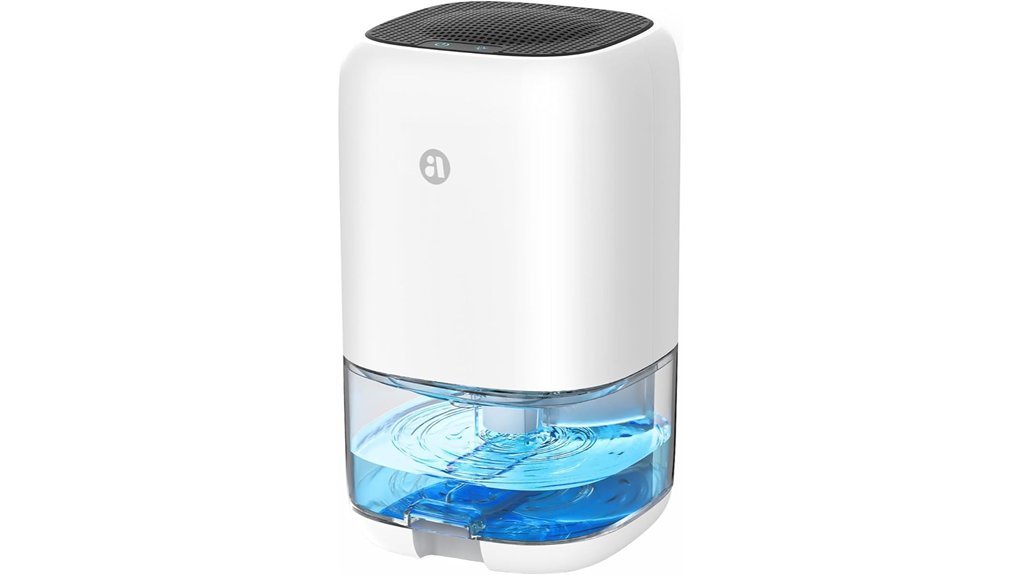
The TABYIK 35 OZ dehumidifier is the most balanced option for buyers who want quiet localized moisture control, a medium-size tank, and an easy-to-place design. It measures approximately 5.9 x 5.9 x 10.1 inches and includes a built-in handle, making it practical for small bedroom areas, offices, closets, and compatible RV spaces.
The manufacturer states that the unit can collect up to 16 ounces, or 450 ml, of water in 24 hours in a closed room at 86°F and 80% relative humidity. Its listing advertises use in areas up to 280 square feet, but buyers should judge actual performance with a hygrometer rather than relying on square footage alone.
The transparent tank has a nominal capacity of 35 ounces, or 1,000 ml. The listing states that automatic shutoff activates when approximately 700–800 ml has collected, so the unit may stop before the nominal tank volume is completely filled. A red indicator alerts you when the tank needs attention.
At a manufacturer-listed 28 dB, TABYIK has the lowest advertised noise figure in this comparison. However, the three brands may use different measurement methods, so the figures should be treated as general guidance rather than controlled side-by-side test results.
Best For: Buyers seeking a balanced compact dehumidifier for a small bedroom zone, office, closet, camper, or RV.
Why You’ll Like It: It combines a larger tank than Bangnics with a lower listed noise figure than MORFY, while maintaining compact dimensions and simple controls.
Who Should Avoid It: Skip it if you need programmable humidity control, continuous drainage, a timer, smart controls, multiple fan speeds, or enough capacity for a wet basement.
Pros:
- Manufacturer-listed 28 dB operation suits bedrooms and offices.
- Compact dimensions and a built-in handle make it easy to reposition.
- Visible 35-ounce nominal tank simplifies water-level checks.
- Automatic shutoff and a full-tank indicator help prevent overflow.
- Balanced extraction claim, tank size, and footprint for a desktop model.
Cons:
- The 16-ounce daily figure is a maximum measured in warm, highly humid conditions.
- Automatic shutoff may activate before the nominal 1,000 ml tank is completely full.
- It has one operating speed and no documented user-set humidity target.
- It is intended for mild small-space humidity rather than severe dampness.
Factors to Consider When Choosing a Desktop Dehumidifier
When choosing a desktop dehumidifier, compare more than the advertised square footage. Room temperature, relative humidity, outdoor air leakage, wet materials, and everyday moisture sources all affect performance. Tank capacity, noise, power use, automatic shutoff, and available surface space also determine whether a model will fit your routine.
Size and Coverage
Measure the desk, shelf, nightstand, or other surface where you plan to place the unit. Leave open space around its air intake and outlet instead of pushing it against a wall, curtain, stack of papers, or furniture.
Coverage ratings can help with an initial comparison, but they should not be treated as guaranteed performance. A small Peltier dehumidifier may collect visible water in a room without lowering the humidity of the entire room enough. Use a separate hygrometer to confirm whether the relative humidity is actually decreasing.
Humidity Controls and Drainage
Do not assume that automatic shutoff means automatic humidity regulation. Tank-based desktop models normally use automatic shutoff to stop collection when the reservoir reaches its full level.
The supplied listing information for these three products does not document a user-adjustable humidity target or a continuous-drain connection. Buyers who need the appliance to maintain a selected percentage, cycle automatically according to room humidity, or drain through a hose should consider a model with a documented humidistat and continuous-drain system.
Water Tank Capacity
A larger water tank does not necessarily mean faster moisture removal, but it can reduce how often you need to empty the unit. MORFY has the largest tank in this comparison at 60 ounces, TABYIK offers a nominal 35-ounce tank, and Bangnics uses a compact 17-ounce tank.
Compare the tank with the stated daily extraction and the full-tank shutoff level. A small tank paired with a relatively high collection rate may fill quickly in warm, humid conditions. A nominal tank may also shut off before every ounce of its stated volume is used.
Noise Level
Noise matters most in bedrooms, home offices, and other quiet spaces. The retained models list operating levels from approximately 28 to 35 dB, although the figures may have been measured under different conditions. Actual sound can vary with operating mode, distance, surface vibration, fan condition, and room acoustics.
Place the unit on a firm, level surface. A hollow shelf, loose tabletop, or uneven surface can amplify vibration even when the appliance itself has a low advertised decibel rating.
Energy Efficiency
Do not judge efficiency only by wattage. A low-wattage unit that cannot reach your target humidity may run continuously without solving the underlying problem.
You can estimate operating cost with this formula:
For example, a 25-watt unit running for 24 hours uses about 0.6 kWh. A 48-watt unit running for 24 hours uses about 1.15 kWh. Actual consumption may be lower if the unit shuts off when its tank fills or if you operate it for fewer hours.
Auto Shut-Off
Automatic shutoff is an important feature for a tank-based desktop dehumidifier. It stops moisture collection when the tank reaches its shutoff level, helping prevent overflow and unnecessary operation. A visible full-tank indicator makes it easier to know when the reservoir needs attention.
Auto shutoff does not eliminate routine maintenance. Check the tank regularly, empty and clean it according to the manual, and make sure it is seated correctly before restarting the appliance.
Portability Features
Compact dimensions, manageable weight, and a built-in handle make it easier to move a dehumidifier between a bedroom, office, closet, and RV. Remember that all three retained products require electrical power. They are portable in size, but they are not cordless.
A removable tank also improves convenience because you can empty and clean it separately instead of carrying the entire appliance to a sink. Empty the tank and let the unit dry before packing or transporting it.
Peltier Performance Limits
These compact units use Peltier or thermoelectric technology. That design supports a small body and relatively quiet operation, but it removes much less water than a conventional compressor dehumidifier.
Peltier performance generally drops in cool rooms and in spaces with only moderate humidity. If a room has damp walls, persistent condensation, standing water, water stains, a musty odor that returns quickly, or humidity that remains above 60%, investigate the moisture source and consider a properly sized compressor dehumidifier.
Warranty, Voltage, and Listing Details
Before ordering, confirm the exact model, seller, color, included power adapter, input voltage, return terms, and warranty information on the current product listing. Product details can change, and accessories shown in photos may not always be included.
This is especially important for travel. A plug-shape adapter does not convert voltage. Check the input information printed on the supplied power adapter before using any dehumidifier outside the electrical system for which it was designed.
Safety and Placement
Set the appliance on a stable, level, dry surface where it cannot be knocked over. Keep fabrics, papers, curtains, furniture, and other objects away from the air openings. Inspect the adapter and cord before use, and stop using the product if the plug, cord, housing, or tank is damaged.
Do not place a standard corded dehumidifier inside a shower area, beside a bathtub, on a wet floor, or where it may be splashed. A bathroom outlet with GFCI protection adds electrical protection, but it does not make an appliance waterproof. Follow the manufacturer’s manual and applicable local electrical requirements.
When placing a unit on a desk, shelf, or nightstand, do not position the water tank directly above a laptop, power strip, documents, or other items that could be damaged by a spill.
Frequently Asked Questions
What Energy Costs Do Desktop Dehumidifiers Add?
Cost depends on the unit’s wattage, daily runtime, and your electricity rate. Calculate it by dividing watts by 1,000, multiplying by operating hours, and then multiplying by your cost per kWh. Do not assume the unit will cost the same every month because humidity, tank shutoff, and runtime change by season.
How Often Should the Water Tank Be Emptied?
Check the tank daily when you first start using the dehumidifier. A small tank may need emptying every day in warm, humid weather, while a larger tank may last several days in a mildly humid room. Empty it whenever the full-tank indicator appears, and do not leave collected water sitting for long periods.
Can Desktop Dehumidifiers Run Overnight?
Use a desktop dehumidifier overnight only when its manual permits extended operation and the appliance is undamaged, correctly assembled, and positioned on a dry, stable surface with clear airflow. Confirm that the tank and automatic shutoff work correctly before relying on the unit overnight. Keep it away from bedding, curtains, water, children, pets, and locations where it could be knocked over.
Do Desktop Dehumidifiers Have a Humidistat?
Some compact models may include humidity controls, but the supplied listing information for the three products in this comparison does not document a user-set humidity target. Use a separate hygrometer to measure the room and consider a compressor model with a documented humidistat if you need automatic control at a selected relative-humidity percentage.
Do Desktop Dehumidifiers Help Prevent Mold Growth?
They may help make conditions less favorable for mold by lowering humidity in a small enclosed space, but they cannot remove existing mold, dry soaked building materials quickly, or repair a leak. Aim to keep indoor relative humidity below 60% and ideally around 30% to 50%. Fix water intrusion, dry wet materials promptly, improve ventilation where appropriate, and clean existing mold using suitable guidance.
Which Desktop Dehumidifier Is Best for Travel Use?
Bangnics is the easiest of these three to fit into a small RV or temporary living space because of its narrow dimensions and 25-watt power rating. Its listing specifies 110-volt input, so verify the power-adapter label and the available electrical supply before using it internationally. Empty the tank and let the unit dry completely before packing it.
Can a Desktop Dehumidifier Dry a Basement?
A compact Peltier model may help inside a small basement closet or enclosed storage cabinet, but it is usually too weak for an entire damp basement. For persistent basement humidity, choose a compressor dehumidifier with an appropriate pint-per-day capacity and address drainage, leaks, condensation, grading, and foundation moisture.
Conclusion
The TABYIK 35 OZ dehumidifier is the best overall choice in this comparison for buyers seeking a balanced combination of compact dimensions, tank size, automatic shutoff, and a low listed noise figure. Choose MORFY when a larger tank and higher manufacturer-stated extraction are more important, or choose Bangnics when fitting the appliance onto a narrow desk, shelf, closet floor, or RV surface is your main concern.
Whichever model you choose, use a hygrometer to confirm that it is actually lowering the space’s relative humidity. These compact desktop dehumidifiers are most useful for mild, localized moisture in small enclosed areas. Persistent dampness, leaks, condensation, wet materials, or humidity that remains above 60% may require ventilation improvements, moisture-source repairs, or a higher-capacity compressor dehumidifier.
Final Recommendation
Start with TABYIK for the most balanced everyday option, MORFY for the largest tank, or Bangnics for the smallest footprint and lowest listed wattage.
Before ordering, check the current Amazon listing for seller information, exact model and color, included components, voltage, warranty terms, and availability.