For a compact room in 2026, the strongest options in this comparison are the Levoair 68oz Dehumidifier, Litever Small Portable Dehumidifier, SANVINDER 35oz Dehumidifier, and NeedDuck 44oz Dehumidifier. The Levoair has the largest tank and highest stated extraction rate, the Litever adds practical gravity drainage for a very small enclosed space, the SANVINDER prioritises quiet operation, and the NeedDuck provides flexible timer and mode controls.
These are compact thermoelectric dehumidifiers intended for light condensation and gradual moisture control in places such as small bedrooms, offices, wardrobes, RVs, and storage areas. They are not substitutes for a high-capacity compressor or desiccant dehumidifier when you have wet walls, substantial laundry moisture, water damage, severe damp, or a whole-home humidity problem.
Updated: August 2026. This is an editorial comparison based on available product specifications and manuals, not a claim of hands-on testing. Product details, supplied adapters, seller terms, and availability can change, so confirm the current Amazon listing and product label before ordering.
How We Compared These Models
The products were compared by stated daily water removal and test conditions, tank size, drainage method, noise claims, controls, power draw, portability, and safety features. Maximum extraction figures are best-case manufacturer or seller claims and may be substantially lower in a cooler or less humid room.
Quick Comparison
| Product | Best For | Tank | Stated Daily Removal | Power | Drain Hose | Amazon |
|---|---|---|---|---|---|---|
| Levoair 68oz | Best overall capacity | 68 fl oz / 2 L | Up to 35 fl oz / 1 L at 30°C and 80% RH | 48 W | Yes, 5 ft | Check Price |
| Litever LL-VS-DH07 | Very small spaces and continuous drainage | 800 ml / about 27 fl oz | Up to 360 ml / about 12 fl oz at 30°C and 80% RH | 22 W | Yes, 4 ft | Check Price |
| SANVINDER DH-CS17 | Quiet bedroom or office use | 35 fl oz / about 1 L | Up to 16 fl oz / about 473 ml at approximately 24°C and 80% RH | Confirm current listing | No | Check Price |
| NeedDuck B-2 | Timers, modes, and bedside use | 44 fl oz / about 1.3 L | Not clearly stated under comparable test conditions | 28 W | No | Check Price |
Comparison note: The listed daily-removal figures come from different manufacturer or seller test conditions and should not be treated as independently certified, directly equivalent capacity ratings. Actual collection depends on room temperature, relative humidity, airflow, room size, and the moisture source.
Levoair 68oz Small Dehumidifier with Drain Hose
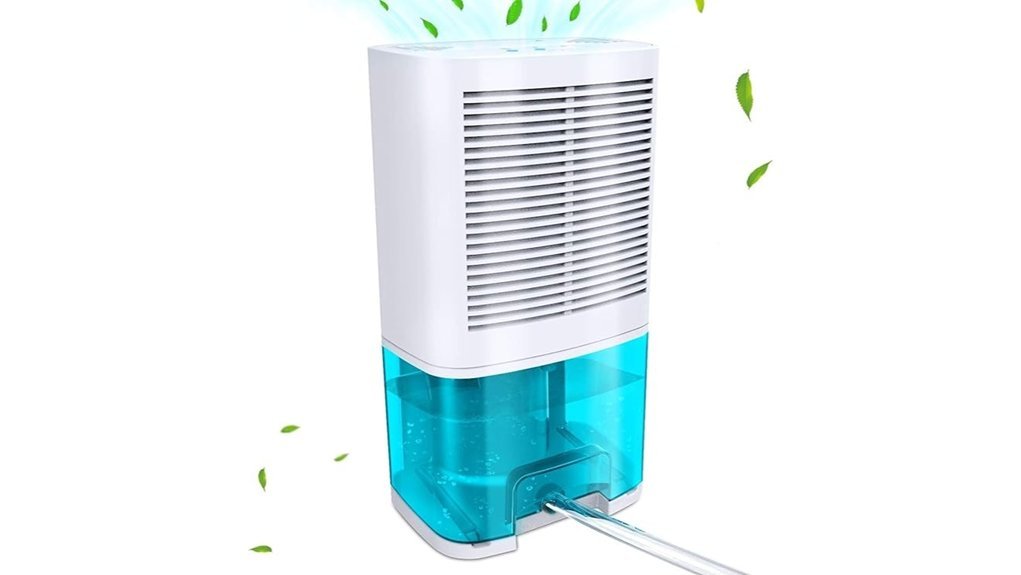
Best Overall Capacity: The Levoair Mini Dehumidifier is the most capable option in this group on paper. Its 68 fl oz (2 L) tank, 5 ft drain hose, and stated removal rate of up to 35 fl oz (1 L) per day give it an advantage over the lower-output mini units in this comparison.
That maximum figure is based on warm, highly humid test conditions of approximately 30°C and 80% relative humidity. Collection will normally be lower in a cool bedroom or a room with only moderate humidity, so the Levoair is best treated as a higher-output mini dehumidifier rather than a substitute for a compressor model.
Best For: A small bedroom, office, RV, wardrobe area, or enclosed utility space with recurring light condensation and access to a suitable gravity drain.
Why You’ll Like It: You can empty the tank manually or route the supplied hose continuously downhill to a suitable drain. The one-button control, lift-up handle, automatic full-tank shutoff, approximately 48-watt draw, and stated noise level below 40 dB make it straightforward to use in everyday living spaces.
Who Should Avoid It: Skip this model if you need a humidistat that maintains a precise target, a certified high-capacity appliance for serious damp, or a unit for a narrow shelf. At roughly 14 inches tall and 5 pounds, it is larger than the other mini dehumidifiers here.
Pros:
- Largest tank and highest stated daily extraction rate in this comparison.
- Includes a 5 ft hose for gravity-fed continuous drainage.
- Automatic shutoff, simple controls, and a carry handle improve everyday convenience.
Cons:
- The headline extraction figure relies on warm, high-humidity test conditions.
- Thermoelectric performance decreases as temperature and humidity fall.
- Larger and heavier than most mini desktop models.
- Does not replace a high-capacity compressor or desiccant dehumidifier for structural damp.
Litever Small Portable Dehumidifier with Drain Hose
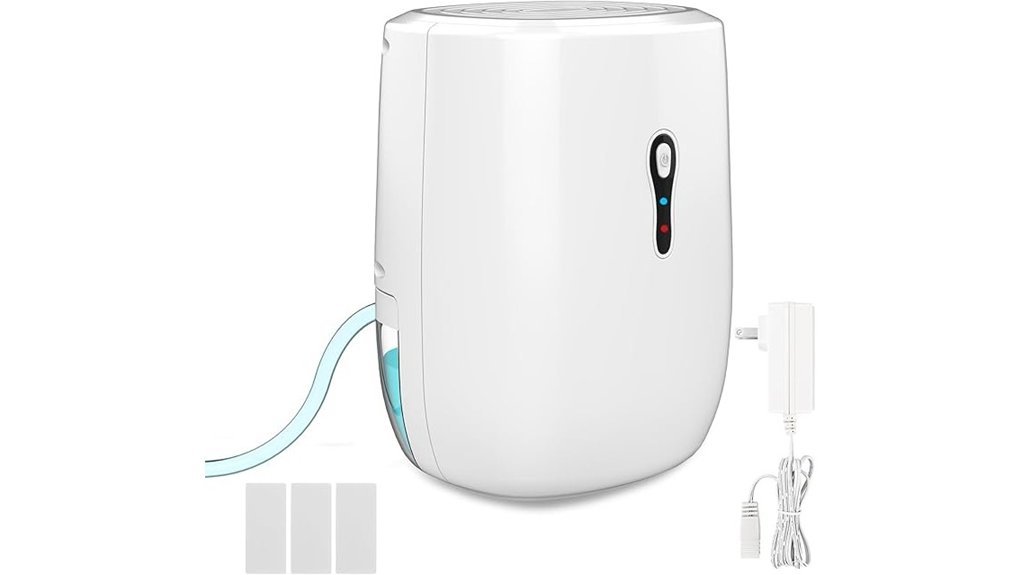
Best for Continuous Drainage in a Very Small Space: The Litever LL-VS-DH07 is intended for small enclosed areas up to about 108 sq ft (10 m²). Its strongest feature is the included 4 ft silicone drain hose, which can route collected water into a lower drain or suitable container and reduce manual tank emptying.
The model is rated to collect up to 360 ml (about 12 fl oz) per day at 30°C and 80% relative humidity. Its removable tank holds approximately 800 ml (about 27 fl oz). At around 2.5 pounds and a stated 22-watt draw, it is easy to position in a closet, pantry, small bathroom outside the splash zone, camper, or compact storage area.
Best For: Closets, pantries, small RV areas, compact storage spaces, and other enclosed locations where a gravity drain can be routed safely downhill.
Why You’ll Like It: The full-tank shutoff helps prevent overflow when the tank is used, while the memory function can restore the previous operating state after the tank is reinstalled or power returns. The supplied adhesive pads and hose clips are also useful in mobile spaces where the unit and drain line need extra stability.
Who Should Avoid It: It is not a practical choice for a large bedroom, substantial laundry drying, or persistent building damp. Available manual information describes a 120V AC adapter, so buyers outside North America must confirm that a correctly rated local version is supplied.
Pros:
- Includes a drain hose, routing clips, and a continuous-drain connection.
- Small and lightweight, with a low stated 22-watt power draw.
- Automatic shutoff and memory functions improve everyday convenience.
- Supplied adhesive pads can improve stability in an RV or other mobile space.
Cons:
- Low extraction capacity compared with compressor dehumidifiers.
- Best limited to a small, closed area with doors and windows shut.
- The described 120V adapter is not automatically suitable for every country.
- The gravity hose must remain below the outlet and free of kinks or raised loops.
SANVINDER 35oz Portable Dehumidifier
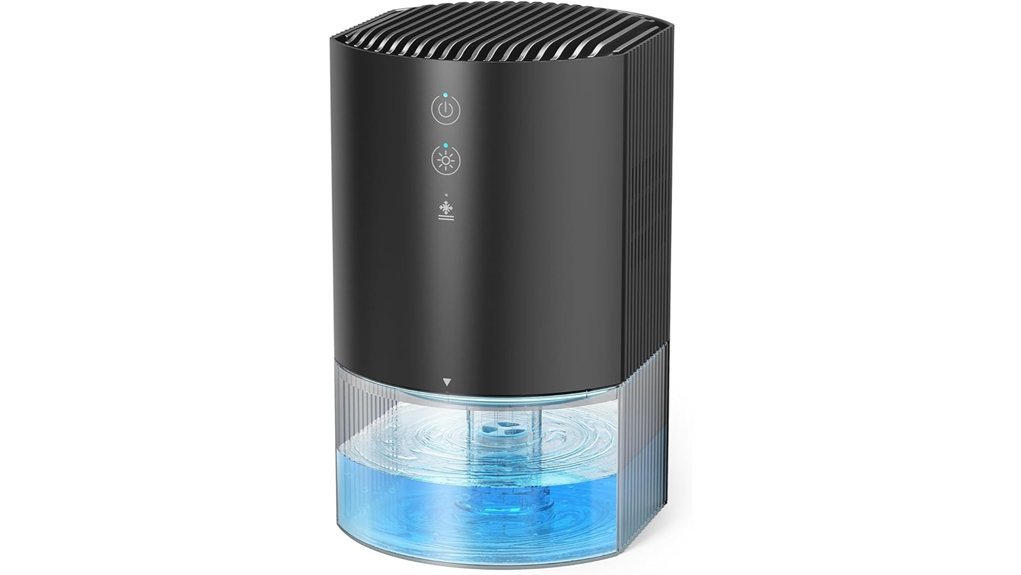
Best Quiet Pick: The SANVINDER DH-CS17 combines a 35 fl oz (about 1 L) tank with a compact 5.71 × 4.96 × 8.41-inch body. Available product information states that it can remove up to 16 fl oz (about 473 ml) per day at approximately 24°C and 80% relative humidity and operate below 25 dB.
Those claims make it attractive for a bedside table, dorm room, wardrobe area, or quiet office where low noise and a small footprint matter more than rapid water removal.
Best For: A small bedroom, home office, dorm room, or wardrobe area with mild condensation and no convenient drain connection.
Why You’ll Like It: The twist-lock tank is designed for straightforward removal and cleaning, while automatic shutoff helps prevent overflow when the tank fills. Automatic defrost and a transparent tank add convenience, and the colour-changing light can provide a low-key night-light effect.
Who Should Avoid It: Do not rely on the advertised 330 sq ft coverage as proof that it can control a genuinely damp room of that size. Mini thermoelectric units are most effective in smaller enclosed areas and under warmer, more humid conditions. This model also lacks a continuous-drain hose.
Pros:
- Low stated noise level suits bedrooms and offices.
- Automatic shutoff and a transparent tank reduce overflow risk.
- Compact tank design is simple to remove and clean.
- Automatic defrost provides extra protection if frost develops internally.
Cons:
- No continuous-drain option.
- Maximum extraction is based on warm, high-humidity test conditions.
- Coverage claims should be treated as a marketing ceiling, not a guaranteed room-size result.
- The low noise claim was not independently measured for this article.
NeedDuck Quiet Portable Dehumidifier with 44oz Water Tank
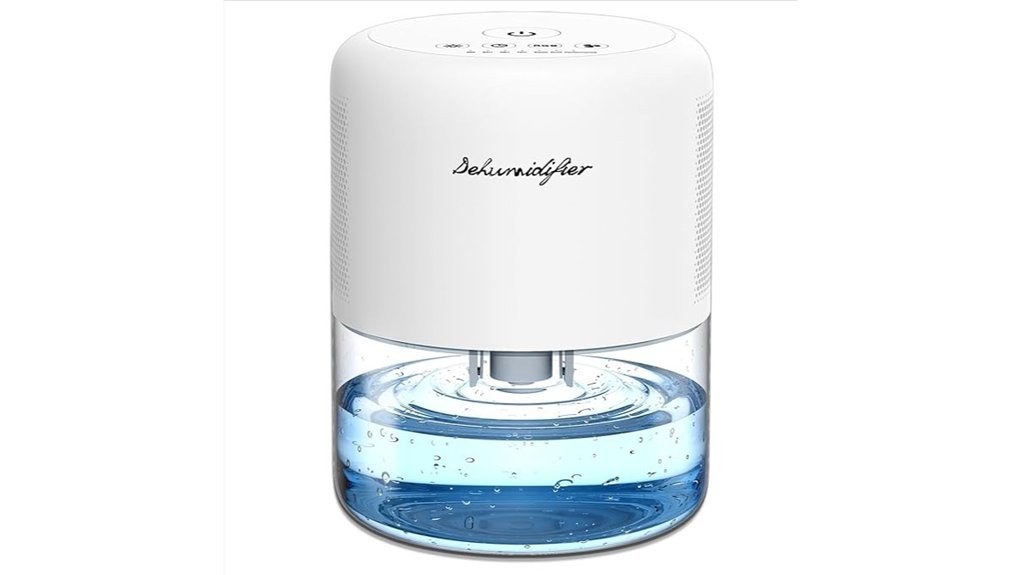
Best for Timers and Multiple Modes: The NeedDuck B-2 has a 44 fl oz (about 1.3 L) tank, three operating modes, four timer choices, automatic defrost, and automatic full-tank shutoff. It weighs about 2.6 pounds and measures roughly 5.91 inches square by 8.46 inches tall, so it fits easily on a shelf, desk, or bedside surface.
Best For: Buyers who want more scheduling and mode options for gradual moisture control in a bedroom, office, closet, or RV.
Why You’ll Like It: The additional controls make it easier to schedule operation around sleeping or working hours. Its stated 28-watt draw, compact footprint, selectable operating modes, and adjustable ambient lighting also suit users who want a small appliance rather than a large floor-standing unit.
Who Should Avoid It: Available product information does not provide a clearly comparable daily extraction figure under stated temperature and humidity conditions. Buyers who need measurable performance for persistent condensation should choose a model with a transparent litres-per-day rating or move up to a suitable compressor or desiccant dehumidifier.
Pros:
- Three modes and four timer options provide more control than basic one-button units.
- Automatic defrost and full-tank shutoff improve convenience.
- Compact and lightweight for moving between small rooms.
- 44 fl oz tank is larger than the tanks in many desktop mini units.
Cons:
- No drain hose for continuous water removal.
- Daily extraction performance is not clearly stated under comparable test conditions.
- Best for gradual moisture control, not severe damp or laundry drying.
- Lighting and timer features should not be mistaken for higher dehumidification capacity.
Factors to Consider When Choosing a Dehumidifier for a Small Room
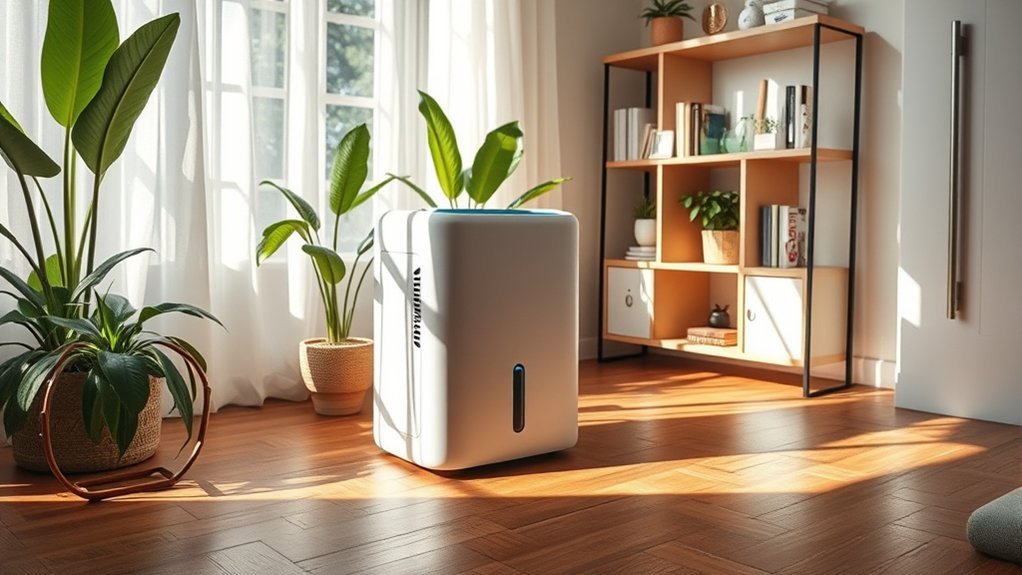
The best small-room dehumidifier depends on the severity of the moisture problem, room temperature, required extraction rate, noise tolerance, drainage setup, control features, and local electrical requirements. Compare the following points before buying.
1. Room Size and Moisture Load
Do not choose only by a large square-foot coverage number. A warm wardrobe with mild condensation needs far less capacity than a cold bedroom with wet windows, drying laundry, or visible damp patches. Mini thermoelectric units are best for light, localised moisture. For persistent damp, a compressor or desiccant model with a clearly stated litres-per-day rating is usually the more realistic choice.
2. Daily Extraction Rate
The extraction rate tells you more about dehumidification performance than tank size. Compare how many millilitres or litres the unit is stated to remove in 24 hours and always check the test temperature and relative humidity. Warm, very humid laboratory or seller test conditions produce higher numbers than a typical cool room, so treat maximum claims as best-case figures.
The seller-stated figures for mini thermoelectric products should not be treated as equivalent to the standardised DOE capacity ratings commonly used for larger portable compressor dehumidifiers.
3. Tank Size and Drainage
A larger tank means less frequent emptying, but it does not make the dehumidifier remove water faster. A drain hose is more useful when the unit will run for long periods near a suitable sink, floor drain, or larger receiving container.
Keep a gravity hose sloping continuously downhill with no kinks, raised loops, or submerged end. Secure the connection and check the hose regularly rather than assuming that continuous drainage cannot fail.
4. Humidity Controls and Operating Modes
A timer or speed mode is not necessarily the same as an adjustable humidistat. A true humidistat measures relative humidity and cycles the appliance around a chosen target. Confirm the exact controls in the current manual if automatic humidity maintenance is important to you.
5. Noise Level
For bedrooms and offices, compare the stated decibel level and look for a quiet or sleep mode. Manufacturer noise figures may be measured under ideal conditions, and vibration can increase when a tank is not seated correctly or the unit sits on an uneven surface.
6. Operating Temperature
Thermoelectric dehumidifiers become less effective in cool air because less moisture condenses on their cold plate. Check the permitted temperature and humidity range in the exact manual. For an unheated room, garage, or cold basement, a desiccant model may be more appropriate than a mini semiconductor unit.
7. Power, Plug, and Safety Compliance
Match the appliance input voltage, plug, and adapter to your country. Do not assume that an imported Amazon.com model is suitable for a 230V supply or that a replaceable plug adapter changes the appliance’s electrical rating. Confirm the product label, required local conformity markings, warranty coverage, and local electrical rules before use.
Keep the unit level, provide the clearance specified in the manual, keep the vents unobstructed, and follow the manufacturer’s instructions concerning overnight or unattended operation.
8. Bathroom Placement
A bathroom is a high-risk electrical environment. Keep a portable dehumidifier well outside bath and shower splash zones, never use an extension lead in a wet room, and follow local rules for sockets and electrical equipment in bathrooms.
Use the extractor fan during and after showers whenever possible. A dehumidifier can help manage leftover moisture, but it should not replace ventilation or repairs to leaks and other damp sources.
9. Maintenance and Cleaning
Empty and rinse the tank regularly, wipe it dry to discourage odours and residue, and keep air inlets and outlets free of dust. Clean removable filters according to the manual. Check drain hoses for blockages, residue, poor slope, loose connections, or an overflowing receiving container before relying on continuous drainage.
Before You Buy
- Measure the room and identify where the unit can sit with clear airflow.
- Check relative humidity with a separate hygrometer.
- Determine whether the moisture comes from condensation, laundry, poor ventilation, or a leak.
- Compare daily extraction rates and their exact test conditions.
- Decide whether you need a removable tank or gravity drainage.
- Verify the supplied voltage, plug, adapter, and local electrical compliance.
- Choose a higher-capacity appliance if walls remain wet or mould repeatedly returns.
Frequently Asked Questions
What Humidity Should I Aim For?
A practical target for many homes is approximately 30% to 50% relative humidity, while keeping it below 60% helps reduce conditions that support mould growth. The best level can vary with climate, season, building construction, and occupant comfort. Use a separate hygrometer if the dehumidifier does not have a dependable built-in humidistat.
What Size Dehumidifier Do I Need for a Small Room?
Choose by moisture load and daily extraction capacity, not room area alone. A mini unit removing a few hundred millilitres per day may help with a closet, small bedroom, or mild window condensation. A persistently damp room, laundry area, or space with wet walls may require a substantially higher-capacity compressor or desiccant dehumidifier.
Does a Larger Water Tank Mean a More Powerful Dehumidifier?
No. Tank capacity tells you how much collected water the appliance can hold before it needs emptying. The daily extraction rate tells you how quickly it can remove moisture. A low-output dehumidifier can have a large tank, while a faster unit with continuous drainage may use a smaller tank.
Do Mini Dehumidifiers Work in Cold Rooms?
They may collect some water, but thermoelectric models generally become less effective as temperature falls. Check the minimum operating temperature in the manual. An unheated garage, basement, or winter room may be better served by a desiccant model designed for cooler conditions.
Can a Mini Dehumidifier Stop Mould?
It can help reduce excess humidity, but it cannot remove existing mould or fix leaks, rising damp, failed ventilation, or water entering through the building. Clean existing mould using appropriate guidance and correct the moisture source. Use the dehumidifier as one part of the solution rather than a guaranteed mould treatment.
Can Dehumidifiers Reduce Allergens in the Air?
A dehumidifier is not an air purifier and does not directly filter pollen or fine particles unless it includes a suitable air filter. Lower humidity can make the environment less favourable for mould and dust mites, but it does not remove every allergen already present.
How Often Should I Empty the Water Tank?
Empty it whenever the full-tank indicator appears and before moving the appliance. In a humid room this may be daily; in lighter conditions it may take several days. Do not leave collected water standing for long periods, and clean the tank regularly.
Can I Run a Dehumidifier Overnight?
Only do so when the exact manufacturer instructions permit it and the unit has intact wiring, stable placement, clear vents, and a working full-tank shutoff or correctly installed drain hose. Stop using it if you notice overheating, a burning smell, unusual noise, water leakage, or repeated electrical trips.
Conclusion
The Levoair 68oz Dehumidifier is the strongest all-round choice here for buyers who want a larger tank, the highest stated extraction rate in this comparison, and continuous gravity drainage. The Litever is better for a very small enclosed space where a compact body and drain hose are the priorities. Choose the SANVINDER for quiet bedroom use or the NeedDuck when flexible timers and operating modes matter more than a clearly documented extraction rate.
Final Recommendation
Start with the Levoair when you need the highest stated capacity among these four mini models. Select the Litever for a smaller installation with gravity drainage, the SANVINDER for low stated noise, or the NeedDuck for timers and multiple modes. Before ordering, confirm the current specification sheet, supplied power adapter, and operating instructions on Amazon.
Whichever model you choose, match its stated extraction capacity to the actual moisture load. Compact thermoelectric dehumidifiers can help with mild condensation and musty small spaces, but persistent damp, visible mould, wet walls, recurring leaks, or heavy laundry moisture call for a higher-capacity appliance and repairs to the underlying cause.