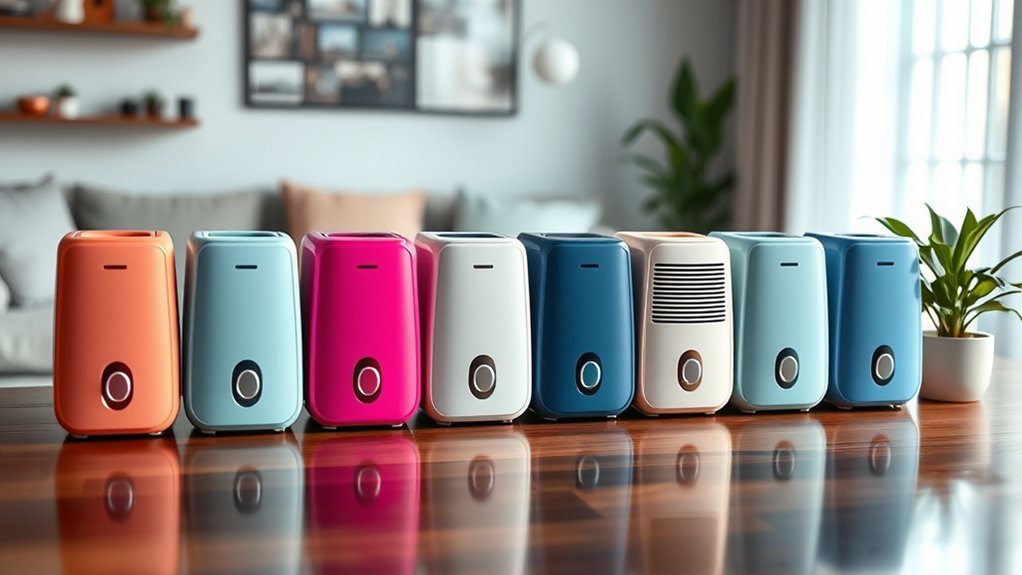
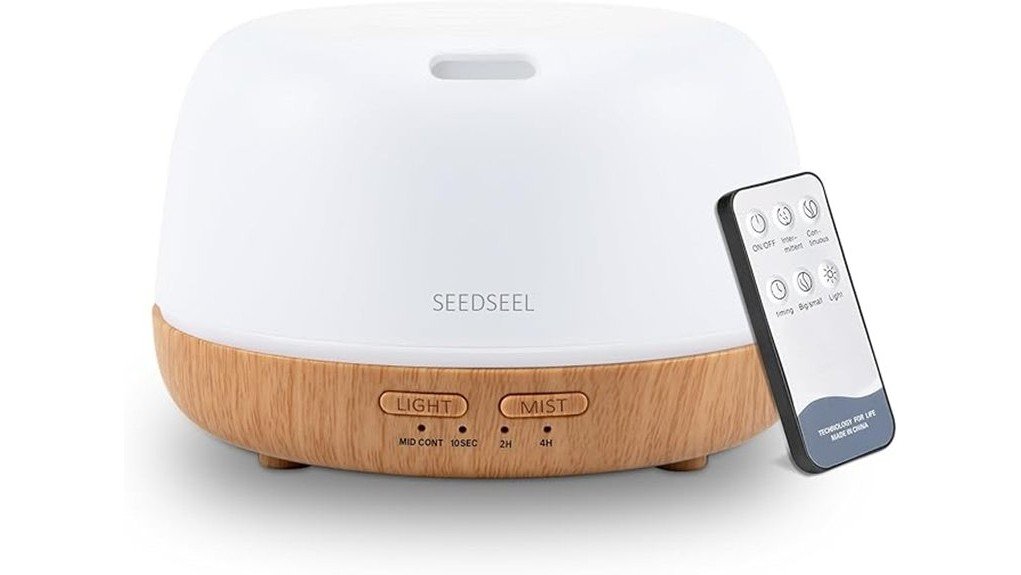
For the best eco air dehumidifiers in 2026, focus on verified energy efficiency, standardized moisture-removal capacity, room size, drainage, noise, and maintenance. This updated list keeps 12 relevant standalone dehumidifiers and removes products that were the wrong category or could not be verified well enough for a trustworthy recommendation.
Quick answer: The AEOCKY RHEA-001 is the strongest overall eco-focused pick for a large room, the Midea 22 Pint is the best smart option for a medium room, the avylo ADC018 is the most convenient choice when you need a built-in pump, and the Tenergy Sorbi is the best compact model when true HEPA filtration matters.
Quick Verdict
- Best Overall Eco Pick: AEOCKY RHEA-001
- Best Smart Medium-Room Pick: Midea 22 Pint
- Best Large-Room Pick: Vellgoo 64 Pint
- Best with a Pump: avylo ADC018
- Best for Crawl Spaces: ALORAIR Sentinel HD55S
- Best Small-Room Air Purifier Combo: Tenergy Sorbi
Quick Comparison
| Product | Best For | Capacity Reference | Drainage | Eco Advantage |
|---|---|---|---|---|
| Midea 22 Pint | Medium rooms and smart control | 22 pints/day | Bucket or gravity hose | ENERGY STAR labeling and reusable filter |
| Vellgoo 64 Pint | Large basements and garages | 64-pint class; verify standardized label | Bucket, drain hose, or garden hose | ENERGY STAR-focused design |
| Tenergy Sorbi | Small rooms needing HEPA filtration | Up to 0.75 L/day in favorable conditions | 1-liter tank | 45-watt Peltier system |
| NeedDuck B-2 | Closets, bedrooms, and RVs | Small-room thermoelectric | 44-ounce tank | 28-watt power draw |
| OWAAE TZ-C4S | Quiet bedrooms and closets | Small-room thermoelectric | 95-ounce tank | Low-noise operation |
| ALORAIR HD55S | Crawl spaces and unfinished basements | 55 PPD AHAM / 120 PPD saturation | Gravity drain | Continuous operation and durable housing |
| AEOCKY RHEA-001 | Large rooms and basements | About 44.34 standardized PPD; up to 80 max-condition | Bucket, drain hose, or garden hose | ENERGY STAR Most Efficient model family |
| Hoomace Compact | Dorms and small bedrooms | About 0.35 L/day | Compact tank | Low-power small-space use |
| 34-Pint Compressor Model | Medium-size rooms | 34 pints/day | 2-liter tank or hose | Humidistat and washable filter |
| avylo ADC018 | Basements needing pumped drainage | 24.5 standardized PPD; up to 90 max-condition | Tank, gravity hose, or pump | Verified ENERGY STAR efficiency |
| Aiusevo AS280 | Value-focused compressor performance | Up to 21 pints/day | 2-liter tank or hose | Automatic humidistat and timer |
| Onsekin CS08-Cream | Small rooms and aromatherapy | Small-room thermoelectric | Tank or drain hose | Quiet semiconductor operation |
How We Chose These Eco Air Dehumidifiers
We prioritized products that clearly function as standalone dehumidifiers and offer at least one meaningful efficiency advantage: verified ENERGY STAR performance, a low-watt thermoelectric system for a genuinely small space, reusable filtration, automatic humidity control, or continuous drainage that avoids unnecessary stop-start operation. We also looked for honest capacity information, useful drainage choices, realistic room guidance, manageable noise, and clear limitations.
Midea 22 Pint ENERGY STAR Dehumidifier with Reusable Filter
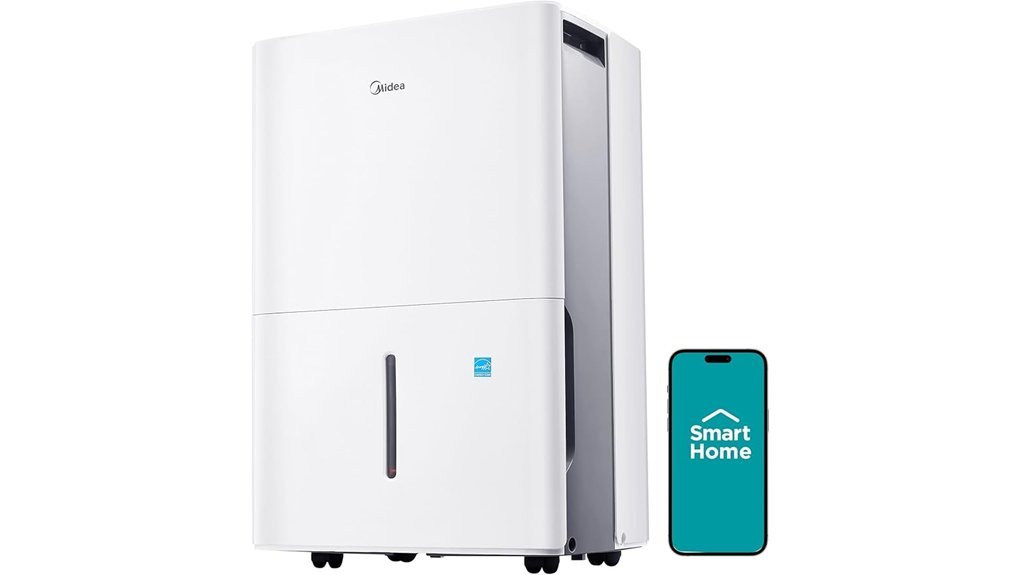
The Midea 22 Pint is a practical choice when you want a standard compressor dehumidifier for a basement, bedroom, bathroom, or other medium-size area. Its rated capacity is 22 pints per day, and the manufacturer lists coverage up to 1,500 square feet. The 0.8-gallon bucket is easy to remove, while a continuous-drain connection can reduce how often you empty it.
Wi-Fi control through the SmartHome app, plus Alexa and Google Assistant compatibility, makes this one of the easier models to monitor from another room. It also includes a reusable filter, auto restart, auto defrost, caster wheels, and a stated noise level around 47 dBA. Treat room-coverage numbers as a starting point: a colder or wetter basement may need a higher-capacity unit.
Best For: Homeowners and renters who want app control, a reusable filter, and balanced capacity for a medium-size room.
Pros:
- 22-pint standardized capacity with manufacturer-listed coverage up to 1,500 sq. ft.
- Wi-Fi, voice-control support, timer, auto restart, and auto defrost.
- Reusable filter and rolling design help simplify routine use.
Cons:
- The 0.8-gallon bucket can fill quickly in very damp conditions.
- A drain hose may need to be purchased separately.
- It is quieter than many compressor models, but it is not silent.
Vellgoo 64 Pint Dehumidifier with Drain Hose
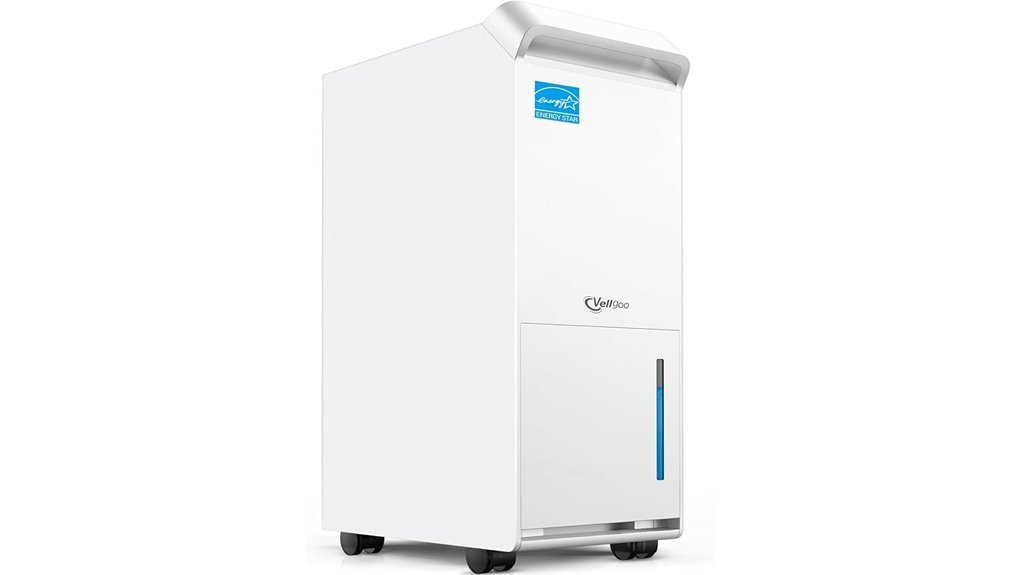
The Vellgoo DryTank is built for larger basements, garages, and open living areas. The listing identifies it as a 64-pint-class model and includes a drain hose, washable filter, timer, child lock, and adjustable humidity control. For continuous use, you can route water through the supplied hose or a compatible garden-hose connection instead of relying only on the bucket.
This model is promoted as ENERGY STAR certified, which makes it a stronger fit for an eco-focused roundup than generic high-capacity units with no verified efficiency information. Capacity claims can vary by test temperature and humidity, so compare the standardized rating shown on the current product label—not only the largest “pints per day” number in marketing copy.
Best For: Large rooms and basements where energy efficiency and continuous drainage matter more than compact size.
Pros:
- High-capacity design for larger damp spaces.
- Multiple drainage options and a washable filter reduce maintenance.
- Humidity control, timer, fan settings, and child lock improve day-to-day usability.
Cons:
- Larger housing requires more floor space and is less convenient to carry.
- Maximum-condition capacity should not be compared directly with DOE-standard ratings.
- Confirm the exact model number and warranty terms before ordering.
Tenergy Sorbi 1000ml Air Dehumidifier with HEPA Filter
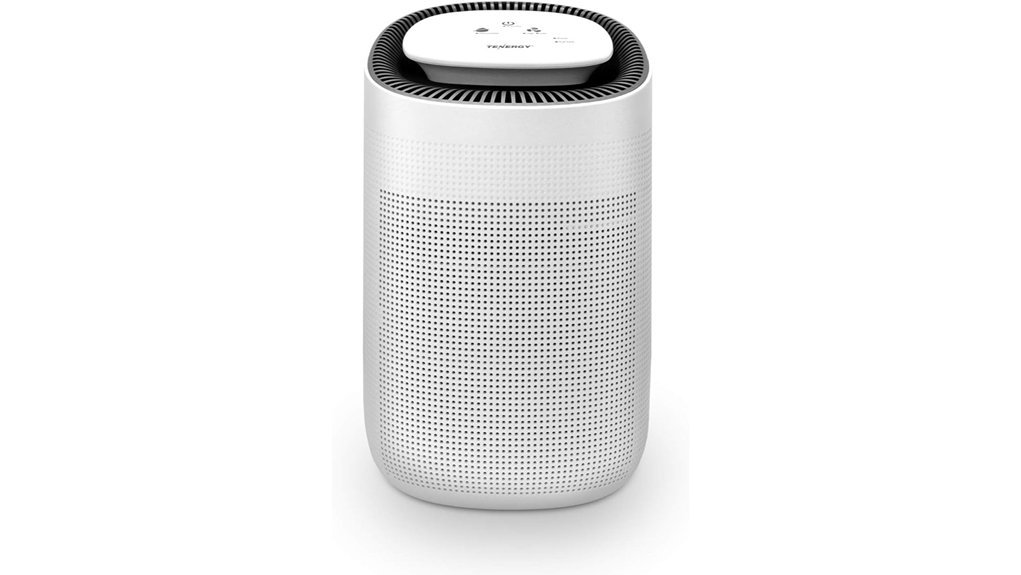
The Tenergy Sorbi is a compact two-in-one dehumidifier and air purifier for closets, bathrooms, small offices, and other spaces up to about 200 square feet. Its Peltier system can remove up to 750 ml of moisture per day under hot, humid test conditions, and the removable tank holds 1 liter.
Unlike many small units that only use a basic screen, the Sorbi includes a True HEPA filter designed to capture fine airborne particles. It operates at a stated 35 to 42 dB and has touch controls, two fan settings, a full-tank indicator, and automatic shutoff. It is a useful small-space option, but it cannot replace a compressor dehumidifier in a wet basement.
Best For: Small rooms where you want modest moisture removal plus genuine HEPA filtration.
Pros:
- True HEPA filtration adds more value than a basic washable prefilter.
- Compact size, automatic shutoff, and low operating noise suit bedrooms and offices.
- The 1-liter tank is easy to remove and clean.
Cons:
- Its 750 ml/day maximum is measured under favorable warm, humid conditions.
- Only suitable for small areas and mild-to-moderate moisture.
- The HEPA filter will eventually need replacement rather than washing.
NeedDuck Quiet Portable Dehumidifier with 44oz Tank
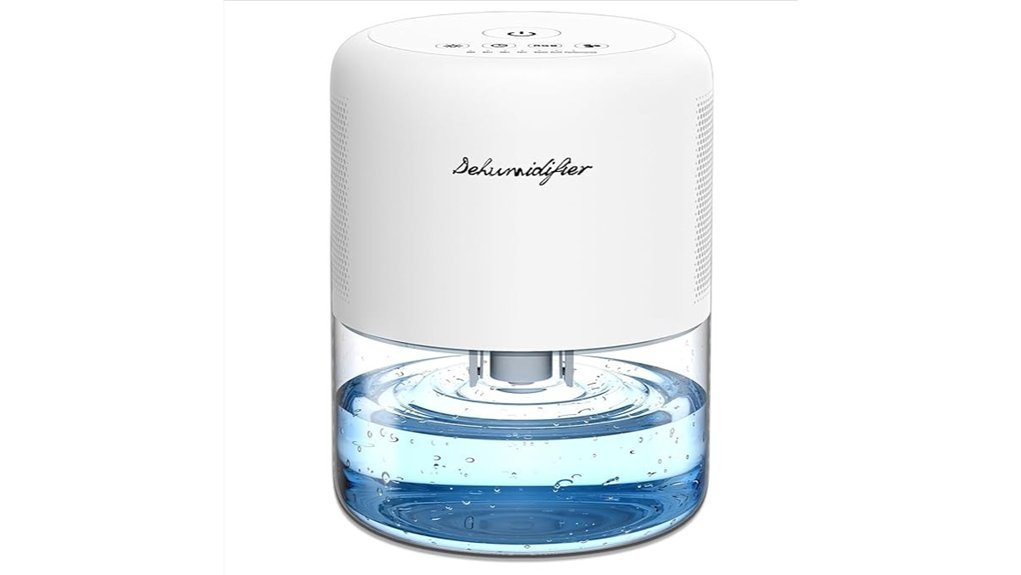
NeedDuck’s B-2 is designed for small bedrooms, closets, bathrooms, RVs, and similar enclosed areas. It uses 28 watts, weighs about 2.6 pounds, and has a 44-ounce tank. The compact body is easy to move, while automatic shutoff helps prevent overflow when the tank is full or the unit is not positioned correctly.
You can choose Sleep, Auto, or Performance mode and use the 24-, 48-, or 72-hour timer. The decorative lighting is optional rather than essential, but the low power draw and small footprint are useful when you only need gentle humidity control. Do not expect this thermoelectric model to solve standing water, active leaks, or severe basement dampness.
Best For: Small enclosed rooms where low power use, portability, and quiet operation are the priorities.
Pros:
- Low 28-watt power draw and compact 2.6-pound design.
- Three operating modes, timer settings, auto defrost, and auto shutoff.
- 44-ounce tank is larger than many mini dehumidifier tanks.
Cons:
- Not powerful enough for large rooms or serious moisture problems.
- The tank may still need frequent emptying during humid weather.
- LED lighting adds little value for buyers focused only on moisture removal.
OWAAE Quiet Dehumidifier with 95oz Tank
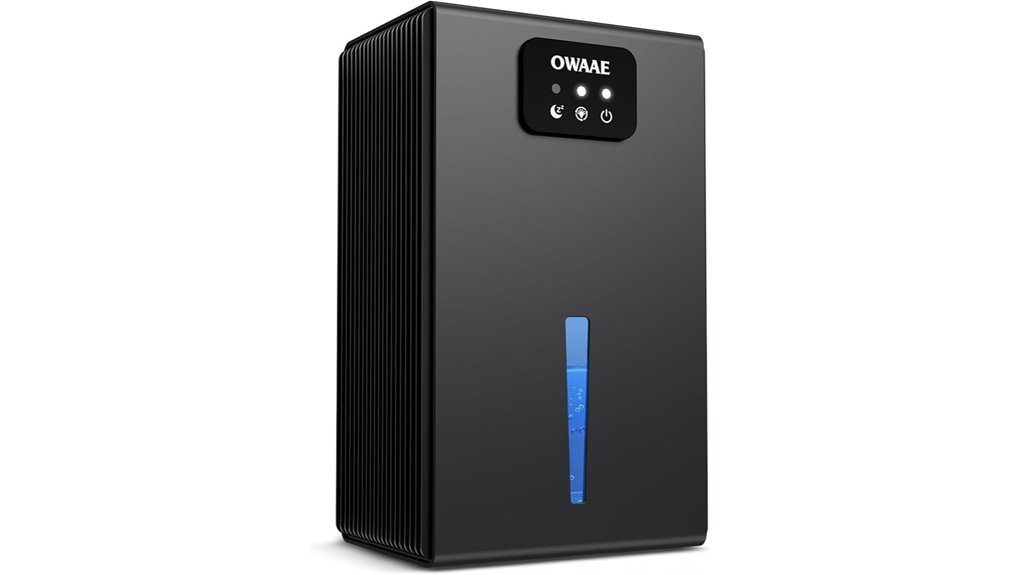
The OWAAE TZ-C4S combines a 95-ounce tank with quiet operation and automatic shutoff. Its compact shape and low-noise design make it better suited to bedrooms, closets, bathrooms, RVs, and other enclosed spaces than to a full-size basement.
The listing may advertise coverage up to 1,000 square feet, but shoppers should treat that as a maximum marketing figure rather than proof that a small thermoelectric unit can manage heavy moisture across a large open area. Buy this model for convenience, low noise, and a larger collection tank—not as a substitute for a 20- to 50-pint compressor machine.
Best For: Light sleepers and small-space users who want a larger tank and simple automatic operation.
Pros:
- 95-ounce tank reduces emptying frequency compared with many mini units.
- Quiet operation and sleep-friendly design suit bedrooms.
- Automatic shutoff helps prevent overflow.
Cons:
- The advertised coverage is optimistic for a compact thermoelectric unit.
- No drain hose or built-in pump is highlighted for unattended operation.
- Not appropriate for severe basement humidity or water intrusion.
ALORAIR Sentinel HD55S Crawl Space Dehumidifier
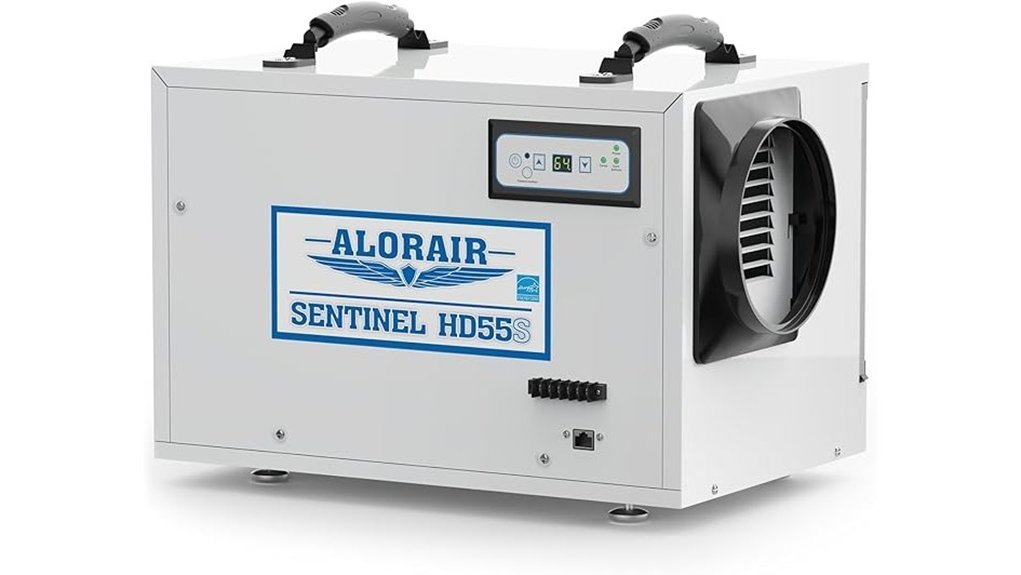
The ALORAIR Sentinel HD55S is a purpose-built crawl-space and basement model with rugged metal housing, gravity drainage, auto defrost, and a MERV-1 filter. It is rated for spaces up to 1,300 square feet and removes 55 pints per day under AHAM conditions. The larger 120-pint figure refers to saturation conditions, so the two numbers should not be treated as competing specifications.
This is a heavier, installation-focused machine rather than a decorative room appliance. It can run continuously through a drain line and is designed to work in lower-clearance areas. The manufacturer lists cETL certification and a six-year limited warranty, but buyers should read the current warranty exclusions and confirm whether a drain hose is included with the exact Amazon package.
Best For: Crawl spaces, unfinished basements, storage areas, and light-commercial locations that need durable continuous drainage.
Pros:
- 55-pint AHAM capacity with 120-pint saturation rating clearly suited to demanding spaces.
- Metal construction, auto defrost, and gravity drainage support long-term use.
- Compact crawl-space shape and manufacturer-listed six-year limited warranty.
Cons:
- At roughly 42 pounds, it is not a lightweight portable unit.
- MERV-1 filtration protects the machine but is not an air-purification feature.
- Gravity drainage requires a suitable lower drain point and correct hose slope.
AEOCKY RHEA-001 Smart-Humidity Dehumidifier with Drain Hose
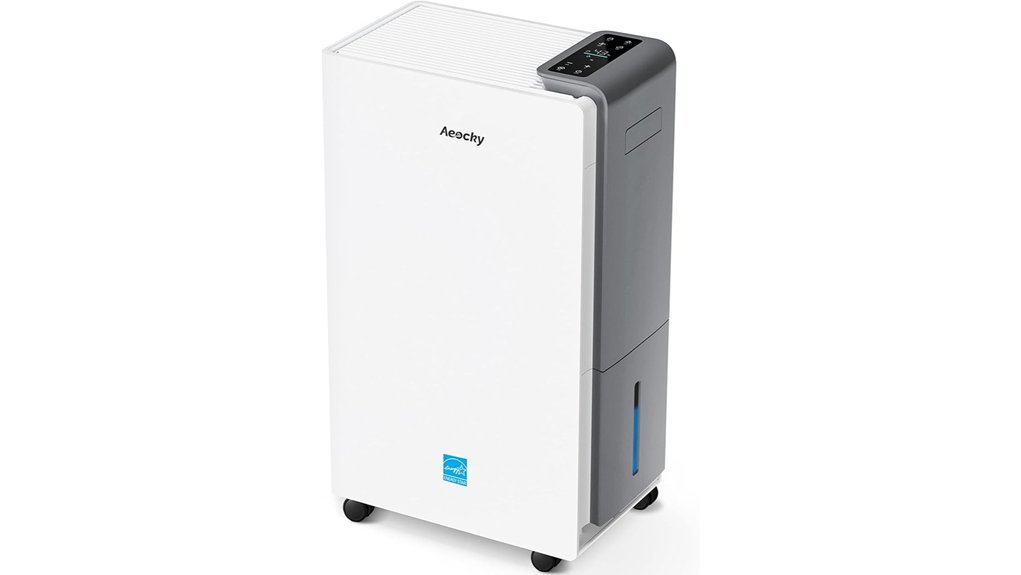
The AEOCKY RHEA-001 is one of the strongest matches for this roundup because it combines high-capacity compressor performance with verified efficiency credentials. The current ENERGY STAR database lists a corresponding RHEA model at about 44.34 pints per day under standardized test conditions and an integrated energy factor of 2.21 L/kWh. The larger “up to 80 pints” figure comes from hotter, more humid conditions.
Its manufacturer-listed coverage is up to 4,500 square feet, and the unit includes a drain hose, garden-hose adapter, adjustable humidistat, child lock, timer, sleep mode, and laundry-drying mode. “Smart” here mainly means automatic humidity sensing and control; it should not be assumed to include Wi-Fi or app control unless the current listing explicitly says so.
Best For: Large basements and living areas where verified ENERGY STAR efficiency and automatic humidity control are top priorities.
Pros:
- ENERGY STAR Most Efficient recognition for the corresponding model family.
- Strong standardized moisture-removal capacity with several automatic modes.
- Drain hose, garden-hose adapter, child lock, timer, and sleep mode are included.
Cons:
- Maximum-condition and standardized pint ratings can look very different.
- The 4,500-sq.-ft. claim is a manufacturer maximum, not a guarantee for every basement.
- Smart humidity control does not necessarily mean Wi-Fi connectivity.
Hoomace Small Bedroom Dehumidifier with Basic Air Filtration
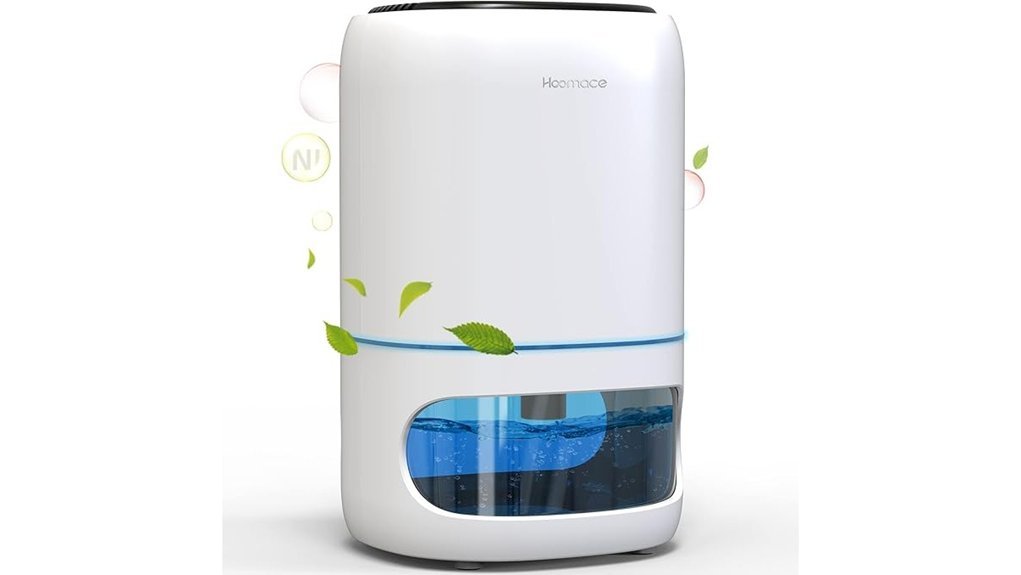
This Hoomace unit is intended for small bedrooms, dorm rooms, closets, and bathrooms. The available specifications show about 0.35 liter of moisture removal per day, a compact tank around 1 liter, quiet operation, timer settings, automatic shutoff, and color lighting.
The “air purifying” feature should be understood as basic filtration rather than a replacement for a dedicated HEPA purifier. That makes it a reasonable convenience pick for light humidity, but not the right choice for allergy-focused filtration or a wet basement. Keep doors and windows closed during use and allow clear airflow around the intake and outlet.
Best For: Small rooms where you want light dehumidification, a timer, and basic filtration in one compact appliance.
Pros:
- Compact footprint and low noise suit bedrooms and dorm rooms.
- Timer, automatic shutoff, and ambient lighting are easy to use.
- Basic filtration can catch larger dust, hair, and lint.
Cons:
- Moisture-removal capacity is modest at about 0.35 liter per day.
- The filter is not presented as True HEPA.
- Not suitable for large rooms, cold basements, or serious dampness.
34-Pint Compressor Dehumidifier for Home with Drain Hose
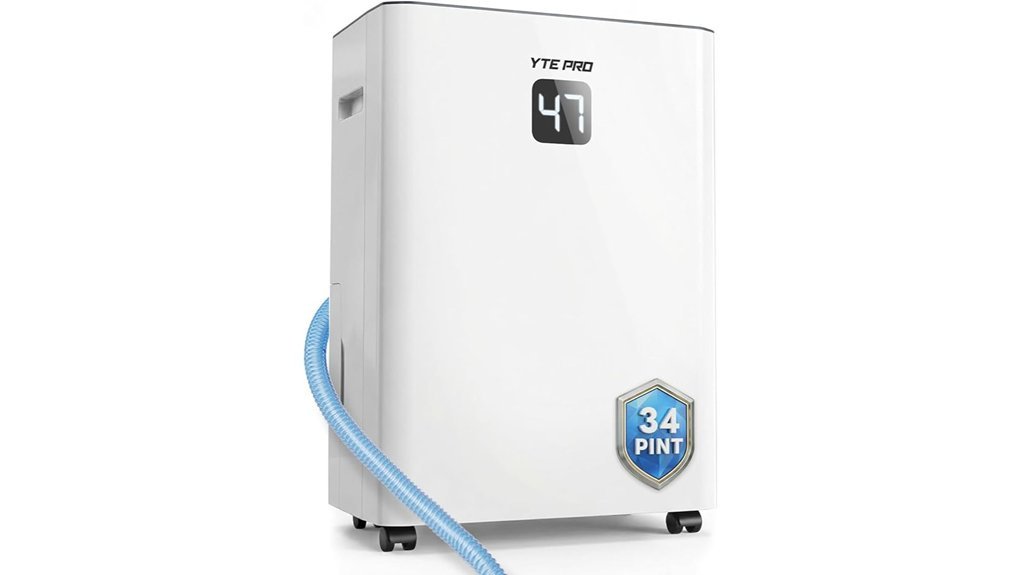
This 34-pint compressor dehumidifier targets bedrooms, bathrooms, and basements with manufacturer-listed coverage up to 2,500 square feet. It offers an LED humidity display, two fan speeds, multiple operating modes, auto defrost, a washable filter, caster wheels, a 2-liter tank, and a 6.56-foot drain hose.
The feature set is useful, but the listing does not give the product a clear consumer-facing brand in the article. That makes seller support, replacement parts, and warranty service harder to judge than with established brands. Check the current Amazon seller, model number, electrical rating, and return policy before buying.
Best For: Buyers who want a mid-capacity compressor model with an included hose and straightforward controls.
Pros:
- 34-pint capacity is more suitable for real room humidity than mini Peltier units.
- Included drain hose supports continuous operation.
- Washable filter, auto defrost, wheels, and digital controls improve convenience.
Cons:
- Brand and warranty transparency are weaker than the named-brand picks.
- The 2-liter tank is small if you do not use continuous drainage.
- Manufacturer-listed coverage may be optimistic in cold or severely damp spaces.
avylo ADC018 Basement Dehumidifier with Pump
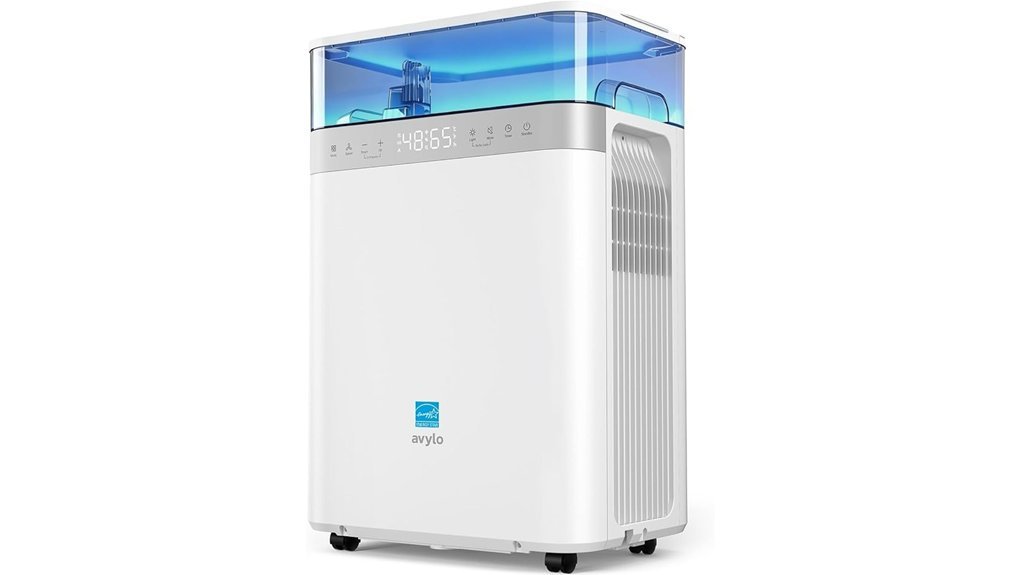
The avylo ADC018 is a practical option when the drain is above floor level. Its built-in pump can move water vertically through the included hose, while the large top-mounted tank is easier to access than a low front bucket. The ENERGY STAR database lists the ADC018 at 24.5 pints per day under standardized conditions, an integrated energy factor of 2.05 L/kWh, and estimated annual energy use of 257 kWh.
Marketing may also show a much larger maximum moisture-removal figure under hot, saturated conditions. Use the standardized 24.5-pint rating when comparing it with other ENERGY STAR products. The unit also includes automatic humidity control, auto defrost, several fan settings, child lock, timer controls, and a stated low-speed sound level around 41 dB.
Best For: Basements and utility rooms where water must be pumped upward to a sink, window, or elevated drain.
Pros:
- Verified ENERGY STAR efficiency data provides a fair comparison point.
- Built-in pump and included drain hose support flexible continuous drainage.
- Large top-mounted tank, auto defrost, timer, and child lock improve usability.
Cons:
- Its standardized capacity is far lower than the maximum-condition marketing number.
- A pump adds complexity and requires careful hose installation.
- The unit is heavier and takes more space than a small room model.
Aiusevo AS280 21-Pint Dehumidifier for Basement and Large Room
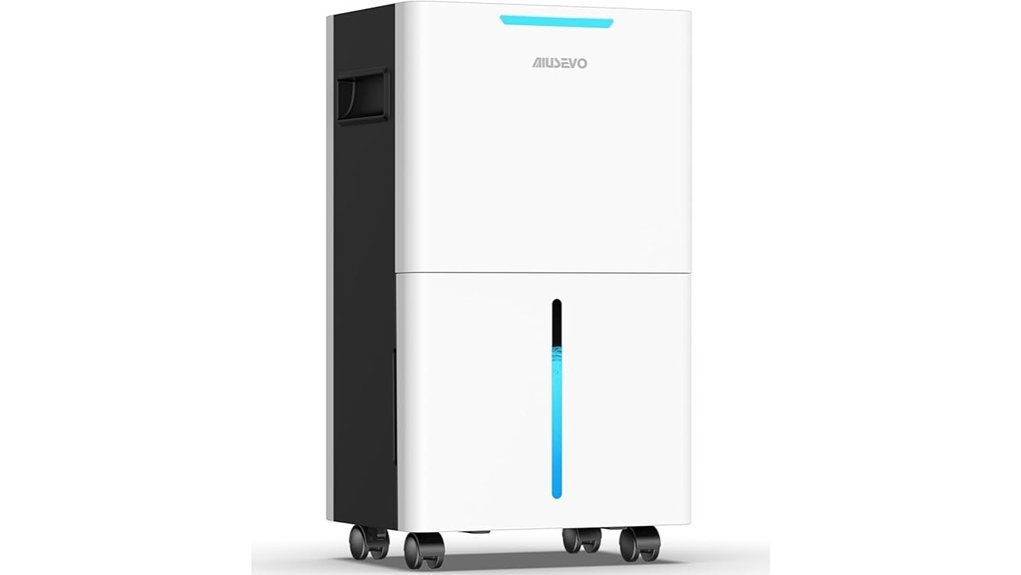
The Aiusevo AS280 is a compact compressor dehumidifier rated to remove up to 21 pints per day in hot, humid conditions. It includes Dehumidify, Dry, and Continuous modes, adjustable humidity control, a 2-liter tank, automatic shutoff, auto defrost, a timer, wheels, handles, and a drain hose.
Its manufacturer-listed coverage is up to 1,500 square feet, but actual performance will depend on room temperature, starting humidity, airflow, and whether doors remain open. It is a better match for a bedroom, bathroom, RV, or moderately damp basement than for a flooded or chronically wet foundation.
Best For: Budget-conscious shoppers who want a real compressor unit with a hose and multiple modes.
Pros:
- 21-pint capacity offers more meaningful moisture removal than most mini units.
- Three modes, adjustable humidistat, timer, auto defrost, and continuous drainage.
- Wheels and lift handles make the compact unit easier to move.
Cons:
- The 2-liter bucket can fill quickly without the hose connected.
- Coverage claims should be reduced for colder or very wet basements.
- It does not offer the verified efficiency data of the strongest ENERGY STAR picks.
Onsekin CS08-Cream Dehumidifier with Aromatherapy Diffuser
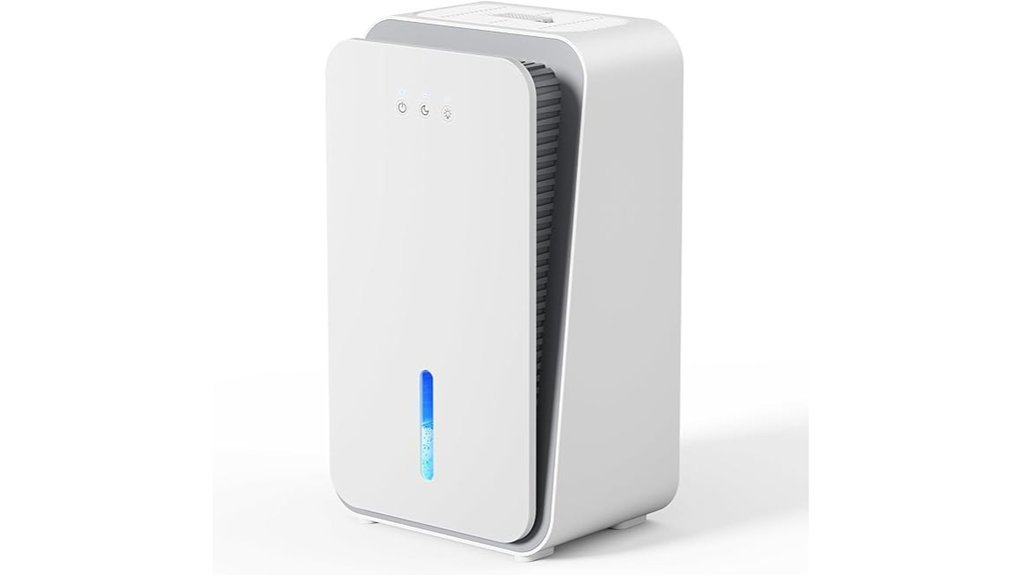
The Onsekin CS08-Cream combines thermoelectric moisture removal with a built-in aromatherapy area, sleep mode, automatic shutoff, color lighting, and a drain-hose option. The manufacturer advertises coverage up to 1,000 square feet, but its compact semiconductor design is better treated as a small-room solution for bedrooms, bathrooms, closets, and RVs.
This is a lifestyle-oriented pick rather than a high-capacity basement machine. Use only fragrance products permitted by the manual, keep oils away from the water tank and electrical components, and stop using the diffuser feature if anyone in the home is sensitive to fragrance.
Best For: Small-room users who value quiet operation, ambient lighting, and an optional scent feature.
Pros:
- Aromatherapy, sleep mode, lighting, auto shutoff, and hose drainage in one compact unit.
- Portable design is easy to move between a bedroom, bathroom, closet, or RV.
- Semiconductor operation avoids the compressor cycling noise of larger units.
Cons:
- The 1,000-sq.-ft. coverage claim is optimistic for a compact Peltier design.
- Fragrance features may not suit people with allergies, asthma, pets, or scent sensitivity.
- Not designed for major moisture removal in a large basement.
Factors to Consider When Choosing an Eco Air Dehumidifier
The most eco-friendly dehumidifier is not automatically the smallest or the one with the lowest wattage. It is the model that can reach your target humidity efficiently without running nonstop. Start with capacity and room conditions, then compare energy certification, drainage, noise, filtration, refrigerant, warranty, and maintenance.
ENERGY STAR Efficiency
For compressor dehumidifiers, an ENERGY STAR label is the easiest efficiency signal to compare. Look at the exact model number, integrated energy factor, standardized pint capacity, and annual energy-use estimate. Avoid assuming every model from the same brand has the same certification.
Standardized Capacity vs. Maximum Capacity
A product may show two very different pint ratings. DOE or AHAM capacity is measured under defined conditions and is best for product-to-product comparison. A larger saturation or “maximum” number may be measured in much hotter and wetter air. Both can be technically valid, but they answer different questions.
Coverage Area Match
Square-foot coverage is not standardized as tightly as pint capacity. A warm open room with moderate humidity is easier to manage than a cold basement with water seepage. For persistent dampness, prioritize standardized pint capacity and drainage over the largest advertised coverage number.
Compressor vs. Thermoelectric Models
Compressor models remove much more water and are usually the right choice for basements, large rooms, and serious humidity. Thermoelectric or Peltier units use less power and make less noise, but they work best in closets, small bathrooms, RVs, and bedrooms with mild moisture.
Noise Level
Noise claims are often measured at the lowest fan setting. For bedrooms, look for a sleep mode and a stated level below about 40 dB, but remember that compressor cycling, floor vibration, and room acoustics also affect what you hear.
Drainage Options
A bucket is simple but requires regular emptying. Gravity drainage needs a lower drain and a hose that slopes downward without kinks. A built-in pump is useful when water must travel upward, but it adds moving parts and should be tested before unattended use.
Smart Humidity Control
A humidistat lets the unit stop when it reaches the selected relative humidity, which can save energy and reduce over-drying. “Smart” may mean automatic sensing only; it does not always mean Wi-Fi, app control, or voice assistants.
Filter Type and Air-Purifying Claims
Most washable dehumidifier filters protect the coils from lint and dust; they are not HEPA air purifiers. Only treat a product as a true air purifier when the filter type and particle-capture standard are clearly stated. A dehumidifier can help discourage moisture-related mold growth, but it does not remove existing mold or replace remediation.
Warranty and Durability
Check who provides the warranty, how long labor and the compressor are covered, whether return shipping is included, and whether replacement filters or hoses are available. Metal crawl-space units can be more durable, while lightweight plastic room units are easier to move.
Before You Buy Checklist
- Measure the room and note whether it is warm, cold, mildly damp, or severely wet.
- Compare standardized pint capacity rather than only maximum-condition claims.
- Decide whether you need a bucket, gravity hose, or built-in pump.
- Confirm voltage, plug type, hose inclusion, filter type, and warranty.
- Plan a level location with clear airflow and safe cord routing.
- Fix leaks and water intrusion before expecting a dehumidifier to solve the problem.
Frequently Asked Questions
What Humidity Setting Is Best for a Home?
A target around 45% to 50% relative humidity works well for many homes. In a damp basement, you may start near 50% and adjust based on comfort, condensation, and how often the unit runs. Avoid setting it unnecessarily low, because that can waste energy.
Do Small Peltier Dehumidifiers Really Work?
Yes, but only within their limits. They can help in a closet, small bathroom, RV, or bedroom with mild humidity. They are not a practical replacement for a compressor dehumidifier in a large basement or during active water intrusion.
Why Does One Dehumidifier Have Two Different Pint Ratings?
One rating may be measured under standardized DOE or AHAM conditions, while the larger number may come from hot, saturated test air. Use the standardized rating to compare products fairly and the maximum rating only as an upper-bound performance claim.
Can a Dehumidifier Replace an Air Purifier?
Usually not. A washable dehumidifier filter mainly protects the appliance. A model such as the Tenergy Sorbi includes a True HEPA filter, but most dehumidifiers do not provide equivalent particle filtration.
What Maintenance Keeps a Dehumidifier Efficient?
Clean the reusable filter on the manufacturer’s schedule, rinse and dry the bucket, inspect the drain hose for clogs or kinks, vacuum dust from the intake and outlet, and keep the unit level with enough airflow around it. Unplug it before cleaning.
Are Dehumidifiers Safe Around Pets and Children?
They can be used safely when placed on a stable surface with vents unobstructed and cords secured. Use the child lock when available, keep the appliance away from standing water, and do not let children or pets climb on, tip, or chew the unit or hose.
How Often Should Filters Be Replaced?
Washable prefilters should be cleaned rather than replaced unless they are torn, warped, or permanently clogged. HEPA filters are normally replaceable, not washable, and should be changed according to the product manual and visible condition.
Conclusion
Final recommendation: Choose the AEOCKY RHEA-001 when you need a large-room, efficiency-focused compressor model; the Midea 22 Pint when smart controls matter; the avylo ADC018 when pumped drainage is essential; or the Tenergy Sorbi for a genuinely small room that also needs HEPA filtration.
The greenest choice is the correctly sized unit that reaches the target humidity without running constantly. Compare standardized capacity, use continuous drainage when practical, clean the filter, and correct leaks before relying on any dehumidifier.