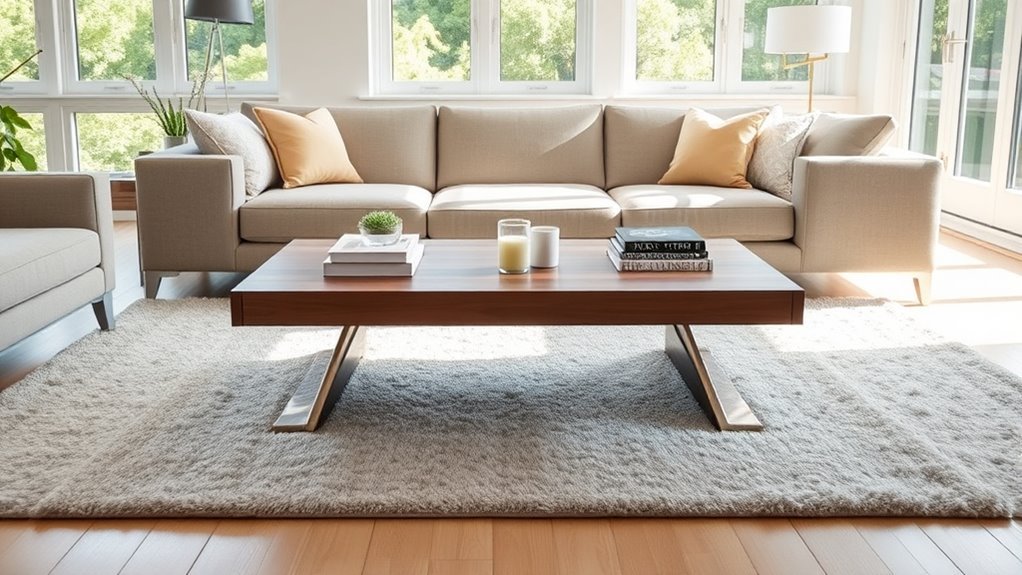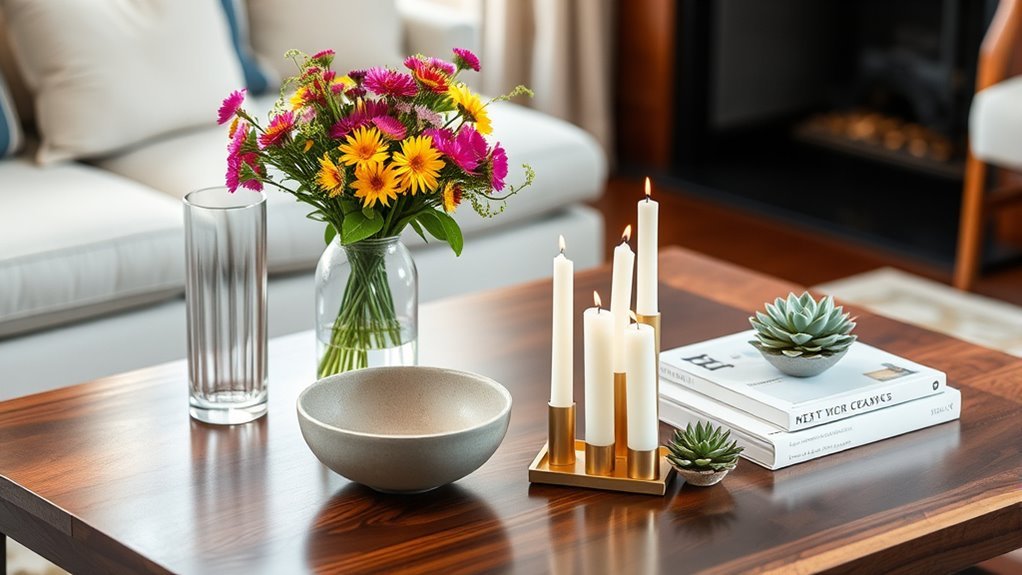
Styling a coffee table works best when the table is easy to reach, scaled to the sofa, and edited enough to leave room for real life. Start with the right height and placement, then build a small grouping with varied heights, textures, and one clear focal point. The goal is not a crowded display; it is a balanced surface that looks finished and still holds a drink, remote, book, or snack.
Quick Answer
For the best coffee table styling, choose a table about the same height as your sofa seat or up to 2 inches lower, leave 14 to 18 inches between the table and sofa, then group decor in threes using one tall item, one medium item, and one low functional piece.
Key Takeaways
- Match the coffee table to your sofa first: aim for the same height as the seat cushion or slightly lower.
- Use spacing as part of the design: 14 to 18 inches from the sofa keeps the table reachable without crowding knees.
- Style in small groups, not scattered pieces. A tray, books, vase, bowl, or sculptural object can create order.
- Vary height, shape, texture, and finish so the table feels layered rather than flat.
- Leave open surface space so the coffee table still works for drinks, remotes, snacks, and everyday use.
At a Glance
| Time Required | 15 to 30 minutes for styling; longer if you are measuring before buying a new table |
| Difficulty | Easy |
| Tools Needed | Tape measure, painter’s tape, tray, books, vase or plant, bowl or box, and everyday items you want to keep handy |
| Cost | $0 if restyling what you own; $10 to $50 for a tray, books, faux greenery, or small decorative accent |
How to Choose the Right Height for Your Coffee Table
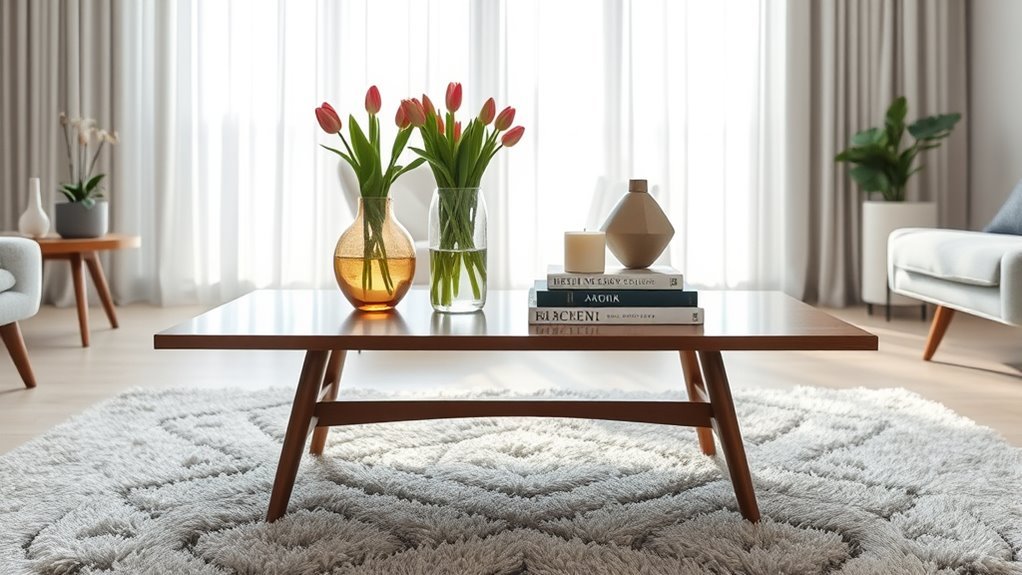
The easiest way to choose the right coffee table height is to measure from the floor to the top of your sofa seat cushion. A good coffee table is usually the same height as that cushion or up to 2 inches lower. This keeps drinks, books, and remotes within easy reach without making the table feel bulky.
Most standard coffee tables fall around 16 to 18 inches high, but the right number depends on your seating. A low modern sofa may pair better with a 12- to 16-inch table, while a taller sofa, lounge chair, or game-friendly living room may need a table closer to 18 to 20 inches. The table should support how you actually use the room, not just match a showroom rule.
For scale, choose a coffee table that is roughly two-thirds the length of your sofa. For example, a 90-inch sofa usually looks balanced with a table around 54 to 60 inches long. If your table is much shorter, the seating area can look unfinished; if it is much longer, it can block movement and make the room feel cramped.
Placement matters just as much as height. Leave about 14 to 18 inches between the sofa and coffee table so people can reach the surface comfortably while still having leg room. Where possible, leave about 30 inches of open walking space around the seating area.
Note: The 36-inch clear-route standard from the U.S. Access Board applies to accessible public routes, not ordinary private living rooms, but it is a useful benchmark if someone in your home uses a mobility aid, walker, stroller, or needs easier circulation.
Choose the Best Coffee Table Shape for Your Room
Shape affects both style and movement. Use the room layout, sofa shape, and household needs to decide what works best.
- Rectangular coffee table: Best for standard sofas, sectionals, and long seating areas because it gives everyone easier reach.
- Round coffee table: Great for small rooms, homes with kids, and spaces with lots of straight-lined furniture. The curved edge softens the room and is easier to walk around.
- Oval coffee table: A strong choice when you want the surface area of a rectangle but the softer movement of a round table.
- Square coffee table: Works well with large sectionals or conversation-style seating where people sit on several sides.
- Ottoman coffee table: Adds softness and can double as extra seating. Use a tray on top so drinks and decor stay stable.
- Storage or nesting table: Ideal for small rooms because it hides remotes, blankets, games, or coasters while keeping the top less cluttered.
Pro Tip: Before buying a table, mark its size on the floor with painter’s tape. Walk around it, sit on the sofa, and check whether you can reach the taped area comfortably.
Recommended Products

Style Reigns: Discover the MAEZO Collection—a furniture line featuring streamlined designs, tapered legs, and smooth, curved transitions. Each piece adds a touch of mid-century modern flair to your home.

【2-Tiered Round Coffee Table】Overall Size: 28.7"D x 28.7"W x 18.1"H. This round coffee table features a 2 tier design, offering both a tabletop for immediate use and additional storage space. It's an ideal solution for keeping your living room essentials neatly arranged. The lower shelf is perfect for stashing away magazines, books, or toys, while the upper surface allows you to showcase your favorite decorative pieces or collectibles, adding a personal touch to your living area.

【Multi-Functional Storage Space】This premium coffee table with storage features a wide open shelf to store baskets, books, remotes and daily clutter. It maximizes storage capacity perfectly as your core living room coffee table.
Balance Coffee Table Heights for Harmony
Once the table itself is the right height, style the top with varied levels. A flat row of objects can look stiff, while a mix of tall, medium, and low pieces gives the eye somewhere to travel.
- Start with one anchor: Use a vase, sculptural bowl, candleholder, plant, or stack of books as the main piece.
- Add a medium-height layer: Try a small box, lidded jar, framed photo, or shorter vessel.
- Finish with a low item: A tray, shallow bowl, coaster set, or decorative dish keeps the arrangement grounded.
- Leave breathing room: At least one-third of the tabletop should stay open for everyday use.
If your coffee table is mostly viewed from the sofa, place taller items toward the back and lower items toward the front. If the table is viewed from all sides, keep the tallest piece closer to the center so the arrangement looks good from every angle.
Group Items for Maximum Visual Appeal
The rule of three is a simple way to make a coffee table look styled without feeling crowded. According to designer-backed rule-of-three guidance, odd-numbered groupings often feel more natural because they create balance, movement, and variation.
Use three pieces that differ in height, shape, or texture. A reliable formula is a tall vase, a medium stack of books, and a low bowl or tray. The pieces should relate to each other, but they should not match exactly. For example, pair a ceramic vase with linen-covered books and a warm wood bowl, or combine a marble tray, glass vessel, and woven box.
Asymmetry usually looks more relaxed than perfect centering. Place two items slightly closer together and let the third sit a little apart. This creates a small visual “conversation” instead of a stiff triangle.
A well-styled coffee table usually has three things working together: the right scale, a clear focal point, and enough empty space to stay useful.
Accessorizing Your Coffee Table Effectively
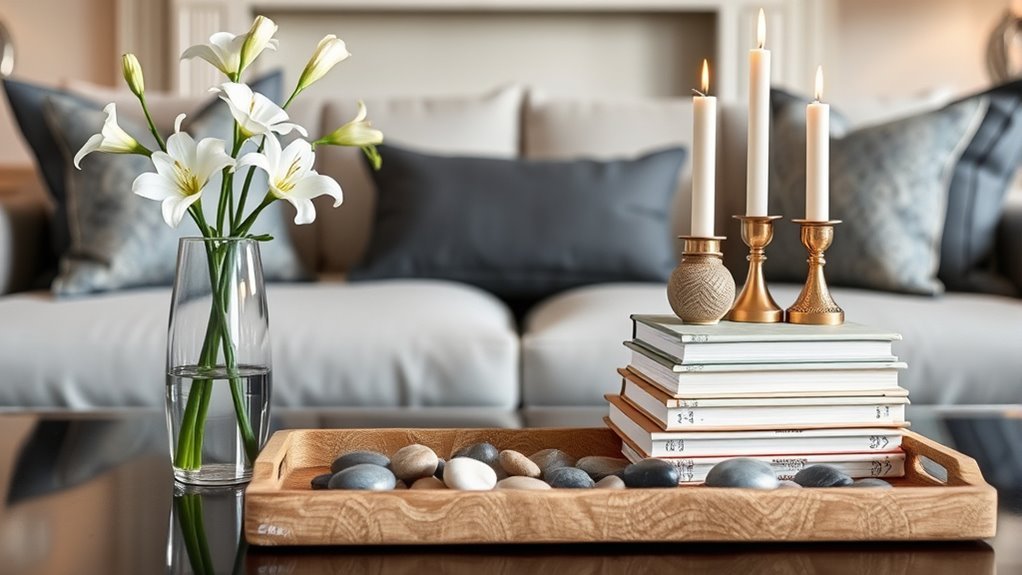
Accessories should make the table feel intentional, not overloaded. Start with what the room needs: warmth, storage, height, color, softness, or a practical landing spot.
- Use a tray to create order: A tray makes small items look collected and is especially helpful for remotes, candles, coasters, and small objects.
- Stack books for height: Two or three books can lift a small bowl, candle, or object so it does not disappear on the tabletop.
- Add one natural element: Fresh flowers, clipped branches, a small plant, or a bowl of stones can soften hard surfaces.
- Mix materials: Combine smooth ceramic, woven texture, wood, glass, stone, or metal so the arrangement has depth.
- Repeat one color: Pull a color from the rug, pillows, artwork, or sofa so the table connects to the rest of the room.
Warning: If you style with real candles, keep flames away from books, dried flowers, curtains, paper, and wood accents, and never leave them unattended. In homes with kids, pets, or busy traffic paths, flameless candles are the safer choice.
Recommended Products

The Perfect Home Decor Accent: Say hi to your new fave coffee table decor for your living room! This luxe set features a sleek decorative tray for a coffee table and a faux book wrapped in elegant linen - effortlessly upgrading your space with a modern, artsy touch
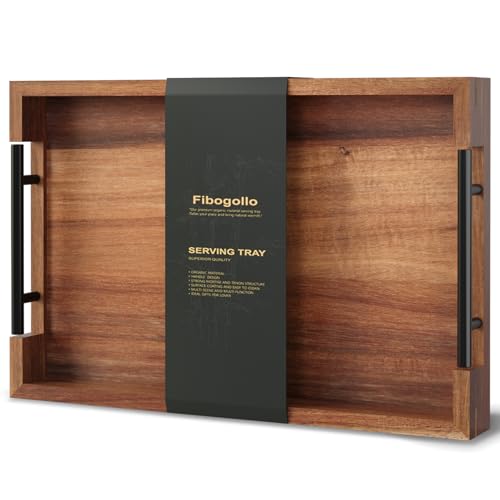
【Premium Material, beautiful and durable】 Crafted from carefully selected natural acacia wood, this piece retains the delicate tactile feel of the original wood grain. The surface is hand-polished and treated with eco-friendly lacquer, achieving a smooth and lustrous finish that is moisture-resistant and durable. The natural subtle fragrance and understated hues of the Acacia Woodimbue the tray with a rustic charm, allowing it to harmoniously integrate into any space while fostering a serene and soothing ambiance.

Italian Natural Travertine: Each tray of Travertino Romano is a unique work of art, formed by nature over millions of years. Its distinctive tiny pores and veins create one-of-a-kind patterns in warm cream or pale yellow tones. Please note that as a 100% natural stone, variations in color, veining, and texture are not flaws but a gift from nature, ensuring your installation is uniquely yours.
Style by Coffee Table Type
Different table materials need different styling choices. A glass table can look cluttered quickly because everything is visible from above and below, so use fewer pieces and one strong tray. A wood table can handle layered books, ceramics, and natural textures. A marble or stone table often looks best with warmer accents, such as woven trays, brass, wood, or greenery.
For an ottoman coffee table, use a firm tray large enough to hold drinks safely. For a small round table, choose one tight grouping instead of several scattered zones. For a large square table, divide the surface into four loose quadrants: one for books, one for a vessel, one for a bowl or box, and one left open.
Recommended Products

Solid Concrete: Hand-crafted from 100% solid concrete by expert artisans, this coffee table tray is designed to enhance any home decor while providing durability and stability, ensuring it withstands daily use without compromising its elegant appearance.

PREMIUM QUALITY - Our tray is made of 100% solid resin and every product is a unique work of art. Elevate your home with this coffee table centerpiece. Our fluted circle tray is perfect to use as a decorative serving tray.

Minimalist Design - Elevate your home decor with YMXYJM modern coffee table tray. Beige fluted rectangle tray with a chic scalloped edge, offering a minimalist, solid-color aesthetic. Each tray is handcrafted, exuding an elegant vibe for your home decor.
Put the Finishing Touches on Your Coffee Table
After the main pieces are in place, step back and edit. A coffee table should look good from the sofa, from the room entrance, and from nearby chairs. If everything is the same height, raise one piece with books. If the table feels busy, remove the smallest items first. If the styling feels cold, add texture with wood, woven material, linen, or greenery.
Keep function visible. Add coasters where people naturally set drinks. Use a decorative box for remotes. Leave a clear spot for a mug or snack plate. If you entertain often, keep the arrangement easy to lift away by grouping pieces on a tray.
Common Coffee Table Styling Mistakes and Fixes
- The table looks cluttered: Remove half the small items and replace them with one larger bowl, vase, or tray.
- The arrangement looks flat: Add height with a stack of books or a taller vessel.
- The table is too low: Keep decor low and wide, or use a thicker book stack to make functional items easier to reach.
- The table is too high: Avoid tall decor and keep the surface visually light so it does not overpower the sofa.
- The table feels disconnected from the room: Repeat one color, finish, or texture from the surrounding pillows, rug, curtains, or artwork.
- The table blocks movement: Shift it closer to the sofa only if there is still comfortable leg room, or choose a round, oval, or nesting table.
Frequently Asked Questions
Should your coffee table be higher or lower than your couch?
Your coffee table should usually be the same height as your sofa seat or up to 2 inches lower. A table that is much higher can feel awkward to use and visually heavy, while a table that is much lower may make drinks, books, and remotes harder to reach.
What’s the correct height for a coffee table?
A common coffee table height is about 16 to 18 inches, but the correct height depends on your sofa. Measure from the floor to the top of the sofa seat cushion, then choose a table that is about the same height or slightly lower.
How do you display things on a coffee table without making it look cluttered?
Use one tray or one tight grouping instead of spreading small items across the whole surface. Combine one tall item, one medium item, and one low item, then leave open space for drinks or daily use. If the table still looks busy, remove the smallest pieces first.
Is a 12-inch-high coffee table too low?
A 12-inch coffee table is low for most standard sofas, but it can work with low-profile modern seating. Before using one, sit on the sofa and check whether you can comfortably reach the tabletop without leaning too far forward.
How far should a coffee table be from the sofa?
A good starting point is 14 to 18 inches between the sofa and coffee table. This usually gives enough leg room while keeping drinks and remotes within reach. In tighter spaces, prioritize safe movement and avoid sharp corners in high-traffic paths.
What should you put on a coffee table?
Good coffee table items include a tray, two or three books, a small vase, a bowl, coasters, a decorative box, a plant, or one sculptural object. Choose fewer, larger pieces instead of many tiny accents so the table stays clean and useful.
Conclusion
A beautifully styled coffee table starts with practical measurements: the right height, comfortable spacing, and a size that matches your sofa. From there, use simple grouping rules to add height, texture, and personality without sacrificing function. Keep one focal point, repeat a color or material from the room, and leave enough open space for everyday life. When height, grouping, and usability work together, the coffee table becomes a natural focal point instead of a cluttered surface.
Sources
- Southern Living — coffee table height, two-thirds sofa length guideline, placement, and material considerations
- Better Homes & Gardens — living room furniture spacing, coffee table distance, and walkway clearance guidance
- Real Simple — rule of three styling guidance for coffee tables, shelves, and decor groupings
- National Fire Protection Association — candle safety guidance for home decor
- U.S. Access Board — accessible route clearance benchmark for circulation planning