
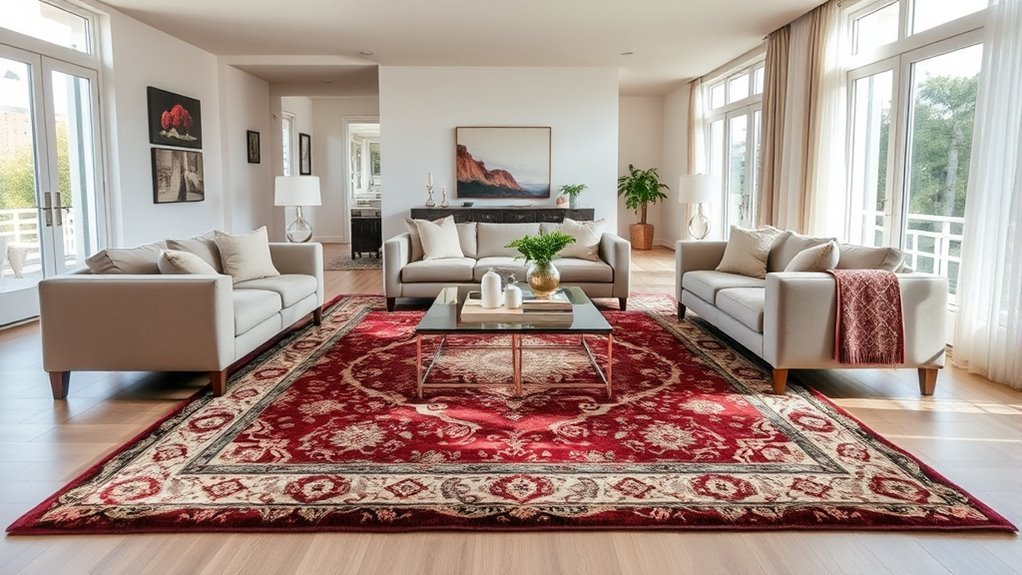
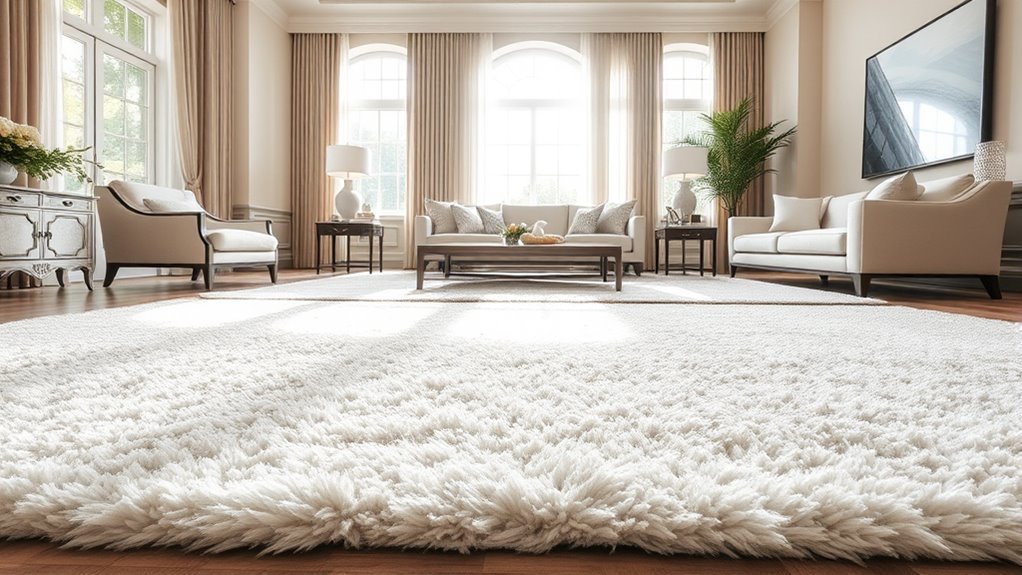
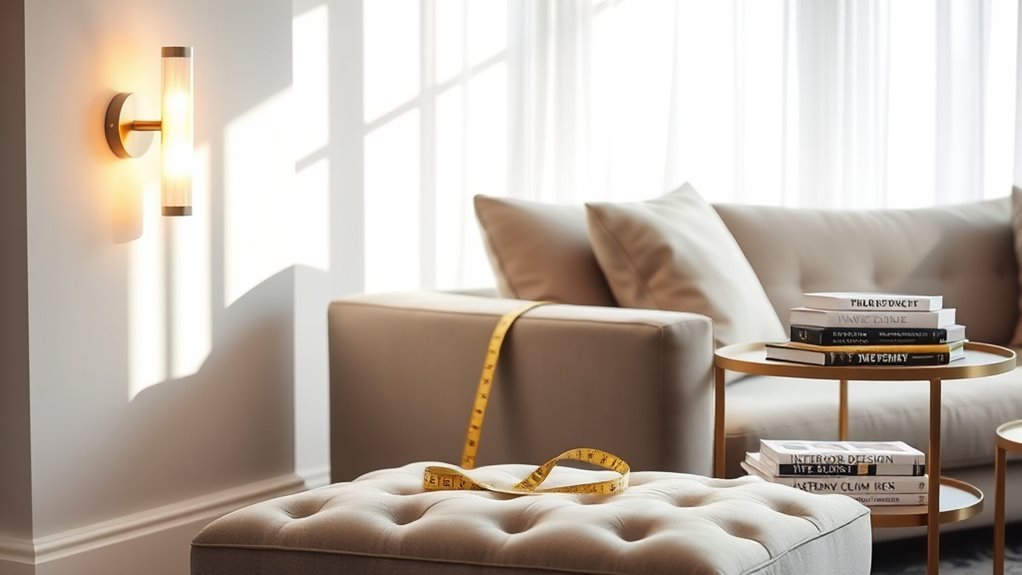
Good living room rug placement starts with your furniture footprint, not the empty floor between the walls. When a rug is sized to the sofa and chairs rather than the coffee table alone, it pulls separate seats into a single conversation zone. Measure your seating arrangement first, tape the candidate rug dimensions on the floor, and verify that doors and walkways stay clear before you buy.
Quick Answer
Size your living room rug so at least the front legs of the sofa and chairs sit 6–12 inches onto the rug, with the rug extending 8–12 inches past each end of the sofa. Center the rug on the seating group, leave 16–18 inches between the sofa and coffee table, and secure the rug with a floor-safe pad trimmed 1–2 inches smaller per side.
At a Glance
| Time Required | 20–45 minutes to measure, tape the outline, and test walkways |
| Difficulty | Easy |
| Tools Needed | Tape measure, painter’s tape, notepad, floor-compatible rug pad, and a helper for lifting furniture |
| Cost | Free if repositioning an existing rug; varies if adding a new rug or non-staining rug pad |
What Is the Best Living Room Rug Placement and Size?
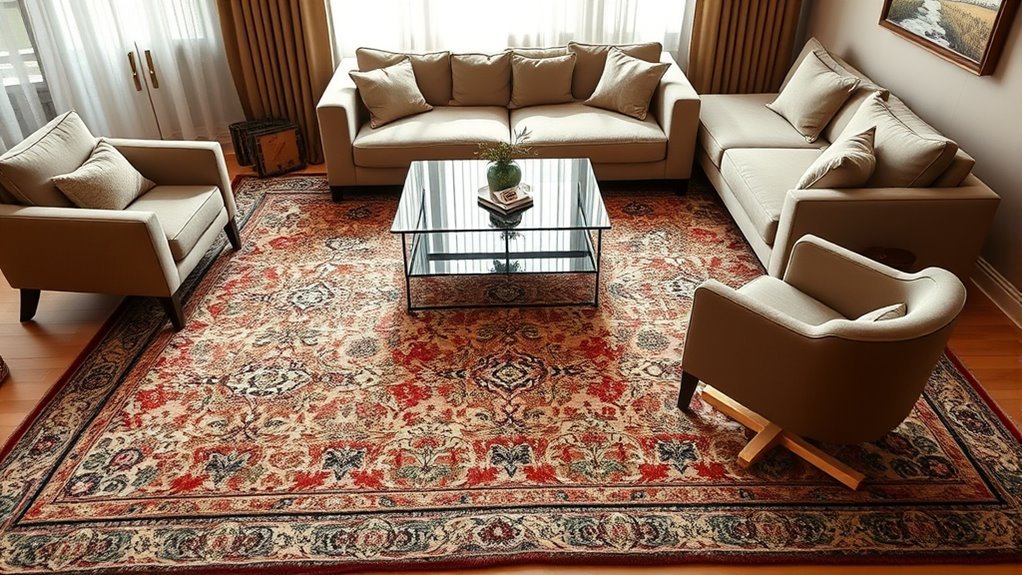
The best living room rug size is determined by the outer dimensions of your arranged sofa, armchairs, and tables. In most rooms, an 8×10-foot or 9×12-foot rug connects a standard three-seat sofa and side chairs without crowding the walls. Measure the complete seating group as it sits in use, then select a standard size that reaches under at least the front legs of every major seat.
For balanced proportions, let the rug extend 8–12 inches (20–30 cm) past each arm of the sofa when room width allows, a benchmark also recommended in King Living’s designer rug-placement guide. For example, a standard 84-inch (7-foot) sofa pairs naturally with an 8×10-foot rug oriented horizontally, leaving 18 inches of rug beyond each arm. A longer 96-inch (8-foot) sofa usually needs a 9×12-foot rug so the ends of the couch do not overhang the rug border.
Recommended Products

CLASSIC VINTAGE AESTHETIC BEIGE RUG: The area rug 8x10 features a harmonious blend of beige tones that evoke a timeless vintage charm, making it an ideal addition for any room in your home—from retro bohemian and rustic farmhouse to modern minimalism. Perfect rugs for living room, bedrooms, dining room rugs for under table, entryways, playrooms, or home offices, this 8x10 rug serves as the finishing touch to your interior flooring decor

Luxuriously Soft & Non-Slip: This 8x10 area rugs features dense low-pile for ultra-soft underfoot comfort. Enhanced TPR non-slip backing keeps it securely in place on all floors, providing peace of mind for families with kids and pets

PET FRIENDLY & NON-SLIP BACKING: 8x10 area rugs featuring simple of colors while promising a luxurious feel underfoot. The blend of a hexagon pattern and a stylish design. Non-slip TPR backing makes the covering for bringing your space together. Make the most of your time at home with our pet-friendly and easy-to-clean area rugs. Elevate the floors of your home with this show-stopping and detailed rug
Use This 3-Number Rug Fit Test
Before shopping, verify three measurements to avoid the most common sizing mistakes. This quick test matches your actual furniture layout to standard rug dimensions (such as 6×9, 8×10, 9×12, or 10×14 feet) before you spend money.
- Total seating footprint: Arrange your sofa, chairs, and coffee table with 16–18 inches of legroom between the sofa and coffee table, then measure the total width and depth of the group.
- Leg overlap depth: Add 6–12 inches under the front legs of the sofa and chairs for a front-legs-on layout, or add the full depth of each seat plus 6–8 inches behind the back legs for an all-legs-on layout.
- Perimeter and walkway clearance: Confirm that the rug leaves 30–36 inches for primary walkways (or at least 18–24 inches in tight rooms) and stays clear of door swings, floor vents, and room transitions.
Choose the smallest standard rug size that passes all three checks, and outline it on the floor with painter’s tape, as outlined in The Spruce’s ultimate rug size guide. If an 8×10-foot outline reaches the sofa’s front legs but stops short of the accent chairs across the coffee table, step up and test a 9×12-foot outline.
Note: Sizing benchmarks are proportion tools, not rigid laws. Narrow townhomes, studio apartments, angled fireplaces, or low-clearance doors may call for a smaller rug or an off-center layout to keep walkways safe and unobstructed.
Living Room Rug Size Chart
Use the chart below to match your sofa length and room layout to the right starting rug size. Always tape the exact dimensions on your floor before ordering, since handmade and woven rugs can vary by a few inches from their nominal label.
| Room or Seating Layout | Typical Sofa Size | Starting Rug Size | Target Leg Placement |
|---|---|---|---|
| Small apartment or studio zone | 60–72 in. loveseat or apartment sofa | 5×8 or 6×9 feet | Front legs of the sofa on the rug; include chair front legs on a 6×9 when space allows |
| Standard sofa with two chairs | 72–84 in. three-seat sofa | 8×10 or 9×12 feet | Front legs of the sofa and both armchairs resting 6–12 in. onto the rug |
| Large living room | 84–96 in. deep or extra-long sofa | 9×12 or 10×14 feet | All four legs of main seating on the rug with 6–8 in. of rug behind the sofa |
| L-shaped or chaise sectional | 96–120+ in. sectional width | 8×10, 9×12, or 10×14 feet | Front legs of both the main section and the chaise on an 8×10 or 9×12; all legs on a 10×14 |
| Open-plan great room | Dual sofas or large modular group | 9×12, 10×14, or 12×15 feet | All main seating legs on the rug to frame the lounge zone separately from dining and kitchen paths |
How Much Floor Should Show Around a Living Room Rug?
Leave about 10–18 inches of bare floor between the rug edges and the walls in most standard living rooms. In compact rooms, an 8-inch border prevents the space from feeling boxed in, while expansive rooms can comfortably show 18–24 inches of flooring. As The Spruce’s area-rug placement dos and don’ts emphasize, the exposed border is flexible and should adapt to your room’s shape.
Avoid pushing an area rug flush against the baseboards unless you are intentionally mimicking wall-to-wall carpet. Keeping a visible strip of hardwood, tile, or luxury vinyl around the perimeter frames the seating arrangement and makes the room look wider.
How Do You Place a Rug to Define a Seating Area?
To place a living room rug accurately, build the layout from your primary sofa and focal point outward rather than measuring from the room’s walls. Following a step-by-step sequence ensures the rug connects every seat, keeps the coffee table within easy reach, and leaves doors and walkways unobstructed.
- Position the seating group first. Align your sofa and chairs around the room’s primary focal point—such as a fireplace, media console, or picture window—leaving 16–18 inches between the seating edges and the coffee table.
- Measure the combined furniture footprint. Measure the outer width from arm to arm and the total depth from the back of the sofa to the front or back legs of the opposite chairs.
- Tape the candidate rug size on the floor. Use painter’s tape to mark standard rug sizes (such as 8×10 vs. 9×12 feet) so you can compare how far each option extends past the sofa arms.
- Set the furniture-leg depth. Pull the rug 6–12 inches under the front legs of the sofa and chairs for a front-leg layout, or position the entire seating group on the rug with 6–8 inches of border behind the seats.
- Check doors, vents, and traffic paths. Open nearby entry and closet doors through their full arc, locate floor registers, and confirm that main walkways don’t straddle a raised rug edge.
- Lay a trimmed, floor-safe rug pad. Place a non-slip pad that is cut 1–2 inches smaller than the rug on all four sides so the rug edges slope smoothly down to the floor.
- Fine-tune the alignment. Step back to the room entrance and check that the rug is centered on the sofa and coffee table— typically with a coffee table that is roughly two-thirds the length of the sofa.
Pro Tip: Live with your painter’s-tape outline on the floor for 24 hours before ordering. Walk your normal paths, pull out ottomans, and sit in every chair—if your feet stay comfortably inside the tape and no door catches, you have the right size.
Which Living Room Rug Placement Is Best?
Choose your rug placement based on room size, furniture depth, and whether your seating floats away from the walls. The three standard layouts—all legs on, front legs on, and coffee-table-only—create very different visual boundaries.
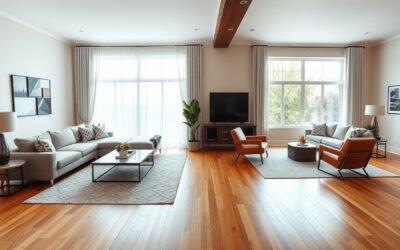
All legs on the rug: Every leg of the sofa, armchairs, and coffee table sits completely on the rug, ideally with 6–8 inches of rug extending past the backs of the seats. This layout works best in large living rooms, open-plan spaces, and rooms where furniture floats away from the walls. It requires a larger size (typically 9×12 or 10×14 feet) and prevents chairs from wobbling between floor and rug.
Front legs on the rug: The front two legs of the sofa and each accent chair sit 6–12 inches onto the rug, while the back legs rest on the bare floor. As explained in Ideal Home’s guide to the sofa front-legs rule, this creates a cohesive visual link across the seating zone without the cost or footprint of an oversized rug. It works best when the sofa sits against or near a wall in small-to-medium living rooms.
Coffee-table-only placement: Only the coffee table sits on the rug, with the sofa and chairs placed completely on the bare floor around its perimeter. Use this layout only in narrow or compact rooms where a 5×8-foot or round accent rug is the largest size that clears doorways. Keep the gap between the rug edge and the front of the sofa uniform (about 4–6 inches) so the rug doesn’t look like a postage stamp floating in the middle of the room.
Warning: Unsecured rugs and curled corners are major home trip hazards. According to CDC older-adult fall statistics, more than one in four older adults falls each year, resulting in about 4.5 million emergency department visits. In its home safety checklist, the CDC STEADI fall-prevention guide recommends removing loose throw rugs or securing rugs with non-slip backing or double-sided tape so edges stay completely flat.
How Does a Rug Define a Living Room Seating Area?
An area rug defines a seating area by creating a clear visual frame on the floor that groups separate pieces of furniture into one destination. Without that shared base, a sofa, coffee table, and pair of chairs can look like individual objects drifting across a hard floor. When their legs touch the same textile boundary, the brain reads the arrangement as a unified room-within-a-room.
Beyond visual structure, a properly scaled rug absorbs echo on hardwood or tile floors, warms cold surfaces underfoot, and protects high-traffic zones in front of the sofa from heel scuffs and grit.
A rug defines a seating area best when it connects the furniture, supports the room’s traffic flow, and looks like part of the layout rather than an afterthought.
How Do Rugs Define Open-Plan Spaces?
In an open-plan home, a large area rug acts as an invisible wall that separates the living zone from an adjacent dining table, kitchen island, or entry foyer. Because there are no partitions to stop the eye, putting all four legs of the sofa and chairs onto a 9×12- or 10×14-foot rug establishes a self-contained lounge boundary.
Always align the rug with the sofa and media wall or fireplace rather than centering it between the outer walls of the entire great room. Leave at least 30–36 inches of bare floor between the edge of the living room rug and any dining rug or kitchen counter stool zone so circulation paths stay distinct.
How Do You Match a Rug With Living Room Decor?
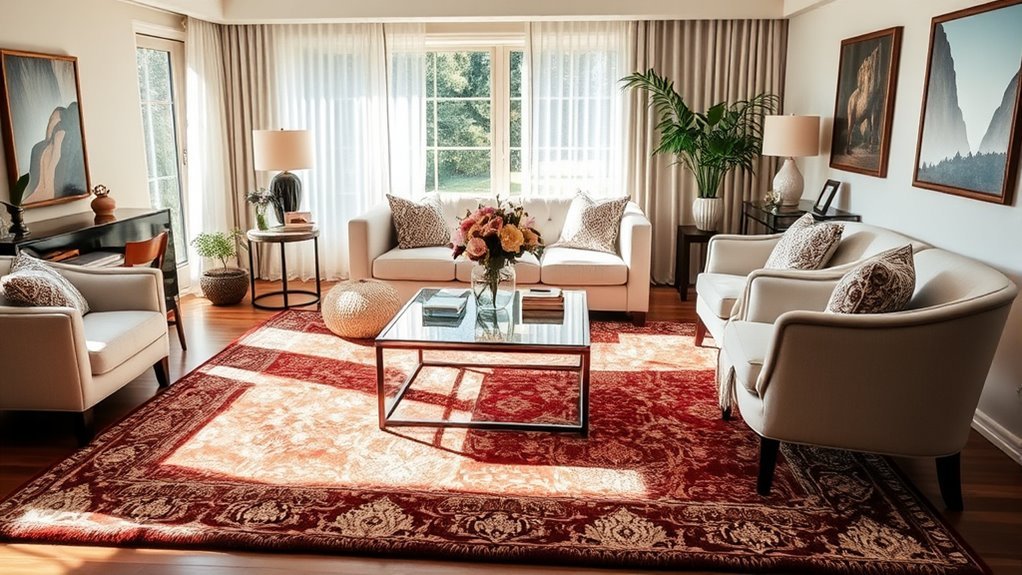
To match a rug with your living room decor, balance its color, pattern scale, and pile texture against your largest existing surfaces—the sofa, walls, floors, and curtains. If your upholstery and drapery are quiet and neutral, the rug can carry bold pattern or color; if your furniture already features strong prints or saturated hues, a calmer textured or tonal rug keeps the room grounded.
Recommended Products

Timeless Vintage Floral Design: Our 8x10 area rug features a stunning central floral medallion surrounded by intricate borders. Its elegant grayscale palette adds classic charm and understated luxury, perfect for living rooms, bedrooms, dining areas, or home offices

Trendy Modern Rug: Our area rug is designed in today's popular minimalist style, featuring adaptable printed patterns that seamlessly blend into a wide range of interior aesthetics. This neutral rug adds understated elegance with a strong feeling of individuality to your living room, bedroom, dining room, nursery or playroom.

STYLISH DESIGN: This trendsetting brushstroke inspired striped area rug design in a versatile color palette combination can be perfectly paired with a variety of home décor styles.
Choose a Rug Color That Supports the Room
Use the rug to bridge your floor tone and sofa color while repeating one or two secondary shades from throw pillows, artwork, or curtains. If you have a dark leather or navy sofa on dark walnut floors, a lighter cream, oatmeal, or warm gray rug creates separation so the furniture doesn’t disappear into the floor.
Factor daily maintenance into your color choice as well. Solid ivory or pale beige rugs show pet paw prints and coffee drips quickly, whereas multi-tone weaves, heathered yarns, or distressed patterns camouflage everyday lint and foot traffic between cleanings.
Balance Pattern With Furniture
Pair patterned upholstery with a solid, rib-woven, or subtle micro-pattern rug so the seating and floor do not compete. Conversely, if your sofa and armchairs are upholstered in solid linen, velvet, or leather, a geometric, Persian-style, or abstract rug adds visual depth without requiring extra furniture.
Check the scale of the pattern from standing and seated eye level before committing. Small, high-contrast motifs can appear busy when repeated across a 9×12-foot surface, while larger-scale medallions or wide stripes tend to read more calmly under a coffee table.
Pick the Right Texture and Pile Height
Match pile thickness to how the room is used and how doors and mobility devices move across the space:
- Low-pile and flatweave (under 1/4 inch): Best for high-traffic rooms, rolling ottomans, pet claws, and tight door clearances.
- Medium pile (1/4 to 1/2 inch): Balances underfoot cushioning with easy vacuuming and stable coffee-table placement.
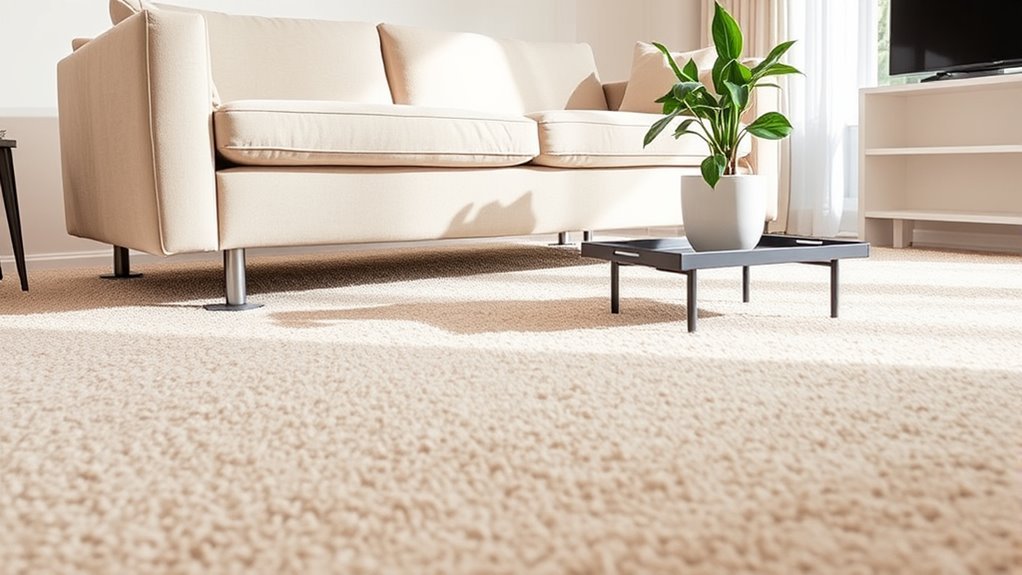
- High pile and shag (over 1/2 inch): Cozy for low-traffic lounge zones, but harder to vacuum and prone to trapping crumbs.
If anyone in your household uses a wheelchair, walker, or cane, keep pile height low and edges flat. The U.S. Access Board ADA Section 302.2 carpet standards specify a maximum 1/2-inch (13 mm) pile height with a firm cushion or no pad to reduce roll resistance and tripping risk.
Which Rug Material Best Fits Your Lifestyle?
The best living room rug material balances underfoot comfort with durability, stain resistance, and cleaning method. Before falling for a pattern, compare how wool, synthetics, washable designs, and plant fibers hold up to your household’s traffic, pets, and flooring type.
| Rug Material | Best Household Fit | Pros | Watch-Outs |
|---|---|---|---|
| Wool | Main living rooms seeking warmth and long lifespan | Naturally springy pile that resists crushing; warm and durable | Sheds initially; requires neutral-pH cleaners (pH 5.0–8.0) and no bleach |
| Synthetics (polypropylene, nylon, PET) | Homes with kids, pets, and frequent spills | Stain-resistant, budget-friendly, and non-shedding | High pile can mat down in heavy walkways faster than wool |
| Washable rugs | Busy family rooms and pet zones | Low-profile; removable top cover or lightweight rug fits home washers | Thinner cushioning; 8×10+ sizes require a large-capacity washer |
| Jute, sisal, and seagrass | Coastal, organic, or layered base layouts | Rich organic texture; lies flat as a base rug for layering | Coarse underfoot; liquid spills can leave water rings on plant fibers |
| Vintage or hand-knotted rugs | Lower-traffic or statement seating areas | One-of-a-kind character and heirloom construction | Vegetable dyes and older foundations often require specialist cleaning |
If indoor air quality is a priority, look for rugs and pads carrying the CRI Green Label Plus certification, which tests for very low chemical emissions, and unroll new rugs in a ventilated room for 48–72 hours. The U.S. EPA overview of volatile organic compounds (VOCs) notes that new furnishings, backings, and adhesives can emit VOCs indoors, so choosing low-emission materials helps protect household air.
Recommended Products
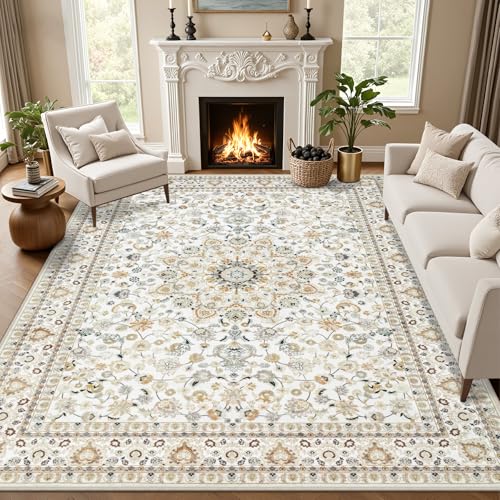
Timeless Classic Design Rug: Featuring an elaborate traditional pattern and harmonious color palette, these 5x7 area rugs bring artistic elegance to the interior. The versatile design works with various decor styles from vintage and bohemian to contemporary, making it suitable for living room, bedrooms, dining room, hallway, kids' playrooms, or home offices. Built to withstand daily use while maintaining its visual appeal, these rugs for living room 5x7 combines durability with timeless beauty

MACHINE WASHABLE: Our rug can be washed directly in washing machine in cold water and dried without heat. Daily maintenance is simple and convenient

Neutral Abstract Rug: This 8'×10' rug features a distressed abstract design in subtle tones, adding a modern, artistic touch to your space. It blends effortlessly with any home style, instantly enhancing your living room, bedroom, dining area, or office
How Do You Layer Rugs in a Living Room?
Layering rugs lets you showcase a smaller vintage, hide, or statement rug (such as a 5×8 or 6×9) without sacrificing the full-size footprint needed to anchor your sofa and chairs. Place a large, neutral flatweave or jute base rug (such as a 9×12) under the front legs of the seating group, then center or slightly angle the smaller decorative rug on top under the coffee table.
For a clean transition that neither bunches nor trips guests, contrast the textures properly. Always put a low-pile or flatweave rug on the bottom and avoid stacking two thick, plush rugs together. Aim for the top rug to be roughly 20–40 inches smaller than the base rug on all sides so a deliberate border of the bottom rug frames the centerpiece.
Pro Tip: To stop a layered top rug from creeping or rippling across a jute or flatweave base, place a thin carpet-to-carpet grip pad (trimmed 1–2 inches inside the top rug’s edges) between the two rugs.
Troubleshooting Common Rug Placement Mistakes
When a living room layout feels disjointed or cramped, the issue is usually rug scale, off-axis centering, or edge interference rather than the furniture itself. Check these five common placement mistakes before replacing your rug.
Mistake 1: The Rug Is Too Small
An undersized 4×6 or 5×7 rug floating alone under the coffee table leaves a wide moat of bare floor in front of every seat, making the room look chopped up. Pull the rug back so the front legs of the sofa sit 6 inches onto it, or layer the small rug over an 8×10 or 9×12 flatweave base rug that reaches the whole seating group.
Mistake 2: The Rug Is Not Centered With the Seating Area
Centering the rug between the four walls of the room often throws it off-center from the sofa when one side of the room includes a walkway or built-in bookcase. Align the centerline of the rug with the centerline of your sofa and focal point (fireplace or TV console) so the seating zone looks intentional.
Mistake 3: The Rug Blocks Traffic Flow
When a rug edge runs right down the middle of a main hallway path, people walk with one foot on the rug and one foot on the hard floor, wearing down the binding and catching toes. Either shift the rug so the walkway stays completely on bare flooring or size up so the entire traffic lane crosses smoothly over the rug surface.
Mistake 4: The Pattern Fights the Room
Combining a busy, high-contrast rug with bold floral curtains and patterned accent chairs leaves the eye nowhere to rest. Echo one quiet accent color from the room in a textured solid or low-contrast rug, or swap busy throw pillows for solid tones that pull a single shade from your patterned rug.
Mistake 5: The Rug Curls or Slips
Curled corners and sliding rugs damage floor finishes and create fall hazards. Flatten curled corners according to the care label, and pair the rug with a floor-safe pad made of 100% felt, natural rubber, or a felt-and-natural-rubber blend trimmed 1–2 inches smaller than the rug on every side. Avoid cheap PVC, plastic, or synthetic latex pads on hardwood and luxury vinyl plank (LVP) floors, as plasticizers can chemically react with the finish and leave permanent yellow stains.
How Do You Clean and Maintain a Living Room Rug?
Routine maintenance keeps fibers upright, prevents grit from grinding down the backing, and stops spills from setting into permanent stains. Always check the manufacturer’s care tag first, then follow the Carpet and Rug Institute cleaning and maintenance guide for daily and seasonal care:
- Vacuum with the right setting: Vacuum high-traffic areas at least once or twice a week. Use a suction-only setting (with the beater bar or brush roll turned off or raised) on loop-pile, wool berber, braided, jute, and fringe edges to prevent snags and fuzzing.
- Blot spills immediately—never scrub: Scoop up solids with a spoon, then press liquids from the outer edge of the spill inward using a clean, unprinted white cloth or paper towel so dyes do not transfer.
- Use fiber-safe cleaners: Pretest any spot cleaner in a hidden corner. On wool rugs, use only neutral-pH detergents (pH 5.0–8.0) and never apply chlorine bleach or strong alkalies. When selecting household solutions, the EPA Safer Choice program lists certified carpet and rug cleaners formulated with safer chemical ingredients.
- Rotate and deep clean: Rotate your living room rug 180 degrees every 6–12 months to equalize foot wear and window sunlight, and schedule restorative deep cleaning every 12–18 months (or use a specialist for antique, silk, and hand-knotted rugs).
Key Takeaways
- Match rug size to sofa length first: pair a 72–84-inch sofa with an 8×10-foot rug, or an 84–96-inch sofa or sectional with a 9×12- or 10×14-foot rug.
- Maintain 16–18 inches of legroom between the sofa and coffee table, and keep 30–36 inches clear for main walkways.
- Leave a balanced 10–18-inch border of bare flooring around the rug in standard rooms, or 8 inches in compact spaces.
- Protect hardwood and luxury vinyl plank (LVP) floors with a felt or natural rubber pad trimmed 1–2 inches smaller than the rug on all sides.
- Keep pile height at or below 1/2 inch along accessible routes, vacuum loop and natural fibers with suction only, and rotate the rug every 6–12 months.
Frequently Asked Questions
What materials and styles best fit your living room lifestyle?
Wool is best for long-term resilience and softness, while synthetic performance fibers (polypropylene, nylon, or PET) and washable rugs are ideal for kids, pets, and frequent spills. Natural fibers like jute and sisal add organic texture and work well as flat layering bases, though they feel firmer underfoot and are less forgiving with liquid stains.
How do I clean and maintain my living room rug?
Vacuum weekly (using suction only on loop pile or natural fibers), blot liquid spills immediately from the outer edge inward with a plain white cloth, and rotate the rug every 6 to 12 months. Follow the care tag for deep cleaning every 12 to 18 months, and send antique, silk, or hand-knotted rugs to a professional specialist.
Can I layer rugs in my living room design?
Yes, layering works well when a favorite patterned or vintage rug is too small to reach your seating group on its own. Place a larger, low-profile jute or flatweave rug underneath to anchor the sofa and chairs, then secure the smaller rug on top with a rug-to-rug grip pad so it stays flat.
What are the best rug shapes for a rectangular room?
A rectangular rug oriented lengthwise with the sofa is the most natural fit for a rectangular seating group. However, a square rug suits symmetrical four-chair conversation layouts, and a large round rug (8 feet or wider) can soften angular furniture or define a compact corner nook.
Should the sofa be fully on the rug?
No, your sofa does not need to sit completely on the rug unless the furniture floats in a large or open-plan room. In most small and medium living rooms where the sofa sits near a wall, placing just the front legs 6 to 12 inches onto the rug visually connects the seating group.
Do I need a rug pad under a living room rug?
Yes, a rug pad prevents slipping, stops corners from curling, absorbs foot traffic, and protects your flooring from scratches. Choose a 100% felt or natural rubber pad labeled safe for your specific floor (especially on hardwood or luxury vinyl plank), and trim it 1 to 2 inches smaller than the rug on all four sides.
How far should a living room rug extend past the sofa?
Aim for the rug to extend about 8 to 12 inches (20 to 30 cm) beyond each arm of the sofa when room width allows. This overhang keeps the sofa from overpowering the rug while leaving room for side tables or floor lamps without crowding doorways and walls.
Should a living room rug be centered in the room?
Center the rug on your sofa and seating group rather than the geometric center of the four walls. Aligning the rug with the furniture and focal point (such as a fireplace or media unit) keeps the conversation zone balanced, even when one side of the room serves as a walkway.
Conclusion
Effective living room rug placement comes down to three steps: measure your arranged seating footprint, choose a standard size that reaches at least the front legs of the sofa and chairs, and verify that walkways and door swings stay clear. Grab a roll of painter’s tape today, mark your top candidate size on the floor for 24 hours, and pair your chosen rug with a floor-safe pad trimmed 1–2 inches inside the border.
Sources
- The Spruce: The Ultimate Rug Size Guide: Supports common living-room rug sizes, furniture-leg placement, exposed-floor guidance, and the painter’s-tape sizing method.
- The Spruce: Area Rug Placement Dos and Don’ts: Supports front-leg placement and flexible floor-clearance borders.
- King Living: Rug Placement Guide: Supports measuring from the sofa, extending the rug roughly 20–30 cm (8–12 inches) beyond the sofa sides, and full-leg versus front-leg layouts.
- Ideal Home: Sofa Front Legs on Rug Rule: Supports using the front-legs-on-rug method to visually connect a seating area.
- CDC STEADI: Check for Safety Home Fall Prevention Checklist: Supports removing loose throw rugs or securing rugs with double-sided tape or non-slip backing to prevent falls.
- CDC: Facts About Older Adult Falls: Supports older-adult fall prevalence (more than 1 in 4 annually, 4.5 million emergency department visits) and identifies throw rugs as a trip hazard.
- U.S. Access Board: ADA Accessibility Standards Chapter 3 (Section 302.2): Supports the 1/2-inch (13 mm) maximum pile height and firm cushion guidance for accessible floor surfaces.
- The Carpet and Rug Institute: Green Label Plus: Supports third-party low-VOC emission certification for rugs and cushions.
- U.S. EPA: What Are Volatile Organic Compounds (VOCs)?: Supports the statement that building materials, furnishings, adhesives, and household products can be indoor VOC sources.
- The Carpet and Rug Institute: Cleaning and Maintenance: Supports routine vacuuming, blotting spills from the edge inward with white cloths, and deep cleaning every 12–18 months.
- U.S. EPA: Safer Choice: Supports identifying carpet and rug cleaning products that meet EPA Safer Choice ingredient criteria.


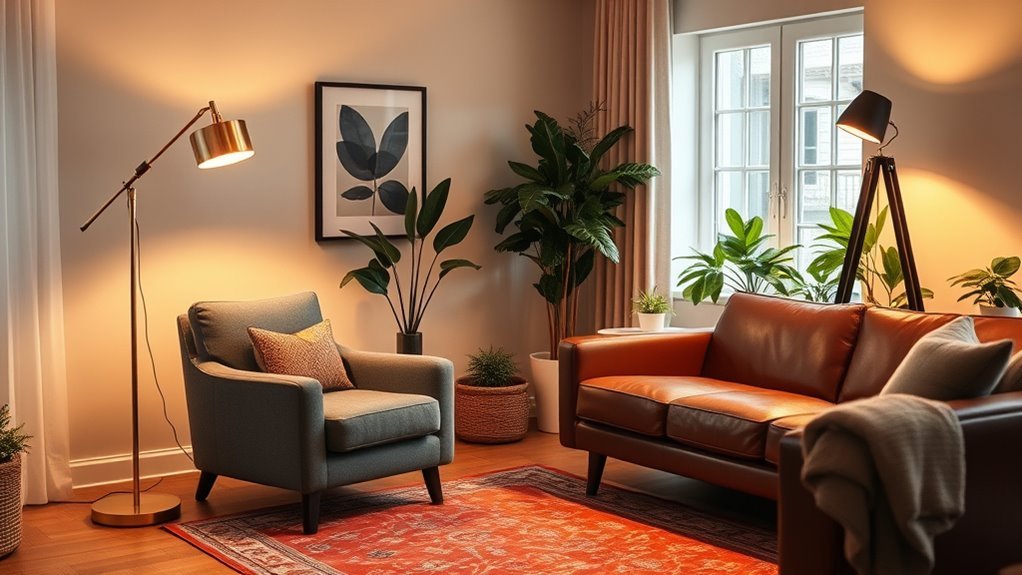

[…] How to Use Rugs to Define a Living Room Seating Area: Step-by-Step Guide […]