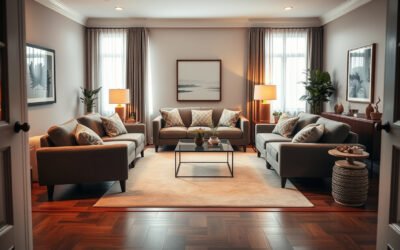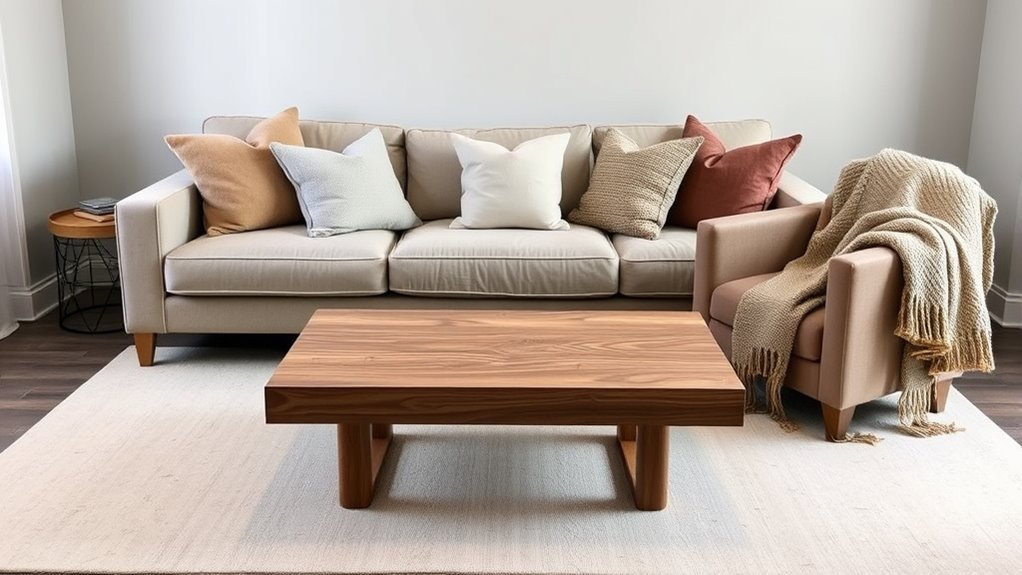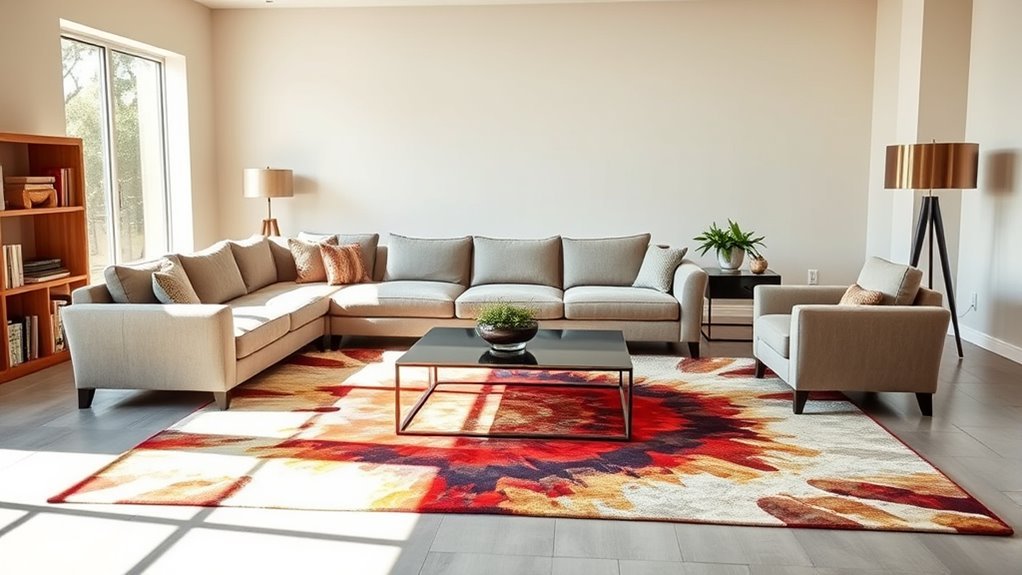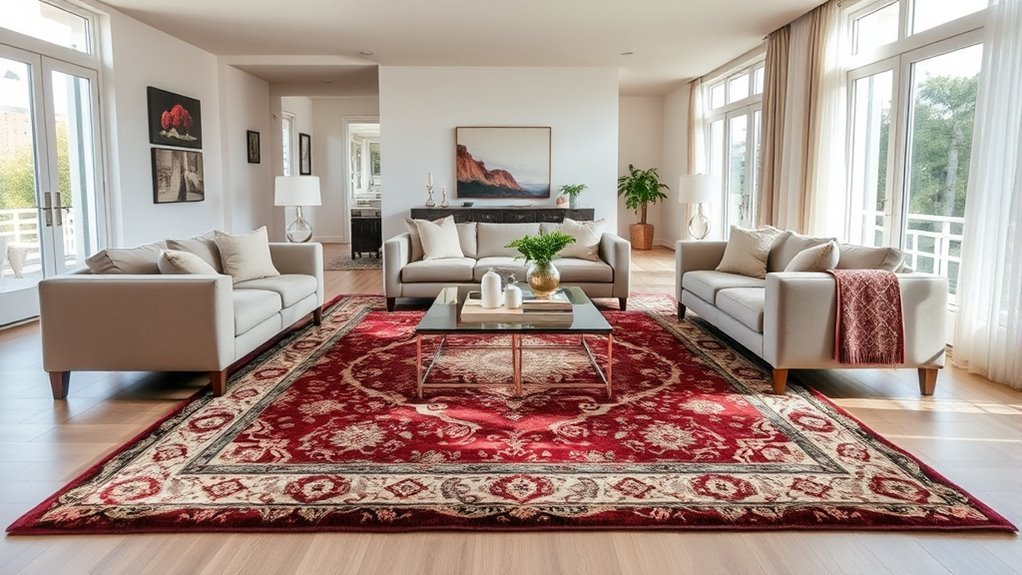
To define your living room seating area with a rug, size the rug from the furniture group, not the empty floor. In most layouts, the rug should reach under at least the front legs of the sofa and chairs; in larger rooms, all seating legs can sit on it. Measure the sofa and chairs first, tape the rug outline on the floor, and choose the smallest standard size that still connects the seating without blocking doors or main walkways.
Last updated: August 19, 2026
Quick Answer
Use a rug that is wide enough for at least the front legs of your sofa and chairs to sit on it, with the rug centered on the seating group rather than automatically centered in the room. A useful starting point is to let the rug extend about 8–12 inches beyond each side of the sofa when space allows. Keep walkways and doors clear, and secure loose rugs with a rug pad, non-slip backing, or another method that is suitable for your floor.
Key Takeaways
- A living room rug should anchor the seating area, not simply decorate the empty floor under the coffee table.
- For most layouts, place at least the front legs of the sofa and chairs on the rug; in large rooms, all furniture legs can sit on it.
- About 10–18 inches of visible floor is a useful starting point in many rooms, but smaller or larger borders can work when the room proportions require them.
- Choose the rug material based on traffic, pets, children, cleaning needs, pile height, and the level of softness you want.
- Keep loose rugs flat and secure. Use a rug pad, non-slip backing, or another floor-compatible method where movement or curled edges could create a hazard.
At a Glance
| Time Required | 20–45 minutes to measure, tape out, and adjust the layout |
| Difficulty | Easy |
| Tools Needed | Tape measure, painter’s tape, notepad, rug pad if needed, and a helper for moving furniture |
| Cost | Free if repositioning an existing rug; cost varies if buying a new rug or rug pad |
What Is the Best Living Room Rug Placement and Size?
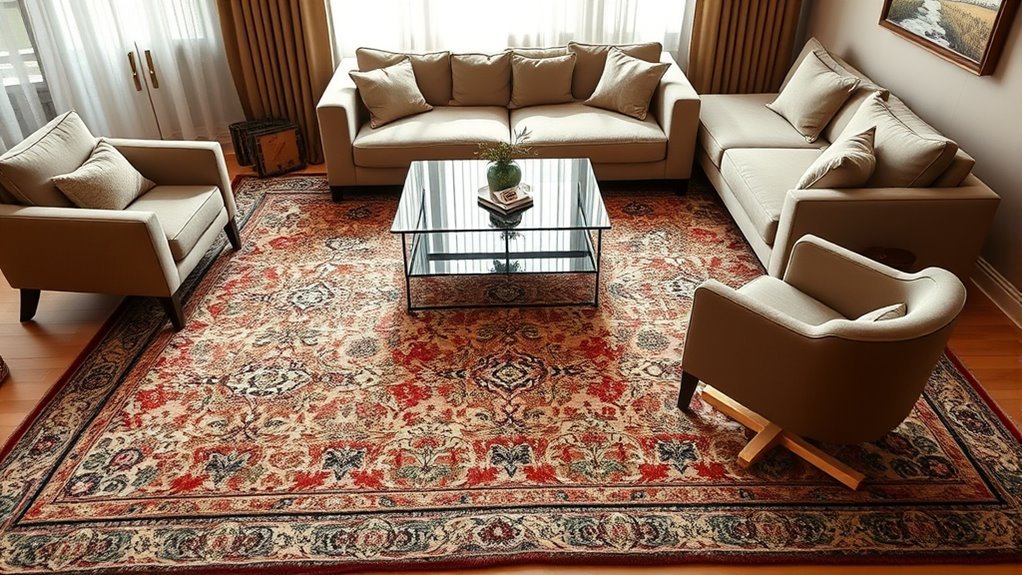
The right size rug depends on your seating layout, not just the size of the room. Start by measuring the full furniture grouping: the sofa, chairs, side tables, and coffee table. Then choose a rug that either holds the main pieces or at least reaches under the front legs of the sofa and chairs.
A useful starting point is to let the rug extend about 8–12 inches beyond each side of the sofa when the room allows. King Living’s rug-placement guidance uses a similar 20–30 cm range. Treat that measurement as a proportion check rather than a fixed rule. In many living rooms, an 8×10-foot or 9×12-foot rug connects the furniture more effectively than a small rug that reaches only the coffee table, but the actual furniture footprint should decide the size.
Recommended Products

Ultra-Soft Low Pile Rug: Gent drizz living room rugs 8x10 made of Upgraded durable low pile faux wool fibers, 0.25'' thick, featuring a soft fuzzy density surface, soft and pliable to the touch, providing great comfort for your bare feet. The low pile makes it easy for your Large area rug to clean and is perfect for homes with kids and pets

Soft & Durable: This 8x10 area rug low-pile combines soft faux wool fibers with a 0.25-inch height for comfort. Tight weaving reduces shedding and edge fraying, making it perfect for high-traffic areas like living rooms, bedrooms, and entryways

Durable & Premium Quality: Crafted from soft faux wool and top-notch recycled polyester fibers, our area rugs 8x10 boast robust, meticulously hand-wrapped edges. So Lbris's living room rugs 8x10 offer not just long-lasting durability and resistance to shedding, but also unparalleled comfort, making them ideal for high-traffic spots like living rooms and bedrooms
Use This 3-Number Rug Fit Test
Instead of choosing a rug from room size alone, check three measurements before buying:
- Seating footprint: Measure the total width and depth of the sofa-and-chair grouping in its finished position.
- Furniture contact: Decide whether the rug needs to hold all furniture legs or at least the front legs of the main seating.
- Clearance: Check the remaining floor border, door swing, vents, floor transitions, and natural walking paths.
Choose the smallest standard rug size that passes all three checks. If an 8×10 reaches the sofa but misses the chairs, for example, test the outline of a 9×12 before deciding. This method keeps the rug tied to the way the room is actually used rather than to a generic room-size label.
Note: Rug rules are guidelines, not strict laws. A small apartment, narrow room, unusual sectional, doorway, or floor transition may need a different setup. The goal is visual balance, safe movement, and a seating area that feels intentional.
Living Room Rug Size Chart
These sizes are starting points, not guaranteed fits. Tape the actual rug dimensions on your floor before buying and check them against your furniture, doors, and walkways.
| Room or Layout | Common Starting Size | Placement Goal |
| Small apartment seating area | 6×9 or 8×10 feet | Aim for the sofa’s front legs on the rug and include the chairs when the footprint allows |
| Standard sofa with two chairs | 8×10 or 9×12 feet | Front legs of all main seating pieces on the rug |
| Large living room | 9×12 or 10×14 feet | All main seating legs on the rug when the room and rug dimensions allow |
| Sectional sofa | 8×10, 9×12, or 10×14 feet | For a front-leg layout, aim to include the front legs of both the main section and the chaise or return; size up for an all-legs-on layout |
| Open-plan living area | Often 9×12 feet or larger | Use the rug to define the seating footprint without intruding awkwardly into dining, kitchen, or circulation zones |
How Much Floor Should Show Around a Living Room Rug?
About 10–18 inches of visible floor is a useful starting point in many living rooms, but it is not a pass-or-fail rule. Smaller rooms may need a narrower border, while large rooms can carry more. Current placement guidance also uses wider ranges; The Spruce’s area-rug placement guide, for example, treats the exposed-floor border as flexible rather than one fixed measurement.
Avoid pushing the rug right against the wall unless you intentionally want an almost wall-to-wall effect. More important than hitting one number is keeping the border visually balanced and making sure the rug relates to the seating group rather than floating by itself.
How Do You Place a Rug to Define a Seating Area?
Defining your living room seating area with a rug is easier when you work from the furniture outward. Instead of buying a rug first and hoping it fits, map the seating zone before you commit.
- Measure the seating group. Measure the width and depth of the sofa, chairs, coffee table, and side tables as they sit together.
- Mark the rug outline. Use painter’s tape to test candidate rug dimensions on the floor. Compare standard sizes such as 8×10 and 9×12 when those dimensions suit your space.
- Choose the furniture-leg layout. Decide whether all legs or only the front legs of the main seating will sit on the rug. Use coffee-table-only placement mainly as a compact-space or accent-rug compromise.
- Center the rug with the seating area. Center it on the sofa and furniture grouping rather than automatically centering it between the room’s walls. A fireplace, media wall, or window view can help establish the seating axis.
- Check walkways and doors. Make sure the rug does not interfere with natural paths, door swings, vents, or floor transitions.
- Secure the rug where needed. Choose a pad, non-slip backing, or other suitable method that is compatible with the rug and floor finish.
- Adjust the final placement. Step back from several angles and confirm that the rug visually connects the major seating pieces without making circulation awkward.
Pro Tip: Before buying, tape the rug dimensions on the floor and live with the outline for a day. Walk through the room, open nearby doors, pull out ottomans, and sit in every chair. If the taped outline connects the seating without interfering with normal movement, the size is a strong candidate.
Which Living Room Rug Placement Is Best?
All legs on the rug: This works well in large living rooms and open-plan spaces when the rug is big enough to hold the complete seating group. It creates a clearly bounded zone and keeps the furniture visually connected.
Front legs on the rug: This is the most flexible option for many average living rooms. The front legs of the sofa and chairs rest on the rug while the back legs remain on the floor. It connects the furniture without requiring a rug large enough to hold every leg.
Coffee-table-only placement: Treat this as a compact-space or accent-rug option rather than the default for defining a full seating area. Keep the rug centered and proportionate to the coffee table and sofa. If the rug looks like a small island with a wide gap before every seat, a larger rug or layered setup will usually create a stronger connection.
Warning: Loose rugs, curled corners, and moving edges can create trip hazards. In its older-adult home fall-prevention checklist, the CDC recommends removing throw rugs or securing them with double-sided tape or non-slip backing. For a larger area rug, keep the edges flat and prevent movement with a method that is appropriate for both the rug and the floor finish.
How Does a Rug Define a Living Room Seating Area?
A rug creates a visual boundary without requiring a wall or divider. When the sofa and chairs physically relate to the same rug, the eye reads them as one seating group. That is especially useful in open-plan homes, studio apartments, and large rooms where furniture can otherwise appear scattered.
A rug can also add softness, sound absorption, color, pattern, and texture. The important factor is scale: the rug should relate to the furniture arrangement instead of appearing as a separate decorative object in the middle of the floor.
A rug defines a seating area best when it connects the furniture, supports the room’s traffic flow, and looks like part of the layout rather than an afterthought.
How Do Rugs Define Open-Plan Spaces?
In an open-plan living room, use the rug as a visual boundary between the seating area and nearby zones. Its edges can help show where the living area ends before a dining table, kitchen island, entryway, or office corner begins.
For the cleanest result, align the rug with the sofa and seating footprint rather than with the walls of the entire open room. This keeps the living zone coherent even when the larger space serves several functions.
How Do You Match a Rug With Living Room Decor?
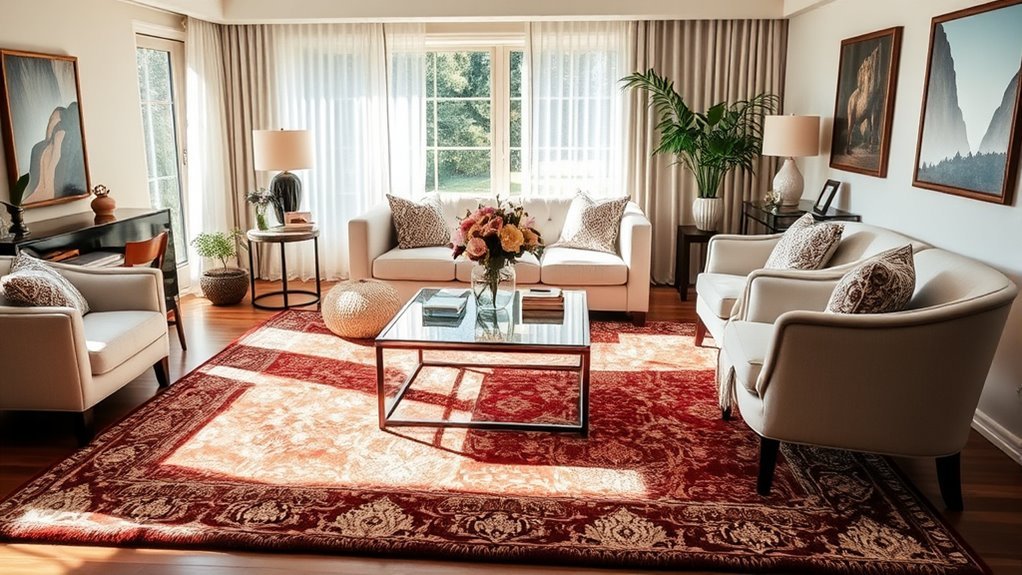
Selecting a rug for your living room decor starts with the colors, textures, and patterns already in the room. A rug can blend in quietly, add contrast, or become the main statement piece. The best choice depends on how much visual energy your furniture, walls, curtains, and artwork already provide.
Recommended Products

Modern Area Rug: This area rug is designed with a Bohemian and Moroccan style pattern using a combination of geometric lines and shapes, able to integrate into any interior design style easily, it can add elegance and fashion to your home space.

The Malibu Collection is an indoor/outdoor area rug featuring geometric patterns in airy, neutral palettes, with playfully fringed edges; from renowned interior designer Amber Lewis in collaboration with Loloi

Machine Washable Area Rug: Designed for households with kids and pets, the black area rug is totally machine washable. Simple to daily maintain. Regular vacuuming and spot cleaning keep 8x10 rug fresh, tossing carpet into your washing machine for a deep clean with cold water and dry it on air-only setting.
Choose a Rug Color That Supports the Room
If your sofa, curtains, or artwork already include strong color, choose a rug that repeats one or two of those tones. If the room is mostly neutral, a patterned rug can add depth without requiring new furniture.
Light rugs tend to show dirt and spills more readily, while deeper or patterned rugs may disguise some everyday marks. Instead of choosing color only by room size, consider natural light, furniture weight, cleaning habits, and how much contrast you want between the floor and seating.
Balance Pattern With Furniture
If your sofa or chairs have bold patterns, choose a solid, textured, or lower-contrast rug. If your furniture is plain, a patterned rug can add personality. The goal is contrast without making every large surface compete for attention.
Pattern scale matters too. View a sample from the normal seating distance if possible. A pattern that looks subtle in a small product image can feel much busier once it covers an 8×10- or 9×12-foot area.
Pick the Right Texture and Pile Height
Plush rugs can feel soft and comfortable in lower-traffic seating areas. Flatweave and low-pile rugs are often easier to place under furniture and can be more practical where wheels, pets, children, doors, or mobility devices are involved. Natural-fiber rugs such as jute or sisal add visible texture but may feel rougher underfoot, so test the feel when comfort is a priority.
Which Rug Material Best Fits Your Lifestyle?
The best living room rug is not simply the one that looks best in a product photo. Its fiber, construction, pile, care requirements, and backing should fit the way the room is actually used.
- Wool: Often chosen for softness, resilience, and long-term use. Cleaning requirements vary by construction and care label.
- Synthetic or performance fibers: Many are designed for easier stain care and lower cost, making them practical options for pets, children, or high-traffic rooms. Check the specific fiber and manufacturer instructions rather than assuming every synthetic rug performs the same way.
- Washable rugs: Useful for busy households, but verify whether the full rug or only a removable cover is washable and whether the stated size fits the intended machine or cleaning method.
- Jute, sisal, and seagrass: Add natural texture but can feel firmer or rougher underfoot, and care requirements differ by fiber and backing.
- Vintage or handmade rugs: Can add character, but inspect the condition, edges, backing, repairs, dye stability, and cleaning requirements before putting one in a heavily used area.
If indoor air quality is a concern, check the manufacturer’s emissions information for the rug and pad, avoid unnecessary adhesives, and ventilate the room if a new product has a noticeable odor. The EPA notes that building materials, furnishings, adhesives, and household products can be sources of volatile organic compounds.
Recommended Products
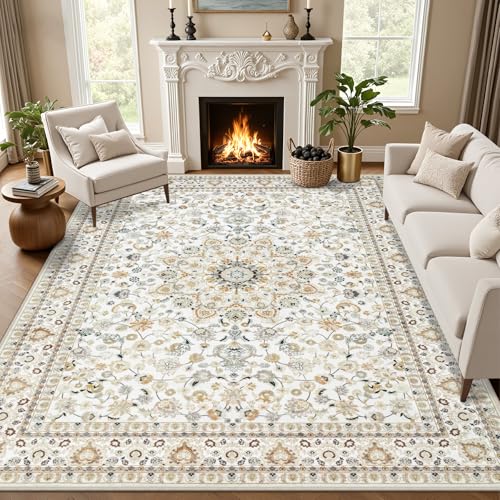
Timeless Classic Design Rug: Featuring an elaborate traditional pattern and harmonious color palette, these 5x7 area rugs bring artistic elegance to the interior. The versatile design works with various decor styles from vintage and bohemian to contemporary, making it suitable for living room, bedrooms, dining room, hallway, kids' playrooms, or home offices. Built to withstand daily use while maintaining its visual appeal, these rugs for living room 5x7 combines durability with timeless beauty

MACHINE WASHABLE: Our rug can be washed directly in washing machine in cold water and dried without heat. Daily maintenance is simple and convenient

Neutral Abstract Rug: This 8'×10' rug features a distressed abstract design in subtle tones, adding a modern, artistic touch to your space. It blends effortlessly with any home style, instantly enhancing your living room, bedroom, dining area, or office
How Do You Layer Rugs in a Living Room?
Layering can help when you love a smaller decorative rug but need more coverage to anchor the seating area. Place a larger, simpler base rug underneath, then position the smaller patterned rug on top. The base establishes the footprint while the top layer supplies the stronger color, texture, or pattern.
For an easier layered setup, keep the bottom rug relatively low-profile so the upper rug sits flatter. A jute-style, flatweave, wool flatweave, or neutral synthetic base can work depending on the room and care requirements. The top rug can then provide more softness or visual detail.
Note: Layered rugs need extra attention to movement and raised edges. Secure the base appropriately and make sure the top layer does not ripple, slide, or create an awkward height change in a walking path.
Troubleshooting Common Rug Placement Mistakes
When a living room rug feels off, check size, alignment, furniture contact, and traffic flow before replacing it.
Mistake 1: The Rug Is Too Small
A too-small rug can leave the furniture visually disconnected. Move the rug toward the sofa and see whether the sofa’s front legs can sit on it without pulling the rug too far from the chairs. If it still reaches only the coffee table, consider layering it over a larger base rug or testing the next standard size.
Mistake 2: The Rug Is Not Centered With the Seating Area
The rug does not have to sit at the geometric center of the room. It should usually align with the seating arrangement. Center it with the sofa and furniture group, using a fireplace, media wall, or another focal point as a secondary alignment cue when appropriate.
Mistake 3: The Rug Blocks Traffic Flow
If people repeatedly have to step across a thick or raised rug edge, reconsider the placement. Keep main routes clear and pay particular attention to doorways, narrow paths, floor transitions, and routes used by strollers, walkers, or wheelchairs.
Mistake 4: The Pattern Fights the Room
If the room already has bold curtains, patterned upholstery, or colorful artwork, another dominant pattern can make the space feel busy. Choose a quieter rug or repeat one color already present in the room. If the furniture and walls are restrained, the rug can take the stronger pattern role.
Mistake 5: The Rug Curls or Slips
Do not ignore curled or moving edges. Flatten the rug according to its care instructions and use a floor-compatible pad, backing, or securing method where needed. A pad should remain hidden beneath the rug and should not introduce a new raised edge.
How Do You Clean and Maintain a Living Room Rug?
Start with the manufacturer’s care label because safe cleaning varies by fiber, weave, backing, dyes, and construction. Vacuum using a setting suitable for the rug, especially in high-traffic areas and along furniture edges where dust collects. Blot spills rather than rubbing them, and test any approved cleaning product in an inconspicuous area first.
For deep cleaning, follow the rug’s specific care instructions. Antique, silk, hand-knotted, unstable-dye, or otherwise delicate rugs may require a specialist. If you are choosing a household cleaner, the EPA Safer Choice program identifies products that meet its ingredient and product criteria.
Frequently Asked Questions
What materials are best for living room rugs?
Wool is often chosen for softness and resilience. Synthetic and performance rugs can be practical where easier cleaning or stain care is important. Natural fibers such as jute or sisal add texture but may feel rougher underfoot. The best material depends on traffic, pets, children, comfort, budget, and the rug’s specific care requirements.
How do I clean and maintain my living room rug?
Follow the rug’s care label, use a suitable vacuum setting, blot spills promptly, and test approved cleaners in a hidden area first. Deep-cleaning requirements vary by fiber and construction. Antique, silk, hand-knotted, unstable-dye, or otherwise delicate rugs may require specialist care.
Can I layer rugs in my living room design?
Yes. Layering can work when a favorite decorative rug is too small to anchor the seating group. Use a larger, relatively low-profile rug as the base and place the smaller rug on top. Keep both layers flat and secure so the upper rug does not ripple or slide.
What are the best rug shapes for a rectangular room?
A rectangular rug is usually the simplest fit for a rectangular seating group, but the furniture footprint matters more than the room shape alone. A square rug can suit a compact symmetrical arrangement, while a round or organic rug can soften angular furniture or define a smaller accent zone.
How do I choose a rug that suits my lifestyle?
Match the rug to daily traffic, pets, children, cleaning habits, mobility needs, and the amount of softness you want. Low-pile, washable, or performance options can be practical in busy rooms, while wool may suit buyers prioritizing softness and resilience. Always check the specific rug’s care instructions.
Should the sofa be fully on the rug?
Not necessarily. In a large living room, placing the sofa fully on the rug can create a strongly anchored seating zone. In many average or smaller living rooms, placing only the front legs of the sofa and chairs on the rug is enough to visually connect the furniture.
Do I need a rug pad under a living room rug?
A rug pad or another suitable anti-slip method is recommended for most loose living-room rugs where movement, bunching, or curled edges are possible. A pad can also add cushioning and help protect the floor. Choose a product that is compatible with both the rug backing and the floor finish.
How far should a living room rug extend past the sofa?
About 8–12 inches beyond each side of the sofa is a useful starting point when the room allows, but it is not a fixed rule. The rug should be wide enough to look proportional to the sofa and reach the other main seating pieces without creating awkward clearance at walls, doors, or walkways.
Should a living room rug be centered in the room?
Usually, center the rug with the seating arrangement rather than automatically placing it at the geometric center of the room. Aligning the rug with the sofa, chairs, and coffee table is more important than making the distance to every wall identical, especially in open-plan or asymmetrical rooms.
Conclusion
Start with the seating footprint, decide which furniture legs should touch the rug, and check the remaining clearance around doors and walkways. Tape the candidate rug size on the floor before buying, then choose the size that connects the sofa and chairs without forcing the layout. Once the position works, keep the rug flat and secure with a method that is appropriate for the rug and floor.
Sources
- The Spruce: The Ultimate Rug Size Guide — supports common living-room rug sizes, furniture-leg placement, exposed-floor guidance, and the painter’s-tape sizing method.
- The Spruce: Area Rug Placement Dos and Don’ts — supports front-leg placement and flexible floor-clearance guidance.
- King Living: Rug Placement Guide — supports measuring from the sofa, extending the rug roughly 20–30 cm beyond the sofa sides, and full-leg versus front-leg layouts.
- Ideal Home: Sofa Front Legs on Rug Rule — supports using the front-legs-on-rug method to visually connect a seating area.
- CDC STEADI: Check for Safety Home Fall Prevention Checklist — supports removing throw rugs or securing them with double-sided tape or non-slip backing where fall risk is a concern.
- CDC: Facts About Falls — identifies throw rugs and clutter among home hazards that can contribute to falls.
- U.S. EPA: What Are Volatile Organic Compounds? — supports the statement that building materials, furnishings, adhesives, and household products can be VOC sources.
- U.S. EPA: Safer Choice — supports identifying cleaning products that meet EPA Safer Choice criteria.