Learning how to decorate a windowless living room starts with replacing missing sunlight through smart surface and lighting choices. Without windows to provide natural brightness or an automatic focal point, interior living rooms and basement lounges can easily feel flat or boxed in. Treating wall reflectance, multi-level lamps, furniture clearance, and tactile fabrics as one coordinated system turns an enclosed room into an airy, welcoming space.
Quick Answer
To decorate a windowless living room, paint the walls a warm neutral with a Light Reflectance Value (LRV) between 65 and 85, and supply 15 to 20 lumens per square foot across ambient, task, and accent LED fixtures. Anchor seating around an oversized artwork or mirror, maintain 30-to-36-inch walkways, and layer textured fabrics for warmth.
At a Glance
| Time Required | 2–6 hours for lamp, mirror, and layout updates; 1 weekend if painting walls or installing sconces and shelving |
| Difficulty | Beginner to intermediate |
| Tools Needed | Tape measure, painter’s tape, bulb guide (2700K–3000K, CRI 90+), level, stud finder, drill or screwdriver, non-slip rug pad, wall anchors |
| Cost | $50–$300 for LED bulbs, plug-in lamps, pillows, and mirrors; $300–$1,500+ for paint, area rugs, new seating, or hardwired fixtures |
How to Choose the Right Color Palette for Your Windowless Living Room
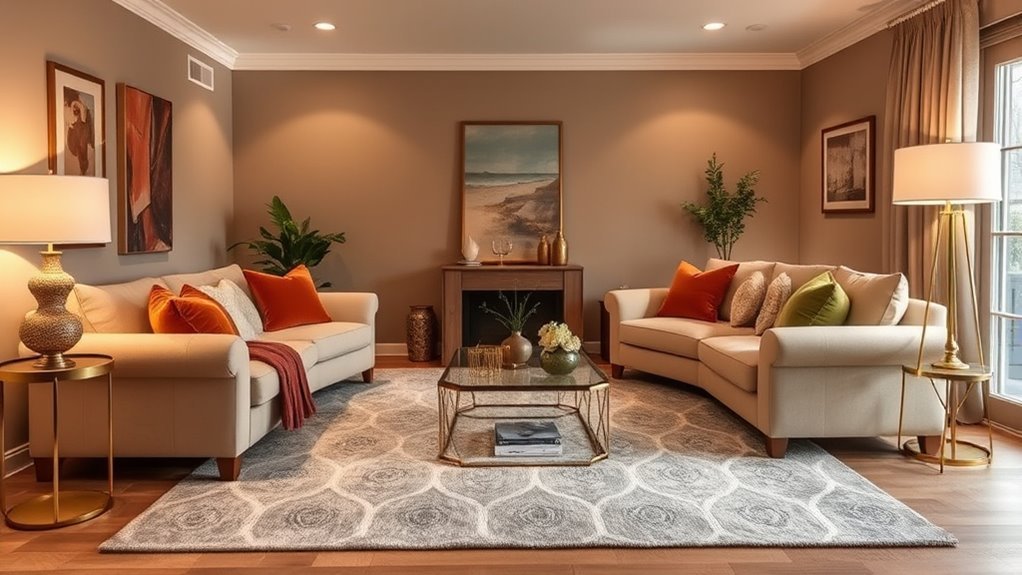
The best color palette for a windowless living room starts with a warm, light-reflective base that has a Light Reflectance Value (LRV) between 65 and 85. LRV measures the percentage of visible light a painted surface bounces back into a space on a scale from 0 (absolute black) to 100 (pure white). Choosing high-LRV warm neutrals allows your walls and ceiling to multiply the output of every lamp in the room.
The U.S. Department of Energy lighting design guide recommends light-colored wall surfaces to bounce illumination efficiently and reduce the need for excessive artificial wattage. However, stark, cool-toned whites with an LRV above 90 often backfire in a windowless room. Because they rely on natural daylight to sparkle, ultra-bright cool whites can read gray, sterile, or shadowy under artificial bulbs.
Softer shades with warm or earthy undertones perform much better. Tried-and-true options include creamy off-whites like Sherwin-Williams Alabaster (SW 7008, LRV 82) or Benjamin Moore White Dove (OC-17, LRV 83) and Swiss Coffee (OC-45, LRV 82), alongside pale greige, oatmeal, soft clay, misty blue-gray, or muted sage (LRV 60–75). Painting the walls, trim, and ceiling the exact same warm shade—a technique called color drenching in a light neutral—blurs corner shadows so the walls visually recede.
Paint finish matters just as much as hue. Dead-flat paint absorbs light and scuffs easily, while semi-gloss highlights every drywall seam. Use an eggshell or satin sheen on walls to create a soft, light-bouncing luster, and bring in deeper colors through smaller accent pieces like a charcoal side table, moss-green armchair, navy artwork, or walnut cabinet.
- Best bright palette: Warm white walls (LRV 80–85), pale oak furniture, cream wool rug, and brushed brass or matte black accents.
- Best cozy palette: Pale greige walls (LRV 68–75), camel upholstery, walnut wood tables, ivory textiles, and muted terracotta pillows.
- Best calm palette: Soft sage walls (LRV 60–68), oatmeal linen sofa, stone-gray rug, warm wood tones, and matte white ceramic lamps.
- Best dramatic palette: Creamy ivory walls (LRV 80+), deep navy built-in cabinet, patterned neutral rug, oversized brass mirror, and warm 2700K lighting.
Pro Tip: Paint sample swatches onto poster boards and view them under the exact LED bulbs you plan to use. In a windowless room, your lamp bulbs act as the “daylight,” so switching from a 2700K bulb to a 3000K bulb will visibly shift how every paint undertone reads.
Recommended Products

MOUNTAIN LANDSCAPE ART: Jagged alpine peaks frame a glowing sunset reflected across still water creating nature wall decor for living rooms bedrooms offices cabins entryways and rustic spaces that need a warm scenic focal point with depth and color.
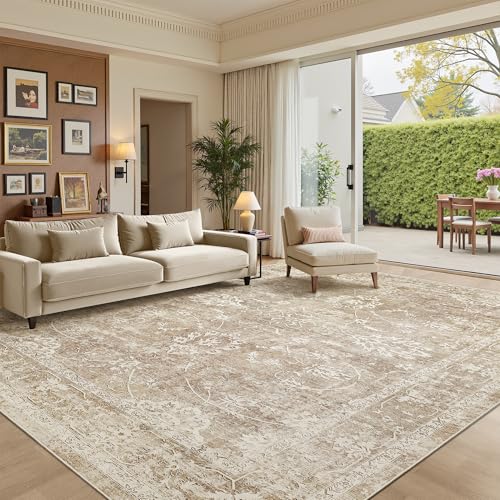
Machine Washable Rugs: Run your hand over it - you’ll feel ZERO bumps. The 3D effect is PURELY VISUAL. Madane washable rugs 8x10 are created to make maintenance a breeze. Simply toss in the machine for a quick wash, then dry using air only setting without heat. The area rug can also be cleaned daily with a handheld small vacuum cleaner or wiped with a damp rag

Classical Wall Art Decor : InSimSea framed vintage landscape wall art decor provide an aesthetic decorations for your living room, bedroom, bathroom, office, etc.
The Importance of Layered Lighting in Windowless Spaces
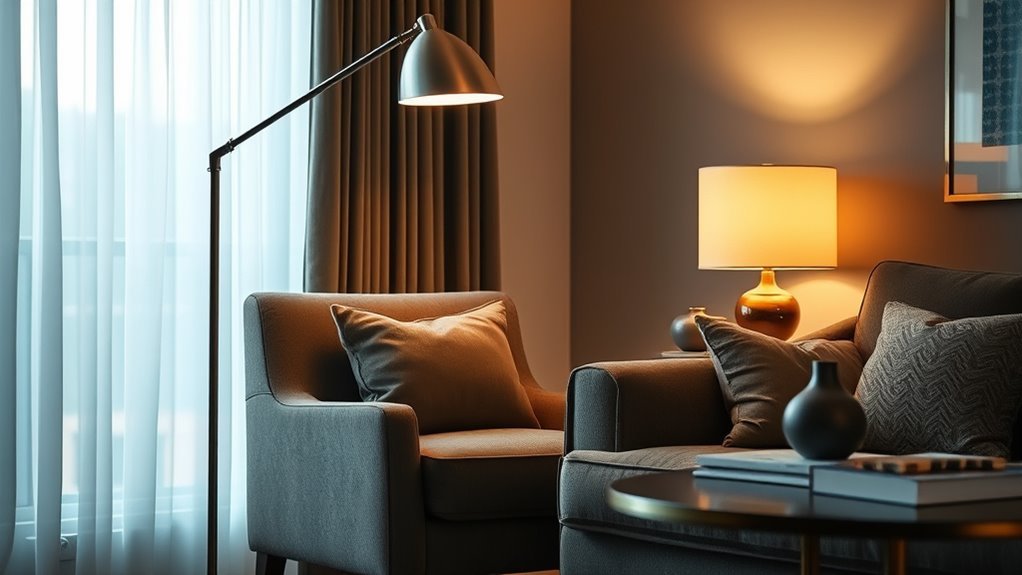
Layered lighting is the single most important element in a windowless living room because it replaces the natural depth and highlights of sunlight. Relying on a single center ceiling fixture casts harsh downward shadows and leaves the room’s corners dark and cave-like. Combining overhead, eye-level, and low-level light sources spreads illumination evenly across the entire footprint.
The U.S. Department of Energy lighting principles divide interior illumination into three core categories: ambient lighting for overall visibility, task lighting for focused activities, and accent lighting to draw attention to architectural features or decor. In a room without windows, adding a fourth layer—hidden indirect lighting—simulates the soft diffused glow of daylight.
Recommended Products

Magnetic Remote & Foot Switch: Enjoy dual control convenience. The magnetic remote attaches securely to the pole to prevent misplacement, while the foot switch allows for easy on/off control without bending down

3 Color Temperature Bulb Included: Dimension of this floor lamp is 60” height, diameter and height of lampshade is 10.04” and 7.87”, diameter of base is 8.66”. Includes a 9W LED bulb which has 3 different color adjustable temperature setting: 3000K/5000K/4000K. You can easily change the color temperature to set the overall ambiance of the room.

Elegant Layered Wooden Lampshade Design - The O’Bright Strata Floor Lamp features a beautifully crafted multi-tier wooden lampshade that creates a striking architectural silhouette. Available in two shade designs and light or dark oak finishes, the layered wood brings natural warmth and mid-century modern style to living rooms, bedrooms, reading corners, and offices.
Ambient and Accent Lighting
Ambient lighting establishes your baseline brightness, while accent lighting washes vertical surfaces so the walls feel farther apart. Illuminating vertical planes—such as curtains, bookcases, and framed art—tricks the human eye into perceiving a much brighter, more open room than downward ceiling lights alone.
| Type of Lighting | Purpose & Target Placement | Windowless Living Room Example |
|---|---|---|
| Ambient Light | Overall room illumination bounced off the ceiling and upper walls | Semi-flush ceiling mount, diffused drum pendant, torchiere uplight, or recessed wall washers |
| Task Lighting | Focused, glare-free light positioned at seating height (40–60 inches) | Swing-arm reading lamp beside an armchair, table lamp on an end table, or plug-in wall sconce |
| Accent Lighting | Directional highlights that build visual depth and focal points | Brass picture light over artwork, puck lights inside bookcases, or a spot uplight behind a floor plant |
| Hidden Sources | Indirect perimeter glow that softens hard wall edges | Diffused LED tape behind a media console, under floating shelves, or inside a ceiling cove |
Flexible Dimming Options
Installing dimmers and smart lighting controls allows a windowless room to shift from crisp daytime energy to a relaxed evening mood. Without natural twilight to signal the end of the day, keeping your lamps at 100% brightness all evening can make the room feel exhausting and artificial.
- Set a bright daytime baseline: Run your ambient ceiling fixture and wall-washing lamps at 80%–100% output during the day for cleaning, working, or socializing.
- Place task lights at eye level: Position two or three shaded table lamps, floor lamps, or sconces (centered around 60–67 inches from the floor) near sofas and reading chairs.
- Add low-glare evening scenes: Dim overhead fixtures below 30%—or turn them off completely—at night, relying on table lamps and backlit LED strips for watching TV.
- Automate with smart plugs or bulbs: Group plug-in lamps onto a single smart switch or app schedule so you never have to walk into a pitch-black room to turn on five separate lamps.
How to Choose Bulbs for a Windowless Living Room
Select LED bulbs for a windowless living room by matching total lumen output, Kelvin color temperature, and Color Rendering Index (CRI). As the ENERGY STAR brightness guide explains, lumens measure actual light output while watts only measure electricity consumption—for example, a 60-watt incandescent bulb equals about 800 lumens, and a 100-watt bulb equals 1,600 lumens.
Interior lighting designers generally aim for 10 to 20 lumens per square foot in a living room, pushing toward 15 to 20 lumens per square foot when a space lacks windows. For a 150-square-foot windowless living room, target 2,250 to 3,000 total lumens split across four to six fixtures rather than using one blinding overhead bulb.
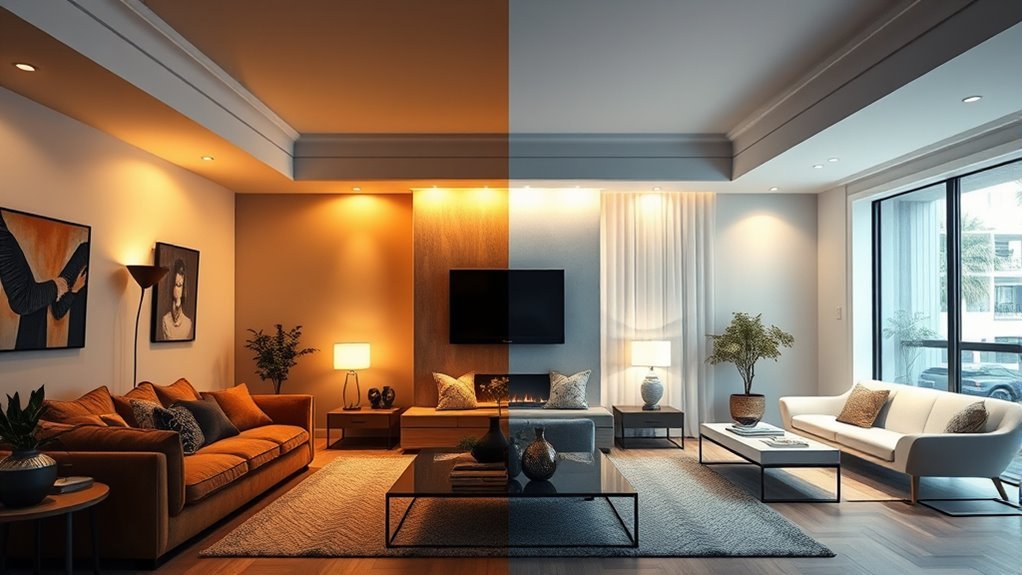
- Kelvin (color temperature): Choose 2700K to 3000K (warm white to soft white) for living room lamps and overhead fixtures so the space feels sunny and inviting. Reserve 3000K–3500K for dedicated desk or reading task lamps, and avoid bluish 5000K–6500K bulbs in open lamps unless they are diffused inside a faux window panel.
- Color Rendering Index (CRI): Look for bulbs labeled CRI 90+ (while ENERGY STAR requires a minimum CRI of 80). High-CRI LEDs render wood grains, skin tones, artwork, and paint undertones accurately instead of washing them out.
- Lumens per fixture: Use 800–1,100 lumens in your primary ambient fixture or torchiere lamp, 450–800 lumens in shaded table and floor lamps, and 150–400 lumens for picture lights and accent strips.
- Glare control: Pair bright bulbs with fabric drum shades, frosted glass globes, or acrylic diffusers so you never see a bare glowing filament.
Note: Avoid mixing starkly different bulb temperatures in the same sightline. Pairing a 2700K warm-white table lamp next to a 4000K cool-white sconce creates visual clashing that makes wall paint look muddy.
How to Arrange Furniture for Maximum Flow and Functionality
Arrange furniture in a windowless living room by anchoring your primary seating around a deliberate focal point and keeping walkways at least 30 to 36 inches wide. Because there is no exterior view to orient the room, you must establish a clear visual anchor—such as a framed oversized canvas, a media console, a decorative fireplace mantel, or a flanked bookcase—before placing your sofa.
Optimal Furniture Placement
Start with your largest seating piece and work downward in scale. Pushing every piece of furniture tight against the perimeter walls creates a rigid “waiting room” effect and emphasizes the room’s enclosed borders. Pulling your sofa even 3 to 6 inches away from the wall—or placing a narrow 8-to-12-inch console table with an LED uplight behind it—creates breathing room and shadow-free depth.
- Main walkway clearance: Keep primary circulation paths 30 to 36 inches wide so people can walk through comfortably. Where accessibility is a priority, the U.S. Access Board ADA accessible route standards specify a minimum 36-inch continuous clear width (reducing to 32 inches only at doorways).
- Coffee table spacing: Leave 14 to 18 inches between the front edge of the sofa and the coffee table—close enough to set down a glass without leaning, yet wide enough for comfortable legroom.
- Open-base silhouettes: Choose sofas and chairs with exposed legs (at least 4 to 6 inches of floor clearance) along with glass, acrylic, or open-frame metal tables so light passes underneath and more floor area remains visible.
- Multi-functional storage: Use storage ottomans, nesting side tables, and closed-door media credenzas to hide remotes, blankets, and board games out of sight.
Enhance Pathways and Open Space
Unobstructed sightlines from the doorway to the far corners make an interior room feel larger the moment you step inside. Never place a tall bookcase or high-backed armchair immediately beside the entry door where it blocks your view into the room. Keep taller storage pieces on the focal wall or opposite the entrance, and place lower-profile furniture near the doorway.
If a layout feels cramped, test removing one small accent chair or side table before replacing the sofa. A U-shaped or L-shaped arrangement works naturally around a TV wall, while two armchairs facing a sofa across a round coffee table soften the geometry of a square, boxy room.
Using Mirrors to Brighten Your Space
Mirrors brighten a windowless living room by doubling the output of your artificial lamps and creating the optical illusion of an opening in the wall. Since you cannot hang a mirror opposite a real window, position it directly across from or immediately behind a glowing table lamp, wall sconce, or illuminated artwork.
- Go oversized rather than scattered: Hang one large mirror (such as a 36-by-48-inch mantel mirror or a 65-to-72-inch floor mirror) instead of a busy cluster of small mirrors. Windowpane-style mirrors with thin black or brass grids naturally mimic architectural casement windows.
- Extend vertical height: In a basement or apartment with 8-foot ceilings, mount a tall vertical mirror stopping 4 to 6 inches below the ceiling line to draw the eye upward.
- Double a corner lamp’s glow: Place a mirror on the wall directly behind a shaded table lamp on a console table to bounce warm light across the opposite side of the room.
- Check the reflection from the sofa: Sit in each seat before drilling holes to confirm the mirror reflects artwork, plants, or lamps rather than tangled TV cords, an open hallway closet, or a blank wall.
Warning: Always secure heavy mirrors, leaning floor mirrors, tall bookcases, and dressers or cabinets directly into wall studs using rated anti-tip brackets or heavy-duty anchors. The CPSC Anchor It campaign notes that anchoring furniture and heavy wall decor is essential to prevent serious tip-over injuries in the home.
Incorporating Textures for Warmth and Visual Interest
Layering tactile textures prevents a light-colored, windowless living room from feeling sterile or one-dimensional. Because a room without windows lacks the shifting shadows of clouds and sunlight across the day, contrasting surface materials provide the visual depth that light alone cannot supply. Aim to combine four distinct texture families across your seating area.
- Soft textiles: Bouclé armchairs, velvet throw pillows, chunky merino or cotton knit blankets, slub-linen upholstery, and chenille cushions absorb echo and soften hard drywall corners.
- Organic and woven elements: Light oak or walnut wood grain, rattan trays, cane cabinet doors, jute or seagrass baskets, and matte travertine or stoneware vases ground the palette.
- Light-bouncing accents: Glass coffee tables, antiqued or clear mirrors, satin brass lamp bases, and glazed ceramic lampshades catch and scatter warm bulb light.
- Subtle wall dimension: Grasscloth-textured wallpaper, limewash paint effects, or painted picture-frame molding adds gentle shadow lines when grazed by a ceiling or floor lamp.
Edit your textures so they support rather than crowd the room. One high-pile or wool rug, a woven storage basket, two velvet pillows, a linen throw, and a ceramic table lamp deliver plenty of warmth without visual clutter.
Choosing Art and Decor to Enhance Ambiance
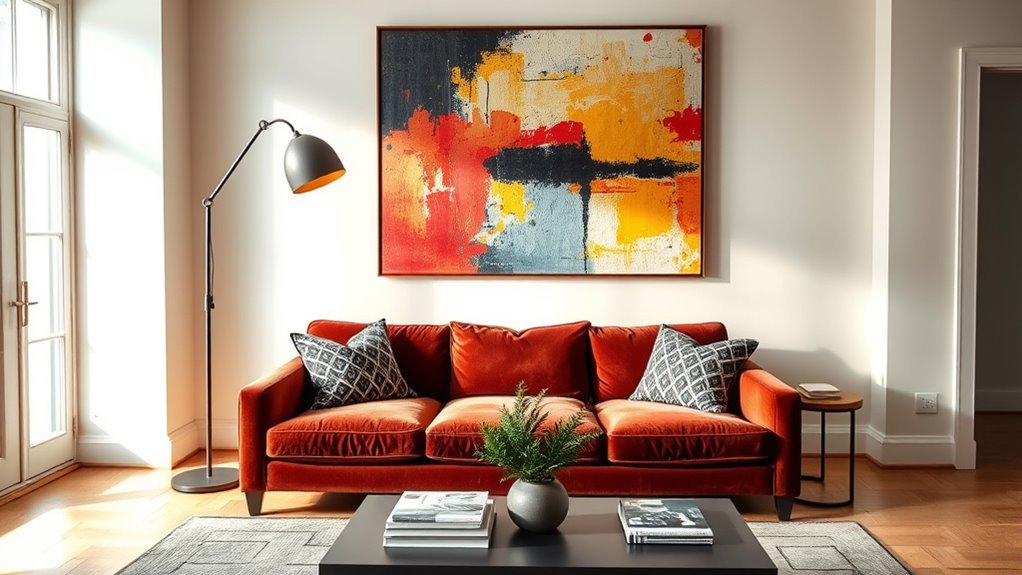
Artwork and greenery serve as the visual “view” in a windowless living room, giving the eye a sense of horizon and nature. Large-scale landscapes, architectural photography, or open abstract pieces with generous white mat boards break up solid drywall and create perspective.
- Scale art to your furniture: Hang one large piece—or a tight diptych—spanning roughly two-thirds (65% to 75%) the width of the sofa or console below it, centered at 57 to 60 inches from the floor.
- Use light-reflective frames: Choose slim brass, light oak, or white frames with wide off-white matting; if the glass causes harsh glare from opposite lamps, swap to non-reflective museum acrylic or open canvas art.
- Add dedicated picture lights: Mount a battery-operated or plug-in picture light (2700K–3000K) above your main artwork so the piece glows like an architectural feature.
Adding Plants and Greenery Without Natural Light
Bringing greenery into a windowless living room adds instant life, but live houseplants cannot survive in total darkness. Even hardy low-light understory species—such as the ZZ plant (Zamioculcas zamiifolia), snake plant (Dracaena trifasciata), cast-iron plant (Aspidistra elatior), and jade pothos—still require photosynthetic light to survive long-term.
According to the University of Minnesota Extension, foliage houseplants grown without sufficient natural light need 12 to 14 hours of supplemental artificial light per day on an automatic timer, with an LED grow bulb positioned 12 to 24 inches above the leaves. You can screw a full-spectrum white LED grow bulb into a standard pendant or floor lamp aimed at a corner plant, rotate two live plants weekly between your windowless room and a sunny room, or style realistic silk olive trees and preserved eucalyptus stems inside ceramic planters.
How to Choose Flooring for a Windowless Room
Light-toned flooring and properly scaled area rugs act as a fifth reflective wall at your feet, bouncing overhead light back up into the seating zone. If your room has dark hardwood, espresso laminate, or gray basement tile, covering the majority of the seating footprint with an ivory, oatmeal, or warm beige area rug immediately lifts the room’s brightness.
- Size the rug generously: Choose an area rug—typically 8×10 feet or 9×12 feet—large enough that at least the front legs of the sofa and all chairs sit on the rug, extending 6 to 12 inches past both ends of the sofa. A tiny 5×7 rug floating in the center makes a dark floor look chopped up and cramped.
- Pick bright, durable materials: Pale white oak, blonde luxury vinyl plank (LVP), low-pile wool rugs, or washable ivory-and-sand patterned rugs brighten the floor while hiding everyday lint.
- Balance sheen and acoustics: Matte or satin floor finishes prevent harsh ceiling-bulb hotspots, while a dense felt and rubber rug pad beneath your rug prevents slipping and absorbs hollow room echo.
Creative Lighting Solutions for Your Windowless Living Room
Creative architectural lighting tricks can convincingly mimic daylight streaming from an unseen window or adjoining room, even in a rental apartment or basement where you cannot cut into drywall.
- Backlit sheer curtain wall (faux window): Mount a curtain rod 4 to 6 inches below the ceiling across a 4-to-6-foot section of blank wall, hang floor-length sheer white linen curtains, and mount diffused LED strip lights behind the fabric. Using 4000K–5000K high-CRI LEDs during the day imitates crisp outdoor daylight filtering through sheers, while dimming to 2700K at night creates a warm lounge glow.
- Framed backlit window box: Build or hang a shallow 3-inch wood frame fitted with a frosted acrylic diffuser panel or windowpane muntins over high-CRI LED sheet lighting to simulate a bright clerestory or basement window.
- Plug-in wall sconces with cord covers: Flank a sofa or mirror with a pair of shaded sconces and paint flat stick-on cord channels the exact wall color for a built-in look without an electrician.
- Hidden floor uplights: Tuck small can uplights on the floor behind a tall planter, armchair, or console table to wash dark corners with upward light.
- Interior transoms or French doors: If you own your home and an adjacent hallway, kitchen, or bedroom has windows, replacing a solid door with a frosted-glass French door or installing an upper transom window borrows real daylight without sacrificing privacy.
Because lights in a windowless living room often run 6 to 12 hours a day, always choose LED fixtures. The U.S. Department of Energy guide to energy-saving lighting notes that residential LEDs use up to 90% less energy and last up to 25 times longer than traditional incandescent bulbs while producing virtually no heat in enclosed rooms.
Recommended Products

【Elegant Vintage Tulip Design】This plug in wall sconces featured a hand-crafted amber tulip glass lampshade, paired with a sleek gold metal base, emitting an eternal retro charm. Amber glass has good light transmittance, allowing soft light to spread evenly, creating a warm and enticing atmosphere in any room.

Modern and Fashion Design: Made of sturdy metal with brushed brass finished and Large white fabric shade. Modern and fashion, ideal for bedroom, bedside, living room, porch, office etc.

【Retro Design】We took the tulip flower as the prototype and incorporated the flower shape into plug in wall light. The tulip-shaped milk white glass lampshade is matched with the brass-finished lamp body. The sconce light creates a retro and luxurious atmosphere. At the same time, milk white can also bring vitality to the living space, making people feel calm and comfortable
How to Keep Your Windowless Living Room Cohesive
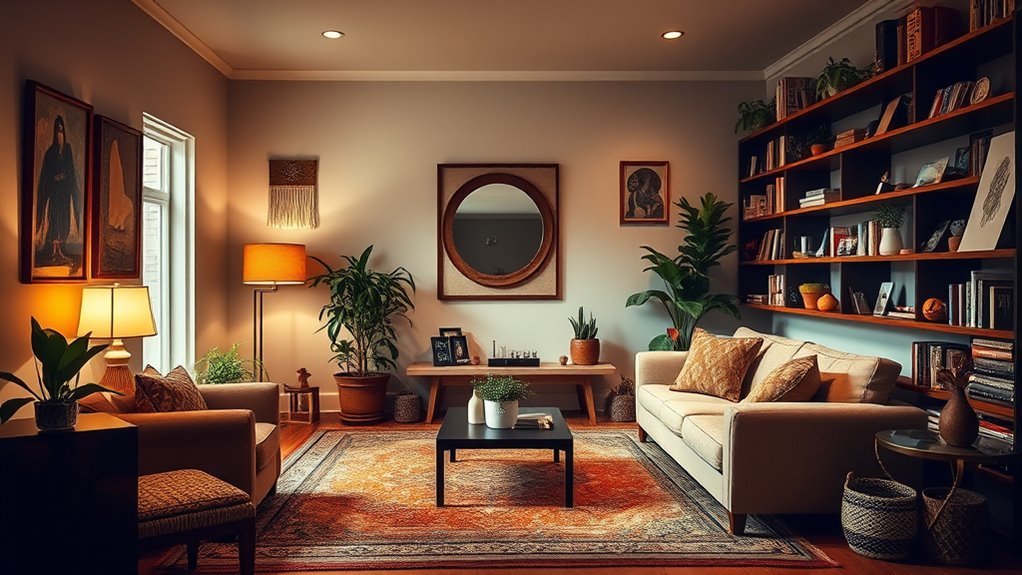
A windowless living room looks intentional and expansive when you follow the 60-30-10 color rule and limit competing hardware finishes. Without a window to draw the eye outward, every object inside the room gets noticed, so visual discipline keeps the space serene.
Use your primary warm neutral on 60% of the room (walls, ceiling, trim, and area rug), a secondary medium tone on 30% (upholstery, wood tables, and curtains), and a single richer accent color—such as rust, sage, or navy—on 10% (pillows, artwork, and one decorative vessel). Stick to at most two wood tones and one dominant metal finish, such as brushed brass paired with small touches of matte black.
- Repeat your main accent color in at least three spaced-out spots around the seating triangle.
- Match every visible lamp bulb to the same 2700K–3000K Kelvin rating so the walls stay a uniform shade.
- Conceal lamp and TV wires inside paintable raceways, woven cable boxes, or behind furniture legs.
- Keep at least 30% of bookcase shelves and coffee table surfaces open so light can bounce freely.
Common Windowless Living Room Mistakes and How to Fix Them
Most windowless living rooms that still feel gloomy or cramped suffer from a few easy-to-correct lighting or scale errors. Use this troubleshooting table to pinpoint and fix the exact issue in your space.
| Common Mistake | Why It Hurts the Room | How to Fix It Fast |
|---|---|---|
| Relying on one overhead ceiling light | Casts harsh downward shadows and leaves perimeter walls dark | Add at least three layered fixtures at varied heights: a torchiere or ceiling light, two eye-level lamps, and an LED strip or picture light |
| Painting walls stark, cool white | Looks dingy and gray without natural UV sunlight | Repaint in a warm white or cream (LRV 75–85) with an eggshell finish and switch to CRI 90+, 2700K–3000K LED bulbs |
| Heavy, dark furniture on a dark floor | Absorbs ambient light and visually shrinks the floor plan | Anchor the seating group on an 8×10 or 9×12 ivory rug, drape a cream throw over dark upholstery, and use a glass coffee table |
| Pushing every piece tight against the walls | Emphasizes the room’s boxy perimeter and traps shadows | Pull the sofa 3–6 inches off the wall or tuck a slim backlit console behind it to create depth |
| Hanging a mirror where it reflects clutter | Doubles visual mess and makes the room feel chaotic | Reposition the mirror directly behind or opposite a shaded lamp, plant, or framed artwork |
Key Takeaways
- Choose warm-neutral wall paints in an eggshell or satin sheen with an LRV of 65 to 85 rather than stark, cool white.
- Target 15 to 20 lumens per square foot (2,250–3,000 lumens in a 150 sq. ft. room) spread across 4 to 6 layered LED fixtures.
- Standardize living room bulbs to 2700K–3000K and CRI 90+ on compatible dimmers so colors look rich and natural.
- Float seating 3 to 6 inches off the wall, leave 14 to 18 inches around the coffee table, and keep main walkways 30 to 36 inches wide.
- Provide 12 to 14 hours of full-spectrum LED grow light for live low-light houseplants, or use high-quality faux greenery.
Frequently Asked Questions
What is the 2/3 rule for living rooms?
The 2/3 rule is a proportion guideline stating that your main sofa should span roughly two-thirds the width of the wall behind it, and both your coffee table and wall art above the sofa should measure about two-thirds the length of the sofa itself. In a windowless living room, following this ratio keeps furniture substantial enough to anchor the space without crowding the walkways.
What is the 5’7″ lighting rule?
The 5’7″ lighting rule recommends mounting wall sconces with their center about 5 feet 7 inches (67 inches) above the finished floor, matching average adult standing eye level so the bulb illuminates the wall evenly without glaring into your eyes. Designers also pair it with the separate 5-to-7 light source rule, which suggests placing five to seven individual lamps and fixtures across a larger living room instead of relying on one ceiling light.
How do you decorate a living room for beginners?
Start by defining how the room functions for watching TV, reading, or hosting guests, then establish a light warm-neutral wall palette and at least three layered light sources. Place your largest piece of furniture—usually the sofa—facing a clear focal point, ground the seating group on a large area rug, and finish with a mirror, framed art, and textured pillows.
What should you do if your room has no window?
Replace missing sunlight by combining high-LRV warm wall paint (LRV 65–85) with layered ambient, task, and accent LED lighting delivering 15 to 20 lumens per square foot. Create a strong visual focal point using oversized landscape art, a windowpane mirror, or backlit sheer curtains, and choose open-legged furniture and closed storage so the floor stays open and clutter-free.
What colors make a windowless living room look brighter?
Warm white, creamy ivory, oatmeal, pale greige, soft beige, muted sage, and misty blue-gray brighten a windowless living room best when applied in an eggshell or satin sheen. Avoid stark, cool-toned pure whites that turn gray under artificial bulbs, and ground your light walls with warm wood tones, brass hardware, and one deeper accent shade.
How many lamps should a windowless living room have?
A small windowless living room needs at least three to four distinct light sources—one overhead or torchiere ambient light, two eye-level task lamps, and one accent or backlit fixture—while medium to large rooms benefit from five to seven sources. Place fixtures in a triangle or square around the perimeter so no corner falls into shadow.
Can real houseplants survive in a windowless living room?
Real houseplants can thrive in a windowless living room only if you provide supplemental full-spectrum LED lighting for 12 to 14 hours a day on a timer, positioned 12 to 24 inches above the foliage. Hardy low-light varieties like ZZ plants, snake plants, pothos, and cast-iron plants adapt well under LED grow bulbs installed inside standard floor or pendant lamps.
Conclusion
Decorating a windowless living room comes down to replacing natural daylight with reflective surfaces, warm layered illumination, and an uncluttered floor plan. Start this weekend by swapping harsh or mismatched bulbs for 2700K–3000K, CRI 90+ LEDs across at least three light heights, positioning a large mirror opposite your brightest lamp, and taping out 30-to-36-inch walkways around your seating area.
Sources
- U.S. Department of Energy — Lighting Principles and Terms: Supports ambient, task, and accent lighting categories, lumens, Kelvin color temperature, CRI, and glare control.
- U.S. Department of Energy — Lighting Design: Supports light-colored reflective wall surfaces, task lighting placement, and lighting controls.
- ENERGY STAR — Learn About Brightness: Supports choosing bulbs by lumens rather than watts and wattage-to-lumen equivalence.
- U.S. Department of Energy — Lighting Choices to Save You Money: Supports LED energy savings (up to 90% less energy) and 25x longer lifespan compared with incandescent bulbs.
- U.S. Consumer Product Safety Commission — Anchor It! Campaign: Supports anchoring heavy mirrors, bookcases, and storage furniture to prevent tip-over injuries.
- U.S. Access Board — Chapter 4: Accessible Routes: Supports 36-inch continuous clear route width and 32-inch doorway clearance standards.
- Sherwin-Williams — How to Choose Paint Colors Based on Room Orientation: Supports the 0–100 Light Reflectance Value (LRV) scale and choosing warm, higher-LRV paint in low-light rooms.
- University of Minnesota Extension — Lighting for Indoor Plants: Supports 12 to 14 hours of daily supplemental LED light positioned 12 to 24 inches above foliage houseplants.