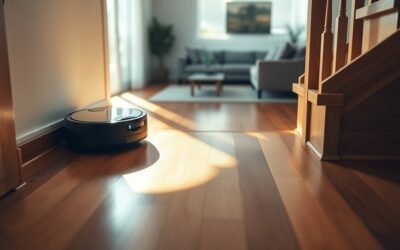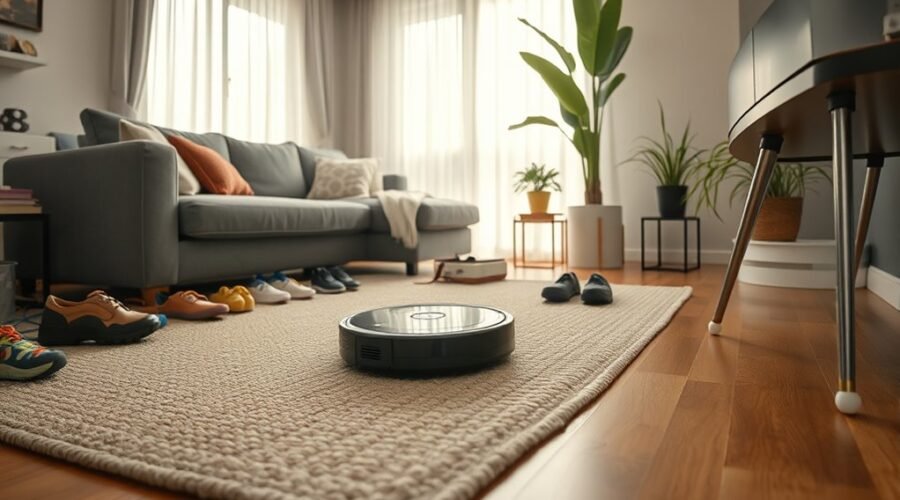
Robot vacuums can help in cluttered homes, but only when the space is prepared with care. Loose cords, toys, and low obstacles often cause stalls, missed spots, and repeated runs. Clear pathways, set no-go zones, and keep high-traffic areas tidied before each cycle. The right habits and features can change how well the machine performs, yet some models handle these conditions better than others.
Why Robot Vacuums Struggle in Cluttered Homes
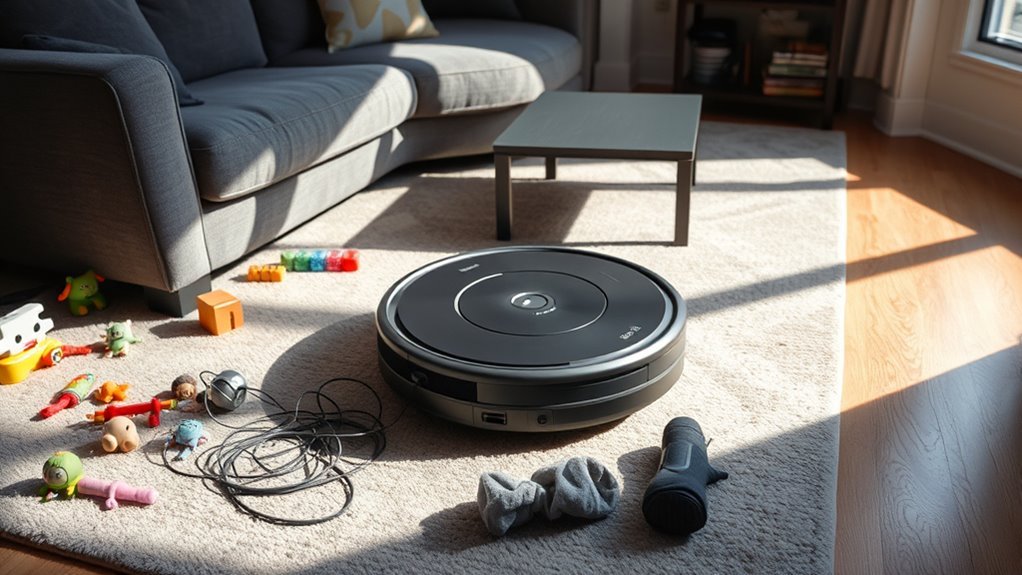
Robot vacuums often struggle in cluttered homes because loose items such as cables and toys can snag the unit and stop a cleaning cycle before it is finished.
In heavily cluttered homes, Robot vacuums face frequent getting stuck events, especially in tight spaces where furniture, cords, and scattered objects leave little room to move. Low clearance under sofas and cabinets can trap the machine, while piles of clothes and uneven surfaces reduce cleaning coverage and create missed areas.
Although advanced navigation and obstacle avoidance improve performance, they cannot fully overcome dense clutter. The result is slower progress, repeated detours, and incomplete passes that weaken daily upkeep.
Practical use depends on reducing physical barriers, since even capable Robot vacuums need clear paths to clean consistently. For households seeking greater freedom from manual sweeping, clutter remains the main limit on reliable floor care.
Set Up a Robot Vacuum for Better Navigation
Before starting a cleaning cycle, a cluttered home should be prepared so the machine can move with fewer interruptions. Loose cables, toys, and other small items should be lifted from the floor so robot vacuums can use smart navigation without repeated stops.
Clear pathways around chairs, doorways, and beds give obstacle detection a better chance to guide the unit through cluttered spaces. When possible, smart mapping should be run first, since it creates a route that reduces backtracking and improves coverage.
Companion app no-go zones can block off dense piles, fragile areas, or rooms that are not ready for cleaning sessions. Height clearance under furniture should also be checked so the machine does not wedge itself beneath low frames.
After use, maintenance matters: empty the bin, wipe sensors, and inspect brushes. These simple steps support steadier operation, fewer interruptions, and more freedom from manual floor care.
Best Robot Vacuum Features for Cluttered Homes
For cluttered homes, the most useful robot vacuum features are those that improve navigation, obstacle detection, and access to tight spaces. Robot vacuums work well when advanced robotic devices use navigation technologies like LiDAR, dToF, and AI vision to map cluttered environments and adjust routes without constant supervision. Smart features matter most when they reduce manual intervention and preserve cleaning efficiency.
- Accurate mapping and obstacle recognition help the Robot avoid small objects and identify larger obstacle zones such as cables or clothing piles.
- Slim body designs and threshold climbing support access to tight spaces, under furniture, and over uneven room passages.
- Regular maintenance, including dustbin emptying and sensor cleaning, keeps navigation reliable in demanding cluttered environments.
Models with smart path planning can improve coverage, but performance still depends on room conditions and upkeep. In practice, the best devices are those that combine precision, adaptability, and low-friction operation.
Daily Habits That Keep Floors Robot-Ready
Each morning, clear shoes, toys, cords, and other loose items from high-traffic floors so the robot vacuum can move without interruption.
Before each scheduled run, reset clutter in corners, along edges, and near furniture to preserve full cleaning coverage.
Small daily tidying habits and quick resets after use help keep paths open and the vacuum working efficiently.
Clear Floors Each Morning
A quick morning reset can make a cluttered home far easier for a robot vacuum to clean. For clear floors, daily upkeep should focus on removing obstacles before they spread. In cluttered homes, this routine protects cleaning power and reduces maintenance demands.
- Place shoes and laundry in baskets or cabinets, using storage solutions that support organizing.
- Keep a shoe rack or similar zone near entry points so items have a fixed home.
- Use app control or a scheduling reminder to prompt the same reset each day.
Low-clearance furniture should be checked regularly so the robot vacuum can move freely.
With consistent habits, floors stay accessible, and the home gains a steadier sense of liberation.
Reset Clutter Before Runs
Morning resets work best when they become a repeatable habit before every run. For robot vacuums in cluttered areas, the setup should include daily clearing of shoes, cables, and other loose items that can trap wheels or block sensors.
A few minutes of tidying before each cleaning session improves navigation and expands cleaning coverage. Regularly placing items in baskets or cabinets keeps a clear path open, while moving larger obstacles such as laundry baskets, toys, or floor décor prevents missed zones.
This routine supports smart mapping by letting the machine follow cleaner routes with less interruption. The result is better efficiency, less manual rescue, and more freedom from constant floor supervision.
Consistency matters more than occasional deep resets, because small daily actions keep spaces robot-ready.
How DEEBOT Handles Cluttered Spaces
Maneuvering cluttered rooms becomes more manageable with DEEBOT’s sensing and mobility systems. The DEEBOT X11 uses dToF laser mapping for obstacle avoidance, while AIVI 3D identifies cables, toys, and other loose items in real time.
That combination helps robot vacuums keep cleaning in cluttered environments with less interruption. The TruePass System adds practical mobility, letting the unit cross door bars and thresholds up to 20mm, which supports multi-level flooring and consistent deep cleaning across connected rooms.
Through the ECOVACS HOME app, users can schedule runs, set zones, and manage cleaning tasks without constant supervision.
- Precise mapping supports efficient path planning.
- Real-time recognition lowers the chance of snagging on household objects.
- Regular maintenance, such as emptying the dustbin and cleaning brushes, helps preserve suction power and stable performance.
This setup offers a practical route toward cleaner floors with less daily effort and more freedom from manual sweeping.
Fix Stuck Vacuums and Missed Spots
Robot vacuums often lose time in cluttered homes when cables, toys, or other loose items block their path, causing stalls that leave areas uncleaned. To reduce missed spots, floors should be cleared of small objects before each run, and furniture should be arranged with open lanes for easier travel.
Smart mapping and obstacle detection can improve navigation, yet these tools work best in tidy spaces rather than among frequent obstacles. In homes with heavy congestion, setting no-entry zones around problem areas can protect cleaning efficiency and prevent repeated performance issues.
Regular maintenance also matters: wheels should be checked for debris, and brushes should be cleaned to keep movement steady. When robot vacuums can move freely, they cover more ground, spend less time recovering from blocks, and deliver more consistent results in cluttered homes.
A simple routine of preparation and upkeep gives users more reliable cleaning and less need to intervene during each cycle.
Frequently Asked Questions
Is It Okay to Use a Robot Vacuum Every Day?
Yes; daily use is generally fine, with daily cleaning benefits for effective floor types, pet hair efficiency, and clutter management tips. Practical scheduling routines, robot vacuum maintenance, battery lifespan concerns, noise levels comparison, smart home integration, and user experience feedback matter.
Is There a Robot That Can Do Household Chores?
Yes—smart home robots can handle sweeping, mopping, and pet hair. Their cleaning efficiency depends on floor types, navigation technology, battery life, noise level, maintenance tips, user reviews, and cost comparison.
What Are the Downsides of Using a Robotic Vacuum Cleaner?
Robotic vacuum cleaners often face Navigation issues, weak Obstacle detection, and limited Battery life. Their Suction power can disappoint on varied Floor types, with poor Carpet performance, higher Noise levels, limited capacity for Pet hair, and rising Maintenance costs.
Can a Robot Vacuum Clean Multiple Rooms?
Yes—about 70% of robot vacuum owners report whole-home cleaning success. With robot vacuum features, mapping technology, and obstacle detection, one unit can cover multiple rooms efficiently; app integration, battery life, noise levels, maintenance tips, brand comparisons, user experiences matter.
Conclusion
In cluttered homes, success often comes by coincidence and habit meeting at the right moment: a clear floor, a mapped no-go zone, a quick brush cleaning. The robot vacuum then moves with fewer stops, fewer snags, and fewer missed spots. When daily tidying, smart setup, and regular maintenance align, even crowded rooms become manageable. The result is not perfection, but reliable cleaning that keeps pace with real life.