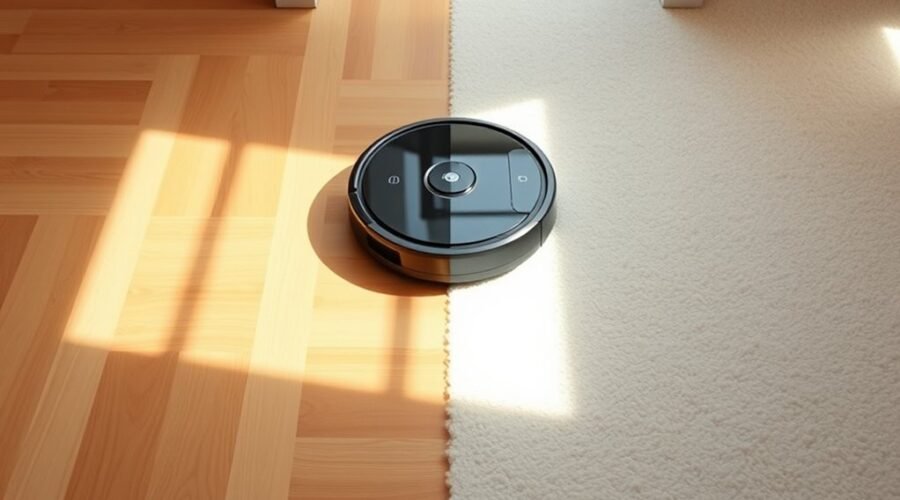
Carpet boost and standard suction may sound similar, but they serve different cleaning needs. Standard suction is usually enough for hard floors and low-pile rugs, while carpet boost can raise power automatically on thicker carpet to lift embedded dirt and pet hair. The real difference often comes down to airflow, brush design, and how much dirt stays behind. That makes the next question more practical than it first appears.
What Is Carpet Boost on a Robot Vacuum?
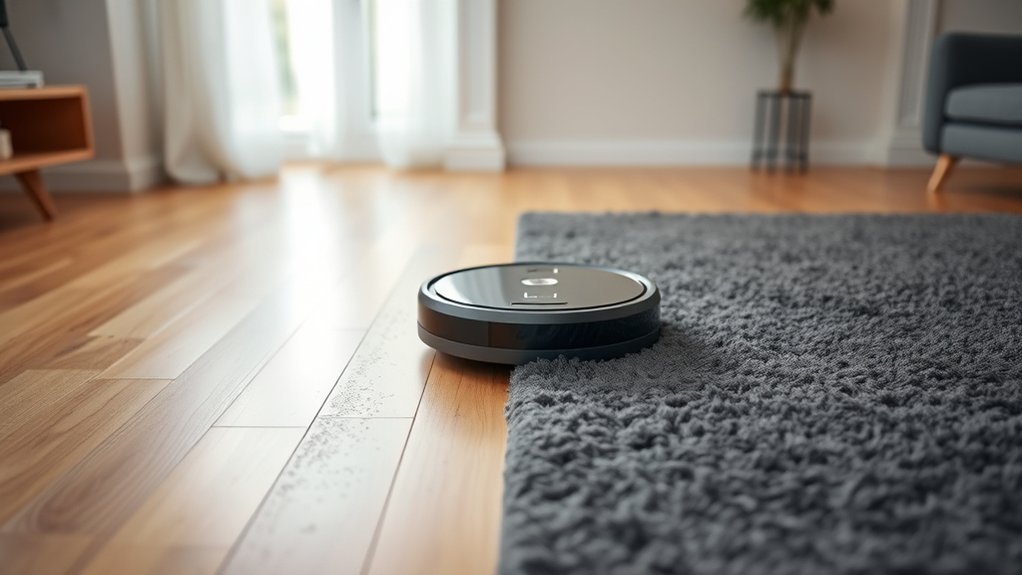
Carpet boost is a smart suction increase that robot vacuums use when they move from hard floors onto carpet, helping them adapt to surfaces that usually trap more dust, dirt, and pet hair.
It raises suction power automatically, so cleaning performance improves without constant adjustment. On medium to thick carpet, where around 10,000 Pa may be needed for strong results, this feature helps lift embedded dirt from deeper fibers.
Many robot vacuums use carpet detection, often through ultrasonic sensors, to trigger the boost at the right moment and keep the process hands free.
Some advanced systems, such as CarpetForce™ Vacuuming System, deliver up to 2.4 times more cleaning power in carpeted zones.
For users seeking freedom from repetitive chores, Carpet boost offers a practical way to let robot vacuums handle mixed flooring more effectively and with less effort.
Carpet Boost vs Standard Suction
When comparing carpet boost with standard suction, the difference is largely about how a robot vacuum adapts to surface changes.
Carpet boost automatically raises suction power on carpets, helping remove dirt and pet hair more effectively than standard suction. Standard suction is usually enough for hard floors and low-pile rugs, yet it can leave embedded debris behind in medium to thick carpets.
For carpet cleaning, models with Carpet boost often work in the 4,000 to 8,000 Pa range, while standard suction may sit between 2,500 and 4,000 Pa. On denser surfaces, stronger carpet boost performance is often needed to maintain peak performance and free a home from trapped dust and allergens.
A robot vacuum built for thick carpets consequently gives greater independence from manual cleanup. Regular maintenance, including emptying the dustbin and cleaning brushes, helps both modes maintain peak performance over time and keeps cleaning consistent.
How Robot Vacuum Suction Is Measured in Pa
Suction ratings in robot vacuums are measured in pascals (Pa), a pressure unit that helps compare how strongly different models can pull in dust and debris.
In practical terms, suction power is often listed from about 2,500 to 8,000 Pa, which may suit lighter cleaning needs on hard floors and low-pile rugs. For thick carpets, many buyers look for at least 10,000 Pa, while some high-end models exceed 30,000 Pa.
Still, higher numbers alone do not guarantee better results. Real-world performance depends on brush design, motor efficiency, and how the machine handles debris during movement.
Higher suction numbers alone don’t ensure better cleaning; brush design and debris handling matter just as much.
The dust pick-up rate offers a useful complement, showing how effectively particles are collected in use. Together, these measures help users judge whether a vacuum can deliver freedom from mess, not just impressive specifications on paper.
Why Airflow Matters on Carpet
On carpet, airflow matters because it helps lift embedded dirt and pet hair from deep within the fibers rather than leaving debris trapped at the surface.
Compared with suction alone, a balanced setup with strong airflow and roughly 10,000 Pa or more can improve pick-up rate and overall cleaning performance.
If airflow is too weak, clogging and poor debris transport can reduce efficiency, making filter and dustbin maintenance more important.
Airflow Lifts Embedded Dirt
Airflow plays a central role in carpet cleaning because it helps lift embedded dirt and move it out of the fibers and into the dustbin, where suction alone may fall short. On carpet, robot vacuums perform best when airflow and suction work in balance; too little airflow weakens dirt transport, reducing cleaning efficiency. Higher airflow improves dust pick-up rate, helping remove pet hair and allergens lodged deep in the pile.
| Metric | Practical effect | Carpet result |
|---|---|---|
| 16 L/s | useful minimum | better pickup |
| More airflow | stronger transport | less residue |
| Balanced Pa | steady lift | deeper cleaning |
| Dense fibers | harder release | more passes |
| Adaptive control | changes automatically | freer cleaning |
For medium to thick carpet, advanced airflow supports deep cleaning and more dependable dustbin loading, giving robot vacuums a clearer path to liberation from trapped debris.
Boosting Carpet Cleaning Performance
To improve carpet cleaning performance, robot vacuums rely on airflow measured in liters per second to lift debris from deep within the pile and carry it into the dustbin.
On carpet, Carpet Boost matters because stronger airflow paired with steady suction pressure improves dust pick-up rate, especially for embedded dirt and pet hair.
Models with auto carpet boost technology can sense a floor change and raise power on thicker or high-pile surfaces, freeing users from manual adjustments.
Compared with standard suction, this response often delivers cleaner results with less residue left behind.
Ideal cleaning performance depends on balance: enough airflow to move debris, enough pressure to hold the seal, and maintained filters and brushes to preserve efficiency over time.
How Much Suction Do Carpets Need?
How much suction a robot vacuum needs depends largely on carpet type, with medium-thick carpets typically requiring at least 10,000 Pa and thick or shag carpets often needing 15,000 Pa or more for effective cleaning.
In practice, suction power should be matched to pile depth rather than advertised as a single universal number. Low and medium pile carpets can often be handled at around 5,000 Pa, while hard floors need far less.
Carpet boost features matter because they raise suction automatically as surfaces change, preserving momentum and reducing missed debris.
Equally important is dust pick-up rate, since a machine with strong airflow but weak collection may leave grit behind.
For peak suction performance, filters should stay clean and the dustbin should be emptied regularly. That maintenance keeps performance steady, especially when carpets demand sustained pull and repeated passes for true cleanliness.
Best Carpet Settings by Floor Type
Low-pile carpet settings usually work well with standard suction around 1,500 to 2,500 Pa, giving adequate pickup without wasting battery.
Thick carpets, by contrast, benefit from boost modes and stronger suction in the 6,000 to 8,000+ Pa range to lift embedded dirt from deeper fibers.
When carpet detection is available, the vacuum can raise power automatically, making mixed-floor cleaning more efficient and consistent.
Low-Pile Carpet Settings
A modest suction range of 1,500 to 2,500 Pa is usually enough for robot vacuums to clean low-pile carpet effectively, since these carpets—generally under 0.5 inches tall—let the machine move and brush with minimal resistance.
For low-pile carpets, carpet boost is often helpful, but standard suction can still perform well when paired with a tangle-resistant brush. Many robot vacuums add auto carpet boost, raising suction only when needed, which preserves battery life while improving pickup.
Regular cleaning frequency, ideally every other day, keeps dust from settling deep into the fibers and supports a tidier, less encumbered home.
Compared with thicker surfaces, low-pile carpets give these machines easier access, letting users enjoy cleaner floors with less effort and more freedom.
Thick Carpet Boost Modes
Thick carpets demand a different level of performance than low-pile flooring, because dense fibers hold embedded dirt and hair far deeper in the pile. For thick carpets, Carpet Boost should raise suction power to at least 15,000 Pa for effective lift. Auto carpet boost mode can free the user from manual changes, increasing output when carpet detection technology identifies a floor changeover. | Setting | Benefit |
| — | — |
|---|---|
| Standard suction | Conserves battery on hard floors |
| Carpet Boost | Stronger dirt removal on thick carpets |
| Auto carpet boost mode | Instant adaptation |
| Specialized brush designs | Reduces tangling |
| Regular maintenance | Preserves peak performance |
Compared with basic models, high-pile machines combine strong suction and specialized brush designs for cleaner results. Regular maintenance of filters and brushes keeps airflow open, supporting consistent freedom from debris.
What Carpet Cleaning Limits to Expect
Carpet performance depends heavily on suction strength, and the limits become obvious as pile height increases: many robot vacuums need at least 10,000 Pa to handle medium-thick carpet reasonably well, while deep-pile or shag surfaces often demand 15,000 Pa or more to avoid leaving embedded dirt and pet hair behind.
Carpet Boost can improve cleaning effectiveness by raising suction on demand, yet Standard Suction often remains enough only for low-pile floors. The right carpet type matters: dense fibers resist pickup, while taller pile can trap debris below the brush reach, reducing deep clean results.
Even strong suction power may not fully liberate thick carpets from buildup, so manual follow-up or a specialized cleaner may still be necessary. Dark carpets can also confuse cliff sensors, limiting coverage in some rooms.
Regularly emptying dustbins and cleaning filters helps preserve performance, but it does not remove the physical ceiling imposed by carpet construction.
Smart Features That Improve Carpet Cleaning
Smart carpet features often start with Auto Carpet Boost, which raises suction the moment a carpet is detected, helping thicker piles receive the stronger pull they need.
Automatic Mop Lift adds a practical safeguard by lifting damp pads off carpeted areas, so hard floors can still be mopped without wetting fibers.
Together, these functions make a robot vacuum more adaptive, reducing manual changes while improving results across mixed flooring.
Auto Carpet Boost
When a robot vacuum moves from hard flooring to carpet, Auto Carpet Boost lets it respond automatically by increasing suction the moment carpet is detected. This improves pickup across different pile heights without any manual adjustment.
In carpeted homes, smart sensors enable faster shifts and steadier cleaning performance than standard suction alone. For medium to thick rugs, this matters because roughly 10,000 Pa is often the minimum for effective extraction, while models such as the DEEBOT X9 PRO OMNI can reach 16,600 Pa on carpet.
The result is stronger dirt and pet hair removal with less intervention, giving users more freedom from repeated settings changes. Compared with fixed-output vacuums, this adaptive approach stays practical, efficient, and better aligned with real rooms, where floor types change constantly.
Mop Lift Detection
As mixed-floor homes become more common, mop lift detection has become one of the most useful carpet-protection features in robot vacuums, automatically raising the mop pads the moment carpet is detected so the machine can vacuum and mop without wetting the rug.
| Benefit | Best Use | Result |
|---|---|---|
| Dry carpets | hard floors plus rugs | no damp odors |
| Seamless shift | mixed rooms | stronger cleaning efficiency |
| Adjustable height | high-pile and shag | better fiber care |
Compared with standard mop modes, mop lift detection keeps carpet fibers safe while preserving momentum across rooms. Advanced models use sensors to judge thickness and lift higher on denser piles. For households seeking liberation from constant setup, this hands-free control reduces interruptions and supports cleaner hard floors, drier carpets, and more reliable whole-home coverage.
How To Maintain Strong Robot Vacuum Suction
Strong robot vacuum suction depends on routine upkeep rather than occasional deep cleaning. A robot vacuum keeps carpet clearer when owners regularly empty the dustbin, because packed debris restricts airflow and weakens strong suction.
To maintain steady performance, they should clean or replace filters as needed; a clogged filter can limit output far more than simple surface dust. They should also inspect and clean brushes and rollers often, since tangled hair and debris reduce pickup efficiency and leave grit behind.
A consistent maintenance routine should include wiping sensors, which supports accurate navigation and prevents wasted passes that drain power. Compared with waiting for problems to appear, this approach preserves suction longer and helps the machine work with less strain.
Keeping the vacuum charged and operational also matters, because delayed cleaning allows heavier buildup that demands more effort later. For users seeking freedom from constant manual cleanup, disciplined upkeep is the practical way to protect performance.
Which DEEBOT Models Handle Carpet Best?
The DEEBOT models best suited to carpet cleaning are the ones that combine high suction with automatic carpet boost, especially on medium- to high-pile surfaces.
Among current DEEBOT models, the T90 PRO OMNI leads with 30,000 Pa, giving the strongest deep cleaning on thick carpets and the most freedom from debris trapped in fibers.
The X11 OmniCyclone follows with 19,500 Pa, offering robust performance for households that need dependable Carpet Boost without sacrificing floor versatility.
The X9 PRO OMNI, at 16,600 Pa, is built for deeper rug and carpet cleaning and adds a Triple Lift System for smarter shifts.
In practice, any model above 10,000 Pa with automatic carpet boost can handle most carpets well, but higher suction power improves results on denser piles.
For users seeking autonomy from constant manual cleanup, these DEEBOT models provide the clearest advantage.
Frequently Asked Questions
What Is Considered Good Suction for a Robot Vacuum?
Good suction power for a robot vacuum usually begins around 2,500 Pa, with 4,000–6,000 Pa better for varied carpet types; cleaning efficiency depends on vacuum design, noise levels, battery life, and maintenance tips.
What Setting Should My Vacuum Be on for Carpet?
For carpet, carpet boost or high suction is best on medium to thick piles; standard suction suits low pile. Carpet types, cleaning frequency, vacuum features, maintenance tips, pet hair, noise levels, and smart technology should guide choice.
Is 20,000 Pa Suction Good for a Robot Vacuum?
Yes, 20,000 Pa suction power is excellent for robot vacuum carpet cleaning, improving robot efficiency on pet hair and dust removal. Advanced vacuum technology often helps, though brush design and maintenance tips still matter.
Is 8000 Pa Suction Good?
Yes, 8,000 Pa suction power is good for many carpet types, offering solid vacuum efficiency. With suitable robot features, it suits routine cleaning. Practical maintenance tips, moderate noise levels, and balanced battery life improve everyday performance.
Conclusion
In the end, carpet boost offers a clear advantage over standard suction because it adapts automatically when carpets need deeper cleaning. Standard suction remains practical for hard floors and low-pile rugs, but thicker carpet often benefits from the extra power and airflow. Some may worry higher suction is always better; however, the best robot vacuum balances strength with battery life and floor type, making smart carpet detection more useful than brute force alone.