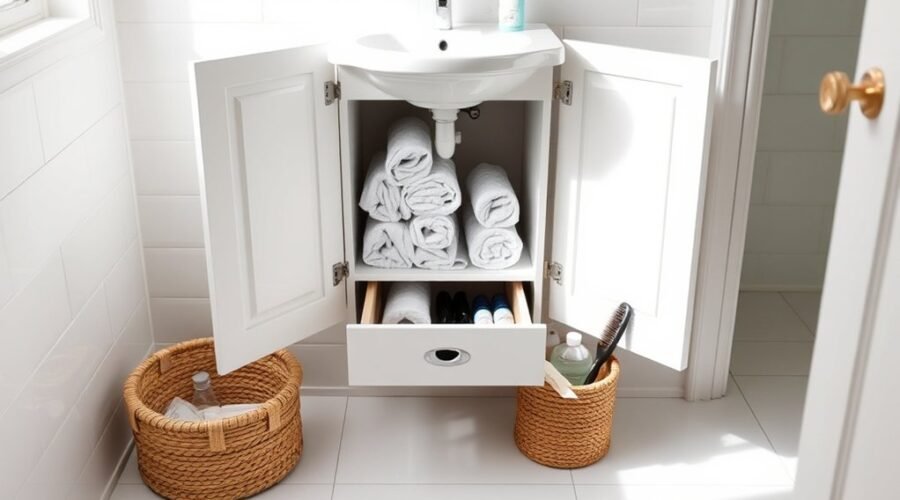
Organizing a small bathroom sink cabinet is easier when you work around the plumbing instead of trying to fill every inch. The right bins, drawers, and door organizers can turn a cramped cabinet into useful storage. Start by clearing the space, measuring the interior, and choosing organizers that fit your daily routine.
Quick Answer
To organize a small bathroom sink cabinet, remove clutter and measure around the pipes first. Use slim bins for narrow spaces, stackable drawers for small toiletries, and hooks or racks inside the cabinet door. Keep everyday supplies near the front, protect the cabinet floor from moisture, and leave plumbing connections accessible.
At a Glance
| Difficulty | Beginner; most solutions do not require permanent installation. |
| Tools Needed | Tape measure, cleaning cloth, suitable storage bins or drawers, and optional labels. |
Clear Out the Under-Sink Cabinet
)
The first step in organizing your under-sink cabinet is to remove everything. This helps you see how much storage space you actually have and which products deserve a place inside.
Place all bottles, boxes, toiletries, and cleaning tools on a towel or nearby surface. Wipe the cabinet floor and look for moisture, stains, or damaged surfaces before putting anything back.
Next, sort your belongings into three groups:
- Keep: Products you use regularly, along with essential refills.
- Relocate: Extra towels, bulky packages, and items better stored elsewhere.
- Discard: Expired products, broken pumps, empty containers, and anything no longer usable.
Separate personal care products from household cleaners. Group toiletries by purpose, such as skincare, dental care, hair care, and daily hygiene.
Keep only the supplies that fit comfortably. You do not need to store every bathroom product beneath the sink.
Once you know what remains, you can select organizers based on the items you actually own instead of buying containers that create more clutter.
Measure Around Pipes and Plumbing
Plumbing often takes up the most awkward space inside a bathroom cabinet. Measuring around the pipes helps you find usable areas without blocking the sink’s connections.
Pay attention to the drain trap, water supply lines, shutoff valves, and any fixtures extending into the cabinet.
Map Pipe Placement
Start by measuring the cabinet’s interior width, depth, and height. Then identify where the plumbing interrupts those measurements.
A simple sketch is enough to plan the layout.
- Measure the available width on both sides of the pipes.
- Record the clear depth between the cabinet opening and the back wall.
- Measure the usable height below and beside the drain trap.
- Mark the locations of water lines, valves, hinges, and other obstructions.
- Identify where drawers or bins can move without touching plumbing.
For example, a cabinet with plumbing centered near the back may have room for narrow drawers on one side and a cleaning caddy on the other.
A cabinet with an off-center drain might fit a wider organizer on one side but require smaller bins on the opposite side.
Measure each usable section separately rather than assuming both sides have the same amount of space.
Leave Clearance Room
Storage organizers should not press against pipes, fittings, or shutoff valves. Leave enough space to inspect connections and reach the valves without dismantling the entire storage system.
The original layout guideline of 1–2 inches of clearance can provide useful breathing room where the cabinet allows. However, the important requirement is practical access, not a fixed distance.
Some bathroom cabinets measure around 20 inches deep, but actual dimensions vary. Never choose an organizer based on an assumed cabinet depth.
Remember that a drawer needs room to slide forward. A container that fits when closed may still collide with a pipe or cabinet hinge when opened.
Also, avoid putting heavy organizers against flexible supply hoses or drain connections.
Fit Storage Around Plumbing
The best under-sink storage layout uses the open spaces beside and below the plumbing. Modular organizers work well because you can position individual pieces around obstructions.
Consider these arrangements:
- Side-by-side bins: Place narrow containers on either side of a central drain.
- Tiered shelving: Use the lower level for taller bottles and shorter upper shelves where pipes allow.
- Pull-out storage: Position shallow drawers away from water lines and hinges.
- Corner organizers: Fill unused side corners without blocking the drain assembly.
- Water-resistant shelf liners: Protect the cabinet base from small drips and product spills.
Before filling the space, place the empty organizers inside and test their movement. You should be able to remove each unit without pulling on the plumbing.
Choose Organizers for a Small Bathroom Sink Cabinet
The best organizers are not necessarily the largest ones. Choose slim, stackable, and easy-to-clean storage that fits your cabinet’s exact shape.
Drawers work well for small toiletries, open bins suit larger supplies, and tiered shelves help use vertical space.
Measure Before You Buy
Before purchasing an organizer, compare its listed dimensions with the usable cabinet space.
Check four important details:
- Width: Make sure the organizer fits beside pipes and hinges.
- Depth: Confirm it does not extend beyond the door opening.
- Height: Allow space for the organizer and the products stored inside.
- Movement: Check whether drawers, lids, or pull-out trays can open fully.
For slide-out storage, measure the clear cabinet opening as well as the interior width. Hinges and door frames can reduce the space available for moving drawers.
Use the manufacturer’s complete dimensions rather than relying on product photos.
Modular systems are especially useful in irregular cabinets because you can combine smaller units rather than forcing one large shelf into the space.
Pick Slim, Stackable Bins
Slim bins make it easier to use narrow sections beside plumbing. Stackable containers help organize spare toiletries without spreading everything across the cabinet floor.
Choose washable plastic, coated metal, or other moisture-resistant materials suited to bathroom storage.
Here is how the main features compare:
| Feature | Benefit |
|---|---|
| Slim profile | Fits narrow spaces around plumbing |
| Stackable bins | Uses vertical space for extra toiletries and refills |
| Water-resistant finish | Makes cleaning easier in damp conditions |
Clear containers make it easier to see what you have. Opaque baskets can hide visual clutter, but labels help you find items quickly.
For a consistent storage setup, IKEA’s under-sink bathroom storage guidance recommends transparent stackable containers, storage baskets, drawer organizers, and turntables.
Do not stack heavy bottles on top of lightweight containers. Keep heavier supplies near the bottom for better stability.
Add Stackable Drawers for Small Items
Stackable drawers are useful when small bathroom products keep disappearing behind larger bottles. They create separate storage levels while keeping supplies accessible.
Use shallow drawers for cotton swabs, hair ties, floss, makeup accessories, and travel-size toiletries. Deeper drawers can hold refill packages, wipes, or other larger items.
A practical arrangement includes:
- Shallow upper drawers for lightweight items you use often.
- Medium drawers for spare personal care products.
- Deeper lower drawers for bulkier refills and taller supplies.
- Small internal dividers to prevent loose items from mixing.
Choose drawers with clear fronts or labels so you do not need to open every compartment.
Non-skid feet can help prevent lightweight drawer units from shifting when opened.
Modular systems, including The Container Store’s Elfa storage systems, offer adjustable drawer and shelving options. Select cabinet-sized components that match your available space.
Remember that modular does not mean universally compatible with every plumbing layout. Check the complete frame dimensions before installation.
Pro Tip: Before buying stackable drawers, make a simple cardboard template of the organizer’s footprint. Place it inside the cabinet to check pipe clearance and available floor space. This can help you spot fitting problems before making a purchase.
Recommended Products

[Multi-Purpose Organizers] Our storage drawers help you to organize everywhere in your home. They can be used as organizers and storage for makeup, bathroom countertop, kitchen or laundry under sink, medicine cabinet, pantry, vanity. You can flexibly use our storage organizer for house organization and storage according to your needs.

【Crystal Clear Drawer Organizer】Made of durable and clear plastic, the drawer organizer looks beautiful in drawer, they are well decorative for home organization and storage, no more mess in bathroom, vanity, office.

4-Tier 4-Drawer Bathroom Counter Organizer: Unlike other makeup organizers storage that only feature 2 drawers, ours offers an enhanced storage capacity. The top two layers can accommodate perfumes, skincare products, and face creams, while the four drawers are perfect for storing eyeshadow palettes, sunscreens, and more.
Sort Supplies Into Bins and Baskets
Bins and baskets make small bathroom storage easier by giving every product category a specific place.
Instead of mixing everything together, create separate groups for daily toiletries, backup products, grooming tools, and cleaning supplies.
Try this simple storage arrangement:
- Daily toiletries: Keep frequently used skincare, toothpaste, and grooming products near the front.
- Extra supplies: Place spare soap, tissue packages, and unopened refills in labeled bins.
- Small accessories: Use divided containers for cotton swabs, hair clips, and similar items.
- Cleaning tools: Place brushes, gloves, and cloths in their own washable container.
- Occasional-use items: Store less frequently needed supplies toward the back.
Deep bins are helpful for tall bottles, but avoid filling them so tightly that you cannot see or reach their contents.
Handled baskets are especially useful because you can lift the entire group out of the cabinet when cleaning or looking for a product.
Modular stacking baskets can also create storage around uneven plumbing lines. Choose open baskets for items you use regularly and lidded containers for suitable backup supplies.
Keep bathroom cleaning chemicals in their original labeled bottles rather than transferring them into decorative containers.
Separating toiletries from cleaning products also helps prevent accidental spills from contaminating personal care items.
Recommended Products

[Stackable Design] Come with 3 storage drawers, included 12.1" W and 2PCS 4.4'' Tall storage containers. The storage containers are stackable, vertical storage will save a lot of space. Put your small objects in acrylic drawers to make your countertop space more tidy.

Stackable Storage Bins-- The top of the drawer has groove design ensures stacking. Use these stackable drawers to save space, which is also keep organized.

8 Pack Clear Storage Bins: Item includes 2pcs Extra large plastic bins (13.5" L x 10" W x 5.8" H) & 6pcs small storage bins (9.6" L x 6.5" W x 4" H). These clear organizer bins are great help to organize your food, snacks, medicine, cleaning tools, towels, RV, toys and books. Keep your shelves, countertop, drawer, refrigerator tidy and clean.
Use the Cabinet Door for Extra Storage
The inside of a cabinet door is valuable storage space in a small bathroom. It can hold lightweight tools and accessories without taking up room on the cabinet floor.
Choose organizers that sit flat enough for the door to close comfortably.
Consider these four options:
- Over-the-door hooks: Hang lightweight grooming tools, small towels, or hair accessories.
- Magnetic strips: Hold suitable metal grooming tools, such as tweezers or scissors, when securely mounted and safely positioned.
- Tiered door organizers: Store small bottles, brushes, and compact toiletries in narrow compartments.
- Styling tool stations: Keep hair dryers and other styling accessories together, with cords neatly contained.
Allow heated styling tools to cool completely before storing them. Keep their cords away from plumbing and moisture.
Use the cabinet door for lighter items rather than heavy bottles that could strain the hinges.
If you prefer removable storage, adhesive hooks or suitable over-the-door racks can work without permanent drilling.
However, an over-the-door organizer may interfere with the cabinet frame. Check the door’s top clearance and hinge movement before installing one.
Open and close the door with the organizer loaded. Nothing should hit the pipes, drawers, or other stored products.
Store Cleaning Tools in a Slim Caddy
A slim cleaning caddy keeps bathroom cleaning supplies together and makes them easier to carry.
Choose a narrow, handled container with enough compartments to separate spray bottles, gloves, brushes, and microfiber cloths.
Look for these features:
- A compact shape that fits beside plumbing.
- A sturdy handle for removing the entire caddy.
- A washable, water-resistant base.
- Dividers that keep bottles upright.
- Enough space to prevent containers from tipping.
A removable caddy is convenient because you can take cleaning supplies directly to the bathroom surfaces that need attention.
It also makes it easier to inspect the cabinet floor and clean small spills.
Warning: An unlocked under-sink cabinet is not a safe storage location for hazardous cleaners when children can access it. Use child-resistant locks or store harmful products in a secure location. Keep chemicals in their original containers and never mix cleaning products, especially bleach with ammonia or other cleaners. Follow Poison Control’s cleaning safety guidance.
Do not place leaking bottles inside a caddy and leave them unattended. Clean spills according to the product label before returning the supplies to storage.
Keep the caddy separate from items used on your face, skin, or teeth.
Add a Small Cart or Shelf if Needed
A compact shelf can improve storage inside a cabinet, while a rolling cart may work better beside an open sink or vanity.
The key is choosing an organizer that fits the available space without blocking plumbing, doors, or walking areas.
Consider these options:
- Small corner shelf: Uses narrow corners and adds vertical storage for folded towels or toiletries.
- Three-tier cart: Holds cleaning tools, refill bottles, and other supplies in separate levels.
- Slim rolling cart: Slides into narrow gaps beside a sink or between bathroom furniture.
- Compact cabinet shelf: Creates another storage level beneath the sink without requiring a full-height cart.
Several established storage products illustrate the differences between these designs.
Consider the IKEA RÅSKOG Utility Cart
The IKEA RÅSKOG trolley is a three-tier rolling organizer with metal baskets and wheels.
The larger model measures 35 cm long, 45 cm wide, and 77 cm high. Its shelves can hold bathroom supplies, cleaning products, and spare toiletries.
Because of its height, this model is generally more suitable beside a vanity than inside a small closed sink cabinet.
Use it when you have available floor space and want portable storage.
Try the IKEA RÅGRUND Corner Shelf
The IKEA RÅGRUND sink shelf/corner shelf is made from bamboo and designed for humid bathroom environments.
It measures 13 3/8 inches wide, 13 3/8 inches deep, and 23 5/8 inches high.
Its corner-friendly shape can help organize an open area beneath or beside a bathroom sink. IKEA also shows two units combined to create storage beneath an exposed washbasin.
For a closed vanity cabinet, measure carefully before assuming the shelf will fit around the pipes.
Use a Yamazaki Tower Rolling Storage Cart
The Yamazaki Tower Rolling Slim Storage Cart With Handle offers a narrow three-tier design.
According to Yamazaki, it measures 13 cm wide, 47.5 cm deep, and 80.5 cm high.
Its slim width makes it useful for narrow floor gaps beside bathroom furniture. The handle and wheels allow the cart to slide out for easier access.
However, its height makes it unsuitable for most small enclosed sink cabinets.
These products show why you should distinguish between storage that fits inside a vanity cabinet and storage designed for the open space around a sink.
Keep the Under-Sink Cabinet Tidy
Once your bathroom cabinet is organized, a simple maintenance routine will help it stay that way. The goal is to keep supplies accessible while preventing moisture damage and clutter from returning.
Return each item to its assigned bin, drawer, or caddy after use.
Follow this practical checklist:
- Put frequently used products back in their designated containers.
- Remove empty bottles and unnecessary packaging.
- Check cleaning supplies for damaged caps or leaking containers.
- Wipe bins and the cabinet floor when dust or spills appear.
- Inspect the plumbing area for dampness, water stains, or active leaks.
- Review backup products periodically so unused items do not build up.
A Lazy Susan, or rotating tray, can make bottles in a deep cabinet easier to reach. Choose one that fits without hitting the pipes or cabinet walls when turning.
It works best for bottles you reach for regularly. Use drawers or smaller bins when there is not enough room for a rotating organizer.
A water-resistant liner can protect the cabinet base from minor spills, but it cannot stop a plumbing leak.
If you notice wet surfaces, swelling cabinet panels, or a musty smell, remove the stored items and investigate the moisture source.
The U.S. Environmental Protection Agency’s mold cleanup guidance recommends fixing plumbing leaks promptly and drying affected materials completely.
Do not hide ongoing moisture problems beneath liners or storage trays. Repairing the source of water is more important than covering the affected area.
Once everything is dry and secure, return the organizers to their assigned positions.
You should be able to reach everyday supplies without moving several containers or disturbing the plumbing.
Key Takeaways
- Measure the usable space on each side of the drain rather than relying on the cabinet’s overall dimensions.
- Test drawer movement and door clearance before installing or filling organizers.
- Choose cabinet-sized storage for enclosed vanities and taller carts for open floor spaces.
- Store cleaning chemicals securely and separately from personal care products.
- Keep plumbing connections accessible and address moisture problems before they damage the cabinet.
Frequently Asked Questions
What to Do With Space Under a Bathroom Sink?
Use the space beneath your bathroom sink for organized toiletries, backup products, and safely stored cleaning supplies. Start by removing unnecessary items, then add stackable drawers, slim bins, or tiered shelves around the plumbing. Hooks inside the cabinet door can provide extra storage without using more floor space.
What Are Some Good Bathroom Organizers for a Small Sink?
Good organizers for a small bathroom sink include narrow plastic bins, stackable drawers, compact pull-out trays, and tiered shelves. Clear containers make products easy to find, while labeled baskets keep categories separate. Choose water-resistant materials and measure around the pipes before buying.
How Can I Organize Everything Under My Sink?
Organize everything under your sink by sorting items into groups and assigning each group a separate container. Place daily essentials at the front, refills toward the back, and small accessories in divided drawers. Keep chemicals secure, leave access to plumbing connections, and remove unnecessary products regularly.
What Are Some Good Ideas for Storage Under a Bathroom Sink in a Small Bathroom?
The most useful small-bathroom storage ideas include vertical stacking drawers, narrow bins beside pipes, cabinet-door hooks, and compact shelves. A rotating tray can improve access to bottles when space allows. For exposed sinks, a small corner shelf or slim rolling cart can provide additional storage.
Conclusion
A small bathroom sink cabinet can provide useful storage without feeling crowded. The most effective approach is to clear unnecessary items, measure around plumbing, and choose organizers that match the available space.
Start with a few slim bins or stackable drawers, then add door storage if needed. Keep supplies grouped, plumbing accessible, and the cabinet dry. With a simple system in place, everyday bathroom essentials become easier to find and put away.
Sources
- IKEA: Under-Sink Bathroom Storage Ideas: Supports transparent containers, stackable storage, and turntables.
- The Container Store: Elfa Storage Systems: Supports modular drawer and shelving options.
- Poison Control: Top Tips for a Safe Spring Cleaning: Supports safe chemical storage and handling.
- IKEA: RÅSKOG Trolley: Confirms the product name, design, and dimensions.
- IKEA: RÅGRUND Sink Shelf/Corner Shelf: Confirms materials, measurements, and intended placement.
- Yamazaki: Tower Rolling Slim Storage Cart With Handle: Confirms product dimensions and storage features.
- U.S. Environmental Protection Agency: Basic Mold Cleanup Steps: Supports moisture control, leak repair, and drying recommendations.