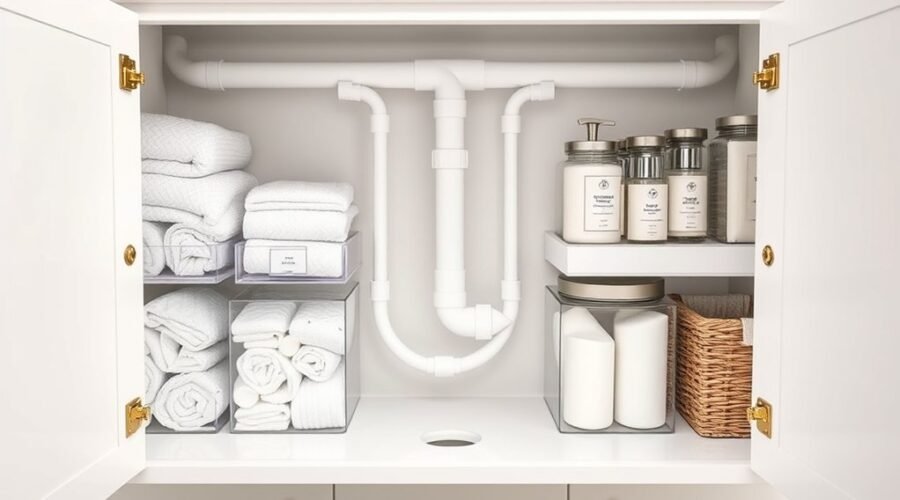
Organizing under the bathroom sink can be frustrating when plumbing takes up most of the space. Still, a workable system is possible with the right approach. The area should be measured first, then cleared and sorted before any organizer is chosen. Once the pipes are accounted for, storage can be arranged to fit around them instead of against them. A few smart adjustments can make the cabinet far more useful.
Measure Your Under-Sink Space First

Before choosing any organizers, the space under the sink should be measured carefully in width, depth, and height, with special attention to pipes, fixtures, and any other obstacles. A tape measure can record the usable width and the available depth so containers will fit without crowding plumbing or blocking access.
The opening height should also be checked, since some pull-out organizers need about 12 inches of clearance to work properly. When pipes run through the cabinet, a few extra inches around them can prevent future frustration and preserve freedom of movement.
These measurements should be written down and kept nearby while comparing products. Exact dimensions make it easier to select storage that fits the sink area instead of forcing a bad arrangement. Clear measurements support practical choices, reduce wasted space, and help the cabinet serve its purpose with less effort and more order.
Recommended Products

<b>IMPORTANT: MEASURE CABINET BEFORE PURCHASE | ADJUSTABLE FOR PIPE OBSTACLES<b>: Please watch our installation video for reference. This under‑sink shelf features telescopic rods for length adjustment, multi‑position mounting holes for height adjustment, and a removable side panel to bypass drain pipes. If you are unsure whether your cabinet fits, we DO NOT recommend purchasing. Measure cabinet inner width, height & depth; account for drainpipes, cabinet dividers and plumbing parts before ordering to avoid return due to poor fit.

2-Tier Smooth Pull-Out for Instant Access: Upgraded slide-out kitchen cabinet organizer adopts premium guide rails for ultra-smooth, quiet sliding. Both upper and lower layers are pull-out style, fitted with limit stops to avoid tipping. A simple pull brings every bottle, sponge, detergent - no more reaching blindly into the back of cabinet corners or under sink organizer kitchen
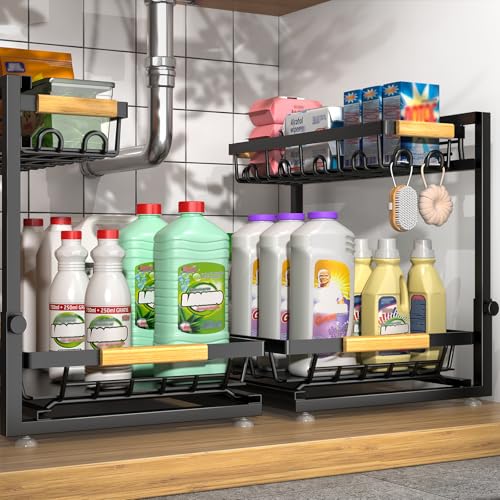
【Get 150% Storage Space】Sevenblue 2-tier under sink organizer is the perfect solution for maximizing storage in small spaces. Its versatile design makes it ideal for use in kitchens, bathrooms, living rooms, cabinets, and more, helping you keep everything tidy and organized.
Clear Out Everything and Sort It
Everything under the bathroom sink should be removed at once so the full cabinet can be seen and assessed. This clean sweep creates room to make better choices and reclaim the under-sink cabinet from clutter.
With every item visible, it becomes easier to sort, compare, and decide what truly belongs.
- Group skincare together.
- Separate hair products, dental items, and first-aid supplies.
- Discard expired, empty, or unused products.
- Set aside unopened items for donation.
Sorting this way exposes duplicates and reveals what is actually needed. It also helps replace uncertainty with order, because seeing the whole collection at once makes gaps and excess obvious.
The result is a leaner, more purposeful cabinet with less waste and more freedom. Once the categories are clear, the remaining items can be organized with intention, not guesswork, preparing the space for a smarter setup around plumbing.
Choose Under-Sink Organizers That Fit Pipes
With the cabinet sorted, the next step is choosing organizers that work around the plumbing. Effective under-sink organizers begin with measurements: note pipe height, width, and placement before buying anything. That simple step prevents wasted space and keeps access clear.
Adjustable-height units and customizable components are especially useful because they adapt to uneven plumbing layouts, giving the cabinet more usable room without forcing awkward compromises.
Pull-out drawers or slide-out shelves, such as the FANHAO Pull Out Cabinet Organizer, help items remain reachable while working around pipes. Stackable containers also make sense, since they let shorter supplies sit neatly in open areas without blocking fixtures.
Clear bins or labeled containers improve visibility, so each item can be found quickly without shifting everything around. The goal is practical freedom: organized storage that fits the cabinet’s constraints and supports easy, independent use every day.
Recommended Products

𝐌𝐚𝐱𝐢𝐦𝐢𝐳𝐞 𝐔𝐧𝐝𝐞𝐫 𝐒𝐢𝐧𝐤 𝐒𝐩𝐚𝐜𝐞 - Designed with a custom-fit silicone mat and L-shaped structure, this under sink organizer fits perfectly around plumbing while protecting cabinets from water, spills, and leaks. Measuring approximately 11.8"W x 15.9"D x 13.8-16.9"H, it’s ideal for most kitchen and bathroom cabinets.

【2 Pack Value Set】Sized at 15” x 8” x 12.8” each, these organizers fit perfectly for bathroom organizers and storage, kitchen organizers and storage, under sink organizer and under cabinet storage.

【Sliding Drawer Design】The bottom drawer features a pull-out design, providing a convenient way to access items in a limited space.
Use Vertical Space Around the Plumbing
Once the cabinet layout is set around the pipes, vertical space can do much of the remaining work. In a bathroom cabinet, height often goes unused, yet it can create order without crowding the plumbing. Stacking, layering, and hanging help reclaim control from clutter and keep the area open and usable.
- Use stackable storage bins to build upward, not outward, so the cabinet floor stays clear.
- Add tiered organizers or a lazy Susan to lift items into view around awkward pipe runs.
- Mount adhesive hooks under shelves or on cabinet doors for lightweight tools, creating more free surface area.
- Choose modular drawer systems and clear containers to fit the space, stay visible, and reduce digging.
This approach supports a cleaner, more independent routine. Vertical organization makes the under-sink zone easier to manage while respecting the plumbing and the limits of the cabinet.
Recommended Products

Dustproof Storage Bins---The storage drawers help you to organize everywhere in your home. It is ideal for storing refrigerator food, snacks, medicines and office items. The storage bins has built-in removable dividers to achieve "one box for one thing" or "one box for one category".

ESSENTIALS STORAGE PREFERRED: The multi-purpose organizer storage is a good helper to keep your vanity or bathroom countertop tidy. It can also be used as under sink organizer, kitchen organization, pantry organizer, refrigerator storage, cabinet storage. Suitable for storing cosmetics, toiletries, perfumes, cleaning supplies, snacks, bottles, spice jars
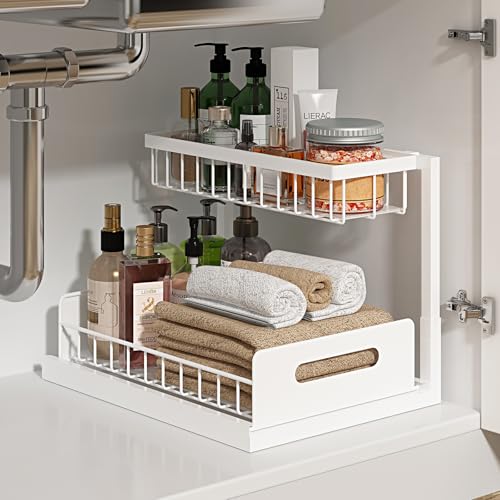
L Shaped Design: L-shaped design with narrow top and wide bottom, leaves space for plumbing and garbage disposal, maximizing the vertical space of the sink. And the bottom tier leaves a suitable space for your tall bottles, which can solve your cabinet storage troubles
Keep Daily Bathroom Items Within Reach
Frequently used items should be stored at the front of the under-sink space so they can be reached quickly without moving everything else.
Easy-access bins, especially deep pull-out styles, help keep daily essentials organized and simple to grab.
Grouping similar products together can further reduce clutter and make the morning routine more efficient.
Store Frequently Used Items
Keep daily bathroom essentials in the most accessible spot under the sink so the morning routine stays efficient.
At the bathroom sink, frequently used items should be placed where hands can reach them without searching or bending around pipes. Clear pull-out drawers help reveal what is available and make the most of limited space. Grouping similar items also reduces friction and supports a calmer routine.
- Toothpaste and toothbrushes
- Daily skincare products
- Hairdryer or curling iron
- Backup essentials for quick rotation
Adhesive hooks on cabinet doors can keep hot tools off the counter and within reach.
Regularly review what stays below the sink, keeping only essentials and removing clutter that slows movement or limits freedom.
Use Easy-Access Bins
Shallow, clear bins help keep daily bathroom items visible and easy to reach under the sink. In smart sink organization, they let users see what is stored without shifting everything around plumbing.
Bins with handles make sliding in and out simple, even in tight spaces. Choosing sizes that fit around pipes prevents wasted vertical space and keeps essentials accessible.
Modular stacking options add freedom, allowing the setup to change as storage needs shift. Clear labels support a tidy system and reduce search time for soap, toothpaste, and other daily items.
This approach keeps the cabinet orderly, practical, and easy to maintain. It gives each item a defined place while preserving quick access for routine use.
Store Backstock Without Creating Clutter
A small backstock section under the sink works best when it holds only the essentials used on a regular basis, not duplicate bottles or rarely needed products.
Keeping this area narrow preserves freedom from clutter and makes it easier to find what is needed without digging past extras. Clear containers or stacking bins can lift backstock upward, using vertical space while keeping each item visible.
One marked section should be reserved for backstock so it stays separate from daily-use supplies and does not become a crowded catchall.
- Keep only regular-use replacements.
- Use clear, stackable storage.
- Follow one in, one out.
- Review and remove expired items.
This simple discipline prevents waste and keeps the cabinet workable. Regular checks help donate or discard what is no longer useful, so the space stays lean, open, and ready for what actually serves the household.
Create a Simple Under-Sink System
With backstock kept to a minimum, the next step is to give the cabinet a simple structure.
First, measure the space under the sink so the plumbing is respected and vertical room is used well. Choose a few clear pull-out drawers or shallow bins that fit around pipes, then assign each one a purpose.
Keep skincare together, dental supplies together, and other daily items in their own containers so nothing has to be hunted for.
On the cabinet door, adhesive bins or hooks can hold small tools, spare sponges, or travel items, freeing the main area for larger products. Transparent storage helps show what is available at a glance and reduces waste.
The system should stay light, easy to reach, and easy to change. A regular reset removes expired or unused products and keeps the cabinet working for practical, self-directed routines.
Frequently Asked Questions
How Should I Organize Under My Bathroom Sink?
It should use Storage Solutions that fit the space, with stackable bins, pull-out drawers, and clear labels. Similar items belong together, while vertical space and accessible containers keep essentials visible, tidy, and easy to reach.
How to Hide Under Sink Plumbing?
Plumbing Concealment can be achieved with a matching cabinet panel, decorative curtain, or painted pipes. He or she may also add baskets or hooks nearby, keeping the space tidy, accessible, and visually unburdened.
What Are Some Common Mistakes to Avoid When Organizing Under Sink Storage?
Common mistakes include ignoring pipe placement, overstocking duplicates, using opaque containers, skipping labels, and failing to sort items. Better Storage Solutions keep essentials visible, accessible, and minimized, supporting easier maintenance and more liberating daily routines.
What Is the Best Under Sink Organizer?
The best under sink organizer is a slide-out cabinet unit with stackable clear bins. It offers flexible Storage Solutions, improves visibility, and maximizes space while keeping items accessible and neatly arranged around plumbing obstacles.
Conclusion
In the end, organizing under the bathroom sink around plumbing works best when the space is measured, sorted, and fitted with storage that avoids pipes. Adjustable bins, pull-out organizers, and vertical stacking keep items easy to reach without wasting room. Daily essentials stay up front, while backstock remains neatly stored. With a simple system in place, the cabinet becomes efficient, tidy, and ready for everyday use. Even in this digital age, order still matters.