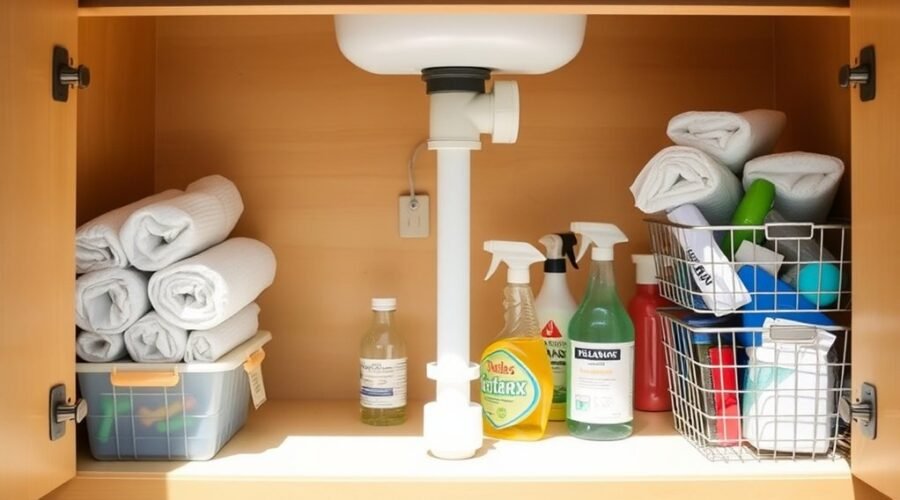
Under-sink storage often turns into a cluttered catchall, but it does not have to stay that way. A few low-cost fixes can make the space easier to use without a full remodel. With the right bins, simple dividers, and a better plan for what stays there, even a cramped cabinet can work harder. The real question is which changes make the biggest difference for the least money.
Clear Out the Under-Sink Cabinet First
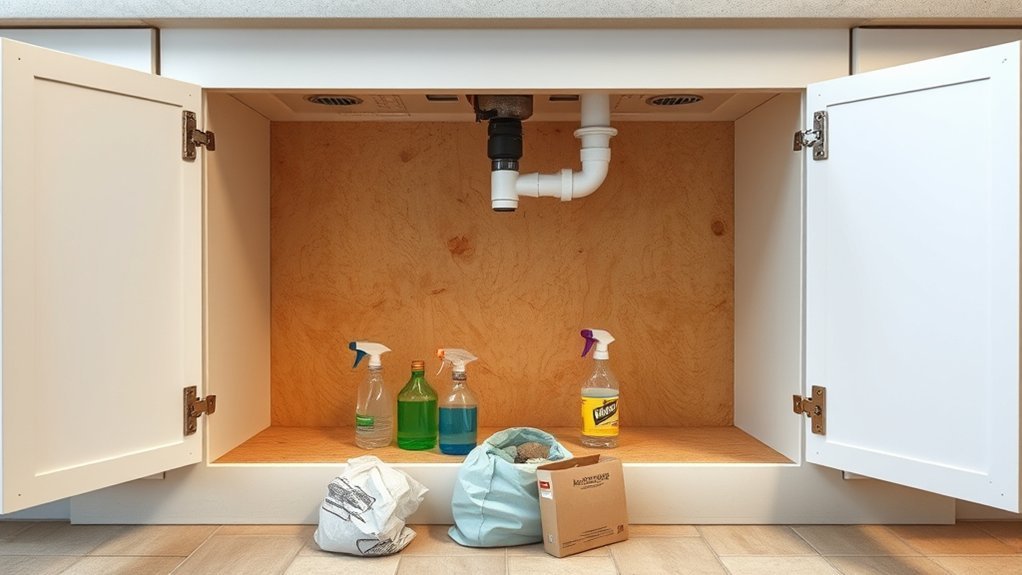
Start by emptying the under-sink cabinet completely so every item can be assessed and any expired or unused products can be removed. This clear out creates room to see the space honestly and prevents clutter from hiding problems.
Once the cabinet is bare, wipe down the interior with a suitable cleaner to remove spills, stains, and residue, giving the area a clean reset.
Wipe the interior with a suitable cleaner to remove spills, stains, and residue, giving the cabinet a clean reset.
Next, sort what remains into simple groups such as cleaning supplies, tools, and miscellaneous items. That structure makes it easier to organize without wasting money on unnecessary storage.
Measuring the cabinet before buying bins or shelves helps guarantee each solution fits and avoids overcrowding.
Any empty containers, damaged packaging, or unusable products should be recycled or discarded responsibly.
This first step supports a more efficient, liberated routine by turning a cramped cabinet into a practical space ready for better use.
What Belongs Under the Kitchen Sink?
Under the kitchen sink, the best items are the ones used often and stored safely, such as glass cleaner, multi-surface cleaner, dish soap, sponges, disinfecting wipes, and furniture polish. This kitchen sink storage zone works best when it holds only practical cleaning products that support daily upkeep and fast resets.
- Keep high-use cleaners visible.
- Place sponges and wipes within reach.
- Use small containers for loose supplies.
- Reserve space for items that need no special care.
Bathroom cleaners, floor cleaners, and laundry care products belong elsewhere to prevent cross-contamination. The goal is simple freedom from clutter, not a crowded cabinet.
When supplies stay sorted and easy to grab, cleaning becomes quicker and less draining. Budget-friendly helpers like small containers can keep everything orderly without turning the space into a project.
The result is a cabinet that supports clear routines, steady access, and a calmer kitchen.
Cheap Under-Sink Organizers That Work
Dollar store finds can make under-sink storage far more efficient without raising costs.
Stackable bins, plastic caddies, tension rods, and command hooks help use vertical space and keep supplies easy to reach.
Wire baskets also offer a simple way to sort smaller items and reduce clutter.
Dollar Store Finds
A few low-cost finds from the dollar store can make under-sink storage far more functional. These simple organization ideas help reclaim space, keep cleaning supplies visible, and reduce the drag of clutter.
A practical setup can include:
- Small plastic caddies for grouping bottles and sprays.
- Stackable bins to use vertical space without crowding.
- Wire baskets for sponges and magic erasers.
- Shelf organizers and Command hooks for extra layers and hanging gloves or brushes.
Together, these dollar store items create order without strain. Everything has a place, and the cabinet becomes easier to use, easier to clean, and easier to maintain.
That small shift supports a more independent home routine, with less waste and less frustration.
Clever Budget Solutions
Low-cost organizer ideas can make the space under the sink work harder without adding clutter or expense. Practical sink organizing ideas start with stacking bins from dollar stores to lift supplies upward and group similar items.
Tension rods can hold spray bottles, keeping labels visible and freeing the base cabinet. Small baskets and repurposed containers give loose items a home, creating a system that fits changing needs.
A plastic shower caddy works well for daily cleaners because it is portable and keeps essentials easy to reach. Command hooks on cabinet doors can hang dish gloves and scrub brushes, opening more storage without extra furniture.
These cheap under-sink organizers help remove chaos, protect freedom of movement, and make every item easier to find and use.
Stack Bins Around the Plumbing
Stackable bins can turn the awkward space around plumbing into useful vertical storage, especially when they are arranged to fit snugly beneath the sink. For a budget-friendly system, stackable bins support organization without wasted inches, giving cleaning supplies a clear home and reducing clutter.
- Choose modular bins that can shift around pipes, such as HÅLLBAR-style containers.
- Use clear or semi-transparent bins so contents stay visible at a glance.
- Label each bin to speed up access and keep categories distinct.
- Limit each container to essentials, preventing overcrowding and preserving order.
This approach makes the cabinet feel lighter, faster to use, and easier to maintain.
This approach keeps the cabinet lighter, easier to navigate, and simple to maintain.
When every bin has a purpose, the space works more efficiently and the household gains a small but meaningful sense of freedom.
Add a Tension Rod for Spray Bottles
A tension rod can be placed horizontally under the sink to hang spray bottles and free up shelf space.
This simple, tool-free setup makes use of vertical space while keeping cleaning products visible and easy to reach.
It is an affordable solution that can adjust to different cabinet sizes and bottle types.
Spray Bottle Storage
Installing a tension rod under the sink creates an easy spot to hang spray bottles, keeping them visible, accessible, and off the cabinet floor. This spray bottle storage method strengthens kitchen sink organization without adding cost or complexity.
A budget-friendly rod, often under $10, gives households a fast win.
- Measure the cabinet width before buying.
- Set the rod at a height that lets bottles hang freely.
- Clip or hook bottles by their triggers.
- Check for leaks and wipe drips quickly.
Vertical Space Saver
Another simple way to improve under-sink storage is to use the cabinet’s vertical space. A tension rod can be installed under the sink to hang spray bottles upright, freeing the floor for other cleaning supplies.
This small change makes bottles easier to see and reach, reducing the frustration of digging through clutter. It also works with different bottle sizes, so the setup stays flexible as needs change.
Because a tension rod is affordable and requires no tools or permanent fixtures, it offers a fast, budget-friendly fix. The result is a more open cabinet, better organization, and a cleaner routine.
With this approach, the under-sink area becomes more functional without buying expensive storage units.
Use a Lazy Susan for Small Cleaners
Few storage fixes are as efficient as a Lazy Susan for small cleaners under the sink. This rotating tray helps people organize cleaning supplies without constant shuffling or digging. Glass cleaner, multi-surface cleaners, and dish soap stay upright, visible, and ready.
In tight cabinets, the spin action restores easy access and reduces clutter.
- Choose a size that fits snugly in the cabinet.
- Place bottles upright to keep labels visible.
- Use it for everyday cleaning supplies only.
- Keep it simple for a budget-friendly setup.
A Lazy Susan uses vertical space well while leaving the floor open for other items. It can be installed with little effort and often costs under $10, making it a smart, economical fix.
For anyone seeking more control under the sink, this small upgrade creates freedom from disarray and makes daily cleaning feel lighter.
Maximize Cabinet Door Storage
The inside of the cabinet door can become valuable storage space with a few simple additions. Command hooks on cabinet doors keep cleaning gloves and scrub brushes hung up, visible, and off the floor.
Small wire baskets or over-the-door organizers can hold dish tabs, sponges, and other cleaning supplies, using vertical space that would otherwise go unused.
Small wire baskets or over-the-door organizers can keep dish tabs and sponges handy, using otherwise wasted vertical space.
Curtain rings offer another low-cost fix, letting dish towels or cloths hang neatly without taking shelf space.
Small containers or caddies can be repurposed to separate items such as trash bags or extra sponges, helping each item stay easy to see and simple to reach.
Labels make every spot clear, so the household can organize faster and avoid hunting through clutter.
This approach frees the main cabinet for bulkier items and keeps cabinet doors working as practical storage, not dead space.
Keep Cleaning Supplies in Caddies
Cleaning supplies stay more manageable when grouped in affordable caddies with compartments, especially sturdy options from dollar stores.
Sorting each caddy by task, such as glass cleaning or bathroom care, keeps items organized and ready to use.
Labeled caddies also create easy-grab storage under the sink while reducing clutter.
Best Caddy Types
Portable shower caddies and plastic caddies with handles make it easy to keep cleaning supplies grouped, mobile, and ready for quick use.
A well-chosen caddy can organize the under-sink area without costly systems, giving more breathing room and less daily friction. Wire baskets and stackable storage bins add flexible storage bins support while keeping essentials visible and easy to reach.
- Portable shower caddy: light, compact, ideal for quick room-to-room use.
- Plastic caddy with handle: affordable, sturdy, simple to carry.
- Wire basket: airy, good for damp cloths, sponges, and soap.
- Stackable storage bins: efficient vertical storage, useful for tight cabinets.
DIY caddies also work when household containers are repurposed.
The result is practical freedom: fewer cluttered corners, faster cleanup, and a cabinet that serves the household instead of controlling it.
Sort By Task
Grouping supplies by task makes each caddy more useful than a loose collection of bottles and tools. Under the sink, portable plastic caddies help organize cleaning supplies into clear jobs, so the right items move together without wasted effort.
A shower caddy can hold dish soap, sponges, and scrubbers for quick dishwashing access, while another can carry bathroom or laundry products. Labels such as “Kitchen,” “Bathroom,” or “Laundry” keep the system legible and easy to maintain.
Stackable bins inside each caddy add vertical order and separate similar items neatly. Budget-conscious shoppers can use dollar store finds to build sturdy caddies without overspending.
This simple setup reduces clutter, saves time, and gives the sink cabinet a more independent, manageable rhythm.
Easy Grab Storage
A few small caddies can turn the space under the sink into easy-grab storage for the supplies used most often. Portable shower caddies work well, and small plastic bins or baskets from dollar stores keep cleaning supplies grouped by task. This setup reduces searching and helps preserve momentum during chores.
- Use one caddy for daily spray bottles.
- Assign a bin for sponges and scrubbers.
- Label each container for fast identification.
- Choose a multi-compartment caddy for disinfectants and surface cleaners.
Keeping each item contained creates a clear system that feels lighter and more freeing. With everything visible and within reach, the under-sink area stays neat, clutter drops, and cleaning becomes simpler to start and easier to finish.
Repurpose What You Already Have
Start by looking around the house for containers that can be given a second job under the sink. Unused baskets, bins, and boxes can repurpose space fast and help organize cleaning supplies without buying new organizers.
Old jars work well for sponges, scrub brushes, and other small items, keeping them visible, contained, and easy to grab. An empty shoe box can hold cleaning cloths and similar items, especially when fitted into a tight corner.
Old plastic caddies or trays from other rooms can become a portable cleaning station, making supplies easier to move when needed. A decorative box or crate can also serve as a recycling bin, reducing clutter and supporting a cleaner routine.
These simple swaps free up space, cut waste, and make the area under the sink more functional with what is already available.
Finish the Space With Easy Touches
A fresh coat of white semi-gloss paint can instantly brighten the cabinet interior, making the space feel cleaner and easier to use.
For a low-cost finish, a few practical upgrades can help organize the area and support easier cleaning without extra clutter. Dollar Tree supplies can stretch the budget while still improving function and appearance.
- Line worn shelves with Dollar Tree floral contact paper for a tidy, cheerful surface.
- Use small plastic caddies and wire baskets to organize cleaning products and lift items into vertical space.
- Add Command hooks inside the doors for sponges and dish gloves, keeping daily tools within reach.
- Repurpose existing baskets or containers for recycling, reducing waste and simplifying the setup.
These easy touches create a cabinet that works harder and feels less cramped.
The result is a cleaner, more flexible under-sink space that supports a calm routine and frees up room for what matters.
Frequently Asked Questions
How Can I Organize Everything Under My Sink?
She can organize everything by using DIY storage solutions, stacking bins, and space saving tricks to separate essential cleaning supplies. A tension rod, adhesive hooks, and repurposed caddies keep items visible, accessible, and clutter-free.
What Is the Best Way to Organize Items Under the Sink?
The best way is to pair order with freedom: shelf risers, storage bins, and clear labels create visible zones. Group cleaning supplies by use, keep daily items front-facing, and store backups higher for easy liberation.
What Are Some Common Mistakes to Avoid When Organizing Under Sink Storage?
Common mistakes include misusing containers, neglecting accessibility, and overcomplicating layout. Better results come from clear bins, vertical storage, labeled zones, and keeping essentials front-facing, so the space stays simple, usable, and free.
How to Organize Cheaply?
Cheap organization relies on DIY Storage Solutions, Budget Friendly Bins, and Upcycled Organizers. They use dollar-store caddies, repurposed baskets, and door hooks, keeping only essentials visible. This frees space, reduces clutter, and cuts costs fast.
Conclusion
With the clutter cleared and every cleaner, sponge, and tool finally in its place, the under-sink cabinet stops feeling like a problem and starts working like one. The best part is that the fix does not need to be expensive or complicated. A few bins, a caddy, and a clever use of vertical space can change everything. And once the door closes, the real surprise is how much easier the whole kitchen suddenly feels.