Affiliate disclosure: As an Amazon Associate I earn from qualifying purchases. This article contains affiliate links to Amazon, so we may earn a commission if you buy through them, at no extra cost to you.
Finding practical under-sink storage ideas doesn’t mean spending money on expensive organizers. Simple bins, tension rods, caddies, and cabinet-door hooks can turn a crowded kitchen cabinet into useful storage. The trick is choosing affordable solutions that fit around the plumbing and keep everyday supplies easy to reach.
Quick Answer
The cheapest way to organize under your kitchen sink is to remove clutter, group supplies in small bins, and use vertical space. Start with dollar-store caddies, stackable containers, and adhesive hooks. Add a tension rod for spray bottles or a Lazy Susan for smaller cleaners. Measure around plumbing before buying anything.
At a Glance
| Difficulty | Easy, with no drilling required for basic organizers |
| Tools Needed | Measuring tape, cleaning cloth, bins or caddies, and optional tension rod or adhesive hooks |
Clear Out the Under-Sink Cabinet First
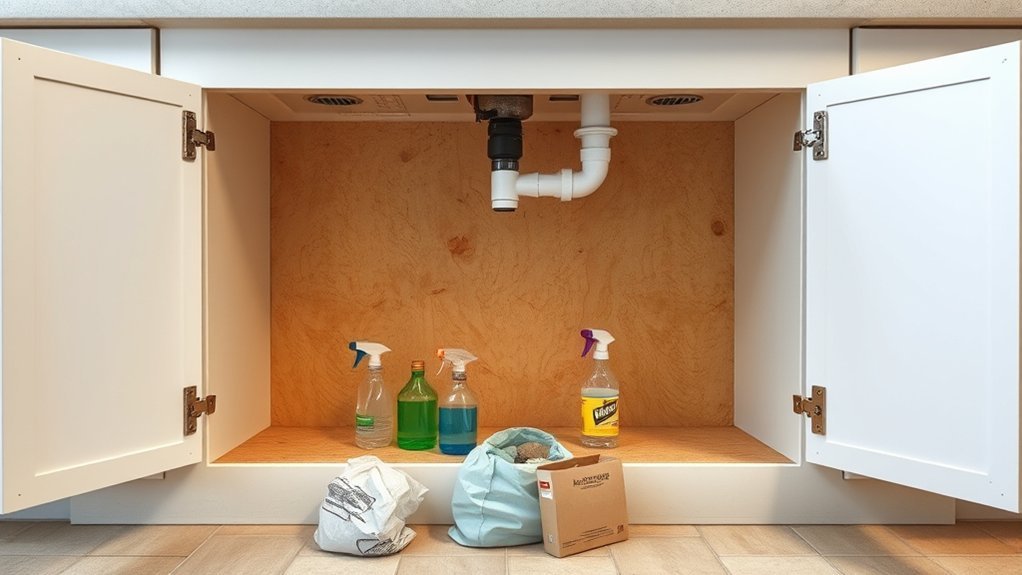
The first step in organizing under your kitchen sink is to empty the cabinet completely. This helps you see how much space you have, identify unnecessary items, and spot hidden leaks before installing organizers.
- Remove everything. Take out cleaning bottles, sponges, tools, trash bags, and loose supplies.
- Sort your items. Separate frequently used products, occasional supplies, and things that belong elsewhere.
- Check the cabinet. Look for damp spots, water stains, damaged surfaces, and leaks around the pipes.
- Clean and dry. Wipe the interior with a suitable cleaner and let the surfaces dry completely.
- Measure the available space. Record the interior width, depth, and height, including the space around pipes.
- Return only essentials. Remove empty containers, unusable products, damaged packaging, and unnecessary duplicates.
Pay particular attention to the drain pipe, water supply lines, and shutoff valves. Your organizers should not block access to these fittings.
The EPA explains that leaking pipes beneath kitchen sinks can cause mold growth inside cabinets and nearby walls.
Warning: If you find an active plumbing leak, repair it before installing shelves or liners. Dry the cabinet completely. Adding organizers over damp or damaged surfaces can hide the problem and make future repairs harder.
When discarding old supplies, follow the label instructions. Some cleaning chemicals need special disposal rather than ordinary trash collection.
The EPA’s household hazardous waste guidance explains why certain cleaners, pesticides, and other hazardous products should not be poured down drains or mixed together for disposal.
Once the cabinet is empty, clean, and dry, you can decide which storage solutions fit without wasting money.
What Belongs Under the Kitchen Sink?
The space beneath your kitchen sink works best for everyday kitchen cleaning supplies. Store only what you use regularly, and keep products in their original, labeled containers.
Useful items include:
- Dish soap: Keep a spare bottle upright in a small bin.
- Multi-surface cleaner: Store it where you can reach it without moving other items.
- Glass cleaner: Group it with other suitable kitchen cleaning products.
- Sponges and scrub brushes: Keep clean, dry replacements in a small basket.
- Disinfecting wipes: Store sealed packages according to their labels.
- Trash bags: Place rolls in a dedicated container or door organizer.
- Cleaning gloves: Hang clean, dry gloves on a suitable hook.
Specialized bathroom cleaners, floor-cleaning products, and laundry supplies are usually better stored near the rooms where you use them. Furniture polish may also be stored elsewhere, particularly if the label identifies special storage precautions.
Avoid putting food, dishes, or moisture-sensitive items beneath the sink. Plumbing leaks can damage stored goods before you notice the problem.
Warning: If children can access the cabinet, store hazardous cleaning products in a locked cabinet out of their sight and reach. A basket or organizer is not a substitute for a safety lock. Never transfer cleaning chemicals into food containers or unlabeled bottles.
The American Academy of Pediatrics recommends locked storage and original packaging for household cleaners, laundry products, and other potentially poisonous substances.
Also, keep incompatible products separate and follow every storage instruction on the label. The EPA warns against mixing cleaning products because dangerous vapors can form.
The goal is a cabinet that holds useful supplies without creating clutter or safety risks.
Cheap Under-Sink Storage Ideas That Work
You don’t need a custom storage system to organize a kitchen sink cabinet. Dollar-store bins, portable caddies, tension rods, wire baskets, and adhesive hooks can solve most everyday storage problems.
Choose each organizer based on the available space and what you need to store.
| Organizer | Best Use | What to Check |
|---|---|---|
| Stackable bins | Using available height beside plumbing | Stability and access to lower bins |
| Tension rod | Hanging compatible spray bottles | Rod strength and secure placement |
| Lazy Susan | Reaching small bottles in deep cabinets | Clearance for a full rotation |
| Adhesive hooks | Hanging lightweight brushes and gloves | Surface suitability and weight rating |
| Portable caddies | Grouping frequently used cleaners | Handle strength and bottle height |
Dollar Store Finds
Dollar stores are useful places to find basic kitchen cabinet organizers without paying for a complete system. Small plastic containers often work just as well as more expensive products when they fit your cabinet.
Look for:
- Small plastic caddies for grouping cleaning bottles.
- Stackable bins for extra storage beside pipes.
- Wire baskets for dry sponges and cleaning accessories.
- Simple shelf organizers for creating another storage level.
- Adhesive hooks for lightweight gloves and scrub brushes.
Choose washable materials that tolerate occasional splashes. Plastic bins are especially practical because you can remove and clean them easily.
Clever Budget Solutions
Before purchasing organizers, consider which storage problems you actually have. A cabinet with tall bottles needs a different arrangement from one filled with small brushes and supplies.
Try a plastic shower caddy for frequently used cleaners. It keeps several items together and lets you carry them to another cleaning area.
If the cabinet has unused space above its contents, stackable bins or a shelf riser may work better. If the main problem is reaching items at the back, use a portable basket or rotating tray instead.
The IKEA under-sink organization guide also recommends modular containers, turntables, protective mats, and door storage for cabinets with awkward plumbing.
The most affordable solution is the one that solves your storage problem without adding unnecessary containers.
Stack Bins Around the Plumbing
Stackable bins help you use the empty space beside and above sink plumbing. The key is choosing containers that fit without pressing against pipes or blocking shutoff valves.
Modular containers, including HÅLLBAR-style bins, work well because you can arrange different sizes around awkward spaces.
- Measure around the pipes. Check the clear space on each side and below the sink basin.
- Choose suitable bins. Look for sturdy containers that stack securely.
- Arrange them beside plumbing. Keep pipes, joints, and water valves accessible.
- Separate supplies. Use one container for kitchen cleaners and another for suitable accessories.
- Label each bin. Choose labels such as “Daily Cleaning,” “Sponges,” or “Trash Bags.”
- Test accessibility. Make sure you can remove the containers without disturbing the plumbing.
Clear or semi-transparent bins make it easier to identify supplies. However, avoid stacking so many containers that you must remove an entire tower to reach one item.
Pro Tip: Use separate small bins on either side of the plumbing instead of one oversized container. This creates removable storage zones and makes it easier to inspect pipes or reach a shutoff valve.
Keep everyday supplies in the most accessible bins. Reserve harder-to-reach spaces for items you use less often.
Recommended Products

Stackable & Space-Saving Design: Reclaim your countertop and enjoy a clutter-free space. The secure, interlocking design lets you stack these acrylic storage drawers safely, keeping makeup, skincare, office supplies, or bathroom small essentials neatly organized while creating a calm, stress-free environment.
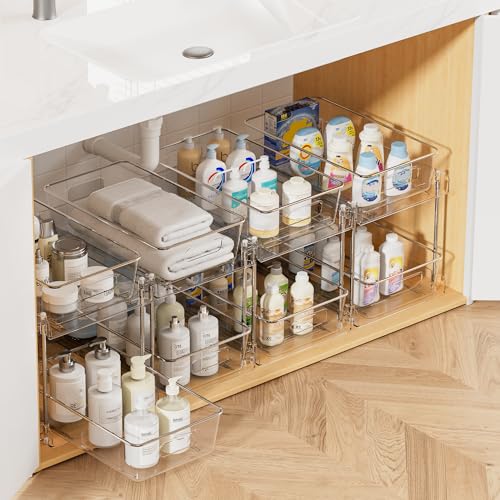
ESSENTIALS STORAGE PREFERRED: The multi-purpose organizer storage is a good helper to keep your vanity or bathroom countertop tidy. It can also be used as under sink organizer, kitchen organization, pantry organizer, refrigerator storage, cabinet storage. Perfect for storing cosmetics, toiletries, perfumes, cleaning supplies, snacks, bottles, spice jars.
Add a Tension Rod for Spray Bottles
A tension rod can create hanging storage for compatible spray bottles without drilling into your cabinet. It uses the open space above the cabinet floor and keeps bottle labels visible.
This method is inexpensive, adjustable, and useful when the cabinet has sturdy sidewalls and enough clearance around the plumbing.
Recommended Products

【Size Introduction】Equipped with 2 tension rods,The actual length of the product is 17-28 inches (43-71cm).(Recommended best use range 17 to 26 inches (43-66cm))

【Easy to install】Stretch and twist. No tools required. Drill free. No need to punch holes in the wall. Installation is easy.

【Package】:This small curtain rod includes 1pcs spring rod and 1pcs end rod, with a range of 16-38 inches. It's extendable and recommended for use within 16-38 inches for the best fit.Please measure your installation space before purchasing to ensure a proper fit.
Spray Bottle Storage
A basic tension rod often costs under $10, making it a budget-friendly option for organizing spray bottles. Choose a rod intended to support the weight you plan to hang.
- Measure the distance between the cabinet’s interior sidewalls.
- Choose an adjustable rod that fits the measured width.
- Position the rod above the floor, away from pipes and fittings.
- Secure it according to its installation instructions.
- Hang suitable lightweight spray bottles by their trigger handles.
- Check that the rod stays secure and each bottle hangs freely.
Do not overload the rod or place it where bottles could strike plumbing. Heavier cleaners may be safer in bins on the cabinet floor.
Vertical Space Saver
Hanging spray bottles can free the cabinet floor for smaller storage containers. This works especially well when you have several regularly used sprays but limited shelf space.
Place a shallow bin underneath the rod for cleaning cloths, spare sponges, or other suitable supplies. Keep enough clearance to remove both the bottles and the lower container easily.
Because tension rods require no permanent cabinet modifications, they are also convenient for renters.
If the rod slips or the cabinet walls do not support it securely, choose a standing caddy instead.
Use a Lazy Susan for Small Cleaners
A Lazy Susan is a rotating tray that makes small cleaning bottles easier to reach. Instead of moving several products to find one at the back, you turn the tray until the item you need faces you.
This works best in cabinets with enough open floor space for the tray to rotate without hitting pipes or other containers.
- Measure the available cabinet space.
- Choose a rotating tray that fits without touching the plumbing.
- Place everyday cleaners upright on the tray.
- Arrange taller bottles where they will not block rotation.
- Turn the tray to confirm that every product remains accessible.
A Lazy Susan often costs under $10 in budget stores, although prices vary by size and retailer.
It is particularly useful for glass cleaner, small multi-surface cleaner bottles, and dish soap.
Unlike a stackable organizer, a Lazy Susan does not create another storage level. Its advantage is making the cabinet’s existing depth easier to use.
Choose a tray with a raised edge when possible to help keep bottles from sliding during rotation.
Maximize Cabinet Door Storage
The inside of your cabinet door can hold lightweight cleaning accessories without taking up shelf space. Adhesive hooks, small wire baskets, and over-the-door organizers are simple ways to use this often-overlooked area.
Useful door-storage ideas include:
- Adhesive hooks: Hang dry dish gloves, scrub brushes, or small cleaning tools.
- Small wire baskets: Keep spare sponges, cleaning accessories, or securely packaged dishwashing tablets organized.
- Over-the-door organizers: Store lightweight supplies in shallow compartments.
- Curtain rings: Hang suitable cleaning cloths or towels where they can dry.
- Small containers: Group trash bags and other loose supplies.
Before installing anything, close the cabinet door to check that the organizer does not hit the sink basin, plumbing, or stored bottles.
For Command hooks, use a clean, dry, compatible surface and follow the product’s weight limit. The manufacturer’s adhesive hook installation instructions also explain why moisture, dirty surfaces, and excessive weight can weaken adhesion.
Labels help family members return items to the correct places.
Keep cabinet-door organizers light enough that the door opens and closes smoothly. If you use a child safety lock, make sure the added organizers do not interfere with it.
Keep Cleaning Supplies in Caddies
Portable cleaning caddies make under-sink storage easier because you can move several items at once. Instead of searching through loose bottles, you lift out one container with the supplies needed for a particular task.
Plastic caddies with handles are especially useful because they are affordable and easy to wipe clean.
Best Caddy Types
The best caddy depends on the size of your cabinet and the supplies you use. Look for a sturdy handle, enough room for bottles, and a shape that fits around plumbing.
- Portable shower caddy: A lightweight option for carrying cleaning supplies between rooms.
- Plastic caddy with handle: Useful for everyday kitchen cleaners and small accessories.
- Wire basket: Provides visibility and airflow for suitable dry cleaning tools.
- Stackable storage bin: Makes use of cabinet height when there is enough clearance.
- Repurposed plastic tray: Keeps bottles grouped without requiring another purchase.
A caddy with separate compartments can keep bottles upright and prevent smaller tools from getting lost.
Sort By Task
Organizing caddies by task makes cleaning supplies easier to find. Each group should contain items that belong together and are safe to store in the chosen location.
For example, create a Kitchen Cleaning caddy containing dish soap, a suitable surface cleaner, and scrub brushes.
You can also create separate caddies for bathroom and laundry cleaning. Store those in appropriate locations rather than crowding them all beneath the kitchen sink.
Use clear labels such as “Kitchen,” “Bathroom,” and “Laundry” so everyone knows where each set belongs.
Avoid placing incompatible or leaking chemicals together in the same container.
Easy Grab Storage
Easy-grab storage works best when the supplies you use most often are nearest the cabinet opening. A small caddy lets you pull everything forward without reaching behind several bottles.
For a simple arrangement:
- Keep daily spray cleaners in a portable caddy.
- Place clean spare sponges and scrubbers in a small basket.
- Use a labeled compartment for suitable disinfecting products.
- Keep occasional cleaning supplies farther back, where they remain accessible.
Leave enough space around each caddy to lift it without knocking over other containers.
When every item has a clear location, you spend less time searching and more time finishing the task.
Repurpose What You Already Have
You may already own containers that work perfectly for under-sink organization. Repurposing baskets, bins, and trays can save money while reducing household waste.
Start by checking other rooms for unused storage items.
- Old plastic baskets: Group cleaning bottles or spare supplies.
- Unused storage bins: Create separate sections around plumbing.
- Empty jars: Hold small, dry scrub brushes or other loose cleaning accessories.
- Shoe boxes: Store dry cleaning cloths if the cabinet is protected from moisture.
- Plastic shower caddies: Become portable cleaning stations.
- Decorative crates or boxes: Serve as recycling containers when their material suits the location.
Never reuse food jars or drinking bottles to store household chemicals. Repurposed containers should hold accessories or other suitable nonhazardous items.
Cardboard boxes are less suitable for damp cabinets because leaks or spills can damage them. Plastic containers are usually easier to clean.
Pro Tip: Before buying anything, arrange your existing containers inside the empty cabinet. Close the doors and test access to every item. This quick trial shows which organizers actually fit and what, if anything, you still need to purchase.
Repurposing works best when you choose containers for their function rather than trying to fit every unused box into one cabinet.
Finish the Space With Easy Touches
Small finishing touches can make an organized under-sink cabinet easier to clean and maintain. You don’t need expensive materials or decorative accessories to make the space look better.
If the cabinet is dry and in good condition, a fresh coat of white semi-gloss paint can brighten a worn interior. Use paint suitable for the cabinet material and follow its preparation, ventilation, and drying instructions.
Other budget-friendly finishing ideas include:
- Add contact paper. Dollar Tree floral contact paper can improve the appearance of worn shelves when the surface is clean, dry, and compatible with the product.
- Use protective lining. A suitable washable liner or protective mat makes small spills easier to manage.
- Arrange plastic caddies and wire baskets. Keep supplies grouped without blocking plumbing access.
- Hang small accessories. Use appropriately rated Command hooks for lightweight dish gloves or brushes.
- Repurpose extra containers. Use existing bins for suitable recycling or spare cleaning supplies.
- Label storage zones. Make it obvious where each item belongs.
Keep the finished layout simple. Avoid filling every available inch with containers, because crowded storage makes supplies harder to remove.
To maintain the system, return supplies to their assigned places after cleaning. When you restock, check for empty bottles, damaged packaging, and products you no longer need.
A well-organized cabinet should let you reach daily supplies quickly, remove containers easily, and inspect the plumbing without dismantling the entire setup.
Key Takeaways
- Measure the cabinet around its pipes, sink basin, and shutoff valves before purchasing organizers.
- Choose stackable bins for available height, turntables for deep cabinets, and portable caddies for grouped supplies.
- Use cabinet doors for lightweight tools, but check adhesive weight limits and door clearance.
- Keep hazardous cleaning products in their original containers and securely stored away from children.
- Repair plumbing leaks and dry the cabinet before adding shelves, liners, or other storage materials.
- Repurpose existing baskets and bins whenever possible to reduce organizing costs.
Frequently Asked Questions
How Can I Organize Everything Under My Sink?
Organize everything under your sink by removing clutter, grouping similar supplies, and using containers that fit around the plumbing. Place daily cleaning products near the front. Use stackable bins, tension rods, and adhesive hooks for extra storage. Keep hazardous products securely stored and leave access to shutoff valves.
What Is the Best Way to Organize Items Under the Sink?
The best approach is to create separate storage zones based on how often you use each item. Keep frequently used supplies in easy-to-reach caddies. Use clear bins and shelf risers where space allows. Choose organizers that leave the plumbing visible and do not block cabinet doors.
What Are Some Common Mistakes to Avoid When Organizing Under-Sink Storage?
Common mistakes include buying organizers before measuring, stacking unstable bins, blocking water valves, and storing too many unnecessary products. Avoid keeping moisture-sensitive items near plumbing. Never use unlabeled containers for chemicals. A simple arrangement with clear storage zones is usually easier to maintain than an overcrowded system.
How to Organize Cheaply?
Organize cheaply by reusing containers you already own before visiting a dollar store. Small plastic bins, shower caddies, adhesive hooks, and tension rods can improve storage without expensive shelving. Remove unused items first, measure the cabinet, and purchase only the organizers needed to solve your remaining storage problems.
Conclusion
Good under-sink storage doesn’t require an expensive makeover. A few affordable bins, a portable caddy, adhesive hooks, or a tension rod can make a cramped cabinet easier to use.
Start by removing clutter and measuring around the plumbing. Then choose only the organizers your space needs. Keep cleaning products safely stored, leave room for maintenance, and maintain the system with simple habits.
Sources
- US Environmental Protection Agency, Mold House Tour: Explains how leaking kitchen sink pipes can cause mold growth.
- US Environmental Protection Agency, Household Hazardous Waste: Supports safe storage and disposal of potentially hazardous cleaning products.
- American Academy of Pediatrics, Poison Prevention and Treatment Tips: Provides guidance on keeping household cleaners in original containers and locked away from children.
- IKEA, Organize Under the Kitchen Sink: Covers modular storage, turntables, door organizers, and fitting containers around plumbing.
- US Environmental Protection Agency, Biological Contaminants and Indoor Air Quality: Supports safe cleaning practices, including avoiding dangerous chemical mixtures.
- Command Brand, Product FAQs: Explains adhesive hook installation, compatible surfaces, and weight restrictions.