
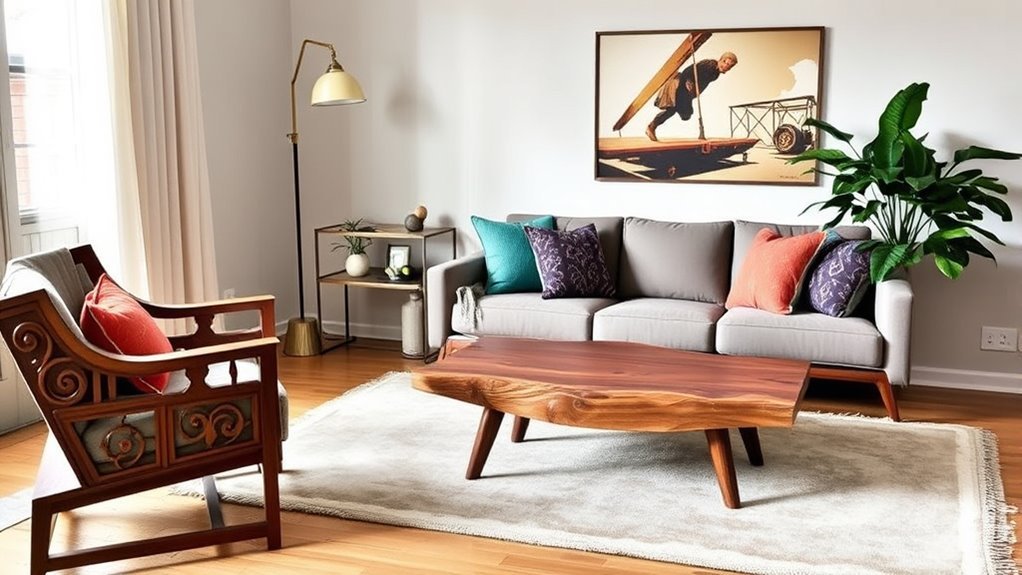
Mixing furniture styles works best when one dominant style leads the room and contrasting pieces support it. Instead of buying a matching showroom set, start with a single anchor piece, repeat colors and materials across different eras, and keep furniture scale and walkways consistent. With a few clear design rules, your rooms will feel collected and personal rather than randomly mismatched.
Quick Answer
To mix furniture styles cohesively, choose one large anchor piece—such as a sofa, dining table, or bed—and let its style cover roughly 80% of the room. Use contrasting styles for the remaining 20%, connect pieces by repeating 3 to 5 colors or finishes at least twice, and maintain 30 to 36 inches for main walkways.
At a Glance
| Time Required | 1–2 hours to measure, audit, and map your layout; rearrange and style in stages |
| Difficulty | Beginner-friendly |
| Tools Needed | Tape measure, painter’s tape, phone camera, paint or fabric swatches, and a room sketch |
| Cost | $0 if rearranging existing furniture; varies if adding bridging decor or accent pieces |
Why Mixing Furniture Styles Is Essential for Personalization
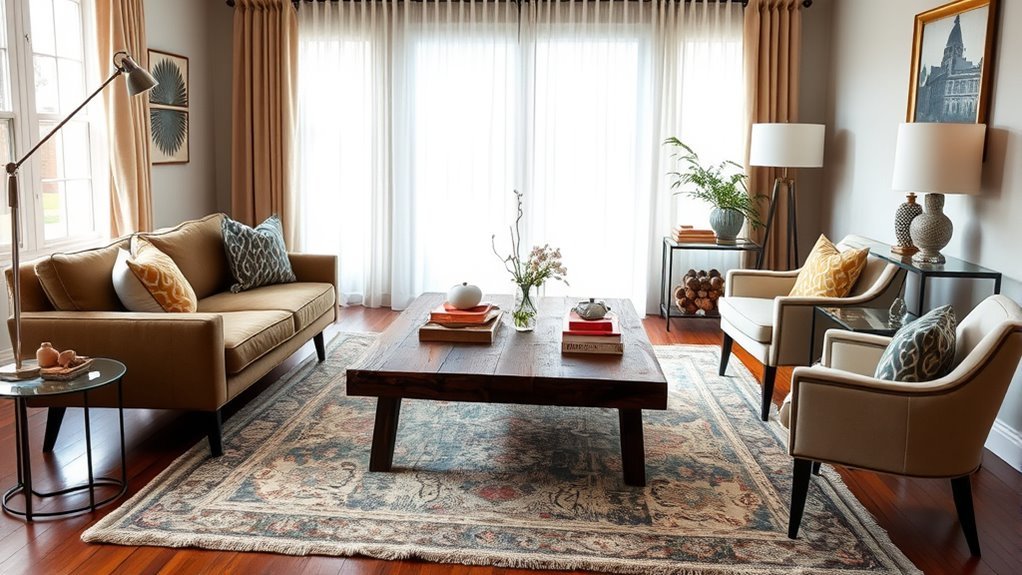
Embracing the art of mixing furniture styles makes your home reflect your real life instead of a retail catalog. Buying an entire matching bedroom or living room set guarantees uniformity, but it often makes a space feel flat and dated within a few years. Combining pieces from different eras lets you integrate heirlooms, travel finds, and practical modern seating in the same room.
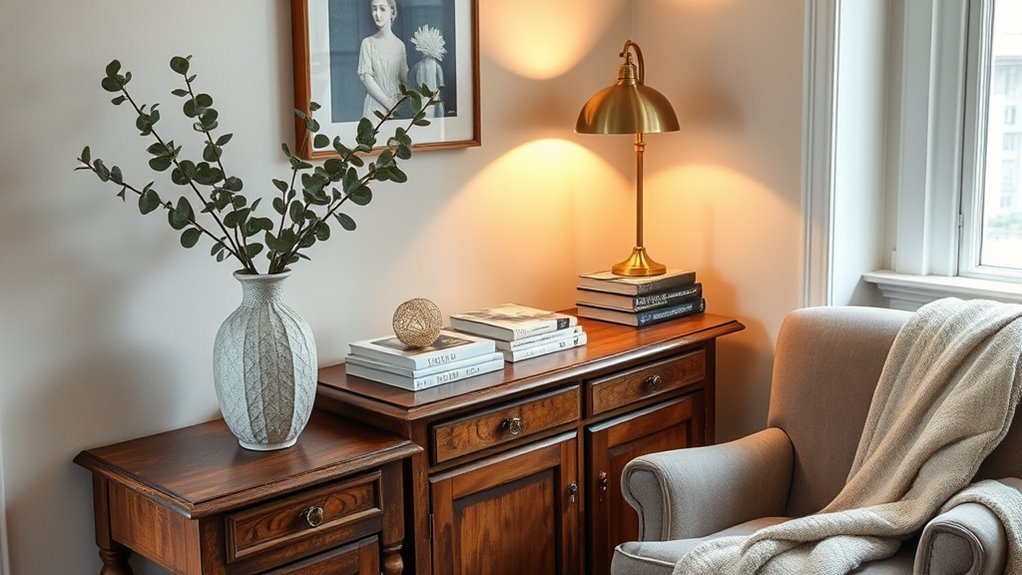
The secret to a cohesive mix is visual intention. A low-profile modern sofa can sit beside a weathered 19th-century oak table, and clean-lined contemporary dining chairs can surround an ornate antique table. As long as contrasting pieces share at least one unifying thread—such as color, material, silhouette, finish, or visual weight—the contrast creates warmth and depth rather than chaos.
Start With a Room Audit Before You Buy Anything
Audit what is already in your room before shopping for anything new. Taking inventory reveals which design style already dominates the space, highlights gaps in functionality, and stops impulse purchases that clash with your layout. Follow these five steps to assess your current furniture:
- List your core pieces: Write down the primary items you are keeping, including the sofa, armchairs, tables, bed, dresser, bookcases, console, area rug, and light fixtures.
- Label the style of each item: Group pieces into broad categories such as modern, mid-century modern, traditional, rustic, Scandinavian, coastal, farmhouse, industrial, vintage, or bohemian.
- Circle the strongest piece: Identify the largest or most visually commanding item, which will serve as your room’s anchor.
- Spot repeating details: Note shared wood undertones, metal hardware finishes, upholstery textures, tapered or turned legs, and curved versus straight lines.
- Photograph the room from the doorway: Looking at a quick phone photo flattens the scene into two dimensions, making scale mismatches, crowded corners, and awkward gaps much easier to see than with the naked eye.
If your audit reveals three or more competing styles, hold off on buying another statement piece. Instead, unify what you already own using bridging accessories—such as a large area rug, artwork, throw pillows, or curtains—that repeat two or three existing colors and materials.
Choosing Your Anchor Piece: A Step-By-Step Guide
Your anchor piece is the largest or most functionally important item in the room, and it sets the visual direction for every other choice. In a living room, the anchor is almost always the sofa or main area rug; in a dining room, it is the dining table; and in a bedroom, it is the bed frame, headboard, or a tall armoire.
- Pick a substantial foundation item: Select a sofa, dining table, bed, cabinet, or large rug with proportions that fit the room’s footprint.
- Define its core style and era: Describe it clearly, such as a “clean-lined Scandinavian linen sofa,” a “turned-leg traditional oak dining table,” or a “vintage tubular brass bed.”
- Pull two or three signature details from it: Look at its upholstery hue, wood grain, metal finish, fabric texture, or leg silhouette.
- Echo those details across the room: Repeat a dark walnut dining table in a walnut picture frame on the wall, or echo brass cabinet pulls with a brushed brass floor lamp across the room.
- Introduce contrast in smaller supporting pieces: If your anchor is traditional, pair it with sculptural modern lamps or an abstract canvas; if your anchor is sleek and modern, warm it up with a hand-knotted vintage rug or a rustic wood side table.
Pro Tip: If you cannot decide which item should lead, choose the piece that is hardest or most expensive to replace. Build your palette around the sofa, dining table, bed, or area rug before shopping for accent chairs or small decor.
Recommended Products

Made with 93% polyester, 7% spandex for high elasticity, soft, anti-wrinkle, durable

Super Soft: A Grade Velvet, fine texture, soft handle and comfortable. It has elasticity, no pilling and no stimulation to the skin.

Care Instructions: Vacuum-sealed packing. Please take out the pillow and shake it, then let it sit for at least 24 to 48 hours. It will become fluffy after a couple of days. Machine wash cold separately. Do Not Bleach. Tumble dry low.
How to Use the 80/20 Rule for Style Balance
The 80/20 rule is a practical interior design heuristic where roughly 80% of a room’s furnishings belong to one primary style and 20% come from a contrasting style. You do not need to count items or calculate strict percentages; simply treat the ratio as “one style leads, the other styles support.”
A House & Garden discussion of the 80/20 styling idea reaches the same practical conclusion: the ratio creates order and tension between old and new, yet professional designers treat it as a flexible guideline rather than a rigid law. Adjust the balance to suit your home’s architectural details—such as crown molding, exposed brick, or steel-framed windows—and the furniture you already own.
A mixed room feels strongest when one primary style sets the foundation and contrasting styles act as intentional punctuation marks.
- Commit to one primary style (about 70%–80%): Use this style for your largest foundational furniture, including the main sofa, primary storage, and dining table.
- Introduce contrast in high-impact accents (about 20%–30%): Add one antique armchair, a sculptural contemporary pendant light, a bohemian kilim rug, or an industrial iron coffee table.
- Never leave a contrasting style completely alone: A single ornate Victorian piece in an ultra-minimalist room can look like a leftover mistake. Add at least one small echo—such as a second vintage frame or brass candlestick—so the secondary style looks deliberate.
- Edit when pieces compete: If every item in the room has a loud silhouette or ornate carving, the eye has nowhere to rest. Swap one busy accent piece for a quiet, simple form.
Certain historical designs naturally bridge opposing styles because they combine traditional craftsmanship with stripped-back geometry. For example, the National Park Service overview of Shaker furniture design notes that 19th-century Shaker tables and chairs avoided applied ornament in favor of tapered legs, clean lines, and honest wood joinery—qualities that let them sit comfortably beside both 18th-century antiques and modern minimalist sofas.
Techniques for Selecting Your Color Palette
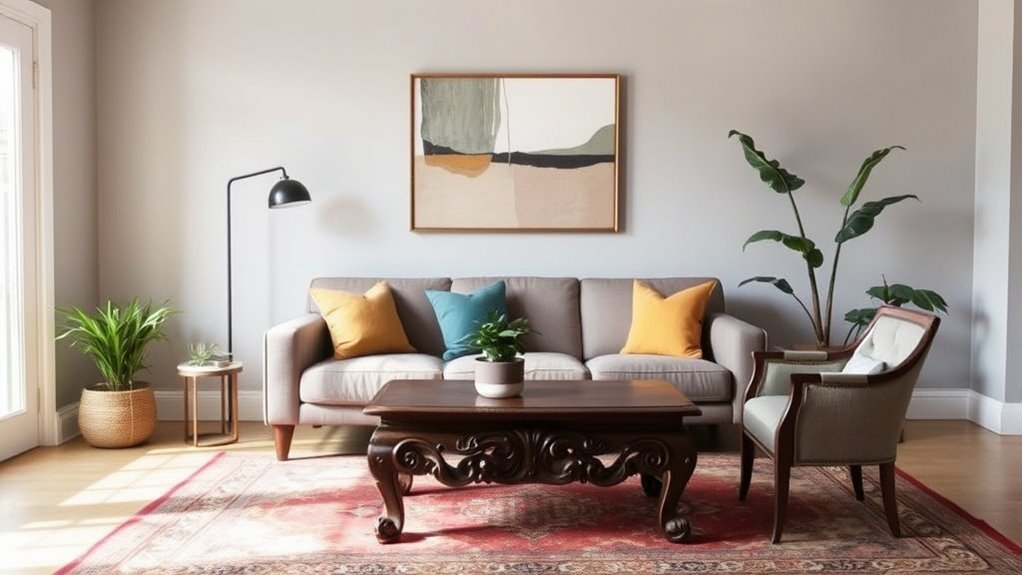
A unified color palette is the fastest way to make different furniture eras look like they belong together. When furniture silhouettes vary widely, apply the classic 60-30-10 color rule: dedicate 60% of the room to a dominant base shade, 30% to a secondary supporting tone, and 10% to a bolder accent color.
Limit a mixed-style room to three to five core colors and finishes:
- Dominant base color (60%): Walls, large sofa upholstery, curtains, and the primary area rug background (such as warm cream, alabaster, soft taupe, or greige).
- Secondary color and natural tone (30%): Accent chairs, painted cabinetry, and dominant wood or woven surfaces (such as sage green, navy blue, white oak, walnut, cane, or cognac leather).
- Metal finish: Keep one primary metal—such as matte black, aged brass, polished chrome, brushed nickel, or oil-rubbed bronze—consistent across hardware and lighting, with at most one secondary metal accent.
- Accent color (10%): Throw pillows, artwork, ceramics, or lampshades in a punchy shade like rust, burgundy, ochre, terracotta, or cobalt.
- Optional pattern bridge: A rug, pillow fabric, or painting that contains both your dominant base color and your 10% accent shade.
Always compare color undertones in natural daylight and evening lamp light before committing. Warm neutrals (ivory, camel, honey oak, unlacquered brass, terracotta) naturally harmonize, while cool tones (crisp white, slate gray, chrome, icy blue, Carrara marble) create a sharper modern contrast. You can mix warm and cool undertones in the same room as long as you repeat each undertone at least twice.
Do All Wood Tones Need to Match?
Wood tones do not need to match, and rooms where every wood surface is identical often look stiff. Instead, use the rule of three by combining a light, medium, and dark wood shade—or applying a 60-30-10 split where your flooring or largest table sets the dominant wood tone (60%), casegoods provide a secondary tone (30%), and frames or stools add a third accent tone (10%).
To prevent mixed woods from clashing, match their undertones rather than their darkness:
- Warm undertones (red, orange, yellow base): Cherry, mahogany, red oak, honey pine, and golden teak.
- Cool undertones (gray, ash, taupe base): Ash, silver maple, weathered oak, and whitewashed pine.
- Neutral bridge woods: American black walnut, natural white oak, and ebonized (black-stained) wood work with both warm and cool wood families.
If a wood piece clashes with your hardwood floor, place an area rug underneath the furniture legs or set a marble, glass, or upholstered surface between them. Creating a visual buffer keeps competing wood grains from fighting edge-to-edge.
Achieving Scale and Proportion for Balanced Furniture Design
Scale and proportion determine whether mixed furniture styles feel harmonious or awkward. Scale refers to how an item’s size relates to the room and human body, while proportion describes how furniture dimensions relate to one another—such as a coffee table measuring roughly two-thirds the length of the sofa it faces.
As the Oklahoma State University Extension guide to design elements and principles explains, empty space (negative space or void) is just as important as the mass occupied by objects for creating visual balance. Follow these standard interior clearance and sizing benchmarks before buying or moving furniture:
- Keep main walkways 30 to 36 inches wide: Primary paths from doorways through a room need 30 to 36 inches of open floor, while secondary gaps between furniture pieces need at least 24 to 30 inches.
- Space the coffee table 14 to 18 inches from the sofa: This gap is close enough to set down a glass without leaning forward, yet wide enough for comfortable legroom. Choose a coffee table that is two-thirds (about 66%) the length of the sofa and level with—or 1 to 2 inches lower than—the sofa seat cushion (typically 16 to 18 inches tall).
- Allow 36 to 48 inches around dining tables: Leave at least 36 inches between the dining table edge and the wall or sideboard so guests can slide chairs out, or 42 to 48 inches if people need to walk behind seated diners. Plan for 24 inches of table width per diner (28 to 30 inches for armchairs).
- Balance visual weight across the room: Solid upholstery that reaches the floor, dark woods, and blocky cabinets carry heavy visual mass. Counterbalance a heavy piece on one side of the room with two substantial armchairs on the opposite side, or pair a bulky sofa with open-legged side tables and a glass coffee table.
- Tape out footprints before buying: Use painter’s tape on the floor to mark the exact length and depth of a prospective sofa, table, or cabinet, and walk around the taped outline for a full day to test traffic flow.
For households planning barrier-free movement or wheelchair access, the U.S. Access Board’s accessible route guidance specifies a minimum 36-inch continuous clear path width (which may narrow to 32 inches at doorways for up to 24 inches) and a 60-by-60-inch clear turning space. While private homes are not bound by commercial ADA standards, these measurements provide an excellent benchmark for effortless circulation.
Note: A room can combine four eras of furniture and still look calm if adjacent seat heights and table heights stay within 1 to 2 inches of each other. Before blaming a style clash, measure whether one piece is simply too tall or too small for its neighbor.
Layering Textures for Depth and Interest in Your Space
Layering textures—combining nubby linen, honed marble, woven cane, distressed timber, smooth saddle leather, and brushed metal—prevents a neutral, mixed-style room from looking sterile. When two pieces come from different centuries, contrasting their surface textures makes the pairing look deliberate and tactile.
Include at least one material from each of these four texture families in every room:
- Soft and matte textiles: Slub linen, brushed cotton, velvet, boucle, chunky wool, or shearling.
- Hard and reflective surfaces: Honed or polished marble, glazed ceramic, clear or smoked glass, metal, lacquer, or travertine.
- Natural and organic elements: White oak, burl wood, knotty pine, woven cane, rattan, jute, sisal, seagrass, or full-grain leather.
- Visual pattern texture: Ticking stripes, geometric kilims, botanical block prints, or pleated fabric lampshades.
Complementary Texture Pairing
Complementary texture pairing works by placing a rough or matte material directly against a sleek or polished one. Smooth aniline leather feels far more inviting when draped with a cable-knit wool throw, and a heavily distressed farmhouse dining table looks sharper when surrounded by smooth matte-black metal chairs.
- Contrast upholstery weaves: Pair a tight-weave velvet or leather sofa with nubby boucle or slub-linen accent chairs.
- Juxtapose warm and cool surfaces: Place an aged wooden bowl or woven rattan tray on top of a cool glass or marble coffee table.
- Echo each major texture once: If you introduce a cane-back vintage chair, repeat that woven texture across the room with a seagrass basket or rattan pendant shade.
Layering for Visual Interest
Build texture from the floor up so every layer serves a clear visual or functional purpose. Start with the largest tactile footprint—typically a flatweave wool or jute area rug paired with your primary sofa upholstery—then add medium-scale wood and metal tables, and finish with small accessories.
For example, a living room anchored by a crisp white slipcovered sofa gains instant depth when layered with a warm walnut coffee table, a forged black iron floor lamp, a braided jute rug, an unglazed terracotta vase, and striped linen pillows. Because the color palette stays quiet, the rich variety of surfaces creates visual interest without clutter.
Bridging Different Styles With Decor
Decorative accessories act as visual translators between furniture styles that might otherwise feel disconnected. Because rugs, lighting, textiles, and hardware cost far less than casegoods, you can use them to repeat colors, eras, and silhouettes across the room.
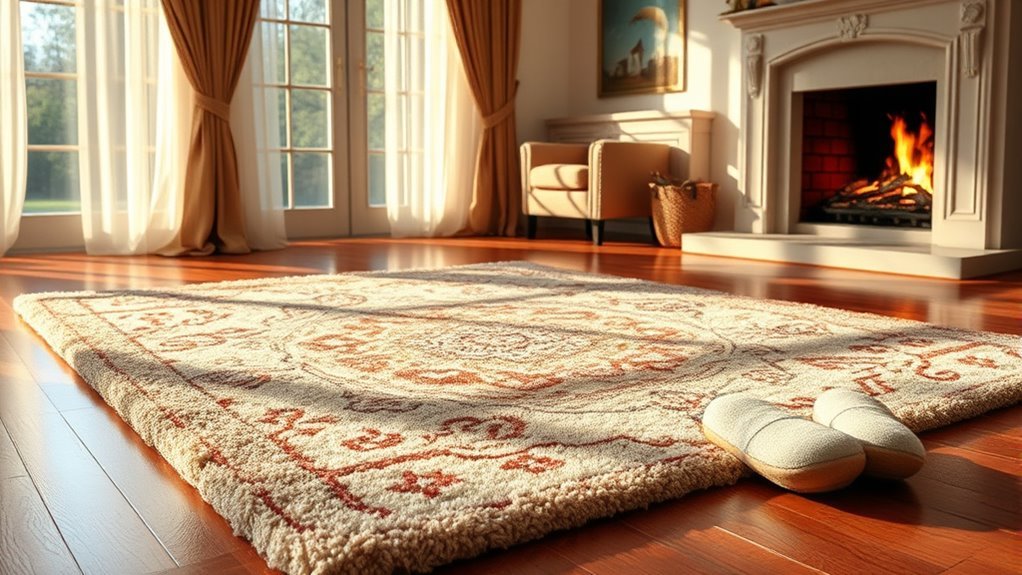
- Area rugs: A faded traditional Persian or Turkish rug softens sharp modern seating, while a simple borderless sisal or wool rug calms ornate antique furniture. Make sure the rug is large enough that at least the front legs of every major seating piece sit on it.
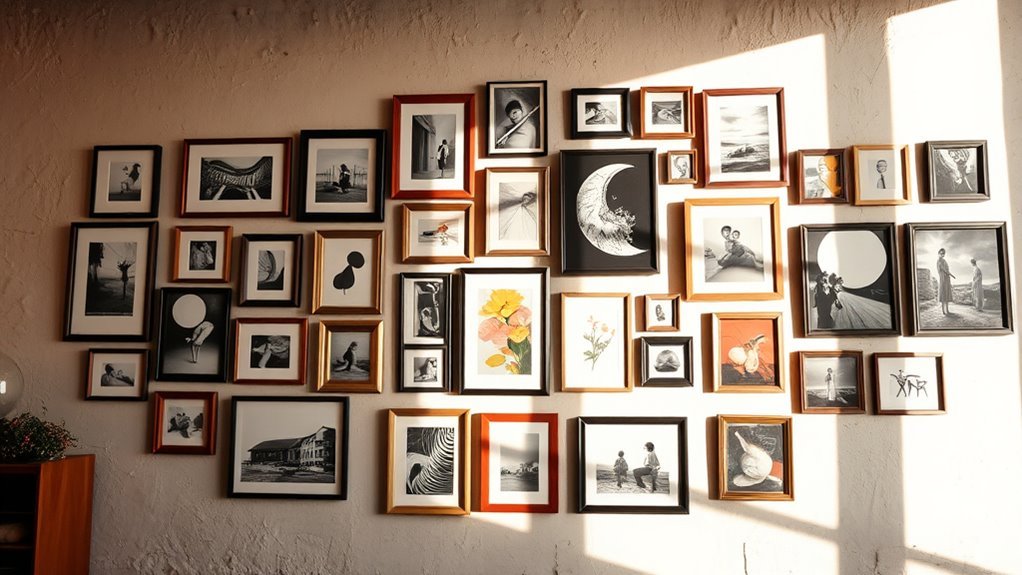
- Wall art and mirrors: Hang modern abstract art in an ornate gilded frame, or place a minimalist black metal frame around a vintage botanical print to merge old and new in a single object.
- Lighting fixtures: Swap a matching table lamp for a contrasting style—such as placing a mid-century saucer pendant above a traditional pedestal dining table.
- Throw pillows and blankets: Pull the exact upholstery color from a modern sofa and the wood or leather tone from a vintage chair into a single patterned pillow.
- Hardware and metal finishes: Repeat your chosen metal (such as aged brass or matte black) at least two to three times across cabinet pulls, curtain rods, picture frames, and lamp bases.
- Repeating silhouettes: Echo an arched traditional mirror with a curved modern sofa or round pedestal side table so the eye follows a consistent geometry.
For instance, if you own a classic rolled-arm sofa and want to introduce a minimalist black steel coffee table, repeat the black steel finish in a slim floor lamp and two picture frames on the opposite wall. That simple three-point triangle of black metal anchors the modern table in the traditional room.
Cohesive Furniture Combinations That Work
Some interior styles pair effortlessly because they either share clean geometry or provide high-contrast texture. Use the combinations in the table below as reliable formulas when planning your room mix:
| Style Mix | Why It Works | Try This Combination |
|---|---|---|
| Modern + Vintage | Crisp modern silhouettes keep patinated vintage pieces from feeling like a museum set. | Low-profile modern track-arm sofa, antique burl wood coffee table, vintage wool rug, and brushed brass floor lamp. |
| Scandinavian + Rustic | Both styles prioritize pale natural woods, honest materials, and uncluttered comfort. | Oatmeal linen sofa, reclaimed timber coffee table, sheepskin throw, and matte ceramic tableware. |
| Traditional + Contemporary | Classic architectural details gain freshness from streamlined contemporary shapes. | Turned-leg mahogany dining table, molded black modern chairs, and a minimalist glass globe chandelier. |
| Industrial + Bohemian | Hard steel and factory wood gain softness from global textiles and indoor plants. | Black steel open shelving, distressed saddle-leather sofa, Moroccan plush rug, and woven rattan poufs. |
| Coastal + Mid-Century Modern | Airy coastal fabrics soften the angled wood frames of mid-century design. | White slipcovered lounge chairs, tapered-leg walnut credenza, woven seagrass rug, and slate-blue coastal art. |
Recommended Products

Stylish and Soft:The blanket is very soft silky lightweight, even and fine pile, rich and full, breathable, not easy to fade and pilling, with excellent quality and long-lasting durability,bringing a warm and cozy home atmosphere. It's perfect for all seasons, kids and adults will love it.
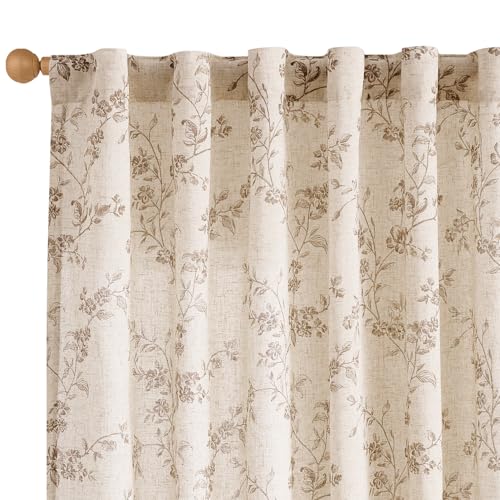
Ready Made: Package includes 2 linen curtain panels, each measuring 50"W & 84"L (100"W for pair). The linen curtains are crafted from open weave linen blend fabric and primitively natural effect make the curtain panels more drapery and aesthetic
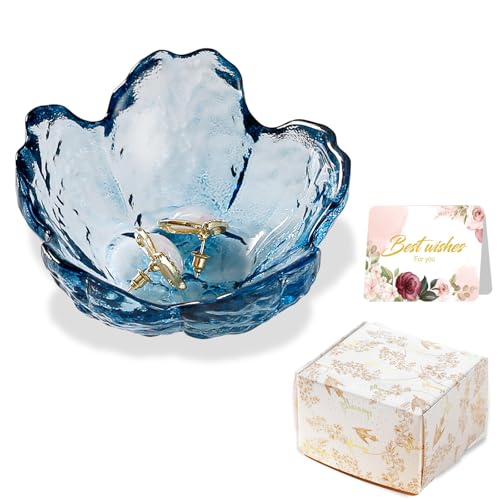
Birthday Gifts For Women: Cute flower trinket tray at about only 8.5cm(3.3 inches)in diameter, approximately 3.5cm(1.3i nches) high, comes with floral gift box. If you don't know what to give as a present, this flower jewellery tray will be a great choice for you. It is a special and meaningful present to your friends and family. Decorations and presents for birthday, valentine's day, wedding, christmas and new year.
How to Mix Furniture Styles Room by Room
While the core rules of color repetition and visual balance apply everywhere in your home, each room has a different anchor piece and ergonomic priority. Always secure the main functional furniture first, then introduce contrasting eras through accent seating, side tables, and lighting.
| Room | Primary Anchor | Best Places to Add Contrast | Ergonomic & Spacing Check |
|---|---|---|---|
| Living room | Sofa or large area rug | Accent armchairs, coffee table, side tables, floor lamps | 14–18 in. sofa-to-table gap; 6–8 ft conversation circle; 30–36 in. walkways |
| Dining room | Dining table | Dining chairs, host armchairs, chandelier, vintage sideboard | 36–48 in. table-to-wall clearance; 12 in. knee space under apron; rug 24–30 in. past table edge |
| Bedroom | Bed frame or upholstered headboard | Mismatched or vintage nightstands, dresser, end-of-bed bench, sconces | 30 in. walkway beside bed; 36 in. in front of dresser drawers; nightstands level with mattress top |
| Home office | Writing desk or bookcase wall | Ergonomic task chair, vintage credenza, task lamp, framed art | 36–42 in. behind desk chair to roll back freely; glare-free task lighting |
Before You Buy: A 6-Point Compatibility Check
A new piece of furniture never needs to match the era of your room, but it must earn its place visually and physically. Before buying any item at an antique market or showroom, score it against these six compatibility checks. If it fails two or more checks, pass on it rather than trying to fix the mismatch later with clutter:
- Connector: Does the piece repeat at least one existing color, wood undertone, metal finish, fabric texture, or silhouette line already present in the room?
- Scale: Does its height, width, depth, and visual mass relate comfortably to the furniture it will sit beside?
- Function: Does it solve a concrete daily need for comfortable seating, closed storage, surface reach, or task lighting?
- Placement and clearance: Will it fit its taped floor footprint while keeping 30-to-36-inch main walkways, air vents, outlets, and door swings completely clear?
- Intentional contrast: Does it support your 80/20 style balance without introducing a fourth competing design era?
- Echo potential: Can you repeat one detail from this piece—such as its brass hardware, curved back, or walnut finish—somewhere else in the room using items you already own?
Pro Tip: Keep a contrasting furniture piece only when it passes the three-part test: it fits your floor clearances physically, works comfortably for daily use, and shares at least one color, material, finish, or shape with your anchor piece.
Recommended Products

Mid-Century Charm - This lounge chair has a mid-century charm with its extra pillows, widened arms, and flared legs. The green color of the fabric complements the walnut color of the frame, which will fit in with any of your home decor styles.
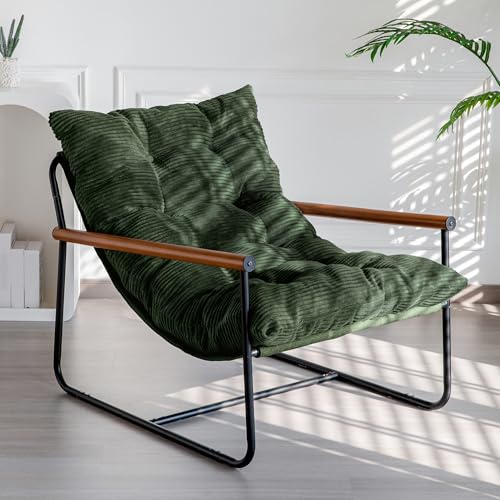
Minimalist Accent Chair: The tufted craft adds to the artistic style, which can meet the needs of most home décor styles. This accent chair has opted for a minimalist design in its appearance. The soft colours give a feeling of peace and relaxation.

【Comfortable & Relaxing Chair】 This accent chair boasts a spacious 26.8 inch wide seat, allowing you to sit cross-legged while using your phone or curl up for a nap. The 6.3 inch thick cushion and ergonomic design ensure ample support and lasting comfort, making it ideal for long periods of reading, gaming, watching TV, or working from home. Note: Cushion is vacuum-compressed; fluffs to 80% in 1-2 hours, full in 24h.
Common Mistakes to Avoid When Mixing Furniture Styles
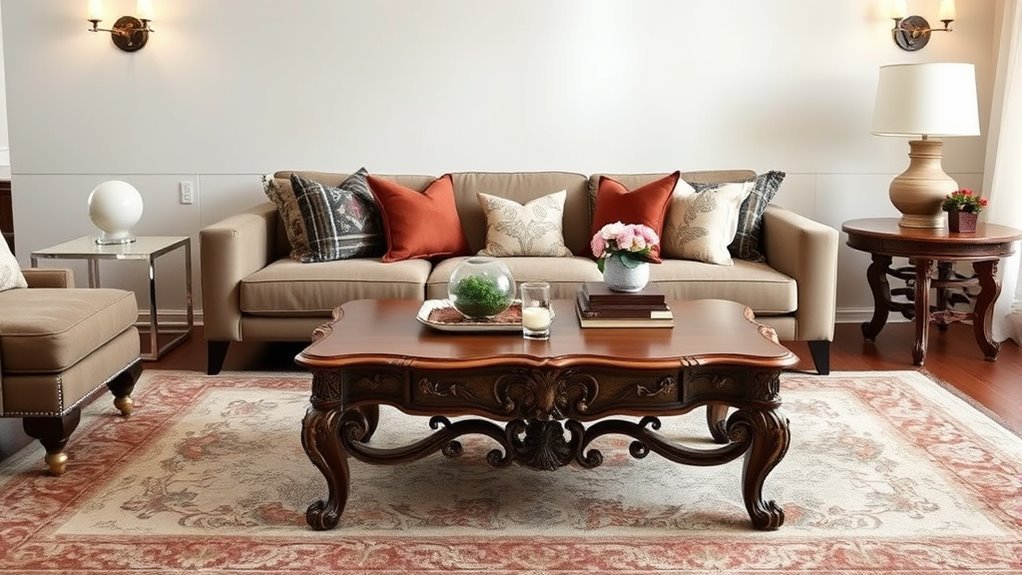
Most mixed-style rooms that feel cluttered or disjointed suffer from scale, undertone, or distribution errors rather than incompatible eras. Watch out for these five common decorating pitfalls and use the solutions below to correct them quickly:
| Mistake | Visual Impact | How to Fix It |
|---|---|---|
| Clustering heavy pieces on one side | The room feels visually lopsided and cramped on one wall. | Distribute visual weight by placing a tall bookcase or pair of substantial chairs opposite the sofa, and mix leggy pieces with skirted ones. |
| Ignoring color and wood undertones | Warm red-orange woods clash against cool gray-toned woods or fabrics. | Stick to a 60-30-10 color palette, align warm or cool undertones, and use an area rug to separate clashing wood floors and legs. |
| Splitting styles 50/50 | Two styles compete equally for dominance, leaving the room unfocused. | Shift the balance toward an 80/20 split so one primary style clearly leads and the other acts as an accent. |
| Mismatched adjacent heights and scale | A tiny antique side table looks lost beside a deep, oversized sectional. | Keep side tables within 1–2 inches of sofa arm height and coffee tables roughly two-thirds of the sofa’s length. |
| Leaving a contrasting piece isolated | A single vintage or industrial piece looks like an accidental leftover. | Echo the contrasting piece’s wood tone, metal finish, color, or silhouette at least once elsewhere in the room. |
Troubleshooting a Room That Still Feels Off
If your room still feels slightly disconnected after arranging your furniture, you rarely need to replace large pieces. Run through these targeted adjustments to diagnose and fix the imbalance in minutes:
- If the room feels visually chaotic: Remove 20% of the small tabletop knickknacks, swap multi-colored throw pillows for solid textured ones, and make sure one dominant style covers most of the room.
- If the room feels too much like a matching catalog set: Swap out the matching coffee table or pair of side tables for a single vintage wood piece, a woven ottoman, or a sculptural metal accent table.
- If a neutral room feels flat and lifeless: Add tactile contrast rather than extra paint colors—introduce raw wood, chunky wool, slub linen, unglazed ceramic, saddle leather, or brushed brass.
- If one vintage or modern piece sticks out awkwardly: Repeat one specific element from that piece—such as its warm walnut stain or matte black finish—in a lamp base, picture frame, or tray across the room.
- If conversation or walking feels cramped: Pull the sofa 3 to 4 inches off the wall, set the coffee table 14 to 18 inches from the sofa cushion, and clear a 30-to-36-inch path from the doorway.
Warning: Never buy a heavy, non-returnable furniture piece purely because you love its style in a showroom. Measure your doorway width, stairwell turns, and floor clearances first, or you risk paying steep restocking fees for an item that blocks walkways or overwhelms your anchor piece.
Key Takeaways
- Start with a 5-step room audit and doorway phone photo to spot scale issues before spending money.
- Apply the 60-30-10 formula to both your color palette and your wood tones, matching warm or cool undertones or bridging them with walnut, white oak, or an area rug.
- Follow standard ergonomic dimensions: 14–18 inches between sofa and coffee table, a coffee table length around two-thirds of the sofa, and 36–48 inches of clearance around dining tables.
- Balance visual weight by pairing heavy, skirted, or dark pieces with open-legged, glass, or lighter-toned furniture across the room.
- Use rugs, artwork frames, lighting, and hardware finishes to echo a contrasting style at least twice so it never looks accidental.
Frequently Asked Questions
Do all the wood tones in a room need to match?
No, wood tones do not need to match. Start with the dominant wood tone in your flooring or largest table, then add one or two contrasting woods that share the same warm or cool undertone. If two wood pieces clash, place an area rug or stone surface between them and repeat each wood tone at least twice.
How do I mix modern and traditional furniture?
To mix modern and traditional furniture, let one style cover roughly 80% of the room and use the other for the remaining 20%. Connect the two eras with a shared element, such as a consistent neutral fabric, wood undertone, or black metal finish. For example, pair a traditional wood dining table with modern black chairs and a black chandelier.
How do I choose a color palette for mixed styles?
Use the 60-30-10 color rule to unify mixed furniture styles. Dedicate 60% of the room to a neutral base color on walls and large upholstery, 30% to a secondary color and natural wood tone, and 10% to a bold accent shade in pillows and art. Repeat each undertone at least twice so the contrast looks intentional.
What are some examples of cohesive furniture combinations?
Reliable combinations include a modern track-arm sofa on a vintage wool rug, a rustic timber dining table with matte-black contemporary chairs, a traditional mahogany dresser beneath a minimalist frameless mirror, and a Scandinavian platform bed layered with bohemian woven textiles. These pairings work because their scale, colors, and finishes repeat across the room.
Can I mix modern and vintage furniture effectively?
Yes, modern and vintage pieces pair effortlessly because clean modern lines prevent antiques from feeling stuffy, while vintage patina warms up stark contemporary rooms. Keep adjacent seat and table heights within 1 to 2 inches of each other, maintain a tight color palette, and echo the vintage piece’s wood or brass finish in a second accessory.
How do I maintain functionality while mixing styles?
Maintain functionality by mapping your floor clearances with painter’s tape before styling. Leave 30 to 36 inches for main walkways, 14 to 18 inches between the sofa and coffee table, and 36 to 48 inches around the dining table. Every piece should provide comfortable ergonomics, reachable surface space, or practical storage regardless of its era.
What accessories enhance a mixed furniture style look?
Area rugs, throw pillows, wool blankets, framed artwork, table and floor lamps, mirrors, trays, and woven baskets are the best accessories for bridging mixed furniture. Choose accessories that combine two elements from your room—such as a modern painting in an antique gilt frame or a pillow combining your sofa and armchair colors.
How many furniture styles can I mix in one room?
Most rooms look most cohesive when you mix two to three furniture styles: one dominant style (around 70% to 80% of the room) and one or two supporting styles (20% to 30%). If you blend three styles, keep your wall and upholstery palette neutral and repeat wood tones and metal finishes at least twice.
Conclusion
A collected room comes together when contrast is backed by clear visual connections and comfortable proportions. Choose a strong anchor piece, let one primary style lead, repeat your core colors and wood undertones at least twice, and verify floor clearances before bringing new pieces home. Take a quick phone photo of your room from the doorway today, identify the single item that feels most disconnected, and either repeat one of its finishes across the room or swap its placement to restore balance.
Sources
- U.S. Access Board: Guide to the ADA Accessibility Standards, Chapter 4: Supports 36-inch continuous accessible walkway widths, 32-inch doorway clearances, and 60-by-60-inch turning spaces.
- Cornell University: Art, Design, and Visual Thinking: Supports foundational design principles including color theory, surface texture, visual balance, proportion, and unity.
- Oklahoma State University Extension: Elements and Principles of Design: Supports how mass, form, line, texture, scale, and negative space (voids) govern visual weight and balance.
- U.S. National Park Service: Shaker Style: Supports how clean-lined utilitarian furniture bridges historic craftsmanship and modern minimalist interiors.
- Better Homes & Gardens: Furniture Scale and Proportion: Supports measuring, painter’s-tape floor mapping, scale ratios, and doorway photo checks.
- MyDomaine: Tips for Mixing Furniture Styles: Supports using a cohesive color palette, undertone repetition, and anchor pieces to connect mixed furniture eras.
- Homes & Gardens: Texture in Interior Design: Supports layering contrasting soft, hard, and natural textures to add warmth and visual depth.
- House & Garden: The 80/20 Styling Rule in Interiors: Supports treating the 80/20 style ratio as a flexible starting guideline rather than a rigid formula.


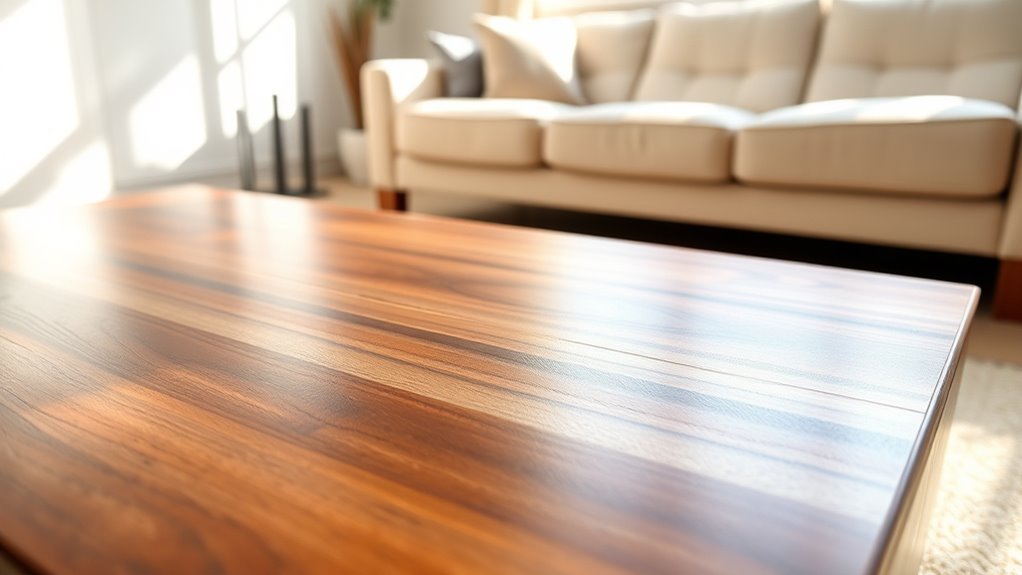


[…] How to Create a Cohesive Look When Mixing Furniture Styles: Step-by-Step Guide […]