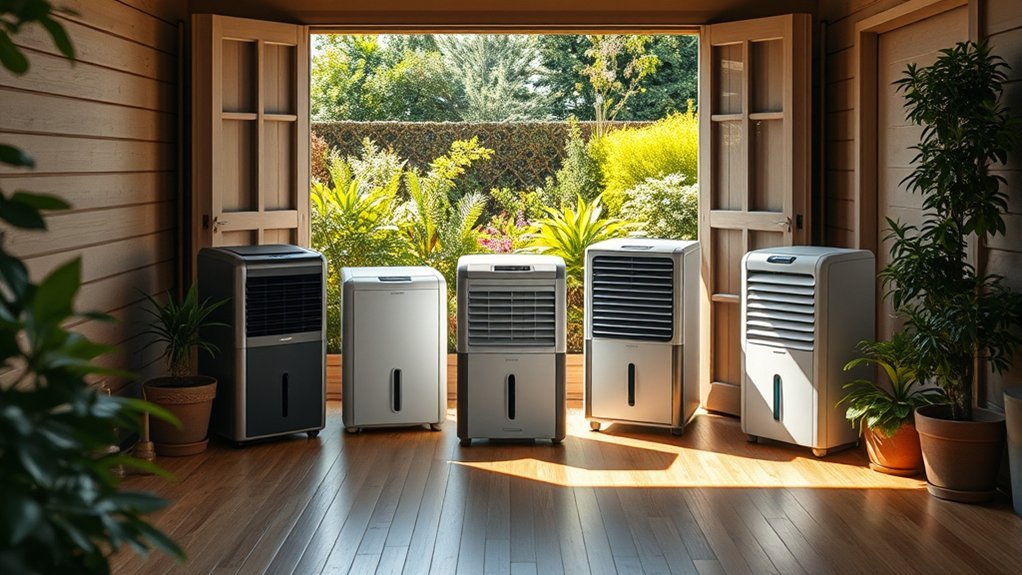
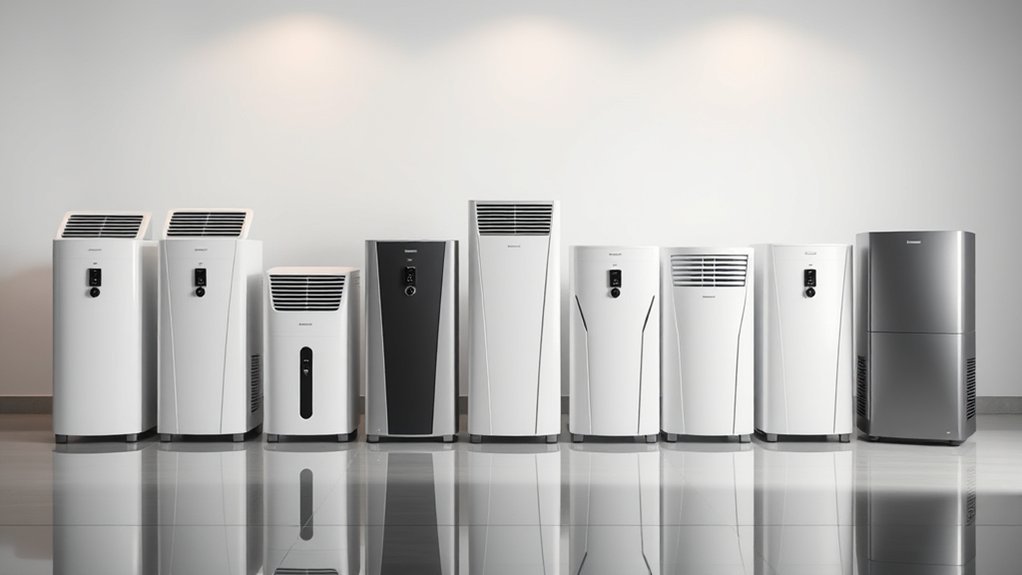
If you’re comparing the best 2 litre dehumidifiers for 2026, look beyond the number printed on the water tank. The three compact models below have tanks ranging from about 1.7 to 2.0 litres and are intended for small, enclosed spaces such as bedrooms, closets, RVs, campers, and dry bathroom areas outside splash zones. The Levoair is the closest match for shoppers who want an exact 2L tank and continuous drainage. BREEZOME adds a sleep mode and timer, while Litever is the smallest and lightest option. Compare the daily moisture-removal rate, test conditions, drainage method, noise controls, and room conditions before buying.
Quick Verdict
Best Overall: Levoair 2L Dehumidifier for its exact 2-litre tank and included gravity-drain hose. Best for Quiet Rooms: BREEZOME 60 OZ for its 35dB sleep setting and 12- to 48-hour timer. Best Compact Pick: Litever 57 OZ for small bedrooms, closets, campers, and other tight spaces.
Quick Comparison of the Best 2 Litre Dehumidifiers
| Model | Tank Capacity | Advertised Maximum Removal* | Drainage | Standout Feature | Best For | Amazon |
|---|---|---|---|---|---|---|
| Levoair | 2 litres | Up to 35oz, about 1 litre per day at 86°F and 80% RH | Tank or included 5ft gravity hose | Exact 2L tank | Small rooms, RVs, dry bathroom areas | Check on Amazon |
| BREEZOME | 1.8 litres | Up to 700ml per day at 86°F and 80% RH | Removable tank | 35dB sleep mode and timer | Bedrooms, RVs, quiet work areas | Check on Amazon |
| Litever | 57oz, about 1.69 litres | Up to 33oz, about 975ml per day, ±10%, at 86°F and 80% RH | Removable tank | Compact 40W dual-Peltier design | Closets, compact bedrooms, campers | Check on Amazon |
*Important: These are manufacturer-advertised maximum extraction figures measured in warm, highly humid test conditions. Actual water collection may be much lower in cooler rooms or at moderate humidity. Tank capacity and moisture-removal capacity are different measurements.
How These Picks Were Compared
- Topic match: Each model has a tank close to the 2-litre buyer target.
- Useful capacity: Daily extraction claims are shown with their stated test conditions.
- Convenience: Drainage, timers, sleep settings, portability, and auto shutoff were compared.
- Honest fit: These are compact thermoelectric units for localized moisture, not substitutes for high-capacity basement dehumidifiers.
Levoair 2L Dehumidifier with Drain Hose
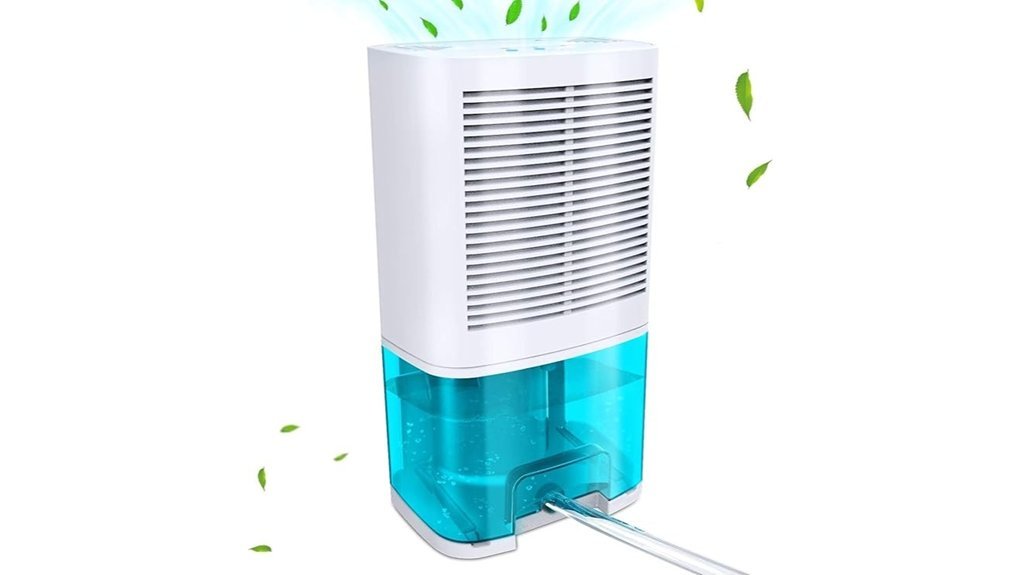
Best Overall
The Levoair is the closest match for shoppers who specifically want a 2-litre dehumidifier. Its 68oz water tank holds approximately 2,000ml, and the included 5ft hose lets you choose between manual tank emptying and continuous gravity drainage. This can reduce maintenance in an RV, storage room, enclosed bedroom, or another small area with access to a suitable lower drain.
The manufacturer advertises removal of up to 35oz, or about 1 litre, of moisture per day at 86°F and 80% relative humidity. Collection will normally be lower when the room is cooler or less humid. The unit weighs about 5 pounds, draws approximately 48 watts, and has automatic shutoff for tank operation.
Why You’ll Like It
- The exact 2-litre tank directly matches the main buyer intent.
- The included hose can reduce repeated manual emptying.
- Its compact, lightweight design fits spaces where a compressor model may be too bulky.
Best For: Buyers who need localized humidity control in an enclosed bedroom, closet, camper, RV, storage room, or a dry bathroom location outside the splash zone and value continuous drainage.
Who Should Avoid It: Anyone trying to dry a wet basement, manage active water entry, or control humidity across a large open floor plan should use a properly sized compressor or desiccant model instead.
Pros:
- True 2-litre tank with an included 5ft continuous-drain hose.
- Automatic shutoff helps prevent overflow during tank use.
- Lightweight design is easy to move between small rooms.
Cons:
- The maximum extraction claim applies to warm, very humid test conditions.
- Gravity drainage requires the hose outlet to stay below the drain port.
- Thermoelectric performance is limited compared with a full-size compressor unit.
BREEZOME 60 OZ Quiet Portable Dehumidifier
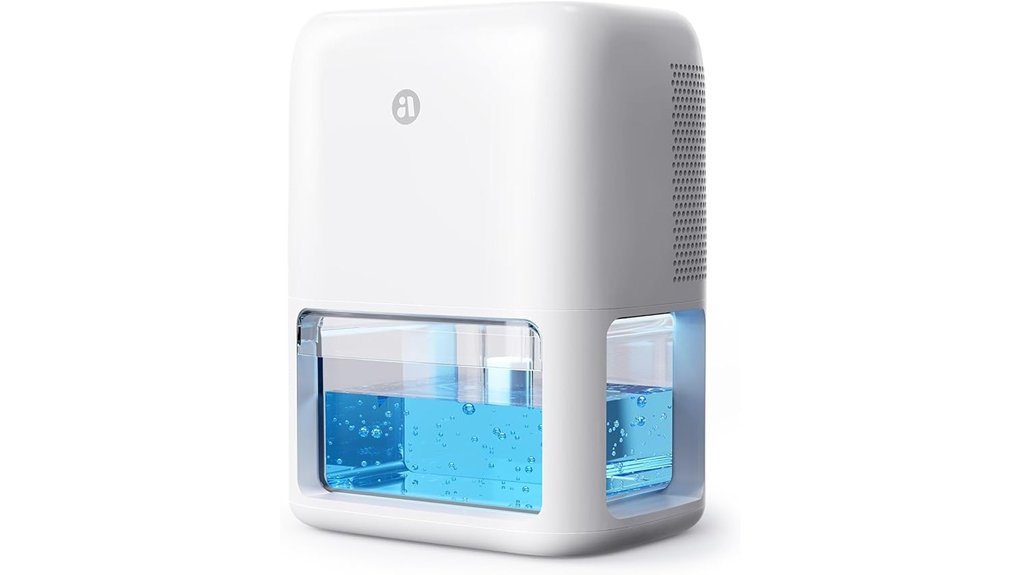
Best for Quiet Rooms
BREEZOME’s 60 OZ model has a 1.8-litre water tank, so it belongs in the near-2L category rather than being a full 2-litre model. It is a practical choice when you want a bedroom-friendly compact dehumidifier with a timer, sleep mode, automatic shutoff, defrost function, and built-in carrying handle.
The manufacturer advertises removal of up to 700ml per day with dual semiconductor condensers, measured at 86°F and 80% relative humidity. The appliance also offers 12-, 24-, 36-, and 48-hour timer settings, a 35dB sleep mode, and approximately 48-watt power draw. These controls make it easier to manage noise and runtime, although sleep mode may collect water more slowly than full-power operation.
Why You’ll Like It
- Timer settings provide more control over daily operation.
- The 35dB sleep setting is designed for bedrooms and quiet work areas.
- The 1.8L tank offers useful storage without making the unit too bulky.
Best For: Enclosed bedrooms, cloakrooms, RVs, campers, small kitchens, and dry bathroom locations where quiet operation and a timer matter more than continuous drainage.
Who Should Avoid It: Buyers who need a drain hose, automatic humidity set points, or strong water removal in a large or persistently damp basement should choose a different type of dehumidifier.
Pros:
- 1.8-litre tank is close to the target 2-litre size.
- Sleep mode, timer, auto shutoff, and defrost features improve convenience.
- Dual-semiconductor design supports a higher advertised extraction rate than many basic single-module mini units.
Cons:
- No continuous-drain hose is included.
- Maximum extraction applies only under warm, very humid conditions.
- The colored tank light may not appeal to buyers who want a plain appliance.
Litever Compact Quiet Dehumidifier for Home and RV
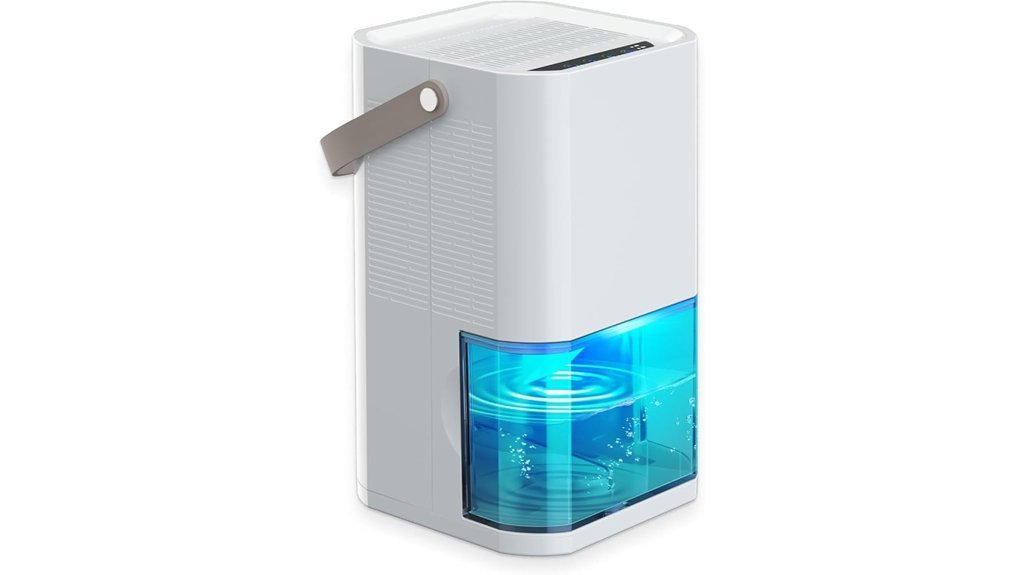
Best Compact Pick
Litever’s 57oz tank holds approximately 1.69 litres, making it the smallest of the three and a near-2L option rather than a true 2-litre model. Its main advantage is portability. The unit weighs about 4 pounds and measures roughly 6.4 by 6.5 by 10.5 inches, so it can fit on a shelf, countertop, RV cabinet, or bedroom table with suitable airflow clearance.
The dual-Peltier design is advertised to remove up to 33oz, or about 975ml, of moisture per day, with a stated ±10% tolerance at 86°F and 80% relative humidity. It draws approximately 40 watts and includes high and low operating modes, automatic shutoff, a 4- to 12-hour delay-off timer, and an optional ambient light.
Why You’ll Like It
- The small footprint fits where larger appliances cannot.
- The lightweight body is convenient for RV and camper use.
- Two operating modes let you balance noise and moisture removal.
Best For: Small bedrooms, closets, campers, trailers, storage areas, and dry bathroom locations where portability is the main priority.
Who Should Avoid It: Buyers who specifically require a full 2-litre tank, continuous drainage, a built-in humidistat, or high extraction in a large damp room should choose the Levoair or a higher-capacity compressor model.
Pros:
- Compact, approximately 4-pound design is easy to carry and position.
- Auto shutoff, delay-off timer, and two modes improve everyday usability.
- Uses approximately 40 watts at the stated full-power setting.
Cons:
- The 57oz tank is about 1.69 litres rather than a full 2 litres.
- No drain hose is included.
- Like other thermoelectric units, performance drops in cooler or less humid conditions.
Factors to Consider When Choosing a 2 Litre Dehumidifier
A compact 2L or near-2L dehumidifier can help with localized condensation and everyday dampness, but the tank size alone does not measure performance. Compare daily extraction, technology, operating temperature, drainage, noise, controls, and the actual moisture load in the room.
Tank Capacity Versus Extraction Rate
A 2-litre tank tells you how much collected water the appliance can store. It does not tell you how quickly the unit removes moisture. A model with a 2-litre tank may collect only a few hundred millilitres during an ordinary day, while collecting more in warm and highly humid conditions.
Compare both the water-tank capacity and advertised litres-per-day figure. Check the tank daily during the first week so you can learn how quickly it fills in your room. Automatic shutoff is useful because it stops collection when the tank reaches its safe limit.
Exact 2-Litre Versus Near-2-Litre Models
Only the Levoair in this comparison has an exact 2-litre tank. BREEZOME holds 1.8 litres, while Litever holds about 1.69 litres. The practical difference is modest for many buyers, but it matters when you specifically want fewer tank-emptying trips or need a strict 2L capacity.
A slightly smaller tank does not automatically mean weaker extraction. The removal rate, room conditions, and runtime determine how much water the unit collects. Choose the tank size and features that fit your routine rather than treating 2 litres as a performance rating.
Thermoelectric or Compressor Technology
The three products in this article use semiconductor or Peltier technology. These systems are compact, lightweight, and usually produce a steady fan sound rather than compressor cycling. They are best for small enclosed spaces and localized moisture.
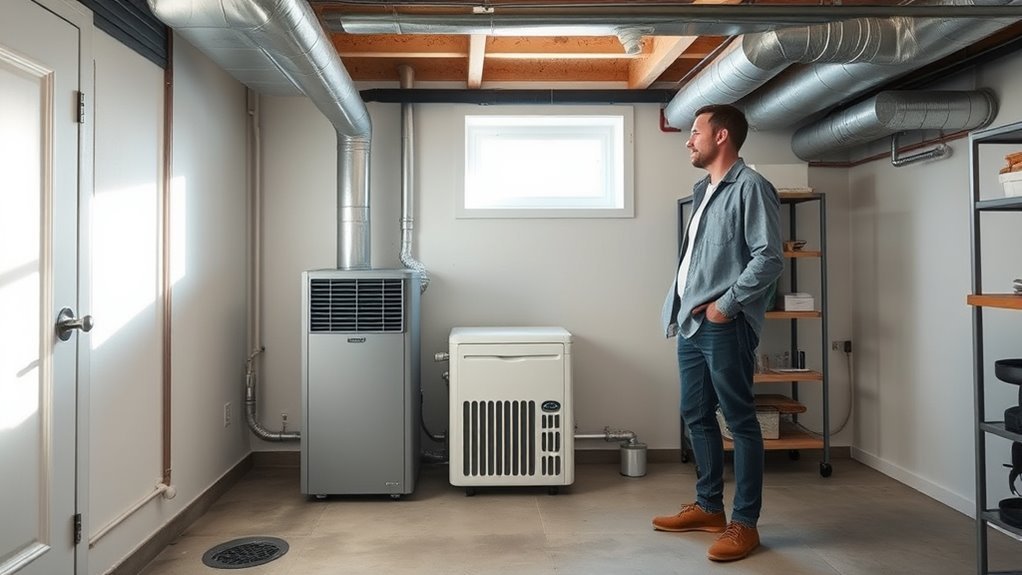
A compressor dehumidifier is normally a better choice for a wet basement, large living area, laundry-drying room, or persistent whole-room damp problem. It costs more, takes up more space, and may be louder, but it can remove substantially more water under typical household conditions.
Coverage Area
Do not choose a mini dehumidifier solely because a listing advertises hundreds of square feet of coverage. Room size is only one part of the calculation. Temperature, starting humidity, ventilation, ceiling height, open doors, moisture sources, and extraction capacity all affect performance.
Compact thermoelectric models generally work best in a closed bedroom, closet, RV, camper, small storage room, or dry bathroom area. A separate hygrometer can show whether the appliance is actually lowering relative humidity. If readings do not improve after several days, the room may require a larger unit or repair of the moisture source.
Noise Level
Check the stated noise level and operating modes if the appliance will sit near a bed or desk. A sleep mode normally lowers fan speed and may dim or turn off the light. A quieter setting can also reduce moisture-removal speed.
Place the unit on a firm, level surface to reduce vibration. Keep the intake and outlet clear, and avoid positioning it directly beside the bed even when the advertised noise rating is low.
Energy Use
The compared models draw approximately 40 to 48 watts at their stated operating settings, which is lower than many compressor appliances. Low wattage does not automatically mean better dehumidification efficiency because a low-powered unit may need much longer to remove the same amount of water.
Compare power use with the realistic extraction rate for your room. Timers and automatic shutoff can reduce unnecessary runtime, but they cannot make an undersized appliance suitable for a large or wet space.
Drainage Options
Manual drainage is simple: remove the tank, pour out the water, reinstall it correctly, and restart the appliance if required. Continuous drainage is more convenient for frequent use, but compact models usually rely on gravity rather than a pump.
For gravity drainage, the hose should slope downward without loops, kinks, or raised sections. The hose outlet must remain below the appliance’s drain port and lead to a suitable sink, container, or floor drain. Test the setup for leaks and steady flow before leaving the unit unattended.
Humidity Control
A separate digital hygrometer is useful because many compact dehumidifiers do not have a built-in humidistat that lets you select and maintain a target percentage. For most homes, a practical target is approximately 30% to 50% relative humidity. Persistent readings above 60% may support condensation and moisture-related problems.
A dehumidifier does not repair leaking pipes, roof damage, groundwater entry, or inadequate ventilation. Fix the source of moisture and dry affected materials as soon as possible rather than relying on the appliance alone.
Portability and Placement
Look for a stable base, carrying handle, manageable weight, and dimensions that fit your intended location. Leave the clearance required by the manual around the air intake and exhaust instead of pressing the unit against a wall, curtain, or furniture.
Keep the appliance upright on a dry, level surface. Do not place it where shower spray, sink water, or a tipped container could reach the unit, adapter, cord, plug, or outlet.
Safety Features
Automatic shutoff is important for tank operation. It should stop the appliance when the tank is full or incorrectly installed. Also check the manual for ventilation clearance, cleaning instructions, power-adapter requirements, allowed operating temperatures, and whether unattended or overnight operation is permitted.
Before ordering, confirm that the voltage and plug are suitable for your location. Do not use a damaged cord or adapter, and unplug the appliance before cleaning the tank, grille, or air inlet.
Safety Note: A product listing may mention bathroom use, but portable electrical appliances must stay on a dry, stable surface away from tubs, showers, sinks, wet hands, and splash zones. Follow the manufacturer’s manual and local electrical-safety requirements.
Before You Buy Checklist
- Confirm whether the stated capacity refers to the water tank or daily moisture removal.
- Decide whether you need an exact 2L tank or whether a 1.7- to 1.8-litre model is acceptable.
- Choose a thermoelectric model only for a suitably small or localized damp area.
- Check the advertised test temperature and humidity behind extraction claims.
- Decide whether you need manual emptying or a continuous gravity-drain hose.
- Measure the available shelf or floor space and allow room for airflow.
- Check voltage, plug type, warranty terms, return policy, and seller support.
- Use a hygrometer to confirm that relative humidity improves after installation.
Frequently Asked Questions
How Often Should I Empty a 2-Litre Dehumidifier?
Check the tank at least once a day when you first start using the appliance. Emptying frequency can range from daily to every few days depending on temperature, humidity, room size, ventilation, and extraction rate. Models with automatic shutoff should stop when the tank reaches its safe limit.
Can a 2-Litre Dehumidifier Run Overnight?
It may be suitable for overnight use only when the manufacturer permits it and the appliance is correctly positioned with a functioning auto-shutoff system. Check the manual, keep the vents clear, and empty the tank before use. For hose drainage, test the downward flow and connections first.
Can I Use a 2-Litre Dehumidifier in a Bathroom?
Only use it where the manufacturer permits and where the unit, power adapter, plug, and outlet will remain completely dry. Keep it away from tubs, showers, sinks, wet floors, and splash zones. Bathroom ventilation and repair of leaks should remain the first steps for moisture control.
Do 2-Litre Dehumidifiers Help With Mold Prevention?
They can support moisture control by lowering humidity in a suitably small space, but they do not remove existing mold or repair the source of dampness. Clean existing growth safely, fix leaks, improve ventilation, and dry wet materials. Widespread or recurring mold may require professional assessment.
What Room Sizes Suit a 2-Litre Dehumidifier Best?
Tank size does not determine the correct room size. Compact thermoelectric models are generally most useful in enclosed bedrooms, closets, RVs, campers, and small storage areas. Judge performance with a hygrometer rather than relying only on a maximum square-foot claim printed on a listing.
Are 2-Litre Dehumidifiers Noisy in Small Bedrooms?
Most thermoelectric models produce a steady fan sound. A sleep mode can reduce noise, but sound preferences vary and lower fan speed may reduce collection. Position the unit on a solid surface away from the bed and make sure it is not touching furniture that could amplify vibration.
Is a 2-Litre Tank the Same as 2 Litres Per Day?
No. Tank capacity is the amount of collected water the appliance can hold. Daily extraction is the maximum amount it may remove during a specified test period. A unit with a 2-litre tank may remove much less than 2 litres during an ordinary day.
Will a Mini Dehumidifier Work in a Cold Basement?
Thermoelectric dehumidifiers usually collect less water as room temperature falls. They may help in a very small localized area, but a cold or persistently damp basement normally needs a properly sized compressor or desiccant dehumidifier plus correction of leaks, seepage, or drainage problems.
Final Recommendation
Choose based on how you will use it:
- Choose Levoair when you want an exact 2-litre tank and an included continuous gravity-drain hose.
- Choose BREEZOME when quiet operation, a timer, and a near-2L tank are your priorities.
- Choose Litever when compact size, lower stated wattage, and portability matter more than a full 2-litre capacity.
Conclusion
A 2 litre dehumidifier, also written as a 2-liter dehumidifier, can be a practical option for localized dampness when you set realistic expectations. The Levoair is the closest match to the exact capacity and adds a useful drain hose. BREEZOME offers the strongest mix of quiet controls and timer convenience, while Litever suits very compact spaces.
Whichever model you choose, compare the daily extraction rate and test conditions rather than relying on tank size or advertised room coverage alone. Keep the space enclosed during use, monitor humidity with a hygrometer, maintain safe clearance, and address leaks or ventilation problems directly. Those steps matter more for long-term moisture control than simply running an undersized appliance for longer.