Last updated: August 2026
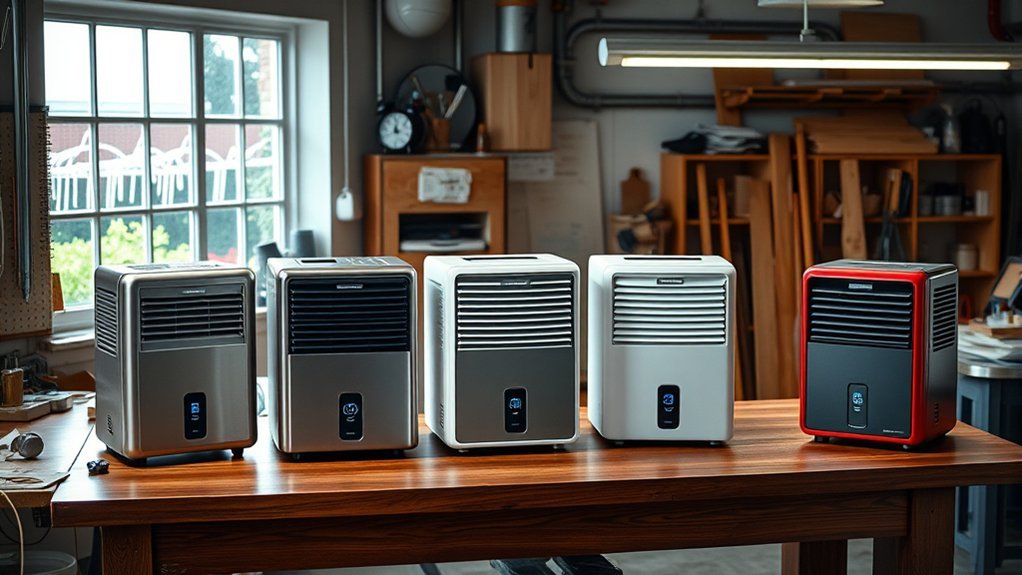
If you need a quiet dehumidifier for a large basement, garage, living area, or open-plan space, the best choice is not always the model with the largest number on its box. You should also compare operating noise, drainage, humidity controls, room layout, and the conditions used to calculate the advertised moisture-removal capacity.
Important category note
The products below are portable dehumidifiers. They can work well in large rooms and connected open areas, but they are not ducted whole-home dehumidifiers installed through an HVAC system. Closed doors, separate floors, and restricted airflow can reduce how much of a home one portable unit can control.
Quick verdict
- Best Overall: AEOCKY 80 Pint Smart Dehumidifier for its balance of low-noise operation, automatic controls, and continuous drainage.
- Best for High Moisture Loads: Gasbye DryPrime for its large tank, strong maximum-condition rating, and multiple operating modes.
- Best Drainage Flexibility: Vellgoo Max 64 Pint because it supports several practical drainage arrangements.
- Best for Simple Multi-Mode Control: Yaufey 5000 Sq. Ft. for buyers who want straightforward presets and adjustable humidity.
Quick Comparison
| Product | Best Use | Advertised Coverage | Advertised Maximum | Noise Information | Drainage | Amazon |
|---|---|---|---|---|---|---|
| AEOCKY 80 Pint Smart | Best overall balance | Up to 4,500 sq. ft. | Up to 80 pints under maximum conditions | Listing states approximately 43–45 dB | Tank or drain hose | Check Availability |
| Gasbye DryPrime | High moisture loads | Up to 4,500 sq. ft. | Up to 115 pints in hot, highly humid conditions | Listing states 45 dB | 1.7-gallon tank or hose | Check Availability |
| Vellgoo Max 64 Pint | Flexible drainage | Up to 4,000 sq. ft. | Up to 64 pints under maximum conditions | Confirm the current model’s dB specification | Tank, included hose, or compatible garden hose | Check Availability |
| Yaufey 5000 Sq. Ft. | Simple multi-mode use | Up to 5,000 sq. ft. | Up to 80 pints under maximum conditions | Low-fan operation listed below 52 dB | Tank or continuous hose drainage | Check Availability |
Capacity note: Advertised maximum pint ratings may be measured under hotter and more humid conditions than standardized capacity ratings. Square-foot figures are also marketing guidelines rather than guarantees. Compare the current model number, standardized capacity, temperature range, and test conditions before buying.
AEOCKY 80 Pint Smart Dehumidifier with Drain Hose
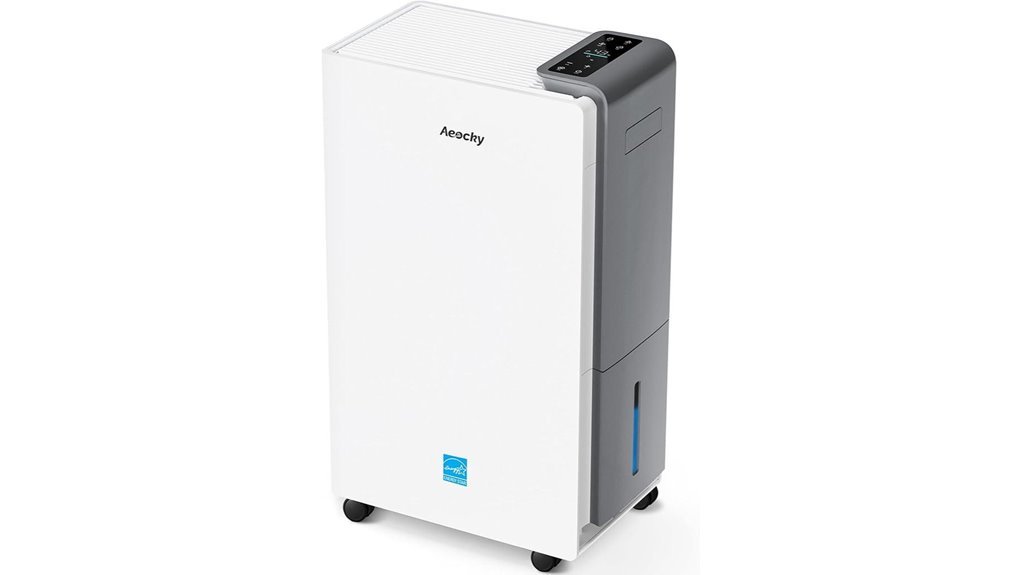
The AEOCKY 80 Pint Smart Dehumidifier is the strongest all-around option here for a large basement, open living area, or similarly humid space. Its listing advertises coverage up to 4,500 square feet and a maximum removal figure of 80 pints under high-temperature, high-humidity conditions.
The main buyer benefit is its balance of moisture control and noise-focused operation. The listing places its operating sound at approximately 43–45 dB, which may make it easier to use near occupied living spaces than a louder high-speed unit. Automatic humidity sensing, restart protection, multiple operating modes, and drain-hose support also reduce day-to-day attention.
Why You’ll Like It: It combines automatic humidity management, continuous drainage, and relatively low listed operating noise in a portable design.
Best For: Large basements, open-plan living areas, laundry spaces, or homeowners who expect to run a portable dehumidifier regularly.
Who Should Avoid This: Buyers who need even humidity control through several closed rooms or floors should consider a properly sized ducted system instead.
Pros:
- Relatively low listed noise range for a large portable compressor model.
- Smart humidity sensing and automatic restart support hands-off operation.
- Drain-hose compatibility reduces the need to empty the collection tank manually.
- Suitable for larger open areas when airflow is not heavily restricted.
Cons:
- The advertised 80-pint figure is a maximum-condition rating and should not be treated as its everyday standardized capacity.
- A portable unit may not control humidity evenly through closed doors or separate floors.
- Availability and the exact included accessories should be confirmed on the current listing.
Gasbye 4500 Sq.Ft. Dehumidifier with Drain Hose
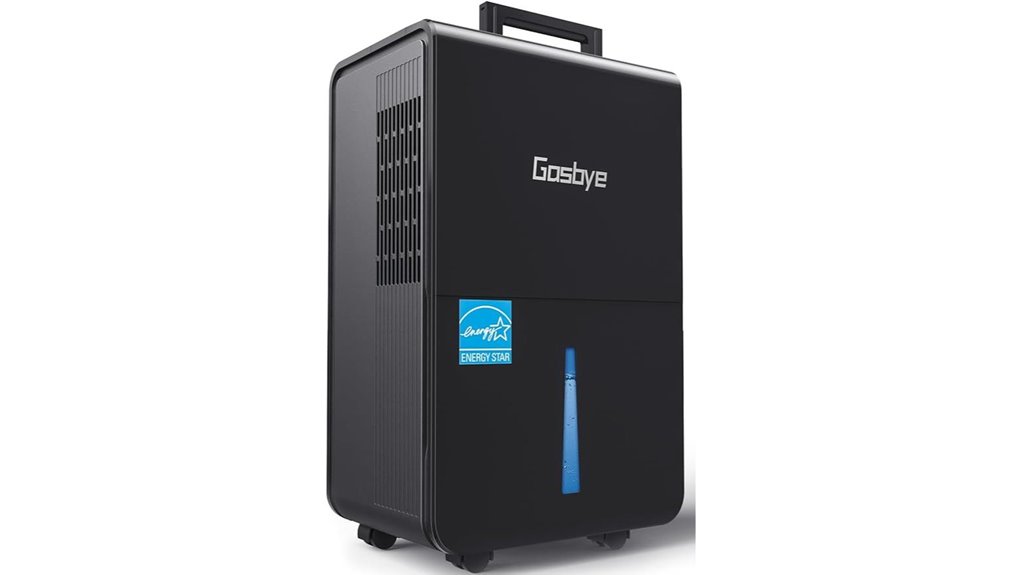
The Gasbye DryPrime is designed for buyers dealing with a persistently damp basement, garage, laundry area, or other large open space. Its listing advertises coverage up to 4,500 square feet and a maximum removal figure of 115 pints per day in hot, highly humid conditions.
That maximum number should not be confused with performance under normal household conditions. The listing provides lower moisture-removal figures at lower temperatures and humidity levels, making the Gasbye a good example of why buyers should compare test conditions rather than choosing solely by the largest pint number.
You can choose among Normal, Turbo, Comfort, and Continuous modes. The 1.7-gallon collection tank offers more capacity than many smaller portable units, while the drain hose is the better option for regular basement use. Automatic restart can also restore operation after a power interruption.
Why You’ll Like It: It offers a large tank, continuous drainage, several operating modes, and a seller-stated 45 dB noise level.
Best For: Damp basements, garages, workshops, and larger open areas where the unit may need to run for long periods.
Who Should Avoid This: It may be more machine than necessary for an occasional humidity problem in a small bedroom or office.
Pros:
- Large advertised coverage area for open basements and similar spaces.
- Multiple modes help balance moisture removal, noise, and energy use.
- Large collection tank and hose drainage provide flexible water removal.
- Automatic restart is useful in areas that experience brief power interruptions.
Cons:
- The 115-pint claim applies to unusually hot and humid test conditions.
- The approximately 43-pound body may be awkward to carry between floors.
- The tank can still fill quickly in a wet basement if continuous drainage is not used.
Vellgoo Max 64 Pint Dehumidifier for Basement
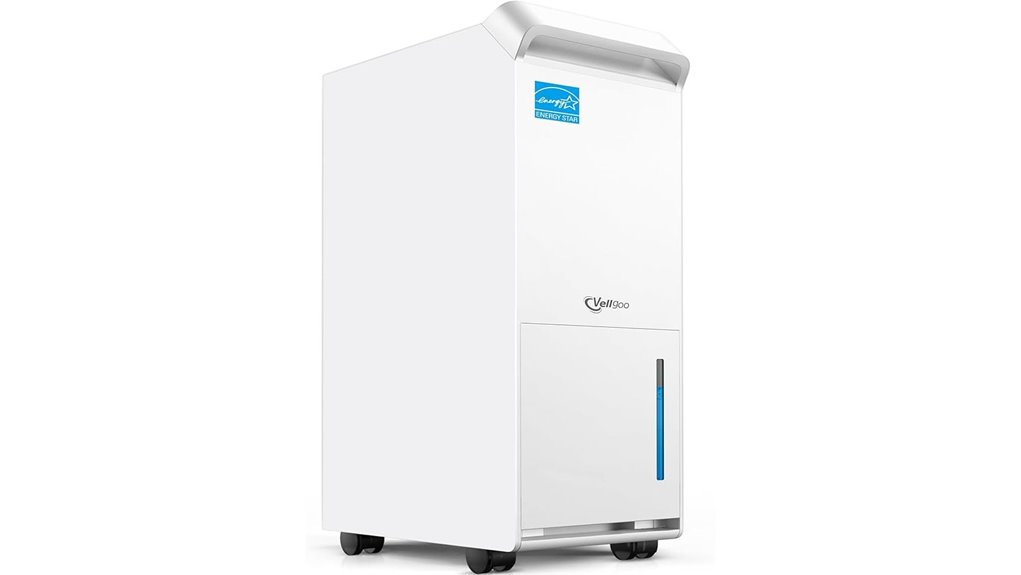
The Vellgoo Max 64 Pint Dehumidifier is a practical choice when drainage convenience matters as much as capacity. Its listing advertises coverage up to 4,000 square feet and a maximum removal figure of 64 pints per day under demanding humidity conditions.
You can set the target humidity within its available control range and let the unit cycle automatically. Automatic defrost helps protect operation in cooler conditions, while automatic restart can restore the previous settings after a power interruption.
The most useful feature is its drainage flexibility. Depending on your setup, you can use the collection tank, the included drain hose, or a compatible garden-hose connection. This makes it easier to position the unit near a suitable floor drain without relying on a small proprietary hose alone.
Why You’ll Like It: Its multiple drainage arrangements make it adaptable to basements, utility rooms, and longer-term installations.
Best For: Buyers who have a suitable gravity drain and want several ways to route collected water.
Who Should Avoid This: Buyers who require a verified ultra-low decibel rating should confirm the current specification before ordering.
Pros:
- Several drainage options suit different basement and utility-room layouts.
- Automatic humidity control reduces unnecessary continuous operation.
- Automatic defrost and restart add convenience in changing conditions.
- Washable filtration can reduce recurring replacement-filter costs.
Cons:
- The advertised 64-pint maximum is not directly comparable with every standardized rating.
- The current noise specification should be checked if bedroom use is a priority.
- Like other gravity-drain models, the hose must run continuously downhill to a suitable drain.
Yaufey 5000 Sq. Ft. Dehumidifier
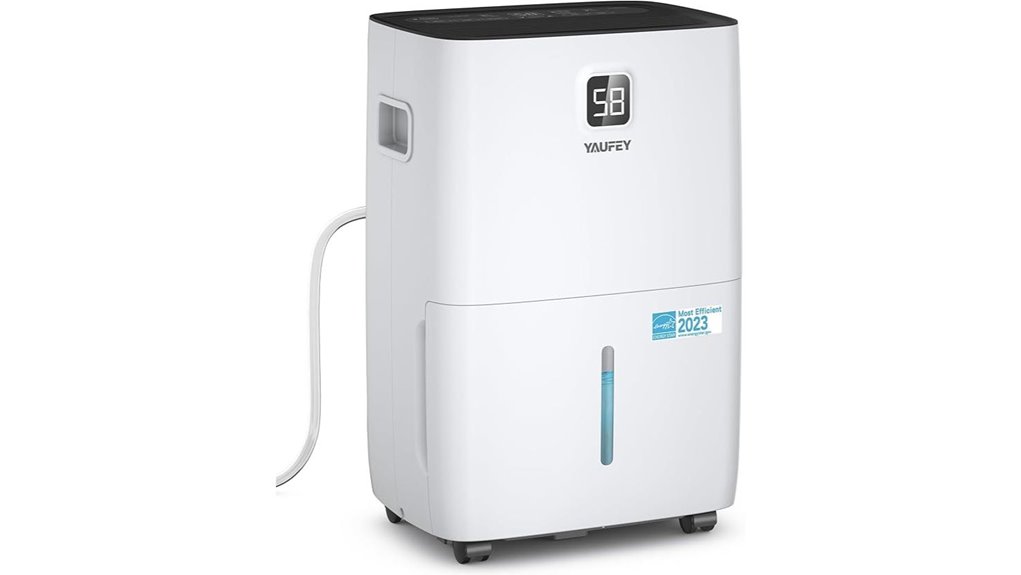
The Yaufey 5000 Sq. Ft. Dehumidifier is aimed at buyers who want simple presets rather than complicated programming. Its listing advertises a maximum removal figure of 80 pints per day and coverage up to 5,000 square feet, although practical performance will depend on room temperature, humidity, layout, and airflow.
Available modes are designed around common locations and operating needs, including living areas, basements, sleep-focused use, and continuous operation. The touch controls make the target humidity easy to adjust, while automatic shutoff, a child lock, wheels, and a carrying handle improve everyday usability.
Its low-fan operation is listed below 52 dB. That is reasonable for a large portable compressor unit, but it is not as quiet on paper as models advertising noise in the low-to-mid 40 dB range.
Why You’ll Like It: The controls are easy to understand, and its presets reduce the amount of manual adjustment required.
Best For: Large basements, garages, offices, and open living areas where straightforward controls are more important than the lowest possible noise figure.
Who Should Avoid This: Very light sleepers may prefer a model with a lower verified decibel specification for overnight bedroom use.
Pros:
- Clear operating modes make setup easier for first-time buyers.
- Adjustable humidity controls support both comfort and continuous drying.
- Wheels, a handle, automatic shutoff, and a child lock improve convenience.
- Continuous drainage is available for longer-term basement use.
Cons:
- The maximum 80-pint figure should not be treated as its everyday removal rate.
- Its low-mode noise figure is higher than some quieter alternatives in this guide.
- Advertised coverage may be reduced by closed rooms, separate floors, or poor airflow.
Factors to Consider When Choosing a Quiet Portable Dehumidifier
A quiet large-room dehumidifier should match the severity of your moisture problem, the room layout, your drainage route, and the amount of background noise you can tolerate. Capacity is important, but a larger advertised number does not automatically mean better performance in your home.
Portable Versus Ducted Whole-Home Models
A portable dehumidifier sits inside the space it is treating and depends on air circulating back to the unit. It can work well in a basement, garage, open-plan floor, or large connected area. However, closed bedroom doors, stairways, walls, and separate HVAC zones can limit its reach.
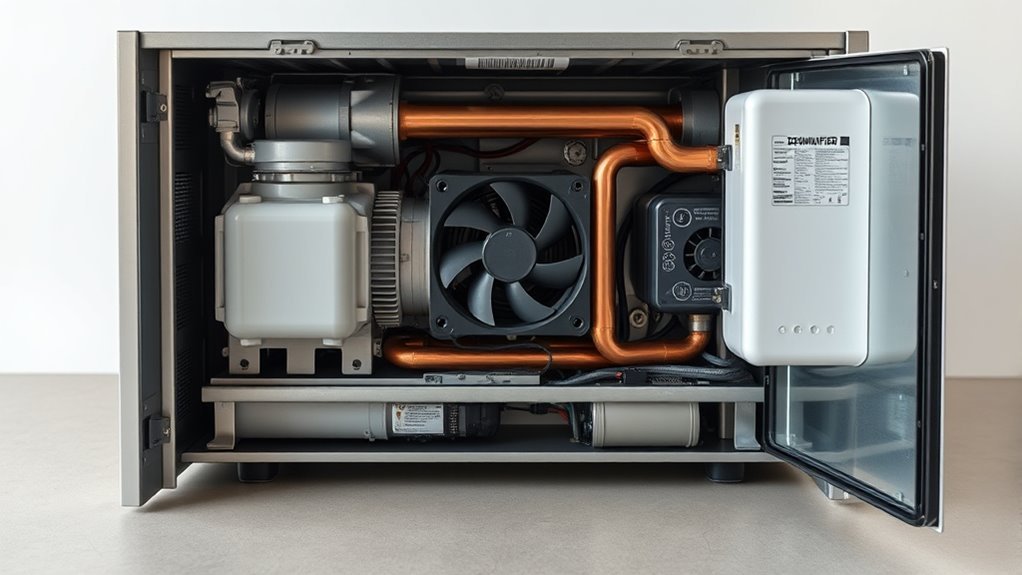
A true ducted whole-home dehumidifier is installed as part of, or alongside, the home’s HVAC ductwork. That approach can provide more even control throughout multiple rooms but requires proper sizing, drainage planning, electrical work, and usually professional installation.
Compare Capacity Test Conditions
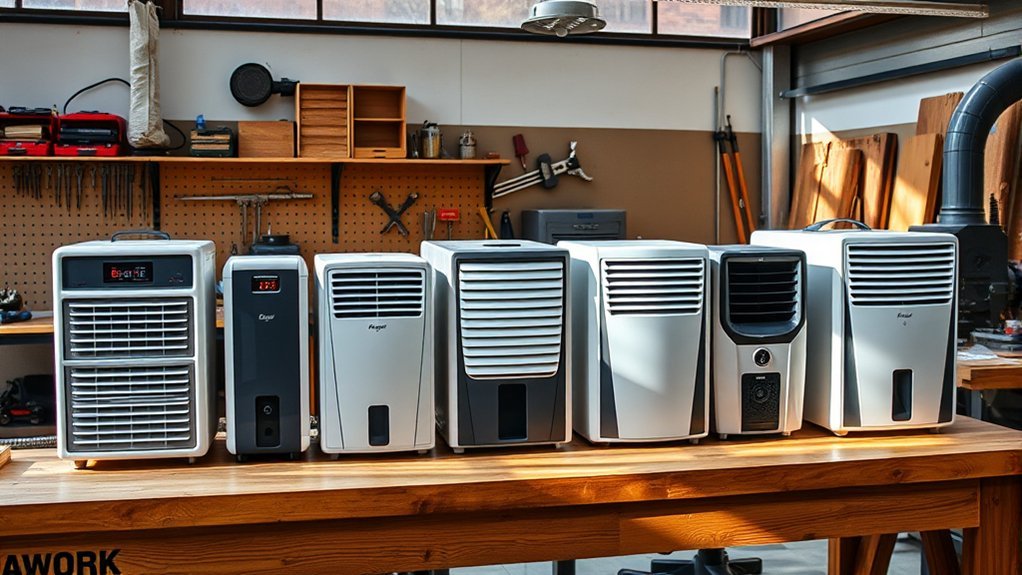
Do not compare two products only by the largest pint number in their titles. A seller may advertise a maximum measured at high temperature and humidity, while another product may emphasize a lower standardized capacity measured under less extreme conditions.
Before buying, check:
- The exact model number
- The standardized pint-per-day capacity
- The temperature and humidity used for the maximum claim
- The minimum operating temperature
- The integrated energy factor when available
Noise Level Ratings
Noise is normally measured in decibels, but the listed figure may apply only to the lowest fan setting. Turbo or continuous modes can sound noticeably louder.
For a basement or garage, moderate fan noise may not matter. For a bedroom, nursery, office, or living room, look for a clearly stated low-mode rating and check whether the compressor produces noticeable cycling sounds in addition to fan noise.
Coverage Area and Layout
Advertised square-foot coverage is a starting point, not a guarantee. A dehumidifier will usually control one open basement more effectively than the same total square footage divided among several closed rooms.
Consider:
- Whether doors will remain open
- Ceiling height and total air volume
- Indoor temperature
- Water intrusion or foundation dampness
- Laundry, shower, or cooking moisture
- Air circulation between problem areas
If humidity remains high in distant rooms, improve airflow, reposition the unit, use a second appropriately sized portable model, or consider a ducted solution.
Humidity Control Precision
For many homes, a target around 40% to 50% relative humidity provides a practical balance between comfort and moisture control. Seasonal conditions may require adjustment.
A built-in humidistat should turn the compressor off when the target is reached and restart it when humidity rises. This is more efficient and comfortable than running continuously when continuous drying is unnecessary.
Drainage Options Available
Manual tank drainage is convenient when the unit is used occasionally, but a large dehumidifier can fill its tank quickly in a very damp area. Continuous drainage is usually better for regular basement use.
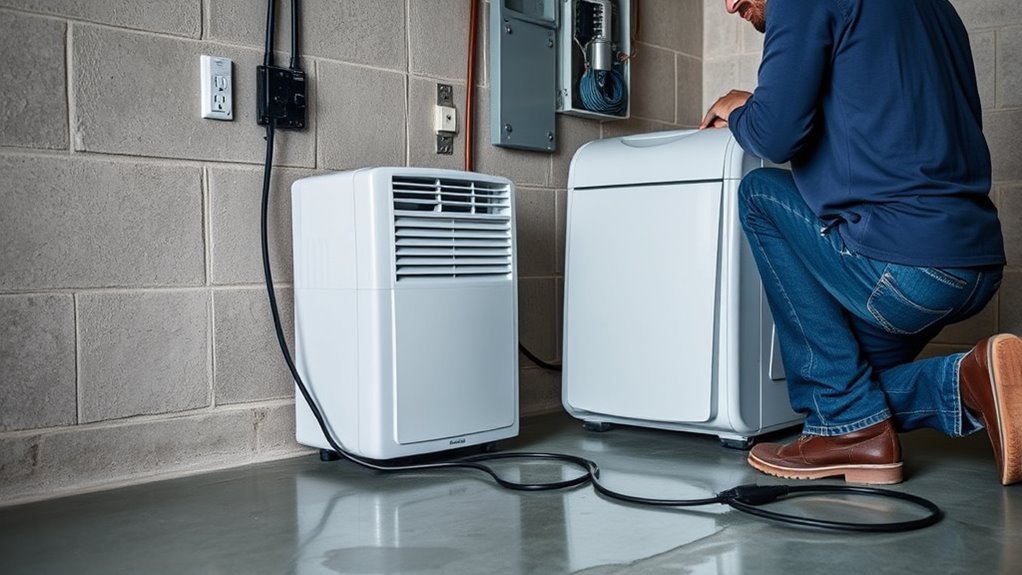
Most products in this guide use gravity drainage. The hose must slope downward without loops, kinks, or uphill sections. A gravity hose cannot move water to a sink or window above the unit. For that setup, you need a model with a built-in pump or a separate compatible condensate pump.
Energy Efficiency and Model Verification
Compare the exact model number rather than relying only on certification language in a marketplace title. Product variations can differ in capacity and efficiency even when they share the same Amazon page.
Useful efficiency features include:
- An accurate humidistat
- Automatic compressor cycling
- Low-temperature defrost
- Multiple fan speeds
- A clean, washable filter
- A current standardized energy-efficiency listing for the exact model
Before You Buy Checklist
- Confirm the exact model and capacity shown after opening the Amazon link.
- Check whether the pint figure is standardized or a maximum-condition claim.
- Measure the area and consider walls, doors, and separate floors.
- Confirm the low-mode and high-mode noise information.
- Plan where the hose will drain before selecting continuous drainage.
- Check the tank size if manual emptying will be your primary method.
- Review the minimum operating temperature for a cool basement.
- Check the current warranty, return terms, seller, and included accessories.
- Repair plumbing leaks, exterior water intrusion, or drainage problems instead of relying on a dehumidifier alone.
Frequently Asked Questions
Are These True Whole-House Dehumidifiers?
No. The products in this guide are portable dehumidifiers intended for large rooms, basements, garages, or connected open areas. A true whole-home model is normally integrated with ductwork so it can treat air throughout multiple rooms more evenly.
How Often Should I Clean the Filter?
Check the filter at least once a month and follow the manufacturer’s cleaning schedule. Homes with pets, renovation dust, or heavy airborne debris may require more frequent cleaning. Reduced airflow, extra noise, or visible dirt are signs that the filter needs attention.
Can a Dehumidifier Lower Cooling Costs?
Lower humidity can make indoor air feel more comfortable, but electricity savings are not guaranteed. The result depends on climate, air-conditioning use, the dehumidifier’s efficiency, operating hours, and your electricity rate. Choose the correct size and use automatic humidity control rather than running the unit continuously without need.
Will a Dehumidifier Help With Mold and Dust Mites?
Controlling excess humidity can make indoor conditions less favorable for mold growth and dust mites. However, a dehumidifier does not remove existing mold, repair a leak, or replace professional remediation when contamination is extensive.
What Humidity Setting Should I Use?
A setting around 40% to 50% relative humidity works well for many homes. Adjust it based on season, condensation, comfort, and basement conditions. Avoid setting the target unnecessarily low because that can increase operating time and energy use.
Do These Dehumidifiers Need Professional Installation?
Portable models normally need only a suitable grounded outlet, adequate clearance, and a correctly routed drain hose when continuous drainage is used. Ducted whole-home systems usually require professional sizing and installation because they connect to drainage, electrical service, and the home’s air-distribution system.
How Accurate Are Square-Foot Coverage Ratings?
They are useful for initial comparison but should not be treated as exact guarantees. Temperature, humidity severity, ceiling height, room separation, airflow, and water intrusion can all reduce effective coverage.
Can I Run a Gravity Drain Hose Uphill?
No. A gravity drain hose must slope downward from the dehumidifier to the drain. To move water upward to a sink, window, or elevated drain, use a dehumidifier with a built-in pump or an appropriately installed condensate pump.
Conclusion
The best quiet dehumidifier is the one that fits your actual space, moisture load, drainage route, and tolerance for background sound. The AEOCKY 80 Pint Smart Dehumidifier offers the best overall balance for many large-room buyers, while the Gasbye DryPrime is better suited to heavier moisture loads. Choose the Vellgoo Max 64 Pint when drainage flexibility is the priority, or the Yaufey 5000 Sq. Ft. when you prefer simple mode-based controls.
Final recommendation
Start with the AEOCKY if low listed noise and automatic control are your priorities. Choose the Gasbye for a persistently damp open basement. Before ordering either one, confirm the exact model, current standardized capacity, seller, included drain hose, and availability on Amazon.