As an Amazon Associate I earn from qualifying purchases. Product details below are based on current manufacturer and retailer listings; capacities and specs can change, so always confirm on the product page before buying.
The top garden carts of 2026 include the Suncast 15.5-Gallon Garden Cart, known for its lightweight and user-friendly design, perfect for light-duty chores around the yard and home. The VIVOHOME Heavy Duty Garden Cart offers impressive durability and an 880 lb load capacity, ideal for heavier hauling. Finally, the Gorilla Carts 7 Cu Ft Dump Garden Cart features a patented dump design and a robust 1,200 lb weight capacity, making it the pick for the biggest, toughest gardening jobs.
Quick Verdict
- Best for Small Spaces / Light Tasks: Suncast 15.5-Gallon Garden Cart
- Best All-Around Heavy-Duty Cart: VIVOHOME Heavy Duty Garden Cart Utility Wagon
- Best for Big Properties & Tow-Behind Use: Gorilla Carts 7 Cu Ft Dump Garden Cart
Quick Comparison
| Cart | Capacity | Material | Best For |
|---|---|---|---|
| Suncast 15.5-Gallon Garden Cart | 15.5 gallons, ~10 lb cart weight | Weather-resistant resin | Seniors, small yards, light indoor/outdoor tasks |
| VIVOHOME Heavy Duty Garden Cart | Up to 880 lbs | Fully-welded steel/iron mesh | Homeowners hauling bulky or awkward loads |
| Gorilla Carts 7 Cu Ft Dump Cart | Up to 1,200 lbs, 7 cu ft | Steel frame, rust-resistant poly bed | Landscapers, large properties, tow-behind use |
Suncast 15.5-Gallon Garden Cart on Wheels
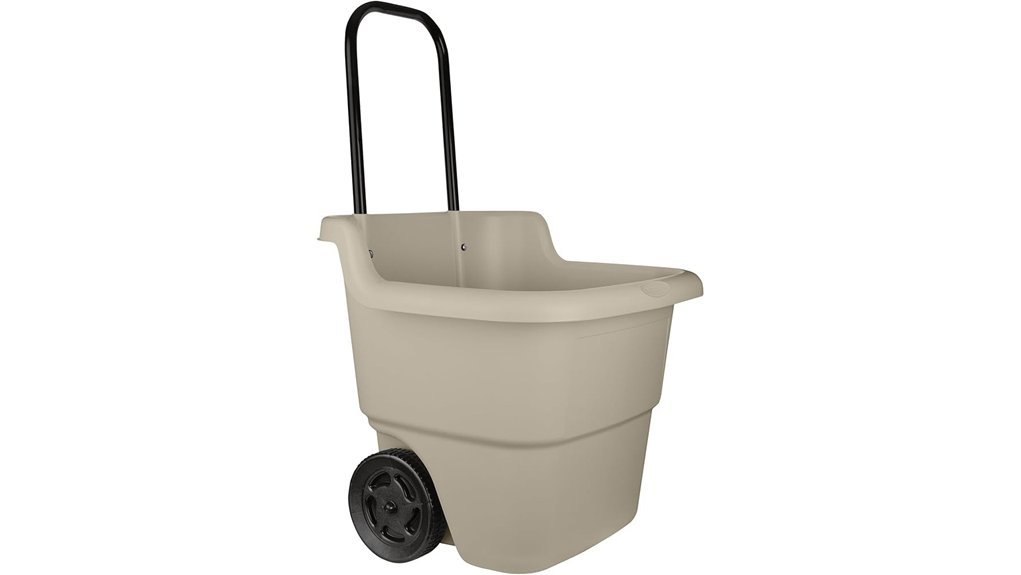
The Suncast 15.5-Gallon Garden Cart on Wheels stands out as an ideal choice for both gardening enthusiasts and everyday users, particularly due to its lightweight construction of about 10 lbs, which enhances mobility for adults and seniors. Made from durable resin, this weather-resistant cart is perfect for various tasks, from hauling firewood and groceries to gardening essentials. Its compact design allows for easy storage in closets or sheds. With user-friendly features that make it accessible for all ages, the Suncast Garden Cart serves effectively as a versatile lawn cart, mini wheelbarrow, and a reliable helper for indoor and outdoor chores.
Why You’ll Like It: If you just want something easy to pull around without fighting the weight of the cart itself, this is the one — it’s built for repeat, low-effort trips rather than one big heavy haul.
Best For: Gardening enthusiasts, seniors, and anyone seeking a lightweight, versatile cart for indoor and outdoor tasks.
Who Should Avoid This: Anyone regularly moving heavy loads like soil, gravel, or firewood in bulk — the 15.5-gallon capacity and lighter-duty resin build aren’t meant for that.
Pros:
- Lightweight design at about 10 lbs, making it easy to maneuver.
- Weather-resistant resin construction ensures durability in various conditions.
- Compact size allows for convenient storage in small spaces.
Cons:
- Limited capacity of 15.5 gallons may not be sufficient for larger tasks.
- Resin material may not be as sturdy as metal alternatives for heavy-duty use.
- Wheels may struggle on very rough terrain compared to larger carts.
VIVOHOME Heavy Duty Garden Cart Utility Wagon
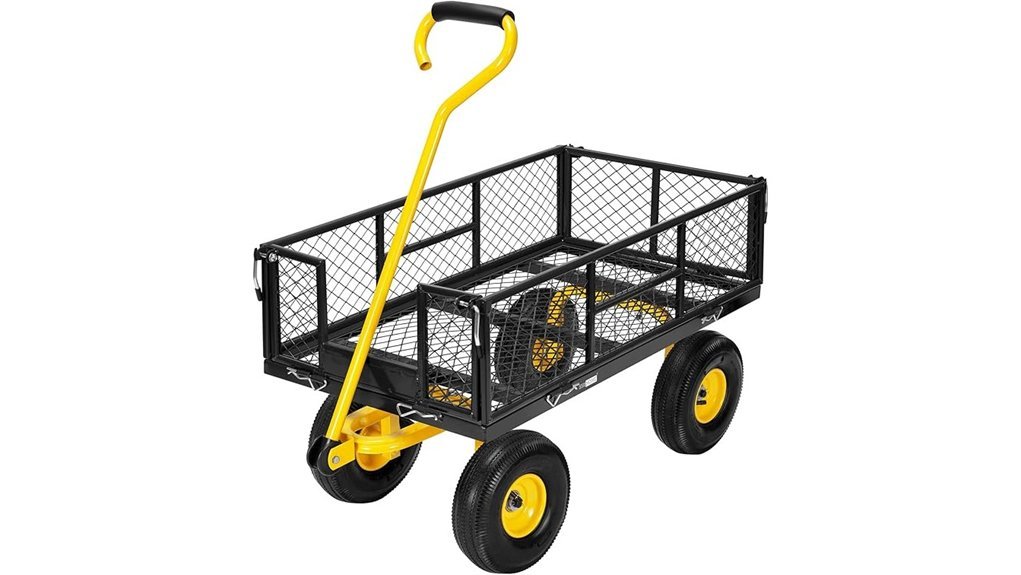
For gardeners needing robust support, the VIVOHOME Heavy Duty Garden Cart Utility Wagon stands out with its impressive 880 lb load capacity. Constructed from fully-welded, high-quality metal, this durable cart features an all-iron mesh bed and sturdy hinges that enhance its longevity. The removable mesh sides allow for versatile use as a flatbed trailer, accommodating larger items. Its pneumatic tires guarantee good elasticity and noise reduction, while the ergonomic handle design makes turning and maneuvering easier, even when loaded. Ideal for transporting heavy or awkward items, this cart is a valuable tool for various gardening and utility tasks.
Why You’ll Like It: The removable sides mean you’re not locked into one shape of load — stack loose material inside, or drop the sides and haul something long and awkward on the flatbed.
Best For: Gardeners and homeowners seeking a durable and versatile cart for transporting heavy or awkward items.
Who Should Avoid This: Anyone who mainly needs to dump loose material like mulch or soil repeatedly — a dump-style cart will save more effort for that job.
Pros:
- High load capacity of 880 lbs, making it suitable for large tasks.
- Removable mesh sides convert it into a flatbed trailer for added versatility.
- Pneumatic tires provide good elasticity and noise reduction for smoother transport.
Cons:
- Weight may be cumbersome for some users when not loaded.
- Tires ship partially inflated and may need adjustment before use.
- Initial assembly is required and may take some time.
Gorilla Carts 7 Cu Ft Dump Garden Cart
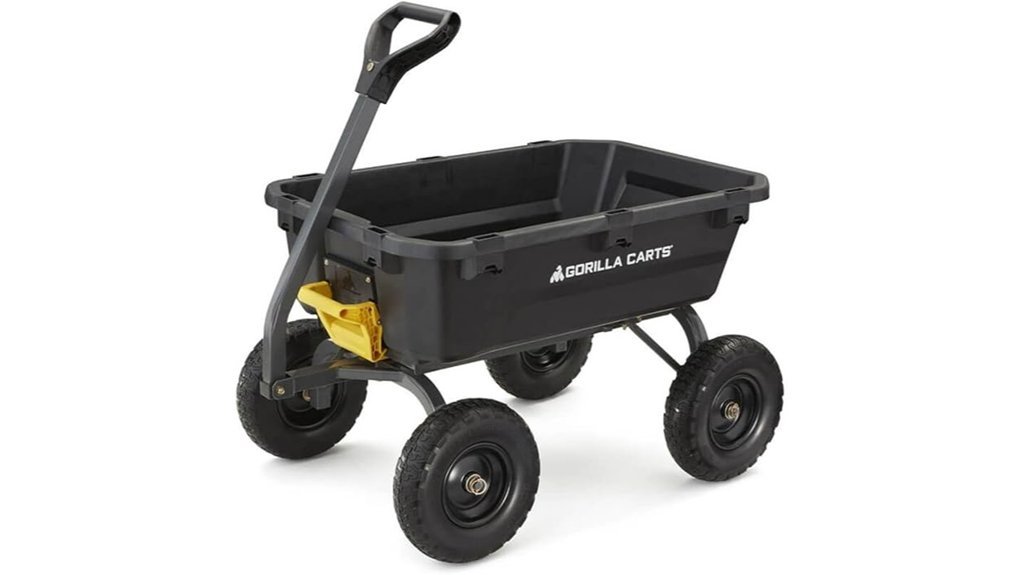
Offering a generous 7 cu ft capacity, the Gorilla Carts Dump Garden Cart is ideal for avid gardeners and landscapers. With a robust 1,200 lb weight capacity, this cart features a patented roll-over dump design for efficient unloading. Users can choose between a hand or tractor tow handle for versatility, complemented by tight-turning steering for easier navigation on various terrains. The flat-free tires guarantee a maintenance-free experience, while the durable steel frame and rust-resistant poly bed enhance longevity. Backed by a 1-year warranty, this cart is built for strength and performance across diverse gardening tasks.
Why You’ll Like It: When the job is “move a lot of heavy material, over and over, and dump it fast,” the roll-over dump design saves your back and your time compared to hand-shoveling out of a flatbed.
Best For: Avid gardeners and landscapers seeking a durable and versatile cart for heavy-duty tasks.
Who Should Avoid This: Anyone with a small yard or storage space — this is the largest and heaviest cart of the three, and it needs assembly and dedicated storage room.
Pros:
- Versatile towing options with a 2-in-1 hand or tractor tow handle.
- Efficient unloading with the patented roll-over dump design.
- Maintenance-free flat-free tires built for tough terrain.
Cons:
- Heavy weight may make it difficult to maneuver for some users when empty.
- Assembly required, which could be a hassle for those not handy.
- Limited warranty period of just one year.
Factors to Consider When Choosing Garden Carts 2026: Top Picks for Home and Yard
When selecting a garden cart for 2026, several key factors warrant consideration. These include load capacity, material durability, and design for ideal maneuverability, which all contribute to the cart’s effectiveness. Additionally, understanding wheel specifications and versatile use cases can greatly enhance the overall gardening experience.
Load Capacity Considerations
Choosing the right garden cart hinges greatly on understanding its load capacity, which can vary considerably from as little as 15.5 gallons for lighter tasks to a robust 1,200 pounds for heavy-duty applications. Higher capacities, particularly those of 880 pounds or more, are ideal for transporting bulky items such as firewood, soil, or equipment. It’s crucial to confirm the cart’s design meets specific needs; some models feature removable sides for added versatility. Additionally, selecting carts made from durable materials like high-quality metal or tough resin will help them withstand heavy loads and outdoor conditions. Maneuverability is another key factor; carts with ergonomic handles and larger wheels facilitate easier transport, even when fully loaded.
Material Durability Factors
Durability stands as a critical factor in selecting a garden cart, as it directly influences the cart’s performance and longevity. Carts constructed from high-quality metal and tough resin offer enhanced resilience against various weather conditions and rugged terrains. Fully-welded metal designs, especially those featuring anti-rust finishes, support long-lasting performance and resistance to wear and tear. Weather-resistant materials like resin shield against moisture and UV damage, further extending the cart’s lifespan. Additionally, the choice of tires—whether flat-free or pneumatic—affects durability, allowing carts to navigate rough surfaces without puncturing. A rust-resistant frame paired with a poly bed not only enhances durability but also simplifies cleaning and maintenance, helping the cart stay functional over time.
Maneuverability and Design
Maneuverability and design play pivotal roles in the effectiveness of garden carts, as they directly impact how easily users can navigate their outdoor spaces. A lightweight design considerably enhances maneuverability, allowing users of all ages to handle the carts with minimal effort. Ergonomic handle designs facilitate smoother turning and navigation, enabling easier hauling in any direction, even when loaded. Compact sizes contribute to straightforward storage and transport, fitting effortlessly into tight spaces like closets or garages. Larger wheels with pneumatic features improve traction and adaptability to varied terrains, helping ensure stability during transport. Additionally, tight-turning steering mechanisms allow for precise maneuvering around obstacles, making garden tasks more efficient and enjoyable.
Wheel Specifications Importance
The effectiveness of garden carts is markedly influenced by wheel specifications, which are essential for good performance across various terrains. Wheel size and type directly impact maneuverability; larger wheels generally enhance load-carrying capabilities and impact resistance. Pneumatic tires provide elasticity and noise reduction, making them suitable for uneven surfaces, while flat-free tires offer reliability on rugged terrain without maintenance concerns. Additionally, wheel design, including width and tread pattern, contributes to stability and traction, critical for safely transporting heavy loads. Durable construction, using high-quality materials and anti-rust features, extends the cart’s lifespan. Wheel placement also affects the ability to navigate tight spaces and obstacles, making this an important factor for efficient handling.
Versatile Use Cases
While many may think of garden carts solely for transporting plants and soil, their versatility extends far beyond these tasks. These carts can efficiently haul firewood, groceries, laundry, mulch, and more, making them useful for both indoor and outdoor activities. Many models feature removable sides or convertible designs, allowing them to serve as flatbed trailers for larger items. With weight capacities reaching up to 1,200 lbs, they are well-suited for heavy-duty yard work. Ergonomic designs and easy-turning steering enhance maneuverability, helping with navigation through tight spaces and uneven terrains. Additionally, weather-resistant materials and durable construction help garden carts withstand varying environmental conditions, making them a solid choice for diverse gardening and household tasks.
Storage and Portability
When considering garden carts, storage and portability play essential roles in helping ensure users can effectively manage their gardening tasks. Lightweight designs, typically around 10 lbs, enhance maneuverability for users of all ages. Compact sizes facilitate convenient storage in limited spaces like closets or sheds, making them ideal for homeowners with smaller yards. Multi-functional garden carts serve various purposes, from hauling firewood to transporting groceries, offering flexibility for diverse tasks. Additionally, weather-resistant materials such as tough resin or metal support durability, allowing outdoor storage without damage concerns. Ergonomic handles and easy-turning designs further improve maneuverability, enabling users to transport items easily in tight spaces, thereby enhancing the overall gardening experience.
Assembly and Maintenance Ease
Selecting a garden cart involves careful consideration of assembly and maintenance ease, as these factors greatly influence user experience. Models that offer hassle-free assembly support quick setup with minimal tools required, which is essential for busy gardeners. Durability is also key; carts made from rust-resistant and weather-resistant materials demand little to no maintenance. Features such as flat-free tires eliminate the need for regular inflation, further simplifying upkeep. User-friendly designs, including quick-release dumping mechanisms, streamline the unloading process, enhancing efficiency. Additionally, carts that come with clear assembly instructions and warranty support provide peace of mind regarding durability and performance. By prioritizing these aspects, gardeners can select a cart that meets their needs with minimal hassle.
Before You Buy: Quick Checklist
- How much weight will you typically carry — occasional light loads or regular heavy hauls?
- Do you need to dump loose material (soil, mulch) or move bulky/awkward items (furniture, firewood, boxes)?
- How much storage space do you have for the cart when it’s not in use?
- Will you be towing it behind a mower or tractor, or pulling it by hand?
- Do you need it to handle rough or uneven terrain, or mostly flat paths and driveways?
Frequently Asked Questions
What Materials Are Garden Carts Typically Made From?
Garden carts are typically made from durable materials such as steel, aluminum, or plastic/resin. These materials support strength and longevity, while some models feature wooden components for aesthetic appeal and added functionality in outdoor settings.
How Do I Maintain My Garden Cart?
Maintaining a garden cart seems simple; yet, neglect often leads to rust and wear. Regularly cleaning, lubricating wheels, and inspecting for damage helps preserve longevity. Ironically, the cart that carries burdens requires care to remain useful.
Can Garden Carts Be Used for Other Purposes?
Garden carts can indeed be repurposed for various tasks. They are useful for transporting tools, firewood, or groceries, and serve as mobile storage units for outdoor equipment, making them versatile assets beyond gardening.
What Weight Capacity Should I Look For?
When considering weight capacity, one should prioritize stability, durability, and ease of use. For light household and small garden tasks, a lower-capacity cart is usually enough; for regular heavy hauling of soil, mulch, or equipment, look toward carts rated for several hundred pounds or more, and check the manufacturer’s recommended (not just maximum) load for long-term use.
Are Garden Carts Environmentally Friendly?
Garden carts can be environmentally friendly, particularly those made from sustainable materials or recycled components. Their utility in reducing reliance on gasoline-powered equipment for gardening tasks further enhances their eco-friendly appeal in sustainable gardening practices.
How Much Should I Expect to Pay for a Garden Cart?
Prices vary by capacity, material, and retailer, and change over time, so it’s best to check the current listing for each cart rather than relying on a fixed number. Generally, lighter resin carts cost less than heavy-duty steel or dump-style carts.
Conclusion
Selecting the right garden cart comes down to matching the cart’s capacity and design to how you’ll actually use it. If you mostly need something light and easy to pull for everyday chores, the Suncast is the simplest choice. If you need to haul heavier or bulkier loads regularly, the VIVOHOME’s flatbed versatility is a strong middle ground, and if you’re managing a larger property or serious landscaping work, the Gorilla Carts’ 1,200 lb dump design is built for that scale. Weighing capacity, durability, and ease of use against your own yard and workload will help you land on the right cart for 2026 and beyond.