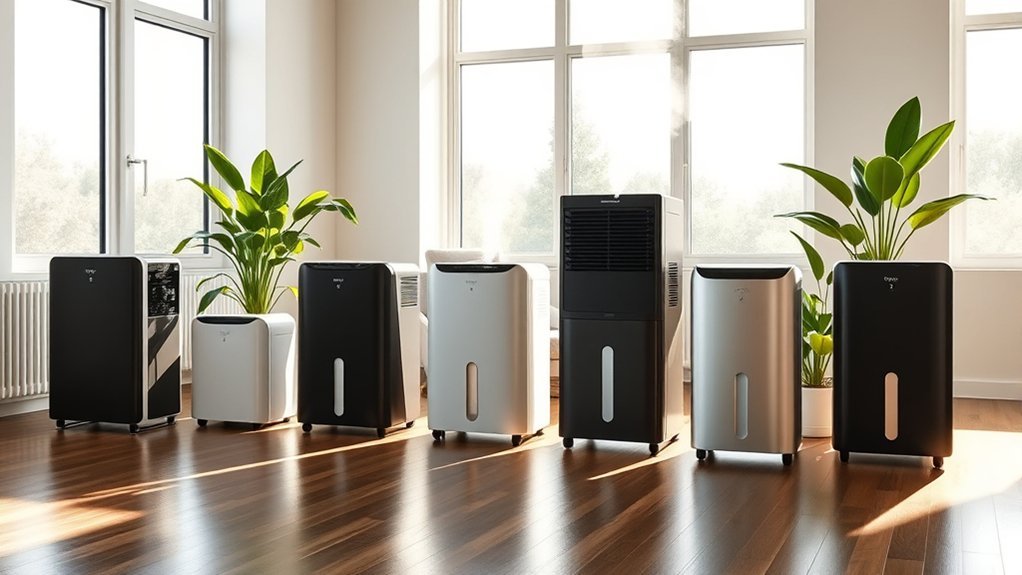
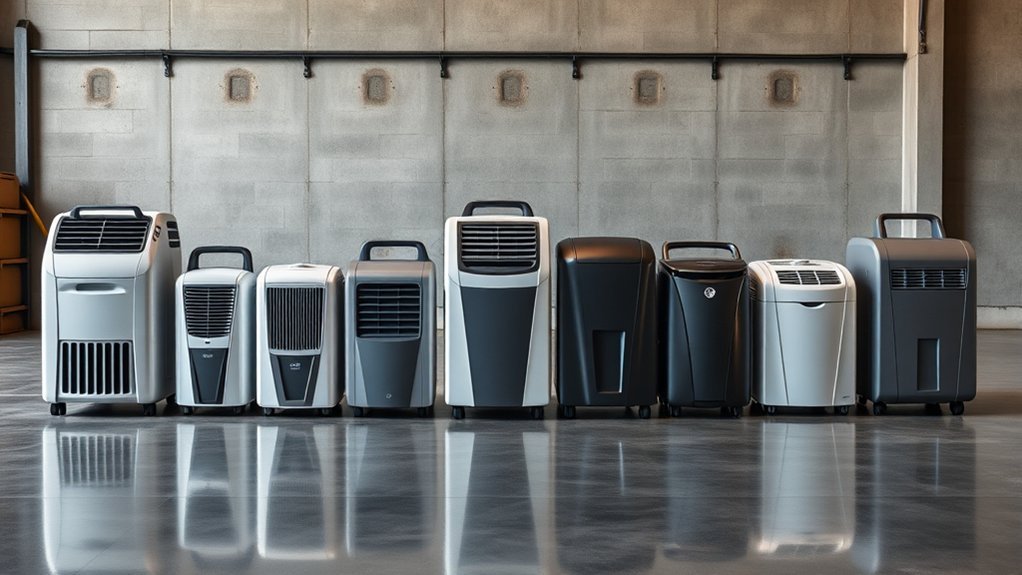
If you are searching for a home dehumidifier for a basement, bedroom, bathroom, laundry area, or other damp room, compare moisture-removal capacity under clearly stated test conditions, drainage, tank size, noise, operating temperature, and energy efficiency. Advertised square-foot coverage is only a rough guide. This updated guide compares five relevant portable compressor dehumidifiers from AEOCKY, hOmeLabs, Waykar, Kesnos, and KeepGlad. These products were not personally laboratory tested by this site; recommendations are based on published specifications, official certification records where a model match could be confirmed, practical features, and buyer fit.
How we evaluated these dehumidifiers
- Published moisture-removal capacity and the conditions used for that claim.
- Tank size, gravity-drain support, hose inclusion, and pump limitations.
- Humidistat controls, restart behavior, timer, defrost, filter access, and portability.
- Exact-model ENERGY STAR verification where a reliable match was available.
- Clear buyer fit, including room type, moisture load, noise sensitivity, and maintenance needs.
Quick verdict
- Best overall for large damp spaces: AEOCKY 4,500 Sq. Ft. Dehumidifier
- Best smart controls: hOmeLabs 4,500 Sq. Ft. Wi-Fi Dehumidifier
- Best quiet compact option: Waykar 34-Pint Dehumidifier
- Best for bedrooms and medium rooms: Kesnos 30-Pint Dehumidifier
- Best large tank: KeepGlad 80-Pint Dehumidifier
Quick Comparison of the Best Home Dehumidifiers
| Product | Best For | Published Capacity | Tank | Drainage | Amazon |
|---|---|---|---|---|---|
| AEOCKY RHEA-001 | Large basements and open damp areas | Up to 80 pints/day in hot, very humid conditions; lower under current standardized conditions | About 1.45 gallons | Tank, included hose, or garden-hose adapter | Check Price on Amazon |
| hOmeLabs Wi-Fi | Remote monitoring and voice control | 32 pints/day at 80°F and 60% RH; up to 80 pints/day at 95°F and 90% RH | 1 gallon | Tank or continuous gravity drain | Check Product Details on Amazon |
| Waykar PD160B-PRO | Quiet everyday moisture control | 10.16 pints/day under the current ENERGY STAR test method; up to 34 pints/day at 95°F and 90% RH | 0.62 gallon | Tank or included gravity hose | Check Current Amazon Availability |
| Kesnos CTH30B | Bedrooms, offices, and medium rooms | Up to 30 pints/day at 95°F and 90% RH | 0.39 gallon | Tank or included 3.3-foot gravity hose | See Today’s Price on Amazon |
| KeepGlad FDD20-5270ZV1R5-E | Large tank and fewer emptying trips | Up to 80 pints/day at 95°F and 90% RH | 1.84 gallons | Tank or included 3.4-foot gravity hose | Check Price on Amazon |
AEOCKY 4500 Sq.Ft Smart Dehumidifier with Drain Hose
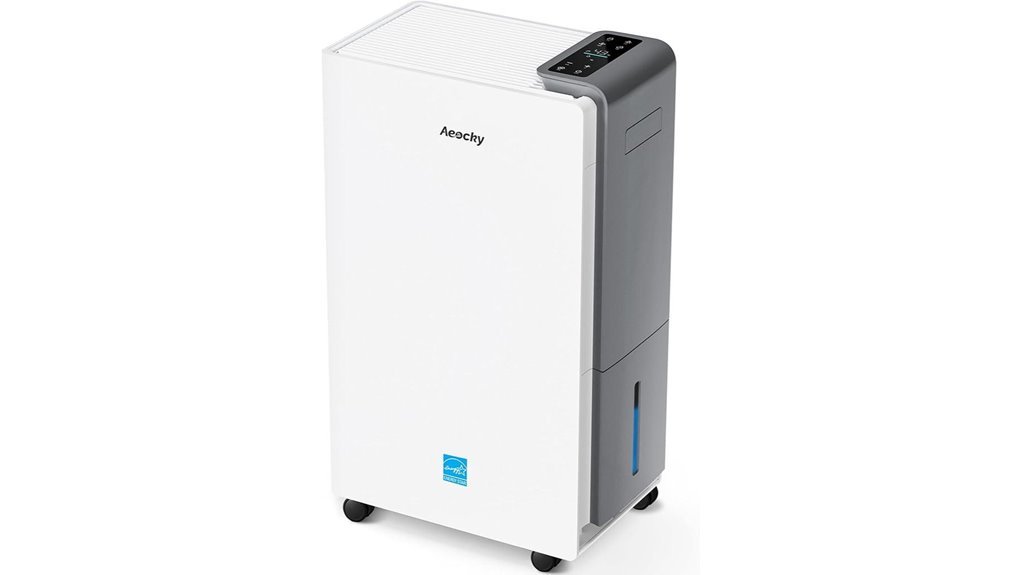
Best Overall for Large Damp Spaces
AEOCKY’s RHEA-001 compressor dehumidifier is the strongest all-around fit in this group for a large basement, open living area, laundry space, or another room with a heavy moisture load. The seller publishes a maximum of up to 80 pints per day in hot, very humid conditions. A matching RHEA model family also appears in the ENERGY STAR product database with a much lower capacity under the current standardized test method, which is why the two figures should not be treated as interchangeable.
Why You’ll Like It: The humidistat, timer, sleep mode, child lock, auto restart, included drain hose, and garden-hose adapter support long-running basement use without requiring constant attention.
Who Should Buy This: Choose it for persistent dampness, a large open layout, laundry drying, or a space where continuous drainage is available.
Who Should Avoid It: A small bedroom with only mild seasonal humidity may not need this size, weight, or purchase cost.
Pros:
- High published maximum output for hot, severely humid conditions.
- Humidistat, timer, sleep mode, child lock, and automatic restart.
- Tank, included hose, and garden-hose adapter provide flexible drainage.
- ENERGY STAR model-family data is available for verification.
Cons:
- The 80-pint maximum is not the current standardized rating.
- The tank can still fill quickly when the room is very damp.
- More capacity and bulk than most small rooms require.
hOmeLabs Wi-Fi Dehumidifier 4,500 Sq Ft
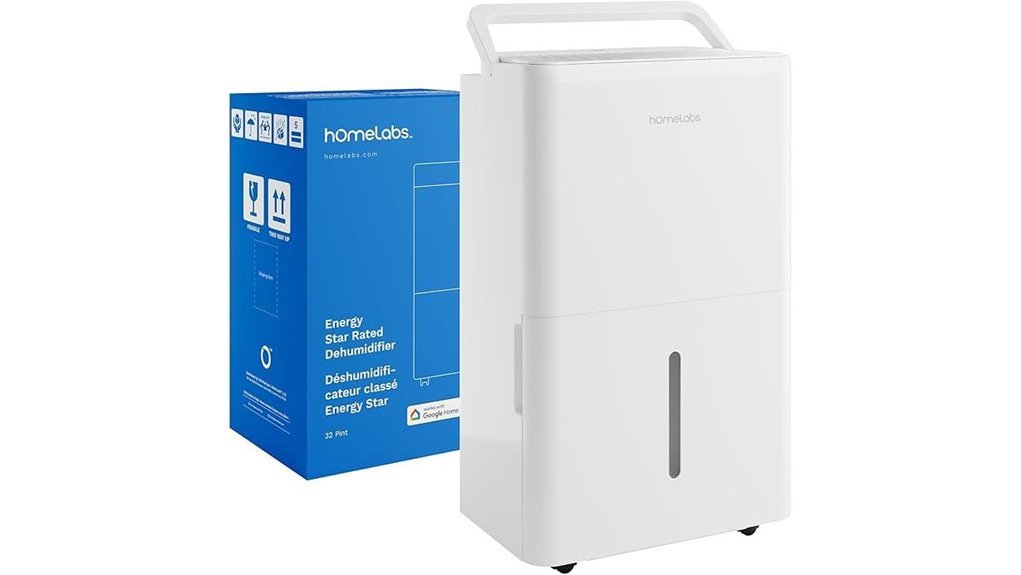
Best Smart Dehumidifier
The hOmeLabs Wi-Fi model is designed for buyers who want to check humidity, change settings, and create timers without walking to the unit. The manufacturer publishes 32 pints per day at 80°F and 60% RH and a higher maximum of 80 pints per day at 95°F and 90% RH. Those conditions should remain visible because “32-pint” and “80-pint maximum” describe different tests.
Why You’ll Like It: Smartphone control, Alexa and Google Assistant support, a 1-gallon tank, full-tank shutoff, washable filter, wheels, and continuous-drain support make it practical for a basement or office that is not checked often.
Who Should Buy This: It is best for buyers who value remote monitoring and already have reliable Wi-Fi in the installation area.
Who Should Avoid It: Skip the smart premium if you prefer simple physical controls, do not use voice assistants, or have weak Wi-Fi in the room.
Pros:
- Remote app control with supported voice assistants.
- Manufacturer clearly states two moisture-removal figures and their test conditions.
- Auto shutoff, timer, washable filter, wheels, and continuous-drain support.
Cons:
- The 1-gallon tank may fill quickly in a persistently wet space.
- App setup and account connectivity add complexity.
- The 32-pint figure is not measured at the current 65°F/60% RH portable-dehumidifier test condition.
Waykar Energy Star Dehumidifier for Home and Basement
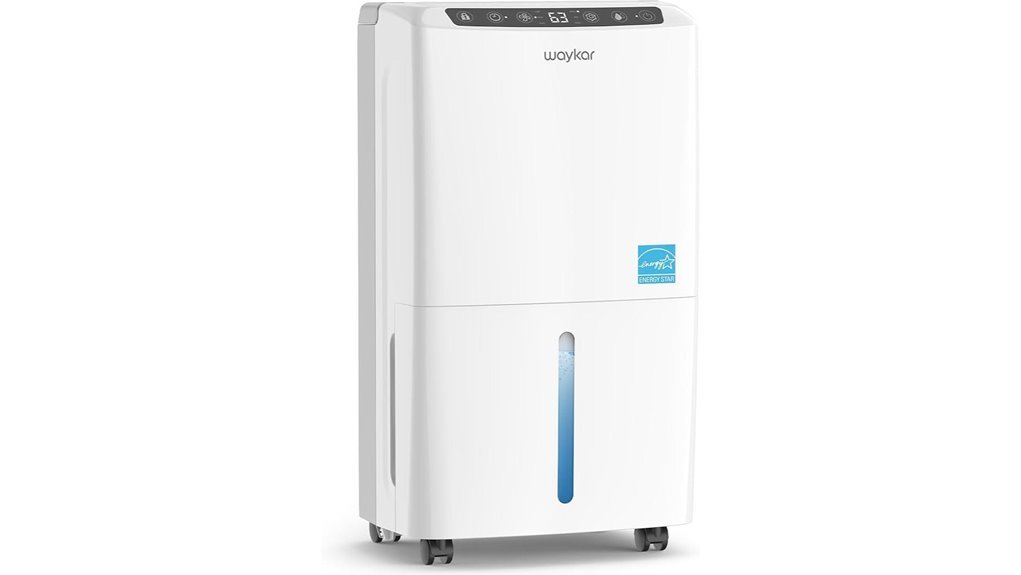
Best Quiet Compact Pick
The Waykar PD160B-PRO is a compact option for a bedroom, office, bathroom, or moderate basement moisture. The seller publishes 34 pints per day at 95°F and 90% RH, while the official ENERGY STAR record lists 10.16 pints per day under the current standardized test method. This large difference shows why test conditions matter more than the number printed most prominently in a product title.
Why You’ll Like It: The seller lists operation as low as 33 dB, and the unit includes adjustable humidity control, two fan speeds, auto defrost, a timer, power-loss memory, child lock, a 0.62-gallon tank, and a 3.3-foot gravity-drain hose.
Who Should Buy This: It is a good match for occupied rooms where compact dimensions, low-speed noise, and easy rolling portability matter.
Who Should Avoid It: Choose a higher standardized-capacity model for severe seepage, a very wet large basement, or rapid restoration drying.
Pros:
- Exact model appears in the official ENERGY STAR database.
- Compact design with seller-rated low-noise operation.
- Tank and included hose provide two drainage choices.
- Useful automatic protections and power-loss memory.
Cons:
- The seller’s 34-pint maximum is far higher than the current standardized rating.
- The small tank may require frequent emptying without continuous drainage.
- Gravity drainage requires a continuously downward hose route.
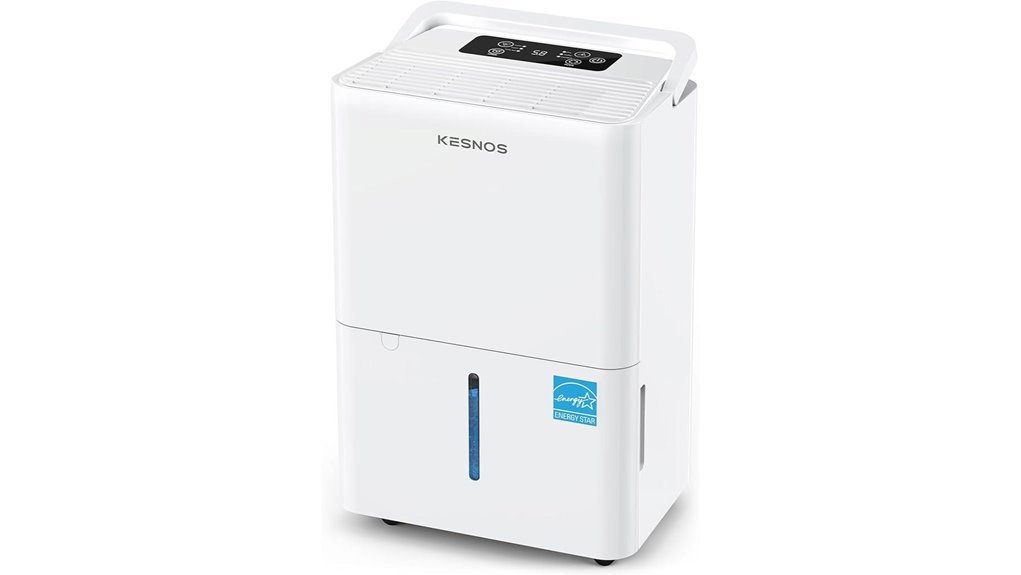
Kesnos Energy Star Dehumidifier for Home & Basement
Best for Bedrooms and Medium Spaces
The Kesnos CTH30B is a compact portable dehumidifier with a seller-published maximum of 30 pints per day at 95°F and 90% RH. Comfort, Dry, Continuous, and Turbo modes, along with auto defrost and restart memory, make it adaptable for bedrooms, offices, bathrooms, and moderate basement moisture. The product page describes it as ENERGY STAR certified, but buyers should match the exact model number on the listing and nameplate with the official database before relying on efficiency claims.
Why You’ll Like It: Its small footprint, caster wheels, hidden handle, seller-rated quiet setting, and included 3.3-foot drain hose make it easier to place in occupied rooms.
Who Should Buy This: Choose it for everyday humidity control in a bedroom, office, bathroom, or medium-size room with a nearby lower drain.
Who Should Avoid It: Choose a larger standardized-capacity model for severe water intrusion, a very wet basement, or a large open floor plan.
Pros:
- Compact portable design suited to bedrooms and medium rooms.
- Multiple operating modes and adjustable humidity control.
- Manual tank drainage or continuous drainage with the included hose.
Cons:
- The 0.39-gallon tank is small for damp-room use.
- The 30-pint claim is measured in hot, very humid conditions.
- No built-in pump is identified for draining upward.
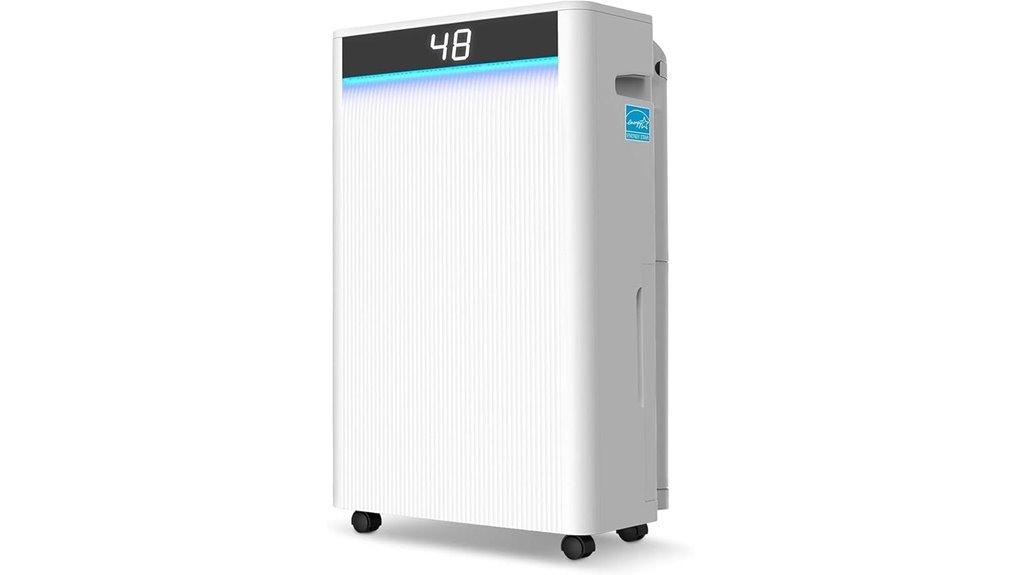
KeepGlad 80 Pint Dehumidifier with Hose
Best Large-Tank Option
The KeepGlad FDD20-5270ZV1R5-E targets larger damp spaces with a seller-published maximum of 80 pints per day at 95°F and 90% RH. Its 1.84-gallon tank is the largest in this comparison, and the included 3.4-foot hose supports continuous gravity drainage. Adjustable humidity from 30% to 80%, DEHU, DRY, and CONT modes, auto defrost, timer, child lock, and power-off memory cover the main functions most buyers need.
Why You’ll Like It: The large tank can reduce emptying frequency, while continuous drainage provides a more hands-off setup for a basement or laundry area.
Who Should Buy This: It suits buyers who want more tank capacity and have enough floor space for a taller portable unit.
Who Should Avoid It: Buyers should verify the exact ENERGY STAR listing, noise rating, warranty, and current model details before treating seller claims as independently confirmed.
Pros:
- Large 1.84-gallon tank with included continuous-drain hose.
- Multiple modes, adjustable humidity, timer, and safety lock.
- Portable design with wheels and a handle.
Cons:
- The 80-pint maximum is not the current standardized rating.
- Continuous drainage still requires a lower drain unless a separate pump is added.
- Certification, low-noise, and warranty claims should be checked against the exact current model.
Factors to Consider When Choosing a Home Dehumidifier
Start with moisture-removal capacity measured under a known test condition, then compare drainage, operating temperature, tank size, noise, energy efficiency, controls, and room moisture load. Square-foot coverage can help narrow the list, but it is less useful than capacity and the actual dampness in the room.
Standardized vs. Maximum Pint Capacity
Do not assume every pint figure was measured the same way. Under the current U.S. test method, portable dehumidifiers are rated at 65°F and 60% RH. Many Amazon titles instead highlight a much larger maximum at 95°F and 90% RH. Use the standardized figure when it is available, or compare two models only when their published temperature and humidity conditions match.
Coverage Area and Moisture Load
A lightly humid bedroom and a wet basement of the same size do not need the same machine. Choose more capacity for visible condensation, persistent musty odors, laundry drying, water seepage, or an open floor plan. ENERGY STAR’s buying guidance also sizes dehumidifiers by both room area and dampness level, not square footage alone.
ENERGY STAR Verification
ENERGY STAR certification can reduce energy use compared with a similarly sized conventional model, but confirm the exact brand and model number in the official ENERGY STAR Product Finder. Avoid relying on phrases such as “Energy Star efficient” or a year printed in a listing unless the exact model is present in the database.
Noise Level and Room Placement
For bedrooms and offices, compare published decibel figures only when the fan speed and test method are stated. Seller-rated low-speed noise may not represent sound at maximum airflow. Place the unit level, keep it away from vibrating furniture, and leave the clearance required by the manual around the intake and exhaust.
Tank, Gravity Drain, or Pump
A tank gives flexible placement but requires manual emptying. A gravity hose works only when the drain is lower than the outlet and the hose can slope continuously downward. To push water upward to a sink, window, or distant drain, choose a model with a built-in pump or add a suitable condensate pump.
Humidity Control
An adjustable humidistat lets the unit cycle near your target setting. The U.S. EPA recommends keeping indoor relative humidity below 60% and ideally between 30% and 50%. A separate hygrometer is useful because a built-in sensor can read differently depending on airflow and placement. See the EPA’s mold and moisture guidance.
Cold-Room Performance
Compressor dehumidifiers lose capacity as temperature falls and may enter defrost mode. Check the listed operating-temperature range before using one in a cool basement, garage, or crawl space. A model that collects quickly in warm summer air may remove much less water in cooler conditions.
Portability, Tank Size, and Maintenance
Check the unit’s weight, dimensions, caster design, handle position, tank capacity, filter access, hose connection, replacement-filter availability, return policy, and warranty before buying. A larger tank reduces emptying frequency, while a washable filter and accessible drain port make long-term maintenance easier.
Before You Buy
- Compare pint ratings measured under the same temperature and humidity conditions.
- Measure the room and classify the moisture problem as slightly damp, very damp, or wet.
- Decide whether you need a tank, gravity hose, or built-in pump.
- Verify the exact ENERGY STAR model number when efficiency is important.
- Confirm the drain-hose length and whether the route slopes continuously downward.
- Check operating temperature, dimensions, weight, warranty, return policy, and filter availability.
Frequently Asked Questions
What Size Dehumidifier Do I Need?
Size the unit by both room area and moisture load. A slightly damp room needs less capacity than a wet room with seepage, laundry drying, or visible condensation. Compare standardized capacity where available, not only the largest hot-weather number in the product title.
How Often Should I Clean My Dehumidifier Filter?
Inspect the filter about every two to four weeks during regular use and sooner in dusty rooms or homes with pets. Follow the manual, vacuum or rinse only if the filter is washable, and let it dry fully before reinstalling it.
Can a Dehumidifier Run Overnight?
Most modern portable dehumidifiers can run overnight when used according to the manual. Keep the unit upright on a level surface, leave the required airflow clearance, plug it directly into a grounded outlet, keep the cord dry, and make sure the tank or drain hose is installed correctly.
What Humidity Level Is Best for Most Homes?
The U.S. EPA recommends keeping indoor relative humidity below 60% and ideally between 30% and 50%. Adjust within that range for climate, window condensation, comfort, and the building’s needs.
Do Dehumidifiers Help With Mold and Musty Odors?
A dehumidifier can reduce the moisture that supports mold growth and musty smells, but it does not remove existing mold or repair leaks. Clean existing contamination safely and correct the water source as well as lowering humidity.
How Do I Know When to Empty the Water Tank?
Most units show a full-tank light and stop automatically. Empty the tank when the indicator appears, clean it regularly, and check that it is seated correctly before restarting the dehumidifier.
Can I Run a Dehumidifier Drain Hose Uphill?
Not with gravity drainage alone. A gravity hose must slope downward without kinks. Use a model with a built-in pump or a separate condensate pump when the drain is higher than the dehumidifier outlet.
Conclusion
The AEOCKY RHEA-001 is the strongest overall choice here for a large, persistently damp space because it combines high hot-condition output with flexible drainage and a broad control set. The hOmeLabs Wi-Fi model is the better fit for remote monitoring. Choose the Waykar PD160B-PRO when a compact, quieter, officially certified model matters, the Kesnos CTH30B for a bedroom or medium room, and the KeepGlad when a larger water tank is the priority.
Final recommendation
For most large damp spaces, start with AEOCKY. For an occupied bedroom or office, compare Waykar and Kesnos. For any model, confirm the selected variant, current test-condition capacity, drainage route, exact certification record, warranty, and return policy before ordering.