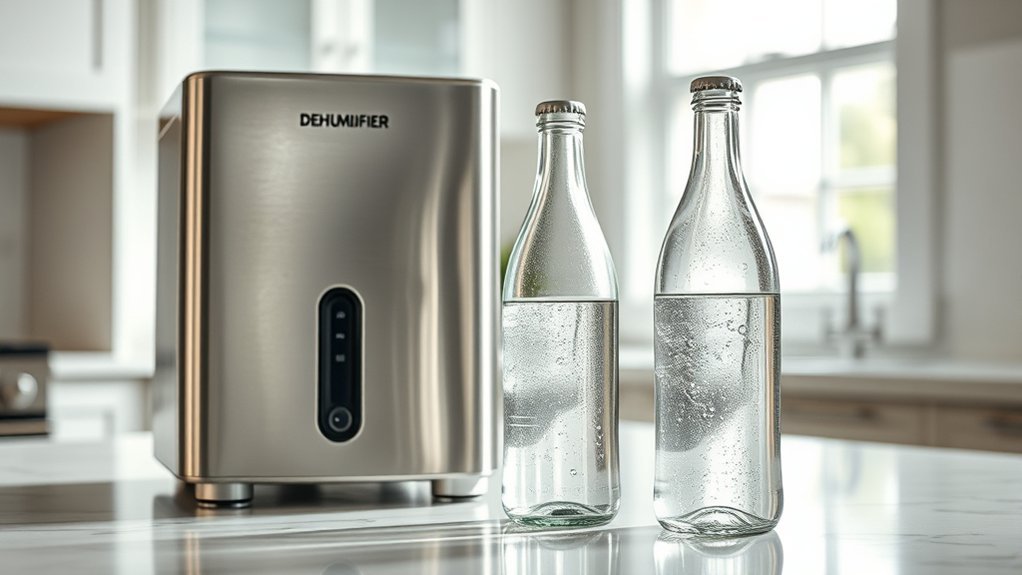
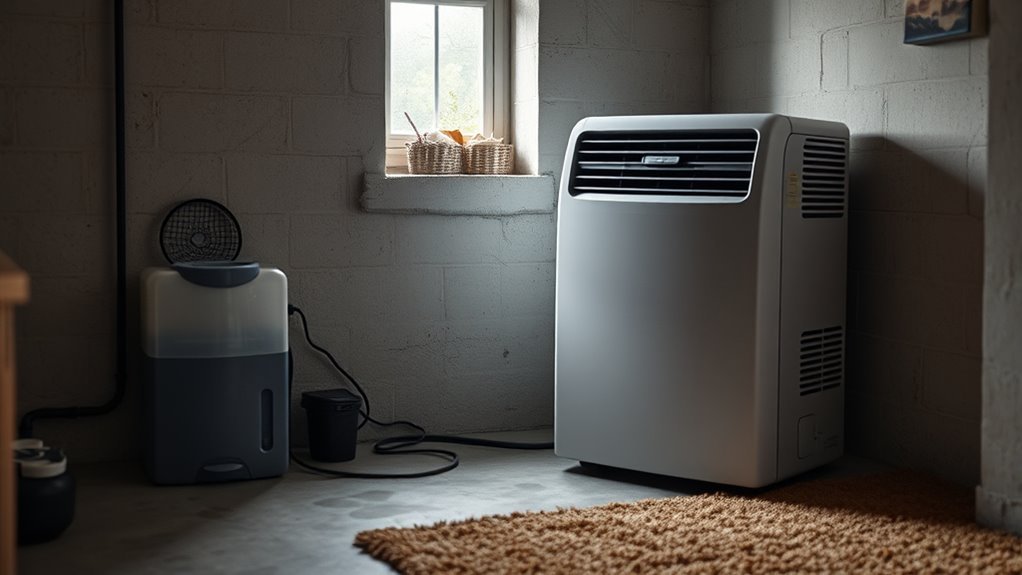
For a durable dehumidifier in 2026, focus on the features that reduce strain and simplify long-term use: the right moisture-removal capacity, accurate humidity control, automatic defrost, dependable drainage, a washable filter, clear warranty terms, and accessible customer support. The ten models below all match the buyer intent, but they serve different room sizes and moisture loads. Waykar’s 80 Pint model offers the best overall balance, Frigidaire is the strongest smart-control choice, AEOCKY and Waykar’s 120 Pint model suit demanding large spaces, while the Midea Cube and KNKA are better for medium rooms.
Quick Verdict
Best Overall: Waykar 80 Pint for its balance of large-space capacity, quiet low-speed operation, auto swing, and flexible drainage.
Best Smart Pick: Frigidaire 50 Pint Wi-Fi for remote monitoring and established appliance support.
Best for Severe Large-Space Humidity: AEOCKY 105 Pint, Waykar 120 Pint, or Gasbye 115 Pint, depending on warranty, room size, and drainage needs.
Best for Medium Rooms: Midea Cube 20 Pint for smart storage-friendly design, or KNKA 34 Pint for quiet value.
Key Takeaways
- Do not choose by square-foot coverage alone; compare pint capacity, test conditions, room dampness, and temperature.
- Use continuous drainage for heavy basement humidity, but remember that a gravity hose must run downhill unless the unit includes a pump.
- Durability is easier to judge through compressor protection, auto defrost, washable filters, drainage design, warranty terms, and parts support than through marketing words alone.
Quick Comparison of Durable Dehumidifiers
Capacity note: Maximum pint figures are not always measured under the same temperature and humidity conditions. Treat this table as a decision guide, then confirm the exact model and test rating on the current listing.
| Product | Advertised Capacity | Drainage | Main Strength | Details |
|---|---|---|---|---|
| Waykar 80 Pint Best Overall |
Up to 80 pints/day; up to 5,000 sq. ft. advertised | 1.45-gal tank or included gravity-drain hose | 42 dB low-speed claim, auto swing, 30%–80% RH setting | Check Amazon |
| Frigidaire 50 Pint Wi-Fi Best Wi-Fi Control |
50 pints/day; up to 4,500 sq. ft. advertised | Front bucket or continuous gravity drainage | Wi-Fi control, three fan speeds, washable filter | Check Amazon |
| AEOCKY 105 Pint Best Premium Large-Space Pick |
Up to 105 pints/day; up to 5,500 sq. ft. advertised | Tank plus continuous drainage; configuration varies by model | 44 dB low-speed claim, copper tubing, three-year coverage | Check Amazon |
| Vellgoo Max 64 Pint Best Efficient Large-Room Pick |
64 pints/day; up to 4,000 sq. ft. advertised | Three drainage options, including gravity hose | ENERGY STAR Most Efficient 2024 listing, auto defrost/restart | Check Amazon |
| Waykar 120 Pint Best for Very Large Spaces |
Up to 120 pints/day; up to 6,000 sq. ft. advertised | Tank or included gravity-drain hose | 40 dB low-speed claim, auto comfort mode, protection controls | Check Amazon |
| DECIUU 100 Pint Best Drainage Flexibility |
Up to 100 pints/day; about 70 pints at 86°F/80% RH | 1.45-gal tank, included hose, or garden-hose adapter | 35%–80% RH control, auto defrost, up to two-year protection | Check Amazon |
| Midea Cube 20 Pint Best Compact Smart Design |
20 pints/day; up to 1,500 sq. ft. advertised | Large bucket or continuous gravity drainage | Lift-and-twist body, app control, Alexa/Google support | Check Amazon |
| KNKA 34 Pint Best Quiet Value |
Up to 34 pints/day; up to 2,500 sq. ft. advertised | 3-liter tank or 3.28-ft gravity hose | 37 dB low-speed claim, three modes, 24-hour timer | Check Amazon |
| Yaufey 80 Pint Best Preset Modes |
Up to 80 pints/day; up to 5,000 sq. ft. advertised | 1.06-gal tank or included gravity hose | Sleep, Living, Basement, and Continuous modes | Check Amazon |
| Gasbye 115 Pint Best Heavy-Humidity Basement Pick |
Up to 115 pints/day; up to 4,500 sq. ft. advertised | 1.72-gal tank plus two continuous-drain hose options | About 44–45 dB, copper-coil build, two-year coverage with registration | Check Amazon |
How We Evaluated Durability
This guide compares published model specifications and buyer-relevant features; it does not claim hands-on testing. We looked at compressor and restart protection, automatic defrost, tubing and heat-exchange construction when documented, drainage reliability, filter access, tank design, noise, mobility, warranty length, registration requirements, and the clarity of manufacturer support. We also separated maximum high-humidity output from more typical warm-basement ratings whenever both were available.
Waykar 80 Pint Energy Star Dehumidifier with Drain Hose
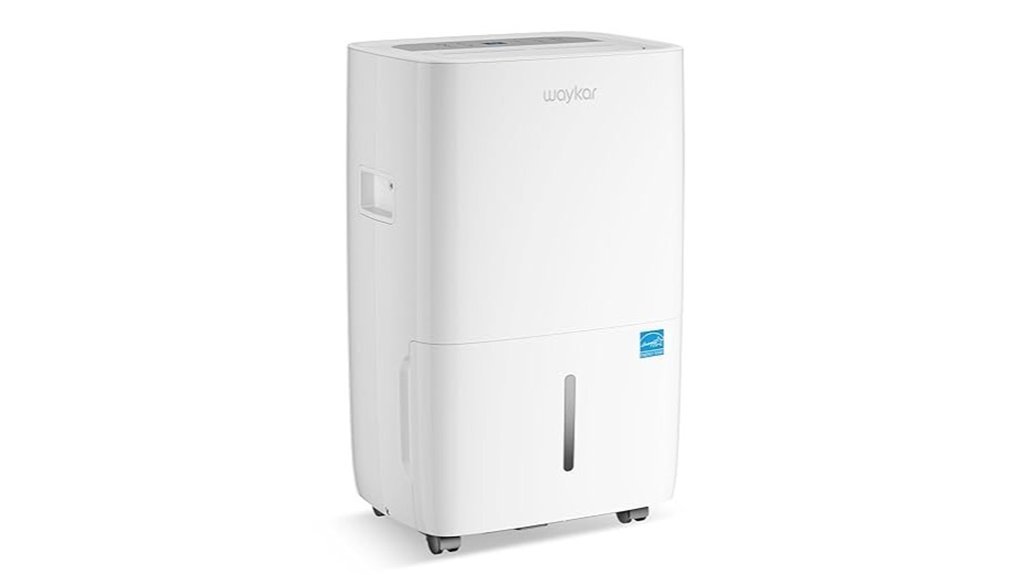
The Waykar 80 Pint Energy Star model offers a useful balance of capacity, noise control, and everyday convenience for large basements and open living areas. The manufacturer rates it for up to 5,000 sq. ft. and up to 80 pints per day under hot, very humid test conditions. Its adjustable humidistat, automatic defrost, restart function, washable filter, and 90° swing help it manage changing conditions without constant input. You can collect water in the 1.45-gallon tank or use the included hose for continuous gravity drainage.
Best For: Large basements, laundry areas, garages, RVs, and homeowners who want strong capacity without moving to the largest unit in this guide.
Why You’ll Like It: It combines large-space coverage, a relatively quiet low-speed rating, flexible drainage, and easy mobility.
Who Should Avoid It: Choose a smaller unit if your room is compact or only mildly damp; oversized capacity can add cost and take up unnecessary floor space.
Pros:
- Strong moisture-removal capacity for large, damp rooms.
- ENERGY STAR certification, adjustable humidity control, and quiet low-speed operation.
- Tank and hose drainage options, plus wheels and a carrying handle.
Cons:
- Maximum pint ratings are measured under very humid test conditions and may not reflect normal basement output.
- The included gravity hose is short for some installations.
- The tank still needs regular emptying when a nearby drain is unavailable.
Frigidaire 50 Pint Dehumidifier w/Wifi
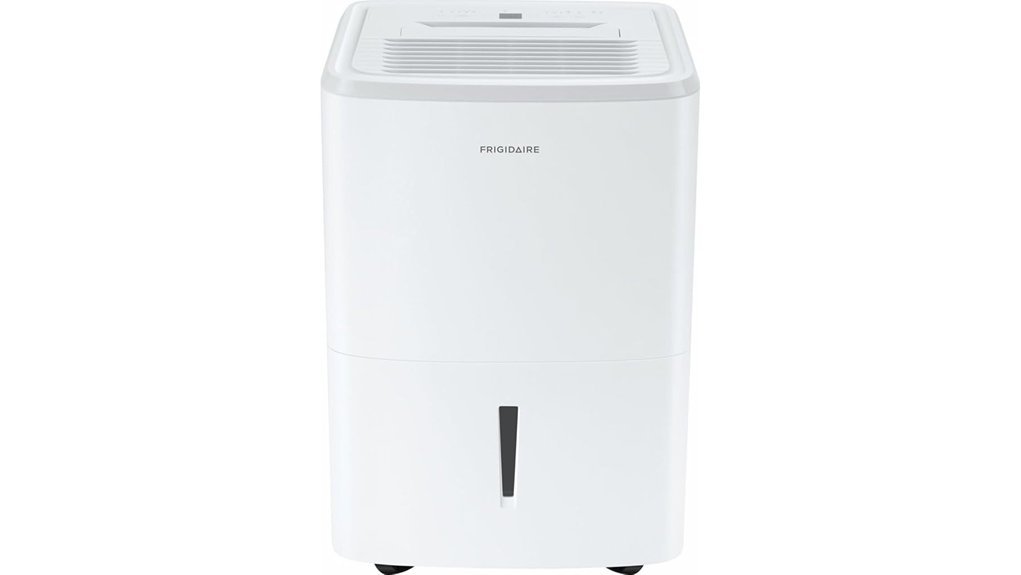
The Frigidaire 50 Pint Dehumidifier is the clearest choice here for readers who value remote monitoring and app-based control. Its 50-pint rating and advertised coverage up to 4,500 sq. ft. make it suitable for many basements, garages, attics, and large rooms. Custom humidity control, three fan speeds, a washable filter, auto shut-off, and continuous drainage reduce day-to-day maintenance. At about 44.5 pounds, it is movable but better treated as a unit you position and leave in one main area.
Best For: Homeowners who want a recognized appliance brand, Wi-Fi convenience, and strong large-room moisture control.
Why You’ll Like It: You can adjust settings remotely, monitor humidity, and use continuous drainage instead of checking the bucket repeatedly.
Who Should Avoid It: Skip it if you do not need smart features or expect to carry the unit between floors often.
Pros:
- Wi-Fi control adds useful remote monitoring and adjustment.
- 50-pint capacity, custom humidity settings, and three fan speeds suit varied moisture loads.
- Washable filter and continuous drainage simplify routine upkeep.
Cons:
- Its roughly 44.5-pound weight makes frequent carrying inconvenient.
- The standard limited warranty is one year.
- Smart features require app setup and a compatible home network.
AEOCKY 105 Pint Energy Star Dehumidifier
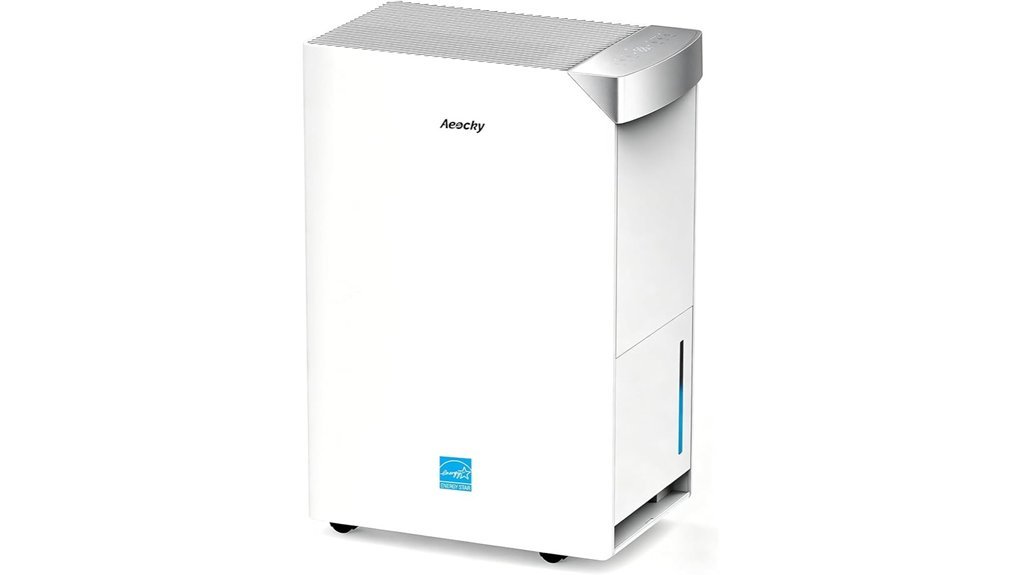
AEOCKY’s 105-pint dehumidifier is aimed at large, persistently damp spaces where efficiency, compressor protection, and warranty length matter. The brand lists output up to 105 pints per day in extreme humidity and about 72 pints per day in warm-basement conditions, with coverage advertised up to 5,500 sq. ft. Copper tubing, automatic defrost, smart humidity sensing, and a 44 dB low-speed claim support its durability-focused positioning. The three-year whole-unit coverage is also longer than many portable models, although buyers should read the warranty terms before ordering.
Best For: Large basements, garages, storage areas, and buyers who prioritize longer warranty coverage and high moisture-removal capacity.
Why You’ll Like It: It pairs high output with smart sensing, automatic defrost, copper heat-exchange components, and longer published coverage.
Who Should Avoid It: It is more machine than most bedrooms, apartments, or lightly damp rooms need.
Pros:
- High advertised output for demanding humidity conditions.
- Automatic defrost, smart humidity sensing, and a quiet low-speed rating.
- Three-year published whole-unit warranty and durability-oriented internal components.
Cons:
- The highest capacity figure applies to extreme test conditions.
- A large-capacity unit requires more floor space than compact models.
- Premium capacity and warranty features may increase the upfront cost.
Vellgoo Max 64 Pint Dehumidifier with Drain Hose
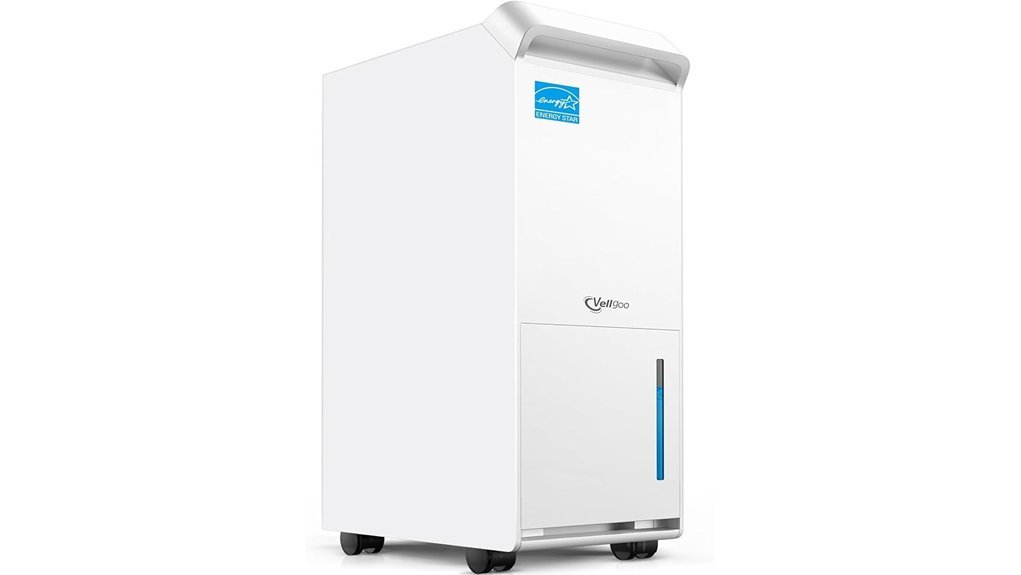
The Vellgoo Max linked in this article is a 64-pint, large-room dehumidifier advertised for spaces up to 4,000 sq. ft. It is a good fit for basements, garages, bathrooms, and open living areas where you want a balance of capacity and energy efficiency. Smart humidity control, automatic defrost, automatic restart, a washable filter, and multiple drainage choices support low-maintenance operation. Product registration can extend warranty coverage to a total of two years, so complete registration promptly if you buy it.
Best For: Large rooms and basements where energy efficiency and multiple drainage choices are more important than maximum capacity.
Why You’ll Like It: It offers a practical mix of 64-pint output, smart humidity control, auto defrost, and flexible water removal.
Who Should Avoid It: Buy a higher-capacity model for severe water intrusion, very large open areas, or constant laundry moisture loads.
Pros:
- 64-pint capacity fits many large-room and basement applications.
- ENERGY STAR-focused design with auto defrost and restart.
- Three drainage choices and up to two years of coverage after timely registration.
Cons:
- Some online listings mix this model with different Vellgoo capacities, so verify the ASIN and specifications.
- A gravity drain needs a suitable drain point below the outlet.
- Warranty extension requires product registration.
Waykar 6000 Sq.Ft Energy Star Dehumidifier
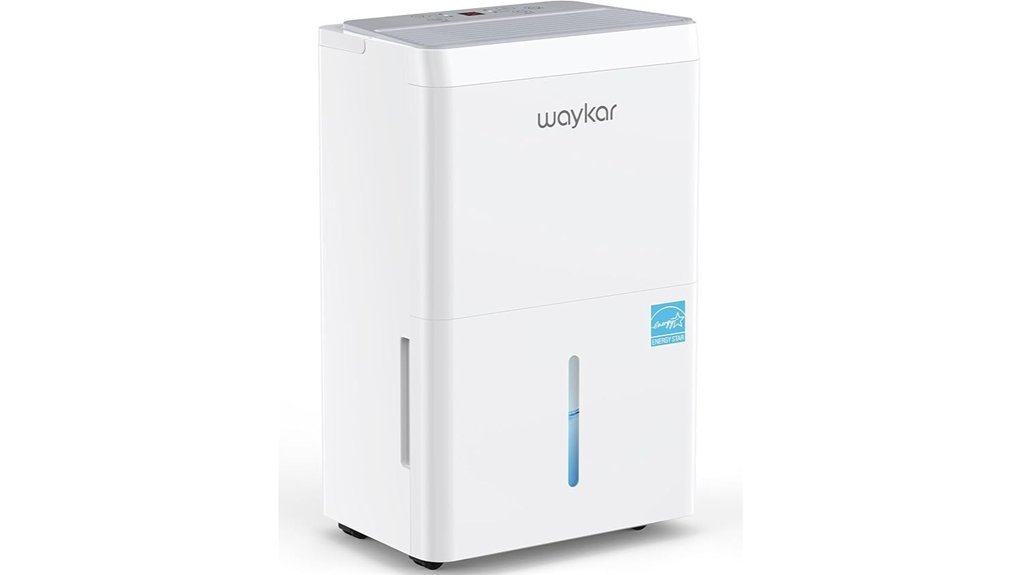
Waykar’s 6,000 sq. ft. model is the strongest large-area option in this roundup, with advertised removal up to 120 pints per day under 95°F and 90% RH conditions. It is designed for very large basements, laundry rooms, storage areas, and open-plan spaces. Smart Auto Comfort Mode, automatic defrost, delayed compressor restart, diagnostic alerts, and full-tank shutoff help protect the unit during extended use. The low-speed noise claim is about 40 dB, while wheels, a handle, a tank, and a hose make placement and drainage more flexible.
Best For: Very large basements, multi-room open areas, laundry zones, and properties with heavy seasonal humidity.
Why You’ll Like It: It delivers the highest advertised coverage in this list while adding useful compressor and overflow protections.
Who Should Avoid It: It is unnecessary for small rooms and may cycle inefficiently if the space has only a light moisture load.
Pros:
- High advertised capacity for very large, persistently damp areas.
- Low-speed quiet claim plus automatic comfort and defrost controls.
- Tank and hose drainage, wheels, handle, and multiple protection features.
Cons:
- The 120-pint figure reflects hot, very humid laboratory conditions.
- Its size and capacity are excessive for bedrooms or compact apartments.
- Gravity drainage requires correct hose slope and a suitable drain.
DECIUU 100 Pint Energy Star Dehumidifier for Home
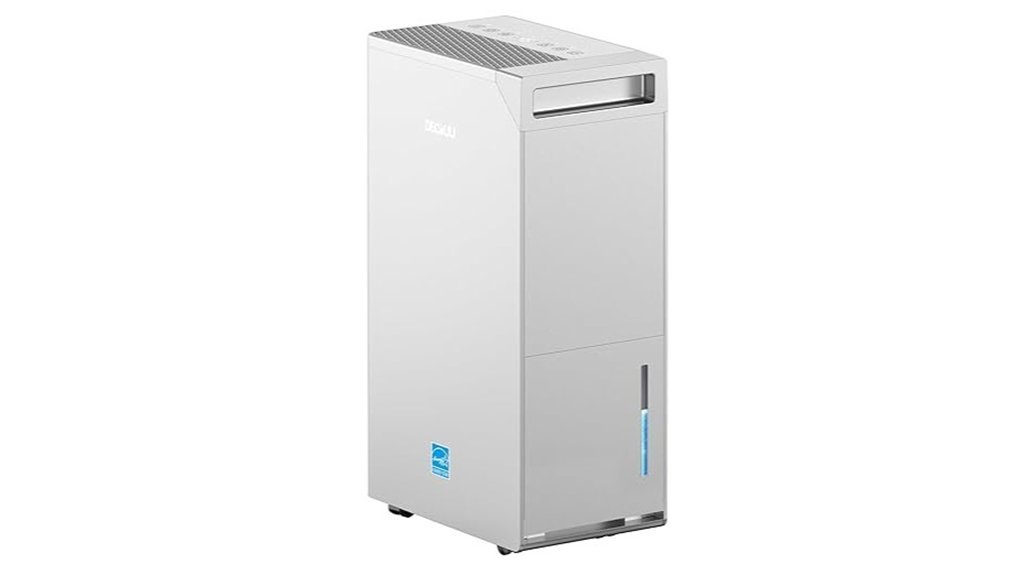
DECIUU’s 100 Pint model is a strong choice when drainage flexibility matters as much as capacity. It is advertised for up to 5,000 sq. ft., removes up to 100 pints per day in hot, very humid conditions, and is rated around 70 pints per day at 86°F and 80% RH. You can use the 1.45-gallon tank, the included drain hose, or the supplied adapter for a standard garden hose. Automatic defrost, memory restart, a 35%–80% humidistat range, a washable filter, child lock, and caster wheels make it practical for long basement runs.
Best For: Large basements, garages, laundry rooms, and seasonal properties that need several gravity-drain setup choices.
Why You’ll Like It: The larger tank, longer included hose, and garden-hose adapter give you more installation flexibility than many competitors.
Who Should Avoid It: It does not include a built-in condensate pump, so water cannot be pushed uphill without separate equipment.
Pros:
- High capacity with a more realistic warm-basement output also stated.
- Three water-handling choices: tank, included hose, or garden-hose connection.
- Auto defrost, memory restart, washable filter, timer, child lock, and wheels.
Cons:
- Maximum output still depends on very hot, humid test conditions.
- The unit is large and heavier than compact dehumidifiers.
- Gravity drainage must run downhill; it is not a pump model.
Midea Cube 20 Pint Dehumidifier with Alexa Smart Control
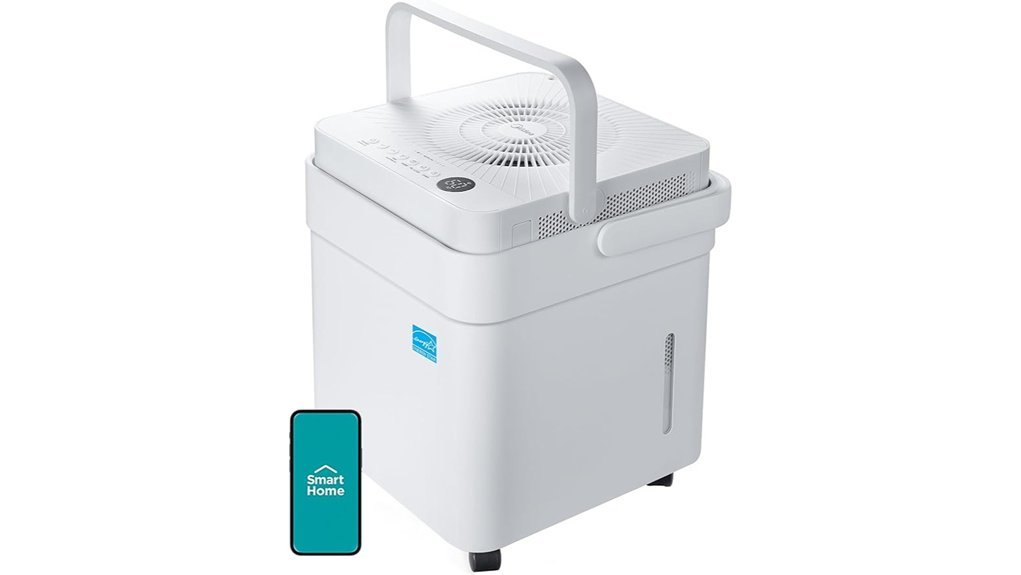
The Midea Cube 20 Pint is the best fit for a medium-size room where storage and smart control matter. It is rated for 20 pints per day and advertised for spaces up to 1,500 sq. ft. The lift-and-twist body can be used in extended form for a larger bucket or nested for compact storage. Wi-Fi control through the SmartHome app, Alexa and Google Assistant support, auto restart, auto defrost, three fan speeds, continuous drainage, and a washable filter make it convenient for bedrooms, offices, and smaller basements.
Best For: Renters and homeowners who want a space-saving smart dehumidifier for a bedroom, office, den, or medium-size basement zone.
Why You’ll Like It: Its unusual expandable design offers a larger water bucket without making storage permanently bulky.
Who Should Avoid It: It is not the right choice for severe basement moisture or large open-plan areas.
Pros:
- Compact lift-and-twist design with a large bucket for its capacity class.
- App, Alexa, and Google Assistant control.
- Continuous drainage, auto restart, auto defrost, and washable filter.
Cons:
- 20-pint capacity is limited for very damp or oversized spaces.
- There is no built-in pump.
- The published limited warranty is one year.
KNKA 2500 Sq.Ft Dehumidifier with Drain Hose
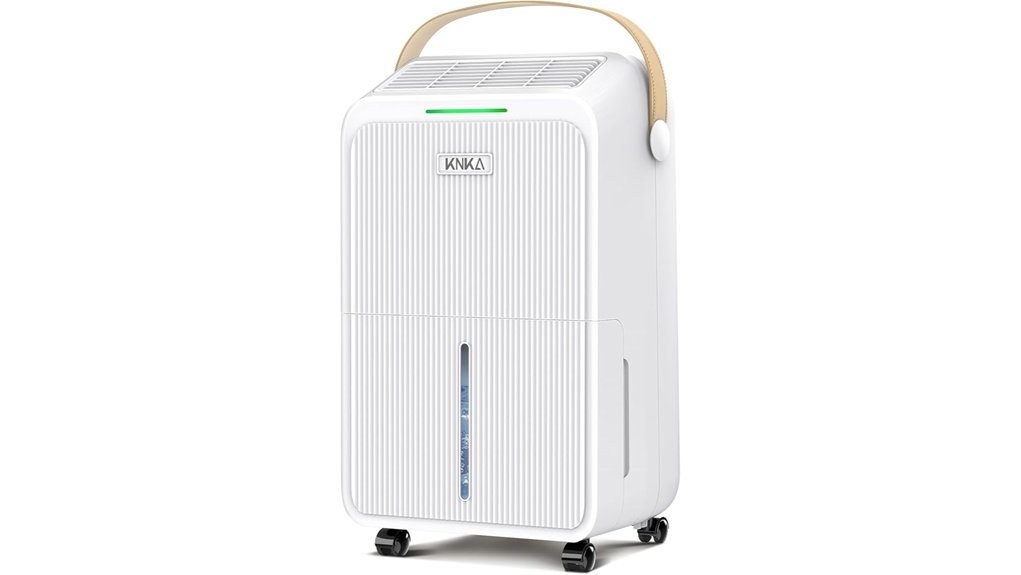
The KNKA PD22SC-12 is a value-focused option for people who need quiet, steady humidity control without the size of a 50- to 120-pint model. It is advertised for up to 2,500 sq. ft. and up to 34 pints per day, with DEHU, DRY, and CONT modes for normal control, laundry drying, or continuous operation. The 3-liter tank has automatic shutoff, while the included 3.28-foot hose supports gravity drainage. A 37 dB low-speed claim, sleep mode, child lock, wheels, washable filter, and 24-hour timer suit bedrooms and home offices.
Best For: Bedrooms, offices, laundry rooms, garages, and medium-size basements with moderate moisture.
Why You’ll Like It: It combines useful capacity, low claimed noise, simple modes, and a lower-power 230-watt design.
Who Should Avoid It: Choose a larger unit if the area is consistently wet, has seepage, or exceeds the advertised coverage.
Pros:
- Good capacity-to-size balance for medium spaces.
- Quiet low-speed claim, sleep mode, timer, and child lock.
- Tank and hose drainage plus washable filter and caster wheels.
Cons:
- The 3-liter tank can fill quickly in high humidity.
- The included hose may be too short for distant drains.
- It is not ENERGY STAR certified in the information verified for this audit.
Yaufey 5000 Sq. Ft. Energy Star Dehumidifier
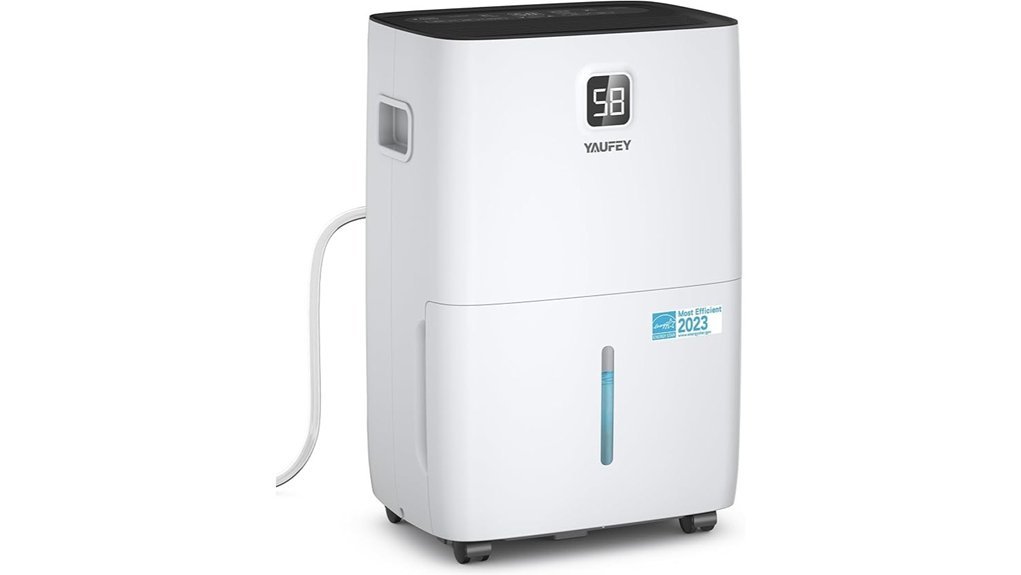
Yaufey’s 80 Pint Energy Star dehumidifier is built for buyers who prefer simple preset operating modes rather than frequent manual adjustments. It is advertised for up to 5,000 sq. ft. and up to 80 pints per day in high-humidity conditions. Sleep, Living, Basement, and Continuous modes make it easier to match operation to the room. The 1.06-gallon tank, included drain hose, smart sensors, auto shut-off, auto defrost, memory restart, child lock, washable filter, handles, and caster wheels cover the core features most large-room buyers need.
Best For: Large rooms, basements, garages, offices, and RVs where easy preset modes are more useful than app control.
Why You’ll Like It: The mode selection makes setup straightforward for common living-space and basement scenarios.
Who Should Avoid It: The 1.06-gallon tank is small relative to the maximum moisture-removal claim, so use hose drainage in very damp areas.
Pros:
- High advertised capacity and coverage for large spaces.
- Four practical operating modes plus humidity sensing and auto defrost.
- Tank and hose drainage, child lock, washable filter, handles, and wheels.
Cons:
- The bucket may need frequent emptying under a heavy moisture load.
- The highest pint figure is based on hot, humid test conditions.
- Its roughly 52 dB claim is louder than the quietest models in this guide.
Gasbye 4500 Sq.Ft. Energy Star Dehumidifier for Basement
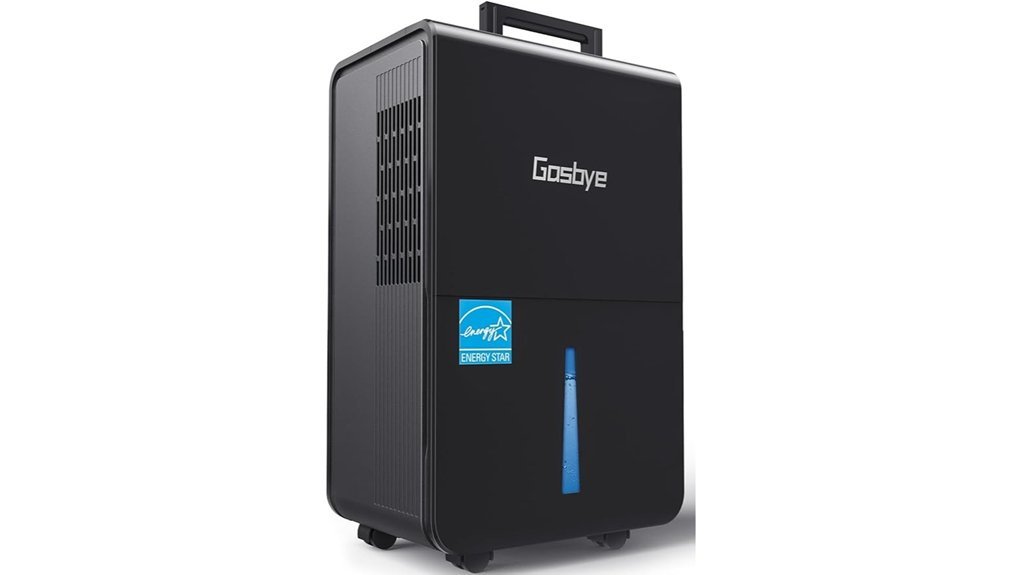
Gasbye’s large-space model targets basements and garages with heavy seasonal humidity. The brand lists up to 115 pints per day at 86°F and 80% RH, up to 4,500 sq. ft. of coverage, and a 1.72-gallon tank. A five-tier copper-coil design, adjustable humidity control, auto shut-off, restart, washable filter, wheels, and multiple drainage setups support long operating sessions. Noise is listed around 44–45 dB, and warranty coverage can total two years when registration requirements are completed.
Best For: Large basements, garages, living areas, and buyers who want a larger tank and high warm-basement output.
Why You’ll Like It: Its stated 115-pint capacity is tied to warm-basement conditions rather than only a 95°F extreme-humidity figure.
Who Should Avoid It: It is bulky for small rooms, and the linked model does not use a built-in pump.
Pros:
- High stated moisture removal at 86°F and 80% RH.
- Large 1.72-gallon tank, multiple drainage options, and washable filter.
- Copper-coil construction, quiet-operation claim, and extended coverage with registration.
Cons:
- The unit is large and weighs about 42 pounds.
- Continuous gravity drainage still needs a downhill route.
- Warranty extension depends on completing registration.
Factors to Consider When Choosing a Durable Dehumidifier
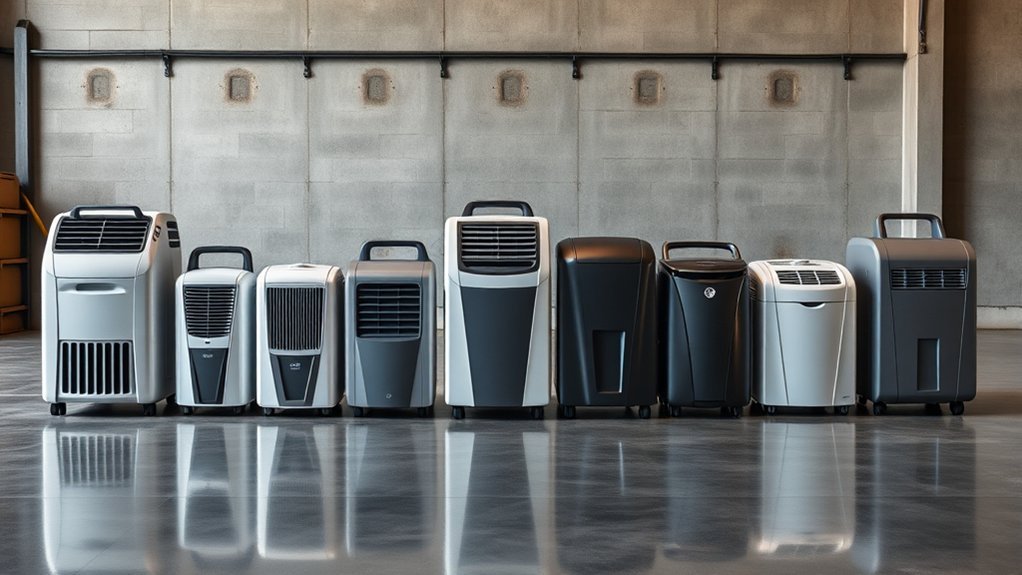
Choose a durable dehumidifier by matching its capacity to the actual moisture load, not simply buying the biggest advertised coverage. Then compare build details, automatic protections, drainage, filter access, noise, warranty terms, and support. A model that is easy to drain and maintain is more likely to be used correctly and consistently.
Advertised Coverage vs. Pint Capacity
Square-foot claims are useful for quick comparison, but they are not standardized room guarantees. Ceiling height, doors, airflow, temperature, seepage, laundry, and outdoor humidity all affect performance. Pint capacity is measured over 24 hours under specified laboratory conditions, so check whether a large “max” figure uses extreme heat and humidity. ENERGY STAR’s sizing guidance also separates slightly damp, very damp, and wet spaces because moisture severity can matter as much as floor area. Review ENERGY STAR dehumidifier sizing guidance.
Build Quality
Look for documented copper tubing or reinforced coil construction, a stable cabinet, smooth caster mounting, a well-sealed bucket, and controls that are easy to operate without forcing buttons or panels. Automatic defrost, delayed compressor restart, overload protection, memory restart, and full-tank shutoff can reduce avoidable stress. Certifications such as ETL or UL address safety compliance, but they do not prove how many years a unit will last.
Compressor Reliability
The compressor does the hardest work, so proper sizing and airflow are important. A severely undersized unit may run continuously, while an oversized unit may cycle more than necessary in a small room. Keep the filter and intake clean, allow the required clearance, and wait the recommended time before restarting or operating a unit after transport. Smart humidity sensing, restart delay, and auto defrost can help protect the refrigeration system.
Energy Efficiency
ENERGY STAR certification provides a stronger efficiency signal than an unsupported percentage in marketing copy. ENERGY STAR states that a certified dehumidifier removes the same amount of moisture as a similarly sized conventional model while using about 13% less energy. Compare the exact model number because certification and “Most Efficient” designations can differ by year and variant. See ENERGY STAR’s efficiency explanation.
Humidity Control
A built-in humidistat lets the unit cycle toward a target instead of running without limits. The U.S. EPA recommends indoor relative humidity below 60% and ideally between 30% and 50%. For many basements, a starting target near 45%–50% balances moisture control and runtime. Adjust if you still see condensation or if the unit runs constantly without a clear moisture problem. Read the EPA moisture and mold guidance.
Drainage Options
Bucket drainage is flexible but requires regular attention. Continuous gravity drainage is better for heavy humidity, provided the hose runs downhill without loops, pinches, or a blocked outlet. A built-in pump is useful when water must travel upward to a sink, but a pump adds another component that may need maintenance. Confirm the included hose length, connector size, garden-hose compatibility, and whether the drain cap or valve must be tightened when using the bucket.
Cold-Temperature Performance
Basements and garages can be cooler than living areas. In low temperatures, frost may form on the coils and reduce moisture removal. Choose automatic defrost for cool spaces and check the manufacturer’s minimum operating temperature. A portable compressor dehumidifier is not a substitute for fixing freezing conditions, major leaks, or standing water.
Noise Levels
Published noise claims in this roundup range from the high 30s to low 50s dB, usually at a specified fan setting. Lower-speed ratings are most relevant for bedrooms and offices, while a basement may tolerate more fan noise. Also consider vibration, floor levelness, bucket fit, and compressor tone. A sleep mode can reduce fan speed, but it may also slow moisture removal.
Warranty Coverage
Compare the full warranty, not just the largest number printed in a listing. Some products include one year automatically and a second year only after registration; others provide three-year whole-unit coverage or separate compressor terms. Check who pays return shipping, whether proof of purchase is required, which parts are excluded, and how quickly support responds. Save the receipt, model number, serial number, and registration confirmation.
Before You Buy Checklist
- Measure the room and identify whether it is slightly damp, very damp, or wet.
- Confirm the exact ASIN, model number, pint rating, test conditions, tank size, and minimum operating temperature.
- Plan the drainage route before ordering; gravity hoses must run downhill.
- Check outlet location, cord reach, required clearance, unit weight, and stair access.
- Read the current warranty and registration requirements.
- Fix active leaks, seepage, or standing-water sources instead of relying on a dehumidifier alone.
Frequently Asked Questions
How Long Do Durable Dehumidifiers Typically Last?
There is no single dependable lifespan for every portable dehumidifier. Service life depends on daily runtime, room temperature, moisture load, airflow, drainage setup, compressor cycling, maintenance, and parts support. You can improve longevity by sizing the unit correctly, keeping the filter and air intake clean, using continuous drainage safely, and following the manufacturer’s storage and restart instructions.
Are Durable Dehumidifiers Easy to Maintain?
Most portable models are straightforward to maintain. Empty and rinse the bucket, clean the washable filter on schedule, keep the intake and exhaust clear, inspect the drain hose for kinks or buildup, and wipe dust from the cabinet. Unplug the unit before cleaning and follow the manual for coil access or seasonal storage.
What Warranty Should I Expect for a Durable Dehumidifier?
A one-year limited warranty is common, while some brands offer two or three years, an added year after registration, longer compressor coverage, or lifetime technical support. Read the terms carefully because registration deadlines, shipping costs, excluded wear items, and proof-of-purchase requirements vary.
Do Durable Dehumidifiers Use a Lot of Electricity?
Energy use depends on capacity, wattage, humidity level, room temperature, runtime, and how often the compressor cycles. An ENERGY STAR certified model, a correctly sized unit, a clean filter, and a realistic humidity setting can reduce unnecessary operation. Compare the current model’s Integrated Energy Factor when that information is available.
Can Durable Dehumidifiers Handle Continuous Basement Use?
Yes, many portable dehumidifiers are designed for extended basement use when they are correctly sized, placed on a level surface, connected to a safe grounded outlet, and drained according to the manual. Check the hose slope, clean the filter, keep clearance around the air openings, and inspect the area for leaks that a dehumidifier cannot fix.
Is Square-Foot Coverage More Important Than Pint Capacity?
No. Square-foot coverage is a manufacturer estimate and can vary with ceiling height, temperature, air movement, and moisture severity. Pint capacity under stated test conditions is usually more useful, but even that figure must be read with the test temperature and relative humidity. Choose based on both room size and how damp the space actually is.
What Humidity Setting Is Best for a Basement?
A practical target is usually around 45% to 50% relative humidity, adjusted for comfort and condensation. The U.S. EPA recommends keeping indoor humidity below 60% and ideally between 30% and 50%. Avoid setting the humidistat unnecessarily low because that can increase runtime and energy use.
Conclusion
The best durable dehumidifier is the one that matches your moisture load and is easy to drain, clean, and maintain. The Waykar 80 Pint is the strongest all-around choice for many large rooms. Choose the Frigidaire 50 Pint Wi-Fi for remote control, the AEOCKY 105 Pint or Waykar 120 Pint for demanding large spaces, the Gasbye 115 Pint for high warm-basement output, and the Midea Cube or KNKA for medium rooms. The EPA advises drying wet materials within 24–48 hours after leaks or spills and keeping indoor humidity below 60%, ideally 30%–50%; a dehumidifier helps control airborne moisture, but it cannot repair the water source itself.
Final Recommendation
Start with Waykar 80 Pint for the best balance of capacity and convenience. Move up to AEOCKY 105 Pint, Waykar 120 Pint, or Gasbye 115 Pint only when the room is very large or persistently humid. For a bedroom, office, or smaller basement zone, choose Midea Cube or KNKA instead of paying for excess capacity.