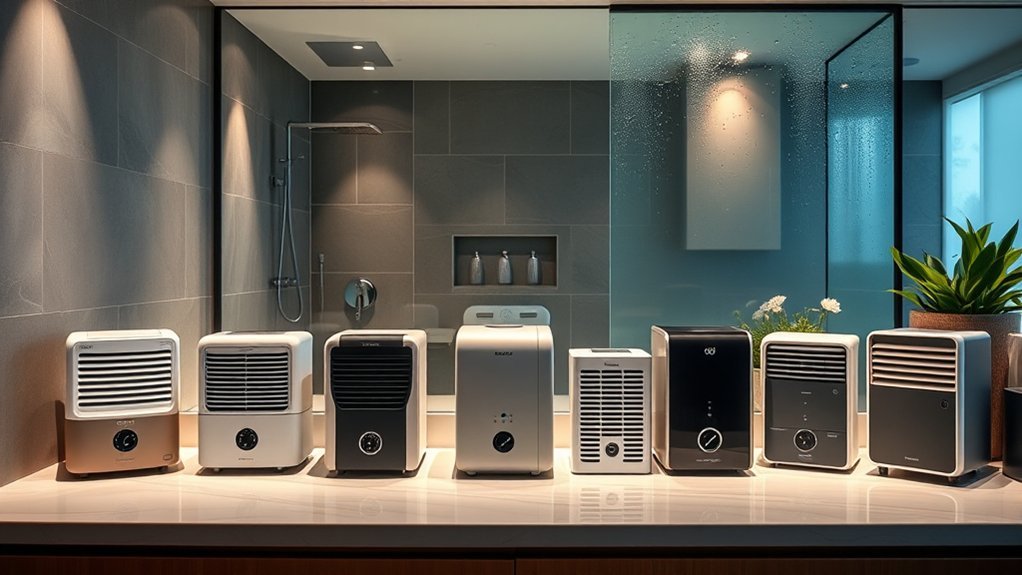
If you are comparing the best small dehumidifiers with drain hoses for 2026, focus on moisture-removal capacity, tank size, noise, room conditions, and how the hose drains—not square-foot claims alone. The seven options below range from tiny thermoelectric models for closets and RVs to a compact compressor unit for wetter rooms. Each pick includes continuous drainage, but performance will vary with temperature, relative humidity, airflow, and room layout.
Quick Answer
Best overall: The UBBO 95oz Dehumidifier offers a useful balance of tank size, listed moisture removal, quiet sleep mode, and continuous drainage. Choose the Litever for very small enclosed spaces, the Lacidoll for a larger tank and quiet bedroom use, or the Britsou 34 Pint when you need a compact compressor-style unit for heavier moisture.
Key Takeaways
- Mini semiconductor dehumidifiers work best in enclosed bathrooms, closets, bedrooms, RVs, and storage spaces—not as substitutes for a full-size basement unit.
- Daily extraction ratings are usually measured in warm, very humid test conditions, so real-world collection may be lower.
- Most included drain hoses rely on gravity. The hose should run continuously downhill without kinks or raised loops.
- For persistent condensation, visible water damage, or a very damp basement, choose capacity based on moisture severity rather than marketing coverage alone.
Quick Comparison of Small Dehumidifiers With Drain Hoses
| Product | Best For | Listed Daily Removal | Tank | Drain Setup | Amazon |
|---|---|---|---|---|---|
| UBBO 95oz | Best overall balance | Up to 1.2 L/day | 95 oz | Included hose | Check Price |
| Lacidoll 118oz | Quiet rooms and fewer tank checks | Up to 40 oz/day | 118 oz | 5-ft hose | Check Price |
| Litever | Closets, pantries, safes, and RV storage | Up to 360 ml/day | 800 ml | 4-ft hose | Check Price |
| LasVacde 95oz | Bathrooms, bedrooms, and RVs | Up to 600 ml/day | 2.8 L | 3.3-ft hose | Check Price |
| Onsekin | Higher-output compact use | Up to 2.5 L/day | 2.5 L | 3.3-ft hose | Check Price |
| Scozza 95oz | Timer and sleep-mode convenience | Up to 730 ml/day | 95 oz | Included hose | Check Price |
| Britsou 34 Pint | Heavier moisture and larger rooms | Up to 34 pints/day under seller-stated high-humidity conditions | 0.66 gal | Included hose | Check Price |
Note: Listed extraction and coverage figures come from product listings and may use different test conditions. Compare the daily removal rate, operating temperature, and room dampness before choosing.
UBBO 95oz Dehumidifier for Home with Drain Hose
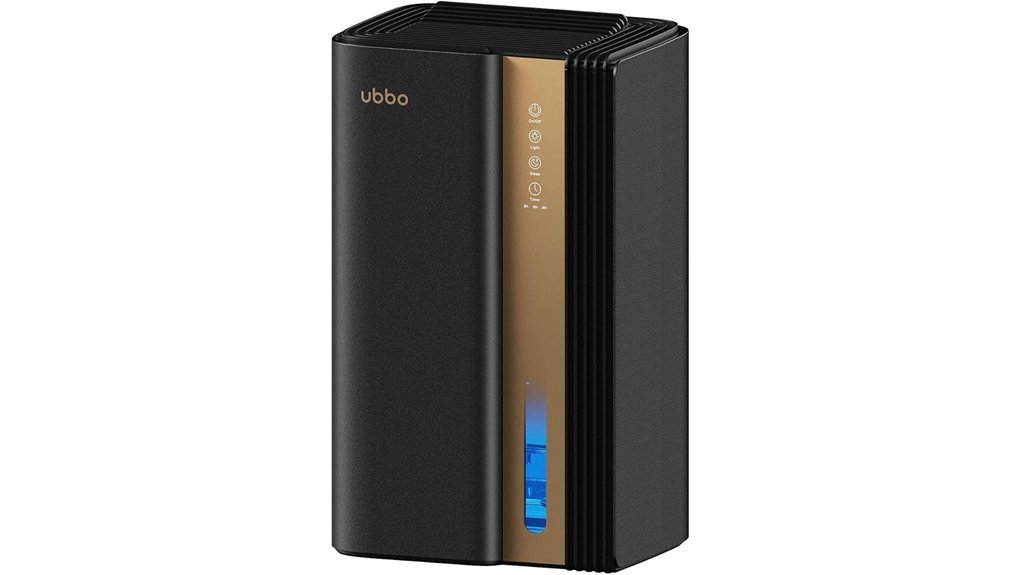
The UBBO 95oz model is a strong all-around choice for a bedroom, bathroom, RV, or other enclosed area where you want a large tank and continuous drainage. Its listing states that the dual-semiconductor system can collect up to 1.2 liters per day at 86°F and 80% relative humidity. Sleep mode is listed at 35 dB, while the full-tank alert and included hose reduce daily maintenance.
Why You’ll Like It
It combines a relatively high listed extraction rate for a semiconductor model with a 95oz tank, timer controls, sleep mode, auto shut-off, and an included drain hose. The hose is the main benefit for users who do not want to empty the tank every day.
Who Should Buy This: Buyers who need a quiet, portable unit for a warm, enclosed room with access to a nearby drain.
Who Should Avoid This: Anyone trying to dry a very wet full-size basement or operate below the temperature range in the product manual.
Pros:
- Up to 1.2 L/day listed removal under warm, humid test conditions.
- Quiet 35 dB sleep mode for bedrooms and offices.
- Large tank, timer, auto shut-off, and continuous drainage.
Cons:
- Real-world extraction may be much lower in cooler or less humid rooms.
- Seller-listed square-foot coverage should be treated as a maximum, not a guarantee.
- The tank and hose still need routine cleaning to prevent buildup.
Lacidoll Portable Dehumidifier with Drain Hose
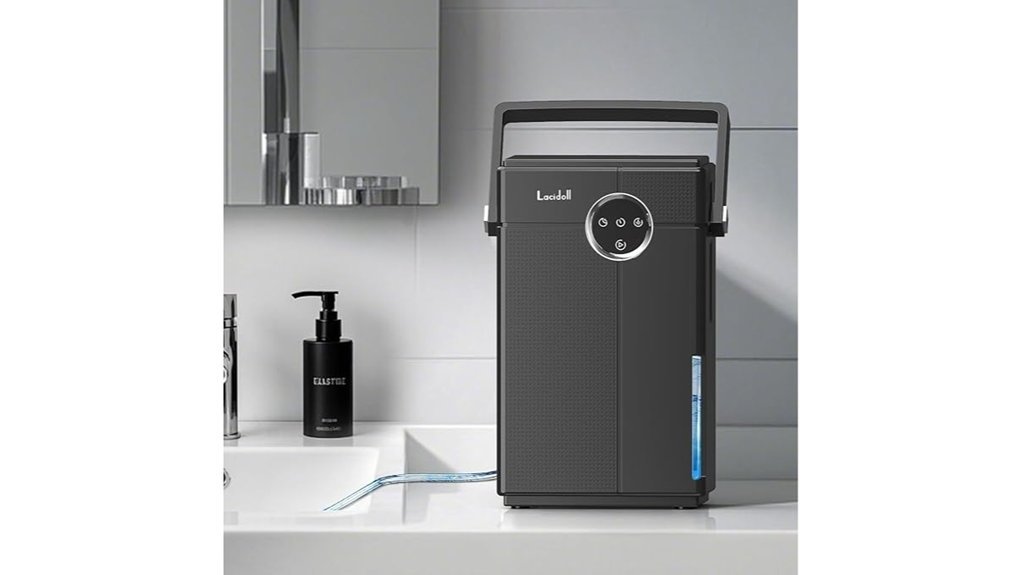
The Lacidoll portable dehumidifier pairs a 118oz tank with a 5-foot drain hose. Its listing states up to 40oz of moisture removal per day at 86°F and 80% relative humidity, plus a 30 dB sleep mode. The larger tank is useful when the hose cannot stay connected all the time.
Why You’ll Like It
The ergonomic handle, two operating speeds, timer, water-level window, and quiet mode make it easy to move between a bedroom, bathroom, closet, or RV. Continuous drainage is available when the unit can sit above a suitable drain.
Who Should Buy This: Buyers who value quiet operation and want a larger tank than most mini dehumidifiers provide.
Who Should Avoid This: Buyers who need compressor-level performance for standing moisture, leaks, or a very damp basement.
Pros:
- Large 118oz tank with a visible water level.
- Up to 40oz/day listed extraction in ideal test conditions.
- 30 dB sleep mode and included 5-foot drain hose.
Cons:
- The advertised 800 sq. ft. figure may overstate practical performance in open or very damp areas.
- Uses more power than very small single-semiconductor models.
- The hose must maintain a downhill path for reliable gravity drainage.
Litever Small Portable Dehumidifier with Drain Hose
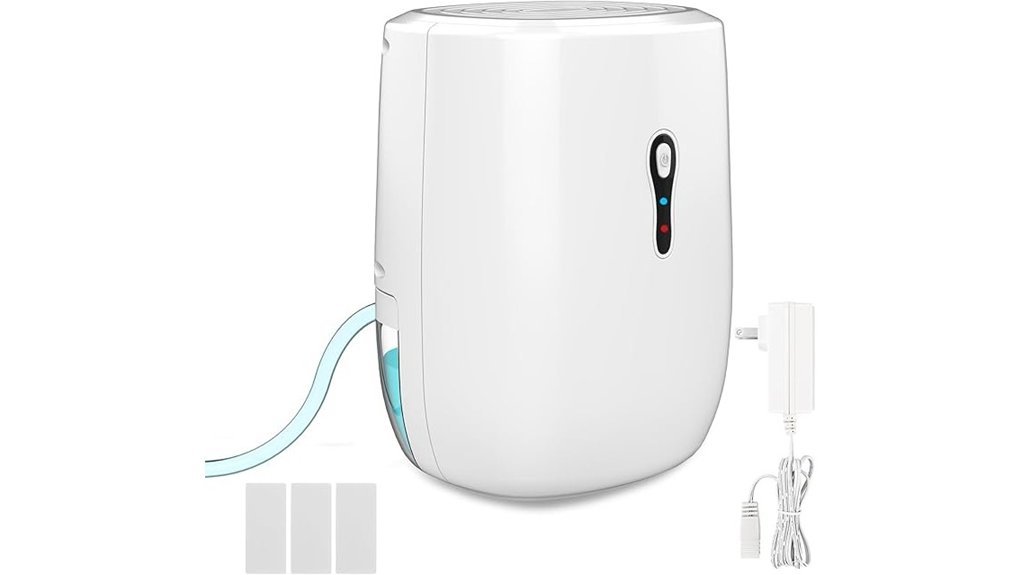
The Litever is the smallest and lightest option in this guide. It is designed for enclosed spaces under about 108 sq. ft. and is listed to remove up to 360 ml (12 oz) per day at 86°F and 80% relative humidity. It measures 6D x 6.5W x 8.9H inches, weighs about 2.5 pounds, and includes a 4-foot silicone drain hose.
Why You’ll Like It
This model is easy to place in a closet, pantry, small bathroom, gun safe area, RV cabinet, or storage nook. The 800 ml tank, auto-off function, memory function, hose-routing clips, and low-voltage body design add convenience for continuous small-space use.
Who Should Buy This: Buyers who need targeted humidity control in a small enclosed space and care more about size than fast extraction.
Who Should Avoid This: Anyone expecting one tiny unit to control a large bedroom, open basement, or severe moisture problem.
Pros:
- Very compact 2.5-pound design.
- Includes a 4-foot hose and routing clips for continuous drainage.
- Auto shut-off and memory function simplify operation.
Cons:
- Limited to small enclosed areas.
- Up to 360 ml/day is not enough for major dampness.
- Single-speed operation offers less control than larger models.
LasVacde 95oz Dehumidifier With Drain Hose for Home and RV
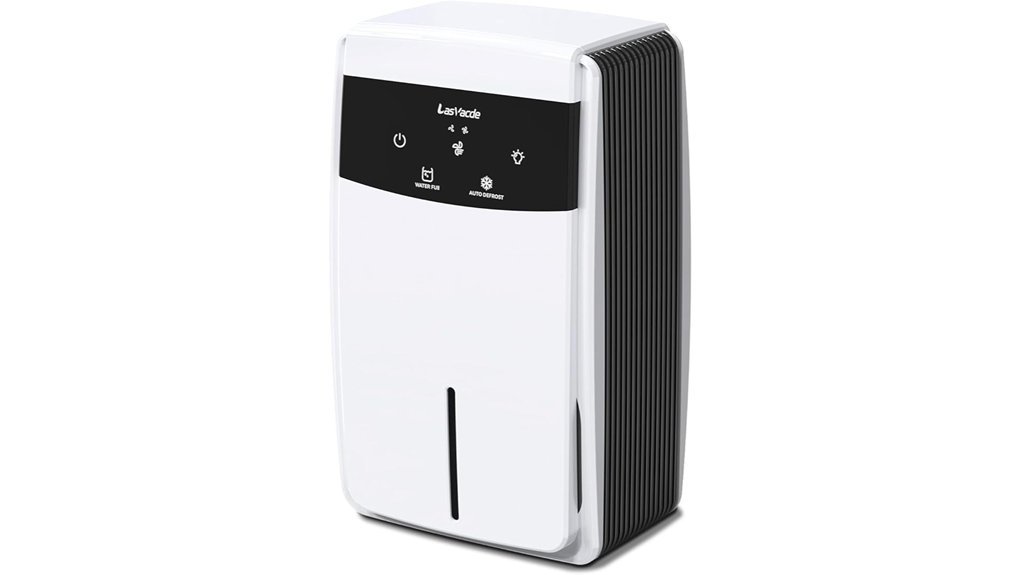
The LasVacde DH002 uses dual-semiconductor technology and is listed to collect up to 600 ml (20 fl oz) per day in warm, humid conditions. It has a 2.8 L tank, two fan speeds, auto shut-off, automatic defrost, a built-in handle, and a 3.3-foot hose for continuous gravity drainage.
Why You’ll Like It
The tall, narrow body is easier to place beside a vanity, under an RV counter, or near a storage area than a wide compressor unit. A separate light control lets you turn the seven-color lighting on or off, and the listed 30 dB operation is suitable for quiet rooms.
Who Should Buy This: Buyers who want a portable mid-size semiconductor unit with two speeds and a large tank.
Who Should Avoid This: Buyers who need a verified pump, whole-basement drying, or operation outside the manual’s temperature range.
Pros:
- Large 2.8 L tank with a 3.3-foot drain hose.
- Two speed settings and quiet listed operation.
- Portable handle, auto shut-off, and defrost feature.
Cons:
- Up to 600 ml/day remains modest compared with compressor models.
- The seller-listed 323 sq. ft. coverage depends heavily on room conditions.
- Decorative lighting may not matter to buyers focused only on performance.
Onsekin Portable Dehumidifier With Drain Hose
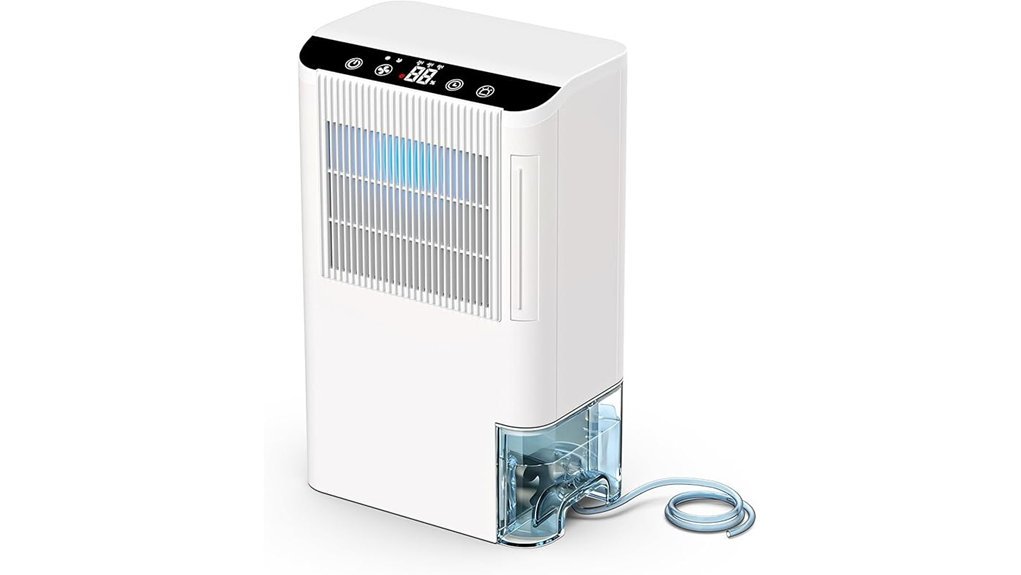
The Onsekin model is listed with a 2.5 L tank, up to 2.5 L of daily extraction, a 3.3-foot drain hose, timer controls, sleep mode, and a washable filter. It is more power-hungry than the smaller Peltier picks, but its higher listed output may suit buyers who want a compact unit for a more demanding room.
Why You’ll Like It
The compact footprint, hidden carry handle, touch controls, full-tank shut-off, tilt sensor, and continuous drainage make it easy to use in a bedroom, bathroom, RV, or targeted basement area. Sleep mode is listed at about 46 dB.
Who Should Buy This: Buyers who want more listed extraction than a typical mini semiconductor model without moving to a full-size floor unit.
Who Should Avoid This: Buyers who assume the advertised 2,000 sq. ft. coverage guarantees whole-room humidity control in a wet or open basement.
Pros:
- Higher listed extraction rate than the smaller thermoelectric picks.
- 2.5 L tank, timer, washable filter, and continuous drainage.
- Full-tank shut-off and tilt protection add practical safety.
Cons:
- 270W listed consumption is much higher than tiny Peltier models.
- 46 dB sleep mode is audible in a very quiet bedroom.
- The 2,000 sq. ft. claim should be treated as a seller-stated maximum.
Scozza 95oz Dehumidifier With Drain Hose and Auto Shut-Off
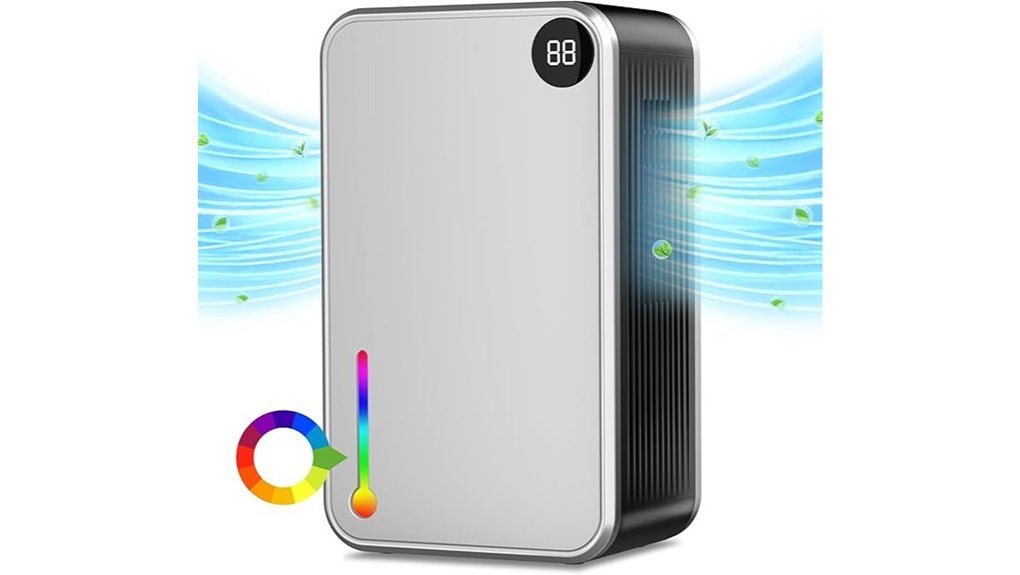
The Scozza 95oz dehumidifier uses semiconductor condensation and is listed to collect up to 730 ml (25 oz) per day at 86°F and 80% relative humidity. It includes a drain hose, humidity display, timer, high-speed mode, sleep mode, auto shut-off, and a built-in handle.
Why You’ll Like It
This model offers more control than a basic one-button mini unit. High-speed mode is useful after showers or during humid daytime hours, while sleep mode reduces fan noise for nighttime use. The hose allows continuous drainage when the unit is positioned above a drain.
Who Should Buy This: Buyers who want a portable unit with a timer, display, two modes, and continuous drainage.
Who Should Avoid This: Buyers dealing with flooding, leaks, or a large damp basement that needs compressor-level extraction.
Pros:
- 95oz tank with an included continuous-drain hose.
- High-speed and sleep modes provide useful flexibility.
- Timer, humidity display, handle, and auto shut-off improve convenience.
Cons:
- Up to 730 ml/day is based on ideal warm, humid conditions.
- The 1,000 sq. ft. marketing claim may not reflect real performance in open spaces.
- Automatic defrost does not remove the need to follow the listed operating-temperature limits.
Britsou 34 Pint Dehumidifier With Drain Hose for Home
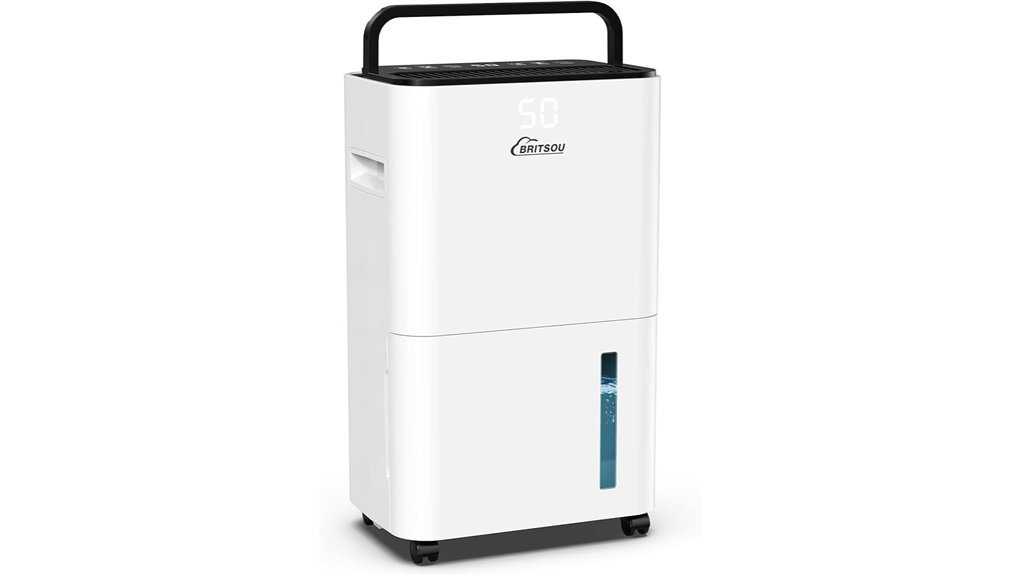
The Britsou 34 Pint is the largest and heaviest model in this roundup, but it is the better fit for genuinely damp rooms. Its compressor-based design offers adjustable humidity from 30% to 80%, DEHU, DRY, and CONT modes, a 0.66-gallon tank, auto defrost, a full-tank alert, wheels, handles, and an included drain hose.
Why You’ll Like It
Unlike basic semiconductor models, the Britsou provides set-point humidity control and a much higher seller-listed extraction rate. It is a practical choice for laundry rooms, medium-size basements, offices, or other spaces where a mini unit would take too long.
Who Should Buy This: Buyers with heavier moisture who still want a relatively narrow, movable floor unit with continuous drainage.
Who Should Avoid This: Buyers who need an ultra-light tabletop unit for a closet, camper cabinet, or tiny bathroom shelf.
Pros:
- Higher moisture-removal capacity than the semiconductor picks.
- Adjustable humidistat plus DEHU, DRY, and continuous modes.
- Wheels, handles, washable filter, auto defrost, and hose drainage.
Cons:
- At roughly 24 pounds, it is compact but not a true mini dehumidifier.
- Uses more electricity and creates more operating noise than small Peltier units.
- Seller listings show inconsistent room-coverage and hose-length details, so verify the current Amazon specifications.
Factors to Consider When Choosing a Small Dehumidifier With a Drain Hose
The best model is not always the one with the largest advertised coverage. Match the technology, extraction rate, drain setup, temperature range, and physical size to the room you actually need to dry.
1. Choose the Right Technology
Semiconductor or Peltier dehumidifiers are compact, light, and quiet. They are best for small enclosed spaces and mild moisture. Compressor dehumidifiers are heavier and louder, but they usually remove much more water and provide a true adjustable humidistat. For a wet basement or laundry room, a compact compressor model is often the better choice.
2. Compare Moisture Removal, Not Just Square Feet
Daily extraction tells you more than a broad coverage claim. Mini models in this guide list roughly 360 ml to 2.5 L per day, while the Britsou lists up to 34 pints under very warm, humid conditions. Remember that test temperature and humidity can greatly change the result. A unit that collects well at 86°F and 80% relative humidity may collect much less in a cool room.
3. Check the Drainage Setup
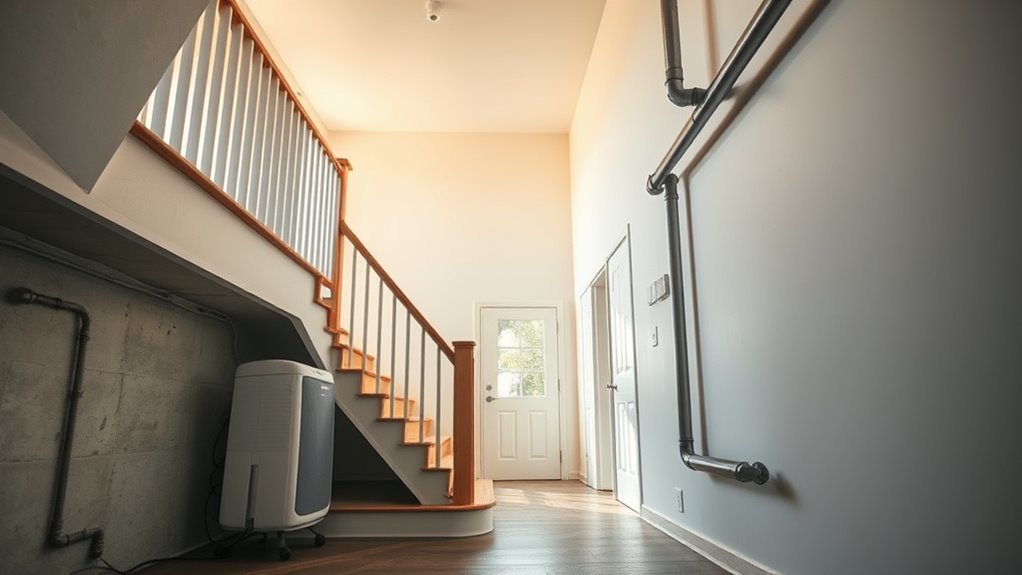
Most small units use gravity drainage. Place the dehumidifier above the drain point, keep the hose sloping downward, and avoid kinks, loops, or a submerged hose end. Do not assume a unit has a pump unless the current manual clearly confirms one. Also check whether the included hose is long enough to reach a floor drain, sink, shower, or larger container safely.
4. Consider Tank Size and Auto Shut-Off
A larger tank reduces emptying when you cannot use the hose. Auto shut-off is important because it stops collection when the tank is full. A transparent tank or water-level window makes monitoring easier. Even with continuous drainage, inspect and clean the tank because a small amount of water may remain inside.
5. Match Noise to the Room
For bedrooms and offices, look for a sleep mode near 30 to 35 dB. A 40 to 46 dB unit may still be reasonable, but it will be more noticeable at night. Compressor models may cycle on and off, while semiconductor models usually create a steady fan sound.
6. Check the Operating Temperature
Small thermoelectric units lose efficiency as the room gets colder. Compressor units may include auto defrost, but they also have minimum operating temperatures. Never rely on a general “works in cold rooms” claim. Follow the current manual and stop the unit if ice forms or drainage freezes.
7. Compare Energy Use With Output
Low wattage does not automatically mean better value. Compare how much moisture the unit can remove for the power it uses. Timers, sleep modes, humidistats, and auto cycling can reduce unnecessary runtime. Energy Star certification was not confirmed for most models in this guide, so verify any certification directly on the current product listing or official database.
8. Review Safety and Placement
Choose a stable, level surface with open space around the air inlet and outlet. Keep the power adapter, plug, and extension connections away from splashes. Bathroom marketing does not mean the unit is waterproof. Use a GFCI-protected outlet where required, follow the manual, and never place the appliance where it can fall into a tub, shower, or sink.
- Measure the available shelf or floor space.
- Identify a drain point lower than the unit.
- Confirm the hose length and connector size.
- Check the listed operating-temperature range.
- Compare daily extraction at the stated test conditions.
- Choose compressor capacity for severe or whole-room dampness.
Frequently Asked Questions
How Do I Clean the Drain Hose of a Dehumidifier?
Turn off and unplug the unit, disconnect the hose, and flush it with warm water and mild dish soap. Use a soft bottle brush only if the hose diameter allows it. Rinse well, let it drain, and reconnect it without kinks. Follow the manual if the manufacturer gives different cleaning instructions.
Why Is Water Not Flowing Through the Drain Hose?
Check that the dehumidifier sits above the drain, the hose slopes downward the entire way, and there are no kinks, raised loops, clogs, loose fittings, or submerged hose ends. If the unit is not collecting water at all, the room may be too cool or not humid enough.
Can I Use a Dehumidifier in Cold Temperatures?
Only within the temperature range listed in the product manual. Small semiconductor models usually collect less water in cool rooms. Compressor models may use auto defrost, but they can still ice up or stop working below their rated range.
How Long Does a Small Dehumidifier Last?
There is no reliable lifespan that applies to every model. Runtime, room temperature, dust, tank cleaning, fan wear, compressor or semiconductor quality, and electrical conditions all matter. Regularly clean the tank, intake, filter, and hose, and replace the unit if it leaks, overheats, or develops electrical damage.
Are Small Dehumidifiers Energy-Efficient?
They can use less electricity than large units, but they also remove less water. Compare wattage with daily extraction and choose the smallest unit that can realistically handle your room. A humidistat, timer, or auto mode can help avoid unnecessary runtime.
How Noisy Are Small Dehumidifiers During Operation?
Many semiconductor models list sleep-mode noise around 30 to 35 dB. Larger compact units may be closer to 40 to 46 dB. Actual sound depends on fan speed, the surface under the unit, room acoustics, and whether the compressor cycles.
Can I Leave a Dehumidifier Running With the Hose Connected?
Continuous drainage is designed to reduce manual emptying, but the setup still needs periodic checks. Make sure the hose remains secure and downhill, the drain is open, the tank is seated correctly, and the air inlet is clear. Follow the manufacturer’s guidance for unattended or overnight use.
Conclusion
For most buyers seeking a small dehumidifier with a drain hose, the UBBO 95oz offers the best mix of listed output, quiet operation, tank capacity, and convenience. The Litever is the better choice for a tiny closet, pantry, safe, or RV storage area, while the Lacidoll stands out for its large tank and quiet sleep mode. For heavier moisture, the Britsou 34 Pint is more suitable than a mini semiconductor model.