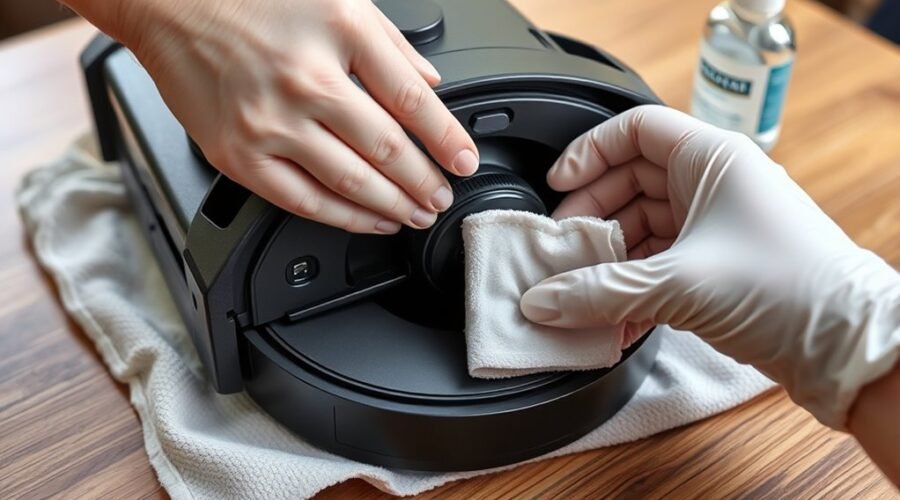
A robot vacuum camera lens requires careful cleaning to avoid scratches, residue, or misalignment. The process starts with the right tools and a light touch, since even minor grit can cause damage if removed incorrectly. Dust, smudges, and streaks each call for a different approach, and the order matters more than it first appears. The safest method is not always the most obvious one, which raises an important question.
Gather the Right Cleaning Supplies
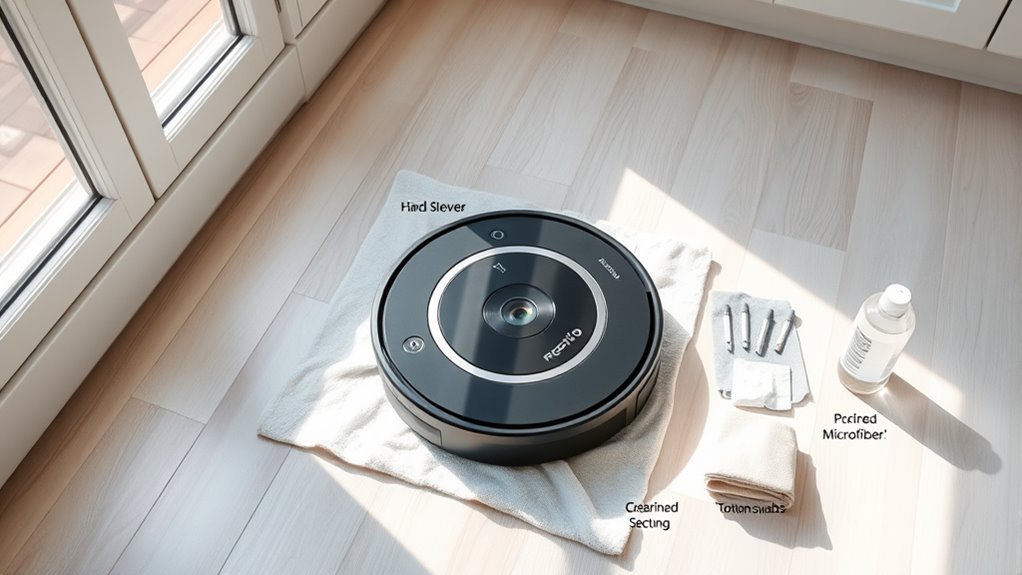
Before cleaning the robot vacuum camera lens, the necessary supplies should be assembled with care: a soft microfiber cloth designed for optical surfaces, a blower bulb or can of compressed air for removing loose debris, an alcohol-free and ammonia-free lens cleaning solution, and a soft-bristled brush for any remaining particles.
The camera lens should be matched with cleaning supplies that are safe for coated glass and intended for optical surfaces. A microfiber cloth must be selected to avoid abrasion, while cleaning solutions should be verified as alcohol-free and ammonia-free to reduce risk of damage.
A soft brush may be kept ready to remove dust that settles in edges or seams. To maintain order and readiness, the items should be organized in a sealed Ziploc bag, limiting contamination and preserving access.
This preparation supports careful, independent maintenance and protects the lens from avoidable harm during the next cleaning stage.
Remove Loose Dust Without Scratching
With the robot vacuum held camera-side downward, loose dust can fall away from the lens as it is cleared. The goal is to remove loose dust without abrasion, preserving freedom from avoidable damage.
- Use a burst of air from a blower bulb or air puffer; direct short, controlled pulses across the camera lens to dislodge dust particles.
- If residue remains, a soft brush or lens cleaning tissue may be used in a circular motion, with minimal contact and no force.
- After debris lifts, gently wipe the surface with a clean microfiber material, but avoid using rough cloths, paper, or liquids.
- Inspect the lens under strong light; any remaining speck suggests another careful pass before further cleaning.
This method keeps the optics clear, safeguards the camera lens, and supports reliable navigation without surrendering to scratches or unnecessary wear.
Wipe the Robot Vacuum Camera Lens Safely
Once loose dust has been cleared, the robot vacuum camera lens can be wiped with a microfiber cloth made for optical surfaces. A soft brush may have already loosened debris; now the task is to gently wipe the camera lens without pressure. A small amount of lens cleaning solution or other cleaning fluid should be placed on the microfiber cloth, never directly on the lens, so liquid cannot enter the housing.
| Step | Action | Caution |
|---|---|---|
| 1 | Inspect lens | Confirm no grit remains |
| 2 | Dampen cloth | Use minimal cleaning fluid |
| 3 | Wipe center | Move in circular motion |
| 4 | Check surface | Remove dust and dirt |
| 5 | Finish | Maintain cleanliness for peak performance |
This controlled method supports careful use and preserves optical clarity. Regular, measured attention helps the system remain functional, allowing the robot to navigate freely and maintain peak performance without unnecessary wear.
Remove Smudges, Oils, and Streaks
Smudges and oils can be removed by placing a few drops of alcohol-free lens cleaning solution on a microfiber cloth and wiping the robot vacuum camera lens in gentle circular motions from the center outward. This controlled method helps clean lenses without forcing moisture onto the lens surface, reducing risk and preserving clarity.
- Apply the cleaning solution to the microfiber cloth, not the lens.
- Use gentle circular motions to remove smudges and spread residue evenly.
- If streaks remain, switch to a clean section of the microfiber cloth.
- For stubborn debris, lightly use a soft brush before wiping to avoid damage.
Paper towels and rough fabrics should be avoided because they can scratch delicate optics. A precise, cautious approach supports clear vision, reliable navigation, and the freedom to operate without interruption.
Keep the Lens Cleaner for Longer
Regular dusting with a soft brush or blower helps keep the robot vacuum camera lens clear by preventing buildup that can reduce visibility and navigation accuracy.
Regular dusting with a soft brush or blower helps keep the robot vacuum camera lens clear and accurate.
A precise cleaning tip is to clean the lens with a microfiber cloth made for optical surfaces, since rough fabrics can compromise lens coatings and leave microabrasions.
When lens cleaning is needed, a small amount of solution formulated for optical glass should be applied to the cloth, never sprayed directly onto the camera. This reduces moisture intrusion and supports safe care and maintenance.
The lens should be inspected regularly for smudges, dust, or scratches so issues are corrected before performance declines.
To prevent dust from settling again, the robot vacuum should be stored in a clean environment away from loose debris and humidity.
Such disciplined handling preserves clarity, extends camera life, and keeps navigation responsive and free from avoidable interference.
Frequently Asked Questions
What Is Safe to Clean a Camera Lens With?
A camera lens is safely cleaned with lens cleaning tools: clean microfiber cloths, air puffer, and alcohol-free, ammonia-free cleaning solutions applied to the cloth. These safe techniques reduce lens scratches, support preventive maintenance, dust prevention, proper storage, lens caps, and cleaning frequency.
How Do I Safely Clean the Dust From My Camera Lens?
They should gently use a rocket blower, like a breath against oppression, then a soft brush and microfiber cloth. These lens maintenance tips, dust prevention techniques, cleaning frequency recommendations, safe handling practices, lens protection accessories aid troubleshooting camera issues.
Can I Use Alcohol Wipes to Clean My Camera Lens?
No; alcohol wipes risk coating damage. Lens maintenance tips, cleaning frequency recommendations, camera lens materials, avoiding scratches guide, best cleaning solutions, microfiber cloth benefits, DIY cleaning solutions, lens protection accessories, common cleaning mistakes, professional cleaning services.
Is It Okay to Clean a Camera Lens With Water?
Generally not, because water can streak or deposit minerals. Lens maintenance tips favor safe cleaning tools, a cleaning solutions guide, and camera care essentials; avoid common cleaning mistakes, protect camera lens materials, and use distilled damp microfiber only.
Conclusion
In the end, safe lens care means gathering the right tools, lifting away loose dust, and wiping with calm, controlled motions. It means removing smudges before they harden, preserving clarity before vision is lost, and protecting the camera before damage begins. A clean, dry storage space helps the lens stay clear, the navigation stay accurate, and the robot vacuum stay reliable. Careful cleaning, careful handling, careful storage—each step prevents harm.