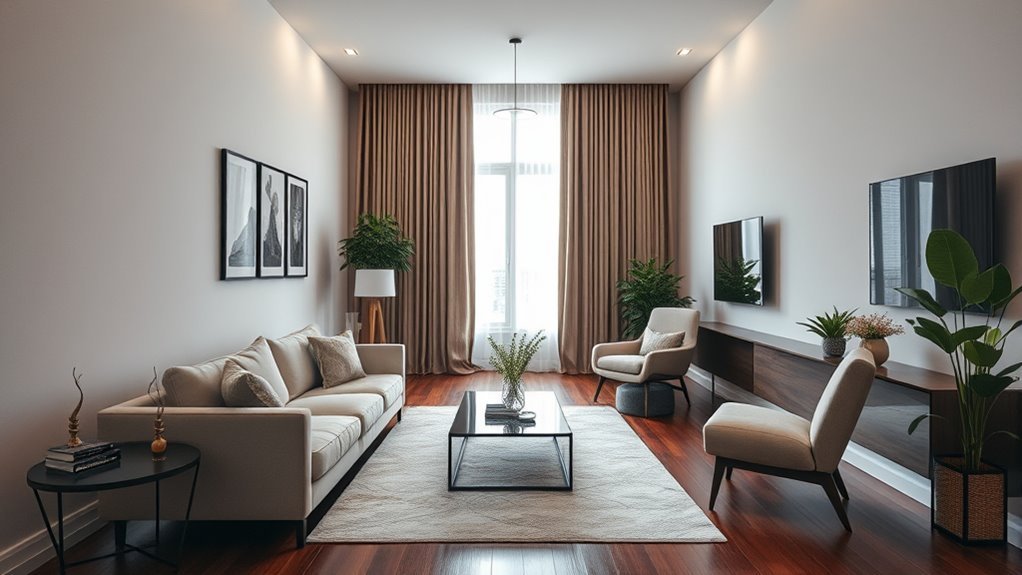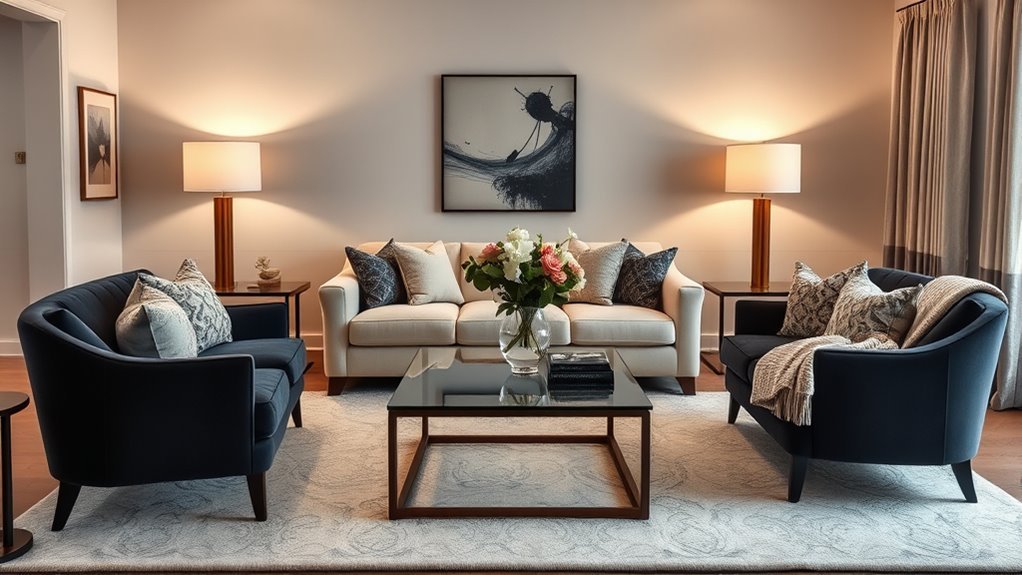
Choosing between sheer and blackout curtains for your living room comes down to one main question: do you want more daylight, more privacy, or flexible control over both? Sheer curtains soften bright sun and keep the room feeling open, while blackout curtains make the space darker, cozier, and more private. For many living rooms, layering the two is the most practical choice.
Quick Answer
Use sheer curtains when you want soft daylight, an airy look, and daytime privacy. Use blackout curtains when you need stronger privacy, glare control, better room darkening, or extra thermal comfort. For a living room, layering sheers with blackout panels usually gives the best balance of light, style, privacy, and flexibility.
Key Takeaways
- Sheer curtains are best for bright, relaxed living rooms where natural light matters more than full privacy.
- Blackout curtains are best for street-facing windows, media rooms, bedrooms, nurseries, and any space where glare or nighttime privacy is a problem.
- Sheers alone are not ideal for nighttime privacy because people may see in when indoor lights are on.
- Layering sheer and blackout curtains on a double rod gives you daylight filtering by day and stronger privacy by night.
- For homes with young children, choose cordless window coverings or keep cords secured and out of reach.
At a Glance
| Time Required | 20–45 minutes to measure and compare options; longer if installing new rods |
| Difficulty | Easy for choosing curtains; moderate if mounting hardware into walls or trim |
| Tools Needed | Tape measure, pencil, level, curtain rod or double rod, brackets, drill or screwdriver for installation |
| Cost | Varies widely by size, fabric, lining, hardware, and whether panels are ready-made or custom |
Sheer vs. Blackout Curtains: Which Is Better for a Living Room?
For most living rooms, sheer curtains are better for daytime softness, while blackout curtains are better for privacy, glare control, and room darkening. The right choice depends on how the room is used.
Choose sheer curtains if your living room feels dark, small, or closed in. They let natural light filter through, which can make the space feel brighter and more open. Choose blackout curtains if your windows face a street, a neighbor’s home, a bright porch light, or a sunny direction that causes glare on a TV or computer screen.
The most flexible setup is a layered treatment: sheer panels closest to the window and blackout or room-darkening panels on the outside. This lets you keep sheers closed during the day, then pull the blackout layer closed at night.
Benefits of Sheer Curtains for Living Rooms
Sheer curtains are lightweight, semi-transparent panels that create a bright, relaxed living room. They soften direct sunlight, reduce harsh contrast, and add movement without making the room feel heavy.
They work especially well in smaller living rooms, apartments, and spaces with limited natural light because they do not visually block the window. White, ivory, beige, pale gray, and linen-look sheers also blend easily with most decor styles.
- Soft daylight: Sheers filter sunlight instead of blocking it completely.
- Airy style: They make a window feel lighter and less formal.
- Daytime screening: They can blur the view from outside during the day.
- Easy layering: They pair well with blackout curtains, drapes, roller shades, or blinds.
- Simple maintenance: Many ready-made sheers are lightweight and easy to remove for cleaning, though care instructions vary by fabric.
Note: Sheer curtains are not the same as full privacy curtains. At night, when lights are on inside and it is darker outside, people may be able to see through them.
When Blackout Curtains Make Sense
Blackout curtains use dense fabric, special lining, or coated layers to reduce incoming light. They are popular in bedrooms, but they can also be useful in living rooms, media rooms, nurseries, rental apartments, and street-facing spaces.
They are a smart choice when you want to:
- Block glare: helpful for TV viewing, gaming, or working from a living-room screen.
- Improve nighttime privacy: opaque panels help prevent people from seeing into the room when the curtains are closed.
- Create a cozier mood: darker panels can make a room feel warmer and more grounded.
- Control heat gain and heat loss: heavier, well-fitted draperies can help improve comfort around windows.
- Support better sleep in nearby rooms: darkness helps support normal circadian cues because light and dark strongly influence the body’s internal clock, according to the National Institute of General Medical Sciences.
For best results, make blackout panels wider and taller than the window opening. Light often leaks around the top, sides, and bottom, so mounting the rod high and wide can make a noticeable difference.
Recommended Products

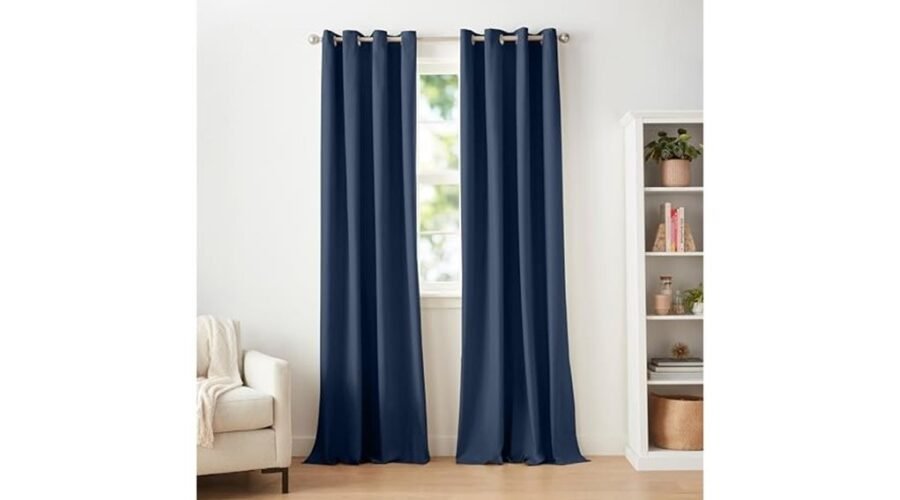
Pair Sold: Each package includes 2 panels of blackout curtains. Each panel measures 40"W x 84"L, with a pair measuring 80"W x 84"L. Each panel has 6 anti-rust silver grommets(1.6 inch inner diameter) which would fit most standard curtain rods

SIZE & MATERIAL:Set includes 2 panels blackout curtains(52" Wide by 84" Long). Each panel has 8 grommets.The interior diameter of hole is 1.6 inch.It's easy to hang. Curtains are made by quality faux linen.

PACKAGE INCLUDES: 2 panels per package. Each package includes two ombre blackout curtain panels of 52"W x 84"L,one set measures: 104"W x 84"L. Each curtain panel has 8 rustproof silver metal grommets on top. Each grommet inner diameter is 1.6 inch, fits most standard rods in the market. Easy to hang, and slide smoothly. These gradient blackout living room curtains are soft and smooth.
Key Differences: Sheer vs. Blackout Curtains
Both curtain styles can look beautiful, but they solve different problems. Use this comparison to match the curtain type to your room’s needs.
| Feature | Sheer Curtains | Blackout Curtains |
|---|---|---|
| Light control | Filters and softens light | Reduces most incoming light when properly fitted |
| Privacy | Moderate in daytime, weak at night | Strong when fully closed |
| Best room use | Living rooms, dining rooms, sunrooms | Bedrooms, nurseries, media rooms, street-facing living rooms |
| Style | Light, breezy, casual, elegant | Cozy, polished, dramatic, private |
| Energy comfort | Limited insulation by themselves | Better potential comfort when heavy, lined, and fitted close to the window |
| Best overall option | Best for soft daylight | Best for darkness and privacy |
Layering Sheer and Blackout Curtains for Better Light Control
Layering sheer and blackout curtains gives you the best of both worlds. During the day, close the sheer layer to soften sunlight while keeping the room bright. In the evening, close the blackout layer for privacy, glare control, and a cozier feel.
Use a double curtain rod or a ceiling track with two channels. Place the sheer panel closest to the glass and the blackout panel on the room side. This keeps the lighter fabric visible during the day and lets the heavier curtain frame the window.
The U.S. Department of Energy notes that window coverings can help with comfort, temperature regulation, and energy use, but the exact savings depend on the product type, season, climate, and how the covering is used. For draperies, the DOE also notes that two draperies hung together can create a tighter air space than one.
According to the U.S. Department of Energy, about 30% of a home’s heating energy is lost through windows, and window coverings can help improve comfort when chosen and operated well.
Pro Tip: Mount curtain rods several inches above and beyond the window frame when possible. The extra coverage helps reduce side gaps, makes the window look larger, and gives blackout panels more room to block light.
Recommended Products

Room Darkening Solution: The double curtain rod features a wrap around design, which creates a tight seal between the wall and curtains, effectively blocking light and reducing outside noise to help you create a comfortable and cozy indoor environment.

ALL-IN-ONE TRACK KIT, READY TO INSTALL: No measuring, cutting, or splicing needed – this single-piece extendable curtain track adjusts from 5ft11/ 1.8m to 10ft9/ 3.3m. Complete with all hardware and a step-by-step guide, installation is quick and DIY-friendly. Perfect for both center-to-sides openings, and easily adjustable without assembling multiple track connectors.
Room Darkening Solution: The double curtain rod features a wrap around design, which creates a tight seal between the wall and curtains, effectively blocking light and reducing outside noise to help you create a comfortable and cozy indoor environment.
How to Pick the Perfect Curtains for Your Home
To choose the right curtains, start with the room’s main problem. A sunny living room with glare needs a different solution than a shaded room that simply needs softness and style.
Recommended Products

MULTIPLE HANGING: Sold per pair, including 2 window panels - Panel measures: 52 x 84 - inches | Set measures: 104 x 84 - inches, with 3 curtain top hanging options (Back tab & Rod pocket & Pleated) for your personalized style. Each panel sewn with 4" rod pocket (7 back loops), 2" bottom hem and 0.8" side hem, specialized fitting the curtain rods up to 3

100% Blackout Curtains for Ultimate Privacy & Serenity: Our blackout curtains ensure your room completely dark, achieving 100% light blockage. Perfect for bedrooms, living rooms, or nurseries, they effectively block all distracting light, creating a dark, comfortable, and tranquil space for sleep and relaxation. Say goodbye to intrusive morning light and enjoy uninterrupted sleep until dawn.
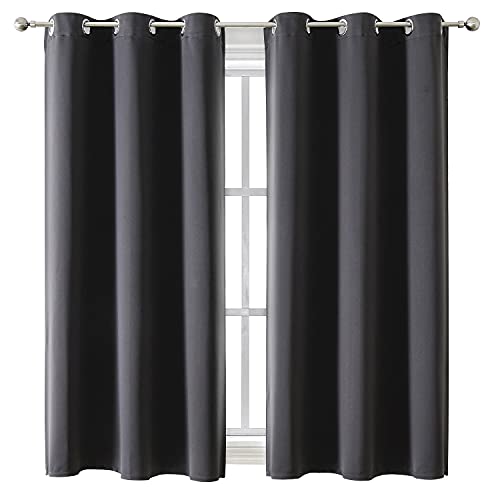
SET DETAILS: 2 charcoal gray curtains per package. Each panel measures 42 inch wide by 63 inch long with 6 silver metal grommets (1.6 inch inner diameter) on top, easy to install and slide.
1. Choose Based on Room Function
- Everyday living room: sheers alone may be enough if privacy is not a concern.
- Street-facing living room: layer sheers with blackout or room-darkening panels.
- TV or media room: use blackout panels to reduce glare.
- Bedroom or nursery: use blackout curtains or a blackout liner for stronger darkness.
- Home office: consider layered curtains so you can reduce glare without making the room too dark.
2. Choose the Right Fabric and Lining
Sheer curtains often come in voile, gauze, lace, linen-look polyester, cotton blends, or lightweight linen. Blackout curtains are usually thicker and may use a blackout lining, foam backing, dense weave, or multi-layer construction.
If you like the look of your current curtains but need more darkness, a separate blackout liner can be a good compromise. If energy comfort is a priority, look for products with clear performance information or check the Attachments Energy Rating Council for certified window attachment ratings.
3. Measure for Better Coverage
For a fuller look, choose curtain panels with a combined width about 1.5 to 2 times the window width. For blackout curtains, go wider when possible so the panels overlap in the center and extend beyond the sides of the window.
Length matters too. Floor-length curtains usually look more polished in a living room. Curtains can hover just above the floor, lightly touch it, or puddle slightly for a softer formal look. For everyday living rooms, a just-above-the-floor length is usually the easiest to clean and operate.
4. Match Color to the Room
Light sheers work well when you want the curtains to disappear into the room. Warm whites, oatmeal, pale gray, and soft beige are easy to use with most wall colors. Blackout curtains can be neutral for a calm look or deeper in color for contrast.
Remember that dark blackout curtains can make a small room feel moodier, while lighter blackout panels with a lined back can keep the room feeling brighter when open.
Warning: If young children live in or visit your home, choose cordless window coverings whenever possible. The U.S. Consumer Product Safety Commission warns that window-covering cords can pose a strangulation hazard and recommends cordless options when children are present.
Common Curtain Mistakes to Avoid
- Using sheers for nighttime privacy: sheers can become see-through after dark when interior lights are on.
- Buying panels that are too narrow: skimpy panels look flat and allow more light gaps.
- Hanging blackout curtains only inside the window frame: this can leave light leaks around the edges.
- Ignoring the care label: some fabrics are machine washable, while others need gentle washing, steaming, or dry cleaning.
- Forgetting hardware: heavy blackout curtains need a sturdy rod and brackets that can support the panel weight.
Frequently Asked Questions
When should you use sheer curtains in a living room?
Use sheer curtains when you want soft daylight, a bright atmosphere, and a lighter look. They are best for living rooms where you do not need full nighttime privacy or heavy glare control.
Do sheer curtains make a room look bigger?
Yes, sheer curtains can make a room feel larger because they let light pass through and keep the window visually open. Hanging them high and wide can also make the ceiling and window area appear taller.
Can you use blackout curtains in a living room?
Yes. Blackout curtains are useful in living rooms with strong sun, TV glare, street-facing windows, or a need for more evening privacy. Choose lighter colors or layer them with sheers if you want the room to stay bright during the day.
Are blackout curtains energy efficient?
They can help improve comfort around windows, especially when they are heavy, lined, and fitted close to the wall or window frame. Energy savings vary by climate, season, window type, curtain fabric, and how often the curtains are opened and closed.
Should you layer sheer and blackout curtains?
Layering is a strong choice if you want flexible light control. Keep sheers closed during the day for filtered light, then close blackout panels at night for more privacy and darkness.
Conclusion
Sheer curtains and blackout curtains both have a place in a well-designed living room. Sheers create a bright, airy feel and soften daylight, while blackout curtains add privacy, glare control, and a cozier mood. If you want one setup that works from morning to night, layer both on a double rod: sheer panels for daytime light and blackout panels for evening privacy.
The best choice is the one that fits how you actually use the room. Think about sunlight, privacy, TV glare, window direction, child safety, and the style you want. With the right fabric, size, and installation, curtains can make your living room feel more comfortable, polished, and practical every day.
Sources
- U.S. Department of Energy — Energy Efficient Window Coverings — supports energy, heat gain, heat loss, and drapery-use guidance.
- U.S. Consumer Product Safety Commission — Window Covering Cords — supports child-safety guidance for cordless window coverings.
- National Institute of General Medical Sciences — Circadian Rhythms — supports light, darkness, circadian rhythm, and melatonin context.
- Attachments Energy Rating Council — supports energy-rating guidance for window attachment products.