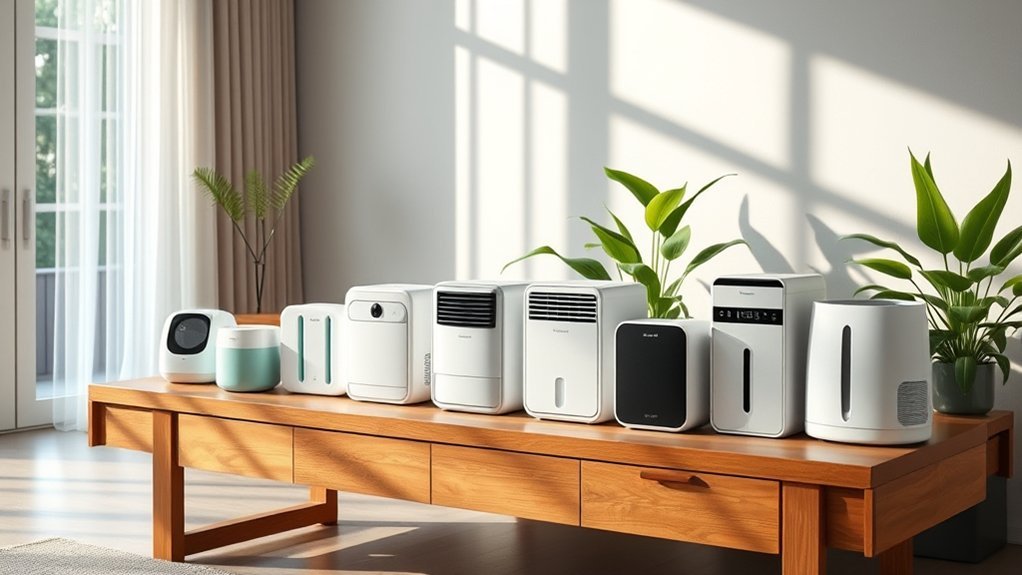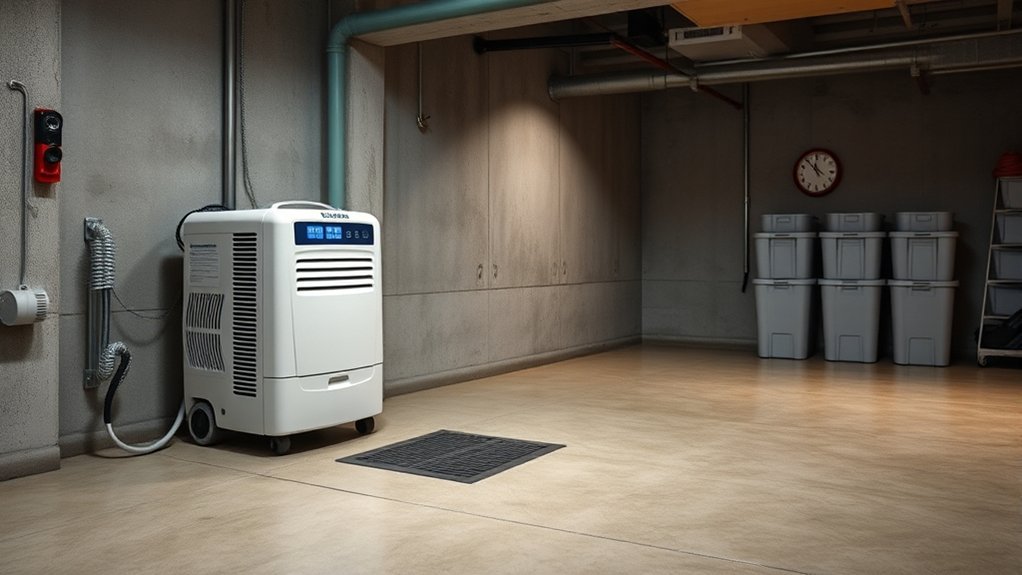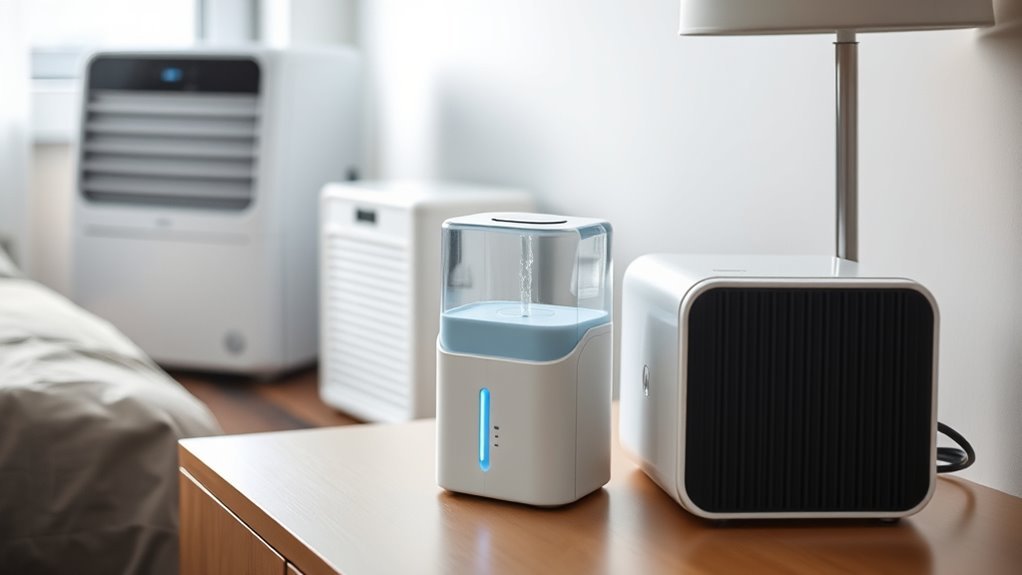
A Peltier dehumidifier is a small thermoelectric dehumidifier made for quiet, targeted moisture control. It can help in a closet, cabinet, RV, desk area, small bathroom, or other enclosed spot with mild excess humidity. It is not the right tool for a wet basement, laundry room, large bedroom, or any space with ongoing leaks, standing water, or heavy condensation.
Quick Answer
A Peltier dehumidifier uses a thermoelectric module to cool a small surface so water vapor condenses into a tank. It is quiet and compact, but it removes far less water than a compressor or desiccant dehumidifier. Choose one only for small, enclosed spaces with light moisture problems.
Key Takeaways
- Peltier dehumidifiers are best for small, enclosed areas, not whole rooms or wet basements.
- They are usually quiet because they do not use a compressor, but they remove only a small amount of moisture each day.
- Low wattage does not always mean high efficiency. A compressor unit usually removes much more water per unit of electricity.
- Use a hygrometer and aim for roughly 30% to 50% indoor relative humidity, unless your doctor or building professional recommends otherwise.
- If you see mold, leaks, standing water, or repeated condensation, fix the moisture source first.
At a Glance
| Best For | Closets, cabinets, RV compartments, desk areas, small bathrooms, and other enclosed spots with light moisture |
| Not Best For | Basements, laundry rooms, large bedrooms, cold garages, flood cleanup, leaks, or heavy condensation |
| Noise Level | Usually quiet because there is no compressor, though fan noise varies by model |
| Main Tradeoff | Very compact and quiet, but much lower moisture removal than compressor or desiccant models |
What Is a Peltier Dehumidifier?
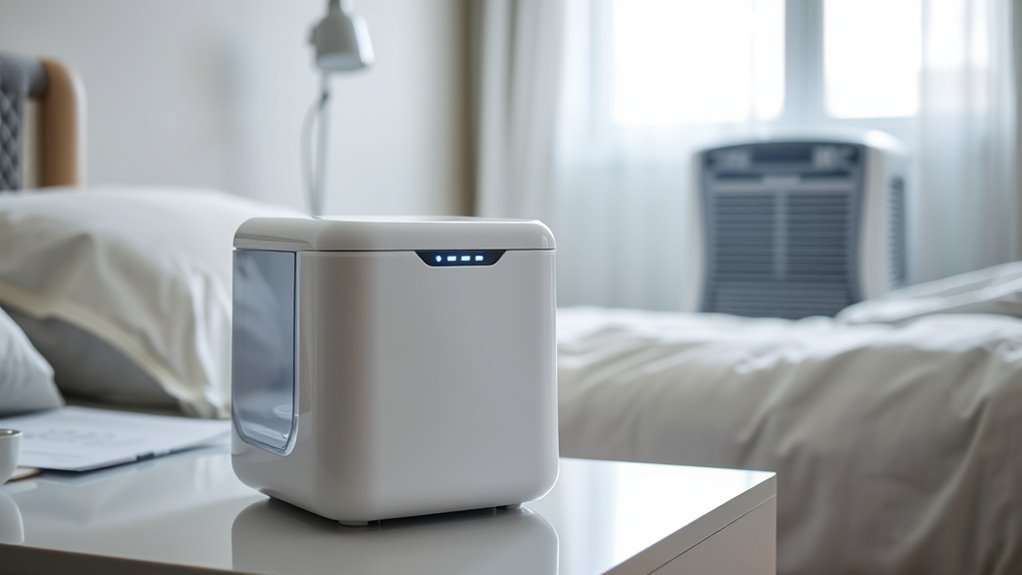
A Peltier dehumidifier is a compact unit that removes moisture with a thermoelectric Peltier module instead of a compressor or a desiccant wheel. When current passes through the module, one side becomes cooler and the other side becomes warmer. A small fan moves humid air across the cold side. If that surface is cold enough, water vapor condenses into droplets and drains into a tank.
The main appeal is simple: Peltier models are small, lightweight, and quiet. They also avoid refrigerant and compressor vibration. The tradeoff is capacity. A tiny thermoelectric unit may collect only ounces or cups of water per day under warm, humid conditions, while standard room dehumidifiers are commonly rated in pints per day.
Note: A Peltier unit is not a repair for a leak, roof problem, plumbing issue, or poor ventilation. If moisture keeps coming back, fix the source before relying on any dehumidifier.
How Peltier Dehumidifiers Work
A Peltier dehumidifier works by creating a cold surface inside the unit. Warm, damp air enters through an intake grille and passes over that cold surface. When the surface temperature is below the air’s dew point, moisture condenses into liquid water. The droplets then run into a small reservoir.
The process is solid-state, which means there is no compressor cycle. Most models still have a fan, a heat sink, a water tank, an auto-shutoff float, and basic electronics. Because the fan is usually the only moving part, these units tend to sound softer than compressor dehumidifiers.
Why Peltier Dehumidifiers Work Best in Small Spaces
Peltier dehumidifiers work best in small spaces because their moisture-removal capacity is limited. A compact thermoelectric module can create a cool surface, but it cannot move as much heat or condense as much water as a larger refrigeration system.
Compact Room Fit
A Peltier unit is useful where a full-size appliance would be awkward: a closet shelf, RV cabinet, boat locker, pantry, under-desk area, or small bathroom counter. The small footprint makes it easy to place close to the moisture problem.
Quiet Low-Power Operation
Peltier units are often low-wattage and quiet. That makes them appealing for bedrooms, workspaces, and shared living areas where compressor noise would be annoying. However, low wattage should not be confused with high dehumidifying efficiency. A larger compressor model usually removes far more water for each kilowatt-hour used.
Limited Moisture Range
The biggest limit is daily water removal. Many mini thermoelectric units are rated in ounces or cups per day, and those ratings usually assume warm, humid test conditions. In cooler or less humid rooms, they may collect very little water.
Use one when the space is small, enclosed, and only mildly damp. Choose a stronger unit when the room smells musty, windows sweat, walls feel damp, or the humidity stays high after showers, cooking, laundry, or rain.
What Humidity Level Should You Aim For?
A practical indoor target is roughly 30% to 50% relative humidity. ENERGY STAR describes 30% to 50% RH as the generally optimum range for buildings, and the CDC recommends keeping home humidity no higher than 50% all day long to help prevent mold growth. Use a small digital hygrometer instead of guessing by feel.
Pro Tip: Place a hygrometer a few feet away from the dehumidifier, not directly in the exhaust stream. That gives you a better reading of the actual space.
Peltier Dehumidifier Limits: What to Expect
A Peltier dehumidifier is a precision tool, not a powerhouse. Expect slow, steady moisture control in a small area. Do not expect fast drying, flood recovery, or whole-room humidity control.
- Capacity is low: Tiny thermoelectric models remove much less water than standard room dehumidifiers.
- Performance depends on conditions: They collect more water in warm, humid air and less in cool or mildly humid air.
- Cold spaces reduce output: If the cold side gets too cold, frost can form and slow collection.
- Tanks are small: The reservoir may need frequent emptying in humid weather.
- Airflow matters: Blocking the intake or outlet sharply reduces performance.
When Not to Use a Peltier Dehumidifier
Skip a Peltier dehumidifier when the moisture load is more than light. It is usually the wrong choice for:
- Basements with musty odors or damp walls
- Rooms larger than the unit’s rated coverage area
- Spaces with leaks, seepage, or standing water
- Laundry drying areas
- Bathrooms without an exhaust fan
- Cold garages, crawl spaces, or unheated rooms
- Mold cleanup or flood recovery
For those situations, use a properly sized compressor or desiccant dehumidifier and fix the moisture source. The EPA emphasizes that moisture control is the key to mold control.
Peltier Dehumidifier vs Compressor Models
The main difference is capacity. A Peltier unit is small, quiet, and easy to move. A compressor dehumidifier is larger, louder, and much stronger. ENERGY STAR’s buying guidance for portable dehumidifiers lists recommended capacities in pints per day, including 20 to 30 pints per day for many small-to-medium damp spaces and higher ranges for wetter or larger areas.
| Feature | Peltier Dehumidifier | Compressor Dehumidifier |
|---|---|---|
| Best use | Small enclosed spaces | Rooms, basements, damp areas |
| Moisture removal | Low | Medium to high |
| Noise | Usually quiet | Usually louder |
| Energy profile | Low wattage, low output | Higher wattage, much higher output |
| Portability | Very portable | Portable, but larger and heavier |
Recommended Products

1600 Sq.Ft High Capacity Dehumidifier- The GoGuess basement dehumidifier is equipped with a quiet yet powerful compressor that efficiently extracts up to 21 pints of moisture per day (tested at 95°F and 90% RH). Perfect for use in basements, offices, bathrooms, bedrooms, kitchens, storage areas, living rooms, laundry spaces, garages, crawl spaces, and RVs. It helps maintain a healthy humidity level between 30% and 70%, promoting a more comfortable and healthier indoor environment

High-Efficiency Dehumidifier for Home:This small dehumidifier is also equipped with a compressor that can dehumidify 20 pints per day and can efficiently dehumidify an area of 1500sq ft continuously. Keep your space as comfortable and dry as possible with a small footprint

1,500 Sq.Ft. OF COVERAGE - Midea dehumidifier with drain hose is able to collect 20 pint (Similar to 30 PT-2012 DOE) of water a day and adjust humidity from 35% to 85%, perfect for use for basement, bathroom, bedroom, or crawlspace.
Moisture Removal Capacity
For serious moisture removal, compressor models win. They are designed for room-scale drying and are rated in pints per 24 hours. Peltier models are better when you only need gentle control in a small, closed area.
Noise and Energy Use
Peltier dehumidifiers are usually quieter, but compressor models usually remove water more efficiently. If your main goal is silence in a tiny space, a Peltier unit can make sense. If your main goal is lowering humidity across a room, choose a properly sized compressor model.
Peltier Dehumidifier vs Desiccant Models
A desiccant dehumidifier removes moisture with a material that absorbs or adsorbs water vapor. It then uses heat to dry that material so the cycle can continue. Desiccant units often perform better than compressor units in cooler spaces, and they usually remove more moisture than tiny Peltier units.
| Type | Best For | Main Drawback |
|---|---|---|
| Peltier | Tiny, quiet, enclosed spaces | Very low capacity |
| Compressor | Warm rooms and larger damp areas | Louder and bulkier |
| Desiccant | Cooler rooms and steady drying | Can use more heat and power |
Recommended Products

【The Undisputed Champion — Industry-Leading Dehumidifier Brand】Choose AEOCKY, getting double market validation. According to data independently verified by Stackline, a leading third-party data analytics company, AEOCKY was an industry‑leading dehumidifier brand on Amazon U.S. in 2025. Meanwhile, it stands as a technology-leading rotary desiccant dehumidifier brand on Amazon. This isn’t just an appliance—it’s a complete humidity-control solution for small spaces. Skip low-performance alternatives and trust a brand recognized by the market.

✔ EASY TO USE: This mini dehumidifier is spill and mess free. Just hang and go! Non-toxic, child and pet safe! Your small rooms will be dry and odor free. Works for areas up to 333 cubic feet.

Semiconductor dehumidifiers use thermoelectric cooling to remove moisture from the air. They create a drier, more comfortable environment by reducing humidity and improving air quality.
Best Uses for a Peltier Dehumidifier
A Peltier dehumidifier is most useful when the moisture problem is small and localized. Good examples include:
| Space | Why It Can Work |
|---|---|
| Closet | Helps reduce mild dampness around clothes, shoes, and stored items |
| RV or boat locker | Fits in compact compartments where airflow is limited |
| Small bathroom | Can help between showers, but it should not replace an exhaust fan |
| Desk or office nook | Adds quiet localized humidity control without taking up much space |
| Cabinet or pantry | Useful when the cabinet is enclosed and only mildly damp |
Warning: Be careful in bathrooms and other wet areas. Keep the plug, cord, and adapter away from splashes, tubs, sinks, and standing water. Follow the manufacturer’s electrical safety instructions and use a properly protected outlet where required.
How to Choose a Peltier Dehumidifier
Choose a Peltier dehumidifier by matching the unit to the space, not by choosing the smallest or cheapest model. Check these points before buying:
- Rated moisture removal: Look for the ounces, milliliters, or cups per 24 hours, and note the test conditions.
- Tank size: A larger tank means less frequent emptying, but the unit should still shut off automatically when full.
- Coverage area: Treat large coverage claims cautiously. Small thermoelectric units work best in enclosed spaces.
- Noise rating: Check the listed decibels and owner feedback if you plan to use it near a bed or desk.
- Operating temperature: Make sure the model is rated for the room temperature where you will use it.
- Airflow design: Choose a unit that gives you enough clearance around the intake and outlet.
- Safety listing: Prefer models with recognized electrical safety certification for your region.
- Easy cleaning: The tank should be simple to remove, empty, rinse, and dry.
Recommended Products
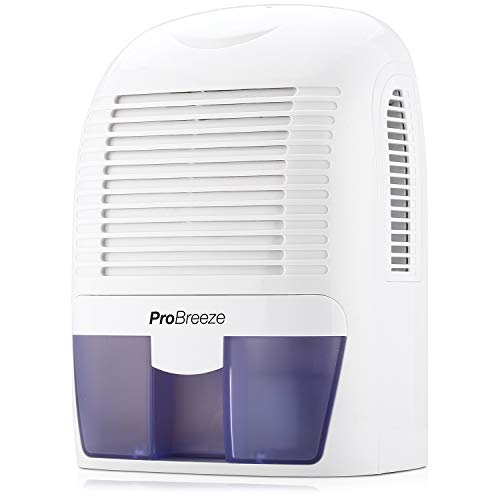
COMPACT & SMALL DEHUMIDIFIER: Lightweight, compact, and portable, this mini dehumidifier removes up to 18 oz of water per day with a 52 oz water tank capacity. They can cover up to 3000 cubic feet (250 sq.ft), leaving ample space for the appliances to function as dehumidifiers for bathroom and moisture absorbers for closet.

🍃Advanced Small Dehumidifier for Home: Designed for lasting home use, our bathroom dehumidifier works gently and steadily to maintain a balanced humidity level. The large 44 OZ (1.3L) water tank minimizes emptying frequency. Suitable for dorm room, camper, apartment, room, office and living room. No more dampness-just fresh, comfortable air everywhere

High-Efficiency Dehumidifier for Home: Still annoyed about the muggy weather? Just Take it easy! Have a try at our 35OZ Peltier dehumidifier, in a closed small room with humid environment of 86°F and 80% RH, it can collect a max of 16oz(450ml) of water in 24 hours, and with very low energy consumption (no more than1 kWh per day).
Where to Place a Peltier Dehumidifier
Placement affects performance. Put the unit where air can move freely through the intake and outlet. Keep it upright on a stable surface, away from fabric, papers, curtains, and walls that block airflow. In a closet, place it on a shelf or floor area with open space around the vents. In a bathroom, keep it away from direct splash zones.
Close doors and windows while it runs. Open windows can bring in more humid air and make the unit work harder. If the space has an exhaust fan, use the fan first to remove large moisture bursts, then let the Peltier unit handle light leftover humidity.
Maintenance and Cleaning
Most Peltier dehumidifiers are simple to maintain, but they still need regular cleaning.
- Empty the tank before it overfills or sits for long periods.
- Rinse and dry the reservoir regularly to reduce odors and buildup.
- Wipe dust from the intake and outlet grilles.
- Keep the unit upright so water drains correctly into the tank.
- Unplug the unit before cleaning.
- Follow the manufacturer’s instructions for filters, adapters, and cleaning products.
If water sits in the tank too long, it can develop odor or residue. Cleaning the tank matters almost as much as collecting the moisture.
Troubleshooting a Peltier Dehumidifier
| Problem | Likely Cause | What to Do |
|---|---|---|
| Little or no water collected | Room is too cool, humidity is already low, or airflow is blocked | Check humidity with a hygrometer, clear vents, and confirm the unit is used within its rated temperature range |
| Ice or frost appears | Cold-side surface is getting too cold for the room conditions | Turn the unit off, let it defrost, and avoid using it in colder spaces unless the manual allows it |
| Musty smell | Dirty tank, damp dust, or hidden mold source nearby | Clean and dry the tank, inspect the space, and fix any moisture source |
| Humidity does not drop | Unit is too small for the space or moisture keeps entering | Close the space, reduce the moisture source, or upgrade to a compressor or desiccant model |
Frequently Asked Questions
What are the disadvantages of a Peltier dehumidifier?
The main disadvantages are low moisture-removal capacity, weaker performance in cool spaces, small water tanks, and lower efficiency per pint removed compared with many compressor dehumidifiers. A Peltier unit is convenient for light moisture control, but it is not built for heavy drying.
Would a dehumidifier help with COPD?
A dehumidifier may help if dampness, mold, or musty indoor air bothers your breathing, but it is not a COPD treatment. The American Lung Association recommends managing COPD with your healthcare team and treatment plan. Ask your clinician what indoor humidity range is best for you.
What is the most reliable Peltier dehumidifier?
There is no single most reliable model for every space. Look for a clear moisture-removal rating, auto shutoff, recognized electrical safety certification, a cleanable tank, a reasonable warranty, and verified owner reviews that mention long-term use. Avoid models with vague capacity claims or no support information.
How does a Peltier dehumidifier work?
It uses electric current to make one side of a thermoelectric module cold and the other side warm. A fan moves humid air across the cold side. Moisture condenses on that surface and drains into a small collection tank.
Can a Peltier dehumidifier stop mold?
It can help reduce mild humidity in a small space, but it will not remove existing mold or fix a moisture source. The CDC recommends keeping indoor humidity low, fixing leaks, improving airflow, and removing mold safely when it appears.
Is a Peltier dehumidifier better than a moisture absorber?
A Peltier unit is reusable and actively condenses water, while a disposable moisture absorber uses a chemical desiccant that must be replaced. For a tiny closet or storage bin, either may help. For ongoing humidity, an electric dehumidifier is usually easier to monitor.
Conclusion
A Peltier dehumidifier is a smart choice when you need quiet, compact moisture control in a small enclosed area. It works by cooling a surface with a thermoelectric module so water vapor condenses into a tank. Its strengths are size, simplicity, and low noise. Its weakness is capacity. For closets, RV compartments, small bathrooms, and desk areas, it can be useful. For damp rooms, basements, leaks, mold problems, or high humidity that will not come down, choose a stronger compressor or desiccant dehumidifier and fix the moisture source.
Sources
- ENERGY STAR — Dehumidifiers — backs up capacity sizing, humidity targets, efficiency, placement, and operating-temperature guidance.
- U.S. EPA — A Brief Guide to Mold, Moisture and Your Home — backs up moisture control as the key to mold control.
- CDC — Mold — backs up mold prevention, health cautions, and keeping home humidity no higher than 50% all day long.
- American Lung Association — Living with COPD — supports the COPD caveat and the need to follow a healthcare plan.
- Thermoelectric Devices: Cooling and Power Generation — supports the thermoelectric cooling background and Peltier-device context.