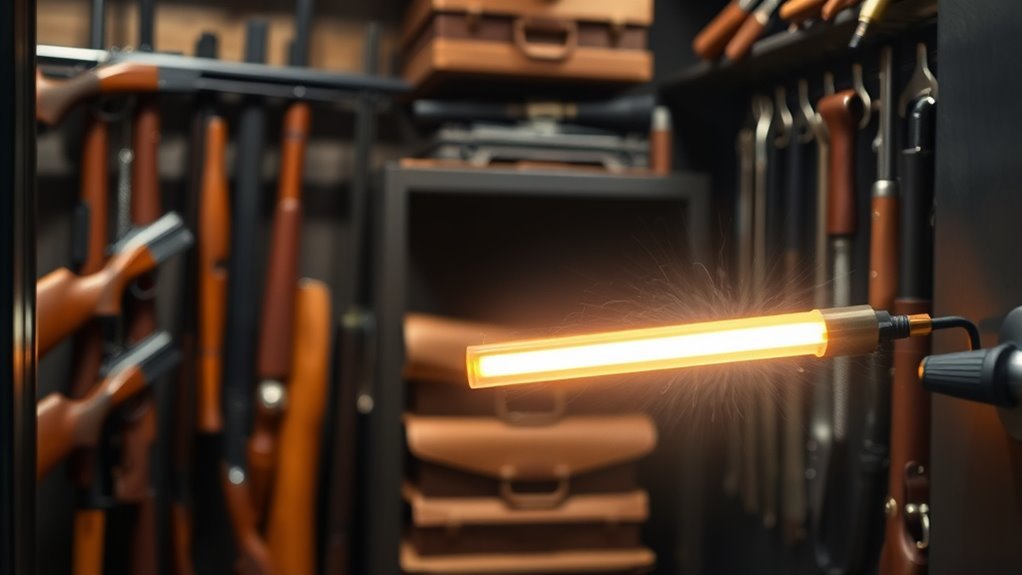
A dehumidifier rod helps protect a safe, cabinet, locker, or small storage enclosure by gently warming the air inside it. That slight heat lowers relative humidity, reduces condensation, and keeps air moving through natural convection. It is simple, quiet, and useful for firearms, tools, documents, optics, and electronics, but it works best when you size it correctly, keep airflow clear, and confirm results with a hygrometer.
Quick Answer
A rod dehumidifier works by warming the air inside a small enclosed space. Warmer air holds moisture more easily, so relative humidity drops and condensation is less likely to form on metal, paper, optics, and electronics. It does not collect water in a tank; it helps keep moisture from settling.
Key Takeaways
- Install a rod dehumidifier horizontally near the bottom of the enclosure so warm air can rise and circulate.
- Use a hygrometer to check the actual humidity level; do not guess by feel.
- A rod reduces relative humidity and condensation risk, but it does not remove water like a compressor dehumidifier or absorb moisture like silica gel.
- For persistent high humidity, combine the rod with desiccant, room-level dehumidification, better sealing, or ventilation.
At a Glance
| Time Required | 15–30 minutes for most safes or cabinets |
| Difficulty | Easy beginner project |
| Tools Needed | Mounting brackets, screws or clips, screwdriver, outlet access, and a hygrometer |
| Cost | Varies by length and brand; expect the rod, optional hygrometer, and optional desiccant packs |
How Does a Rod Dehumidifier Work?
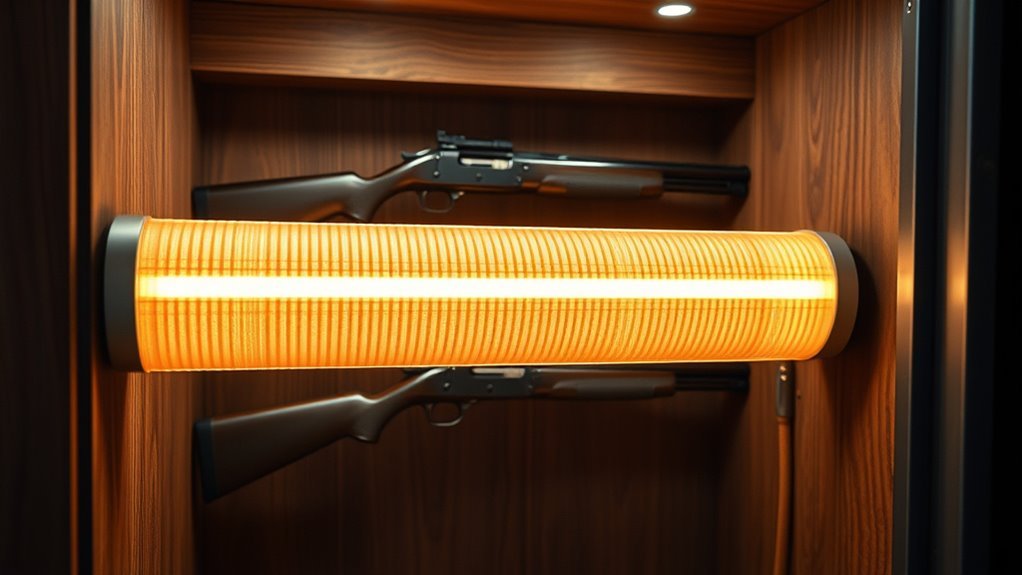
A rod dehumidifier works by slightly increasing the air temperature inside a small enclosed space. That warmer air rises, cooler air sinks, and the movement creates convection currents. Those currents help move air through the safe, cabinet, locker, or storage box so moisture is less likely to sit in one damp pocket.
The key is relative humidity. Warm air can hold more water vapor than cool air. When the rod warms the air inside the enclosure, the relative humidity drops even if the actual amount of water vapor has not changed much. That lower relative humidity makes condensation less likely on cold metal surfaces, optics, paper, wood, and electronics.
This is different from a regular room dehumidifier. A compressor or desiccant dehumidifier physically removes water from air and stores or drains it. A rod does not have a tank, pump, fan, or drain hose. It is a low-maintenance heater designed for a small protected space.
A rod dehumidifier does not “soak up” moisture. It warms and circulates air so condensation is less likely to form on your stored gear.
GoldenRod/Lockdown describes its rod as a device that slightly increases air temperature inside a gun safe or enclosure so warm air circulates continuously and helps reduce humidity, mildew, and condensation. You can confirm model-specific sizes and ratings on the Lockdown Golden Rod product page.
Where to Install a Rod Dehumidifier
For best performance, mount the rod horizontally near the bottom of the safe, cabinet, locker, or enclosure. This position lets the rod warm the lower air first. The warm air rises, cooler air drops, and the natural airflow helps spread heat through the full interior.
Do not bury the rod under cases, papers, clothing, foam, or packed gear. It needs open space around it so air can move. If your safe has shelves, install the rod low enough that air can rise past the shelf edges. If the enclosure has a power-cord pass-through, route the cord cleanly and avoid pinching it against a sharp metal edge.
Warning: Follow the manufacturer’s instructions. Do not cover the rod, do not place flammable material against it, do not use it with a damaged cord, and do not install it where it can get wet. GoldenRod safety guidance notes that the surface can reach up to about 150°F, so treat it as a hot electrical device.
How to Install a Rod Dehumidifier
- Empty or clear the bottom area. Move stored items away from the planned mounting spot so the rod has open air around it.
- Measure the enclosure. Multiply height × width × depth to estimate cubic feet, then compare that number with the rod manufacturer’s coverage rating.
- Choose the longest suitable rod that fits horizontally. GoldenRod-style models are commonly sold in 12, 18, 24, and 36 inch lengths, but coverage varies by model.
- Attach the brackets or clips. Use the included mounting hardware and keep the rod off loose fabric, paper, foam, and other stored items.
- Route the cord safely. Use the safe’s electrical pass-through if available. Avoid crushed, stretched, or sharply bent cords.
- Plug it into a suitable outlet. Use a properly functioning outlet and follow the electrical instructions for your model.
- Check humidity after 24–48 hours. Place a hygrometer inside the safe or cabinet and watch the readings over several days.
Pro Tip: Put the hygrometer on a middle shelf, not directly beside the rod. That gives you a better reading of the enclosure as a whole instead of the warmest spot.
Recommended Products
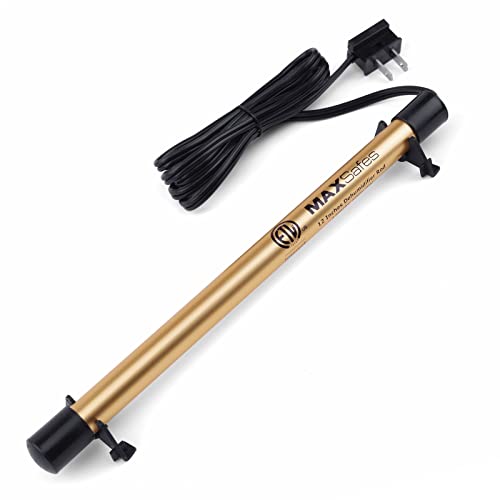
Electric Dehumidifier Rod: Maintenance-free heating rod that provides humidity control in gun safes, cabinets and small enclosures by increasing the temperature in your gun safe to a slightly higher level than the ambient temperature to help to drive out excess humidity

Helps prevent rust and corrosion

SPECS: 12 inches long with a 110/120 volt AC plug to protect up to 100 cubic feet
Rod Dehumidifiers for Safes and Cabinets
Rod dehumidifiers work especially well in safes and cabinets because those spaces are small, enclosed, and prone to stagnant air. In a gun safe, tool cabinet, document locker, closet safe, camper cabinet, or boat storage compartment, the rod can keep air slightly warmer and moving, which reduces the chance that moisture will condense on cold surfaces.
The best humidity target depends on what you store. The EPA recommends keeping indoor humidity below 60%, ideally between 30% and 50%, to help control mold and moisture. For metal artifacts, the Canadian Conservation Institute notes that stable metal objects in mixed collections are commonly stored around 35% to 55% relative humidity, while actively corroding metals need drier conditions.
For most home safes and cabinets, aim for a steady reading near the middle of that range rather than chasing a perfect number. If your hygrometer stays around 40% to 50% and you see no condensation, rust smell, mildew odor, or damp paper, the setup is likely doing its job.
Note: A rod dehumidifier is not a cure for a wet room. If the room around the safe is damp, musty, or regularly above 60% relative humidity, control the room moisture too.
Recommended Products

PROTECT YOUR INVESTMENTS: Don't let moisture & condensation take a toll on your arms and valuable belongings any longer. Introducing the Zarpax gun safe dehumidifier rod, the compact yet formidable solution to keep your enclosed storage spaces moisture-free. Whether it's your prized gun locker, cherished heirlooms, or essential documents, our humidity absorber rod ensures your arms and other possessions stay safe, dry, and in pristine condition.

Electric Dehumidifier Rod: Maintenance-free heating rod that provides humidity control in gun safes, cabinets and small enclosures by increasing the temperature in your gun safe to a slightly higher level than the ambient temperature to help to drive out excess humidity

SPECS: 18 inches long with a 110-120 volt AC plug, 6 foot power cord to protect up to 200 cubic feet
How to Choose the Right Size
Choose rod size by the enclosure volume and the manufacturer’s rating, not by guesswork. Measure the inside height, width, and depth in feet, then multiply them:
Height × Width × Depth = cubic feet
For example, a safe that is 5 feet tall, 2 feet wide, and 2 feet deep is about 20 cubic feet. A larger cabinet that is 6 feet tall, 4 feet wide, and 2 feet deep is about 48 cubic feet. Once you know that number, check the rod’s product page or manual for coverage.
Lockdown/GoldenRod lists 12, 18, 24, and 36 inch variations and states that rod length determines the protected volume. Some product pages also list a specific coverage figure for a single size, such as up to 100 cubic feet for a 12-inch model. Because ratings vary, use the current manufacturer rating for the exact rod you buy.
What Rod Dehumidifiers Do Best
A rod dehumidifier is best for small enclosed storage where air sits still and condensation can damage valuable items. It is quiet, simple, and steady. It has no water bucket to empty, no fan noise, and no desiccant pack to bake dry.
It is especially useful for:
- Firearms and gun safes: helps reduce condensation and rust risk when paired with regular inspection and safe firearm storage habits.
- Tools and metal parts: helps protect steel surfaces from damp storage conditions.
- Documents and photos: helps reduce moisture swings that can encourage mildew or paper damage.
- Optics and electronics: helps reduce damp pockets inside cabinets, lockers, and small storage compartments.
- Boat, RV, and camper cabinets: helps during storage when air circulation is limited.
It is not the right tool for an open room, a basement, a wet crawl space, or a cabinet with active water intrusion. In those cases, fix the moisture source first.
Rod vs. Silica Gel vs. a Compact Dehumidifier
| Option | Best For | Main Limitation |
| Rod dehumidifier | Safes, cabinets, lockers, and small enclosed storage | Does not collect or absorb water; needs power |
| Silica gel or rechargeable desiccant | Small spaces, backup protection, and power-free storage | Needs replacement or recharging when saturated |
| Calcium chloride moisture absorber | Very damp closets, sheds, or storage boxes where spills can be contained | Can spill salty liquid; not ideal near firearms or documents unless contained carefully |
| Compact electric dehumidifier | Rooms, closets, basements, and severe humidity problems | Needs space, drainage or tank emptying, and more power |
Recommended Products

Electric Dehumidifier Rod: Maintenance-free heating rod that provides humidity control in gun safes, cabinets and small enclosures by increasing the temperature in your gun safe to a slightly higher level than the ambient temperature to help to drive out excess humidity

Electric Dehumidifier Rod: Maintenance-free heating rod that provides humidity control in gun safes, cabinets and small enclosures by increasing the temperature in your gun safe to a slightly higher level than the ambient temperature to help to drive out excess humidity

Advanced Moisture Control: The DIGKAU Electric Dehumidifier Rod is expertly designed to keep the humidity at the ideal level in your gun safes, cabinets, and other closed spaces. With a high power output, it ensures your firearms, ammo, documents, and other precious items stay dry by slightly increasing the surrounding temperature to remove excessive moisture
When a Rod Dehumidifier Isn’t Enough
When humidity stays persistently high, a rod dehumidifier may not be enough by itself. This is especially true in basements, coastal climates, garages, sheds, boats, and rooms with leaks or poor ventilation. The rod can help inside the enclosure, but it cannot overcome a large moisture source around it.
- Check a hygrometer often. If readings stay high for several days, your current setup is not keeping up.
- Add a dry desiccant backup. Silica gel can absorb moisture spikes that the rod alone cannot manage.
- Improve internal airflow. Move cases, boxes, and cloth away from the rod so warm air can circulate.
- Control the room. If the room is damp, use a room dehumidifier, air conditioner, exhaust fan, or better ventilation where appropriate.
- Fix moisture sources. Look for leaks, wet flooring, damp walls, unvented appliances, or condensation on nearby surfaces.
- Use multiple moisture controls in large enclosures. A single rod may not be enough for a large safe, boat compartment, or heavily packed cabinet.
The CDC recommends keeping home humidity no higher than 50% all day to help prevent mold growth, and it also recommends using a hygrometer because humidity changes during the day. That same habit helps you confirm whether your safe or cabinet is truly protected.
Troubleshooting Common Problems
The hygrometer still reads high
Make sure the rod is plugged in, warm, and mounted low with open airflow. Check that the enclosure is not overpacked. If the safe is in a damp room, reduce the room humidity too.
Condensation still forms on metal
Condensation often means surfaces are getting colder than the surrounding air. Move the safe away from cold exterior walls, concrete floors, or unconditioned spaces when possible. Add desiccant and monitor readings for several days.
The rod feels hot
That can be normal, but it should not be covered or touching flammable materials. GoldenRod safety guidance says the surface can reach up to about 150°F. Keep clear space around it and inspect the cord and mounting points.
A musty smell remains
A rod can help reduce future condensation, but it will not remove existing mold, mildew, or odor from damaged material. Remove damp cardboard, cloth, foam, or paper. Clean hard surfaces and fix the moisture source.
There is no outlet or cord pass-through
Use a power-free desiccant instead, or ask the safe manufacturer whether a proper electrical pass-through kit is available. Do not drill into a safe without understanding fire lining, security, wiring, warranty, and manufacturer instructions.
Frequently Asked Questions
Where is the best place to put a dehumidifier rod in a safe?
Put the dehumidifier rod horizontally along the bottom of the safe. Bottom placement helps warm air rise and circulate. Keep it clear of boxes, fabric, foam, papers, and other items that can block airflow or touch the warm rod.
Does a rod dehumidifier actually remove moisture?
Not in the same way a tank-style dehumidifier does. A rod dehumidifier warms and circulates air, which lowers relative humidity and reduces condensation risk. It does not collect water in a bucket or absorb water like silica gel.
What humidity should a gun safe or cabinet be?
For many safes and cabinets, a steady range around 40% to 50% relative humidity is a practical target. EPA guidance for indoor moisture control says to keep humidity below 60%, ideally 30% to 50%, while some metal-storage guidance commonly uses about 35% to 55% for stable mixed collections.
Are Golden Rods a fire hazard?
They are generally designed for continuous use when installed correctly, but they are still warm electrical devices. Use the correct outlet, inspect the cord, do not cover the rod, keep flammable materials away, and follow the manufacturer’s safety instructions.
Can I use a rod dehumidifier in a closet or room?
Use a rod only in a small enclosed space, such as a safe, locker, or cabinet, if the model is rated for that use. It is not a room dehumidifier. For a damp closet, basement, or bedroom, use proper ventilation, a room dehumidifier, or an HVAC solution.
Would a dehumidifier help with COPD?
A room dehumidifier may help if excess indoor humidity is causing mold, dust mites, or musty air, but it is not a COPD treatment. Too-dry air can also irritate breathing for some people. If you have COPD, monitor indoor humidity and ask your healthcare provider what range is best for your symptoms.
Can a dehumidifier help with snoring?
A room dehumidifier may help if high humidity is contributing to mold, dust mites, allergies, or nasal congestion. It will not fix every cause of snoring, and very dry air can make throat or nasal irritation worse. Loud, chronic snoring or pauses in breathing should be discussed with a healthcare professional.
Conclusion
A rod dehumidifier works by gently warming the air inside a closed storage space. That warmth lowers relative humidity, supports natural convection, and reduces condensation on firearms, tools, documents, optics, and electronics. Install it horizontally near the bottom, keep airflow clear, use the right size for the enclosure, and verify performance with a hygrometer.
For ordinary safe and cabinet moisture control, a rod is simple and effective. For severe dampness, persistent high humidity, leaks, or musty rooms, use it as one part of a larger moisture-control plan that may include desiccant, room dehumidification, ventilation, and repairs.
Sources
- Lockdown Golden Rod Dehumidifier Rod — backs up rod operation, available lengths, power-source details, and enclosure use.
- GoldenRod Dehumidifier Safety Instruction Guide — backs up installation position, surface-temperature caution, electrical safety, and airflow safety.
- U.S. EPA: A Brief Guide to Mold, Moisture and Your Home — backs up indoor humidity targets, hygrometer use, condensation, and moisture-control guidance.
- CDC Clinical Guidance for Mold, Asthma, and Other Respiratory Conditions — backs up the recommendation to keep humidity no higher than 50% for mold prevention and to use a hygrometer.
- American Lung Association: Mold — backs up moisture control, ventilation, and indoor humidity guidance related to mold.
- Canadian Conservation Institute: Storage of Metals — backs up the role of relative humidity in metal corrosion and storage-range context.