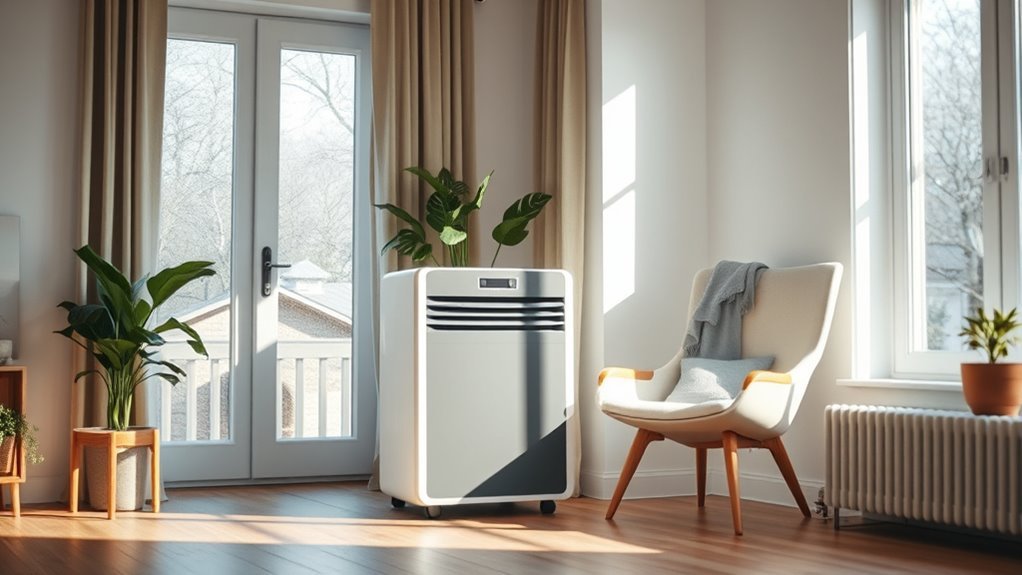
Continuous drainage can save you from emptying a dehumidifier bucket several times a day, but it only works when the hose, drain outlet, and discharge point are arranged correctly. Before you begin, check the owner’s manual for the required hose size, fitting, bucket position, and pump instructions because these details vary by model.
Quick Answer
Unplug the dehumidifier, open its drain port, and attach the correct hose securely. Route the hose to a safe drain below the outlet, with a continuous downward slope and no kinks or loops. Reinstall the bucket if the manual requires it, restore power, and test for steady flow and leaks.
Key Takeaways
- A gravity-drain hose must stay below the dehumidifier’s drain outlet and slope downward for its entire run.
- Use the hose size, adapter, washer, and bucket position listed in your model’s manual.
- Kinks, upward loops, a blocked outlet, a submerged hose end, or a loose connection can stop drainage.
- Use a built-in or external condensate pump only when the drain is higher than the unit or gravity drainage is not practical.
At a Glance
| Time Required | About 10 to 20 minutes, plus time to confirm drainage |
| Difficulty | Easy |
| Tools Needed | Compatible drain hose, required adapter or washer, towel, and a soft flexible brush for cleaning |
| Cost | No added cost if the correct hose is included; otherwise, the cost of a compatible hose, fitting, or pump |
How Dehumidifier Drainage Works
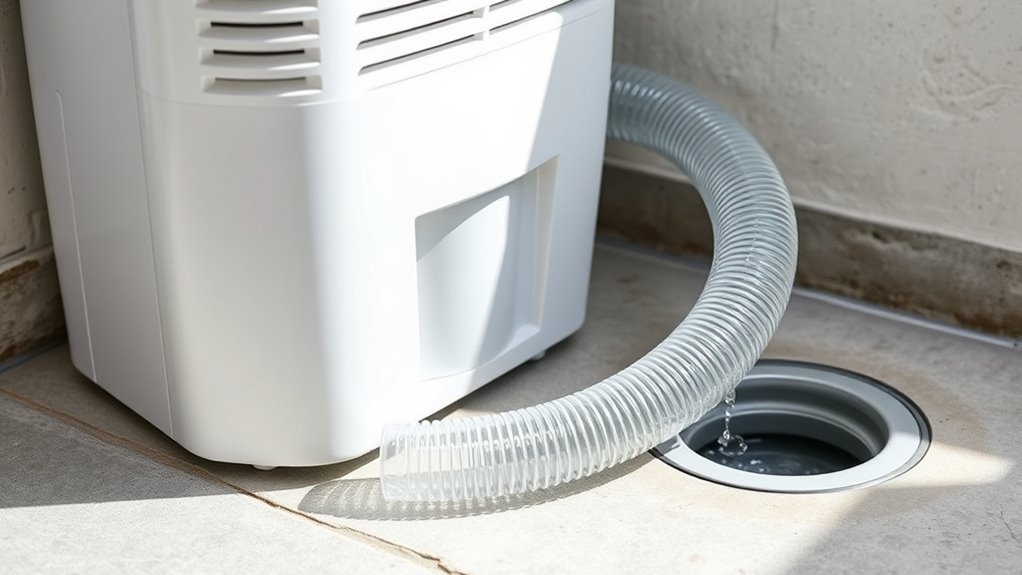
A dehumidifier pulls moist room air across a cold coil. Water condenses and flows into a collection system. Depending on the model, that water goes into a removable bucket, through a gravity-drain port, or into a pump system.
- Bucket drainage: Water collects in the tank until you empty it. Most portable units stop when the bucket is full or not seated correctly.
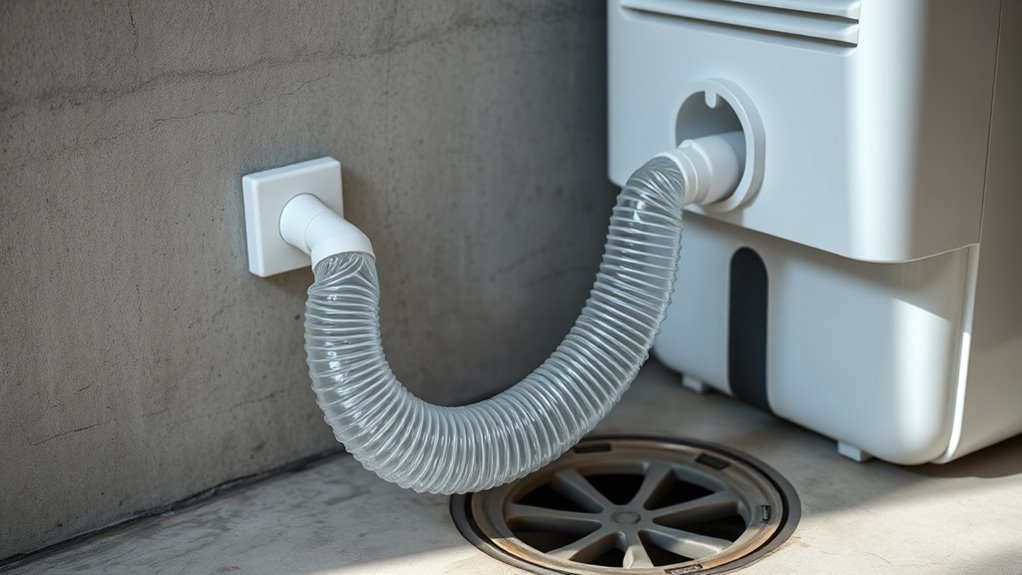
- Gravity drainage: Water leaves through a hose because the drain point is lower than the outlet. The hose cannot rise, loop upward, or stay level for a long distance.
- Pump drainage: A built-in or external condensate pump pushes water to a higher sink, standpipe, or other approved outlet. Maximum lift and hose length are model-specific.
GE Appliances’ drainage guidance shows why gravity models need a short, flat hose to a lower drain and why pump instructions must be followed for the specific appliance.
Note: The bucket may still need to be installed even during continuous drainage. On some models, it holds a float or safety switch that allows the unit or pump to operate.
Before You Connect the Hose
Prepare the unit and drainage route before removing any caps or fittings.
- Read the model manual. Confirm whether the port accepts a garden hose, a smaller supplied tube, or a proprietary adapter.
- Choose a safe drain. A floor drain, utility sink, sump, or properly sized standpipe is usually better than an unsecured container that can overflow.
- Check the height. For gravity drainage, the final outlet must be lower than the dehumidifier’s drain port.
- Place the unit level. A tilted cabinet can cause water to miss the drain channel or leak around the bucket.
- Inspect the hose. Do not use a cracked, flattened, excessively long, or badly worn hose.
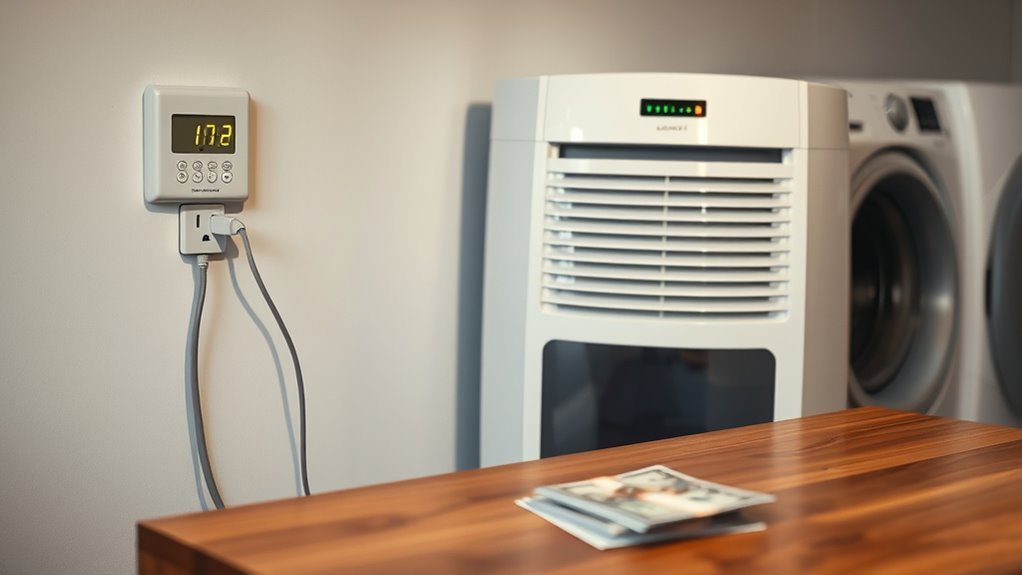
Warning: Turn off and unplug the dehumidifier before opening the drain port, removing the bucket, cleaning the hose, or wiping a leak. Keep plugs, extension cords, and power strips away from the drainage path.
How to Set Up a Drain Hose
Follow these steps for a typical gravity-drain setup. Your owner’s manual takes priority if its instructions differ.
Recommended Products

Multi-Purpose Hose, 6ft Cut-to-Fit:This 6-foot hose is designed for various applications, including dehumidifier drainage and gardening tasks. It can be easily cut to the desired length for flexible use. Please confirm the required length before purchase.

[Convenient] This drain hose automatically drains water from the dehumidifier to the drain for uninterrupted use.

Premium Quality Material:This dehumidifier hose is made of durable and thick PVC, which has moderate flexibility and is easy to bend without breaking; Ripple design can prevent tangling, ensure smooth water flow, and make it easy to move in small spaces
1. Position the Dehumidifier
Set the appliance upright on a firm, level surface with the required airflow clearance. Place it high enough for the hose to slope down to the drain without crossing a doorway or creating a trip hazard.
2. Open the Drain Port
Switch the unit off and unplug it. Remove the bucket if the manual directs you to do so, open the drain cover, and remove the cap or plug. Keep any removed parts in a safe place in case you return to bucket operation.
3. Check the Fitting and Washer
Inspect the drain threads, adapter, and rubber washer. Dirt, cross-threading, or a missing washer can cause a slow leak. Replace damaged parts with components approved for your model.
4. Attach the Hose
Connect the compatible hose firmly without forcing it. Start threaded fittings by hand so they do not cross-thread. Tighten only enough to stop leaks; overtightening can damage plastic threads or deform a washer.
5. Route the Hose Downhill
Run the hose to the drain with a continuous downward slope. Keep it as short and straight as practical. Remove loops, high spots, sharp bends, pinched sections, and areas where furniture can press on the line.
6. Secure the Discharge End
Place the hose end where it cannot slip out, splash onto the floor, or sit in standing water. If it enters a standpipe or sink, do not jam it so deeply that the outlet becomes blocked or submerged.
7. Reassemble and Test
Reinstall the bucket if required, plug in the unit, select the correct operating or continuous-drain mode, and let it run. Check the hose connection, bucket area, and discharge point after several minutes and again after the unit has collected enough condensate to begin draining.
Pro Tip: Put a dry paper towel under the hose connection during the first test. Even a small drip will show quickly, making it easier to correct the washer, fitting, or hose angle before water reaches the floor.
Why a Dehumidifier Won’t Drain
If the bucket fills while a gravity hose is attached, trace the water path from the drain port to the discharge point. The fault is often in the hose setup, but settings, bucket position, frost, or a pump problem can also be responsible.
| Symptom | Likely Cause | What to Check |
| Bucket fills instead of hose draining | Hose rises above the outlet, is kinked, or is blocked | Restore a continuous downward slope and flush the hose |
| Water leaks at the connector | Loose fitting, damaged threads, or missing washer | Reconnect by hand and replace the correct washer or adapter |
| Little or no water anywhere | Humidity is already below the setting, the room is cool, airflow is blocked, or the unit is not dehumidifying | Check the humidity setting, filter, room conditions, and error lights |
| Pump does not discharge | Pump mode is off, bucket is not seated, hose is wrong, or lift exceeds the model limit | Follow the pump section of the owner’s manual exactly |
| Ice or heavy frost is visible | Room temperature, restricted airflow, or a defrost problem | Stop the unit and allow it to defrost according to the manual; never chip ice from the coils |
Frigidaire’s troubleshooting guidance recommends keeping a gravity hose below the connection, straight, free of kinks, and periodically flushed because dust, sludge, and algae can restrict flow.
How to Prevent Leaks and Kinks
A leak-free setup depends on the connection, slope, hose support, and final drain location.
- Seat the washer correctly: Use the rubber or plastic washer specified for the fitting. Replace it if it is cracked, flattened, or missing.
- Support the hose: Prevent the weight of a long hose from pulling sideways on the drain port.
- Protect the route: Keep the hose away from chair legs, doors, wheels, pets, and stored items that can pinch or move it.
- Maintain the slope: Do not create an upward loop to keep the hose off the floor. Use supports that preserve a downhill path.
- Secure the discharge point: Make sure the hose cannot jump out of a sink or standpipe when water begins to flow.
- Test after moving the unit: Even a small change in position can flatten the slope or loosen the fitting.
If moisture appears at a joint, unplug the unit, dry the area, realign the hose, and reconnect it. GE’s drain-hose troubleshooting page also advises checking the washer, avoiding excess hose, keeping the outlet above standing water, and cleaning both the hose and drain opening.
Recommended Products
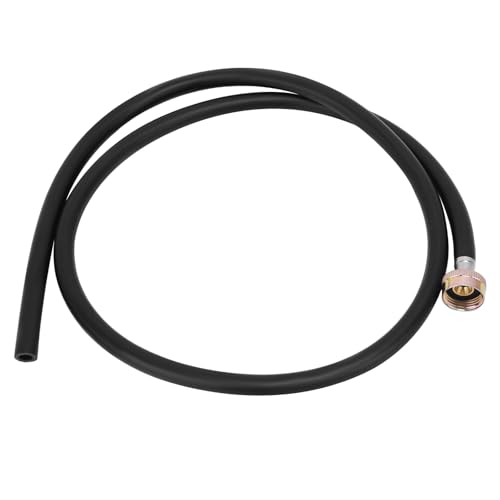
Dehumidifier Hose for Drainage Suitable for Most Dehumidifier Drainage Interfaces,Black
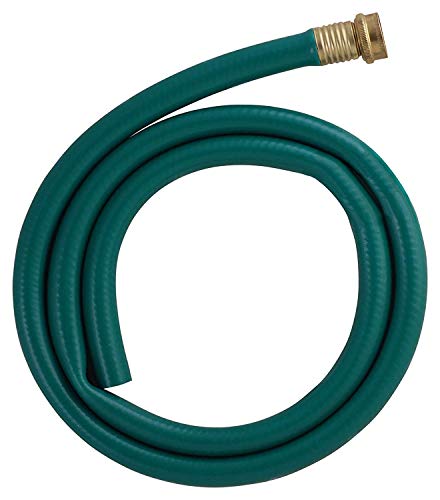
FUNCTIONALITY: This 5ft Drain Hose will provide you convenience as this can help you with any small maintenance job around your house, garden, garage or to reach hanging house plants. It can also use as dehumidifier drain hose.

Versatile Drain Hose: The dehumidifier drain hose is designed for multi-applications, including dehumidifier drainage and various household and garden equipment. It can be easily cut to the desired length, efficiently solve daily drainage problems
How to Clean a Clogged Drain Hose
Clean the hose when flow slows, the bucket starts filling unexpectedly, or visible slime and debris appear. Always unplug the appliance before disconnecting the line.
Clear Hose Blockages
- Place towels under the connection and empty the bucket if needed.
- Disconnect the hose from the dehumidifier and drain any trapped water into a sink or container.
- Inspect both ends for lint, sludge, algae, or a damaged washer.
- Use a soft, flexible bottle brush or pipe cleaner to loosen material without puncturing the tubing.
- Check the dehumidifier’s drain opening and gently remove visible debris.
Flush Out Buildup
Flush the hose with clean warm water until it runs freely from end to end. If the owner’s manual allows mild detergent, use a small amount, then rinse thoroughly so no soap remains. Let the hose drain, reconnect it, restore the downward slope, and test the system.
Warning: Do not routinely pour bleach through the hose unless the appliance manufacturer specifically permits it. If bleach or another disinfectant is allowed, follow the product label, ventilate the area, protect your skin and eyes, and never mix bleach with ammonia, acids, vinegar, or other cleaners. The EPA does not recommend bleach as a routine mold-cleanup method.
When to Use a Gravity Drain or Pump
Choose the simplest system that can move water reliably to an approved drain.
| Feature | Gravity Drain | Condensate Pump |
| Best use | Drain is lower than the outlet | Drain is higher or farther away |
| Power | No extra power needed | Requires a powered pump or built-in pump system |
| Maintenance | Inspect slope and flush the hose | Inspect hose, reservoir, float, power, and alarm or shutoff |
| Main limitation | Cannot move water uphill | Lift height and hose length are limited by the model |
For example, GE states that certain pump-equipped models can move water up to 16 vertical feet with the supplied pump hose, but that figure does not apply to every brand or model. Never substitute a longer or different pump tube unless the manual approves it.
Recommended Products
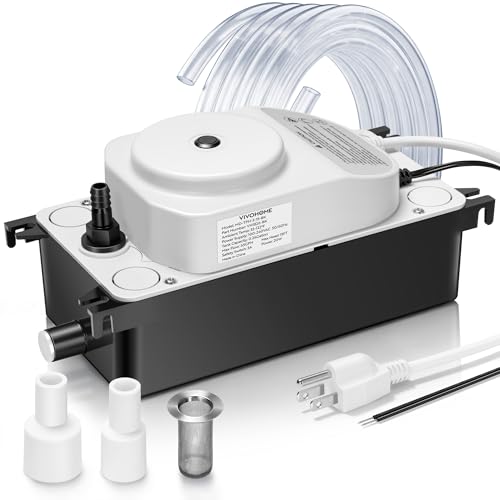
QUIET & POWERFUL & ENERGY-SAVING: Enjoy peace and savings with low-noise DC motor; The VIVOHOME condensate pump moves up to 65 GPH or lifts water up to 15 ft vertically, operating at only 25 dB and 20W for quick, quiet, and energy-efficient drainage

AUTOMATIC CONDENSATE PUMP: features a vertical-type switch to reduce footprint and is designed to automatically remove condensate produced by boilers, furnaces, air conditioners and de-humidifiers
Safe Places to Drain a Dehumidifier
A safe outlet accepts the expected flow without backing up, overflowing, damaging the building, or creating an electrical or slip hazard.
- Floor drain: Usually the simplest option when it is lower than the unit and remains open.
- Utility sink: Works for gravity drainage only if the hose can slope down to the sink; otherwise use an approved pump.
- Sump pit: Suitable when the sump system is working, permitted, and sized for the additional water.
- Standpipe: Use only when the hose fits safely without forming an airtight seal or sitting below standing water.
- Toilet bowl for manual disposal: You may pour bucket water into the bowl if it contains no cleaning chemicals, but do not treat dehumidifier condensate as drinking water.
- Outside discharge: Use only when the manufacturer permits it and the outlet cannot freeze, drain toward the foundation, create algae or ice on a walkway, or violate local rules.
How to Maintain Continuous Drainage
Continuous drainage is not maintenance-free. Use this simple schedule:
- After initial setup: Check the connector, bucket area, and discharge point several times during the first day.
- Weekly: Confirm the hose is still downhill, secure, and free of pinches or standing water.
- Monthly: Inspect the fitting, washer, drain opening, and hose interior. Clean sooner if the room is dusty.
- Every few months: Disconnect and flush the hose with clean water, or follow the maintenance interval in the manual.
- After moving the unit or a power outage: Verify the hose route and confirm that pump or continuous mode is still selected.
A hose does not make drainage automatic unless the entire water path stays open, downhill, secure, and matched to the dehumidifier’s design.
Humidity and Health Expectations
A dehumidifier controls moisture; it does not diagnose or treat rhinitis, asthma, infections, or a cough. Lowering excessive indoor humidity may reduce conditions that support mold and dust mites, which can trigger symptoms in sensitive people. The EPA recommends keeping indoor relative humidity around 30% to 50%, while the CDC notes that damp and moldy environments can contribute to nasal, throat, cough, wheeze, and allergy symptoms.
Note: Seek medical advice for a persistent cough, breathing difficulty, wheezing, chest pain, fever, or symptoms that do not improve. Do not rely on humidity control as a substitute for medical care.
Frequently Asked Questions
Where should I drain a dehumidifier in a bedroom?
Use a nearby bathroom drain, utility sink, floor drain, or another approved outlet. Gravity drainage works only when the outlet is lower than the dehumidifier’s drain port. Do not run a loose hose across a walking path. An outside window discharge should be used only when the model supports pumping and the exterior outlet is safe.
Does a dehumidifier help with rhinitis?
It may help indirectly when excessive humidity, mold, or dust mites are aggravating allergy symptoms. It is not a treatment for rhinitis, and lowering humidity too far can feel uncomfortable. Aim for a measured indoor range of about 30% to 50% and follow medical advice for ongoing symptoms.
Can I pour dehumidifier water into the toilet?
You can generally pour plain bucket water into the toilet bowl for disposal. Do not use it if cleaning chemicals were added, and do not drink it or use it for cooking, pets, nasal rinsing, or other uses that require potable water.
Do dehumidifiers help with a cough?
They may reduce a cough only when dampness, mold, or another humidity-related trigger is contributing. A dehumidifier will not treat infections, asthma, reflux, or other causes. Seek medical care for severe, persistent, or worsening symptoms.
Can a gravity drain hose run uphill?
No. A gravity hose needs a continuous downward path from the drain port to the outlet. Use a pump-equipped model or an approved external condensate pump when water must travel upward.
Why is the bucket still filling with a hose attached?
The hose may be kinked, blocked, too high, too long, loosely connected, or submerged at the outlet. The drain cap or adapter may be installed incorrectly, or the model may require a specific mode or bucket position. Follow the manual and test each part of the drain path.
Conclusion
A properly routed drain hose can keep a dehumidifier operating without repeated bucket emptying. Keep the unit level, use the correct fitting, maintain a continuous downward slope, secure the discharge end, and test for leaks. If water backs up, check the hose, drain opening, bucket position, and settings before assuming the appliance has failed. Use a pump only when gravity cannot reach the drain, and follow the model’s lift and hose limits.
Portable dehumidifiers can collect a substantial amount of water each day, depending on their rated capacity and the room’s temperature and humidity. That makes a clear, secure drain path important for preventing spills, shutdowns, and hidden moisture damage.
Sources
- GE Appliances: Dehumidifier Draining Options – gravity-drain and pump setup guidance.
- GE Appliances: Dehumidifier Drain Hose Issues – washers, hose routing, submerged outlets, and cleaning.
- Frigidaire: Dehumidifier Not Draining – hose position, clogs, sludge, and gravity-drain troubleshooting.
- U.S. Environmental Protection Agency: Improving Your Indoor Environment – recommended indoor humidity range.
- Centers for Disease Control and Prevention: Mold and Health – health effects linked with damp and moldy environments.
- U.S. Environmental Protection Agency: Should I Use Bleach to Clean Up Mold? – bleach limitations and chemical-mixing safety.