Choosing the best dehumidifier for a storage room depends on more than the advertised square-foot rating. The room’s dampness, temperature, drainage access, and the moisture-removal capacity of the unit matter more. For most large storage rooms, the AEOCKY 4500 Sq. Ft. is the best all-around pick; the Waykar 6000 Sq. Ft. is better for very large or persistently damp areas, while the Aiusevo 1500 Sq. Ft. is a more practical compressor model for smaller rooms. Mini thermoelectric units such as the BREEZOME and Eva-Dry are only appropriate for small, enclosed, mildly damp spaces.
Quick Verdict
- Best Overall: AEOCKY 4500 Sq. Ft. Smart Dehumidifier
- Best High-Capacity Pick: Waykar 6000 Sq. Ft. Energy Star Dehumidifier
- Best Mid-Size Value: PLUSCENT 32 Pint Dehumidifier
- Best for Smaller Storage Rooms: Aiusevo 1500 Sq. Ft. Dehumidifier
- Best for a Storage Closet: Eva-Dry EDV-1100
Important: Manufacturer coverage figures are seller-stated. Size a dehumidifier by both room area and moisture load, and use a hygrometer to confirm that the selected unit can maintain the target humidity.
Quick Comparison of the Best Storage Room Dehumidifiers
| Product | Seller-Rated Capacity | Seller-Stated Coverage | Best Use | Amazon |
|---|---|---|---|---|
| AEOCKY 4500 Sq. Ft. Smart Dehumidifier with Drain Hose Best Overall |
Up to 80 pints/day | Up to 4,500 sq. ft. | Large room / overall | Check Amazon |
| Waykar 6000 Sq. Ft. Energy Star Dehumidifier Best High-Capacity Pick |
Up to 120 pints/day | Up to 6,000 sq. ft. | Very large, damp area | Check Amazon |
| Yaufey 5000 Sq. Ft. Dehumidifier with Drain Hose Best for Large Storage Rooms |
Up to 80 pints/day | Up to 5,000 sq. ft. | Large storage room | Check Amazon |
| Waykar 80 Pints Energy Star Dehumidifier Best Large-Room Alternative |
Up to 80 pints/day | Up to 5,000 sq. ft. | Large-room alternative | Check Amazon |
| PLUSCENT 32 Pint Dehumidifier for Medium Storage Rooms Best Mid-Size Value |
Up to 32 pints/day | Up to 2,500 sq. ft. | Medium room | Check Amazon |
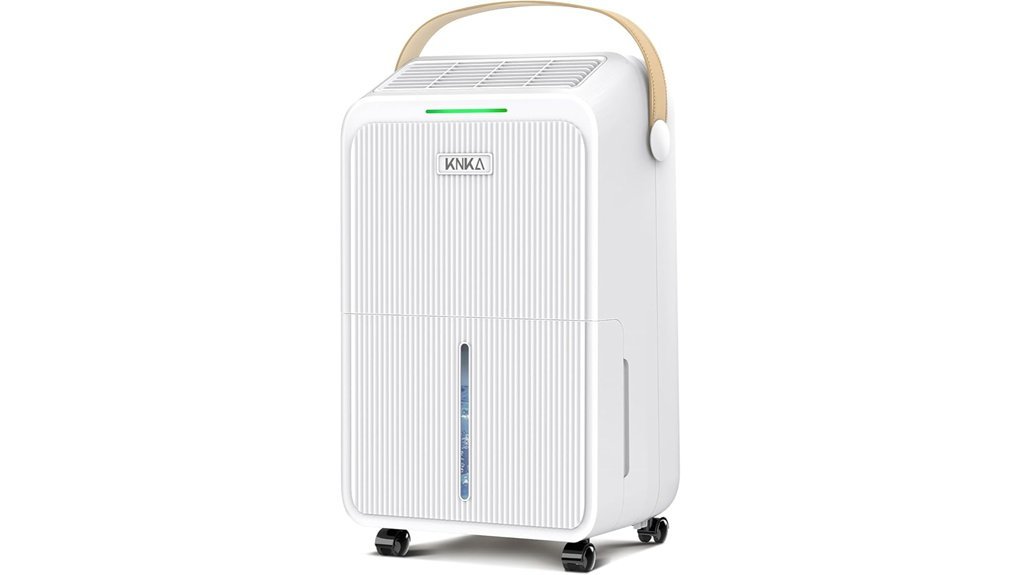
| KNKA 2500 Sq. Ft. Dehumidifier with Drain Hose Best Quiet Mid-Size Pick |
Up to 34 pints/day | Up to 2,500 sq. ft. | Medium room / quiet | Check Amazon |
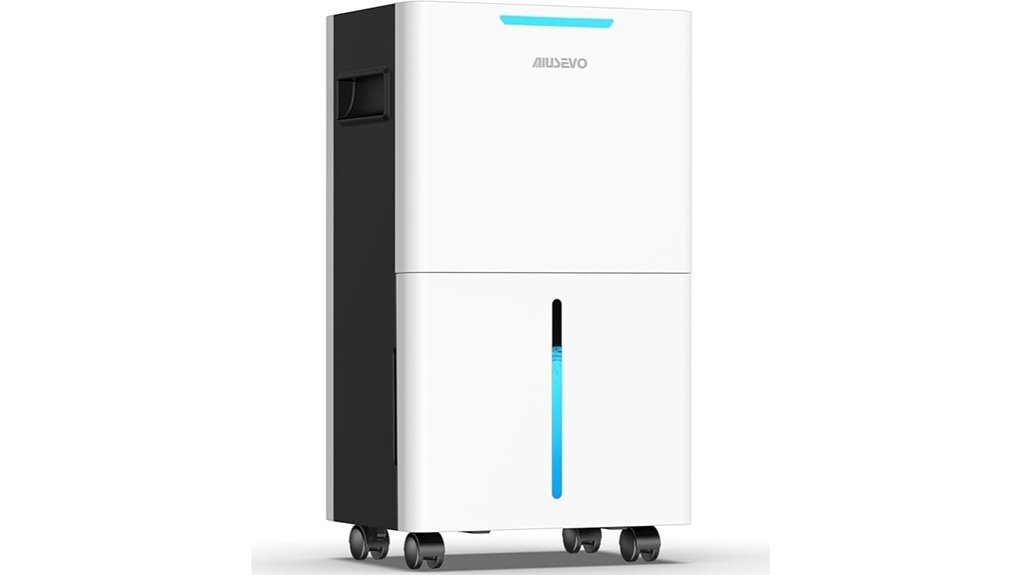
| Aiusevo 1500 Sq. Ft. Dehumidifier with Intelligent Humidity Control Best for Smaller Storage Rooms |
Up to 21 pints/day | Up to 1,500 sq. ft. | Small-medium room | Check Amazon |
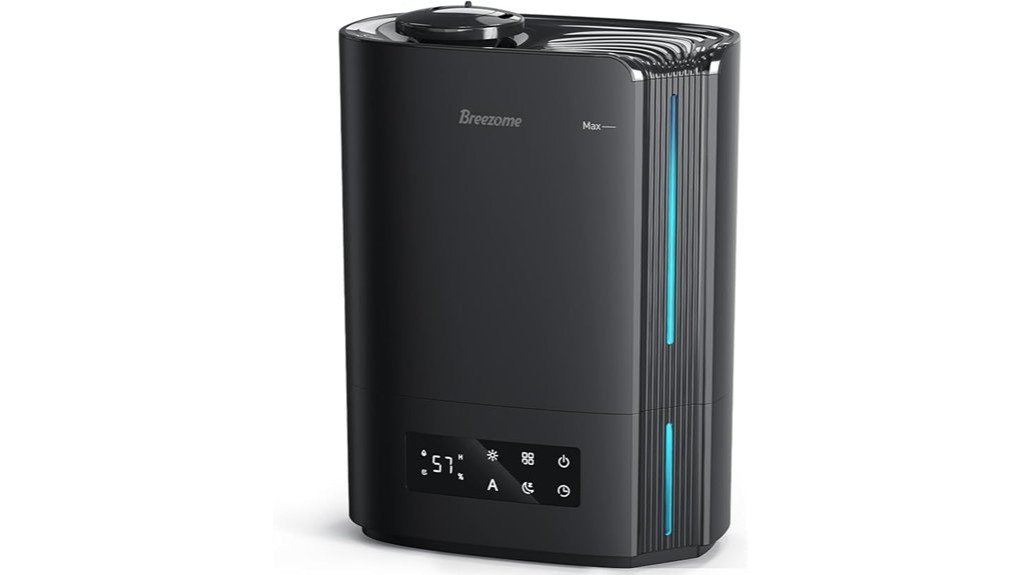
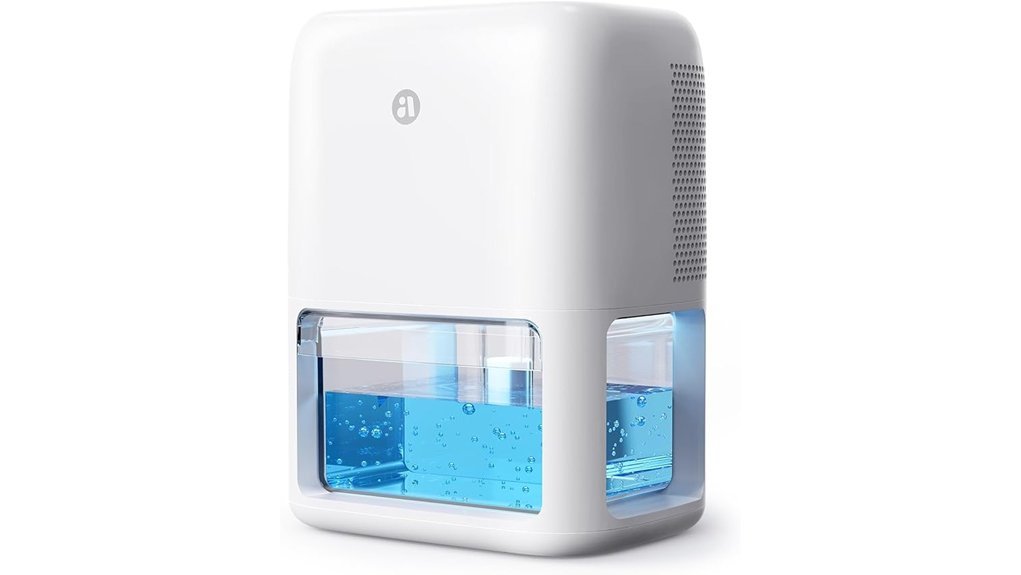
| BREEZOME 60 OZ Quiet Portable Dehumidifier with Timer Best for a Small Enclosed Storage Area |
About 0.56 L/day | Up to 350 sq. ft. | Small, mildly damp area | Check Amazon |
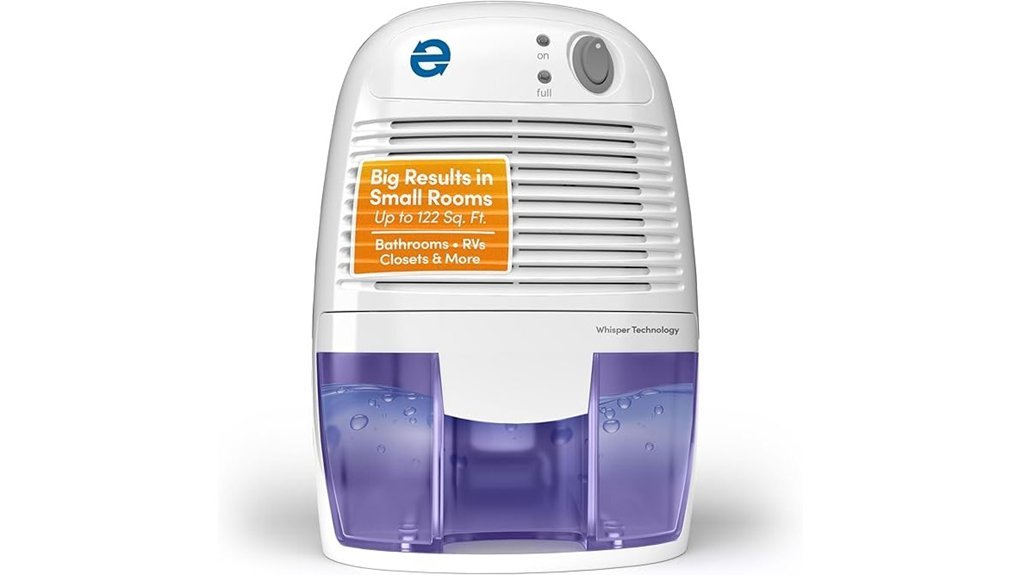
| Eva-Dry EDV-1100 Dehumidifier for Very Small Spaces Best for a Storage Closet |
0.23 L/day | Up to 122 sq. ft. | Very small closet | Check Amazon |
AEOCKY 4500 Sq. Ft. Smart Dehumidifier with Drain Hose
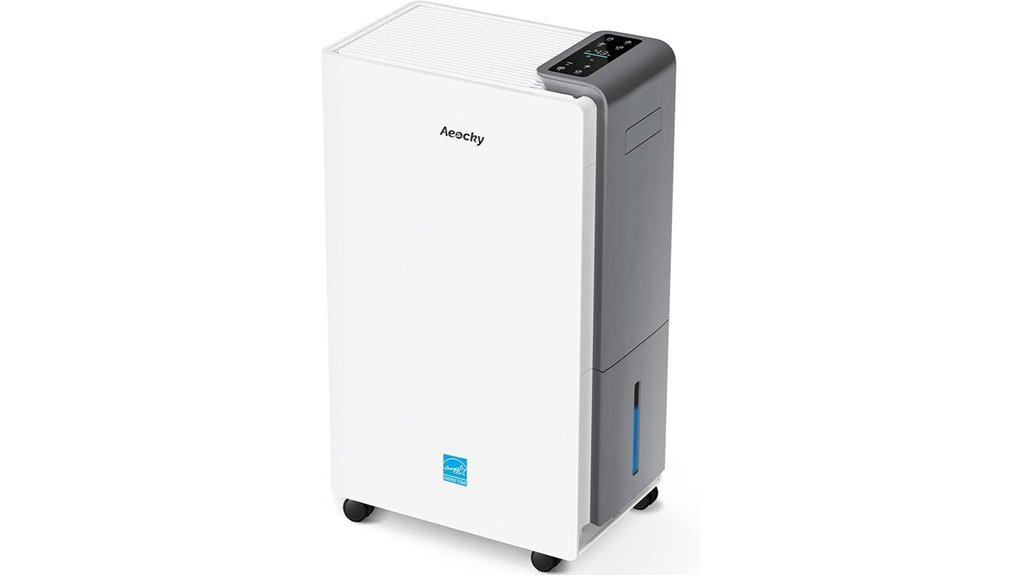
Best Overall
A strong all-around choice for a large storage room that needs automatic humidity control and continuous drainage. The seller lists coverage up to 4,500 sq. ft. and a maximum moisture-removal rating of 80 pints per day under hot, very humid test conditions.
Best For: Large, warm storage rooms, basements, and users who want an efficient compressor model with a drain hose.
Why You’ll Like It
- ENERGY STAR-certified compressor design
- Adjustable humidistat and automatic restart
- Drain hose and garden-hose adapter included
- Seller-listed low fan noise of 44 dB
Who Should Avoid It: It is larger and heavier than a mini unit, and the maximum pint rating is measured under demanding test conditions rather than ordinary room conditions.
Pros:
- High seller-rated moisture-removal capacity
- Automatic humidity control reduces guesswork
- Continuous drainage suits unattended storage areas
Cons:
- Bulky for a narrow closet
- Higher upfront cost than thermoelectric mini units
- Actual water removal varies with temperature and humidity
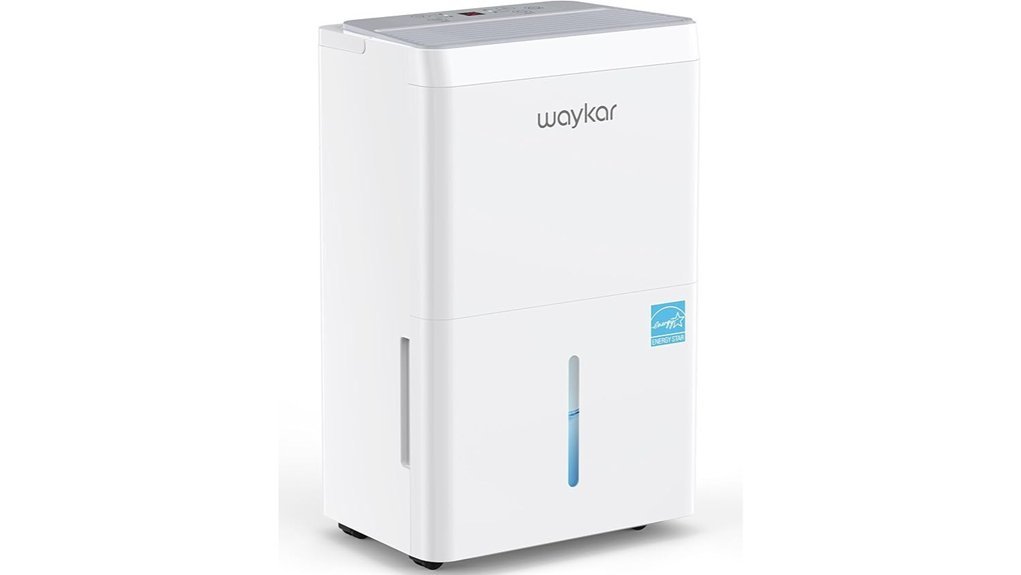
Waykar 6000 Sq. Ft. Energy Star Dehumidifier
Best High-Capacity Pick
This is the most powerful retained option in the roundup. The listing states coverage up to 6,000 sq. ft. and a maximum capacity of 120 pints per day, making it better suited to very large or persistently damp storage areas than the small thermoelectric models.
Best For: Very large storage rooms, damp basements, and open storage areas where continuous drainage is available.
Why You’ll Like It
- High-capacity compressor system
- Adjustable humidity control and multiple operating modes
- Continuous-drain connection plus removable tank
- Wheels, handle, auto shutoff, and washable filter
Who Should Avoid It: It may be excessive for a small room, and the listing contains inconsistent capacity metadata, so buyers should confirm the current specifications before ordering.
Pros:
- Highest seller-rated capacity in this list
- Designed for large spaces
- Useful automatic and drainage features
Cons:
- More power consumption than smaller models
- Requires enough floor space and airflow clearance
- Oversized for lightly damp closets
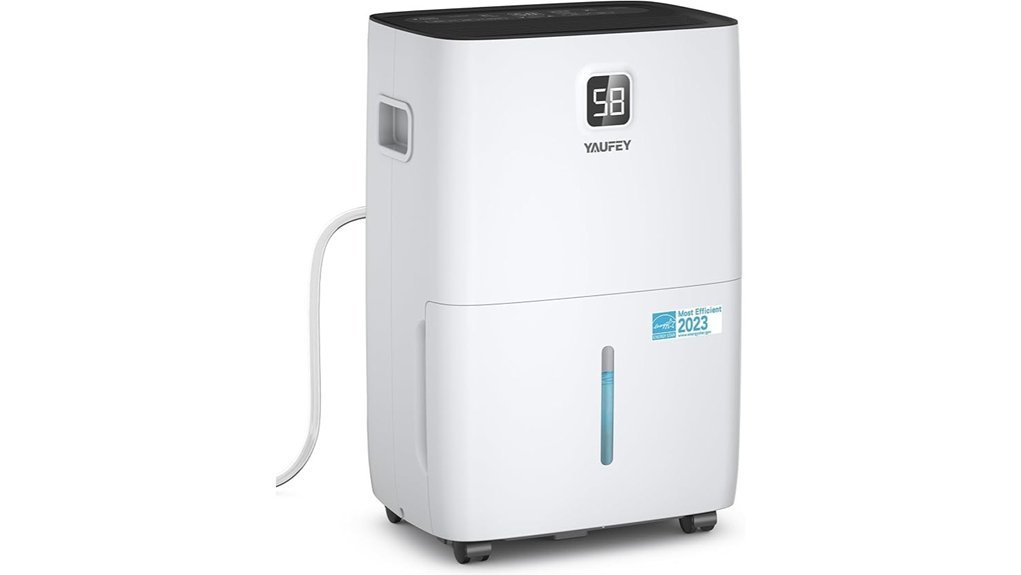
Yaufey 5000 Sq. Ft. Dehumidifier with Drain Hose
Best for Large Storage Rooms
The Yaufey combines an 80-pint maximum daily rating with adjustable humidity control, a removable tank, and continuous drainage. It is a practical fit when the storage room is large enough to justify a compressor unit but does not need the 120-pint Waykar.
Best For: Large storage rooms, garages, and basements with regular humidity problems.
Why You’ll Like It
- Seller-listed coverage up to 5,000 sq. ft.
- Adjustable 30% to 80% humidity setting
- Drain hose for continuous operation
- Portable cabinet with wheels and handle
Who Should Avoid It: The 80-pint figure is a maximum test-condition rating; performance will be lower in cooler or less humid rooms.
Pros:
- Strong capacity for large areas
- Flexible manual or hose drainage
- Automatic humidity management
Cons:
- Takes more space than compact models
- Compressor sound may be noticeable in a quiet adjacent room
- Manual tank emptying is still needed without a drain
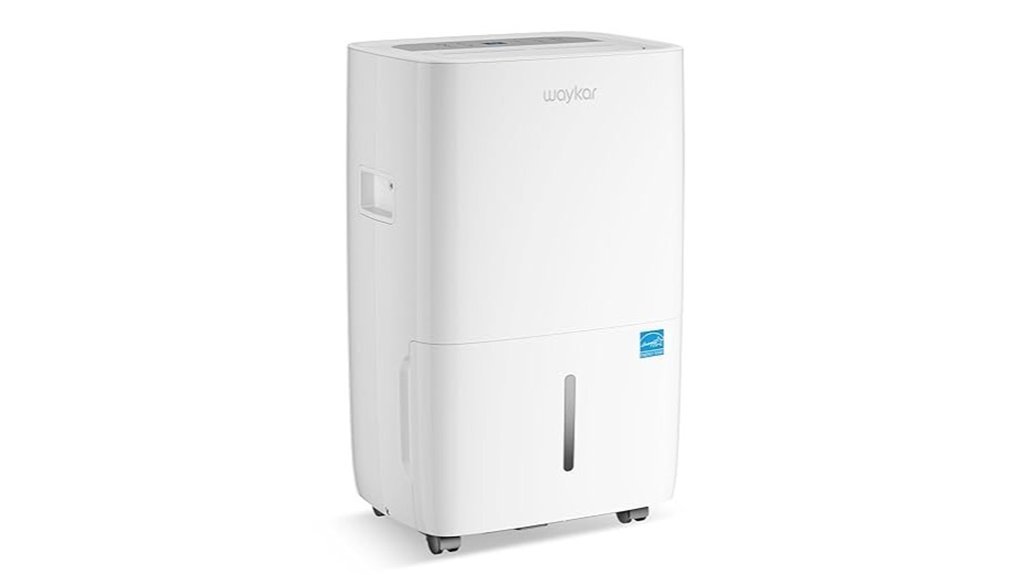
Waykar 80 Pints Energy Star Dehumidifier
Best Large-Room Alternative
This Waykar model is another large-room option with a seller-listed 80-pint maximum capacity and coverage up to 5,000 sq. ft. Its automatic defrost, timer, washable filter, and drain-hose support make it suitable for long-running storage-room use.
Best For: Buyers who want a large Energy Star model with straightforward controls and flexible drainage.
Why You’ll Like It
- ENERGY STAR certification shown on the listing
- Adjustable humidity control
- Automatic defrost and shutoff
- Drain hose support and washable filter
Who Should Avoid It: Amazon listing data shows conflicting tank-volume figures, so the article does not rely on an exact tank size.
Pros:
- Good large-room feature set
- Energy-efficient certification
- Easy maintenance features
Cons:
- Large footprint
- Exact tank capacity should be confirmed
- Maximum capacity depends on room conditions
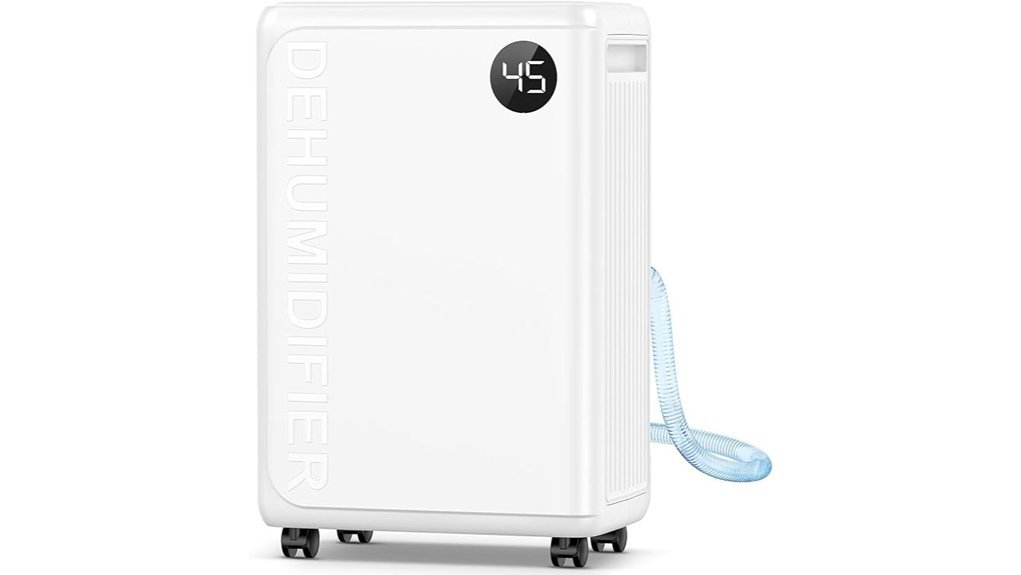
PLUSCENT 32 Pint Dehumidifier for Medium Storage Rooms
Best Mid-Size Value
The PLUSCENT offers a more moderate 32-pint maximum rating and seller-listed coverage up to 2,500 sq. ft. It is a better match than an 80- or 120-pint unit when the storage room is medium-sized and only moderately damp.
Best For: Medium storage rooms, laundry-adjacent storage, and users who want continuous drainage without buying an oversized machine.
Why You’ll Like It
- 32-pint maximum daily rating
- Adjustable humidity control and automatic defrost
- Two-liter tank with continuous-drain connection
- Timer, child lock, and washable filter
Who Should Avoid It: Its small bucket can fill quickly in high humidity if a drain hose is not used.
Pros:
- Balanced capacity for mid-size spaces
- Compact compressor design
- Useful automatic controls
Cons:
- Not the best choice for very wet large basements
- Frequent tank emptying without continuous drainage
- Coverage claims should not replace capacity-based sizing
KNKA 2500 Sq. Ft. Dehumidifier with Drain Hose
Best Quiet Mid-Size Pick
The KNKA is close to the PLUSCENT in intended room size but has a seller-listed 34-pint maximum capacity and a three-liter tank. It is a useful alternative for a medium storage room where wheels, sleep mode, and a drain hose matter.
Best For: Medium storage rooms near living areas and buyers who value portability and quieter operation.
Why You’ll Like It
- 34-pint maximum daily rating
- Three-liter tank and continuous-drain option
- DEHU, DRY, and continuous modes
- Wheels, child lock, and washable filter
Who Should Avoid It: At 230 watts and roughly 23 pounds, it is not as compact or low-power as a thermoelectric mini unit.
Pros:
- Good balance of capacity and mobility
- Multiple modes and humidity control
- Larger bucket than some mid-size competitors
Cons:
- Not Energy Star-listed in the checked product data
- Still requires drainage planning
- May be too large for a closet
Aiusevo 1500 Sq. Ft. Dehumidifier with Intelligent Humidity Control
Best for Smaller Storage Rooms
The Aiusevo is the smallest retained compressor model. Its listing states a 21-pint maximum rating, coverage up to 1,500 sq. ft., a two-liter tank, and an included drain hose. That combination makes it a sensible bridge between large compressor units and low-capacity mini models.
Best For: Small to medium storage rooms that need a real humidistat and continuous drainage.
Why You’ll Like It
- Compressor-based 21-pint maximum rating
- Adjustable 30% to 80% humidity setting
- Two-liter tank and included drain hose
- Automatic shutoff, restart, and defrost
Who Should Avoid It: The 21-pint rating is measured at 95°F and 90% RH, so everyday removal will usually be lower.
Pros:
- More capable than a Peltier mini unit
- Compact footprint for a compressor model
- Good control and drainage options
Cons:
- Not ideal for very large or severely wet rooms
- Small bucket without hose drainage
- Seller-stated coverage may be optimistic for difficult conditions
BREEZOME 60 OZ Quiet Portable Dehumidifier with Timer
Best for a Small Enclosed Storage Area
This thermoelectric model is best treated as a small-space moisture helper, not a replacement for a compressor dehumidifier. Amazon lists a 1.8-liter tank, coverage up to 350 sq. ft., and a moisture-removal rate of about 0.56 liters per day under favorable conditions.
Best For: Small enclosed storage rooms, closets, or cabinets with mild seasonal dampness.
Why You’ll Like It
- Compact 1.8-liter tank design
- Dual semiconductor condensers
- Timer, auto shutoff, and automatic defrost
- Lower power draw than compressor units
Who Should Avoid It: Do not choose it for leaks, visible condensation, severe dampness, or a large basement storage room.
Pros:
- Compact and easy to move
- Quiet thermoelectric operation
- Simple tank monitoring
Cons:
- Far lower moisture removal than compressor models
- Performance drops in cool or mildly humid conditions
- No substitute for fixing leaks or water intrusion
Eva-Dry EDV-1100 Dehumidifier for Very Small Spaces
Best for a Storage Closet
The EDV-1100 is a very small thermoelectric unit with a listed coverage area of 122 sq. ft., a one-pint reservoir, and a dehumidification capacity of 0.23 liters per day. It is appropriate only for a small, closed, mildly damp space.
Best For: Storage closets, small utility cabinets, and very small rooms where quiet operation matters more than fast moisture removal.
Why You’ll Like It
- Small 22-watt design
- One-pint removable tank
- Automatic shutoff when full
- Easy to move between small spaces
Who Should Avoid It: It has no continuous-drain option and is not powerful enough for a wet basement, large storage room, or active water problem.
Pros:
- Very compact
- Low power use
- Simple auto-shutoff protection
Cons:
- Lowest active moisture-removal capacity in this list
- Manual tank emptying only
- Limited effectiveness in cooler or lower-humidity conditions
Factors to Consider When Choosing a Dehumidifier for a Storage Room
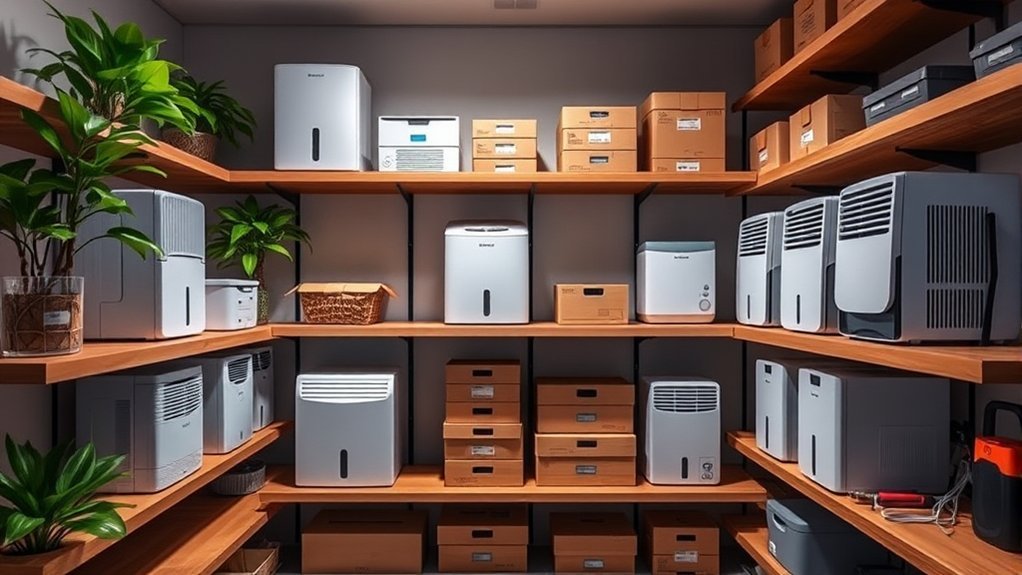
1. Measure the Room and Check the Humidity
Measure the storage room and use a separate hygrometer to see how humid it becomes. A room that is slightly damp needs much less capacity than one with wet walls, condensation, or a persistent musty odor. The U.S. EPA recommends keeping indoor relative humidity below 60%, ideally around 30% to 50%.
2. Choose Capacity, Not Just an Advertised Coverage Number
Dehumidifier capacity is measured by how much water the unit can remove in 24 hours under specified test conditions. ENERGY STAR guidance recommends considering both room size and how damp the room is. For a storage room with serious moisture, a compressor model in the 20- to 50-plus-pint range is generally more appropriate than a small thermoelectric unit.
3. Compressor vs. Thermoelectric Models
Compressor dehumidifiers remove much more water and usually include a humidistat, auto defrost, and continuous drainage. They are the better choice for most true storage rooms. Thermoelectric models are smaller and quieter, but their daily moisture removal is measured in ounces or fractions of a liter. Use them only in small, enclosed spaces with mild dampness.
4. Plan the Drainage
A continuous-drain hose is valuable in a storage area that is not checked every day. Gravity drainage requires the hose to slope downward to a floor drain or other suitable outlet. If no drain is available, compare bucket size and make sure the unit has automatic shutoff when full.
5. Consider Room Temperature
Compressor dehumidifiers lose efficiency in colder rooms and may need to pause for defrosting. Thermoelectric units also remove less water when the room is cool or only mildly humid. Check the manufacturer’s operating-temperature range if the storage room is unheated.
6. Look for Useful Controls
The most useful features are an adjustable humidistat, automatic restart after a power outage, automatic defrost, a washable filter, a timer, and continuous drainage. Decorative lighting and aromatherapy features do not improve moisture control and should not be prioritized for storage use.
7. Fix Water Problems First
A dehumidifier cannot repair a roof leak, plumbing leak, foundation seepage, or standing water. Correct the source of moisture and dry wet materials promptly. Then use the dehumidifier to maintain a stable humidity level.
Frequently Asked Questions
What Humidity Level Is Best for a Storage Room?
A practical target is about 40% to 50% relative humidity for many household storage areas. Keep the room below 60% to reduce moisture-related risk, but check the needs of sensitive items such as musical instruments, wine, photographs, or archival documents.
Can a Dehumidifier Prevent Mold?
A dehumidifier can reduce the excess humidity that supports mold growth, but it cannot remove existing mold or fix leaks. Moisture control, prompt drying, cleaning, and repairs are still necessary.
What Size Dehumidifier Do I Need?
Use both square footage and dampness. A small or moderately damp room may need a 20- to 30-pint compressor model, while a large or very damp room may require 40 pints per day or more. A mini thermoelectric unit is only for a small, enclosed, mildly damp area.
Should I Use Continuous Drainage in a Storage Room?
Yes, when a safe gravity drain is available. Continuous drainage reduces the chance that the bucket fills and the unit stops while the room is unattended. Make sure the hose remains unkinked and slopes downward.
How Often Should I Maintain the Dehumidifier?
Check the tank and drain hose regularly, clean the air filter according to the manual, keep the intake and exhaust clear, and inspect for dust or frost buildup. Use a separate hygrometer to confirm that room humidity is actually staying near the selected target.
Conclusion
For most large storage rooms, the AEOCKY 4500 Sq. Ft. Smart Dehumidifier offers the best balance of capacity, humidity control, and drainage. Choose the Waykar 6000 Sq. Ft. for a very large or persistently damp area, the PLUSCENT 32 Pint or KNKA 34 Pint for a medium room, and the Aiusevo 21 Pint for a smaller storage room. The BREEZOME and Eva-Dry mini units should be limited to small, enclosed spaces with mild humidity.
Whichever model you choose, verify the room with a hygrometer, fix leaks first, provide clear airflow around the unit, and use continuous drainage when possible.