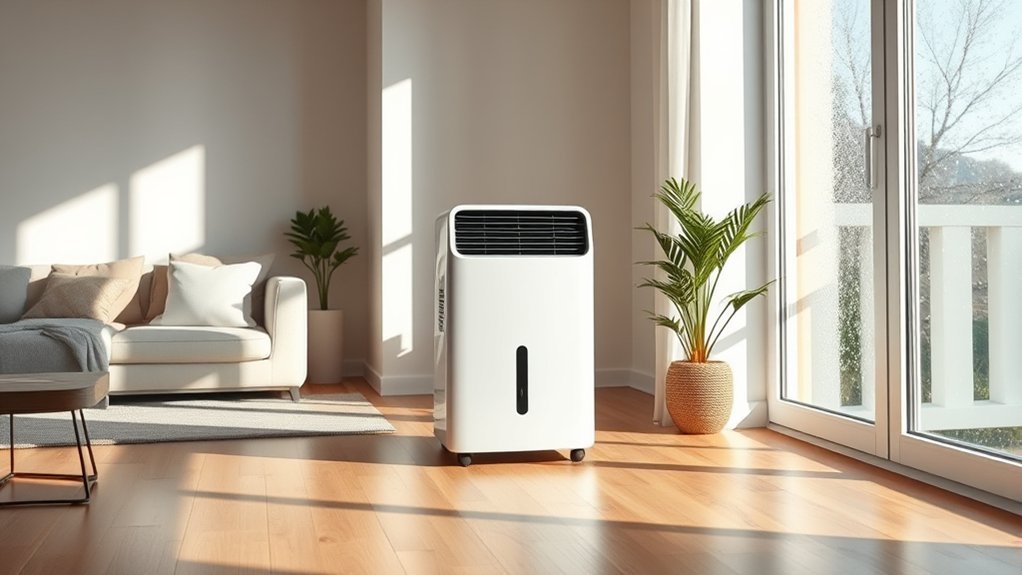
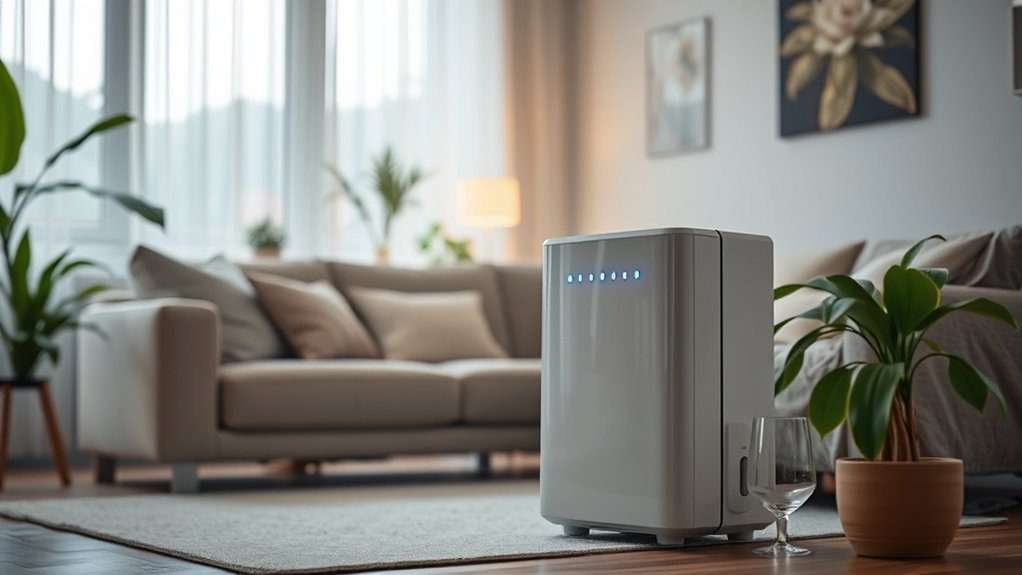
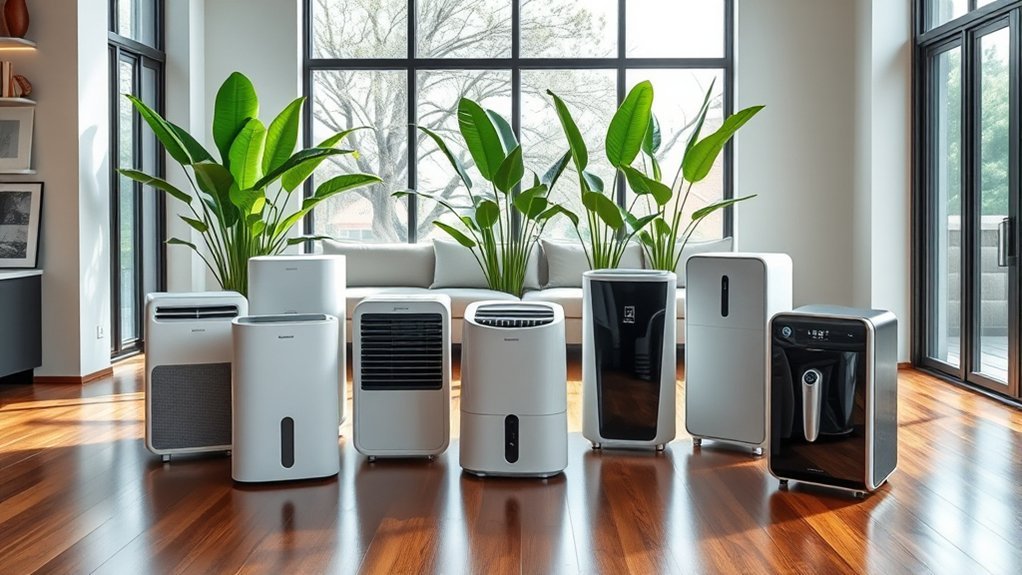
The best dehumidifier for a gym is not simply the model with the largest square-foot number. Gyms create a changing moisture load from people, wet towels, showers, cleaning, outdoor air, and HVAC operation. For most workout spaces, a compressor dehumidifier with a humidistat and continuous drainage is a better fit than a small tabletop semiconductor unit.
After reviewing the linked products and checking the available manufacturer and certification data, the AEOCKY 4500 Sq.Ft Dehumidifier with Pump is the strongest portable all-around option in this lineup for a medium-size gym zone because it combines the highest verified standardized capacity here with pumped drainage. The AEOCKY 3500 Sq.Ft Compressor Dehumidifier is a strong gravity-drain alternative, while the Waykar 34-Pint model is a practical ENERGY STAR-certified choice for a moderately damp, smaller workout space.
Quick verdict
- Best overall portable option and best with a pump: AEOCKY 4500 Sq.Ft model. The seller advertises up to 80 pints per day in extreme conditions, while the official ENERGY STAR listing shows about 44.94 pints per day under the standardized test.
- Best higher-output gravity-drain option: AEOCKY 3500 Sq.Ft Compressor model, with a seller-listed maximum of 50 pints per day.
- Best mid-size ENERGY STAR pick: Waykar 34-Pint model for a smaller or moderately damp workout area.
- Best for a small home gym: Aiusevo 21-Pint model, provided the room has a light moisture load and no shower area.
How We Selected These Gym Dehumidifiers
We prioritized compressor-based models with meaningful pint-per-day capacity, adjustable humidity control, automatic shutoff, drain-hose support, and enough portability for cleaning or repositioning. We also considered seller-listed noise, tank size, coverage, and whether each unit has a realistic workout-space use case. This is a specification-based comparison, not a hands-on product test, so seller claims are identified as claims and official certification data is used where it could be matched to the exact model.
Important sizing note: Manufacturer square-foot ratings are useful for comparison, but they are not a guarantee. Actual performance depends on starting humidity, temperature, ceiling height, outdoor-air exchange, occupancy, showers, laundry, and the building’s HVAC system. When in doubt, size by pints per day and moisture load, not square footage alone.
Quick Comparison
| Product | Best for | Capacity context | Marketed coverage | Drainage | Amazon |
|---|---|---|---|---|---|
| AEOCKY with Pump | Medium-size gym zones needing pumped drainage | Seller max: 80 pints/day ENERGY STAR: 44.94 pints/day |
Up to 4,500 sq. ft. | Built-in pump, hose, or tank | Check Price |
| AEOCKY 3500 Compressor | Small-to-mid-size zones with gravity drainage | Seller max: 50 pints/day | Up to 3,500 sq. ft. | Gravity hose or tank | Check Price |
| Waykar 34-Pint | Smaller, moderately damp gyms or studios | Seller max: 34 pints/day ENERGY STAR: 9.81 pints/day |
Up to 2,000 sq. ft. | Gravity hose or tank | Check Price |
| VEAGASO 34-Pint | Simple controls and flexible modes | Seller max: 34 pints/day | Up to 2,500 sq. ft. | Gravity hose or tank | Check Price |
| KNKA 34-Pint | Noise-sensitive workout areas | Seller max: 34 pints/day | Up to 2,500 sq. ft. | Gravity hose or tank | Check Price |
| PLUSCENT 32-Pint | Easy movement between zones | Seller max: 32 pints/day | Up to 2,500 sq. ft. | Gravity hose or tank | Check Price |
| Aiusevo 21-Pint | Small home gyms with light moisture | Seller max: 21 pints/day | Up to 1,500 sq. ft. | Gravity hose or tank | Check Price |
Capacity note: Seller “maximum” figures are commonly measured in very warm, humid conditions and should not be treated as directly equivalent to the current standardized ENERGY STAR capacity. Where an exact official match was available, both figures are shown. Real-world removal can be lower in cooler or less humid rooms.
AEOCKY 4500 Sq.Ft Energy Star Dehumidifier with Pump
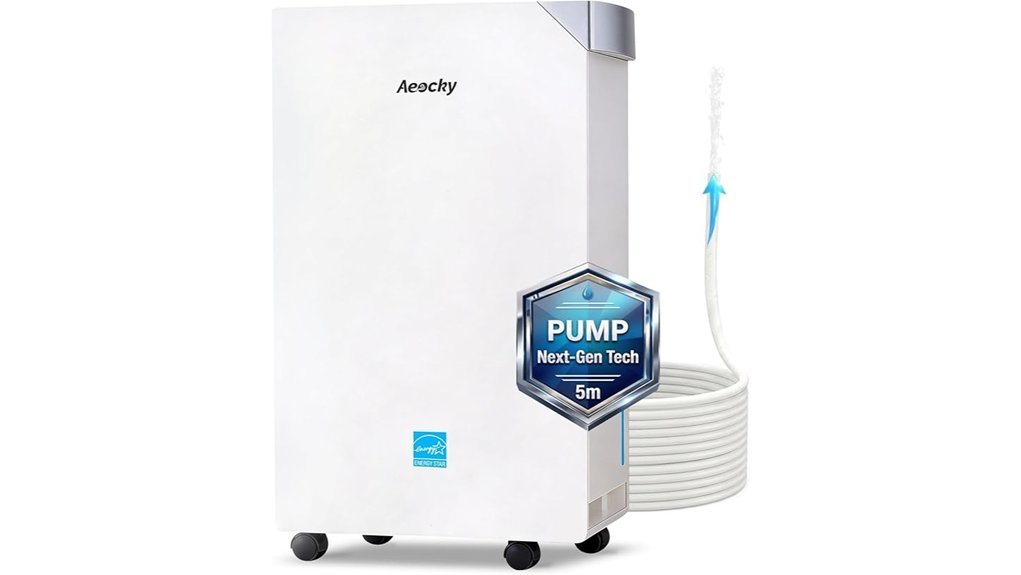
The AEOCKY 4500 Sq.Ft model is the most capable portable option in this lineup for a medium-size gym zone, especially when the nearest drain is above or away from the unit. Its built-in pump can move collected water through the included hose, reducing the need to empty a tank or rely on a perfectly sloped gravity drain.
The seller advertises a maximum removal rate of 80 pints per day in very hot, humid conditions. The official ENERGY STAR listing for the matched model shows a standardized water-removal capacity of about 44.94 pints per day and identifies it as an ENERGY STAR Most Efficient 2025 model. That distinction makes the specification easier to compare honestly with other dehumidifiers.
Best For: Medium-size gyms, workout studios, locker zones without showers, and spaces that need pumped drainage.
Who Should Avoid It: Large open commercial gyms, pool areas, and shower-heavy facilities that need a professionally sized whole-building system.
Why You’ll Like It
- Pumped drainage: More placement flexibility than gravity-only models.
- Highest verified standardized capacity here: Offers more moisture-removal headroom than the smaller portable options in this guide.
- Automatic humidity control: Can cycle based on the selected target instead of running blindly.
Pros:
- Seller-listed maximum of 80 pints per day, with an official standardized rating of about 44.94 pints per day for the matched ENERGY STAR model.
- Built-in pump plus hose and tank drainage options.
- Suitable for larger zones than the other portable units in this guide.
- The matched official ENERGY STAR entry identifies it as Most Efficient 2025.
Cons:
- The 80-pint marketing figure uses hotter and more humid conditions than the standardized ENERGY STAR rating.
- A pump adds components that need correct setup and occasional inspection.
- A very large open gym or shower-heavy facility may still require multiple units or a dedicated HVAC solution.
AEOCKY 3500 Sq.Ft Compressor Dehumidifier with Drain Hose
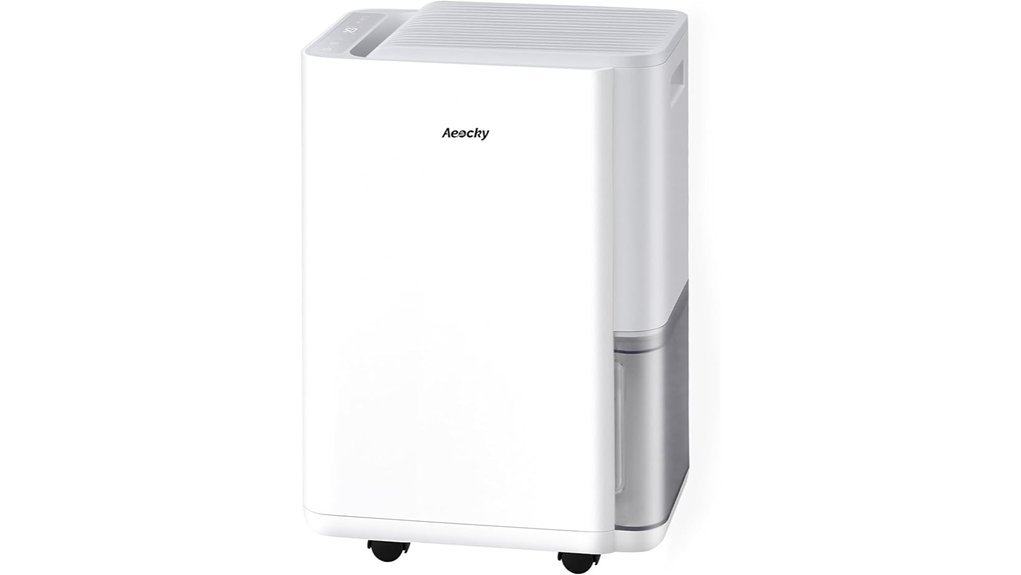
This AEOCKY compressor model is a strong choice when you want more seller-listed removal capacity than a typical 32-to-34-pint unit but do not need pumped drainage. The exact linked ASIN is currently described as covering up to 3,500 square feet, not 2,500 square feet, with a maximum claim of 50 pints per day under very warm, humid conditions.
Its humidistat, drain-hose connection, portable design, and seller-listed 0.5-gallon tank make it practical for a gym with a nearby floor drain. It can also serve as a higher-output zone unit for a stretching room, studio, equipment room, or locker area.
Best For: Small-to-mid-size gym zones with a gravity drain and a heavier moisture load.
Who Should Avoid It: Spaces where the hose cannot maintain a continuous downward slope or where water must be pumped upward.
Why You’ll Like It
- Higher capacity: Offers more moisture-removal headroom than the 21-to-34-pint models.
- Continuous drainage: Can run without repeated bucket emptying when the hose slopes correctly.
- Compact footprint: Easier to position than a large commercial unit.
Pros:
- Seller-listed maximum of 50 pints per day under very warm, humid test conditions.
- Adjustable humidistat and drain-hose support.
- Portable design for moving between gym zones.
Cons:
- No built-in pump is identified in the linked listing.
- Gravity drainage requires a continuously downward hose path.
- The 3,500-square-foot figure is a marketing ceiling, not a guarantee for a crowded gym.
Waykar 34 Pints Energy Star Dehumidifier
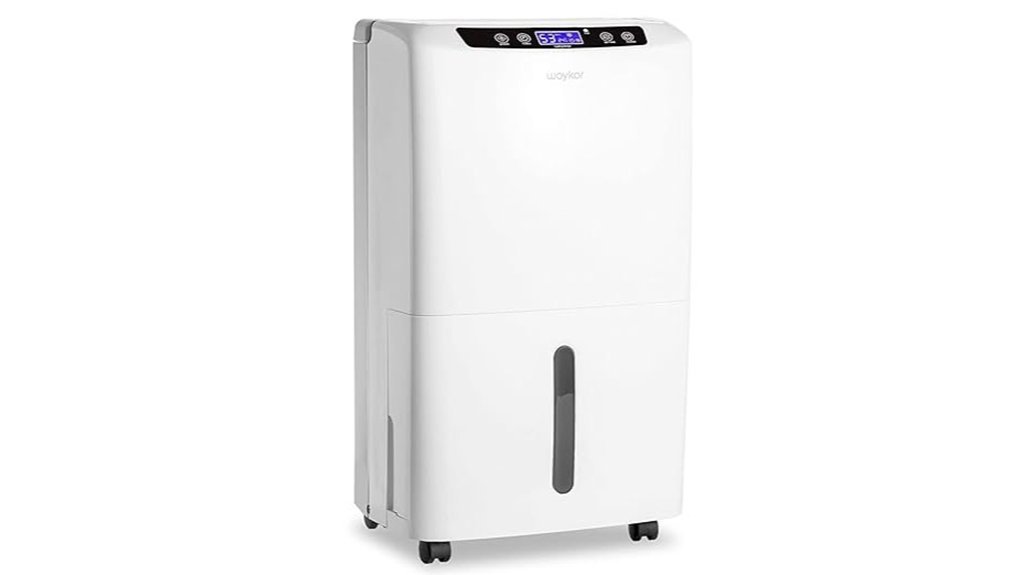
The Waykar 34-Pint model is a balanced option for a moderately damp home gym or studio. The linked listing states coverage up to 2,000 square feet, adjustable humidity control from 30% to 80%, automatic defrost, an included drain hose, and a seller-listed 0.66-gallon water tank.
The seller’s 34-pint maximum is measured at 95°F and 90% relative humidity. The official ENERGY STAR product finder lists the matched PD160B at 9.81 pints per day under the standardized test and marks it ENERGY STAR certified, but not Most Efficient. This makes it a better fit for a smaller or moderately damp workout area than for a crowded commercial gym.
Best For: Moderately damp home gyms, yoga studios, and smaller fitness rooms with a nearby gravity drain.
Who Should Avoid It: High-occupancy gyms, shower areas, or spaces that regularly stay very damp despite HVAC operation.
Why You’ll Like It
- Practical for lighter loads: A reasonable fit for smaller, moderately damp workout spaces when sized correctly.
- Automatic defrost: Helps protect operation when room temperature drops.
- Flexible drainage: Use the tank or the included hose.
Pros:
- The matched PD160B appears in the official ENERGY STAR product finder as certified.
- Seller-listed maximum of 34 pints per day, with a standardized ENERGY STAR capacity of 9.81 pints per day for the matched model.
- Adjustable humidistat and automatic defrost.
- Included drain hose and 0.66-gallon tank.
Cons:
- Not the best fit for high-occupancy or shower-equipped gyms.
- No built-in pump is listed.
- Gravity drainage limits placement if the drain is higher than the unit.
VEAGASO 2500 Sq.Ft Dehumidifier with Drain Hose
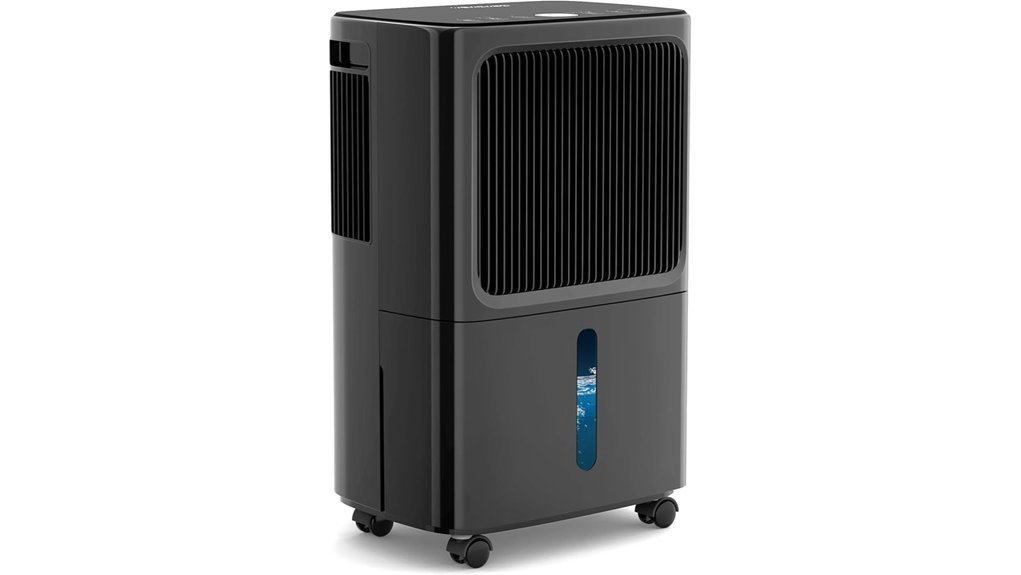
The VEAGASO model combines a seller-listed 34-pint maximum with three operating modes, a 24-hour timer, a digital control panel, and both tank and continuous gravity-drain operation. The linked listing markets it for spaces up to 2,500 square feet and lists a 0.53-gallon tank.
For gym use, DEHU mode is the most useful because it allows a target humidity setting. CONT mode can help during unusually damp periods, while DRY mode may be useful for a small towel or laundry area. The seller lists a 40 dB operating-noise claim, but actual sound can vary with fan setting, room acoustics, placement, and distance.
Best For: Small-to-mid-size gym zones that need straightforward controls and flexible operating modes.
Who Should Avoid It: Facilities that need pumped drainage or verified standardized capacity for formal equipment planning.
Why You’ll Like It
- Three useful modes: Normal humidity control, continuous operation, and clothes drying.
- Drain-hose support: Reduces manual tank handling.
- Portable setup: Handles and wheels make repositioning easier.
Pros:
- Seller-listed maximum of 34 pints per day under warm, humid test conditions.
- Digital humidistat, 24-hour timer, and automatic defrost.
- Tank and continuous gravity-drain options.
Cons:
- The 2-liter tank can fill quickly if continuous drainage is not used.
- No built-in pump is listed.
- Advertised coverage may be optimistic for a busy gym with high air exchange.
KNKA 2500 Sq.Ft Dehumidifier with Drain Hose
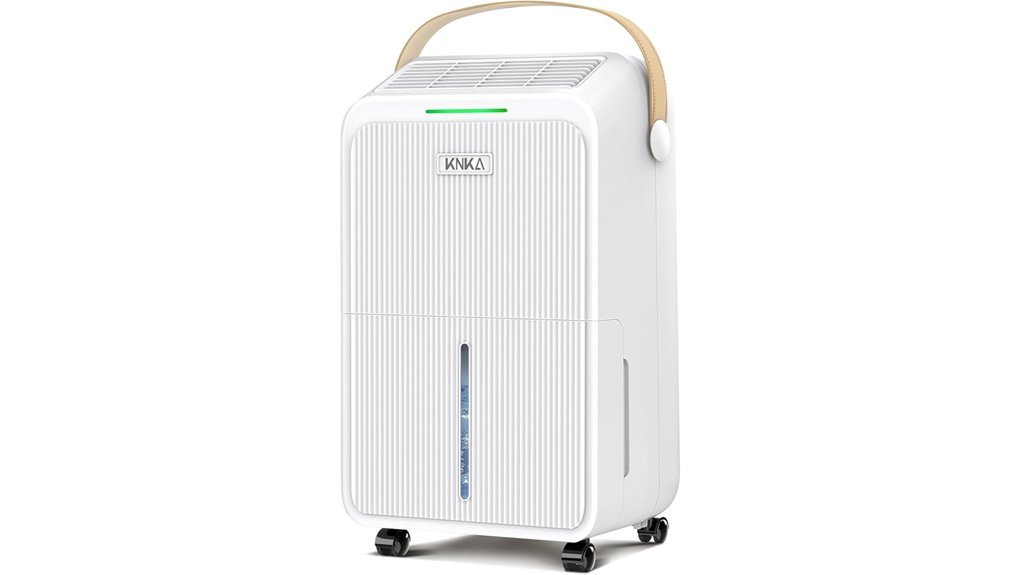
The KNKA is another compressor option with a seller-listed maximum of 34 pints per day and marketed coverage up to 2,500 square feet. It includes three modes, intelligent humidity control, a 24-hour timer, a 3-liter tank, and a 3.28-foot drain hose.
The seller lists operation at 37 dB, which is one of the quieter claims in this lineup. Treat that number as a seller claim rather than a guaranteed in-room result because hard floors, mirrors, walls, fan speed, and nearby equipment can amplify mechanical sound.
Best For: Yoga rooms, personal-training studios, and smaller workout zones where lower perceived noise matters.
Who Should Avoid It: Large open gyms, shower-heavy locker rooms, or installations that require pumped drainage.
Why You’ll Like It
- Low listed noise: A useful feature for classes and instruction.
- Three operating modes: Adaptable for normal control, continuous operation, or drying.
- Two drainage methods: Use the removable tank or the included hose.
Pros:
- Seller-listed maximum of 34 pints per day under the stated test conditions.
- 37 dB seller-listed operating claim.
- Automatic shutoff, timer, humidistat, and continuous-drain support.
Cons:
- No pump is listed, so the hose needs a downward path.
- The noise claim may not match every room or fan setting.
- Capacity may be insufficient for a large gym with showers or heavy occupancy.
PLUSCENT 32 Pint Dehumidifier
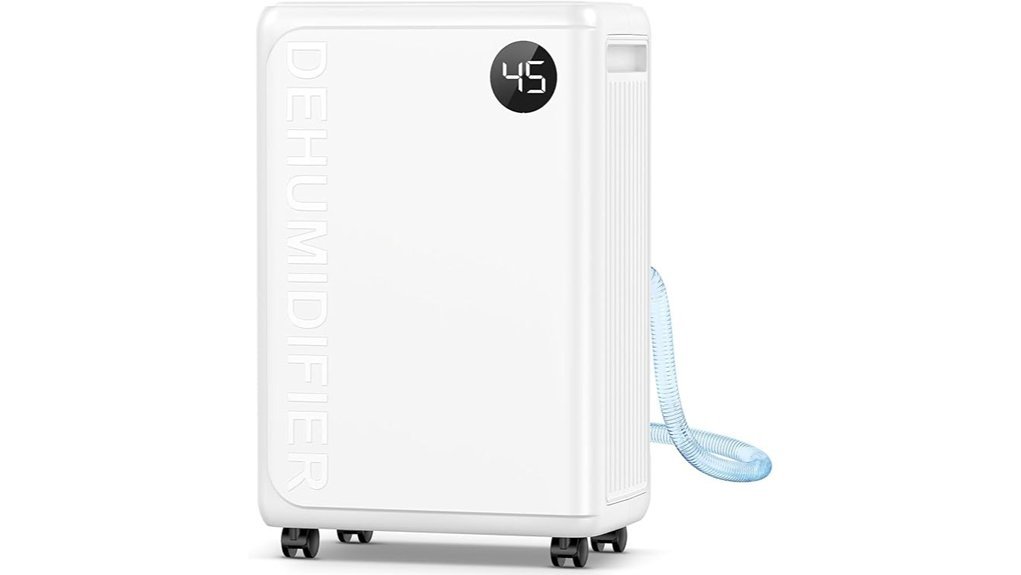
The PLUSCENT is marketed with a seller-listed maximum of 32 pints per day for spaces up to 2,500 square feet. It offers DEHU, CONT, and DRY modes, a 24-hour timer, automatic defrost, a drain-hose connection, a washable filter, wheels, and carrying handles.
Its main advantage for a gym is mobility. You can position it near a damp studio after a class or move it toward a locker area during cleaning. For unattended daily use, however, a fixed drain-hose setup is safer and more convenient than relying on the small tank, and frequent relocation can complicate hose routing.
Best For: Home gyms and small facilities that need one portable unit for several enclosed zones.
Who Should Avoid It: Buyers who want a permanently installed drain setup or independently verified standardized capacity.
Why You’ll Like It
- Easy mobility: Wheels and handles simplify relocation.
- Washable filter: Useful in dusty workout environments.
- Three modes: Covers normal control, continuous operation, and drying.
Pros:
- Seller-listed maximum of 32 pints per day under the stated test conditions.
- Continuous drainage, timer, auto defrost, and adjustable humidity control.
- Portable design with wheels and handles.
Cons:
- The 2-liter tank is small for a high-humidity gym.
- No built-in pump is listed.
- Moving the unit repeatedly can disrupt a carefully routed drain hose.
Aiusevo 1500 Sq. Ft Dehumidifier with Intelligent Humidity Control
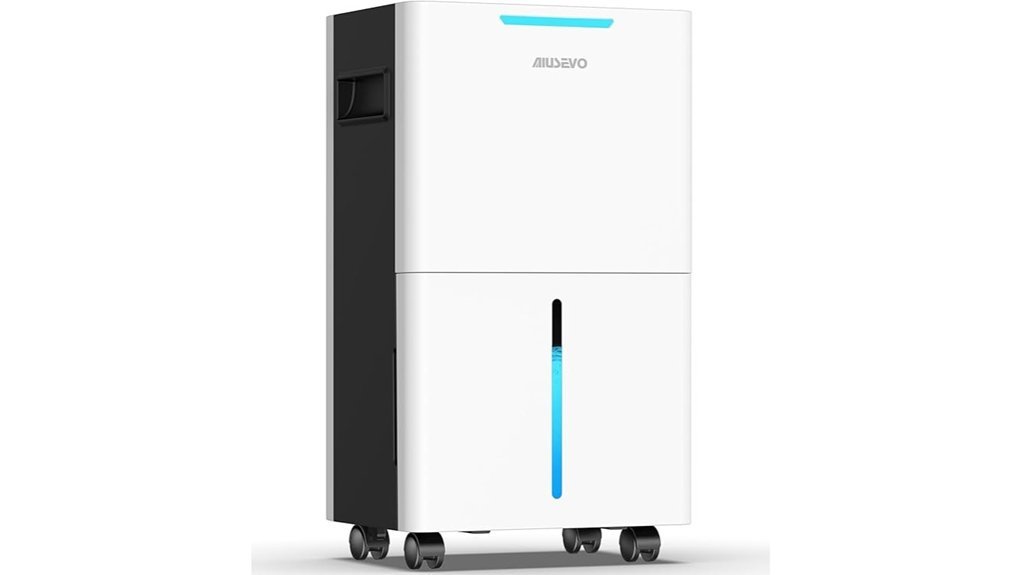
The Aiusevo 21-Pint model is the smallest compressor dehumidifier in this guide. The linked listing markets it for spaces up to 1,500 square feet and includes an adjustable humidistat, three modes, automatic defrost, a 24-hour timer, a 2-liter tank, and a drain hose.
Its lower seller-listed capacity makes it more suitable for a lightly used home gym than a commercial fitness room. It can work when the room is enclosed, the temperature stays warm enough for compressor operation, and the moisture source is mainly one or two people exercising rather than showers, wet towels, or indoor laundry.
Best For: Small home gyms, spare-room workout areas, and light-duty studio use.
Who Should Avoid It: Busy gyms, locker rooms, shower areas, and any space with persistent high humidity or frequent outdoor-air exchange.
Why You’ll Like It
- Compact compressor design: More appropriate for a workout room than a tiny tabletop semiconductor unit.
- Automatic control: Humidistat and timer reduce manual adjustment.
- Drain hose included: Supports continuous gravity drainage.
Pros:
- Seller-listed maximum of 21 pints per day at 95°F and 90% relative humidity.
- Three modes, auto defrost, timer, and automatic shutoff.
- Compact size for a small workout room.
Cons:
- Not recommended for a busy gym, locker room, or shower area.
- Real-world extraction will be lower in cooler or less humid conditions.
- The 2-liter tank may need frequent emptying without a drain hose.
Before You Buy: Five Checks
- Measure actual humidity: Check the room during the busiest and dampest part of the day with a separate hygrometer.
- Identify the moisture source: Exercise, showers, wet towels, mopping, leaks, and humid outdoor air create very different loads.
- Choose a drainage route: Use gravity drainage only when the hose can slope continuously downward; use a pump when water must travel upward.
- Check room temperature: Compressor performance can decline in cooler rooms, even when automatic defrost is included.
- Plan safe placement: Keep the intake and exhaust clear and route the cord and hose away from traffic, splash zones, and equipment.
Factors to Consider When Choosing a Dehumidifier for a Gym
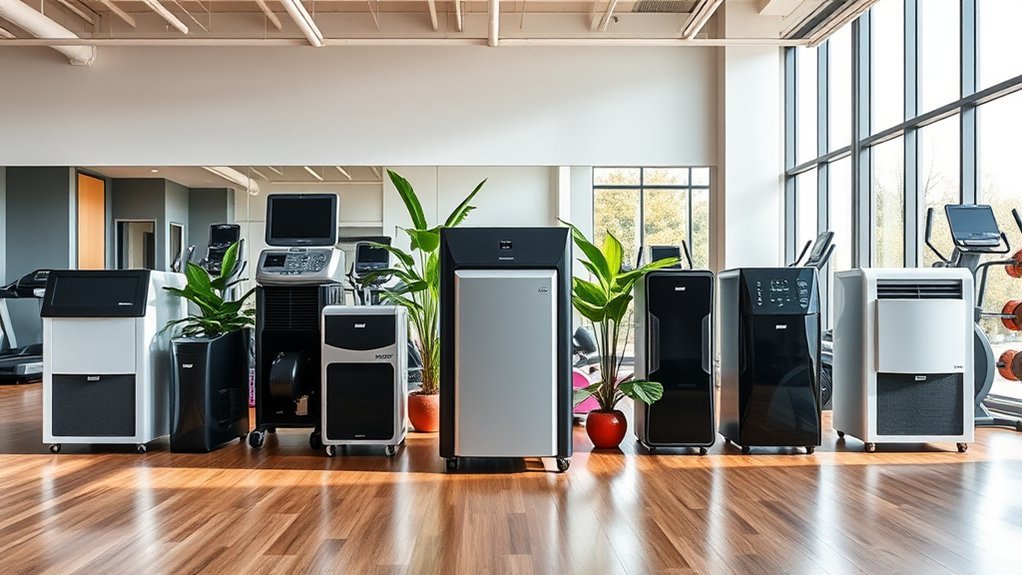
A gym has a more variable moisture load than a typical bedroom or basement. Use the following factors to choose a unit that can maintain humidity without constant tank emptying or disruptive noise.
1. Start With Moisture Load, Not Only Square Footage
Square-foot ratings are marketing estimates. A 1,500-square-foot home gym used by one person may need less capacity than a 700-square-foot locker room with showers. Consider occupancy, ceiling height, outdoor-air exchange, cleaning routines, damp towels, showers, and whether doors remain open.
ENERGY STAR’s general guidance starts at 40 pints per day for a very damp space larger than 2,000 square feet and 50 pints per day or more for a wet or high-load space of that size. A gym may need extra headroom because occupancy, showers, cleaning, and ventilation can add moisture throughout the day. Compare standardized capacities where available rather than relying only on a seller’s hot-condition maximum.
2. Choose Compressor Capacity for Real Gym Duty
For most gyms, prioritize a compressor dehumidifier with a meaningful, comparable pints-per-day rating. Small semiconductor units can be useful in closets or tiny bathrooms, but their low water-removal rate is usually a poor match for sustained gym humidity. For a busy commercial facility, use standardized capacity data and consult an HVAC professional instead of treating an “up to” square-foot or hot-condition maximum as a sizing guarantee.
3. Target a Practical Humidity Range
The U.S. EPA recommends keeping indoor relative humidity below 60% and ideally between 30% and 50% when possible. For many gyms, a target around 40% to 50% offers a practical balance, but the correct setpoint depends on climate, building design, comfort, and HVAC requirements.
4. Compare Test Conditions
A model advertised as 50 or 80 pints per day may be using very hot, highly humid test conditions. Capacity falls as temperature and humidity decrease. Compare models using the same standardized test when possible, and do not assume the largest marketing number equals the best real-world performance.
5. Plan Continuous Drainage
Continuous drainage is one of the most important gym features. A gravity hose must slope downward without loops or pinches. A built-in pump is more flexible when the water must travel upward to a sink, standpipe, or distant drain. Secure the hose so members and cleaning equipment cannot dislodge it.
6. Consider Noise and Room Acoustics
Seller-listed decibel figures are useful for comparison, but gym acoustics can change perceived noise. Hard floors, mirrors, concrete walls, and empty studios may amplify compressor and fan sound. Place the unit away from instruction areas while maintaining the clearances required by the manual.
7. Check Portability and Placement
Wheels and handles are helpful, but a dehumidifier still needs stable, level placement and free airflow around its intake and exhaust. Do not place it where members can trip over the cord or drain hose. Keep electrical equipment away from splash zones and follow the manufacturer’s location and clearance instructions.
8. Make Maintenance Easy
Choose a unit with a washable or replaceable filter, accessible tank, full-bucket shutoff, and clear maintenance indicators. In a dusty gym, inspect the filter more often than you would in a bedroom. Clean the tank, check the drain hose, and remove dust from the air intake according to the manual.
9. Know When Portable Units Are Not Enough
A portable unit does not replace ventilation, air conditioning, leak repair, or mold remediation. Large open gyms, indoor pools, shower-heavy locker rooms, or buildings with chronic moisture problems may need multiple zoned units or a professionally sized whole-building dehumidification system.
Frequently Asked Questions
What Humidity Level Is Best for a Gym?
A practical target for many gyms is around 40% to 50% relative humidity. The EPA recommends keeping indoor humidity below 60% and ideally between 30% and 50% when possible. Use a separate hygrometer to check conditions away from the dehumidifier’s air intake.
How Do I Size a Dehumidifier for My Gym?
Use comparable pints-per-day capacity, room condition, and moisture sources rather than a “one pint per square foot” rule. For a very damp room over 2,000 square feet, ENERGY STAR guidance starts at 40 pints per day; wet or high-load spaces start at 50 pints per day or more. Add capacity for showers, high occupancy, frequent door opening, or humid outdoor air, and seek professional sizing for a commercial facility.
Can a Dehumidifier Replace Gym Ventilation?
No. A dehumidifier removes water vapor, but it does not provide fresh outdoor air or control carbon dioxide, odors, and all airborne contaminants. Use it as part of a broader HVAC and ventilation plan.
Should I Use the Tank or Continuous Drainage?
Continuous drainage is usually better for a gym because it reduces shutdowns and daily handling. Use a gravity hose only when it can slope down to the drain. Choose a pump model when the drain is higher or farther away.
How Often Should I Clean the Filter?
Follow the product manual, but inspect it frequently in a gym because chalk, lint, dust, and hair can restrict airflow. A monthly schedule may be adequate in a clean home gym, while a busy facility may need checks every one or two weeks.
Can a Dehumidifier Remove Existing Mold?
No. Lower humidity can make future growth less likely, but a dehumidifier does not remove existing mold or repair the moisture source. Fix leaks, dry wet materials, and use qualified remediation help when needed.
Is One Portable Dehumidifier Enough for a Commercial Gym?
Sometimes, but not always. Separate studios, locker rooms, showers, and equipment areas can create different humidity zones. A large or complex facility may perform better with multiple units or a dedicated whole-building system selected by an HVAC professional.
Conclusion
For the strongest combination of verified standardized capacity and drainage flexibility, the AEOCKY 4500 Sq.Ft Dehumidifier with Pump is the best overall portable choice in this lineup. Choose the AEOCKY 3500 Sq.Ft Compressor model when you have a nearby gravity drain and want a higher seller-listed maximum without a pump. The Waykar 34-Pint is a sensible ENERGY STAR-certified option for a smaller or moderately damp workout area, while the Aiusevo 21-Pint should be limited to a small, lightly used home gym.
A portable unit may be enough for one enclosed room or zone, but a large commercial gym, pool area, or shower-heavy locker room may require multiple units or a professionally sized HVAC dehumidification system.
Final recommendation
Match the dehumidifier to the gym’s moisture load, not just its floor area. Prioritize continuous drainage, compare standardized capacity where available, verify the current seller listing, and use a separate hygrometer to confirm that the room stays near your target humidity during the busiest part of the day.