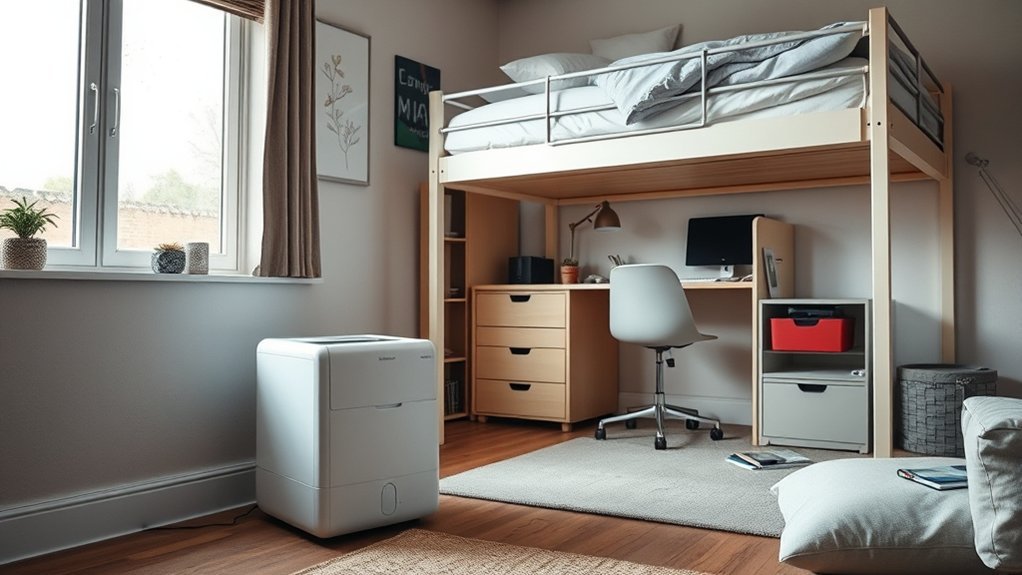
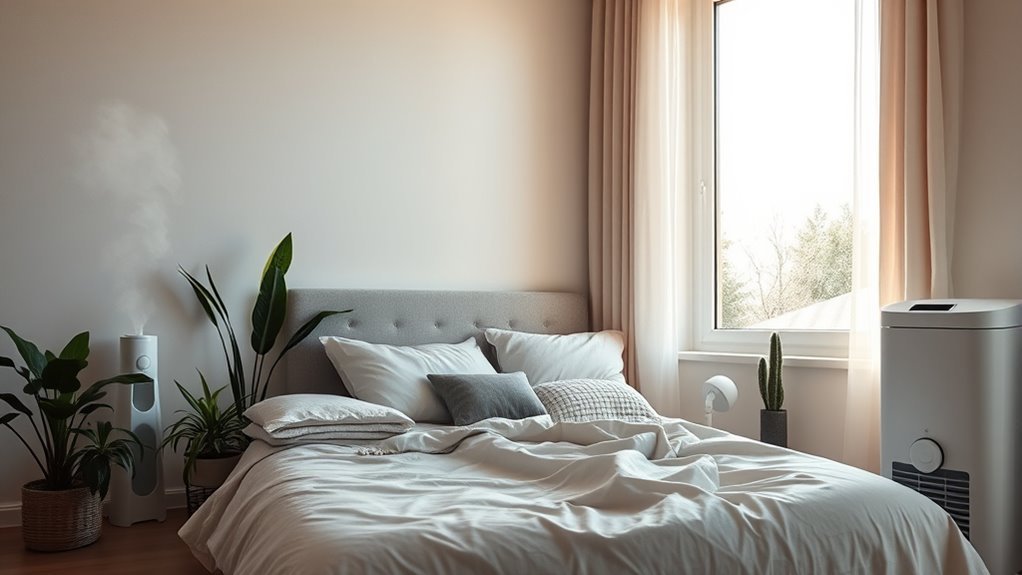
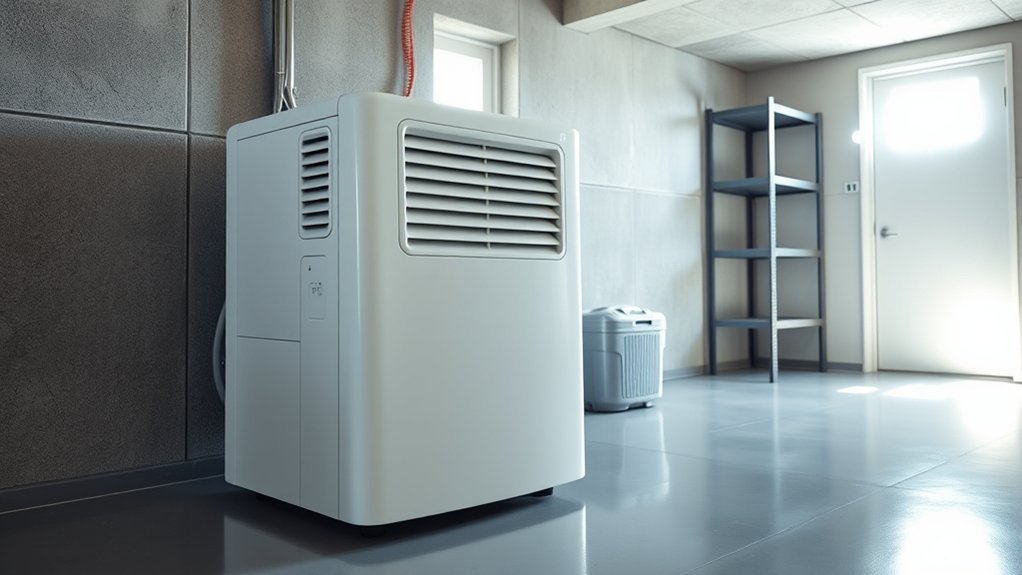
Choosing a room dehumidifier for a home in the Philippines requires matching the unit to both the moisture load and the local electrical supply. The retained picks in this guide are compact thermoelectric models for bedrooms, bathrooms, closets, RVs, and other small enclosed spaces: the TENKER 77 OZ, ToLife 95 OZ, and BEDRED 95 OZ. If you need to control persistent condensation, dry laundry, or manage a large open room, look for a locally supported compressor dehumidifier specifically rated for the Philippine power supply rather than relying on a small mini unit.
Affiliate disclosure: This article contains affiliate links. We may earn a commission if you buy through a link, at no extra cost to you.
Quick Answer: The TENKER 77 OZ is the best overall retained pick for a small enclosed room because its current product information lists a 100–240V input range, plus a 77-ounce tank, automatic shut-off, and a quiet sleep mode. The ToLife 95 OZ is the better simple-control alternative, while the BEDRED 95 OZ is the most decorative option. These are mini thermoelectric units, so none should be treated as a replacement for a full-size compressor dehumidifier in heavy tropical humidity.
Philippines compatibility note: Philippine grid power is typically 230V, 60Hz. Before ordering from Amazon.com, confirm the exact unit’s nameplate or manual supports the local voltage and frequency, check the plug type, and verify shipping and warranty coverage. A plug adapter changes plug shape only; it does not convert voltage.
Key Takeaways
- All three retained picks are thermoelectric mini dehumidifiers suited to small enclosed spaces with light to moderate moisture.
- TENKER lists a 100–240V input range, making its published voltage specification the strongest fit among the retained Amazon listings. Confirm frequency and plug compatibility on the exact unit before use.
- ToLife and BEDRED list 220V. Because the Philippines typically uses 230V/60Hz, verify the exact nameplate or manual supports the local supply before plugging either unit in.
- Use a locally rated compressor dehumidifier for persistent condensation, laundry drying, large open rooms, or heavy tropical humidity.
- Do not compare tank volume with daily extraction. A 95-ounce tank tells you how much water the reservoir can hold, not how much moisture the unit removes per day.
Quick Comparison of Room Dehumidifiers
| Product | Best For | Type | Key Claim / Voltage | Drainage | Amazon |
|---|---|---|---|---|---|
| TENKER 77 OZ | Quiet bedroom or bathroom use | Thermoelectric | 100–240V listed; seller states up to 35 oz/day at 30°C and 80% RH | Manual tank | Check Details |
| ToLife 95 OZ | Simple quiet operation in small rooms | Thermoelectric | 220V listed; 1 L/day product-info rating; sleep mode below 30 dB | Manual tank | Check Details |
| BEDRED 95 OZ | Small rooms where ambient lighting is useful | Thermoelectric | 220V listed; 95 oz tank and seven-color light | Manual tank | Check Details |
TENKER Dehumidifier for Home (77oz Water Tank) — Best Overall Small-Room Pick
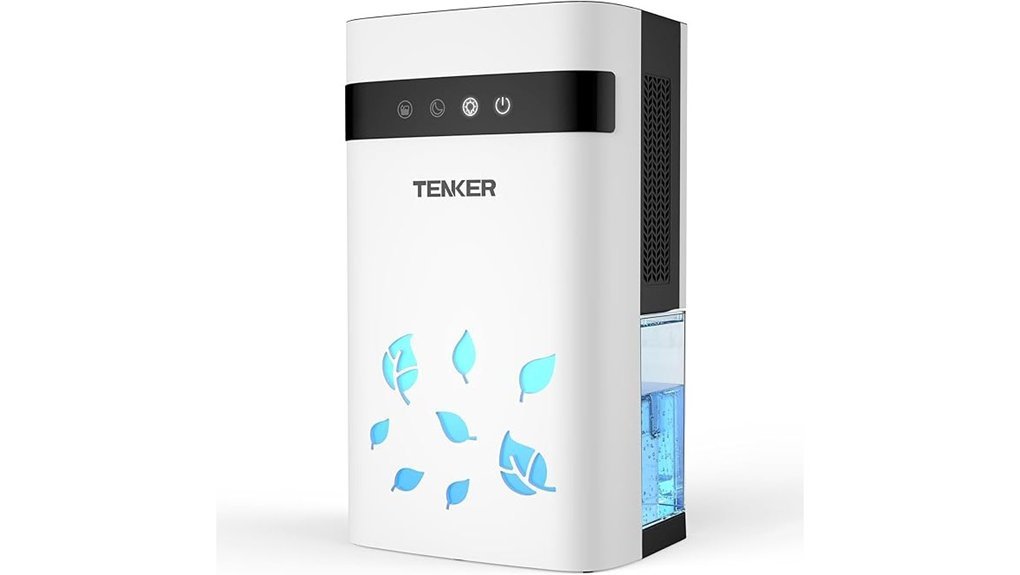
Why You’ll Like It: The TENKER combines semiconductor dehumidification with a portable design, automatic shut-off, a removable tank, and a low-noise sleep mode. The seller states that it can collect up to 35 ounces of moisture in 24 hours in a closed room at 30°C and 80% relative humidity. More importantly for buyers in the Philippines, the current product information lists a 100–240V input range, which is broader than many US-only appliances.
Best For: Bedrooms, bathrooms, closets, RVs, and other small enclosed spaces where quiet operation and a broad listed voltage range are priorities.
Who Should Avoid It: Buyers who need continuous drainage, a settable humidistat, or fast moisture removal across a large open room.
Electrical Compatibility: The listing states 100–240V. Confirm the exact shipped unit also supports 60Hz and has a suitable plug before use in the Philippines.
Pros:
- 100–240V input range is listed in the current product information.
- Seller states up to 35 oz/day under warm, humid test conditions.
- Sleep mode, portable handle, automatic shut-off, and seven-color lighting improve convenience.
Cons:
- The 77 oz tank still needs manual emptying.
- Its mini thermoelectric design is not a substitute for compressor-class moisture removal.
- No drain hose or built-in humidistat is listed.
ToLife Dehumidifier for Home with 95 OZ Tank — Best Simple Controls
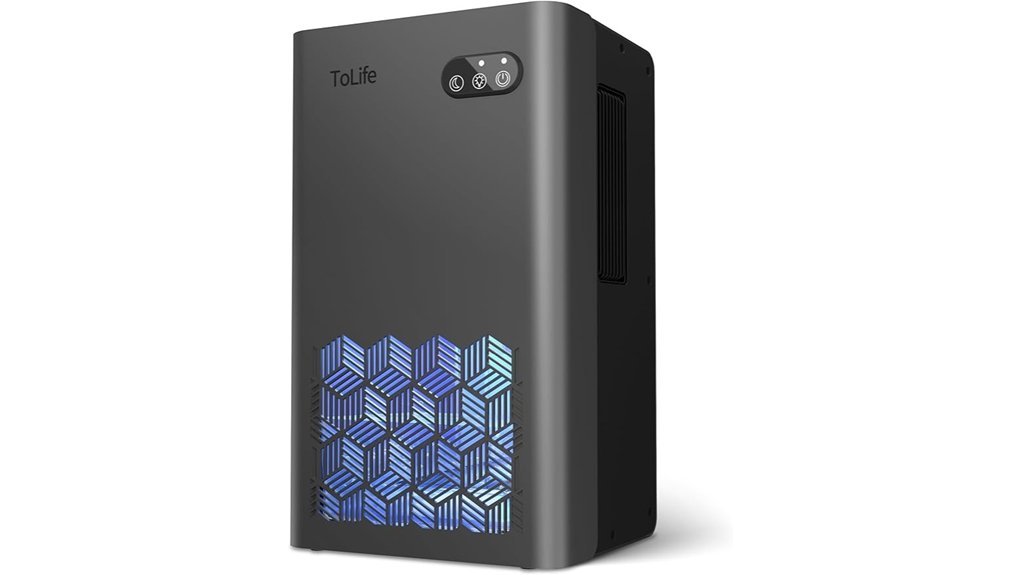
Why You’ll Like It: The ToLife keeps operation simple with a stronger daytime mode and a low-speed sleep mode listed below 30 dB. Current product information lists a 95-ounce tank, automatic shut-off, a 1-liter-per-day dehumidification rating, 93-watt power use, and 220V. The brand’s own product description also notes that the unit is more suitable for small spaces such as bedrooms and bathrooms, which is a more realistic use case than treating the 1,000-square-foot marketing figure as guaranteed performance.
Best For: Bedrooms, bathrooms, closets, and other small enclosed spaces where quiet operation and straightforward controls matter more than rapid extraction.
Who Should Avoid It: Buyers who need a drain hose, a settable humidistat, or compressor-class capacity for severe dampness.
Electrical Compatibility: The current product information lists 220V. Confirm the exact unit’s nameplate or manual supports the Philippine 230V/60Hz supply before use.
Pros:
- Current product information lists 1 L/day dehumidification capacity and 220V.
- Two operating modes, including sleep mode below 30 dB.
- 95 oz tank, automatic shut-off, removable tank, and portable design simplify everyday use.
Cons:
- The 1,000-square-foot coverage figure should be treated as marketing, not a promise of full-room control in tropical humidity.
- The listing shows 220V, so buyers should still verify 230V/60Hz tolerance on the exact unit.
- Manual tank drainage may be inconvenient during very humid weather.
BEDRED 95 OZ Dehumidifier with Ambient Light — Best Decorative Pick
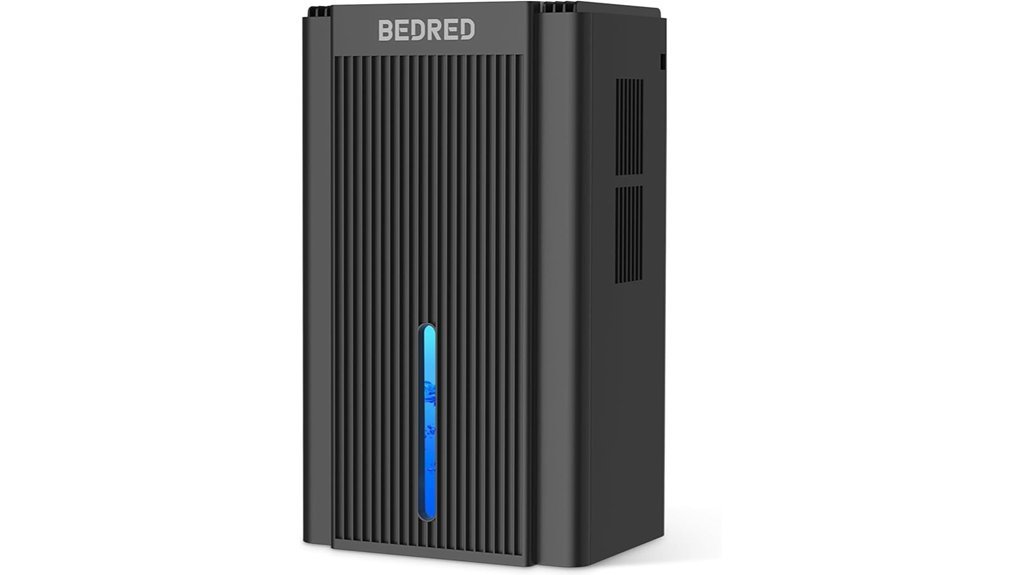
Why You’ll Like It: The BEDRED CT11 pairs a 95-ounce tank with automatic shut-off, sleep mode, and seven-color ambient lighting. Current product information lists 220V and identifies the unit as a semiconductor dehumidifier. That makes it a better fit for light moisture control in a small enclosed area than for drying a large, heavily damp room.
Best For: Bedrooms or small living spaces where you want basic moisture control plus soft ambient lighting.
Who Should Avoid It: Anyone who needs a clearly published daily extraction rate, continuous drainage, or fast drying after leaks.
Electrical Compatibility: The current product information lists 220V. Confirm the exact unit’s nameplate or manual supports the Philippine 230V/60Hz supply before use.
Pros:
- Current product information lists 220V and a 95 oz tank.
- Seven-color ambient light adds flexible room lighting.
- Automatic shut-off helps prevent tank overflow.
Cons:
- The current listing does not clearly state a daily moisture-removal rate.
- The 1,000-square-foot coverage claim should be treated cautiously for a thermoelectric unit.
- No continuous drain hose is listed.
Factors to Consider When Choosing a Room Dehumidifier in the Philippines
Philippine homes often face warm, humid weather, but the right dehumidifier still depends on room size, how damp the space feels, ventilation, air-conditioning use, and whether the moisture comes from normal humidity or an unresolved leak. Use the points below to avoid buying a unit that is too small or electrically incompatible.
Compressor vs. Thermoelectric
Compressor dehumidifiers remove much more water and are usually the better choice for large rooms, persistent condensation, laundry drying, or very damp spaces. Thermoelectric or Peltier models are smaller and quieter but work best in enclosed closets, bathrooms, bedrooms, and RVs with lighter moisture. A mini unit advertised for 1,000 square feet should not be assumed to perform like a 21- or 34-pint compressor model.
Coverage Area Requirements
Treat advertised square-foot coverage as a rough maximum. A room with closed doors, moderate humidity, and air conditioning is easier to manage than an open-plan room with wet laundry, poor ventilation, or active water intrusion. When in doubt, prioritize the daily moisture-removal rating and the room’s dampness over the headline coverage number.
Moisture Removal Capacity
Compressor models are commonly rated in pints per day, while mini models may be rated in ounces or milliliters per day. Compare extraction under similar temperature and humidity conditions. Do not use tank volume as a performance rating: a 95-ounce tank only tells you how much water the reservoir can hold.
Voltage and Plug Compatibility
Electrical compatibility is essential. The Philippine grid is typically 230V, 60Hz. Confirm that the exact model’s nameplate, power adapter, or manual supports the local voltage and frequency before use. A product listing that says 220V should still be checked for its permitted voltage tolerance and 60Hz support. A plug adapter changes plug shape only; it does not convert voltage. Do not use a step-down transformer unless the appliance manufacturer permits it and the transformer is correctly sized for the continuous load.
Energy Efficiency Ratings
For compressor models, ENERGY STAR certification and an automatic humidistat can help reduce unnecessary runtime. For mini models, low wattage alone does not guarantee better results; a weak unit may need to run continuously and still remove little water. Compare energy use with verified extraction capacity when possible.
Noise Level Considerations
Bedrooms and workspaces benefit from a verified low-noise or sleep mode. Thermoelectric units are often quieter because they do not use a compressor, while full-size units may produce fan and compressor noise. Remember that the highest fan setting will usually be louder than sleep mode.
Drainage Options Available
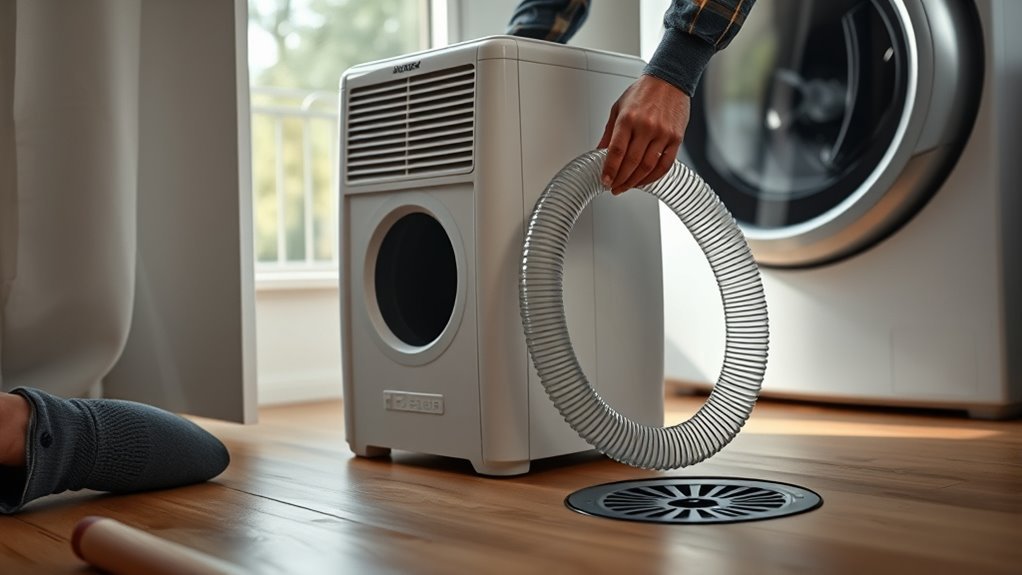
A removable tank is simple but may need frequent emptying during humid weather. Continuous gravity drainage is more convenient for long-term use, but the hose must slope downward to a suitable drain. If the drain is above the unit, look for a model with a built-in pump rather than assuming any hose can move water uphill.
Tank Size and Maintenance
A larger tank reduces emptying frequency, but it also adds weight when full. Clean the tank regularly, wash or vacuum the filter as directed, keep air inlets clear, and leave enough space around the unit for airflow. Place the machine on a level surface and never block the drain hose.
Safety Features Included
Useful features include automatic shut-off, full-tank alerts, automatic defrost, overload protection, child lock, and auto-restart after a power interruption. Safety certifications and local warranty coverage are also important, especially when importing an electrical appliance.
Before You Buy Checklist
- Measure the room and identify whether the moisture is light, persistent, or caused by a leak.
- Choose compressor capacity for heavy humidity; choose a mini unit for a small enclosed space.
- Confirm the exact nameplate or manual supports 230V/60Hz or an appropriate voltage range, then check plug type, seller shipping, returns, and warranty coverage.
- Decide whether you need a tank, gravity hose, or built-in pump.
- Check the stated test conditions behind any pints-per-day or ounces-per-day claim.
Frequently Asked Questions
What Is the Ideal Humidity Level for Homes in the Philippines?
A practical target is about 30% to 50% relative humidity, while keeping it below 60% when possible. In a tropical climate, reaching the lower end may be difficult, so focus on reducing condensation, musty odors, and sustained high humidity without making the room uncomfortably dry.
Should I Buy a Compressor or Mini Dehumidifier?
Choose a compressor model for a large room, ongoing condensation, laundry drying, or severe dampness. Choose a thermoelectric mini model for a closet, bathroom, small bedroom, desk area, or RV where quiet operation and portability are more important than fast extraction.
Why Are the Retained Picks Mini Dehumidifiers?
This guide keeps only the reviewed products with the strongest published voltage information for a Philippines-specific buying decision. The retained products are mini thermoelectric models, so buyers dealing with heavy humidity should look for a locally sold compressor dehumidifier that clearly states support for 230V/60Hz.
Can an Amazon US Dehumidifier Work in the Philippines?
Only if the exact unit supports the local electrical supply. Check the product label, power adapter, and manual for 230V/60Hz compatibility or an explicitly supported range that includes the local supply. Do not assume a plug adapter makes a 120V appliance safe on a 230V outlet, and do not rely on a transformer unless the manufacturer permits that setup.
How Often Should I Empty the Water Tank?
Empty it whenever the full-tank indicator activates. In very humid weather, a small tank may fill daily or more often. A continuous drain hose can reduce this work if the unit supports gravity drainage and you have a suitable drain.
Can Dehumidifiers Help With Mold Prevention?
They can help by reducing excess moisture, but they do not remove existing mold or fix leaks. Clean affected surfaces safely, repair the moisture source, improve ventilation, and use the dehumidifier as part of the moisture-control plan.
Are 1,000-Square-Foot Claims on Mini Dehumidifiers Reliable?
Use them cautiously. A thermoelectric unit may influence humidity in a larger listed area under favorable conditions, but it is usually most effective in a smaller enclosed space. Daily extraction capacity is a better comparison point than floor-area marketing alone.
What Maintenance Is Required for Dehumidifiers?
Empty and wash the tank, clean the filter and air vents, inspect the drain hose, and keep the unit level with clear airflow around it. Follow the manual’s cleaning schedule and unplug the appliance before maintenance.
Conclusion
Final Recommendation: Choose the TENKER 77 OZ as the best overall retained option for a small enclosed room because it combines quiet operation, automatic shut-off, a practical tank size, and a current listing that states a 100–240V input range. Pick the ToLife 95 OZ if you prefer simple controls and a larger 95-ounce tank, or the BEDRED 95 OZ if ambient lighting matters. For persistent condensation, laundry drying, or a large damp room, skip the mini-unit category and choose a locally supported compressor dehumidifier clearly rated for 230V/60Hz.
Whichever model you choose, verify the exact nameplate, frequency, plug type, shipping, warranty, and the test conditions behind any capacity claim before buying. A correctly sized dehumidifier can help control excess indoor moisture, but leaks, poor ventilation, and existing mold still need direct attention.