Excess moisture and airborne particles are two different indoor-air problems, so the best choice depends on what you need to fix. This updated 2026 guide compares one true dehumidifier and air purifier combo with three dedicated home dehumidifiers for light dampness, quiet bedrooms, continuous drainage, and cooler spaces. The Tenergy Sorbi is the only remaining model here with a replaceable HEPA filter; the other units use washable intake filters that help protect the machine but do not replace a dedicated air purifier.
Quick Answer
Best 2-in-1 option: Choose the Tenergy Sorbi when you need light moisture removal and HEPA filtration in a small room. Choose ToLife for quiet, light-duty dehumidifying; PTHRAOUTA when a drain hose is the priority; or the rotary humidity-display model for a cooler basement, garage, or similar space. None of these compact units should be treated as a substitute for a high-capacity compressor dehumidifier in a severely damp basement.
Key Takeaways
- Only Tenergy is a true purifier-dehumidifier combo in this final list.
- Daily extraction figures are usually measured in warm, very humid test conditions, so real-world water collection may be lower.
- Advertised square-foot coverage does not tell the whole story; also compare daily extraction, room temperature, humidity level, and airflow.
- A drain hose is useful for continuous operation, while a large tank is more convenient when no floor drain is available.
- Washable or reusable intake filters are not the same as a HEPA air-purification system.
Quick Comparison
| Product | Type | Claimed Daily Removal | Tank | Drain Hose | Best For | Amazon |
|---|---|---|---|---|---|---|
| Tenergy Sorbi 1000ml | Dehumidifier + HEPA purifier | Up to 750ml in specified test conditions | 1 liter | No | Small rooms needing two functions | Check Price |
| ToLife TZ-C2 | Thermoelectric dehumidifier | Up to 1 liter in specified test conditions | 95 oz | No | Quiet bedrooms and light dampness | Check Price |
| PTHRAOUTA 95 oz | Thermoelectric dehumidifier | Up to 34 oz at 86°F and 80% RH | 95 oz | Yes | Hands-off drainage and sleep mode | Check Price |
| Rotary Humidity-Display Model | Rotary/desiccant-style dehumidifier | Up to 75 oz at 86°F and 80% RH | 85 oz | Yes | Cooler rooms and humidity monitoring | Check Price |
Tenergy Sorbi 1000ml Air Dehumidifier with HEPA Filter
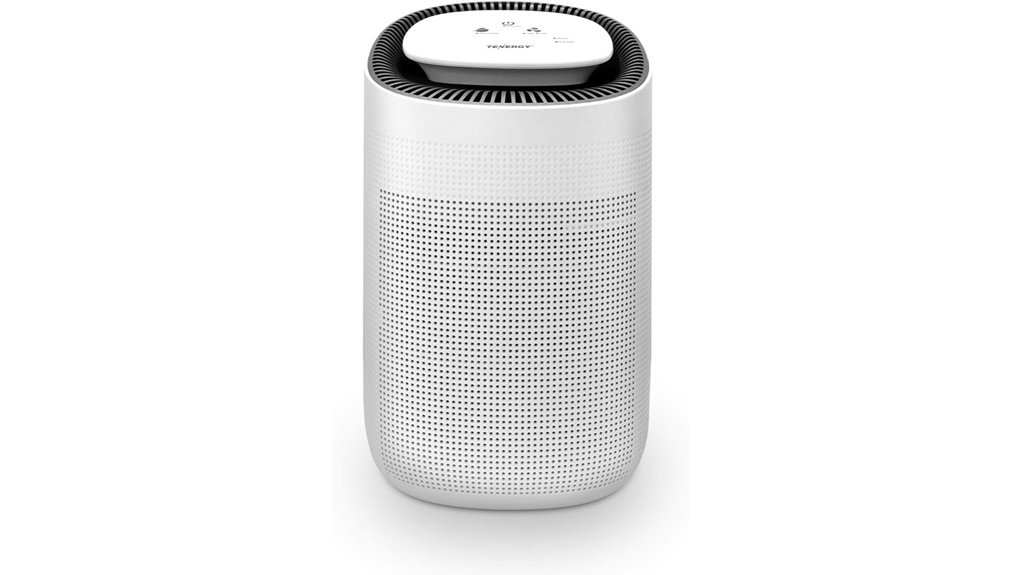
The Tenergy Sorbi is the clearest match for shoppers who want light dehumidification and particle filtration in one compact machine. Its Peltier system is rated to collect up to 750ml of water per day at 86°F and 80% relative humidity, while the 1-liter tank includes a full-tank indicator and automatic shutoff. The listing also identifies a replaceable True HEPA filter and two fan-speed settings for air circulation.
Why You’ll Like It: It saves space by combining two functions and is easier to move than a full-size compressor dehumidifier. It is most useful in a small bathroom, closet, office, or bedroom where dampness is mild rather than severe.
Who Should Buy This: People who want one compact appliance for light moisture control and HEPA filtration in a room around the listing’s 200-sq.-ft. range.
Who Should Avoid This: Anyone dealing with standing water, major basement dampness, fast laundry drying, or whole-home humidity control.
Pros:
- Combines a dehumidifier and replaceable HEPA filter in one unit.
- Automatic shutoff helps prevent tank overflow.
- Compact format suits closets, bathrooms, offices, and small bedrooms.
Cons:
- Extraction is modest and depends heavily on warm, humid conditions.
- The 1-liter tank may need frequent emptying during humid weather.
- Replacement filters add ongoing maintenance cost.
ToLife 1000 sq.ft Home Dehumidifier with LED Light
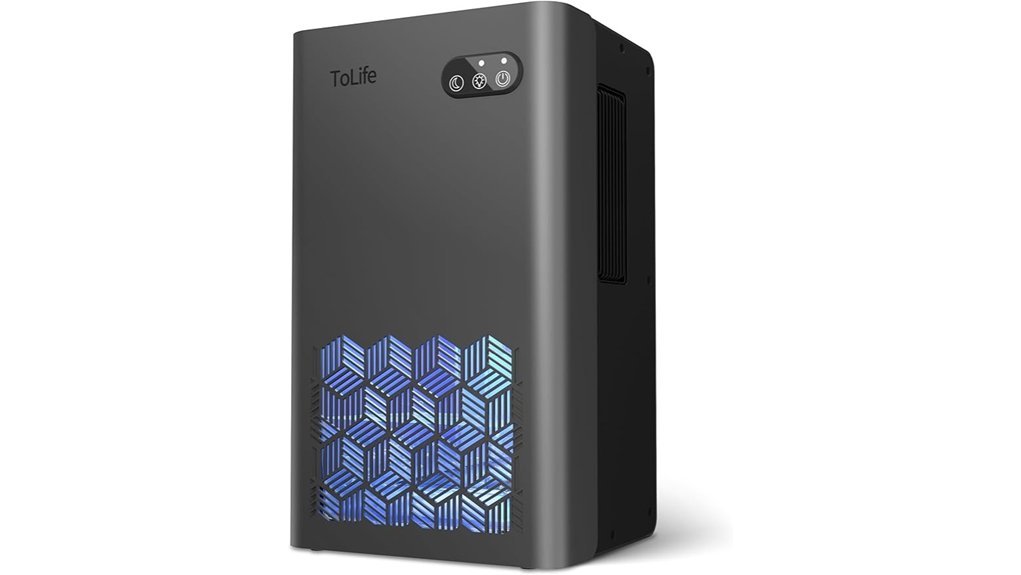
The ToLife TZ-C2 is a thermoelectric home dehumidifier with a 95-ounce tank, two operating modes, automatic shutoff, and seven-color ambient lighting. The listing markets it for spaces up to 1,000 sq. ft. and claims up to 1 liter of daily extraction under favorable conditions. Its sleep mode is advertised below 30 dB, making it more appealing for bedrooms and home offices than a louder compressor unit.
Why You’ll Like It: The large tank reduces emptying frequency, and the quiet mode is convenient when you want gentle moisture control overnight.
Who Should Buy This: Shoppers treating mild condensation or musty air in an enclosed bedroom, bathroom, office, or similar room.
Who Should Avoid This: Buyers who need verified high-capacity extraction for a wet basement. The 1,000-sq.-ft. coverage claim should not be treated as equal to the performance of a full-size compressor dehumidifier.
Pros:
- 95-ounce tank and automatic shutoff support easier daily use.
- Advertised sleep mode under 30 dB is suitable for quiet rooms.
- Two modes let you choose stronger daytime operation or lower-noise use.
Cons:
- Light-duty extraction may be too slow for persistent or severe dampness.
- No continuous-drain hose is listed for this model.
- Ambient lighting may not matter to buyers who prefer simple controls.
PTHRAOUTA Home Dehumidifier with Drain Hose, 950 sq.ft
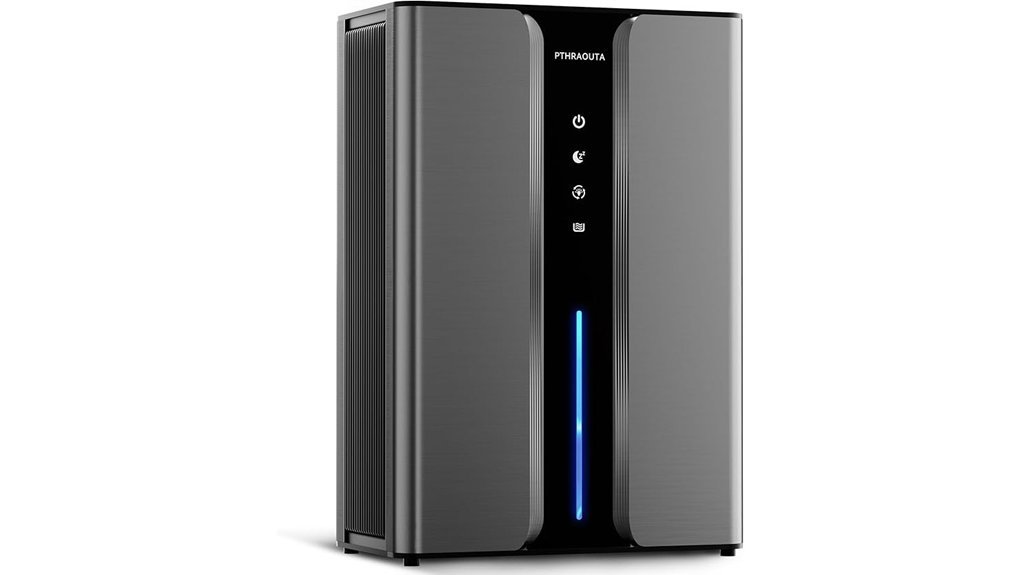
The PTHRAOUTA model is designed for buyers who want a compact dehumidifier with a drain-hose option. Its seller specifications list a 95-ounce tank and up to 34 ounces of moisture removal per day at 86°F and 80% relative humidity. It also offers a stronger mode, a sleep mode advertised below 30 dB, automatic shutoff, seven-color lighting, and a washable intake filter.
Why You’ll Like It: Connecting the hose can reduce the need to empty the tank, which is useful in a bathroom, RV, closet, or small basement area with a suitable drain nearby.
Who Should Buy This: People who value quiet operation and continuous drainage more than maximum extraction speed.
Who Should Avoid This: Anyone expecting the washable filter to perform like a HEPA air purifier, or anyone trying to dry a seriously damp 950-sq.-ft. basement with a compact thermoelectric unit.
Pros:
- Drain-hose support allows more hands-off moisture removal.
- Sleep mode and automatic shutoff improve bedroom usability.
- Large 95-ounce tank reduces emptying compared with smaller compact models.
Cons:
- The 34-ounce daily claim is measured in warm, high-humidity conditions.
- The washable intake filter is not a substitute for HEPA filtration.
- Performance may be limited in cool rooms or open floor plans.
Home Dehumidifier with Drain Hose and Humidity Display
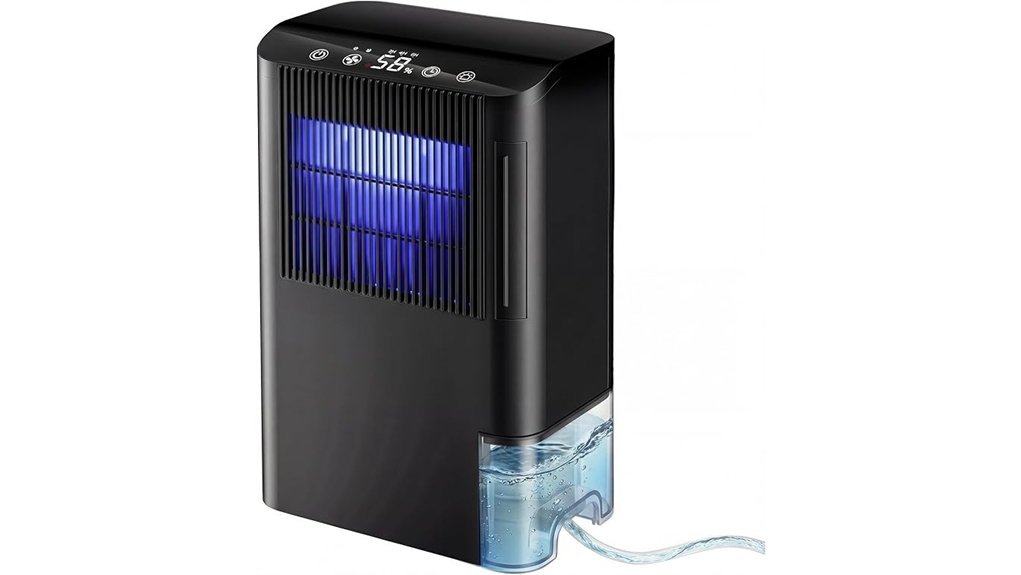
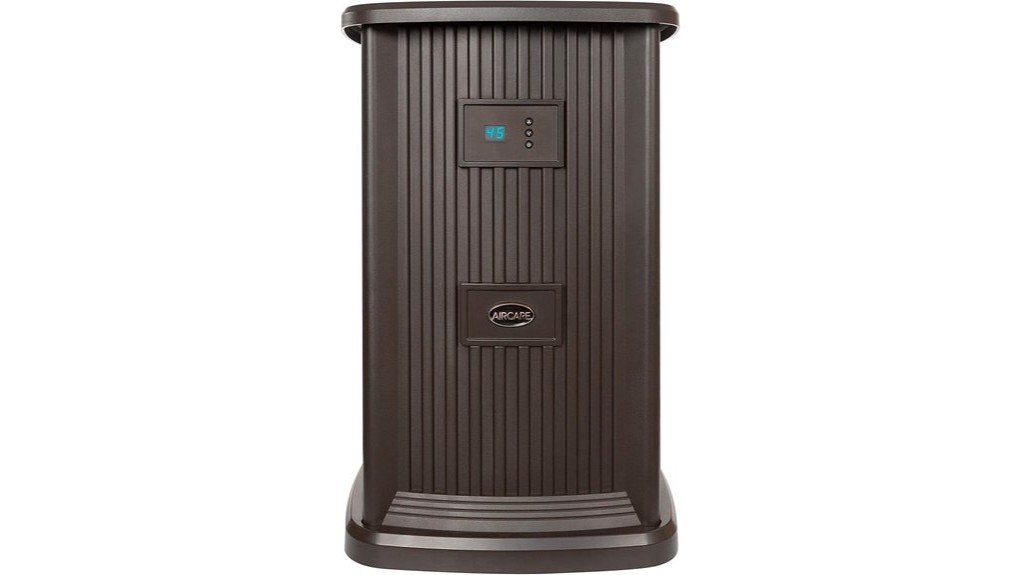
This humidity-display model is marketed as a rotary or desiccant-style dehumidifier that can keep operating in cooler conditions than many small thermoelectric units. Its Amazon listing claims up to 75 ounces of moisture removal per day at 86°F and 80% relative humidity, operation down to 32°F, an 85-ounce tank, continuous drainage, a washable filter, and noise below 40 dB. The listing also advertises coverage from 270 to 2,200 sq. ft., but buyers should judge that claim alongside the daily extraction figure and the actual dampness level.
Why You’ll Like It: The humidity display makes room conditions easier to monitor, while the drain hose and low-temperature design may suit a garage, cooler basement, RV, or utility room.
Who Should Buy This: Buyers who need a compact dehumidifier for a cooler space and want both a tank and continuous-drain option.
Who Should Avoid This: People who want a verified HEPA purifier or who need commercial-grade drying after flooding or water damage.
Pros:
- Seller-listed operation down to 32°F may suit cooler rooms.
- Humidity display, timers, auto shutoff, and drain hose improve control.
- Claimed 75-ounce daily removal is higher than the thermoelectric models above.
Cons:
- The broad 2,200-sq.-ft. coverage claim should be treated cautiously.
- Rotary/desiccant operation can release warmer air and may use more electricity than a small Peltier unit.
- The washable filter is a maintenance filter, not confirmed HEPA purification.
Factors to Consider When Choosing a Home Dehumidifier or Air Purifier Combo
Start by deciding whether your main problem is excess humidity, airborne particles, or both. A dehumidifier reduces moisture but does not automatically remove fine dust, pollen, or smoke. A washable intake filter mainly protects the machine. For meaningful particle filtration, look for a replaceable HEPA filter and a published airflow or CADR figure.
Dehumidifier Type
Thermoelectric or Peltier models are compact and quiet, but their extraction falls as temperature and humidity drop. They work best for light moisture in smaller enclosed rooms. Compressor dehumidifiers are generally better for warm, seriously damp basements and laundry drying. Rotary or desiccant-style models can work better in cooler rooms but may release warmer air and use more power.
Moisture Removal Capacity
Compare the amount of water the unit can remove per day and note the test conditions. Claims measured at 86°F and 80% relative humidity describe a warm, very damp room; collection may be much lower in a cool bedroom at moderate humidity. For persistent dampness, prioritize verified daily extraction over decorative features or a large advertised coverage number.
Room Size and Humidity Level
Square-foot ratings are useful only when paired with extraction capacity. A compact unit may circulate air across a large room but still remove water slowly. Measure your room, check its typical relative humidity with a hygrometer, and choose a higher-capacity model when humidity remains above your target or condensation returns quickly.
Air Cleaning Performance
If air purification matters, confirm that the unit has a replaceable HEPA filter, not only a washable mesh filter. Check whether the manufacturer publishes airflow or CADR and whether replacement filters are easy to buy. Ionizer claims should not replace HEPA performance data, and sensitive users should review ozone or emissions information before enabling an ion function.
Noise Level
For bedrooms and offices, look for a clearly stated low-speed noise level. Claims below 30 dB suggest very quiet operation, while levels in the mid-30s to low-40s are usually more noticeable but may still work as background noise. Remember that high or powerful mode will normally be louder than sleep mode.
Tank and Drainage
A larger tank reduces maintenance, but it also makes the filled container heavier. Continuous drainage is the better choice for long runtimes when you have a safe downward path to a floor drain or sink. Make sure the hose is not kinked and that the outlet remains lower than the machine unless the unit includes a pump.
Operating Temperature
Check the minimum operating temperature before using a dehumidifier in a basement, garage, or RV. Thermoelectric and compressor performance can fall in cool conditions. A rotary/desiccant model may be more suitable for colder rooms, but compare its wattage because low-temperature performance can come with higher energy use.
Maintenance and Filter Cost
Wash the water tank regularly, clean reusable intake filters, and replace HEPA filters according to the manufacturer’s schedule. Before buying a combo unit, confirm that replacement filters are still sold for the exact model. A low purchase price can become less attractive when filters are expensive or difficult to find.
Before You Buy Checklist
- Measure the room and identify whether dampness is mild, persistent, or severe.
- Compare daily extraction under stated temperature and humidity conditions.
- Confirm whether you need a tank, drain hose, or both.
- Check minimum operating temperature and low-speed noise.
- Verify whether the filter is HEPA or only a washable intake filter.
- Review replacement-filter cost, warranty details, and return policy.
Frequently Asked Questions
How Often Should I Replace the HEPA Filter?
Follow the schedule for the exact model. For the Tenergy Sorbi, replacement guidance commonly falls around every three to six months depending on use and dust load. Replace it sooner if airflow drops, odors remain, or the filter is visibly loaded. Do not wash a HEPA filter unless the manufacturer specifically says it is washable.
Can These Units Run Continuously Overnight?
Many can run overnight when used according to the manual, placed on a stable level surface, and kept away from blocked vents or splash zones. Use automatic shutoff when relying on the tank, or secure the drain hose so it cannot leak or siphon onto the floor.
Does a Washable Filter Turn a Dehumidifier Into an Air Purifier?
No. A washable mesh or intake filter mainly catches larger dust and protects internal parts. It should not be described as HEPA purification unless the manufacturer clearly identifies and rates a separate HEPA filter.
What’s the Average Electricity Cost per Month?
Use this formula: wattage × hours used per day × 30 ÷ 1,000 × your electricity rate per kWh. Check the product label for wattage and your utility bill for the local rate. Rotary or compressor units often use more power than small thermoelectric models, but they may also remove moisture faster.
Can a Compact Dehumidifier Handle a Basement?
It may help with light moisture in a small, enclosed basement area, but it is usually not the right tool for severe dampness, water intrusion, or a large open basement. In those situations, compare full-size compressor models with higher pint-per-day ratings and address the source of the moisture.
Are Dehumidifiers Safe Around Pets and Children?
They can be used safely when the unit is stable, cords are secured, vents are clear, and the machine is kept out of reach and away from standing water. Follow the manufacturer’s placement and clearance instructions, and stop using the unit if the cord, plug, tank, or housing is damaged.
How Do I Clean the Water Tank Properly?
Unplug the machine, empty the tank, wash it with warm water and mild dish soap, scrub corners with a soft brush, rinse well, and let it dry before reinstalling. Follow the manual before using vinegar or another disinfectant, and never mix cleaning chemicals.
Conclusion
Final Recommendation
Choose the Tenergy Sorbi when you specifically want a compact dehumidifier with HEPA filtration. Choose ToLife for quiet, light-duty bedroom use, PTHRAOUTA for continuous drainage, or the rotary humidity-display model for a cooler room. Base the final decision on daily extraction, temperature range, drainage, and filter type—not square-foot marketing alone.
Before ordering, open the Amazon listing to confirm the current seller, availability, warranty, included accessories, and specifications for the exact ASIN.