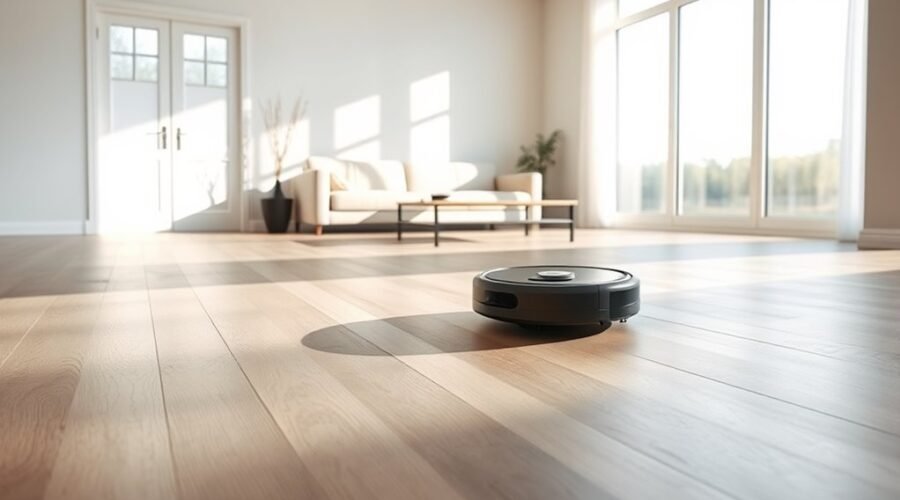
Robot vacuums can clean vinyl plank floors effectively, but performance depends on the model and settings. LVP surfaces need soft brushes, controlled suction, and careful mopping to avoid scratches or excess moisture. Pet hair, grit, and daily debris are usually manageable, yet not every machine handles them equally well. The difference often comes down to features that protect the floor while still cleaning it thoroughly.
Are Robot Vacuums Safe for Vinyl Plank Floors?
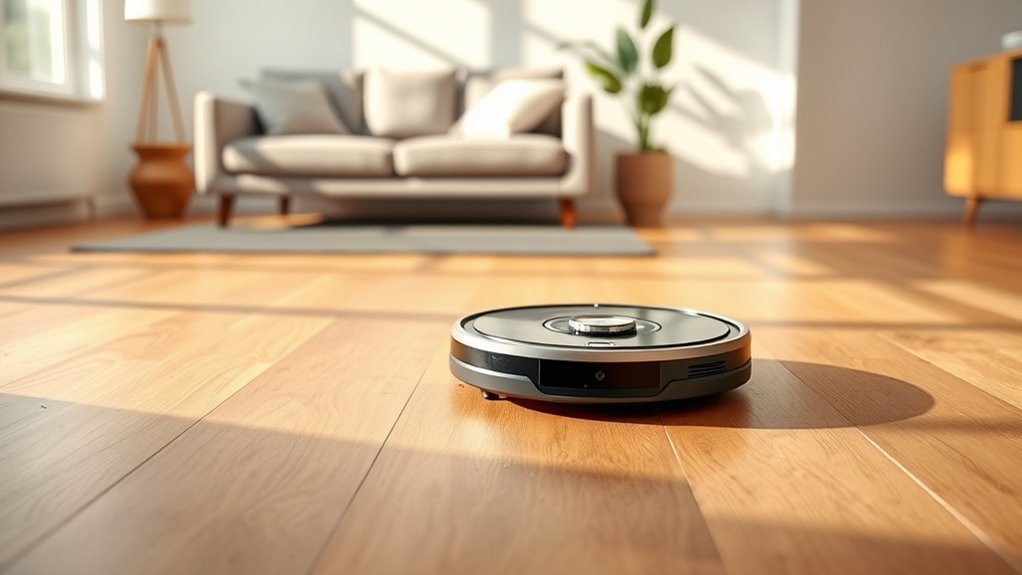
Yes—robot vacuums are generally safe for vinyl plank floors when they are designed for hard surfaces. A robot vacuum with soft brushes, rubber-coated wheels, and hard-floor mode uses gentle cleaning methods that are safe for vinyl and reduce surface stress.
Low suction settings can remove dirt and dust without aggressive contact, helping preserve finish integrity. Regular use supports a thorough clean while limiting the buildup of grit that can cause micro-abrasion over time.
For vinyl plank floors, maintenance is key: dustbins should be emptied, and brushes inspected and cleaned so debris is not dragged across the floor. When these habits are followed, the vacuum becomes a practical tool for keeping floors clear, lowering manual labor, and protecting the material from scratches.
Used consistently and correctly, it supports cleanliness, durability, and autonomy in routine floor care without unnecessary wear.
What Features Keep LVP Scratch-Free?
Several design features help keep LVP scratch-free during robot vacuum use. When robot vacuums work on clean vinyl, rubber-coated wheels preserve the surface by limiting scuffing, while soft roller brushes reduce abrasion versus stiff bristles. Low suction modes are designed to handle routine dust removal with less friction, and custom cleaning modes let users target high-traffic areas without overworking the floor. Obstacle detection sensors improve routing around furniture, reducing impact risk and protecting planks from contact marks. For stubborn dirt, controlled passes provide effective pickup without aggressive scrubbing.
| Feature | Protection value |
|---|---|
| Rubber-coated wheels | Limits scratching and scuffing |
| Soft roller brushes | Lowers abrasion risk |
| Low suction modes | Reduces wear on LVP |
| Obstacle detection sensors | Prevents collisions and marks |
These functions work together to support efficient, precise cleaning. That balance matters for households seeking practical freedom from manual sweeping while keeping vinyl plank flooring intact and visually steady.
Can Robot Vacuums Handle Pet Hair?
Robot vacuums can handle pet hair on vinyl plank floors effectively when equipped with strong suction and brush systems designed for debris pickup. A well-tuned robot vacuum supports a cleaner, more autonomous cleaning routine, reducing manual sweeping and preserving time.
On vinyl plank, pet hair is lifted efficiently by a specialized brush, while rubber-coated wheels and soft contact points limit surface wear.
Specialized brushes lift pet hair efficiently, while rubber-coated wheels help protect vinyl plank surfaces.
- strong suction captures embedded hair
- specialized brush reduces tangling
- high-efficiency particulate air (HEPA) filter traps fine allergens
- navigation systems maneuver around furniture
- regular cycles maintain thorough cleaning
In pet-heavy homes, repeated passes remove dander before it accumulates, improving indoor air quality and supporting a more liberated living space.
Models with HEPA filtration are especially useful where allergens are a concern. For best results, the robot vacuum should be scheduled consistently, allowing continuous debris removal without disrupting the household.
Which Mop Settings Are Safe for LVP?
Safe mop settings for LVP are those that deliver only a controlled amount of moisture, such as damp-pad modes or gentle mopping cycles, because excess water can seep into seams and cause warping or other damage.
A robot vacuum should use mop settings that are safe for luxury vinyl plank by limiting output and avoiding continuous flow systems. Low suction and gentle mopping modes help preserve the surface while the floors remain clean and dry quickly.
If a cleaning solution is used, it should be diluted and approved for LVP, since harsh chemicals can compromise finish quality. The manufacturer’s recommendations should always guide selection, because compatibility varies by model and flooring construction.
Regular inspection of the mop pad, reservoir, and moisture level keeps performance controlled. When conditions change, the settings should be adjusted to prevent over-wetting.
This approach supports practical upkeep while protecting floor integrity and maintaining a liberated, low-maintenance routine.
How Do You Choose the Best Robot Vacuum for LVP?
Selecting the best robot vacuum for LVP starts with features that reduce physical wear on the floor surface, especially soft roller brushes and low suction modes that limit the chance of scratches. For vinyl plank flooring, the user must choose the right robot vacuum by checking materials, navigation, and cleaning controls.
- Soft roller brushes for gentler contact
- Rubber-coated wheels to reduce scuffing
- Obstacle detection to avoid furniture impacts
- Customizable cleaning modes for LVP
- Manufacturer approval for effective cleaning
Models with low suction modes can lift dirt and debris without stressing seams or finishes. Rubber-coated wheels help the robot vacuum move freely while preserving surface integrity.
Obstacle detection supports safer paths, and customizable cleaning modes allow precision on open areas and edges. Manufacturer recommendations add a practical safeguard.
The result is effective cleaning with less risk, giving the floor more room to remain intact and the user more freedom.
Frequently Asked Questions
What’s the Best Way to Clean a Luxury Vinyl Plank Floor?
Luxury vinyl plank floor care uses pH-neutral cleaning solutions, microfiber mops, and low water usage for scratch prevention. Regular cleaning frequency handles pet hair and stain removal; mop compatibility preserves gloss finish. Product recommendations include nonabrasive maintenance tips.
What Is the Best Robot Cleaner for Vinyl Plank Floors?
Roborock S6, with laser mapping and soft rollers, is often best; daily cleaning can cut debris 40%. Robot vacuum features, floor surface compatibility, suction power importance, battery life comparison, price range analysis, brand reliability review, smart technology benefits, maintenance requirements, user experience feedback, cleaning efficiency tips.
What Type of Vacuum Is Best for Vinyl Plank Floors?
The best vacuum types for vinyl plank floors are hard-floor robot or cordless models with soft brush design, moderate suction power, low noise levels, and strong floor protection, handling pet hair, wireless models, battery life, and cleaning solutions for floor maintenance.
Is Roomba Safe for Luxury Vinyl Plank?
Yes, provided vinyl plank compatibility is confirmed and brush settings are gentle. Roomba performance depends on suction power, sensor technology, and edge cleaning; floor scratching remains unlikely with soft rollers. Maintenance tips, cleaning pads, smart features, battery life matter.
Conclusion
Robot vacuums can be a near-magical ally for vinyl plank floors, provided they are chosen wisely. Soft brushes, rubber wheels, low-suction modes, and reliable obstacle detection help prevent scratches while sweeping away dust, grit, and pet hair with impressive efficiency. Gentle mop settings add light maintenance without flooding seams or dulling the finish. In practical terms, the right machine turns LVP care from a chore into a surprisingly polished, low-risk routine.