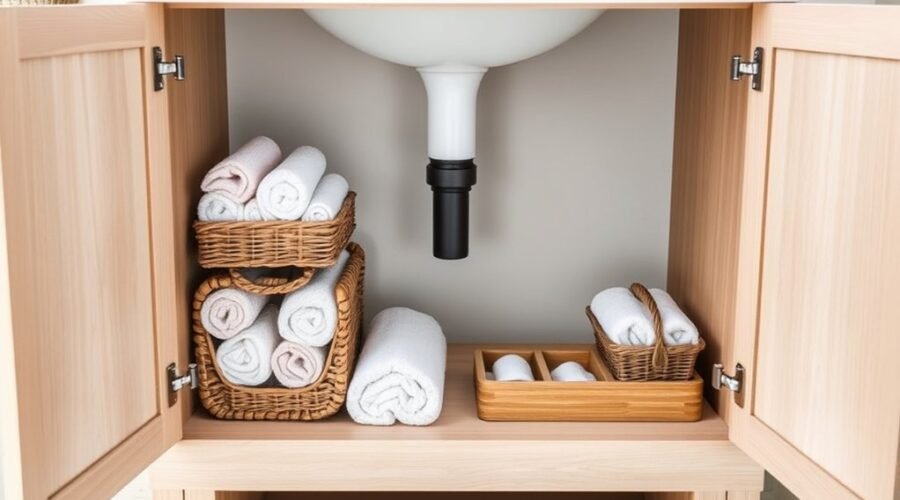
Learning how to organize towels under a bathroom sink can help you make better use of a small cabinet. The challenge is fitting towels around pipes while keeping them clean, dry, and easy to reach. With the right measurements, storage bins, and folding methods, you can create an organized space without a major renovation.
Quick Answer
To organize towels under a bathroom sink, first empty the cabinet, check for moisture, and measure around the plumbing. Use labeled, stackable bins for clean towels, roll smaller towels to save space, and fold larger bath towels when needed. Add door hooks or pull-out shelves for easier access, keeping towels separate from cleaning chemicals.
At a Glance
| Difficulty | Easy for basic organization; moderate if installing shelves that require drilling. |
| Tools Needed | Tape measure, storage bins or baskets, labels, and optional hooks or pull-out shelves. |
Measure the Space to Organize Towels Under a Bathroom Sink
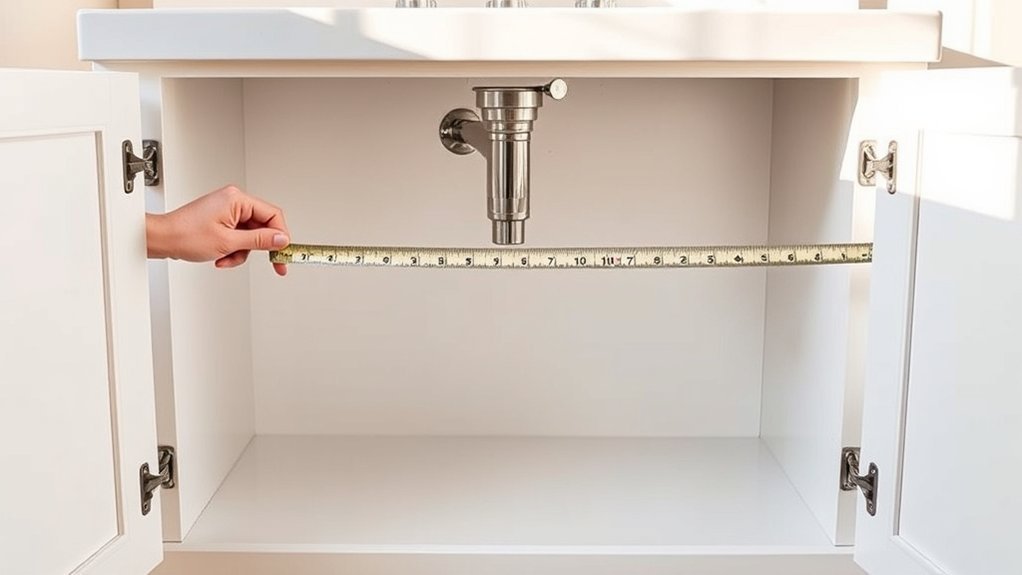
Start by measuring the usable height, width, and depth of your under-sink cabinet. Pipes, shutoff valves, and door hinges can reduce the space available for towels and organizers. Accurate measurements help you choose containers that fit without blocking access to plumbing.
Remove everything from the cabinet before measuring. This gives you a clear view of its shape and makes it easier to spot leaks, stains, or damaged surfaces.
Measure the cabinet opening as well as the interior. A storage bin may fit inside the cabinet but still be too wide to pass through its door.
Use a tape measure and follow these steps:
- Measure the interior width: Measure from one inside wall to the other, noting any hinges or brackets.
- Measure the usable depth: Check the distance from the cabinet opening to the back wall.
- Measure the height: Find the available space below and beside the sink basin and pipes.
- Mark the plumbing: Record the position of the drainpipe, water lines, and shutoff valves.
- Check door clearance: Make sure the doors can close when bins, hooks, or shelves are installed.
Record the measurements on your phone or in a notebook. Bring them when shopping for organizers, and check product dimensions before buying.
Leave enough space to reach the plumbing when needed. Storage should not block shutoff valves or place pressure on water lines.
Choose Under-Sink Storage Bins That Fit
The best under-sink storage bins fit around the plumbing and let you reach individual towels easily. Choose containers based on your cabinet’s actual dimensions rather than buying a matching set first.
Clear plastic bins are useful because you can see their contents without pulling everything out. They are also easy to wipe clean if dust or moisture collects inside the cabinet.
Opaque baskets work well when you prefer a decorative look. Add simple labels such as “Bath Towels,” “Hand Towels,” and “Washcloths” to keep everything sorted.
Consider these storage options:
- Stackable bins: Use the available cabinet height without creating unstable piles of towels.
- Transparent containers: Make it easier to identify clean towels and other supplies.
- Lidded bins: Help protect clean, completely dry towels from dust and occasional splashes.
- Divided organizers: Keep different towel sizes separate in one container.
- Small baskets: Work well in narrow spaces beside pipes or at the front of the cabinet.
For additional layout ideas, see these stackable and transparent storage suggestions for bathroom cabinets.
Avoid filling every inch of the cabinet. You still need room to lift out containers, inspect the plumbing, and clean underneath them.
Pro Tip: Before buying several bins, test the layout with empty boxes of similar sizes. This helps you see whether the cabinet doors will close and whether the plumbing leaves enough room.
Roll Towels for a Better Fit
Rolling towels can make under-sink storage easier, especially for hand towels and washcloths. Compact rolls fit into narrow baskets and let you remove one towel without disturbing an entire stack.
However, rolling is not always the best choice for large bath towels. A neat folded stack may use a shallow or rectangular bin more efficiently.
To roll a towel neatly:
- Lay the clean, completely dry towel flat on a surface.
- Fold it lengthwise to match the width of your container.
- Roll it tightly from one short end to the other.
- Place the roll into a bin with the loose end tucked underneath.
For small towels, try arranging the rolls upright with their ends facing you. This creates vertical storage and makes each towel easier to identify.
If the basket is wider than it is tall, place the rolls horizontally in a single layer or a neat stack.
Rolling can also help preserve a tidy shape and reduce visible creases. It works particularly well when you want to store several washcloths in one compact container.
Decorative baskets offer another option for open cabinets. They hold the rolls securely and give the storage area a more finished look.
The goal is not to roll every towel. Choose the arrangement that allows you to remove one item without pulling out the rest.
Use Cabinet Doors for Extra Storage
The inside of a bathroom cabinet door can provide useful storage without taking up shelf space. Small hooks, racks, and adhesive organizers work especially well for lightweight hand towels and washcloths.
Before installing anything, check how much clearance exists between the closed door, sink basin, and plumbing. An organizer should not prevent the cabinet from closing properly.
Recommended Products

MORE REPLACEMENT OPTIONS : We will provide 4 adhesive stickers(more than normal), with 2 as replacements for backup, this allows you to quickly replace the adhesive sticker when it loses its adhesive force or when you need to change the installation location

[Size Check - Min Requirements] Inside Depth > 4.5", Door Thickness ≤ 1.1", Cabinet Door Width > 12", Top Door Gap > 1/8"
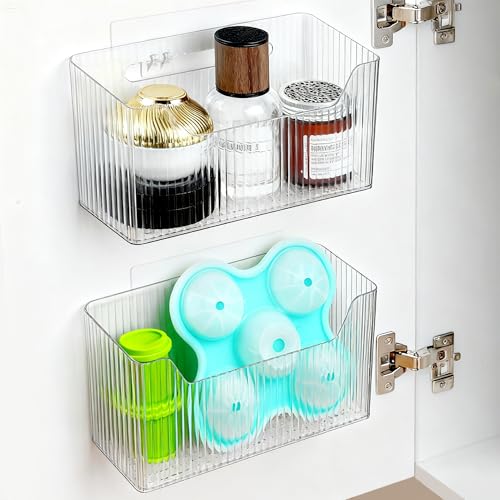
Designed for Inside Cabinet Door Storage: This cabinet door organizer is specially designed to hang inside cabinet doors, creating instant storage for bathroom or kitchen essentials. Keep items hidden yet easily accessible.
Door-Mounted Organizers
Door-mounted organizers make good use of space that often goes unused. They can hold folded washcloths, small hand towels, and everyday bathroom accessories.
Choose a slim organizer with compartments that are easy to reach. Shallow pockets work better than bulky baskets when the cabinet is narrow.
Some organizers attach with adhesive strips, while others need screws. Adhesive options may suit renters who want to avoid drilling, provided the cabinet finish and product instructions allow them.
Screw-mounted organizers can offer a firmer attachment, but they require careful placement. Check the door thickness before drilling so you do not damage its front surface.
Keep heavier items on a stable cabinet shelf instead of hanging them from the door. This reduces strain on the hinges and helps the door move smoothly.
You can also use clear pockets for toiletries or small accessories, provided they remain separate from clean towels.
Slim Storage Hooks
Slim storage hooks are a simple solution for hanging small towels inside the cabinet. They use little space and keep frequently used items within reach.
Adhesive hooks are convenient when you cannot drill into the door. Screw-in hooks provide another option for a more permanent setup.
Check the hook’s weight rating before hanging anything. Light hand towels and washcloths are better choices than heavy bath towels.
To create an orderly arrangement, place the hooks where the hanging fabric will not touch the cabinet floor, pipes, or stored products.
Scissors and other small tools can also be stored in suitable holders, but sharp items should remain secured rather than hanging loose.
Use hooks for clean, dry towels or for items that need temporary access. Do not place a wet towel inside a closed cabinet to dry.
Easy Access Zones
An easy-access zone keeps the towels and supplies you use most often near the cabinet opening. Door-mounted hooks are useful for small towels, while bins and tiered shelves can organize the cabinet interior.
The following options work for different storage needs:
| Option | Best Use | Benefit |
|---|---|---|
| Hooks | Hand towels | Fast reach |
| Adhesive organizers | Small supplies | Tidy storage |
| Magnetic strips | Small metal items | Secure access |
| Tiered shelves | Small towels | More levels |
| Clear bins | Separated towel categories | Quick spotting |
Magnetic strips can hold suitable metal accessories. Tiered shelves work better inside the main cabinet, where they can support towels without weighing down the doors.
Keep the most frequently used items at the front. Reserve the harder-to-reach spaces for backup towels that you use less often.
Add Pull-Out Shelves for Better Access
Pull-out shelves make deep bathroom cabinets easier to use. Instead of reaching around plumbing or removing several containers, you can slide a shelf forward and see the towels stored behind it.
These organizers are especially helpful when the cabinet has enough depth but limited access through the front opening.
Easy Access
A sliding shelf lets you reach towels and toiletries stored at the back of the cabinet. It can also reduce the need to bend deeply or move several items to reach one container.
Before choosing a pull-out shelf, check its width, extension distance, mounting requirements, and clearance around the sink pipes.
| Benefit | Effect | Result |
|---|---|---|
| Easy access | Less deep reaching | Faster towel retrieval |
| Custom fit | Matches usable cabinet dimensions | Better space use |
| Simple installation options | Some kits need only basic tools | Practical cabinet upgrade |
Storage capacity depends on the organizer and cabinet layout. A pull-out shelf manufacturer reports an increase of up to 50% for its bathroom cabinet systems. This is a manufacturer claim, not a guaranteed improvement for every cabinet.
Some straightforward installations may take under an hour. However, systems that need drilling, custom sizing, or adjustments around plumbing can take longer.
For a small cabinet, choose a narrow pull-out shelf that leaves room around the pipes and allows you to reach the shutoff valves.
Vertical Organization
Pull-out shelves can also improve vertical organization by dividing a tall cabinet into usable levels. This makes it easier to store different towel sizes without building unstable stacks.
Adjustable shelves provide more flexibility than fixed-height models. You can reserve a taller section for folded bath towels and a shorter section for hand towels or washcloths.
Keep heavy or bulky items on lower levels whenever possible. Smaller towels can sit on an upper shelf where they remain visible and easy to remove.
Check that the shelves extend freely without touching pipes, hinges, or the cabinet door.
A good layout should let you reach the back of the cabinet while keeping the entire system stable.
Bin-Friendly Layout
Combining pull-out shelves with labeled bins creates a flexible storage system. Each bin holds one type of towel, while the sliding shelf brings everything into view.
Use this simple arrangement:
- Place neatly folded bath towels in one bin.
- Group hand towels in a second container.
- Reserve a smaller bin for rolled washcloths.
- Choose adjustable pull-out shelves to accommodate different towel stacks.
Place labels where you can read them when the shelf is extended. This makes it easier for everyone to return towels to the correct container.
Pull-out shelves also simplify cabinet cleaning because the containers can be moved forward without reaching into deep corners.
If ready-made organizers do not fit, DIY pull-out shelves can be sized to match the available space. Make sure the materials and mounting hardware can support the expected load.
Sort Towels by Size and Use
Sorting towels by size and purpose makes under-sink storage easier to maintain. Instead of mixing everything in one large basket, create separate groups for bath towels, hand towels, and washcloths.
This approach also helps you see how many towels you have and whether the cabinet is becoming overcrowded.
Bath towels: Fold larger towels into compact rectangles that fit your container. If the cabinet is shallow, storing only a few bath towels under the sink may be more practical than keeping the full supply there.
Hand towels: Roll or fold these according to the bin shape. Upright rolls work well in smaller baskets, while folded stacks fit rectangular containers.
Washcloths: Keep these in a divided bin or shallow basket. Their small size makes them suitable for narrow spaces beside the plumbing.
Label each group to make the system easy to follow. You can also use separate containers for everyday towels and extra linens.
If you prefer a coordinated bathroom, choose baskets that complement the cabinet finish. Matching containers can create a neat appearance, but practical dimensions matter more than color.
Review the towel supply regularly. Remove worn, damaged, mismatched, or unused towels that no longer serve a purpose.
A smaller, well-organized collection is often easier to manage than a cabinet packed with towels you rarely need.
Keep Daily Towels Easy to Reach
Store your most frequently used towels near the front of the cabinet. This reduces searching and makes it easier to replace clean towels after laundry day.
Use tiered organizers or shallow bins when the cabinet has enough height. These keep towels visible without forcing you to remove an entire stack.
Follow these steps to create a practical daily-use area:
- Choose a front section: Reserve the easiest-to-reach space for clean towels used every day.
- Use clear bins: Keep rolled hand towels and washcloths visible so you can identify the next clean towel quickly.
- Add cabinet-door hooks: Use suitable hooks for lightweight towels that need to stay close at hand.
- Rotate the supply: Move freshly washed towels behind or below the remaining clean towels so the older stored towels are used first.
Keep backup towels in the rear or on a lower-use shelf. There is no need to make every towel equally accessible when some are only needed occasionally.
If multiple people use the bathroom, labeled containers can also help everyone find the correct towel without disturbing other supplies.
With this arrangement, the cabinet stays functional during busy daily routines.
Keep Stored Towels Dry and Separate From Cleaning Products
Clean towels should only be stored under the bathroom sink when the cabinet is dry and free of leaks. Plumbing problems, condensation, and bathroom humidity can make a closed cabinet unsuitable for long-term linen storage.
Check the cabinet floor, walls, and pipes before putting towels inside. Look for damp areas, water stains, dripping connections, or a musty smell.
According to the EPA’s guidance on mold and moisture, indoor humidity should remain below 60% when possible, ideally between 30% and 50%. Wet materials and surfaces should be dried within 24 to 48 hours to help prevent mold growth.
Use the bathroom exhaust fan when showering and address leaks promptly. If the cabinet repeatedly becomes damp, choose a drier location for clean towels.
Warning: Do not store clean towels in a cabinet with an active leak, visible mold, or persistent moisture. Remove affected linens, fix the moisture problem, and clean and dry the storage area before using it again.
Lidded containers can protect towels from dust and small splashes, but they cannot solve an ongoing moisture problem. Never seal damp towels inside a closed bin.
It is also best to keep clean towels separate from household cleaning products. Leaking bottles and chemical spills can contaminate stored linens.
The US Consumer Product Safety Commission’s poison prevention guidance recommends keeping household chemicals in their original containers and storing cleaning supplies in a locked cabinet or box, out of children’s reach.
If your under-sink space also holds cleaning products, use a separate, secure storage location for those products rather than placing them beside towels. A dedicated linen basket or another dry cabinet may be the better option.
Prevent Under-Sink Clutter
Preventing clutter starts with assigning every towel a specific place and limiting the amount stored in the cabinet. When each category has its own container, maintaining order becomes much easier.
Stackable bins help you use the cabinet height, while rolled towels improve visibility in smaller spaces.
Give every towel category a defined space, and avoid storing more than the cabinet can hold comfortably.
Use clear containers or labels to identify towels quickly. Keep extra linens in a separate location if the under-sink area becomes crowded.
Door-mounted organizers can hold smaller bathroom accessories, leaving the main shelf available for towels. Make sure they do not interfere with the door or plumbing.
Regular decluttering is equally important. Review the cabinet for duplicate supplies, unused towels, and expired personal-care products.
A simple maintenance routine can help:
- Return clean towels to their labeled containers after laundry.
- Remove empty packaging and unnecessary items.
- Wipe accessible shelves and organizers when needed.
- Check for moisture or plumbing leaks during routine cleaning.
- Adjust the arrangement if towels become difficult to reach.
If you use a removable cabinet liner, lift it occasionally to check for hidden moisture underneath.
Keep storage containers light enough to remove comfortably. This also makes it easier to clean the cabinet and reach the plumbing when necessary.
Over time, these habits prevent the space from returning to a crowded, disorganized condition.
Key Takeaways
- Measure the cabinet opening, interior dimensions, and plumbing clearance before choosing organizers.
- Rolled hand towels and washcloths often fit well in narrow bins, while folded bath towels may suit wider shelves.
- Door-mounted hooks work best for lightweight items and should not interfere with cabinet movement.
- Pull-out shelves can improve access to towels stored in deep cabinets, even when they do not add much storage capacity.
- Keep stored towels completely dry, inspect the cabinet for leaks, and separate linens from household cleaning chemicals.
Frequently Asked Questions
What Are Some DIY Ways to Store Towels in a Small Bathroom?
You can use repurposed baskets, decorative boxes, tension rods, and simple shelves to store towels in a small bathroom. Roll hand towels and washcloths into compact bundles or fold larger towels into neat stacks. Vertical racks and tiered organizers can add storage without taking up much floor space.
What Are Some Good Ideas for Organizing Under a Bathroom Sink?
Use stackable bins, clear containers, cabinet-door hooks, and adjustable shelves to organize the space under a bathroom sink. Measure around the pipes before selecting organizers. Group towels by size, label each container, and reserve the front of the cabinet for frequently used items. Keep the area dry and clutter-free.
What Are Some Good Ideas for Placement of Bathroom Towels?
Store clean bathroom towels on dry open shelves, in front-access bins, or in organized drawers. Rolled towels work well in baskets, while folded towels fit neatly on rectangular shelves. Use separate containers or color-coded labels for different towel types. Keep everyday towels in the easiest-to-reach locations.
What Is a Good Towel Organizer for a Small Bathroom?
A stackable bin system is a practical towel organizer for many small bathrooms because it uses vertical space and separates different towel sizes. Narrow baskets, compact shelving units, and pull-out organizers are also useful. Choose an option that fits around the plumbing, keeps towels dry, and allows easy access.
Conclusion
Organizing towels under a bathroom sink is easier when you work with the available space instead of overcrowding it. Measured bins, neatly rolled towels, door hooks, and pull-out shelves can create a more practical storage system.
Start by clearing and measuring your cabinet. Then choose containers that fit, keep clean towels away from moisture and cleaning products, and maintain the arrangement with regular tidying. A simple, well-planned system will make your towels easier to find and your bathroom cabinet easier to manage.
Sources
- IKEA: Under Sink Bathroom Storage Ideas: Supports the use of transparent containers, stackable bins, and compact storage solutions.
- ShelfGenie: Pull-Out Drawers for Bathroom Cabinets: Provides the manufacturer’s claim of up to 50% additional storage with its bathroom pull-out systems.
- US Environmental Protection Agency: A Brief Guide to Mold, Moisture and Your Home: Supports guidance on moisture control, indoor humidity, leak repairs, and mold prevention.
- US Consumer Product Safety Commission: Poison Prevention: Supports recommendations for safely storing household cleaning products and chemicals.