Disclosure: As an Amazon Associate, we may earn from qualifying purchases. This does not change what you pay, and it helps support our work.
If you need a 70-pint dehumidifier for a cold basement, crawl space, garage, storage room, or jobsite, capacity is only one part of the decision. You also need auto-defrost, continuous drainage, enough airflow, and a realistic operating temperature range. A good unit can reduce frost interruptions, but no dehumidifier is freeze-proof in every cold or poorly ventilated space.
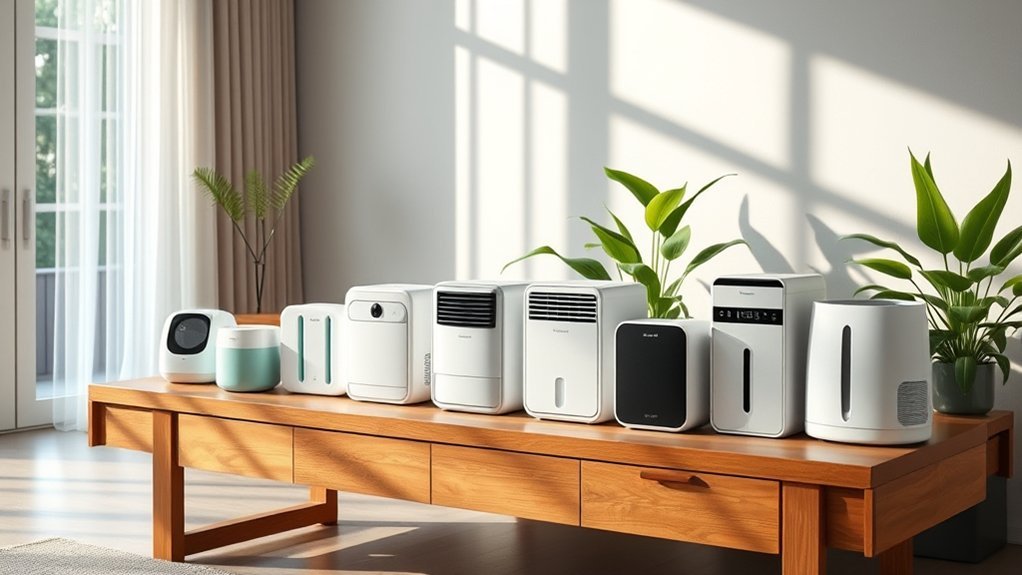
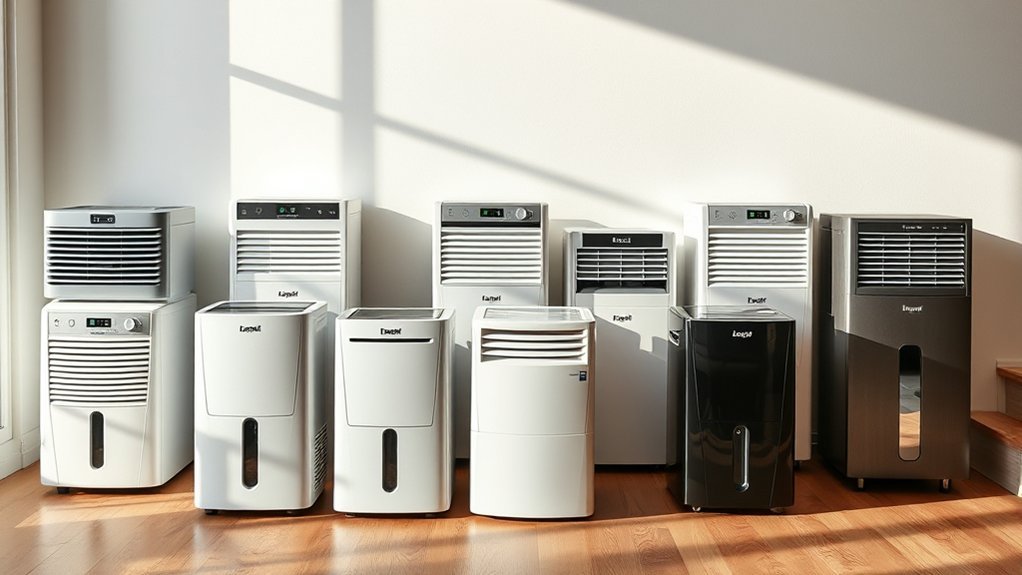
The strongest fits in this guide are the Yaufey 70 Pints Commercial Dehumidifier, Abestorm 70 Pint Crawl Space Dehumidifier, BaseAire Crawlspace Dehumidifier, and ARGENDON Crawlspace Dehumidifier. Each one targets damp, low-clearance, or hard-to-drain areas where ordinary room dehumidifiers may struggle.
Quick Verdict
Choose Yaufey if you need the biggest coverage and a commercial-style build for a large damp area. Choose Abestorm if you want the easiest crawl-space pick with a built-in pump. Choose BaseAire if compact installation matters more than maximum verified daily removal. Choose ARGENDON if you want both gravity drainage and pumped drainage in one flexible 70-pint-class unit.
Capacity Note Before You Buy
Not every “70-pint” dehumidifier label uses the same test condition. Some crawl-space models advertise a maximum or saturation rating while also listing a lower daily removal number under standard conditions. Compare the current Amazon listing, manual, and test-condition wording before you buy, especially if your space is very wet or very large.
Quick Comparison
|
Product |
Best For |
Drainage / Cold-Space Feature |
Check Details |
|---|---|---|---|
|
Yaufey 70 Pints Commercial Dehumidifier |
Large basements, warehouses, jobsite areas, and restoration spaces |
Gravity drain with included hose, high listed airflow, and commercial-style housing |
|
|
Abestorm 70 Pint Crawl Space Dehumidifier |
Crawl spaces and basements that need pumped drainage |
Built-in pump helps move water upward when gravity drainage will not work |
|
|
BaseAire Crawlspace Dehumidifier |
Tight crawlspaces, laundry rooms, and compact basement installs |
Compact body, auto-defrost support, and optional hanging setup |
|
|
ARGENDON Crawlspace Dehumidifier |
Medium damp spaces needing pump or gravity drainage |
Built-in pump plus gravity hose option for more placement flexibility |
How We Chose These 70-Pint Dehumidifiers
We focused on models that match the main buyer intent: damp basements, crawl spaces, garages, storage rooms, and work areas where low-temperature operation and drainage matter. The most important factors were auto-defrost support, continuous drainage, pump availability, airflow, coverage rating, compact installation options, and clear buyer-use cases.
We avoided ranking products by price, discounts, or review counts because those details can change quickly. Always confirm the current Amazon listing, manual, included accessories, and warranty terms before buying.
Yaufey 70 Pints Commercial Dehumidifier with Drain Hose
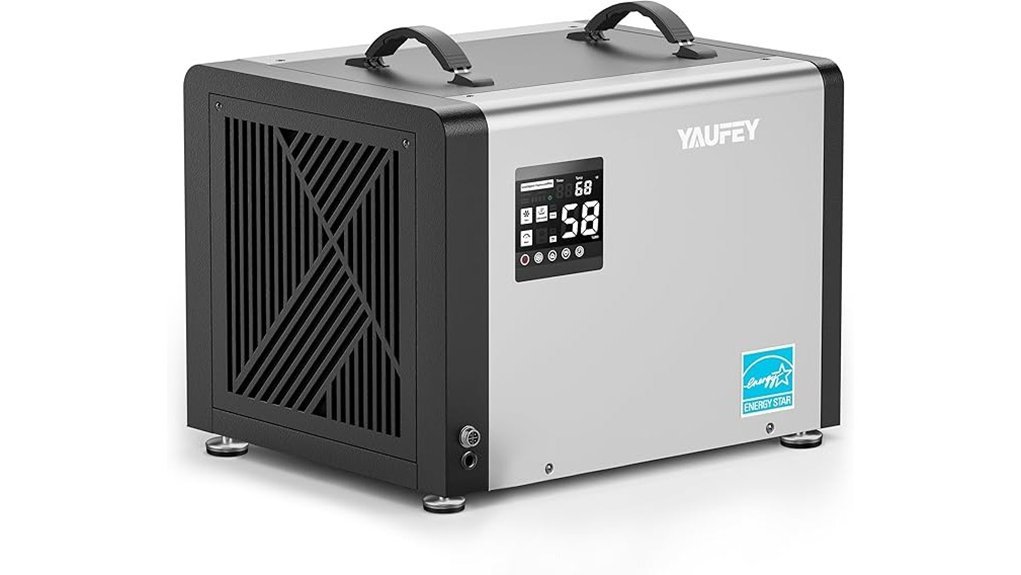
The Yaufey 70 Pints Commercial Dehumidifier is the best fit here if you need serious moisture control in a large basement, warehouse, construction area, or restoration space. The listed specs point to coverage up to 5,000 sq. ft., 70 pints per day, and 159 CFM airflow, which makes it more heavy-duty than a basic bedroom unit. Its included 6.56 ft drain hose and gravity drain port help support continuous operation when you have a nearby floor drain.
Why You’ll Like It: It focuses on high airflow, steady drainage, and a tough metal housing, so it suits demanding spaces where moisture returns quickly.
Best For: Property owners, contractors, and facility managers who need nonstop moisture removal in large spaces like basements, warehouses, construction sites, or restoration areas.
Who Should Avoid This: Skip it for small bedrooms, apartments, or areas without a practical drain point, since the commercial build may be more machine than you need.
Pros:
- Covers up to 5,000 sq. ft. with strong listed 70-pint-per-day dehumidifying power.
- Continuous drainage with a 6.56 ft hose and gravity drain port supports hands-off use.
- Heavy-duty metal construction makes sense for demanding environments.
Cons:
- Likely overkill for smaller rooms or light home use.
- Continuous use works best when you have access to a suitable drain.
- Commercial-style construction may be less convenient to move frequently.
Abestorm 70 Pint Crawl Space Dehumidifier with Pump
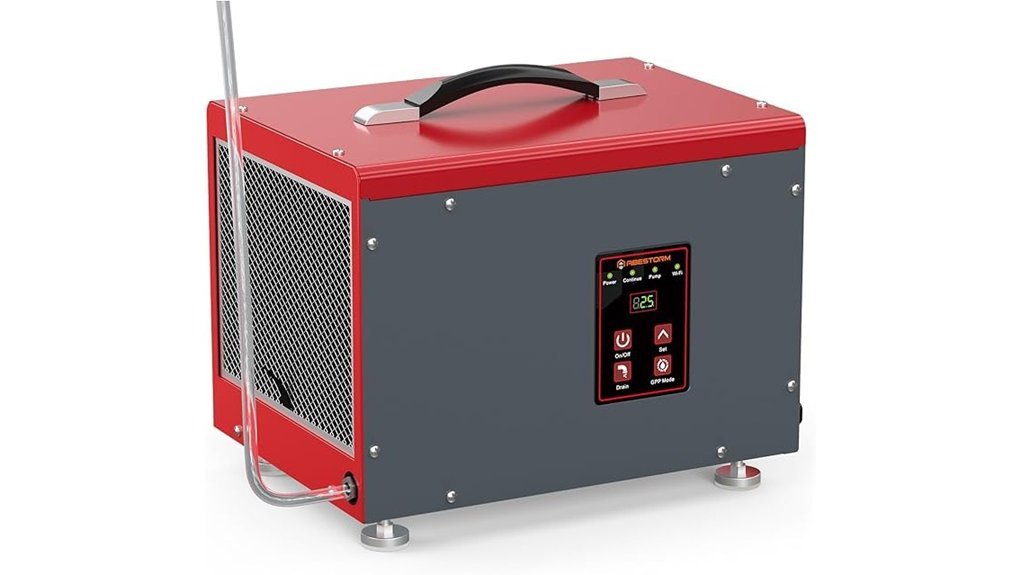
Built for crawl spaces and basements, this 70-pint-class Abestorm is a strong choice when gravity drainage will not work. It handles spaces up to 1,000 square feet, lets you set a target humidity, and includes auto-stop and auto-restart convenience. The biggest advantage is the built-in pump, which can lift water up to 19.6 feet, so you can send condensate to a sink, drain line, or higher discharge point instead of relying only on a floor drain.
Why You’ll Like It: The pump reduces the biggest crawl-space hassle: finding a drainage path that keeps the unit running without constant bucket checks.
Best For: Homeowners needing a reliable dehumidifier for crawl spaces, basements, or garages up to 1,000 sq. ft., especially where pumped drainage is helpful.
Who Should Avoid This: It may not be the best choice for very large open basements or commercial spaces that need higher airflow and broader coverage.
Pros:
- Listed as a 70-pint crawl-space dehumidifier for spaces up to 1,000 sq. ft.
- Built-in pump can lift water up to 19.6 feet for flexible drainage options.
- Includes auto-stop/auto-restart, automatic defrost, a 5-year warranty, and lifetime tech support.
Cons:
- At around 38 pounds, it may be difficult to move or install alone.
- Best suited for smaller to medium spaces, not whole-building moisture control.
- Capacity wording can vary by test condition, so compare the current listing details before buying.
BaseAire Crawlspace Dehumidifier with Pump (70-Pint Class)
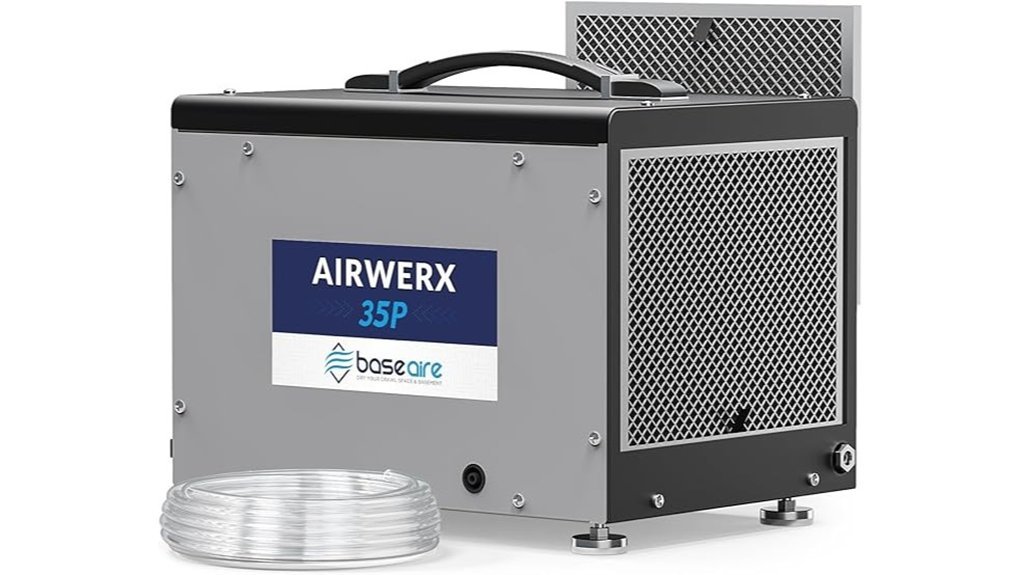
If you need a compact dehumidifier for tight crawlspaces, BaseAire’s 70-pint-class model fits low-clearance areas better than many bulky units. The listed specs also mention 35 pints of moisture removal per day with a maximum 70-pint capacity at saturation, so check the current Amazon listing carefully if you need a strict 70-pint daily removal rating under a specific test condition. Its slim 15.2 x 11.2 x 11.4-inch frame can work in crawlspaces, basements, laundry rooms, and garages where space is limited.
Why You’ll Like It: The smaller frame, sturdy handles, adjustable feet, and optional hanging setup make it easier to place in awkward areas where a larger machine may not fit.
Best For: Homeowners or property managers who care more about compact crawl-space installation than maximum whole-basement capacity.
Who Should Avoid This: Avoid it if your top priority is the highest verified daily pint removal in a large, very wet space.
Pros:
- Compact design fits tight, low-clearance spaces more easily.
- Auto defrost helps reduce frost interruptions in cold damp areas.
- Includes a 5-year warranty plus lifetime tech support for added peace of mind.
Cons:
- The listed capacity details are confusing, so buyers should confirm the current rating before ordering.
- Hanging kit is optional, so some installations may require an extra purchase.
- Smaller size may be less ideal for large, extremely damp spaces.
ARGENDON Crawlspace Dehumidifier with Pump, 70 Pint
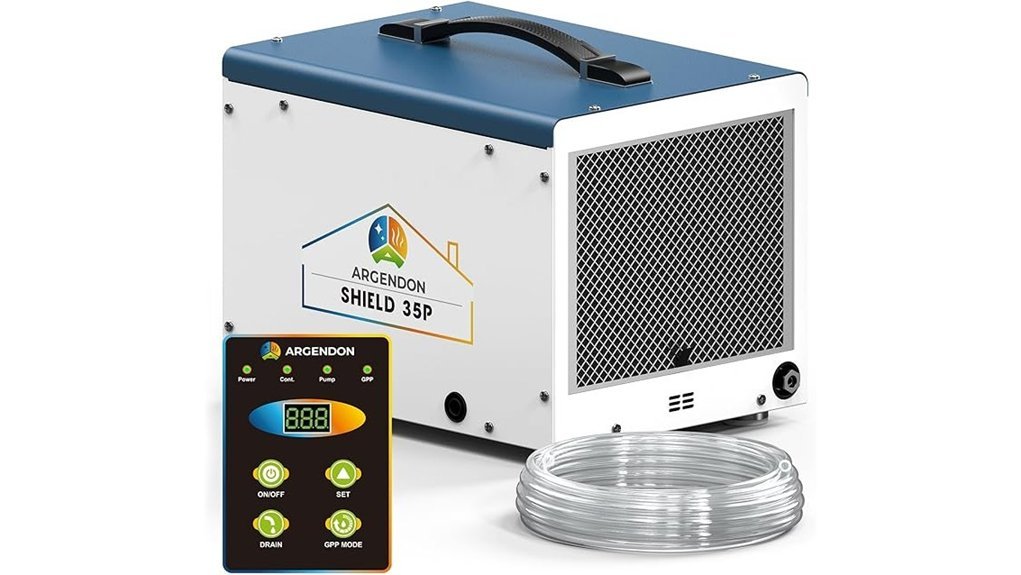
The ARGENDON Crawlspace Dehumidifier with Pump is a flexible 70-pint dehumidifier for medium damp spaces. It pulls up to 70 pints a day, moves air at 115 CFM, and is listed for spaces up to 1,000 sq. ft. You can use gravity drainage with the included 6.5-foot hose, or use the built-in pump to send water up to 19.6 feet. That dual-drain setup makes it useful when you are not sure whether a floor drain will be available.
Why You’ll Like It: You get pump drainage and gravity drainage in one unit, so placement is easier in basements, crawl spaces, garages, and utility areas.
Best For: Homeowners or property managers who need a flexible, high-capacity dehumidifier for basements, crawl spaces, or other medium-sized areas.
Who Should Avoid This: It is less compelling if you only need a simple plug-in unit for a small finished room with a bucket you can empty by hand.
Pros:
- 70-pint daily moisture removal and 115 CFM airflow handle spaces up to 1,000 sq. ft.
- Dual drainage options include a 6.5-foot hose and a built-in pump that can lift water up to 19.6 feet.
- Adjustable humidity control, easy-maintenance MERV-1 filter, and 5-year limited warranty.
Cons:
- Best suited for spaces up to 1,000 sq. ft., so it may not be enough for larger areas.
- MERV-1 filter offers basic filtration only.
- Pump and drainage setup may be more than some users need for simple dehumidification tasks.
Factors to Consider When Choosing a 70-Pint Dehumidifier for Cold Spaces
When you’re choosing a 70-pint dehumidifier for a cold basement, garage, or crawl space, don’t look at capacity alone. A good fit should have automatic defrost, a clear operating temperature range, drainage that matches your layout, and enough airflow for the room size. No dehumidifier can promise zero frost in every condition, but the right low-temperature features can reduce frost problems and keep moisture removal steadier.
Before You Buy Checklist
- Measure the area: Match the listed square-foot coverage to your actual basement, crawl space, or garage.
- Check drainage: Choose gravity drainage if you have a floor drain below the unit, or a pump if water needs to move upward.
- Confirm operating temperature: Look for auto-defrost and a stated low-temperature range for cold spaces.
- Compare capacity ratings: Pint ratings can vary by test condition, so compare the current listing details carefully.
- Check airflow: Higher CFM can help move damp air across a larger or more open space.
- Plan maintenance access: Make sure you can reach the filter, hose, pump outlet, and controls after installation.
Low-Temperature Operation
Low-temperature operation matters because a 70-pint dehumidifier can lose efficiency or frost up in cold spaces. In unheated basements, crawl spaces, or garages, look for units built for cool operation and paired with auto-defrost. Sensors that track room and coil temperature help the machine pause or adjust when frost risk rises. That matters because damp, cold air can still lead to musty smells, condensation, and possible mold concerns.
Auto-Defrost Capability
Auto-defrost capability should be high on your list because frost on the coils can reduce moisture removal and strain the compressor. In chilly spaces, automatic defrost cycles help the unit recover without constant manual checks. Compare the stated defrost temperature carefully, since some crawl-space models are designed for lower temperatures than standard room models.
Drainage Options
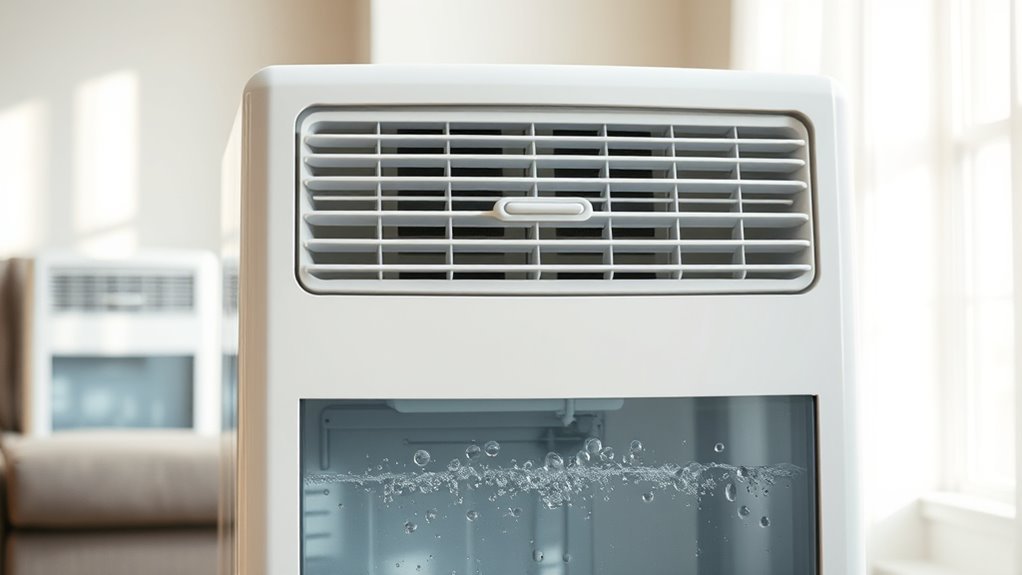
Drainage options are a big deal in a 70-pint dehumidifier, especially in a cold basement, garage, or crawl space where you do not want to empty a bucket by hand. Choose a gravity drain port and hose if the unit can drain downward. Choose a built-in pump if the water needs to move upward or across the room. Dual drainage methods are useful because they let you adapt the setup later.
Coverage Area
Coverage area matters just as much as capacity. You need to match the unit to the room size so it can control humidity without running nonstop. Many 70-pint models are rated for spaces from about 1,000 sq. ft. to several thousand sq. ft., but layout, ceiling height, air leaks, and dampness level all affect performance. For larger spaces, stronger airflow in CFM can help move damp air through the room more evenly.
Energy Efficiency
Energy efficiency should be high on your list because a basement or crawl-space dehumidifier may run for long stretches. Look for Energy Star certification when available, but still compare capacity, operating mode, and drainage setup. A model that is too small may run constantly, while a properly sized unit with adjustable humidity controls can shut off or cycle down once it reaches your target.
Humidity Target
For moisture control, the EPA recommends keeping indoor relative humidity below 60% and ideally between 30% and 50% when possible. A dehumidifier can help you reach that range, but it will not fix leaks, seepage, poor grading, or standing water by itself. Use a separate hygrometer if you want a more reliable room reading. You can read more in the EPA’s guide to mold, moisture, and indoor humidity.
Frequently Asked Questions
How Often Should I Clean the Air Filter?
You should clean the air filter every two to four weeks if you run the unit often. Check it more often in dusty basements, crawl spaces, workshops, or restoration areas. Rinse or vacuum it gently, then let it dry completely before reinstalling it.
Can a 70 Pint Dehumidifier Run in a Basement?
Yes, a 70-pint dehumidifier can run in a basement if the space matches the unit’s coverage rating and operating temperature range. For the easiest setup, use continuous drainage and place the unit where air can move freely around the intake and exhaust.
What Humidity Level Prevents Mold Growth Best?
You’ll usually get the best mold-prevention support by keeping indoor relative humidity below 50% when possible. The EPA recommends keeping indoor humidity below 60% and ideally between 30% and 50%. Fix leaks and water intrusion too, because humidity control alone cannot solve an active moisture source.
Do These Units Work With Smart Plugs?
Some dehumidifiers can work with a smart plug, but you should only do it if the unit restarts safely after power loss and the smart plug is rated for the appliance’s electrical load. For pump models or high-draw units, check the manual first. A built-in timer, humidity setting, or smart dehumidifier feature is usually safer than forcing control through an undersized plug.
How Noisy Are 70 Pint Dehumidifiers?
Many 70-pint dehumidifiers sound like a strong fan. Noise depends on fan speed, compressor design, room echo, and whether the unit sits on a hard floor. If noise matters, look for a published decibel rating and use lower fan settings when humidity is under control.
Is a Pump Worth It on a 70 Pint Dehumidifier?
A pump is worth it if the water has to travel upward to a sink, drain pipe, window, or higher discharge point. If you have a floor drain directly below the unit, gravity drainage is simpler and usually has fewer parts to maintain.
Is a 70 Pint Dehumidifier Too Large for a Small Room?
It can be. A 70-pint unit is usually better for basements, crawl spaces, garages, and larger damp rooms. In a small bedroom or bathroom, a lower-capacity unit may be quieter, easier to place, and more efficient for the space.
What Is the Difference Between a Crawl Space Dehumidifier and a Room Dehumidifier?
A crawl-space dehumidifier usually has a lower-profile body, continuous drainage, auto-defrost, stronger housing, and controls designed for less accessible spaces. A room dehumidifier is usually easier to move and empty, but it may not handle cold, cramped, or hard-to-drain areas as well.
Does Auto-Defrost Mean the Dehumidifier Will Never Freeze?
No. Auto-defrost helps reduce frost buildup on the coils, but it does not make the unit freeze-proof. If the space falls below the model’s operating temperature range, the unit may still stop, defrost often, or remove less moisture.
Conclusion
If you want a 70-pint dehumidifier that is less likely to freeze up in a cool, damp space, prioritize auto-defrost, proper drainage, enough airflow, and a realistic coverage rating. Yaufey is the strongest fit for large demanding areas, Abestorm is the easiest pick when you need pumped crawl-space drainage, BaseAire is useful for tight installations, and ARGENDON offers flexible pump or gravity drainage. Match the unit to your room size, drainage path, and temperature range, and you’ll have a much better chance of keeping your space drier with fewer interruptions.