Last updated: August 2026
Choosing the best dehumidifier in Korea starts with electrical compatibility, verified performance, and local support. A model designed for another country may have attractive capacity figures, but it should not be connected to Korean mains unless its rating label clearly confirms that it is suitable for 220V, 60Hz.
This guide explains how to compare Korea-ready dehumidifiers by moisture-removal capacity, room conditions, drainage, noise, operating temperature, energy use, certification, and warranty. It does not recommend unverified imported 110–120V models.
Quick verdict
Choose a locally supported dehumidifier whose rating label states 220V and 60Hz. Check for an appropriate KC mark or certification number, then compare rated capacity in liters per day, drainage options, noise, operating temperature, energy consumption, and Korean warranty support.
Important Korea electrical check
A plug adapter changes only the plug shape. It does not convert a 110–120V dehumidifier for safe operation on a 220V supply. Avoid relying on an imported compressor model, travel adapter, or transformer unless the manufacturer explicitly confirms the complete setup. A native Korea-ready appliance is normally the safer and simpler choice.
Selection note
Do not rank dehumidifiers by advertised floor area alone. This guide prioritizes electrical suitability, certification, moisture-removal capacity, rating conditions, drainage, noise, low-temperature performance, maintenance, and local service.
Quick Dehumidifier Comparison Checklist
| Feature | What to Check | Why It Matters |
|---|---|---|
| Electrical rating | The appliance label should state 220V and 60Hz, or a compatible range that clearly includes both. | Incorrect voltage can damage the appliance and create an electrical hazard. |
| Safety information | Look for the KC mark, certification details, Korean instructions, and importer or manufacturer information. | These details help confirm that the model is intended for the Korean market. |
| Rated capacity | Compare liters removed per day under the same temperature and humidity test conditions. | Headline capacities measured under different conditions are not directly comparable. |
| Technology | Choose among compressor, desiccant, and thermoelectric designs based on room temperature and moisture load. | Each technology performs differently in warm rooms, cold spaces, and small enclosed areas. |
| Humidity control | Look for an adjustable humidistat, automatic restart, and a readable humidity display. | Automatic control prevents unnecessary operation and excessive drying. |
| Drainage | Compare tank size, full-tank shutoff, gravity drainage, hose connection, and pump availability. | A suitable drainage method reduces manual emptying and overflow risk. |
| Noise | Check rated noise at each fan speed rather than relying only on “quiet” marketing. | Noise is especially important in bedrooms, study areas, and small apartments. |
| Operating temperature | Check the minimum operating temperature and whether auto-defrost is included. | Compressor performance can decline in cooler rooms. |
| Energy use | Compare rated watts and moisture removed per unit of electricity. | The lowest-wattage unit is not always the most efficient if it removes very little water. |
| Local support | Confirm Korean warranty coverage, repair options, replacement filters, and return terms. | Imported-model warranties may not apply in Korea. |
Factors to Consider When Choosing a Dehumidifier in Korea
1. Confirm the Voltage, Frequency, and Plug
Read the rating label on the actual appliance or its power adapter before buying. It should explicitly include 220V and 60Hz. Do not assume that international shipping, a similar-looking plug, or a marketplace listing makes a product electrically compatible.
Dehumidifiers with compressors can draw more power during startup than during normal operation. This is another reason to choose a model designed for Korean household electricity rather than relying on a small travel transformer.
2. Check KC Certification and Local Labeling
Look for the KC mark, certification number, Korean-language safety information, model number, importer or manufacturer details, rated power, and refrigerant information where applicable. The certification number should match the model you are purchasing rather than a similar product from the same brand.
An optional performance mark or independently verified test can also be useful when it reports dehumidification capacity, power consumption, and noise under defined conditions.
3. Match Capacity to the Moisture Load
Room size is only one part of capacity selection. Also consider:
- Whether the room has visible condensation or only mild humidity.
- Whether wet laundry is regularly dried indoors.
- How often doors and windows are opened.
- Whether the space connects to a hallway or another room.
- Whether there is water intrusion, a plumbing leak, or damp building material.
- The normal room temperature.
A small bedroom with mild summer humidity may need much less capacity than a laundry area, semi-basement, or large open-plan apartment. When comparing models, use the manufacturer’s rated liters-per-day capacity and confirm the test conditions used for that rating.
Buyer tip: If two models advertise the same room coverage but one removes far more water per day under the same test conditions, the higher-capacity model is usually better suited to a persistent moisture problem.
4. Choose the Right Dehumidifier Technology
| Type | Best Use | Main Limitation |
|---|---|---|
| Compressor | Bedrooms, living rooms, laundry areas, and other warm or moderately warm spaces with meaningful moisture loads. | Performance can decline at lower temperatures, and compressor noise may be noticeable. |
| Desiccant | Cooler rooms, storage areas, or spaces where low-temperature performance is important. | It can use more electricity and may release warmer air into the room. |
| Thermoelectric | Closets, cabinets, small bathrooms, RVs, or other enclosed areas with light moisture. | Its moisture-removal rate is normally much lower than that of a compressor unit. |
5. Treat Room-Coverage Claims Carefully
A large square-foot number does not guarantee strong dehumidification. Some compact models advertise coverage of hundreds or even thousands of square feet while removing only a small amount of water each day.
Compare the following before accepting a coverage claim:
- Rated water removal per day.
- Temperature and relative humidity used for the rating.
- Airflow and fan-speed information.
- Whether the room will remain closed during operation.
- Whether the intended use is maintenance drying or correction of severe dampness.
6. Compare Drainage Options
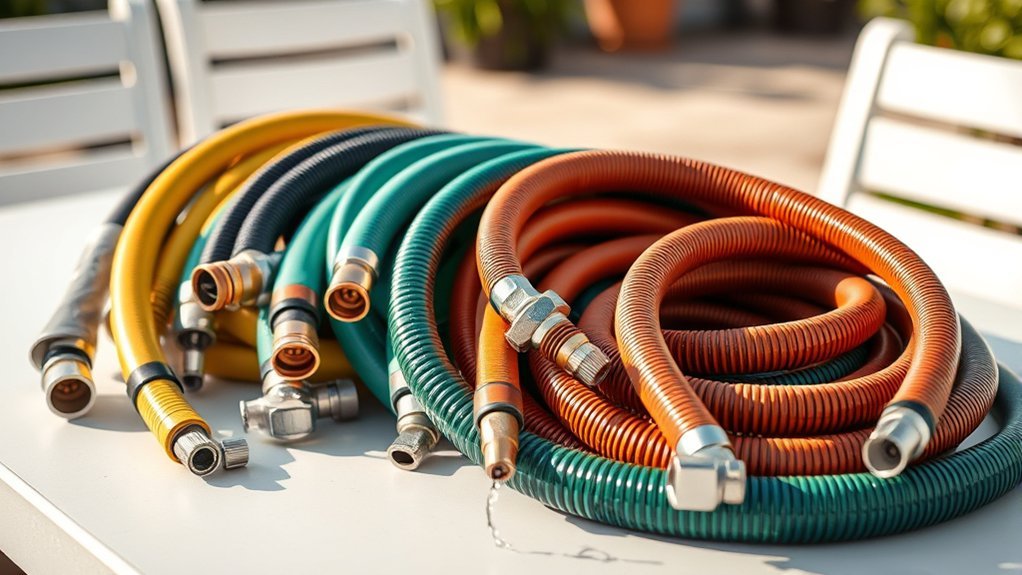
Manual tank drainage is suitable when the unit is easy to reach and does not collect water rapidly. For laundry rooms, semi-basements, or unattended operation, a continuous drain connection can be more convenient.
Before using gravity drainage, confirm that:
- The hose connection is included or uses a readily available size.
- The hose can slope downward without loops or raised sections.
- The drain is below the outlet on the dehumidifier.
- The hose cannot be crushed, frozen, or accidentally pulled loose.
A built-in pump is useful when water must move upward to a sink or higher drain. Verify the pump’s maximum lift height and whether the pump hose is included.
7. Consider Noise in Bedrooms and Apartments
Published noise figures should identify the fan speed or operating mode used during testing. A sleep setting may reduce fan noise, but the compressor can still cycle on and off.
For a bedroom or study area, compare:
- Noise on the lowest and highest fan settings.
- Whether indicator lights can be turned off.
- Whether button sounds can be muted.
- Whether the fan continues running after the compressor stops.
- Whether vibration can travel through a hard floor.
Placing the unit on a level surface and leaving the manufacturer’s required clearance around the air intake and outlet can reduce vibration and airflow noise.
8. Compare Efficiency, Not Just Wattage
A very small dehumidifier may consume fewer watts but also remove much less water. Compare energy use with rated moisture removal rather than selecting the model with the lowest wattage alone.
Useful efficiency features include:
- An adjustable humidistat.
- Automatic compressor cycling.
- A timer.
- Automatic restart after a power interruption.
- A washable filter.
- A clear filter-cleaning reminder.
- An efficient laundry or continuous mode when genuinely needed.
Do not run the unit with doors or windows open unless ventilation is part of a deliberate drying plan. Otherwise, it may continuously process humid outdoor air.
9. Check Operating Temperature and Auto-Defrost
Compressor dehumidifiers can develop frost on the evaporator in cooler conditions. Auto-defrost pauses normal moisture removal while allowing the frost to clear.
For a cool storage room, utility area, or semi-basement, verify the manufacturer’s minimum operating temperature. A desiccant model may be more appropriate when the room regularly falls below the effective range of a compressor unit.
10. Confirm Korean Warranty and Service
Ask the seller who handles repairs in Korea and whether the warranty applies to the exact sales channel. Check whether replacement filters, tanks, drain adapters, pumps, and other parts are available locally.
For an imported appliance, confirm all of the following in writing before purchasing:
- Voltage and frequency compatibility.
- Plug and grounding arrangement.
- KC certification or applicable compliance information.
- Korean warranty coverage.
- Return shipping responsibility.
- Availability of service and replacement parts.
Before You Buy: Korea Dehumidifier Checklist
- Does the rating label clearly state 220V and 60Hz?
- Is there a KC mark or verifiable certification number for the exact model?
- Is the plug suitable for the intended Korean outlet and properly grounded?
- Is capacity stated in liters per day with test conditions?
- Is the technology suitable for the room temperature?
- Does the unit have an adjustable humidistat?
- Can the tank be removed and cleaned easily?
- Is a drain hose included, and will gravity drainage work in your room?
- Does the noise rating cover the mode you intend to use?
- Are the filter and air intake easy to access?
- Is there Korean warranty and repair support?
- Are return terms clear if the unit is noisy, damaged, or incorrectly specified?
Placement and Use Tips
- Place the unit on a level, stable surface.
- Maintain the clearance specified in the manual around air inlets and outlets.
- Keep the appliance away from direct water spray, bathtubs, and wet floors.
- Close exterior doors and windows while dehumidifying, unless ventilation is intentionally required.
- Use a separate hygrometer when you want to verify the built-in humidity display.
- Do not block the filter with curtains, furniture, bedding, or stored items.
- Keep the power cord and plug visible and accessible.
- Do not use an extension cord unless the manufacturer explicitly permits it.
- Fix plumbing leaks, rain penetration, or groundwater problems instead of relying only on a dehumidifier.
How to Maintain a Dehumidifier
Regular maintenance supports airflow, efficiency, and reliable drainage. Follow the model’s manual, but the usual tasks include:
- Emptying and rinsing the water tank before residue or odor develops.
- Cleaning the air filter at the recommended interval.
- Checking the intake and exhaust for dust or obstructions.
- Inspecting a continuous drain hose for bends, buildup, or leaks.
- Keeping the humidity sensor area clean and unobstructed.
- Allowing a washable filter to dry fully before reinstalling it.
- Unplugging the appliance before routine cleaning.
- Arranging qualified service if the cord, plug, refrigerant system, or internal electrical parts are damaged.
Frequently Asked Questions
Can I Use a 110–120V Dehumidifier in Korea?
Not by connecting it directly to a normal 220V outlet. Choose a model whose rating label explicitly supports Korea’s voltage and frequency. A native 220V model with local certification and support is generally preferable to operating a compressor appliance through an external transformer.
Does a Plug Adapter Convert the Voltage?
No. A basic plug adapter changes the physical plug connection only. It does not convert 220V electricity to 110–120V. Always check the appliance label before connecting it.
How Do I Choose the Right Dehumidifier Capacity?
Consider room area, ceiling height, temperature, severity of dampness, indoor laundry drying, door and window use, and whether the space connects to other rooms. Compare liters removed per day under equivalent test conditions rather than relying only on advertised square-foot coverage.
Does an Energy Star Label Prove That a Dehumidifier Is Suitable for Korea?
No. An energy-efficiency label does not replace voltage, frequency, plug, Korean certification, or local warranty checks. Confirm every electrical and compliance detail separately.
Which Type Works Best in a Cool Room?
A desiccant dehumidifier may perform better in a consistently cool space. A compressor model can still be appropriate when its operating-temperature range and auto-defrost system match the room conditions.
Do I Need Continuous Drainage?
It is not essential for every room. A tank may be sufficient for occasional bedroom or living-room use. Continuous drainage is more convenient when the unit collects water quickly, runs for long periods, or operates in a laundry area or other difficult-to-monitor space.
Can a Dehumidifier Fix Damp Walls?
A dehumidifier can reduce moisture in the air and help dry materials after the moisture source is controlled. It cannot repair a plumbing leak, failed waterproofing, rain penetration, rising damp, or damaged building materials.
Can I Use a Dehumidifier for Drying Laundry Indoors?
Yes, when the appliance is approved for the room and positioned safely. Close the room, leave space around the laundry for airflow, and keep wet clothing away from the appliance, plug, and cord. A dedicated laundry mode can be useful, but rated capacity and airflow remain more important than the mode name.
How Often Should the Filter Be Cleaned?
Follow the manufacturer’s schedule and check it more frequently in dusty rooms or during heavy use. Reduced airflow, increased noise, or longer operating times can indicate that the filter or air intake needs attention.
Conclusion
The best dehumidifier for Korea is not simply the model with the largest tank, highest square-foot claim, or most decorative features. Start by confirming 220V and 60Hz compatibility, appropriate Korean certification information, and local warranty support.
After those checks, compare rated moisture removal in liters per day, room temperature, humidistat controls, drainage, noise, energy use, maintenance, and replacement-part availability. A locally supported model with clear specifications is usually a better long-term choice than an unverified imported appliance.
Final recommendation
Choose a Korea-ready 220V/60Hz dehumidifier with verifiable certification, enough rated capacity for your actual moisture load, automatic humidity control, practical drainage, and accessible local service. Do not buy until the seller or manufacturer can confirm those details for the exact model.