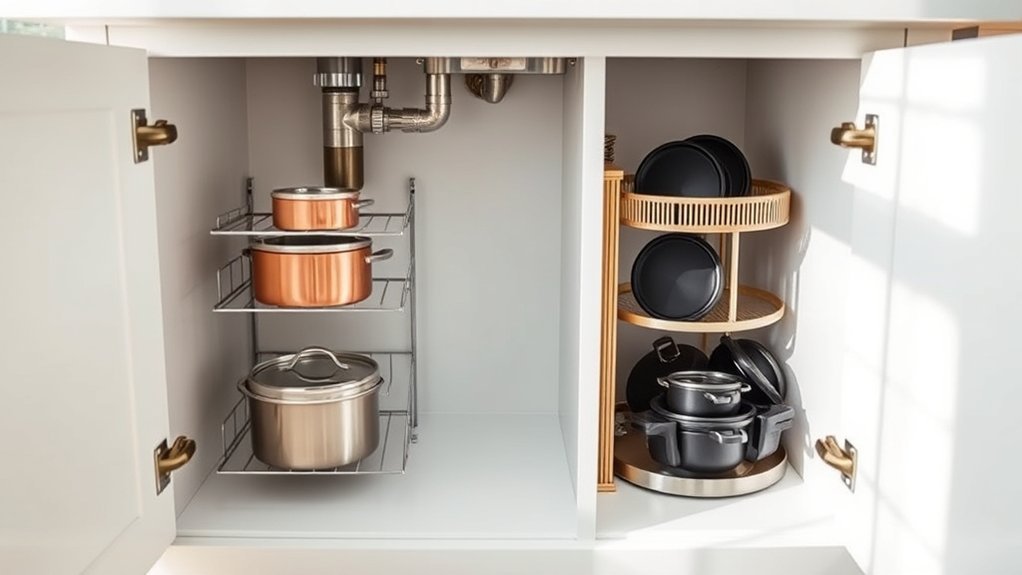
Under-sink cabinets are difficult places to organize cookware because pipes, drain traps, shutoff valves, and garbage disposals divide the usable space. The best under-sink pot organizers use expandable frames, movable dividers, vertical tiers, or removable shelf panels to keep pots, pans, lids, trays, and cutting boards accessible without blocking plumbing. This guide compares six relevant options for wide cabinets, compact spaces, central pipework, and mixed cookware collections.
- Measure the cabinet interior, door opening, plumbing, and disposal—not just the cabinet’s advertised size.
- Use steel frames for heavier cookware and lightweight divider racks mainly for lids, trays, and nonstick pans.
- Treat seller-stated load limits as distributed-load guidance and confirm the current listing before storing cast iron.
Quick Comparison of Under-Sink Pot Organizers
| Organizer | Best For | Key Adjustment | Main Caution | Amazon |
|---|---|---|---|---|
| Mustorn Expandable 2-Tier Organizer BEST OVERALL |
Mixed pots, pans, lids, trays, and boards | 17.7–30.3-inch width, six height levels, 12 dividers | Needs about 17 inches of clear height | Check Availability |
| 2-Tier Expandable Pot and Pan Organizer BEST FOR WIDE CABINETS |
Wide cabinets and mixed shelf-plus-divider storage | 18.9–33.5-inch width and two height positions | Seller-stated load claim is not independently verified | Check Availability |
| GEMWON Expandable 2-Tier Adjustable Shelf BEST FOR PLUMBING CLEARANCE |
Cabinets with pipes running through the middle | 16.5–30.7-inch length, removable panels, separate tier heights | Fixed 11.2-inch depth and inconsistent capacity wording | Check Availability |
| SOGAPULY Organizer with 10 Dividers BEST FOR LARGE COLLECTIONS |
Many pans, lids, trays, and cutting boards | 20.9–34.5-inch width and 19.1-inch overall height | Requires a large cabinet and evenly distributed loading | Check Availability |
| Silanit Expandable Rack with 7 Dividers BEST COMPACT DIVIDER |
Lids, baking sheets, boards, and lightweight pans | About 13–22-inch expandable length | Plastic construction is not ideal for heavy cast iron | Check Availability |
| AIYoo Adjustable 3-Tier Pot and Pan Rack BEST VERTICAL OPTION |
Narrow cabinets with at least 17 inches of clear height | Three adjustable tiers on a 10.6 x 9-inch footprint | Tall frame may conflict with drains or disposals | Check Availability |
Mustorn Expandable 2-Tier Under Cabinet Pot & Pan Organizer (Black)
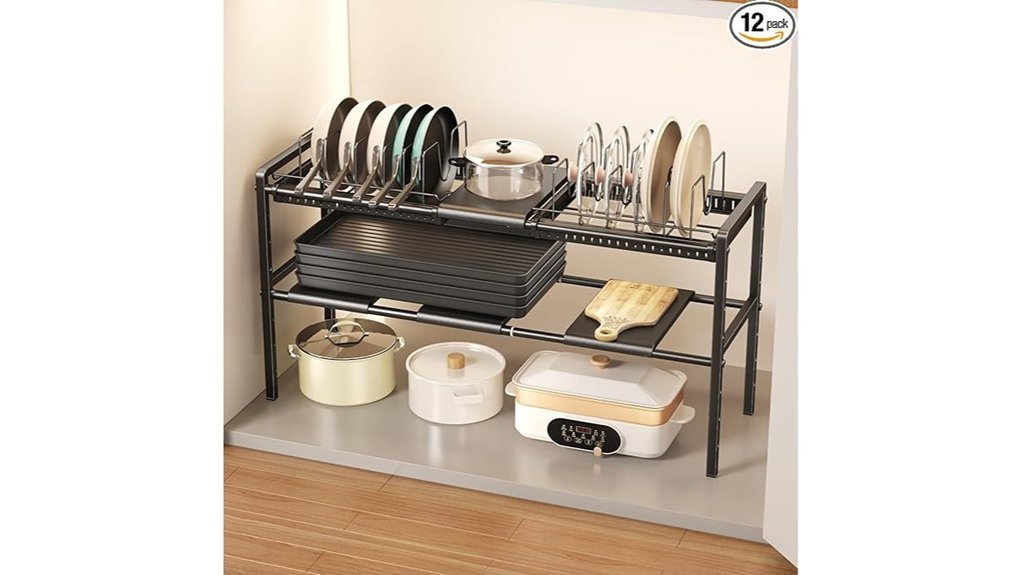
Best overall for adjustable cookware storage: The Mustorn organizer expands from 17.7 to 30.3 inches, measures 9.6 inches deep and about 17 inches high, and offers six height levels. This combination gives buyers more control than a fixed rack when pipes, shelf height, or mixed cookware sizes make cabinet planning difficult.
Two removable pot racks use 12 dividers in total, plus handle-support guardrails. The listing suggests room for up to 10 cookware pieces, but real capacity depends on pan thickness, lid handles, and how much of the frame must be left open for plumbing.
Why You’ll Like It: It can create narrow slots for lids and trays while leaving wider spaces for frying pans or shallow pots.
Who Should Buy This: Choose it for a medium-to-wide cabinet with enough vertical clearance and a mixed collection of pans, lids, boards, and bakeware.
Who Should Avoid It: Skip it if the cabinet has less than about 17 inches of clear height or a large disposal occupies the center.
Pros:
- Expandable width works with many cabinet layouts
- Six height levels provide useful vertical flexibility
- Twelve removable dividers support a customized arrangement
Cons:
- Requires assembly with included hardware
- May not fit low under-sink cabinets
- Cast iron should be loaded cautiously because a dependable current load rating is not clearly stated
Under Sink 2-Tier Expandable Pot and Pan Organizer
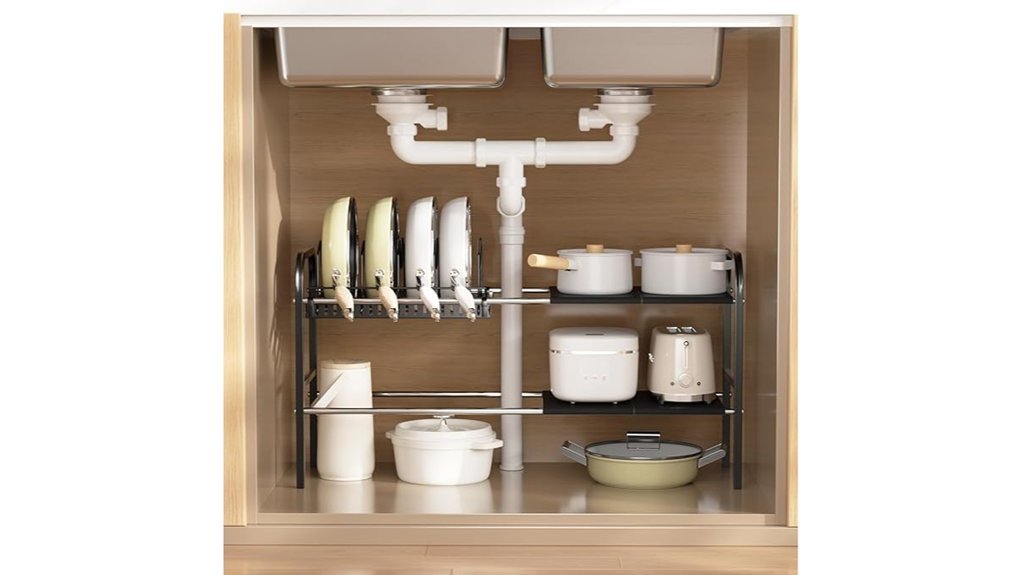
Best expandable option for wide cabinets: This JIYUNII organizer expands from 18.9 to 33.5 inches and combines four removable shelf panels with one movable pot rack and four dividers. Its shelf height has two adjustment positions spaced about 2.2 inches apart.
The frame uses carbon steel and PP components. The listing makes a high load-capacity claim, but that figure has not been independently verified here. Keep heavy pieces low, distribute weight across the frame, tighten every connection, and confirm that the extended rack does not wobble before loading cookware.
Why You’ll Like It: The extra-wide adjustment range and mixed shelf/divider layout can organize pans, lids, boards, and small pots in one structure.
Who Should Buy This: It suits buyers with a wide cabinet who want both flat shelf space and vertical divider slots.
Who Should Avoid It: Choose a smaller rack if the cabinet is narrow, plumbing hangs low, or the frame must be extended to its limit to fit.
Pros:
- Wide 18.9–33.5-inch expansion range
- Movable shelf panels and dividers help work around pipes
- Metal-and-plastic construction is more substantial than a simple plastic lid rack
Cons:
- Only two shelf-height positions are available
- Seller-stated load capacity should be treated cautiously
- Maximum extension can make careful leveling and balanced loading more important
GEMWON Expandable Under Sink Organizer 2-Tier Adjustable Shelf
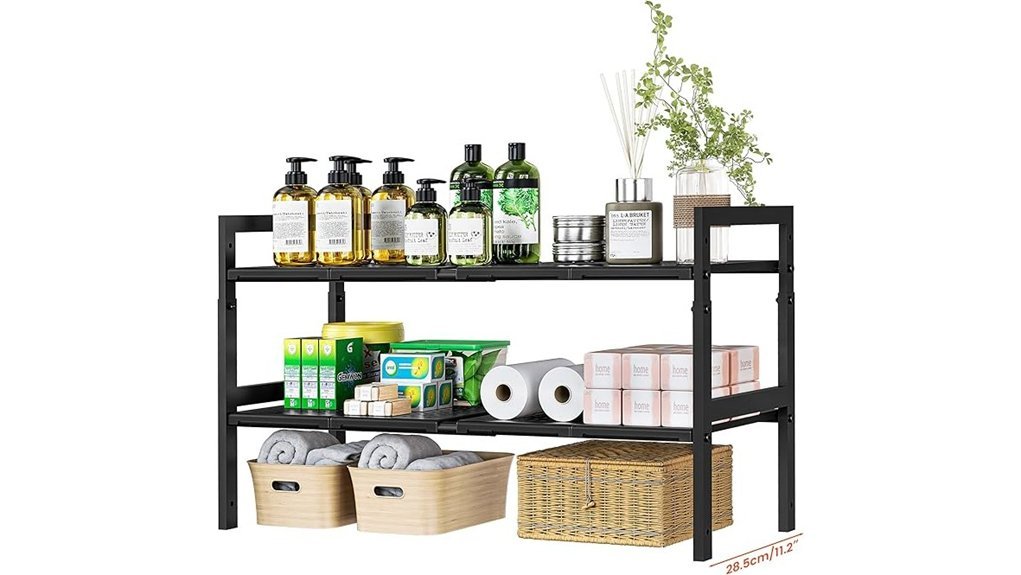
Best shelf-style option for plumbing clearance: This organizer expands from 16.5 to 30.7 inches, has a fixed 11.2-inch depth, and adjusts from about 13.2 to 16.7 inches high. Eight removable ABS panels can be left out around U-shaped or P-shaped pipes, while the two tiers use separate height settings.
The listing currently gives a 50-pound capacity figure, but its wording is not fully consistent about whether that applies to the whole unit or each layer. Treat it as seller-stated distributed-load guidance, confirm the current product page, and avoid placing concentrated cast-iron weight on one panel.
Why You’ll Like It: Removable panels make it one of the easiest options to shape around central plumbing without cutting or drilling the cabinet.
Who Should Buy This: Choose it when pipes occupy the center and you need flat shelf space for pots, pans, or other kitchen items.
Who Should Avoid It: The fixed 11.2-inch depth may not fit shallow cabinets, and shelf storage is less effective than dividers for keeping thin lids upright.
Pros:
- Expandable length with independently adjustable tiers
- Eight removable panels help the frame bypass pipes
- Open panel design makes small spills easier to notice and wipe
Cons:
- Requires accurate measurements before purchase
- Only preset height positions are available
- Capacity wording should be confirmed before storing heavy cookware
SOGAPULY Pots and Pans Organizer Under Cabinet with Dividers (Black)
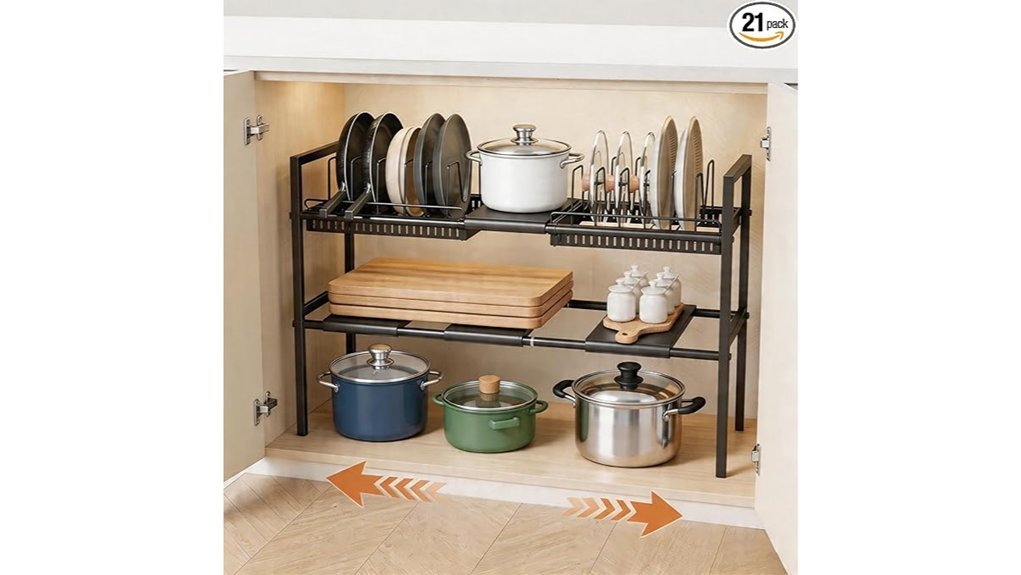
Best for a large cookware collection: This SOGAPULY organizer uses two pot racks with 10 dividers and expands from about 20.9 to 34.5 inches. It is approximately 9.7 inches deep and 19.1 inches high, making it the largest option in this guide and a better match for roomy cabinets than compact sink bases.
The seller states that the rack can hold up to 40 pounds when weight is distributed and warns against placing more than 20 pounds at one fixed point. Use those figures as seller guidance rather than an independent test result, and place dense cookware low and near the center.
Why You’ll Like It: The broad frame and multiple slots can separate pans, lids, trays, and cutting boards instead of stacking them together.
Who Should Buy This: It is best for a wide, tall cabinet with a large mixed cookware collection and plumbing that leaves room for a 19.1-inch frame.
Who Should Avoid It: Skip it for compact cabinets, low drain traps, or spaces where a garbage disposal reduces the available width.
Pros:
- Two-tier layout creates many vertical storage slots
- 20.9–34.5-inch expansion range suits wide cabinets
- Free-standing setup does not require cabinet drilling
Cons:
- Large 19.1-inch height limits compatibility
- Heavy cookware must be distributed across the frame
- Two tiers can reduce clearance for tall stockpots or Dutch ovens
Silanit Expandable Pot and Pan Organizer Rack with 7 Dividers (White)
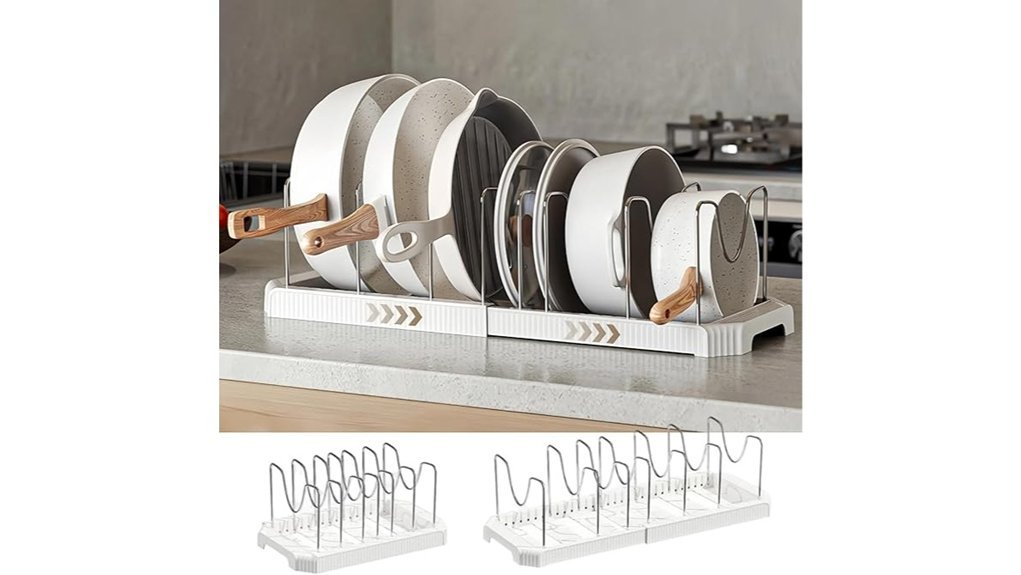
Best compact divider rack: This Silanit rack expands from about 13 to 22 inches, measures roughly 7.87 inches deep and 5.51 inches high, and includes seven movable dividers. It is a practical option for lids, nonstick pans, cutting boards, and bakeware in a small under-sink or lower cabinet.
U-shaped grooves help items stay upright, while the low profile preserves room above the rack for pipes. Its plastic construction is washable and easy to move, but no dependable heavy-load specification is provided, so it should not be treated as a cast-iron organizer.
Why You’ll Like It: It is simple to reconfigure, requires no permanent installation, and uses less vertical space than a multi-tier frame.
Who Should Buy This: Choose it for lightweight pans, lids, trays, and boards in a rental kitchen or compact cabinet.
Who Should Avoid It: A steel rack is a better choice for several heavy skillets, Dutch ovens, or stockpots.
Pros:
- Expands to fit a range of compact cabinet widths
- Seven movable dividers customize the spacing
- Low-profile design preserves plumbing clearance
Cons:
- Plastic construction is less suitable for heavy cookware
- Low height may not stabilize deep pots
- Best used on a flat cabinet base
AIYoo Black Adjustable 3-Tier Pots and Pans Organizer Rack
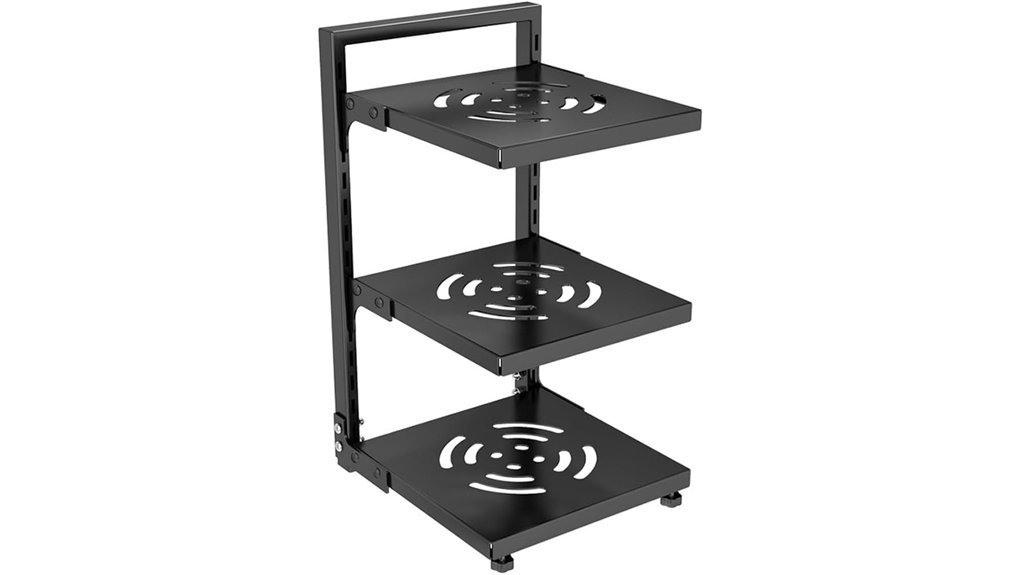
Best vertical rack for narrow cabinets: This three-tier carbon-steel organizer has a 10.6 x 9-inch footprint and stands about 17 inches high. Each tier can be repositioned, allowing buyers to use cabinet height instead of stacking pans directly on the floor.
The listing states a capacity of 44 pounds per tier. Because that is a seller claim rather than an independent test, confirm the current listing and frame stability before loading dense cookware. Keep the heaviest pan on the lowest tier and make sure the base sits flat.
Why You’ll Like It: The narrow footprint keeps individual pans accessible while leaving more floor space for pipes or other items.
Who Should Buy This: Choose it when the cabinet is narrow but has at least 17 inches of unobstructed height.
Who Should Avoid It: It may not clear low plumbing, deep drain traps, or garbage disposals, and the 9-inch width limits very large cookware.
Pros:
- Three adjustable tiers separate cookware vertically
- Narrow footprint works in compact cabinets
- Carbon-steel frame is more rigid than a lightweight plastic divider
Cons:
- Tall frame can conflict with plumbing
- Compact shelf dimensions may not support oversized cookware well
- Coated steel should be dried after leaks or spills
Factors to Consider When Choosing an Under-the-Sink Pot Organizer
The right organizer must fit through the cabinet opening, sit flat inside the cabinet, clear the plumbing, support the intended cookware, and stay stable when one item is removed. Use the checklist below before buying.
Size and Fit
Measure the cabinet’s interior width, depth, and height—not just the door opening. Record the location of supply lines, drain pipes, disposal units, hinges, and any center support. Compare those measurements with both the organizer’s minimum and maximum dimensions.
An expandable rack is useful only when it can remain stable at the width you need. Leave enough clearance to remove large pans without striking the cabinet frame.
Material Quality
Steel frames are generally better for heavy cookware, while plastic racks are easier to clean and move. Carbon steel is not automatically rust-proof, so look for a protective coating and wipe the frame dry after leaks or spills. Reinforced joints, stable feet, and smooth divider edges also help protect cookware.
Weight Capacity
Check whether the listed capacity applies per tier, per shelf, or to the entire organizer. Also check whether the rating assumes evenly distributed weight. Place dense cookware low and near the center, and avoid concentrating several cast-iron pieces on one divider or edge.
Adjustable Features
Expandable width, height settings, removable panels, and movable dividers make an organizer more useful as your cookware collection changes. For mixed storage, choose a model that can create narrow slots for lids and wider spaces for frying pans or baking dishes.
Installation Ease
Many free-standing organizers assemble with basic included hardware and do not require drilling into the cabinet. Read the instructions before loading the rack, tighten every connection, and confirm that sliding or telescoping parts lock securely.
Plumbing Clearance
C-shaped frames and shelves with removable panels are the easiest designs to fit around plumbing. Leave space to reach shutoff valves and pipe fittings. A rack that technically fits but blocks maintenance access is not a good choice.
Divider Options
Adjustable and removable dividers provide more flexibility than fixed slots. Look for coated or rounded contact points that reduce scratching, and make sure the spacing can support the thickness of your pan handles, lids, and trays.
Rust Resistance
Under-sink areas are vulnerable to humidity, condensation, and leaks. Protective coatings, plastic panels, and easy-to-clean surfaces can slow corrosion, but no organizer should be left wet. A waterproof cabinet liner beneath the rack can make leaks easier to spot and clean.
Before You Buy Checklist
- Measure interior width, depth, height, and door clearance
- Map pipes, valves, disposal units, hinges, and outlets
- Weigh or estimate the heaviest cookware you plan to store
- Decide whether flat shelves, upright dividers, or vertical tiers best match your cookware
- Confirm that the organizer can be removed for cleaning or plumbing service
- Check the current product dimensions, capacity wording, included parts, seller, availability, and return terms on Amazon
Frequently Asked Questions
Can These Organizers Hold Cast Iron Cookware?
Some steel organizers can hold cast iron, but only when the current manufacturer rating supports the total load. Distribute the weight, keep heavy pieces on the lowest level, and avoid relying on lightweight plastic dividers for several cast-iron pans.
Will They Fit Pedestal Sinks?
Usually not. Pedestal sinks have little or no enclosed cabinet space. Measure the open area around the pedestal before buying, and consider a freestanding bathroom shelf instead of an under-cabinet cookware rack.
Are Dividers Removable for Cleaning?
Many cookware racks use removable dividers, but not every model does. Check the product design before purchase. Removable dividers can usually be washed separately and reinstalled after they are fully dry.
Do They Work With Garbage Disposals?
They can, provided the frame clears the disposal body, drain pipe, power cord, and service area. C-shaped designs and shelves with removable panels are usually easier to position around a disposal.
Can I Install Them Without Drilling?
Most organizers in this guide are free-standing and do not require drilling into the cabinet. They may still require screws, clips, suction cups, or other included hardware during assembly.
Is It Safe to Store Pots Under the Sink?
It can be safe if the cabinet is dry, clean, and free from chemical contamination. Keep cookware away from household cleaners, inspect regularly for leaks, and wash any item exposed to dirty water or cleaning products before use.
How Do I Measure for an Under-Sink Organizer?
Measure the usable interior width, depth, and height, then note the exact position of every pipe, valve, hinge, disposal, and shelf support. Also measure the cabinet opening so the assembled organizer and your largest pan can pass through it.
Can I Store Household Cleaners Beside Cookware?
It is better to keep cleaners in a separate, leak-resistant bin or another cabinet. Chemical spills, spray residue, and plumbing leaks can contaminate cookware, so do not place cleaning products directly above or against pots and pans.
Conclusion
The best under-sink pot organizer is the one that fits the real usable space—not merely the cabinet’s outside dimensions. Measure the opening and interior, map every pipe and valve, keep maintenance access clear, and choose a layout that matches the weight and shape of your cookware.
Before ordering, verify the current dimensions, seller-stated capacity, included hardware, seller, availability, and return terms. After installation, load heavy cookware low and evenly, keep household chemicals separate, and inspect the cabinet regularly for moisture or leaks.