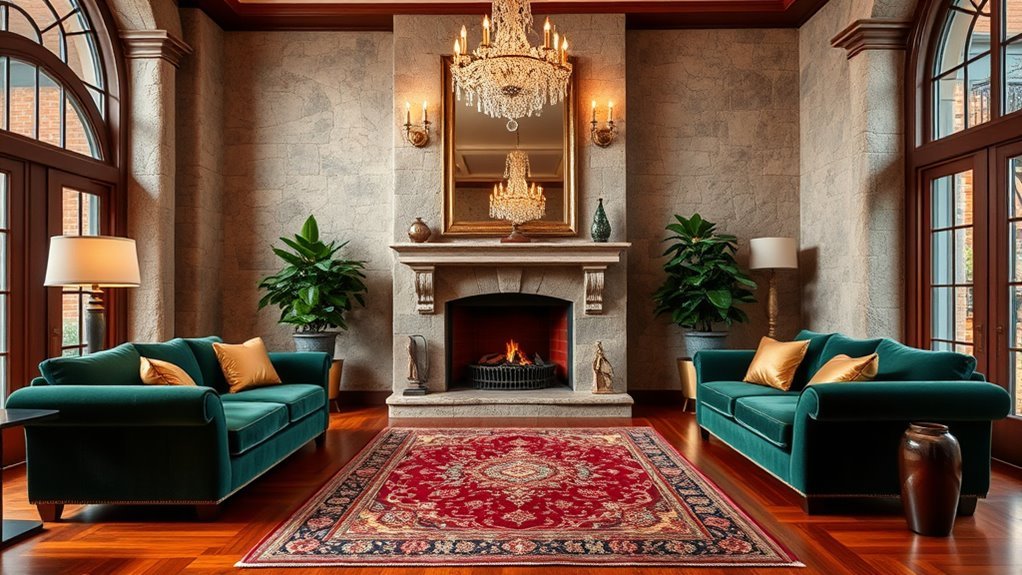
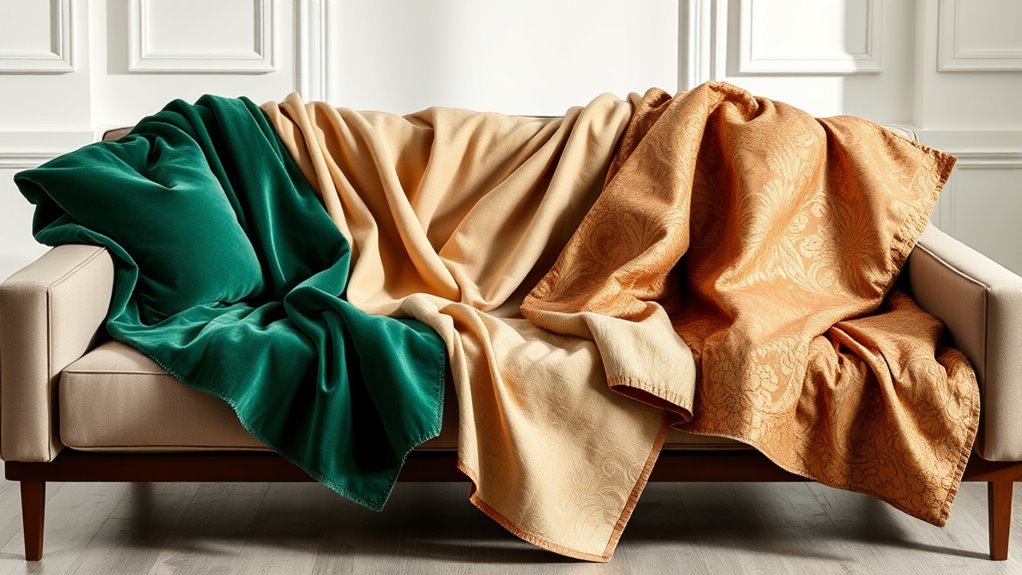
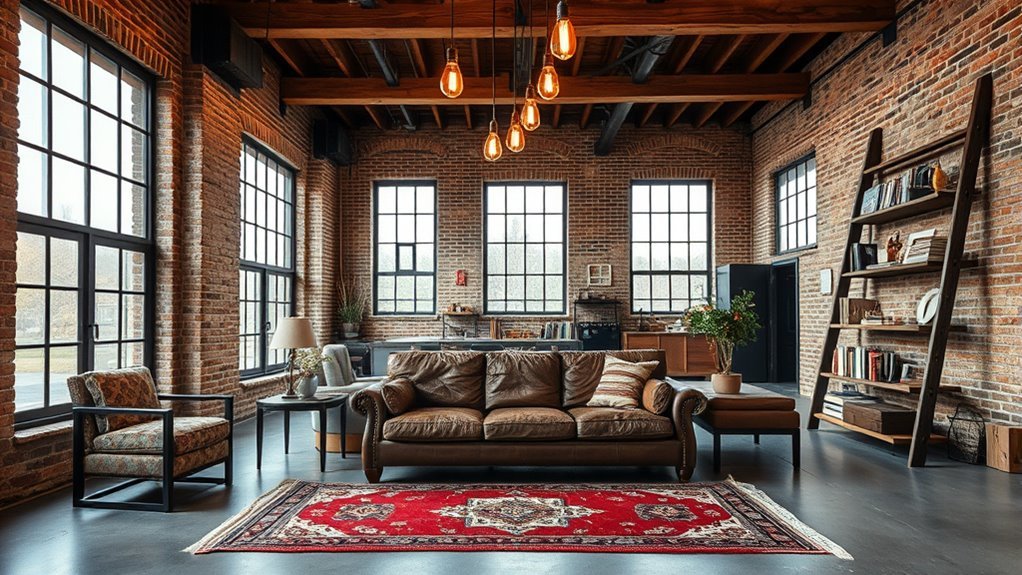
To create a relaxing living room color scheme, start with soft blues or muted greens for your base, adding neutral tones like pale gray for harmony. Use calming accent colors, like peachy pink, to enhance comfort. Maximize natural light with light-filtering curtains and mirrors, while incorporating houseplants to enrich the atmosphere. Keep your space organized and clutter-free for ultimate peace. Continue exploring these ideas, and you’ll discover even more ways to elevate your sanctuary.
Understanding the Impact of Color on Relaxation
When you step into a living room, the colors surrounding you can instantly shift your mood, making it essential to choose wisely. Color psychology reveals that soft blues and greens evoke tranquility, tapping into your sensory perception of calming natural environments. These hues can create an emotional response that promotes relaxation and stress relief. Muted tones like lavender or pale gray foster visual harmony, crafting a serene atmosphere that reduces anxiety. By strategically selecting a limited range of soothing colors, you enhance daily operations, encouraging mental clarity and focus. Embrace the power of color in your living space, and you’ll find your sanctuary—one that nurtures your well-being and liberates your spirit.
Choosing a Base Color for a Relaxing Living Room
To create a truly relaxing living room, selecting the right base color is vital, as it sets the tone for the entire space. Opt for calming color combinations like soft blues or muted greens, known for their ability to evoke tranquility and reduce anxiety. Alternatively, consider neutral tones such as pale gray or beige, which serve as peaceful backdrops, allowing flexibility for accent colors and decor. Remember, base color psychology plays a significant role in your emotional response; choose colors that resonate with you personally. Incorporating textured finishes can add depth, promoting an inviting atmosphere. Finally, test your base color in various lighting conditions to guarantee it maintains its calming effect throughout the day.
How to Use Neutral Tones for a Cozy Feel
To create a cozy living room, embrace earthy color palettes that ground your space in warmth. Layering textures, like soft throws and plush cushions, invites comfort and enhances the inviting atmosphere. With these elements, you’ll transform your neutral tones into a serene retreat that feels both spacious and snug.
Embrace Earthy Color Palettes
Embracing earthy color palettes can transform your living room into a serene retreat, where shades like beige, taupe, and soft browns wrap you in warmth and comfort. These neutral tones enhance natural light, making your space feel open while maintaining a cozy ambiance. Incorporate soft greens and muted grays to evoke calmness and connect with nature.
To deepen this inviting atmosphere, consider adding earthy textures. Here’s a quick guide:
| Color | Effect |
|---|---|
| Beige | Warmth & Inviting |
| Taupe | Sophistication & Calmness |
| Soft Brown | Earthiness & Comfort |
| Soft Green | Tranquility & Freshness |
This cohesive earthy scheme reduces overwhelm, fostering a peaceful environment perfect for relaxation.
Layer Textures for Warmth
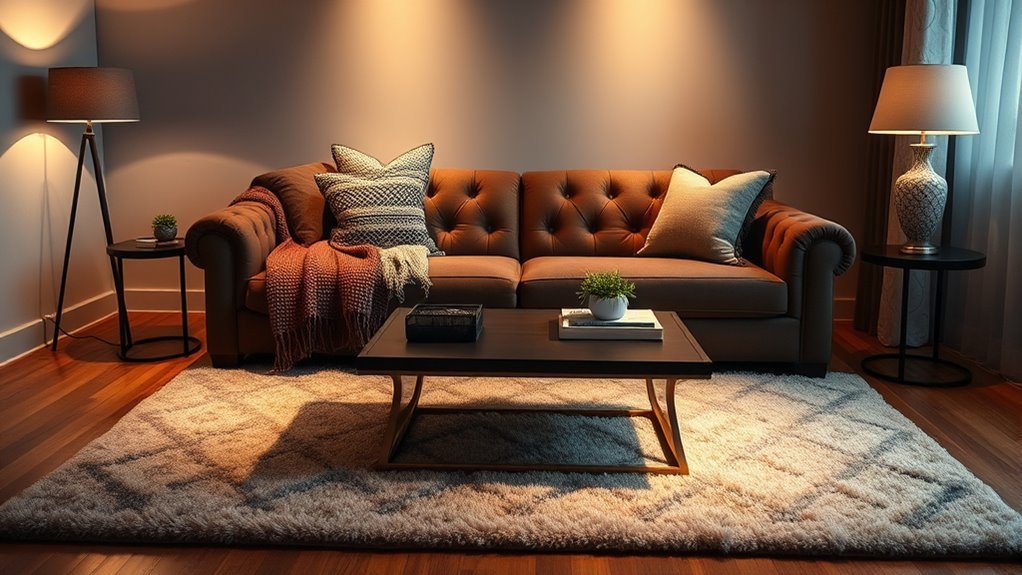
A cozy living room thrives on the interplay of textures, turning neutral tones into a warm embrace. Start by mixing texture combinations like soft throws and plush rugs to enhance that inviting feel. Layering techniques, such as adding velvet cushions or linen curtains, create a tactile experience that invites relaxation. Incorporate natural materials like wood and stone to connect with nature, enriching your serene backdrop. Soft lighting enhances these textures, casting inviting shadows that add depth and intimacy to your space. Each element works together to cultivate a calming atmosphere, inviting you to unwind and breathe deeply. Embrace the sensory journey of your living room, where every texture contributes to a feeling of warmth and tranquility.
Selecting Accent Colors to Enhance Comfort
How can you transform your living room into a serene retreat? Start by selecting calming accent colors like soft blues, muted greens, or gentle lavenders. These hues embody accent color psychology, effectively reducing anxiety and promoting relaxation. Pair these soothing color combinations with warm neutrals like beige or light gray to create a comforting backdrop that complements bolder accents without overwhelming your senses. Use these colors strategically in decor items such as cushions, throws, or artwork, ensuring they harmonize with your primary palette. Shades like peachy pink or muted plum can foster warmth and tranquility. Avoid overly vibrant colors, as they can disrupt the peaceful ambiance you’re aiming for, keeping your space a true sanctuary.
Using Natural Light Effectively
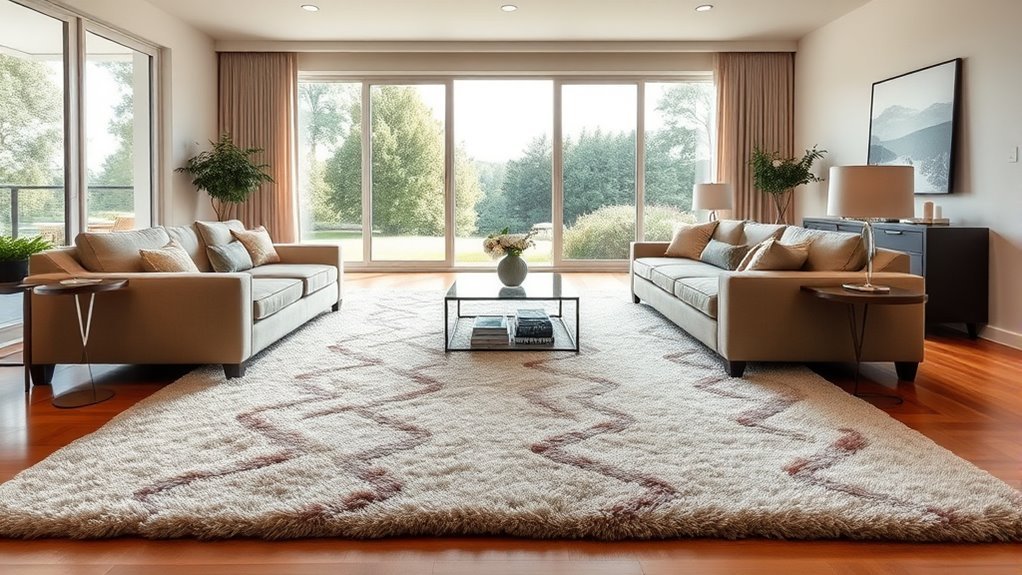
To create a serene living room, maximize your window placement and let the sunlight pour in. Choosing light-filtering treatments, like sheer curtains, not only enhances privacy but also bathes your space in a gentle glow. This thoughtful approach will make your room feel both inviting and tranquil, setting the perfect mood for relaxation.
Maximize Window Placement
While natural light can transform a living room into a serene sanctuary, maximizing window placement is key to harnessing its full potential. Start by ensuring your windows are aligned to capture sunlight throughout the day. Position mirrors opposite windows to enhance light reflection, brightening dark corners and creating an inviting atmosphere. Arrange furniture thoughtfully to avoid blocking any windows, allowing light to flow freely and fostering a sense of openness. Incorporate sheer or light-filtering curtains that let in sunlight while maintaining privacy, striking the perfect balance. Finally, place lush plants near windows to utilize natural light for growth, improving air quality and further enriching your tranquil living environment. Embrace these strategies, and watch your space transform!
Choose Light-Filtering Treatments
With your windows strategically placed to invite in natural light, the next step is to enhance that luminosity through light-filtering treatments. Sheer curtains are perfect for this, allowing soft sunlight to flood your living room while diffusing harsh glare. This not only creates a cozy atmosphere but also helps regulate your mood and promotes relaxation.
Consider these aspects when choosing your treatments:
- Warm-toned fabrics that complement your calming color scheme
- Textures that evoke a sense of airiness and openness
- Designs that minimize glare on screens, perfect for reading or watching TV
Embracing these light-filtering treatments transforms your space into a serene retreat, elevating your living room into a haven of peace and tranquility.
Accessorizing With Textures and Natural Elements
As you curate your living room, embracing textures and natural elements can transform it into a serene retreat. Start with soft textile combinations—plush throw pillows and cozy blankets invite you to unwind. Incorporate a woven rug for tactile interest and smooth ceramic decor that adds elegance. Natural accents, like wooden furniture and stone details, create a grounding connection to the outdoors, fostering tranquility. Strategically place houseplants to purify the air and enhance your well-being, bringing life to your space. Layered lighting, including soft lamps alongside natural light, casts a soothing glow that calms your mind. Together, these elements work harmoniously, creating a comforting atmosphere that encourages relaxation and liberates your spirit.
Testing Your Color Scheme Before Committing
How can you guarantee your color choices truly resonate in your living room? Start with swatch testing to explore how colors transform throughout the day. Here’s how to dive deeper:
Explore how colors evolve in your living room through swatch testing and discover their true impact throughout the day.
- Apply paint patches on several walls, revealing interactions with furniture and lighting.
- Experiment with peel-and-stick wallpaper for bold shades without a permanent commitment.
- Capture photos of your test colors at different times to gauge their emotional impact on the space.
How to Maintain a Relaxing Atmosphere
After testing your color scheme, the next step is to cultivate a relaxing atmosphere in your living room. Embrace soothing shades like soft blues and muted grays, as color psychology shows they reduce anxiety and promote tranquility. Let in natural light through sheer curtains or mirrors, enhancing your sensory experience and inviting warmth. Keep your space decluttered and organized; a minimalist design fosters peace of mind. Introduce houseplants to improve air quality and add calming greenery, which studies show boosts well-being. Finally, maintain a comfortable temperature around 72 degrees Fahrenheit to support relaxation. By harmonizing these elements, you’ll create a sanctuary that invites liberation and serenity into your daily life.
Frequently Asked Questions
What Colors Are Good for Calm Living Rooms?
For a calm living room, choose soft neutrals, calming blues, earthy tones, and pastel shades. These colors create a serene atmosphere, inviting relaxation and fostering a sense of peace in your personal space. Enjoy the tranquility!
Conclusion
In crafting your relaxing living room, remember that color isn’t just a visual choice; it’s a mood enhancer. Soft blues and gentle greens whisper calm, while warm neutrals wrap you in comfort. Imagine sinking into your space, surrounded by hues that breathe peace into your day. By thoughtfully blending colors and textures, you create an oasis that beckons you to unwind. Trust in your instincts—your perfect palette awaits to transform stress into serenity.