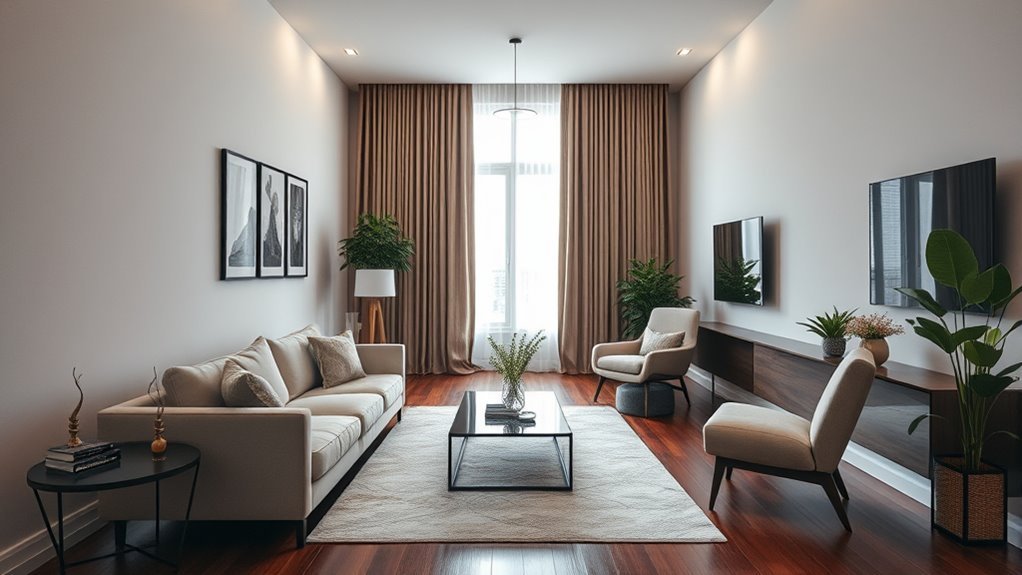
To manage echo and noise in your open concept living room, start by adding soft furnishings like upholstered furniture and plush area rugs to absorb sound. Heavy drapes can help dampen reflections, while large plants serve as natural sound diffusers. Rearranging furniture strategically disrupts sound pathways. Consider using acoustic panels for a stylish touch or consult professionals for persistent issues. With these tips, you can transform your space into a serene environment—discover more effective strategies to enhance your acoustics.
Immediate Solutions for Managing Echo in Open Spaces
When you walk into an open-concept living room, the last thing you want is to feel like you’re inside a cavern. To combat echo, start by incorporating soft furnishings. Upholstered sofas and chairs absorb sound, creating a cozy vibe. Next, lay down dense area rugs on hard floors; they’ll dampen footfall noise and minimize reflections. Consider heavy window treatments—thick drapes or fabric blinds can greatly reduce sound bouncing off windows. Don’t forget to add large leafy plants; they not only enhance aesthetics but also act as natural sound diffusers. Finally, identify reflection points using the mirror method, allowing for targeted acoustic treatment. With these soundproofing techniques, you’ll achieve effective echo reduction, turning your space into a serene sanctuary.
Understanding Key Reflective Surfaces
In an open-concept living room, understanding key reflective surfaces is essential for managing echo and noise. Hard surfaces like hardwood floors and tile reflect sound, amplifying echo, while high ceilings can create a “stadium effect,” letting sound travel freely. Reflective furniture materials, such as leather and metal, contribute to this issue by failing to absorb sound effectively. Minimalist design, which often favors fewer soft furnishings, can exacerbate sound reflection and make echo management trickier. Identifying first-reflection points—where sound bounces back to you—is vital. By recognizing these surfaces and their impact, you can make informed choices that enhance sound absorption and create a more serene living space. Your journey to a quieter home starts here!
Simple Furniture Adjustments to Dampen Sound
To create a quieter oasis in your open concept living room, start with soft upholstered seating that absorbs sound better than hard surfaces. Layer in plush area rugs to cushion footfalls and disrupt noise, while adding throw pillows and blankets enhances comfort and further dampens echoes. These simple adjustments can transform your space into a serene retreat, making it feel more inviting and less echoey.
Soft Upholstered Seating
Soft upholstered seating transforms your open-concept living room into a cozy sanctuary that effectively combats echo and noise. Embracing upholstered furniture benefits not only your comfort but also enhances sound absorption techniques. Here’s how to maximize the impact:
- Choose Fabric-Covered Pieces: Opt for sofas and armchairs that absorb sound waves better than leather or metal.
- Add Plush Cushions: Incorporate extra cushions and throw blankets to boost sound absorption and comfort.
- Select Larger Upholstered Items: Larger, denser pieces cover more surface area, reducing sound reflection.
- Strategic Arrangement: Position seating to disrupt sound pathways, minimizing echo by preventing direct sound wave reflections.
These adjustments create an acoustically balanced environment, liberating your living space from disruptive noise.
Area Rugs Placement
Upholstered seating sets the stage for a cozy atmosphere, but adding area rugs can take your sound management to the next level. Large, dense rugs made from materials like wool or polyester blends can absorb sound effectively, so aim to cover at least 60% of your open floor space. Consider the color selection as well; darker hues can help hide stains while adding depth to your decor. Layering rugs—like placing a plush rug over a flat-weave one—can further dampen noise and create visual intrigue. Position them strategically under coffee tables or seating arrangements to minimize footfall noise. Remember to maintain and clean your rugs regularly to keep their acoustic properties sharp and effective.
Textiles and Accessories Usage
When it comes to managing sound in your open concept living room, the right textiles and accessories can make a world of difference. By strategically selecting fabric textures, you can create a more serene environment. Here are four effective adjustments:
- Plush Sofas & Fabric-Covered Chairs: These disrupt sound pathways, absorbing echo.
- Thick Drapes or Fabric Blinds: They reduce sound reflections off windows, enhancing quietness.
- Throw Pillows & Blankets: Scatter these around for added comfort and sound absorption.
- Large Leafy Plants: These natural sound diffusers break up sound waves and improve acoustics.
Incorporating these sound absorbing accessories will transform your space into a tranquil haven. Embrace the liberation that comes with a quieter living area!
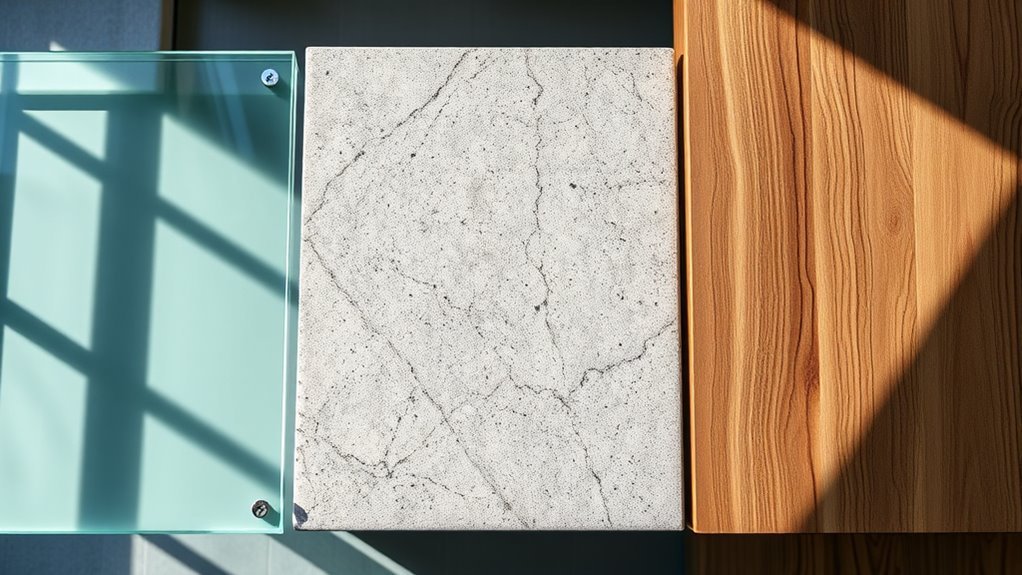
Choosing the Right Textiles: Best Rugs and Curtains for Echo Reduction
To create a cozy atmosphere in your open concept living room, selecting the right textiles is essential for reducing echo and noise. Start by choosing larger, thicker area rugs made from natural fibers like wool. These textile materials absorb sound and should cover at least 60% of your floor space for maximum effect. For curtains, opt for heavy drapes in velvet or thick cotton, which greatly dampen sound waves. Layering multiple rugs or combining rugs with carpet runners can disrupt sound pathways, enhancing acoustic features. Look for sound-absorbing fabrics labeled as “acoustic” to further minimize reverberation. Additionally, honeycomb blinds can provide stylish sound insulation, completing your tranquil living space. Embrace these choices for a serene environment!
Use Plants and Decor to Enhance Acoustics
To create a more peaceful open-concept living room, consider incorporating large leafy plants that act as natural sound diffusers. Pair them with textured decor items like woven baskets or macrame wall hangings, which not only warm up the space but also disrupt sound reflections. Don’t forget to install fabric wall art; it adds visual interest while absorbing sound and minimizing echo.
Incorporate Large Leafy Plants
Incorporating large leafy plants into your open concept living room can transform not just the aesthetic but also the acoustics of the space. These natural sound diffusers break up sound waves and enhance comfort. Here are some effective placement strategies:
- Corners: Position taller plants like fiddle leaf figs to absorb sound in reflective areas.
- Near Windows: Use plants like rubber trees to soften noise from outside while benefiting from natural light.
- Variety of Types: Mix plant types, such as pothos and monstera, for both visual appeal and acoustic enhancement.
- Layering Heights: Combine short and tall plants to create an inviting atmosphere that balances sound absorption.
Embrace the beauty of greenery to elevate your living experience!
Use Textured Decor Items
Textured decor items can work wonders in an open concept living room, not just for aesthetics but for acoustics too. By incorporating textured cushions and woven wallhangings, you add visual warmth while actively enhancing sound quality. Large leafy plants serve as natural sound diffusers, breaking up echoing sound waves and improving absorption. Place these plants strategically in corners or near windows to maximize their acoustic benefits. Additionally, using macrame wall art and woven baskets disrupts sound reflections, creating a more balanced auditory experience. Opting for a variety of textures not only elevates your decor but also contributes to a harmonious atmosphere, allowing you to enjoy your space without the noise distractions. Embrace the liberation that comes with well-curated design!
Install Acoustic Wall Art
Acoustic wall art can transform your open concept living room, providing both sound absorption and visual flair. Choosing the right acoustic panel types is essential for maximizing effectiveness. Here are some installation tips to enhance your space:
- Select Fabric-Wrapped Panels: These not only absorb sound but come in various colors to match your decor.
- Consider Decorative PET Felt: Lightweight and stylish, they add a modern touch while reducing echo.
- Incorporate Large Leafy Plants: Use them to naturally diffuse sound waves and bring life to your room.
- Position Art at Reflection Points: Utilize the mirror method to find spots that benefit most from sound treatment.
Together, these elements create a harmonious, inviting environment.
Should You Use Acoustic Panels or Call in the Pros?
How can you strike the right balance between aesthetics and sound quality in your open-concept living room? You might consider DIY acoustic solutions like fabric-wrapped panels. They’re cost-effective, enhance your decor, and markedly cut down on echo without needing a pro’s touch. However, if your space has persistent sound issues—think home theaters or professional studios—it might be wise to seek professional consultation. Experts can tailor solutions that combine absorption, diffusion, and bass traps for a superior sound environment. Engaging with specialists like Acoustic Geometry guarantees you access to high-quality materials and advanced techniques, transforming your living room into a harmonious haven. Ultimately, weigh your needs against your budget to find the best fit for your unique space.
Regular Echo Management: Evaluate and Adapt Your Space
While you may love the open feel of your living room, managing echo can be a challenge. Regularly evaluating and adapting your space is key to effective soundproofing techniques. Here are four steps to contemplate:
Embrace the openness of your living room while tackling echo with thoughtful soundproofing strategies. Regular adjustments can make a significant difference.
- Assess Hard Surfaces: Identify tiles or hardwood floors that reflect sound. Add rugs to disrupt sound pathways.
- Rearrange Layout: Use room dividers or furniture arrangements to manage sound dispersion, especially with high ceilings.
- Increase Soft Furnishings: Incorporate upholstered chairs, cushions, or fabric wall hangings to absorb sound and enhance comfort.
- Utilize the Mirror Method: Identify first-reflection points for targeted acoustic treatments or soft decor modifications.
Frequently Asked Questions
How to Reduce Echo in Open Concept House?
To reduce echo in your open concept house, rearrange furniture to create cozy nooks and consider wall treatments like acoustic panels or heavy drapes. These changes embrace a more harmonious, inviting atmosphere while minimizing sound reflections.
How to Soundproof a Doorless Room?
To soundproof a doorless room, try thick textiles for sound absorption, consider creative door alternatives like heavy curtains, and place plush furniture strategically to soften sounds. Embrace these elements for a peaceful, private space.
What Steps Would You Take to Stop Echo and Reverberation Affects in a Large Room?
To stop echo and reverberation in a large room, prioritize sound absorption. Rearrange your furniture for ideal placement, add soft furnishings, and layer area rugs to create a cozy, inviting space that calms noise.
How to Acoustically Treat an Open Room?
To acoustically treat your open room, install acoustic panels strategically and add sound-absorbing elements like plush furniture and thick rugs. These choices create a harmonious space, liberating you from unwanted echoes and enhancing your environment.
Conclusion
As you navigate the open sea of your living space, remember that every wave of sound can be tamed. By adjusting the sails of your furnishings and draping your windows with rich textiles, you create a serene harbor for conversations. Let plants stand as your loyal crew, softening the storms of echo. With the right tools, you can transform your space into a tranquil oasis, proving that even the wildest waters can find calm with thoughtful care.