
Waking up with a stuffy nose, itchy eyes, or wheezing often points to microscopic pests hiding in your mattress, pillows, and carpets. When you ask, does a dehumidifier help with dust mites, the real issue is whether drying the air can stop a pest that thrives inside warm bedding. Because dust mites cannot drink liquid water, controlling indoor moisture is one of the most reliable ways to weaken their habitat, provided you pair it with physical allergen removal.
Quick Answer
Yes, indirectly. A dehumidifier helps control dust mites by keeping indoor relative humidity between 30% and 50% (ideally below 50% in bedrooms), which causes active mites to dry out and stop reproducing. However, because a dehumidifier cannot remove dead mites or allergenic waste from fabrics, you must combine it with zippered encasements, weekly 130°F washing, and HEPA vacuuming.
Last updated: October 13, 2026
At a Glance
| Humidity target | 30% to 50% RH whole-home range; sustain below 50% RH (40% to 45% ideal margin) in bedrooms |
| What a dehumidifier does | Pulls water vapor from ambient air so mites lose body water faster than they can absorb it |
| What it does not do | Physically remove live mites, shed exoskeletons, or settled fecal allergens from mattresses, rugs, or upholstery |
| Best supporting steps | Standalone digital hygrometer, zippered allergen-proof covers, weekly 130°F bedding wash, HEPA vacuuming, and CADR-matched HEPA air filtration |
Does a Dehumidifier Help With Dust Mites?
Yes, a dehumidifier helps with dust mites whenever indoor humidity stays elevated. House dust mites (primarily Dermatophagoides farinae and Dermatophagoides pteronyssinus) are 70% to 75% water by weight, yet they do not drink liquid water. Instead, they absorb water vapor directly from room air using specialized glands near their front legs called supracoxal glands. Lowering relative humidity forces mites to lose body moisture faster than they can replenish it.
To keep your home comfortable while suppressing mite growth, aim for a steady indoor relative humidity (RH) between 30% and 50%. The CDC recommends 30% to 50% as a core part of asthma and dust mite trigger control, and the EPA also recommends 30% to 50% to maintain healthy indoor air quality. According to the 2013 Joint Task Force dust mite practice parameter, a dust mite’s critical equilibrium humidity—the threshold needed to maintain water balance—ranges from 55% to 75% RH depending on room temperature. Keeping rooms below 50% RH keeps mites below that survival line.
What Clinical Trials Show About Dehumidification
The clinical evidence shows why consistency and whole-room control matter. A randomized trial in 76 homes in the United Kingdom found that placing a single portable dehumidifier in one bedroom lowered ambient relative humidity slightly, but did not produce a major overall drop in dust mite counts or Der p 1 allergen levels compared with control homes. Researchers noted that intermittent operation, open doors, and moisture trapped inside mattresses limited the single unit’s impact.
By contrast, sustained humidity control across the living space delivers dramatic reductions. In a 17-month study in temperate US homes led by entomologist Larry Arlian, maintaining indoor relative humidity below 51% during humid summer months reduced live mite counts to just 8 ± 3 live mites per gram of dust and cut Der 1 allergen levels to 4 ± 1 micrograms per gram. Control homes without humidity control experienced seasonal spikes of 500 to 1,000 mites per gram and 40 to 70 micrograms of allergen per gram of dust. In practice, you get the best results when you maintain sub-50% humidity continuously and pair it with direct fabric cleaning.
The goal is not to sterilize the room. The goal is to keep humidity low enough that mites struggle to multiply while you remove the allergens already trapped in fabric and dust.
How Low Should Humidity Be?
For reliable dust mite control, maintain 30% to 50% relative humidity across your home and keep mite-prone bedrooms consistently below 50% RH (with 40% to 45% RH serving as an ideal buffer). You do not need desert-dry air. If an independent humidity gauge shows your bedroom already stays below 50% year-round, buying a dehumidifier will add very little benefit; spend your budget on mattress encasements and HEPA filtration instead.
| Relative Humidity (RH) | Impact on House Dust Mites | Human Comfort & Home Impact |
|---|---|---|
| 75% to 80%+ RH | Optimal breeding zone; populations multiply rapidly within weeks | Muggy air; high risk of indoor mold and mildew growth |
| 55% to 74% RH | Above critical equilibrium humidity; mites feed, hydrate, and lay eggs | Slightly damp in summer; favors allergen accumulation in bedding |
| 40% to 50% RH (Target) | Below critical threshold; active mites stop breeding and dry out over days to weeks | Comfortable breathing, skin, and sleep conditions (CDC/EPA target) |
| Below 35% RH | Halts growth completely, even if humidity spikes briefly for 2 hours a day | Can dry out nasal passages, throat, and eczema-prone skin |
What Happens When Humidity Spikes Briefly?
Real homes experience daily moisture spikes from showers, cooking, and breathing at night. Fortunately, a 1999 study on intermittent daily humidity spikes found that keeping mean daily relative humidity below 50% still restricted D. farinae population growth by 97.3% to 98.2% over 10 weeks, even when humidity rose to 75% RH for 4 to 8 hours per day. When moist spells (75% to 85% RH) were limited to 2 hours or less per day with the remaining 22 hours held at 35% RH, mite colonies declined outright.
Do not rely solely on the built-in humidistat on your dehumidifier, which only reads air right next to the appliance’s intake vents. Place a separate digital hygrometer near your bed or sofa because humidity varies by room, floor level, and microclimate. A below-grade basement is often 10% to 20% more humid than an upstairs bedroom, and mattresses retain warmth and perspired moisture for hours after you wake up.
Pro Tip: Pull back your comforter and top sheet for 30 to 60 minutes each morning before making the bed. Letting body heat and night sweat evaporate helps the bedroom dehumidifier dry the sleeping surface much faster.
Avoid driving indoor humidity too low in pursuit of faster mite die-off. Air below 30% RH can irritate your nasal passages, dry out your throat, and flare up eczema. If you have asthma, eczema, or persistent sinus symptoms, treat humidity control as one part of environmental management alongside your doctor’s care plan.
What a Dehumidifier Can and Can’t Do
A dehumidifier modifies the ambient habitat dust mites need to thrive, but it cannot physically clean fabrics or strip existing allergens out of your bedding. Understanding where the machine’s job ends prevents frustration when allergy symptoms do not vanish overnight.
Even after low humidity kills active mites, their shed skins and fecal pellets—the actual proteins (such as Der p 1 and Der f 1) that trigger allergic reactions—remain potent in household dust for months until you wash or vacuum them away.
- It lowers ambient moisture: Keeping relative humidity under 50% makes bedrooms, basements, and upholstered living areas inhospitable to both dust mites and indoor mold.
- It suppresses mite reproduction and survival: Active mites exposed to sustained sub-50% humidity typically dehydrate within 6 to 11 days in laboratory settings, though dormant protonymph stages in thick fabrics can hold out longer.
- It supports a multi-step allergen plan: Low humidity prevents rapid population rebound between weekly laundry and vacuuming sessions.
- It cannot remove settled allergens: A single dust mite produces roughly 10 to 20 waste particles per day during its 30-to-60-day lifespan; those particles stay embedded in pillows, rugs, and mattresses until physically removed or sealed inside an encasement.
- It cannot fix structural water leaks: If indoor humidity stays above 55% because of plumbing leaks, wet crawl spaces, or foundation seepage, you must fix the water entry first.
Recommended Products

Upgrade High Efficient Dehumidification: Dehumidifier utilize semi conductor condensation technology, ensuring quiet operation while effectively extracting moisture from the air. This advanced feature helps keep humidity levels below 45%

WHY IT WORKS| Dust mites are one of the most common allergy and asthma triggers. These invisible bugs can quickly create an unpleasant environment for anyone sensitive to their allergens. DustmiteX kills the dust mite and is the answer for safe and effective removal.

Compact 2-in-1 Air Care: The Airthereal AZH200 combines air purification and dehumidification into one compact system. This dehumidifier and air purifier combo filters dust, pollen, pet dander, and smoke while reducing moisture, effectively simplifying indoor climate control and saving valuable space.
How To Use a Dehumidifier for Dust Mites
Focus your setup on the bedroom first, because you spend 6 to 8 hours a night breathing inches away from your mattress and pillows. Dust mites congregate in bedding, box springs, carpets, and fabric headboards, which is why the AAAAI notes that reducing mite levels in the bedroom is especially important for allergy and asthma relief.
- Measure baseline humidity for 24 hours. Place a standalone digital hygrometer at mattress height away from windows and vents. Check both early-morning readings (when night respiration peaks) and evening readings.
- Match capacity to the room. Follow ENERGY STAR dehumidifier guidance by sizing capacity in pints per 24 hours based on square footage and dampness—typically 20 to 30 pints/day for a damp bedroom or 35 to 50+ pints/day for a damp basement.
- Set the target humidistat to 45%–50% RH. Aiming for 45% RH gives you a slight cushion so everyday moisture spikes do not push the room above the 50% dust mite threshold.
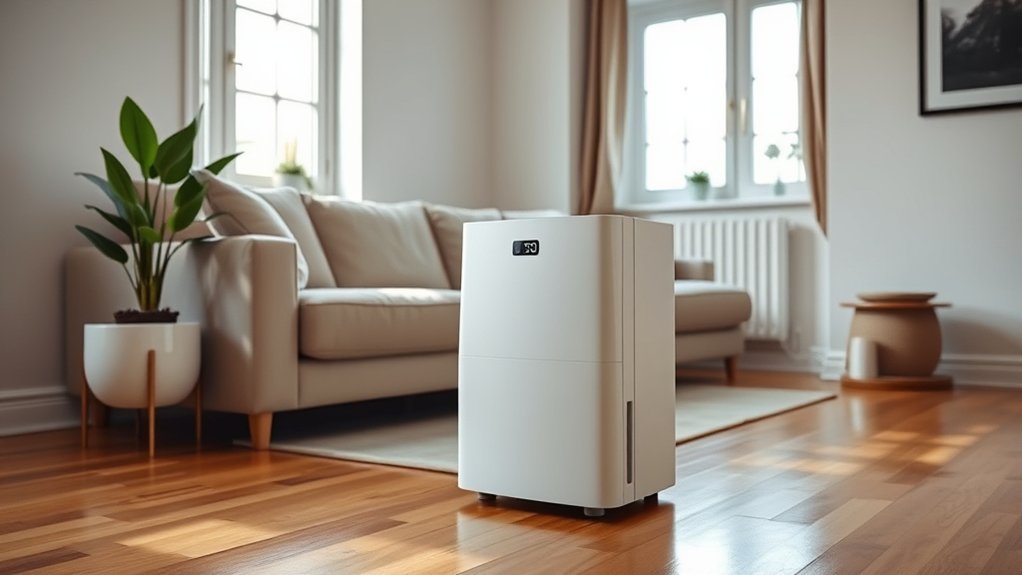
- Leave 12 inches of airflow clearance. Position the unit on a level surface away from walls, drapes, and dressers so intake and exhaust vents circulate air across the entire room.
- Block competing moisture sources. Keep bedroom doors closed while the unit runs, run bathroom exhaust fans during and for 20 minutes after showers, and never dry wet laundry on indoor racks.
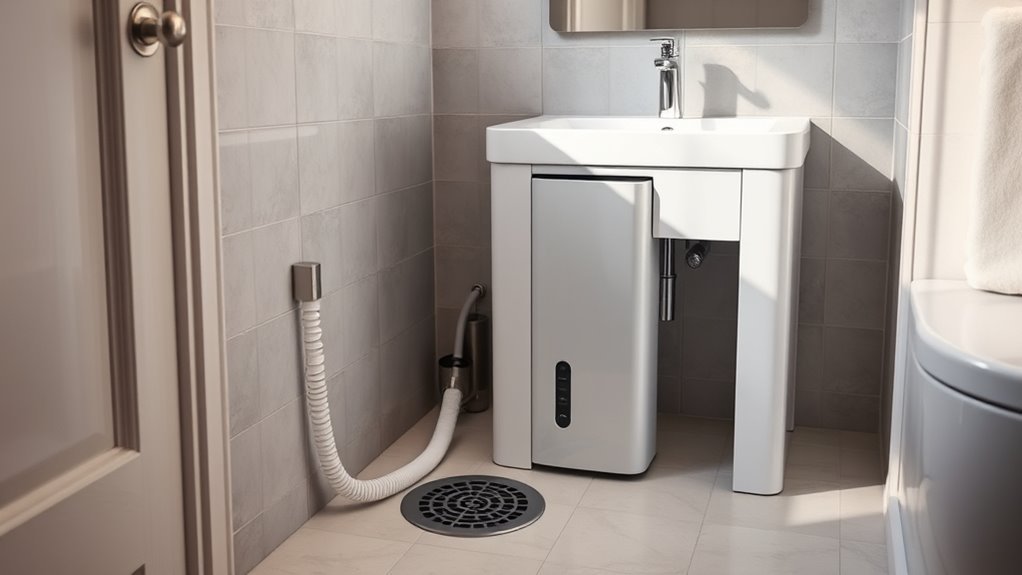
- Drain and clean the unit regularly. Empty the collection bucket daily or attach a continuous drain hose to a floor drain or condensate pump. Wash the washable intake filter and water bucket every 2 to 4 weeks with warm water and mild detergent so mold cannot grow inside the appliance.
Note: Central or window air conditioning naturally removes indoor moisture during hot summer months. However, during mild spring and fall weather when the AC rarely cycles on—or in cool, damp basements year-round—a standalone dehumidifier is often required to keep RH below 50%.
Can Air Purifiers Help With Dust Mite Allergens?
True HEPA air purifiers capture airborne dust mite allergens stirred up from surfaces, though they never kill live mites or clean inside a mattress. Unlike lighter pet dander that floats for hours, most dust mite fecal particles are relatively heavy (often 10 to 40 microns) and settle back onto surfaces within 15 to 30 minutes after disturbance (compare the two appliances in our air purifier vs dehumidifier guide). Even so, fine allergen fragments stay suspended long enough to irritate airways, and the EPA defines HEPA filtration as theoretically removing at least 99.97% of airborne particles at 0.3 microns.
Clinical sampling confirms that bedroom air filtration cuts airborne allergen exposure. In a 2022 study of 22 bedrooms published in Clinical and Translational Allergy, running a portable air purifier reduced total airborne Dermatophagoides farinae allergen (Der f 1) by a median 75.2% (and reduced cat Fel d 1 by 76.6% and dog Can f 1 by 89.3%), while the smaller sample of homes with Der p 1 showed a 65.5% median drop that did not reach statistical significance. That means an air purifier reduces what you inhale while it runs, especially when bed-making or walking stirs dust into the breathing zone.
To get real benefit, match the purifier’s airflow to your bedroom’s square footage. The EPA recommends using CADR (Clean Air Delivery Rate) to select a unit strong enough for your room size. An undersized tabletop purifier running on low speed will not turn over enough cubic feet of air per hour to capture heavy mite particles before they settle.
- Place the HEPA purifier in the bedroom a few feet from the bed with unobstructed intake and outlet vents.
- Run it continuously on a quiet medium setting overnight, and switch to high speed for 30 minutes whenever you strip sheets, fluff pillows, or vacuum.
- Check pre-filters monthly and replace the main HEPA cartridge on the manufacturer’s schedule (typically every 6 to 12 months).
Warning: Never use ozone generators or ionizers that emit ozone to treat dust mites or indoor odors. The EPA warns that ozone is a potent lung irritant that can trigger asthma attacks and worsen respiratory inflammation without removing dust mite allergens.
Recommended Products

𝗪𝗛𝗬 𝗖𝗛𝗢𝗢𝗦𝗘 𝗔𝗛𝗔𝗠 𝗩𝗘𝗥𝗜𝗙𝗜𝗗𝗘 𝗔𝗜𝗥 𝗣𝗨𝗥𝗜𝗙𝗜𝗘𝗥𝗦: AHAM (Association of Home Appliance Manufacturers) is an ANSI-accredited organization that sets strict standards for appliance performance. Air purifiers with the AHAM VERIFIDE seal have been independently tested for air cleaning performance, safety, and energy efficiency. When you choose an AHAM certified air purifier, you're choosing a product trusted for reliable and effective indoor air quality improvement

𝐖𝐇𝐘 𝐂𝐇𝐎𝐎𝐒𝐄 𝐀𝐇𝐀𝐌 𝐕𝐄𝐑𝐈𝐅𝐈𝐃𝐄 𝐀𝐈𝐑 𝐏𝐔𝐑𝐈𝐅𝐈𝐄𝐑𝐒: AHAM (Association of Home Appliance Manufacturers) is an ANSI-accredited organization that sets strict standards for appliance performance. Air purifiers with the AHAM VERIFIDE seal have been independently tested for air cleaning performance and energy efficiency. When you choose an AHAM certified air purifier, you're choosing a product trusted for reliable and effective indoor air quality improvement

Cleaner Air In Minutes: Purivortex is proven to filter common pollutants from your home’s air. This air purifier purifies rooms up to 880 ft² in one hour. It can purify a 215 ft² room in about 15 minutes, giving you noticeably fresher air in a short time. Breathe clean, crisp air and feel the difference in your space. (*Tested in an ISO 17025 certified laboratory under typical residential room ventilation conditions.)
Why Dehumidifiers and HEPA Filters Work Together
A dehumidifier and a HEPA air purifier target two completely different phases of the dust mite life cycle. The dehumidifier alters the room’s moisture balance so live mites stop breeding and gradually die off, while the HEPA filter captures the microscopic waste fragments and body parts that become airborne whenever fabrics move.
Because dead mites and dried fecal pellets remain allergenic long after humidity drops below 50%, pairing moisture control with mechanical filtration and fabric barriers tackles both future mite populations and today’s symptoms.
| Control Tool | Primary Target | Key Limitation | Recommended Spec / Routine |
|---|---|---|---|
| Dehumidifier | Ambient air moisture (suppresses live mite survival and breeding) | Does not remove dead mites or settled fecal allergens | Keep room at 30%–50% RH (below 50% in bedrooms) continuously |
| HEPA Air Purifier | Airborne allergen particles stirred up from bedding or floors | Cannot pull allergens out of mattresses, pillows, or carpet | True HEPA (99.97% at 0.3 µm) with CADR matched to room size |
| Allergen Encasements | Mattresses, pillows, and box springs (blocks mites and skin flakes) | Outer sheets and blankets on top still collect dust | Tightly woven zippered covers; wipe or wash outer surface periodically |
| Hot-Water Washing | Washable sheets, pillowcases, blankets, and throw rugs | Warm or cold water washes away allergens but may not kill all live mites | Wash weekly at 130°F (54.4°C) and dry on a hot dryer cycle |
| HEPA Vacuuming | Surface dust, skin scales, and settled allergens in rugs and upholstery | Live mites cling tightly to deep carpet fibers; vacuuming stirs up fine dust | Sealed HEPA or double-layered microfilter bag; vacuum 1–2 times weekly |
Recommended Products

WHY CHOOSE AHAM VERIFIDE AIR PURIFIERS: AHAM (Association of Home Appliance Manufacturers) is an ANSI-accredited organization that sets strict standards for appliance performance. Air purifiers with the AHAM VERIFIDE seal have been independently tested for air cleaning performance and energy efficiency. When you choose an AHAM certified air purifier, you're choosing a product trusted for reliable and effective indoor air quality improvement
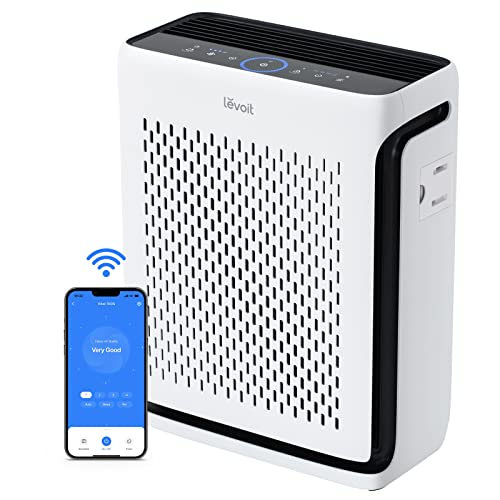
𝐖𝐇𝐘 𝐂𝐇𝐎𝐎𝐒𝐄 𝐀𝐇𝐀𝐌 𝐕𝐄𝐑𝐈𝐅𝐈𝐃𝐄 𝐀𝐈𝐑 𝐏𝐔𝐑𝐈𝐅𝐈𝐄𝐑𝐒: AHAM (Association of Home Appliance Manufacturers) is an ANSI-accredited organization that sets strict standards for appliance performance. Air purifiers with the AHAM VERIFIDE seal have been independently tested for air cleaning performance and energy efficiency. When you choose an AHAM certified air purifier, you're choosing a product trusted for reliable and effective indoor air quality improvement

𝐖𝐇𝐘 𝐂𝐇𝐎𝐎𝐒𝐄 𝐀𝐇𝐀𝐌 𝐕𝐄𝐑𝐈𝐅𝐈𝐃𝐄 𝐏𝐑𝐎𝐃𝐔𝐂𝐓𝐒: AHAM (Association of Home Appliance Manufacturers) is an ANSI-accredited organization that sets strict standards for appliance performance. Air purifiers with the AHAM VERIFIDE seal have been independently tested for air cleaning performance, safety, and energy efficiency. When you choose an AHAM certified air purifier, you're choosing a product trusted for reliable and effective indoor air quality improvement.
Simple Ways To Reduce Dust Mites At Home
Combining humidity control with targeted bedroom hygiene cuts dust mite exposure far faster than any single appliance. Start with the bed—where mites have a steady supply of shed human skin flakes and body warmth—and then address floors and soft furnishings.
- Wash all bedding weekly in 130°F water. Strip sheets, pillowcases, and washable mattress pads every week. The AAAAI recommends washing in hot water at 130°F (54.4°C) and drying thoroughly in a hot dryer to kill mites and flush out water-soluble allergens.
- Seal mattresses and pillows in zippered encasements. Enclose mattresses, box springs, and pillows in tightly woven, dust-proof or allergen-impermeable covers. Avoid down-filled pillows or quilts, which trap moisture and cannot be washed frequently at high heat.
- Vacuum with a sealed HEPA filter or microfilter bag. Standard vacuums can blow microscopic allergen particles back out the exhaust. The National Institute of Environmental Health Sciences (NIEHS) advises using a vacuum with a HEPA filter or double-layered microfilter bag, wearing a mask while vacuuming, and staying out of the vacuumed room for 20 minutes afterward so disturbed allergens can settle.
- Damp-mop and damp-dust hard surfaces. Wipe nightstands, baseboards, and hard floors with a damp microfiber cloth or mop instead of a dry duster or broom, which launches settled particles into the air.
- Declutter dust-trapping textiles. Replace heavy fabric drapes with washable roller shades or blinds, and remove decorative throw pillows, bed skirts, and plush stuffed toys from the bed (or wash washable plush toys weekly in hot water).
- Swap wall-to-wall carpet for bare floors and washable rugs. Deep carpet padding holds moisture and skin scales even in air-conditioned homes. Where removing carpet is not possible, keep relative humidity strictly below 50% and vacuum slowly twice a week.
- Eliminate hidden household dampness. Vent clothes dryers outdoors, repair plumbing drips promptly, and avoid laying carpet directly over concrete basement slabs.
Troubleshooting When Humidity or Allergies Don’t Improve
If your dehumidifier runs daily but your hygrometer still reads above 50% RH—or your morning congestion refuses to clear—check six common equipment and environmental bottlenecks before replacing the machine.
- The dehumidifier is undersized for the moisture load. A compact mini-dehumidifier (such as a Peltier thermoelectric unit removing only a few ounces of water a day) cannot bring a 300-square-foot bedroom below 50% RH. Use a compressor or desiccant unit rated for at least 20 to 35 pints per day for bedrooms and 50+ pints for damp basements.
- Room temperature is below 65°F. Standard compressor dehumidifiers lose efficiency in cool basements; when air temperatures drop below 65°F (18.3°C), frost can form on the coils and cause the compressor to short-cycle without removing moisture. Choose a low-temperature-rated compressor model or a desiccant dehumidifier for unheated spaces.
- Airflow is short-circuiting or the space is wide open. Leaving bedroom doors open forces a small unit to fight humidity from the entire floor, while pushing the unit tight against a wall causes it to read only its own dry exhaust air and shut off prematurely.
- An active moisture source is feeding the room. Check for unvented bathroom steam, wet crawl spaces, foundation efflorescence (white chalky mineral deposits on masonry walls), or a humidifier attached to your central furnace.
- Built-up allergen reservoirs have not been cleared. Dropping humidity below 50% takes weeks to collapse an established mite colony and does nothing to remove old fecal proteins. Wash all bedding at 130°F, install zippered encasements, and consider replacing pillows older than 2 years.
If allergy or asthma symptoms persist after 6 to 8 weeks of keeping bedroom humidity below 50% and encasing your bed, schedule an evaluation with a board-certified allergist. Skin-prick or specific IgE blood testing can confirm whether pet dander, mold spores, cockroach allergens, or seasonal pollen are driving your symptoms.
Key Takeaways
- Maintain indoor relative humidity around 30% to 50%; the CDC recommends this range because dust mites struggle to absorb water vapor once room air stays below 50% RH.
- Sustained whole-room dehumidification (under 51% RH) cut live mites to 8 ± 3 per gram of dust in a 17-month trial, whereas running a small portable unit intermittently in one room showed minimal impact.
- Dehumidifiers only dry the air; you still need zippered mattress and pillow encasements, weekly 130°F washing, and HEPA vacuuming (with a 20-minute settling pause) to clear allergenic mite waste.
- A room-sized HEPA air purifier reduced airborne Der f 1 mite allergen by a median 75.2% in bedroom testing, making it a strong partner to—not a replacement for—humidity control.
Frequently Asked Questions
What humidity level helps control dust mites?
Keep indoor relative humidity between 30% and 50%, and aim to stay consistently below 50% (ideally 40% to 45%) in bedrooms and other fabric-heavy rooms. Dust mites require a critical equilibrium humidity of 55% to 75% to absorb moisture from the air, so staying below 50% suppresses survival and reproduction.
Do air purifiers dry indoor air?
No, air purifiers do not remove moisture or lower relative humidity. An air purifier pulls room air through a mechanical HEPA filter to trap airborne particles, whereas a dehumidifier condenses or absorbs water vapor to dry the air.
Can a dehumidifier kill dust mites?
Yes, over time—sustained relative humidity below 50% causes active dust mites to dehydrate and die, but it is not an instant kill switch. Because mattresses hold body moisture and dead mites still trigger allergies, you must combine dehumidification with allergen-proof covers, weekly 130°F washing, and HEPA vacuuming.
How long does it take low humidity to kill dust mites?
In laboratory settings at 50% relative humidity or lower, active adult dust mites dry out and die within 6 to 11 days. In a real bedroom, however, thick mattresses and dormant nymph stages mean it typically takes 6 to 12 weeks of consistent sub-50% humidity—paired with weekly hot washing and vacuuming—to noticeably reduce allergen levels.
What is the best bedroom routine for dust mites?
Keep bedroom humidity below 50% with a dehumidifier or air conditioner, seal your mattress and pillows in zippered allergen-proof covers, wash all bedding weekly in 130°F water, and vacuum floors weekly with a sealed HEPA vacuum. Pulling back your top covers for 30 minutes each morning also helps the mattress air out.
Is a dehumidifier better than an air purifier for dust mites?
A dehumidifier is better for stopping dust mite population growth when indoor humidity is above 50%, while a HEPA air purifier is better for trapping airborne allergen particles stirred into the room air. Start with a dehumidifier if your hygrometer reads above 50% RH, and add a CADR-matched HEPA purifier for bedroom air filtration.
What size dehumidifier do I need for dust mites in a bedroom or basement?
A typical bedroom or small living space under 500 square feet usually needs a 20- to 30-pint dehumidifier, while damp basements and larger open areas generally require a 35- to 50-pint (or larger) unit. Avoid tiny thermoelectric mini-dehumidifiers, which lack the capacity to hold a full room below 50% relative humidity.
Can dust mites live in a clean house?
Yes, dust mites live in spotless homes because they feed on microscopic flakes of shed human skin and shelter deep inside mattresses, pillows, carpets, and upholstery. Surface tidiness alone will not stop them unless you also keep relative humidity below 50% and encase or hot-wash bedding.
Conclusion
A dehumidifier is one of the most effective tools for controlling dust mites when indoor relative humidity regularly climbs above 50%. Keeping your home between 30% and 50% RH—and holding bedrooms consistently below 50%—deprives dust mites of the atmospheric moisture they need to survive and multiply.
Start today by placing an inexpensive digital hygrometer in your bedroom for 24 hours to see your true baseline humidity. If readings top 50%, pair a properly sized dehumidifier with zippered mattress and pillow encasements, weekly 130°F bedding washes, and HEPA vacuuming to clear out both live mites and the trapped allergens behind your symptoms.
Sources
- CDC — Controlling Asthma — supports allergen-proof covers, weekly bedding washing, HEPA vacuuming, and keeping home humidity around 30% to 50% for dust mite trigger control.
- EPA — Care for Your Air: A Guide to Indoor Air Quality — supports the 30% to 50% indoor humidity range and the use of a humidity gauge.
- EPA — Guide to Air Cleaners in the Home — supports CADR room sizing, filter maintenance, air-cleaner limitations, and ozone cautions.
- EPA — What is a HEPA filter? — supports the HEPA definition of theoretical 99.97% removal of airborne particles at 0.3 microns.
- AAAAI — Indoor Allergens — supports the bedroom focus, allergen-proof covers, weekly 130°F bedding washing, low humidity, and carpet reduction advice.
- Hyndman et al., Clinical & Experimental Allergy, 2000 — a 76-home randomized trial in which portable dehumidifiers reduced relative humidity but did not produce a major overall reduction in dust mite counts or allergen levels.
- Arlian et al., Journal of Allergy and Clinical Immunology, 2001 — demonstrates that maintaining indoor relative humidity below 51% over 17 months cut live dust mites to 8 ± 3 mites/g and Der 1 allergen to 4 ± 1 µg/g compared with 500–1,000 mites/g in humid control homes.
- Maya-Manzano et al., Clinical and Translational Allergy, 2022 — found portable air filtration in 22 bedrooms reduced airborne Der f 1 house dust mite allergen by a median 75.2%.
- Portnoy et al., Journal of Allergy and Clinical Immunology (Joint Task Force Practice Parameter), 2013 — supports dust mite critical equilibrium humidity (55% to 75% RH) and multifaceted environmental exposure control.
- Arlian et al., Journal of Allergy and Clinical Immunology, 1999 — shows that keeping mean daily RH below 50% restricts D. farinae population growth by 97.3% to 98.2% even with 4 to 8 hours of daily 75% RH spikes.
- EPA / DOE ENERGY STAR — Dehumidifiers — supports dehumidifier pint capacity sizing, drainage options, and coil frost risks below 65°F.
- NIEHS — Dust Mites and Cockroaches — supports keeping humidity at or below 50%, using HEPA or double-layered microfilter vacuum bags, and waiting 20 minutes after vacuuming for disturbed dust to settle.



[…] dehumidifier works best when paired with physical cleaning and source repairs to control dust mites and mold. Lowering ambient humidity slows down new allergen growth, while targeted cleaning removes […]
[…] dust mites feed on shed human skin flakes and never bite, their fecal pellets and decaying body fragments […]