Running a dehumidifier overnight can be a practical way to control a damp bedroom, but it is not automatically safe just because the unit is modern or has a full-tank switch. Safe overnight use depends on the exact model, its recall status, the electrical setup, airflow, drainage, room temperature, maintenance, and a sensible humidity target.
Quick Answer
Yes, most properly maintained dehumidifiers can run overnight, but only when the exact model is not recalled and its manual permits unattended operation. Set the humidistat around 40% to 50% RH, plug directly into a grounded wall outlet, keep vents clear, and use a working full-tank shutoff or correctly installed drain hose.
Key Takeaways
- Check the model and serial number against current safety recalls before leaving a dehumidifier on while you sleep.
- Aim for about 40% to 50% relative humidity in a bedroom; do not keep lowering the setting once the room is comfortable and dry.
- Plug the unit directly into a properly grounded wall outlet. Do not use an extension cord, power strip, or multi-outlet adapter unless the manufacturer specifically allows it.
- Follow the manual’s clearance requirement, keep bedding and curtains away from the vents, and place the unit on a stable, level surface.
- A dehumidifier can control excess moisture, but it cannot repair a leak, remove existing mold, purify all indoor pollutants, or treat a termite infestation.
At a Glance
| Time Required | About 5 to 10 minutes for a pre-bed safety check |
| Difficulty | Easy, provided the unit and drain are installed according to the manual |
| Tools Needed | The owner’s manual and, ideally, a separate hygrometer |
| Cost | No added cost if you already own the unit; an optional hygrometer varies by retailer |
Is It Safe to Run a Dehumidifier Overnight?
It can be safe to run a dehumidifier overnight when the manufacturer permits normal unattended operation and the unit is correctly set up. A humidistat can cycle the compressor or fan as humidity changes, while a full-bucket switch can stop water collection when the reservoir fills. Those features improve convenience, but they do not replace basic electrical and fire-safety checks.
Before using any older or secondhand unit, check its model and serial number on the U.S. Consumer Product Safety Commission’s dehumidifier recall page. Several large recalls have involved units that could overheat, smoke, or catch fire. Stop using a recalled unit and follow the recall instructions rather than relying on its auto-shutoff feature.
Warning: Do not run the unit overnight if it is recalled, has a damaged cord or plug, gives off a burning smell, sparks, becomes abnormally hot, repeatedly trips a breaker, leaks near electrical parts, or makes a new grinding or buzzing sound. Turn it off, unplug it safely, and arrange qualified service or replacement.
Before-Bed Safety Checklist
- Read the manual: Confirm that your model is approved for the room temperature, drainage method, and operating pattern you plan to use.
- Check for recalls: Search by the exact model and serial number, especially for an older, used, inherited, or stored unit.
- Inspect the cord and outlet: The plug should fit firmly, and the cord should not be cut, crushed, hot, or routed under a rug.
- Use a direct wall connection: GE Appliances advises plugging dehumidifiers directly into a properly grounded three-prong outlet rather than using an extension cord, surge protector, or multi-outlet adapter. Follow your own manufacturer’s instructions.
- Set the target humidity: Start around 45% to 50% RH and verify the room with a hygrometer.
- Prepare the water path: Empty and reseat the bucket, or confirm that the drain hose is secure, unkinked, and routed exactly as the manual requires.
- Clear the airflow: Move bedding, curtains, clothing, paper, and furniture away from the intake and exhaust.
- Use a level surface: The floor must support the unit with a full bucket and keep it stable against vibration or tipping.
When You Should Not Run It Overnight
Leave the dehumidifier off until the problem is corrected when any of these conditions apply:
- The unit is listed in a safety recall or its identity label is missing and you cannot confirm the model.
- The manual says not to use it unattended, in a bedroom, or at the current room temperature.
- The outlet is loose, damaged, ungrounded, wet, overloaded, or shared through a power strip.
- The unit is close to a bathtub, shower, sink splash zone, standing water, or another place where water could reach the cord or outlet.
- The bucket switch does not stop operation when the tank is full, or the continuous drain has leaked.
- The room is below the unit’s minimum operating temperature and the coils are icing repeatedly.
- A child or pet can tip the unit, pull the hose, block the grille, or reach the controls without supervision.
A dehumidifier is also the wrong first response to active flooding, a roof or plumbing leak, sewage-contaminated water, or widespread mold. Stop the water source, protect electrical safety, and use qualified restoration or remediation help when needed.
How Overnight Dehumidifiers Remove Moisture
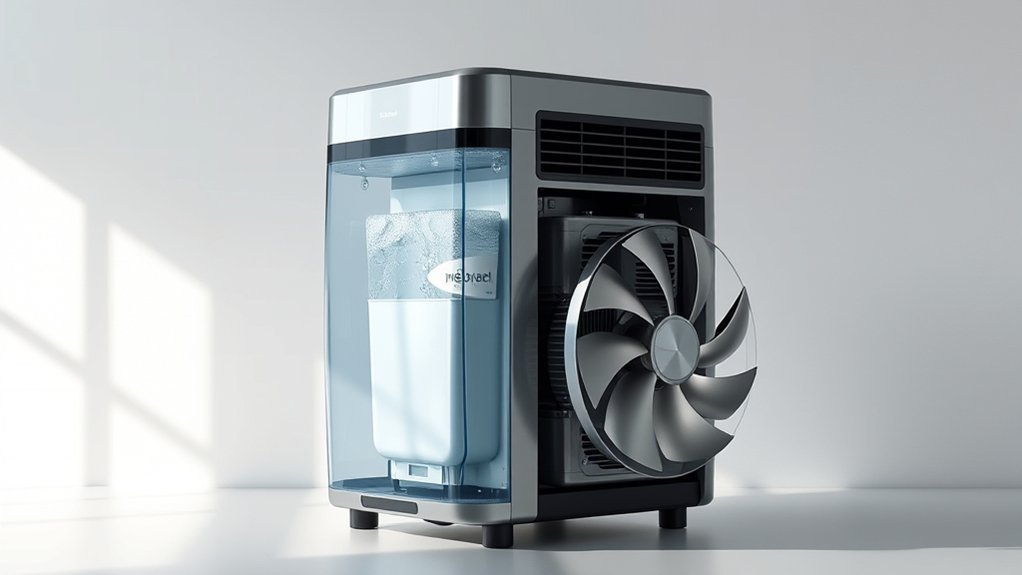
Most portable compressor dehumidifiers pull room air across cold coils. Water vapor condenses on the coils, drips into a bucket or drain, and the unit releases drier, slightly warmer air back into the room. A humidistat compares the measured relative humidity with your chosen setpoint and cycles the unit as needed.
Cold-Coil Condensation
Cold-coil condensation is similar to water forming on the outside of a chilled glass. The fan moves humid air over the evaporator coil, which cools the air below its dew point. Condensed water then enters the reservoir or drainage system. The compressor and fan add some heat to the room, so a bedroom may feel warmer even as it becomes less humid.
If the room is too cold for the model, frost can form on the coil and reduce water removal. Some units include automatic defrost, but you should still follow the operating-temperature range in the manual.
Humidistat-Controlled Drying
A built-in humidistat lets the dehumidifier respond to changing moisture levels instead of running the compressor without a target. For overnight use:
- Set the unit around 45% to 50% RH.
- Place a separate hygrometer several feet away from the exhaust for a second reading.
- Allow the room to stabilize before making another adjustment.
- Raise the setpoint if the room drops below about 35% to 40% RH or you develop dry-eye, skin, nose, or throat discomfort.
The U.S. Environmental Protection Agency recommends keeping indoor humidity between 30% and 50%. For many bedrooms, the middle or upper part of that range provides a practical balance between moisture control and comfort.
Continuous Night Operation
“Continuous operation” can mean two different things. A continuous-drain connection lets collected water leave without filling the bucket. A continuous fan or compressor setting may keep the machine running regardless of the humidity reading. For routine bedroom use, humidistat-controlled cycling is usually more sensible than forcing the compressor to run all night.
If humidity never reaches the setpoint, do not simply lower the setting. Check for an undersized unit, open windows, damp laundry, a hidden leak, blocked airflow, a dirty filter, or inaccurate sensor placement.
How Lower Humidity May Improve Sleep Comfort
Reducing excessive bedroom humidity can make the air feel less clammy and can help limit conditions that support mold and dust mites. It may also reduce musty odors and condensation. These changes can improve comfort for some sleepers, particularly when dampness or mold is aggravating nasal or respiratory symptoms.
However, a dehumidifier is not a sleep treatment, and research does not support promising deeper sleep or fewer awakenings from humidity control alone. In a 2023 bedroom-environment study, humidity was associated with subjective sleepiness and poor sleep quality, but it was not associated with objectively measured sleep efficiency. Temperature, carbon dioxide, noise, and particulate matter also affect bedroom comfort and sleep. See the Sleep Health observational study for context.
Moisture control can support a healthier bedroom, but it does not replace ventilation, leak repair, mold cleanup, temperature control, or medical care.
Choose the Right Bedroom Dehumidifier
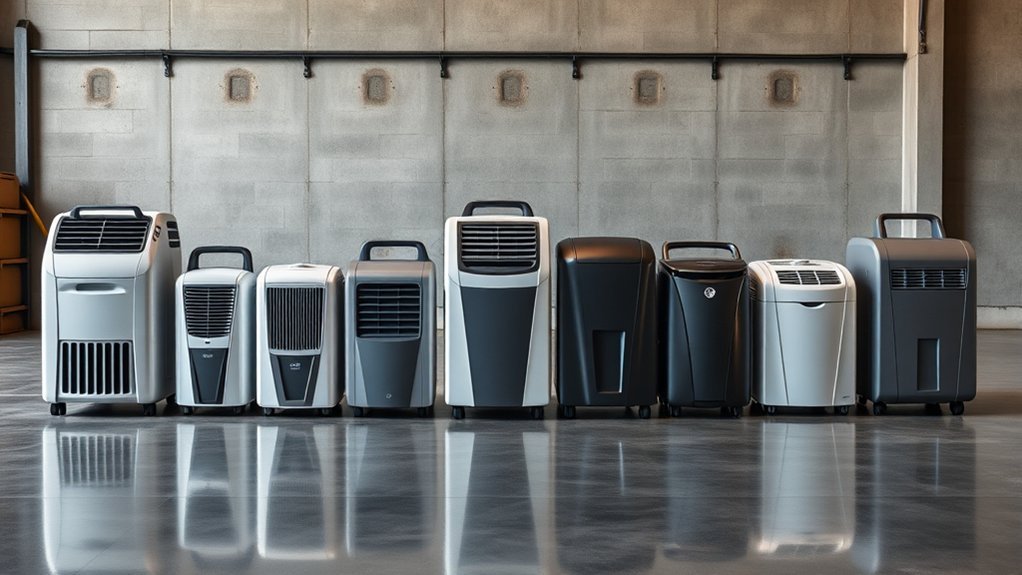
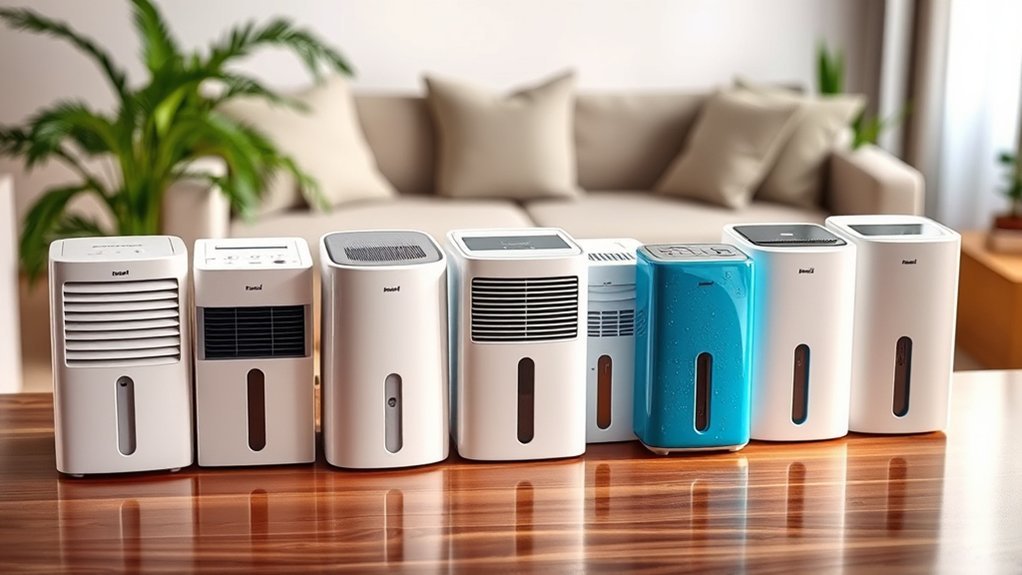
Choose capacity by the area being treated and how damp it is, not by bucket size alone. Also compare the lowest fan setting, humidistat controls, full-tank shutoff, defrost capability, drain options, filter access, operating-temperature range, and the manufacturer’s safety instructions.
Recommended Products

🍃Advanced Small Dehumidifier for Home: Designed for lasting home use, our bathroom dehumidifier works gently and steadily to maintain a balanced humidity level. The large 44 OZ (1.3L) water tank minimizes emptying frequency. Suitable for dorm room, camper, apartment, room, office and living room. No more dampness-just fresh, comfortable air everywhere

UPGRADED HIGH EFFICIENT DEHUMIDIFICATION:Say goodbye to sticky air. This dehumidifier uses semiconductor condensation technology to quietly and efficiently pull moisture from your bedroom, bathroom, or basement. It extracts up to 23 oz (650 ml) of moisture per day under test conditions of 86°F and 60% RH, which helps you enjoy a fresher, more comfortable living space
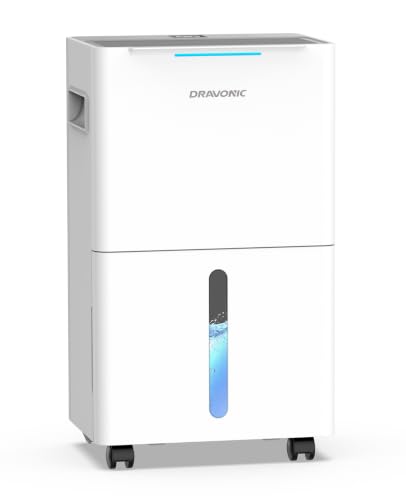
QUIET ENOUGH FOR THE BEDROOM, STRONG ENOUGH FOR THE HOME: A dehumidifier shouldn't keep you up at night. On low, this one runs at around 37 dB — easy to leave going beside the bed or in an RV without the constant drone — yet a real compressor still pulls up to 21 pints of moisture a day (tested at 95°F/90% RH) across rooms up to 1,500 sq.ft. Turn it up to high when you want the damp gone faster. Quiet when you want calm, capable when you need it, in a bedroom, basement, or anywhere muggy.
Quiet Nighttime Operation
A model advertised around 40 dB on low or sleep mode may sound quiet in a showroom, but decibel figures are not always measured under identical conditions. Low-frequency compressor hum, cycling, floor vibration, and room acoustics can matter as much as the published number.
- Use low fan or night mode after the room reaches the target humidity.
- Place the unit on a firm, level surface rather than against a hollow cabinet or loose object.
- Keep it away from the bed so the exhaust does not blow directly toward your face.
- Do not cover the unit or place it inside a closet to reduce noise.
- Return or relocate a unit that repeatedly disturbs sleep, provided the new location still meets the manual’s airflow and drainage rules.
Correct Room Capacity
The original “30 to 50 pints for a medium bedroom” rule is too broad. Current pint ratings describe how much water the unit can remove under standardized test conditions, and the correct size depends heavily on dampness and the total connected area.
The ENERGY STAR sizing guide gives these starting ranges for a small-to-medium space under 2,000 square feet:
| Condition Without Dehumidification | Suggested Capacity |
|---|---|
| Slightly to moderately damp, about 50% to 75% RH | 20 to 30 pints per day |
| Very damp, about 75% to 90% RH | 25 to 40 pints per day |
| Wet conditions, about 90% to 100% RH | 30 to 50 pints per day |
These are broad starting points, not a bedroom-specific prescription. Account for adjoining spaces, open doors, damp laundry, outdoor humidity, water intrusion, and how quickly moisture returns. It is generally better to choose adequate capacity and let the humidistat cycle than to force an undersized unit to run continuously.
Set Safe Humidity Levels
For a bedroom, begin around 45% to 50% RH. If windows still collect condensation or the room remains musty, lower the setting slightly while staying within the manufacturer’s range. If the room feels dry or the hygrometer drops toward 30%, raise the setting or turn the unit off.
- Use the built-in humidistat as the main control.
- Verify it with a separate hygrometer because readings near the exhaust can differ from the rest of the room.
- Wait for the room and its furnishings to release stored moisture before judging performance.
- Do not use the lowest possible setting as a goal; lower humidity is not always better.
The CDC advises keeping home humidity no higher than 50% to help prevent mold. If visible mold is already present, clean or remediate it and correct the moisture source; a dehumidifier alone will not remove it.
Pro Tip: Compare the dehumidifier’s display with a separate hygrometer for several nights. If they differ consistently, control the room by the independent reading rather than repeatedly lowering the setpoint.
Place the Dehumidifier for Quiet Operation
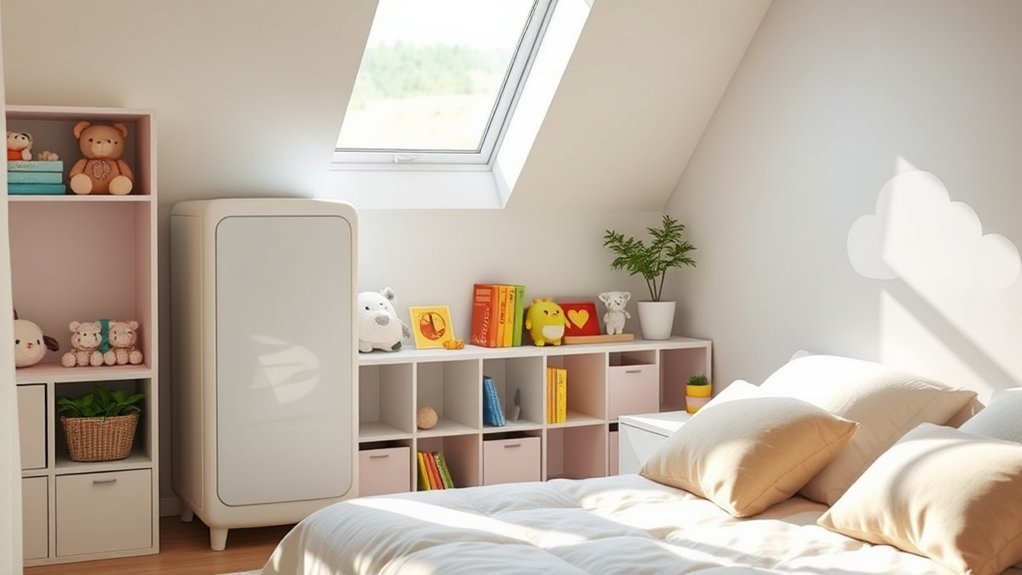
Place the unit on a stable, level floor with every intake and outlet fully open. Do not use a universal six-inch rule. Clearance requirements vary by model, and many portable units require more space. Follow the exact distances in the owner’s manual.
- Keep curtains, blankets, clothing, paper, and furniture away from the grilles.
- Do not put the unit in a closed closet or wedge it between furniture.
- Keep the exhaust from blowing directly onto the bed.
- Protect the hose from being stepped on, pulled, or pinched.
- Keep the appliance away from splash zones and locations where a leak could reach the outlet.
Closing exterior windows and the bedroom door can help a portable unit dry that room more efficiently. However, a dehumidifier does not bring in fresh air or remove carbon dioxide, so maintain appropriate building ventilation through your normal ventilation system or other safe means.
Use Auto-Shutoff and Continuous Drainage
A working full-tank shutoff prevents the bucket from overflowing during normal use. ENERGY STAR notes that portable units typically stop when the bucket is full, but you should still confirm that the bucket is seated correctly and that the float or sensor moves freely.
For continuous drainage, follow the manual rather than improvising:
- Use the specified hose size and connection.
- For gravity drainage, route the hose continuously downhill with no loops, kinks, or raised sections.
- Secure the outlet end so it cannot slip out of the drain.
- Keep the hose where no one can trip over it or pull the unit.
- Check the first several drainage cycles for leaks before trusting the setup overnight.
- If the unit has a pump, follow its maximum lift and hose-routing limits.
Do not bypass the bucket switch, drill an unapproved hole, or place the unit where a drainage failure could wet electrical equipment.
Recommended Products

Multi-Purpose Hose, 6ft Cut-to-Fit:This 6-foot hose is designed for various applications, including dehumidifier drainage and gardening tasks. It can be easily cut to the desired length for flexible use. Please confirm the required length before purchase.

[Convenient] This drain hose automatically drains water from the dehumidifier to the drain for uninterrupted use.

MULTIFUNCTIONAL UNIVERSAL DRAIN HOSE: This drain hose has multiple uses, in addition to being suitable for dehumidifier drainage, it is also suitable for air conditioner drainage as well as being suitable for a variety of gardening tasks. Additionally our dehumidifier drain hose can be cut to your desired length to customize it for different situations.
Stop Common Overnight Dehumidifier Problems
| Problem | Likely Causes | What to Do |
|---|---|---|
| Runs all night but RH stays high | Open windows, hidden moisture source, dirty filter, blocked grille, undersized unit, or inaccurate sensor | Close the treated space, clean the filter, check for leaks, compare with a hygrometer, and reassess capacity |
| Coils ice up | Room below the operating range, poor airflow, or a defrost fault | Turn it off, let it thaw, clean the filter, and check the manual’s minimum temperature |
| Water appears on the floor | Bucket not seated, cracked tank, loose hose, blocked hose, or hose routed uphill | Stop overnight use until the leak is found and corrected |
| Room feels too warm | Normal compressor and fan heat, oversized runtime, or poor room ventilation | Use humidistat cycling, a lower fan setting, or run the unit before bedtime |
| Dry throat, eyes, or skin | Setpoint too low or exhaust aimed toward the bed | Raise the target, confirm RH with a hygrometer, and redirect or relocate the unit |
| New odor, smoke, sparks, or unusual heat | Electrical or mechanical fault | Switch off and unplug safely; do not restart until professionally assessed |
Note: If humidity quickly returns after the unit stops, look for the source. Roof leaks, plumbing leaks, damp foundations, unvented clothes drying, and poorly vented bathrooms cannot be solved by dehumidification alone.
Recommended Products


Face Icon Comfort Indicator: Humidity temperature gauge features face icons to indicate DRY/COMFORT/WET air conditions, quickly informs you how to adjust your humidifier or dehumidifier to achieve optimal comfort.

1-【Widely Application】The digital LCD monitor can be used in home, office, garage, schools, hotels, laboratories, kindergartens, aquaculture, instrument workshop, warehouse, reptile tank terrarium, aquarium, hermit crab habitat, and other places where temperature/humidity measurement is required.
How Much Electricity Does Overnight Use Consume?
Energy use depends on the unit’s wattage, fan speed, compressor runtime, room conditions, and electricity rate. Use this formula:
Energy used in kilowatt-hours = watts ÷ 1,000 × hours of operation.
For example, a 500-watt unit running continuously for eight hours would use 4 kilowatt-hours. A humidistat-controlled unit may use less because the compressor cycles off after reaching the target. To reduce unnecessary runtime, fix moisture sources, keep doors and windows arranged for the intended zone, clean the filter, and choose adequate capacity.
How to Maintain Overnight Performance
Regular maintenance keeps airflow steady, reduces odors, and helps safety controls work as intended. Use the schedule in your model’s manual, but these checks are a useful baseline:
- Before each overnight run: Inspect the cord, outlet, bucket or hose, airflow clearance, and current humidity.
- After emptying the bucket: Rinse or wipe it as directed, dry the outside, and reseat it fully.
- On the manual’s filter schedule: Clean or replace the air filter. Never operate the unit without the required filter.
- Periodically: Vacuum dust from accessible grilles while the unit is off and unplugged. Do not open the cabinet unless the manual permits it.
- Before seasonal storage: Drain and dry the unit, clean the bucket and filter, protect the cord, and store it upright in a dry location.
If performance drops sharply, the fan stops, the compressor sounds abnormal, or the unit repeatedly freezes or trips a breaker, stop using it overnight and follow the manufacturer’s troubleshooting or service process.
Frequently Asked Questions
Is It Bad to Leave a Dehumidifier on All Night?
Not when the model is not recalled, the manual permits normal overnight operation, the electrical setup is safe, airflow is clear, and the bucket shutoff or drain works. Use a humidistat rather than forcing the compressor to run continuously.
Should You Use a Dehumidifier if You Have COPD?
Do not treat a dehumidifier as automatic COPD therapy. Both hot, humid conditions and cold, very dry conditions can worsen symptoms for some people. Keep humidity moderate, avoid blowing dry air toward the bed, and ask your clinician or respiratory therapist what indoor conditions are appropriate for you. Seek urgent care for severe or worsening breathlessness.
Will a Dehumidifier Help Dry Out Plaster?
It can assist drying after the moisture source has been corrected, especially when combined with suitable temperature and air exchange. Follow the plaster manufacturer’s curing guidance because aggressive heat or overly rapid surface drying can damage some finishes. Persistent damp may indicate a leak, rising damp, or salt contamination that needs repair.
Will a Dehumidifier Help With Termites?
Lowering excess moisture can make a structure less attractive to some termites and supports prevention, but it does not eliminate an established colony. The EPA recommends moisture control, leak repair, inspection, and appropriate professional treatment.
What Humidity Should I Set Overnight?
Start around 45% to 50% RH. Adjust within the broader 30% to 50% indoor range based on condensation, comfort, season, and medical advice. Avoid driving the room below 30% RH.
Can I Use an Extension Cord With a Dehumidifier?
Generally, no. Major manufacturers commonly instruct users to plug a dehumidifier directly into a properly grounded wall outlet because extension cords, power strips, and adapters can overheat or provide an unreliable connection. Follow the instructions for your exact model.
Should Bedroom Doors and Windows Be Closed?
Closing exterior windows and limiting humid air entering the treated zone improves dehumidification. However, the unit does not supply fresh air, so do not block required ventilation or use it as a substitute for a functioning ventilation system.
Sources
- U.S. Environmental Protection Agency: Improving Your Indoor Environment — recommended indoor humidity range and moisture control.
- Centers for Disease Control and Prevention: Mold — mold prevention, health effects, and the need to correct moisture problems.
- ENERGY STAR: Dehumidifiers — sizing, humidistats, bucket shutoff, drainage, placement, and efficiency.
- U.S. Consumer Product Safety Commission: Dehumidifier Recalls — model checks and fire-hazard recalls.
- GE Appliances: Extension Cord or Surge Protector Use — direct grounded-outlet guidance.
- Sleep Health: Bedroom Environment and Sleep Study — evidence and limitations regarding humidity and sleep outcomes.
Conclusion
You can run a dehumidifier overnight when the exact unit is safe, correctly sized, maintained, and used according to its manual. Check recalls, plug it directly into a grounded wall outlet, set the humidistat around 40% to 50% RH, provide the required clearance, and confirm that the bucket shutoff or drain works. Stop using it at the first sign of electrical trouble, leakage, overheating, or unusual noise. Most importantly, treat the source of excess moisture instead of asking the appliance to hide a leak, mold problem, or building defect.