A laundry room can experience a sharp rise in humidity when you air-dry clothes indoors or run several loads close together. From the original product list, only the two compressor dehumidifiers below offered the combination of 30-plus-pint seller-listed capacity, adjustable humidity control, and continuous gravity drainage that reasonably matches this use. This is therefore a focused comparison of those two suitable models rather than a market-wide roundup.
The pint ratings require context: both products advertise their maximum daily removal at 95°F and 90% relative humidity. A typical laundry room may be cooler and less humid, so actual water collection can be lower than the headline rating.
Quick verdict
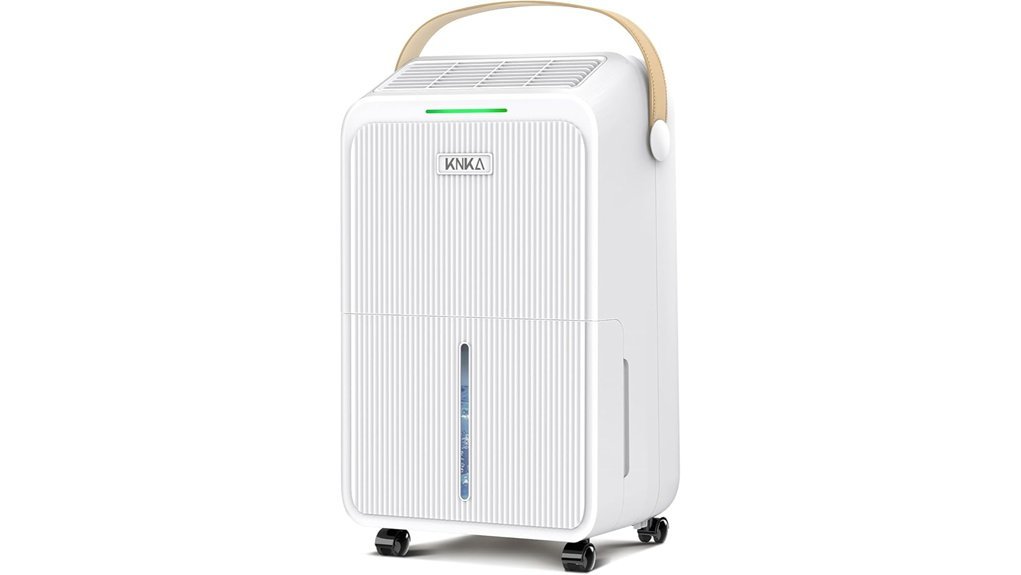
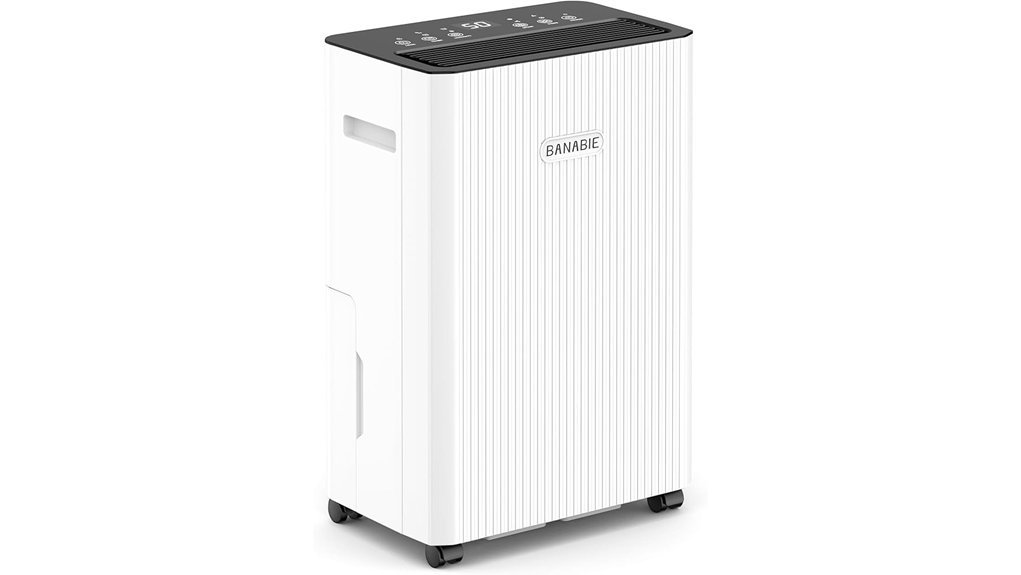
Best overall: The KNKA 2500 Sq.Ft Dehumidifier is the stronger first choice because its listing combines a 34-pint maximum rating, dedicated Dry mode, adjustable humidity control, a 3L tank, and continuous drainage. Best alternative: The BANABIE 2500 Sq.Ft Dehumidifier offers a 32-pint maximum rating, automatic humidity control, a 2.5L tank, and an included gravity-drain hose, but buyers should confirm the model specifications because parts of its Amazon product information are inconsistent.
Quick Comparison
| Product | Seller-Listed Capacity | Drainage | Best For | Amazon |
|---|---|---|---|---|
| KNKA 2500 Sq.Ft Dehumidifier Best Overall |
Up to 34 pints/day at 95°F and 90% RH | 3L tank or continuous gravity drainage | Regular indoor clothes drying and changing moisture loads | Check Current Amazon Availability |
| BANABIE 2500 Sq.Ft Dehumidifier Best Alternative |
Up to 32 pints/day at 95°F and 90% RH | 2.5L tank or included 3.28-ft gravity-drain hose | Medium laundry rooms needing automatic humidity control | Check Current Amazon Availability |
Before you buy: The advertised square-foot coverage is a seller estimate, not a performance guarantee. Compare the pints-per-day rating, test conditions, measured room humidity, indoor-drying habits, room temperature, drainage route, model number, warranty, and current listing details.
How these two models were selected
- Both use compressor-based moisture removal rather than low-output thermoelectric technology.
- Both advertise at least 30 pints of extraction per day under their stated maximum test conditions.
- Both provide humidity controls and a hose option for continuous gravity drainage.
- Smaller units from the original list were excluded because they were better suited to closets, cabinets, bedrooms, or mild spot dampness.
KNKA 2500 Sq.Ft Dehumidifier with Drain Hose
Best Overall
The KNKA PD22SC-12 is the strongest laundry-room match in this comparison. Its listing claims removal of up to 34 pints of moisture per day at 95°F and 90% RH and provides DEHU, DRY, and CONT operating modes. The dedicated Dry mode is the main advantage for households that hang wet clothing indoors, while the adjustable humidistat allows the unit to cycle after the room reaches the selected humidity.
The 3L bucket, continuous-drain option, automatic shutoff, automatic defrost, washable filter, wheels, and handle make it easier to use during repeated laundry loads. The listing also advertises a 37 dB operating figure, but noise can vary with fan speed, placement, room acoustics, and the method used to measure it.
The “up to 2,500 square feet” coverage should not be treated as a promise that one unit will control every part of a large open home. A closed laundry room creates a very different moisture load from an open basement, and actual extraction normally falls below the maximum rating when the room is cooler or less humid than the stated test conditions.
Why you’ll like it
- Dedicated Dry mode directly addresses the temporary moisture surge from indoor clothes drying.
- Continuous gravity drainage can prevent the bucket from stopping the unit during a long drying session.
- Adjustable humidity control reduces unnecessary runtime after the room reaches its target.
- The listing clearly identifies the model as PD22SC-12, making model verification easier.
Best For: Households that regularly dry clothes indoors or need a higher-capacity compressor unit for a closed, damp laundry room.
Who Should Avoid It: Buyers without a safe downhill drainage route, anyone needing a built-in pump, or shoppers expecting one 34-pint unit to manage an entire open-plan home.
Pros:
- The seller-listed capacity falls within a useful starting range for many small-to-medium laundry rooms with high moisture loads.
- DEHU, DRY, and CONT modes provide practical control for normal operation and indoor drying sessions.
- The drain option supports longer operation without repeated bucket emptying.
- Automatic defrost, automatic shutoff, child lock, and a washable filter improve day-to-day convenience.
Cons:
- The 34-pint figure applies to unusually warm and humid test conditions, not every laundry room.
- The 3L tank can fill quickly if the hose is not used.
- The advertised 2,500-square-foot coverage may overstate practical performance in open or persistently wet spaces.
- The advertised noise level should not be treated as an independently verified result.
BANABIE 2500 Sq.Ft Dehumidifier with Smart Humidity Control
Best Alternative
The BANABIE PD8R-03QE is another relevant laundry-room option because its main listing claims a compressor-based 32-pint daily dehumidification capacity at 95°F and 90% RH. It includes automatic humidity controls, continuous operation, a custom-humidity mode, a 24-hour timer, and a gravity-drain option.
The seller describes a 2.5L tank, a 3.28-foot drain hose, automatic bucket shutoff, wheels, and a 32 dB noise figure. These features can make it easier to maintain a selected humidity level without emptying the bucket after every laundry load, provided the hose can run continuously downhill to an approved drain.
Listing consistency note
The main Amazon title and feature bullets describe 32-pint daily extraction and coverage up to 2,500 square feet, while other product-information fields on the same page display conflicting capacity and coverage values. Confirm that the live listing still shows brand BANABIE, model PD8R-03QE, the expected voltage, drain hose, tank size, warranty, and return terms before ordering.
Amazon currently displays an ENERGY STAR badge for this listing. Because marketplace information can change and other fields on the page are inconsistent, verify the exact model in the official ENERGY STAR Product Finder before relying on the certification in your buying decision.
Why you’ll like it
- The 32-pint maximum rating is better matched to laundry moisture than a mini thermoelectric unit.
- Automatic and custom humidity controls support set-and-monitor operation.
- The included gravity-drain hose can reduce interruptions from a full tank.
- The current listing identifies a specific brand and model number for pre-purchase verification.
Best For: Buyers who want a 30-plus-pint compressor model with automatic humidity controls, a timer, and gravity drainage.
Who Should Avoid It: Buyers unwilling to resolve the conflicting listing specifications, anyone needing a built-in drain pump, or shoppers who require independently confirmed certification and warranty details before purchase.
Pros:
- The primary 32-pint extraction claim is within a practical starting range for many enclosed laundry rooms.
- Automatic, continuous, and custom-humidity modes provide flexible control.
- The tank and included hose offer manual and continuous water-removal options.
- Automatic bucket shutoff can prevent overflow when manual collection is used.
Cons:
- The Amazon page contains conflicting capacity and square-footage fields.
- The 2.5L tank may require frequent emptying during heavy indoor drying.
- The seller-listed 32 dB claim may not reflect noise in every room or operating mode.
- Certification, warranty, accessories, and service support should be confirmed for the exact model.
Factors to Consider When Choosing a Dehumidifier for a Laundry Room
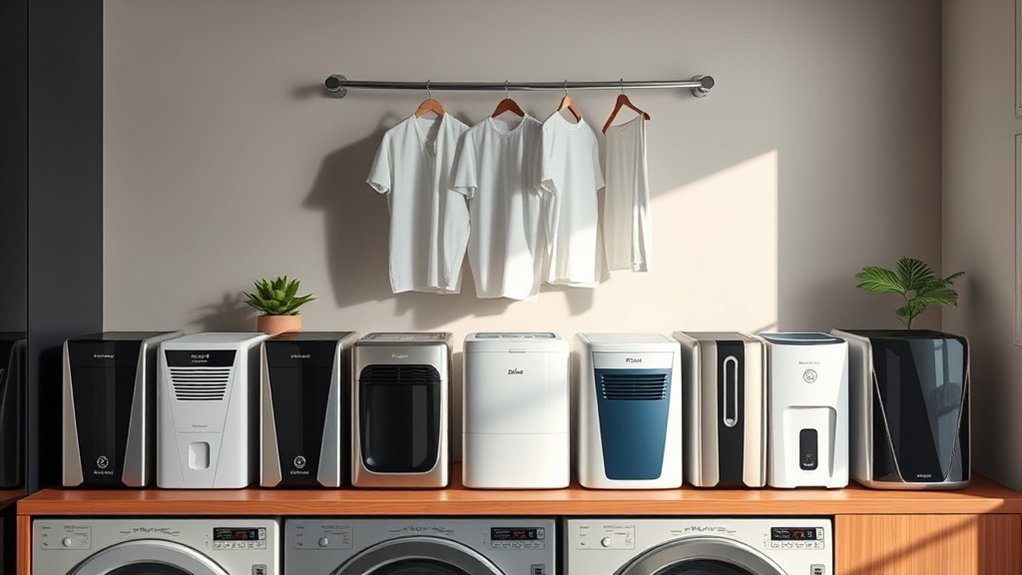
The right model should handle the room’s moisture load rather than merely match a square-foot number in a product title. Compare extraction capacity, rating conditions, drainage, controls, room temperature, noise, energy certification, placement, and maintenance.
Moisture-Removal Capacity
ENERGY STAR guidance places a small-to-medium wet space with high-load conditions such as laundry drying in roughly the 30-to-50-pint-per-day range. A wet area larger than 2,000 square feet may need 50 pints per day or more. These are starting estimates, so increase capacity when the room remains damp for hours, has poor ventilation, opens into a basement, or handles several loads per day. See the current ENERGY STAR dehumidifier buying guidance for the full sizing table.
Understand the Capacity Test Conditions
A daily pint rating does not mean the machine will collect that amount in every home. The two models reviewed here advertise their maximum ratings at 95°F and 90% RH. Cooler air contains less moisture and can reduce extraction, so compare the models relative to each other but do not assume that either bucket will collect 32 or 34 pints during a normal day.
Coverage Area and Room Conditions
Do not size a dehumidifier from square footage alone. Ceiling height, door position, airflow, starting humidity, room temperature, ventilation, and the number of wet garments all affect performance. A 32- or 34-pint model can be suitable for a closed laundry room but may be inadequate when the door stays open to a much larger basement.
Compressor vs. Thermoelectric Designs
Compressor dehumidifiers generally provide the higher extraction capacity needed for repeated indoor clothes drying. Small thermoelectric models can be lighter and quieter, but their removal is commonly measured in ounces rather than dozens of pints. They are better suited to closets, cabinets, RV storage areas, or mild spot dampness.
Drainage Options
Continuous drainage is one of the most valuable laundry-room features. The hose must normally empty into a floor drain, sink, sump, or other approved outlet located below the dehumidifier’s drain port. Keep it free of kinks and maintain a continuous downward slope. The two models reviewed here describe gravity drainage rather than a built-in pump. When downhill drainage is impossible, choose a model with an integrated pump or use a compatible condensate pump according to its instructions.
Humidity Controls and Dry Mode
An adjustable humidistat allows the unit to cycle around the selected level instead of running continuously. For normal home use, begin around 45% to 50% relative humidity, check the result with a separate hygrometer, and adjust for comfort and condensation. A Dry or Continuous mode can be used temporarily while wet clothing is present, but automatic control is normally more efficient after the moisture surge has passed.
Noise Levels During Operation
Compressor models usually produce more sound than mini thermoelectric units, particularly at higher fan speed. Treat decibel figures cautiously unless the measurement distance and test method are provided. Place the dehumidifier on a stable, level surface, keep the filter clean, and maintain the clearance required by the manual to reduce vibration and airflow noise.
Energy Efficiency and Certification
Compare certified energy information instead of relying only on phrases such as “energy efficient.” ENERGY STAR evaluates dehumidifiers using capacity and an integrated energy factor measured under defined test procedures. Search the exact brand and model in the ENERGY STAR Product Finder before treating a marketplace badge as final confirmation.
Tank Size and Maintenance
Do not confuse tank volume with extraction capacity. A dehumidifier can be rated to remove dozens of pints per day while holding only 2.5 or 3 liters before shutting off. Clean the filter according to the manual, wash and dry the bucket regularly, inspect the drain hose for buildup, and prevent laundry lint from blocking the intake.
Safety and Placement
Look for automatic bucket shutoff, automatic defrost, a grounded plug, and clear model labeling. Keep the appliance away from splashing water, do not block the intake or outlet, and do not use an extension cord unless the manufacturer expressly allows it. Because dehumidifiers have been included in major historical fire-related recalls, check the exact brand and model against the CPSC dehumidifier recall information before purchase and periodically during ownership.
Before-you-buy checklist
- Measure the laundry room and note whether the door stays open or closed.
- Measure humidity with a separate hygrometer before and during indoor drying.
- Consider roughly 30–50 pints/day for a small-to-medium wet room with laundry drying.
- Confirm the rating conditions behind the advertised capacity.
- Check whether the hose can run continuously downhill to an approved drain.
- Choose a built-in pump model when gravity drainage is not possible.
- Verify the brand, exact model number, voltage, hose, warranty, and return terms.
- Confirm ENERGY STAR status in the official Product Finder when efficiency matters.
- Check current CPSC recall information and follow the placement instructions in the manual.
Frequently Asked Questions
What Size Dehumidifier Is Best for a Laundry Room?
For a small-to-medium room that becomes wet or very humid during indoor clothes drying, roughly 30–50 pints per day is a useful starting range. Increase capacity for an open basement, persistent seepage, low ventilation, or several daily laundry loads.
Can a Dehumidifier Reduce Laundry Drying Time?
It can help by lowering the relative humidity around wet fabric, allowing additional moisture to evaporate. Results depend on room temperature, airflow, garment spacing, starting humidity, and dehumidifier capacity, so faster drying is not guaranteed in every setup.
Should I Use Continuous Drainage?
Continuous drainage is useful for frequent indoor drying because a full bucket can stop the dehumidifier. Confirm that the hose runs downhill without kinks and empties into an approved location. Neither reviewed model should be assumed to pump water upward.
What Humidity Setting Should I Use?
A setting near 45%–50% RH is a practical starting point for normal operation. Use a stronger Dry or Continuous mode temporarily while wet clothing is hanging, then return to automatic control. A separate hygrometer can help confirm the humidity away from the unit’s intake.
Are Mini Dehumidifiers Good for Laundry Rooms?
Usually not for repeated indoor clothes drying. A mini model may collect some moisture in a tiny enclosed room, but its daily extraction is generally much lower than that of a 30-plus-pint compressor dehumidifier.
Do These Dehumidifiers Have Built-In Pumps?
The reviewed listings describe drain hoses for continuous gravity drainage, not integrated pumps. The receiving drain must therefore remain below the drain outlet unless a separate compatible condensate pump is used.
How Often Should I Clean the Dehumidifier?
Follow the maintenance schedule in the exact model’s manual. In a lint-prone laundry room, inspect the filter frequently, clean and dry the tank regularly, and check the hose for clogs, kinks, or buildup.
Conclusion
Final recommendation
Choose the KNKA 2500 Sq.Ft Dehumidifier when dedicated Dry mode, a clearly identified model number, a 3L tank, and a slightly higher maximum extraction claim are your priorities.
Consider the BANABIE 2500 Sq.Ft Dehumidifier when you prefer its automatic controls, compact tank-and-hose setup, and currently displayed efficiency badge—but verify model PD8R-03QE and all conflicting listing details before purchasing.
Whichever model you choose, focus on measured humidity, rating conditions, pints per day, room temperature, drainage access, and model verification rather than a square-foot claim alone. Correct sizing and a properly routed gravity-drain hose will usually matter more than decorative lights or an oversized coverage number.